
9 seats, 460 km range, and 800-volt technology for the new KIA PV7
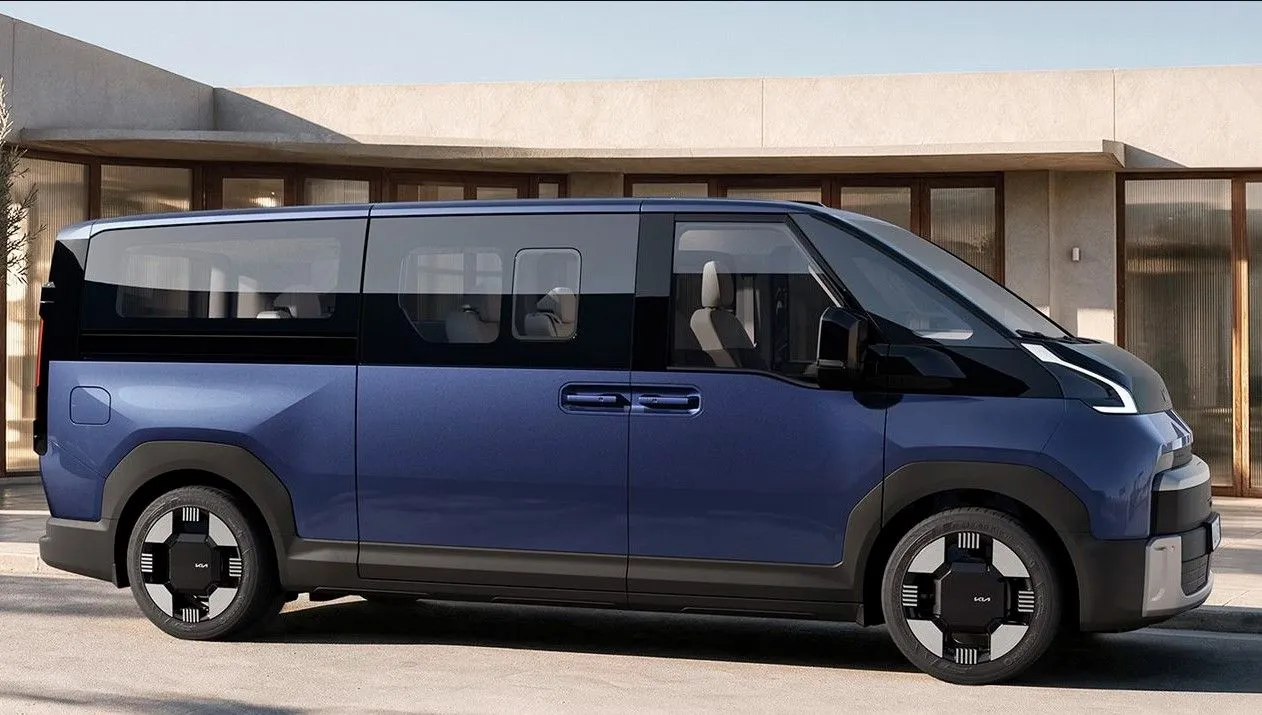
Following a preview last August, Kia has now unveiled the second model in its new range of electric commercial vehicles. The new Kia PV7 was officially presented at the IAA Transportation show in Hannover, aiming to surpass the PV5 with significantly more space, up to nine seats for European markets, decent range, and most importantly, an 800-volt architecture that was not previously available in the brand’s electric commercial vehicle lineup.
The formula is similar to the one Kia has used with the PV5: a single platform capable of transforming into different vehicles depending on the customer’s needs. The PV7 will initially be available in Cargo and Passenger versions, though Kia is already working on a much broader range that will include up to 23 variants, with different body styles and versions tailored for professional use. In Europe, its arrival is scheduled for the second half of 2027.
Over 5.3 meters long and up to nine seats
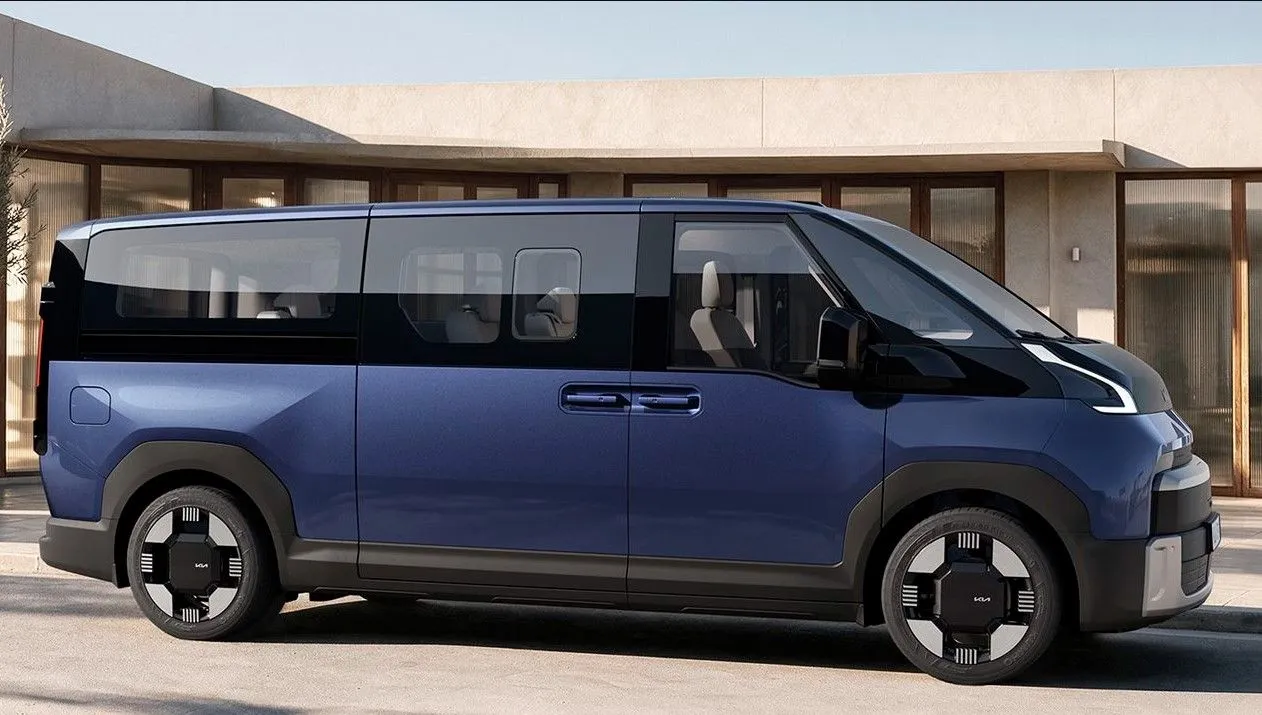
The PV7 retains the design language introduced by the PV5, though on a significantly larger scale. The front features vertical light groups and the distinctive integrated daytime running lights alongside the hood sides, while the black hood and darkened pillars add contrast that has become one of Kia’s PBV family hallmarks.
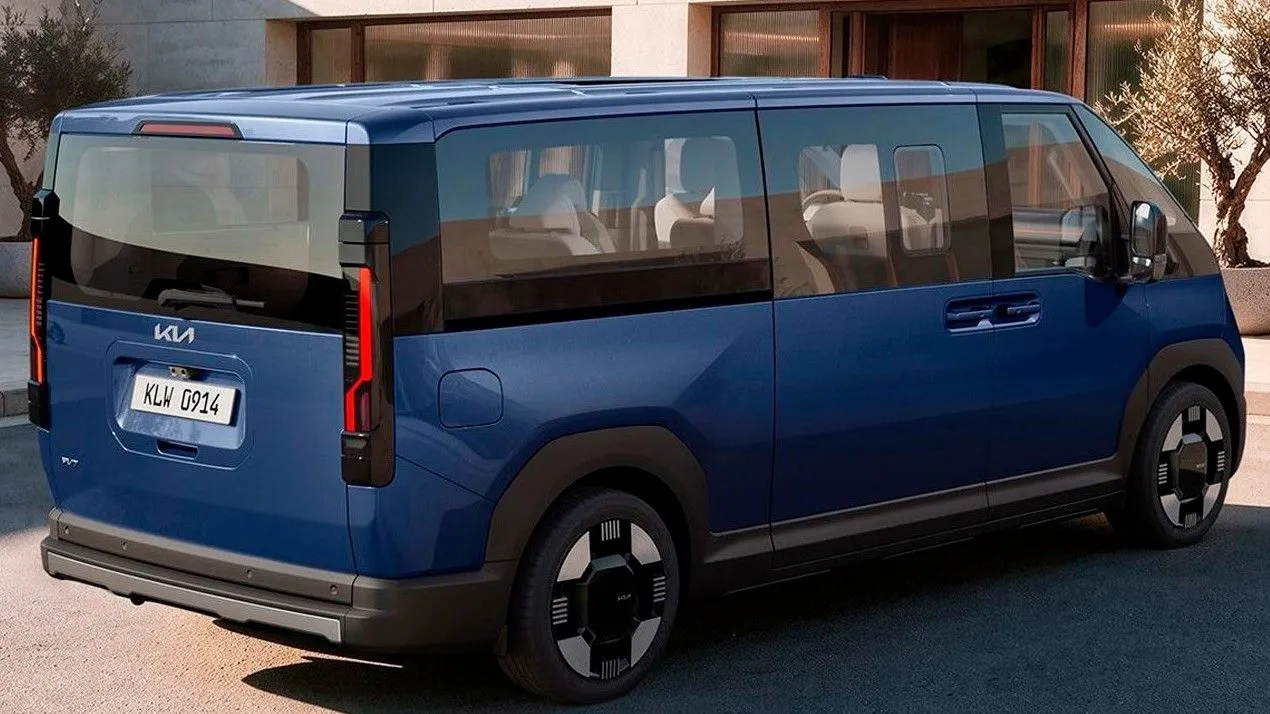
The dimensions make it clear this is a large electric van. The PV7 measures 5.35 meters in length, 1.995 meters in width, 1.99 meters in height, with a wheelbase of 3.5 meters. These figures apply to both the Passenger and Cargo Long versions, though other configurations will be available in the future lineup.
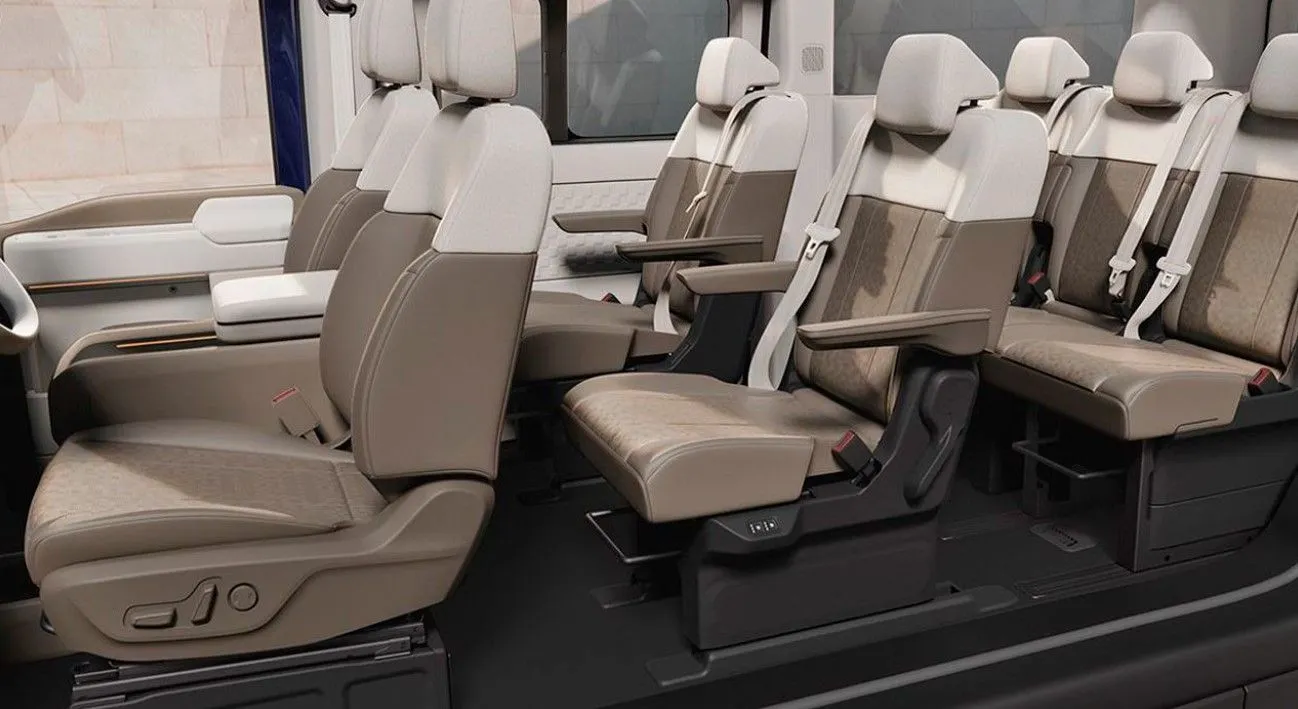
The Passenger version will be able to carry up to nine passengers in Europe, while in South Korea Kia will offer a configuration with up to eleven seats. Additionally, the seats can move longitudinally and be retracted to adjust the cabin to current needs. The seven-seater version will feature Easy Remove seats on tracks, whereas the nine-seater version can be configured with or without a fourth row.
In the case of the PV7 Cargo, the available space is even more impressive. The long version offers up to 6.1 cubic meters of cargo capacity, while the variant with a raised roof reaches 8 cubic meters. The payload capacity is up to 1,200 kg, and the long version can carry up to three European pallets, with a loading height of just 550 millimeters.
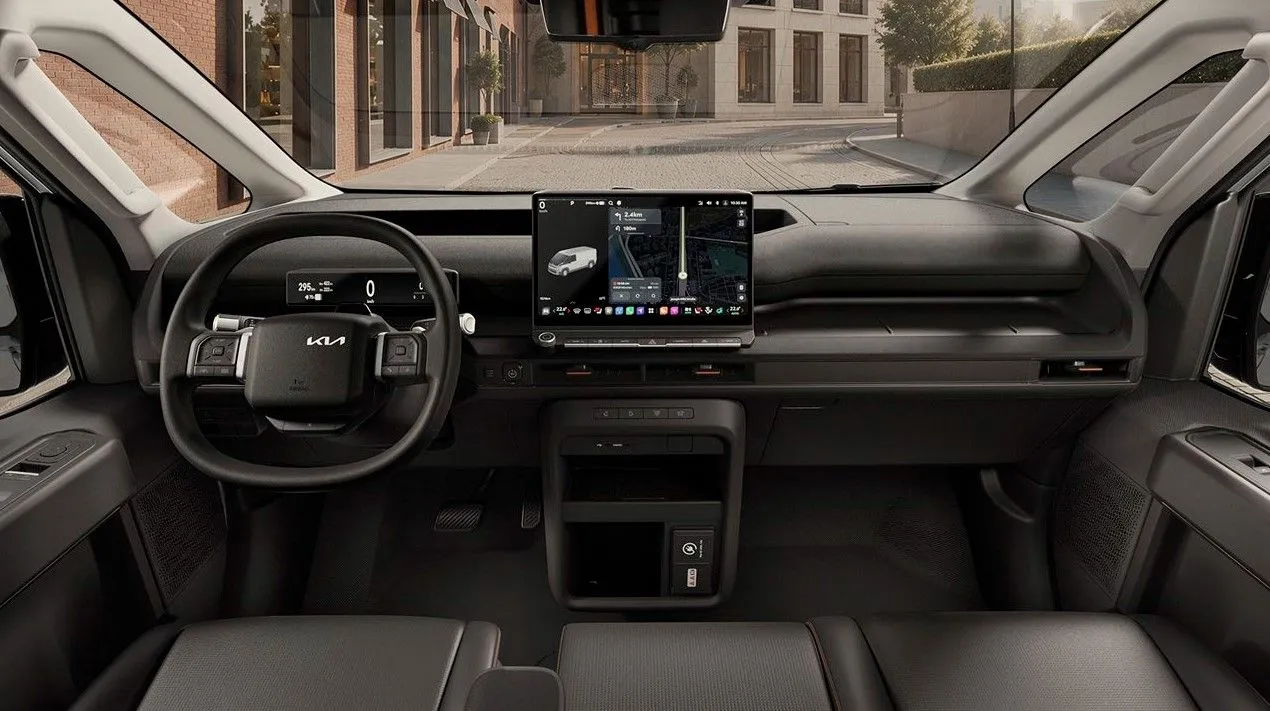
Inside, Kia aims to make the PV7 more than just a large electric van. The dashboard features a 12.9-inch screen for instruments and another 14.6-inch screen for the multimedia system, while the Pleos Connect system adds connected navigation, apps, and remote updates. The Gleo AI voice assistant will also be available.
The safety features include seven airbags, one of which is located in the ceiling ahead of the passenger, along with emergency braking, lane-keeping assist, adaptive cruise control, road driving assistant, front, side, and rear parking sensors, a rear-view camera, and a surround-view camera. It can also be equipped with remote parking and an integrated camera to record movements.
In the Passenger version, the interior will be more similar to that of a minivan rather than a conventional van. Kia will offer two-tone finishes, enclosed compartments, ambient lighting, climate control for the rear seats, and an optional center console that can be converted into a table. The Cargo version, on the other hand, features open spaces and practical solutions for those who use the vehicle throughout the day.
The mechanical aspects also represent a significant improvement over the PV5. The Kia PV7 delivers up to 200 kW, equivalent to 272 horsepower, and 420 Nm of torque, with front-wheel drive as standard. Kia is also preparing a four-wheel-drive version that will be released later, though it has not yet confirmed a specific launch date.
The major innovation lies in Kia’s E-GMP.S platform, designed specifically for their PBV vehicles. Unlike the conventional solutions found in many electric vans, the PV7 features an 800-volt electrical architecture that enables use of fast chargers capable of delivering up to 350 kW. In this segment, such a difference can be crucial for vehicles that spend much of their time in use and need to minimize downtime.
Kia will offer two battery options, with capacities of 71.5 and 96.2 kWh. The Cargo Long version equipped with the higher-capacity battery achieves a range of over 460 kilometers under the WLTP cycle, although the brand itself notes that this figure is still pending final approval.
Fast charging is also one of the PV7’s strengths. Kia claims it can go from 10% to 80% in just over 20 minutes using a 350 kW DC charger. Additionally, for the first time in a Kia model, the PV7 features two charging ports: one front port compatible with both AC and DC power, and an optional second rear side port for AC charging. This setup is particularly useful in a van of these dimensions, as it allows the vehicle to be charged even when parking sideways.
The PV7 also comes with V2L functionality, enabling it to power tools, work equipment, or other electrical devices. The Cargo version further includes a dedicated mode for heavy loads, which adjusts the vehicle’s performance based on the weight being transported.
Kia will not stop at the two versions shown in Hannover. The brand has confirmed it will gradually expand its range to 23 variants, including different Cargo configurations, Passenger versions, a cab-over chassis body style, and various modifications for professional use. The next major addition will be the PV9, scheduled for 2029.
The Kia PV7 will arrive in Europe in the second half of 2027, initially in Cargo and Passenger versions. So far, Kia has not announced prices, so it will take some time to determine how well it can compete with rivals like the Volkswagen ID. Buzz and future large electric vans entering the European market.
Key points
Kia PV7, the second major addition to the brand’s PBV lineup.
Cargo and Passenger versions.
Up to 9 seats available in Europe.
5.35 meters in length.
Up to 8 cubic meters of cargo volume.
Up to 1,200 kg of payload capacity.
Batteries with 71.5 and 96.2 kWh capacity.
Up to 200 kW, equivalent to 272 horsepower.
Front-wheel drive as standard, with all-wheel drive available in future versions.
800-volt electric architecture.
Fast charging up to 350 kW.
From 10% to 80% in just over 20 minutes.
The PV7 Cargo Long is expected to have a range of over 460 km.
An optional second AC charging port.
V2L function.
Arrival in Europe during the second half of 2027.
Kia is preparing up to 23 variants of the PV7.