
9. BDEW-Electromobility Monitor: “Dense charging network for passenger cars and also for trucks”
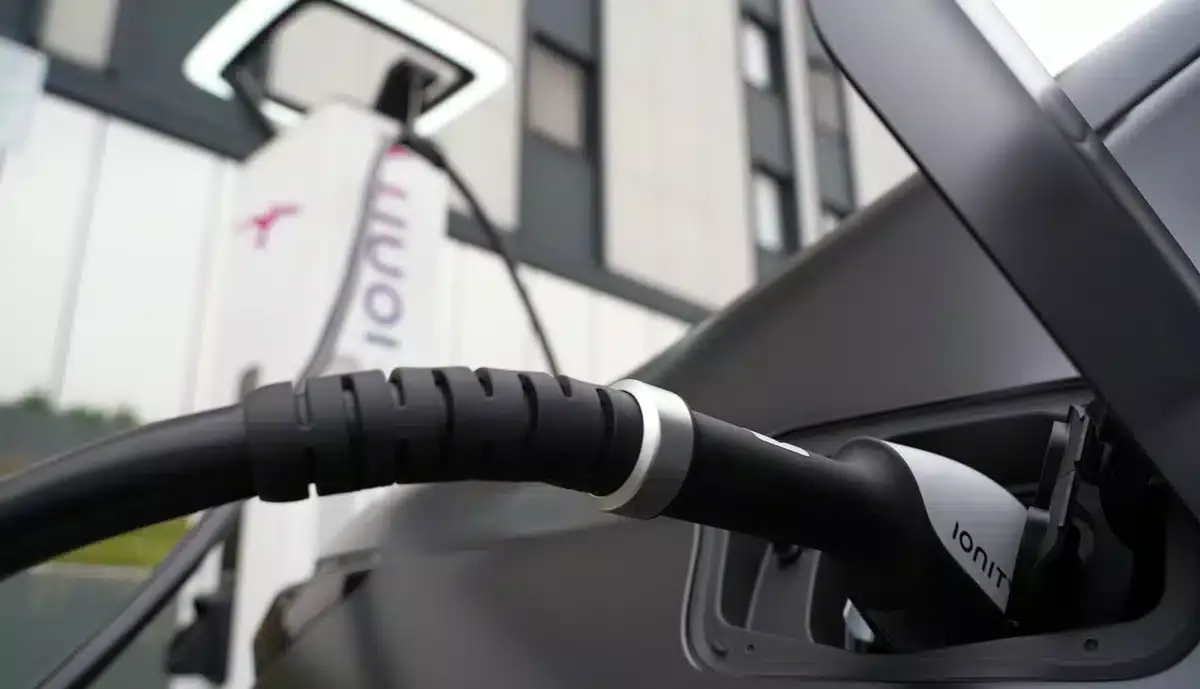
Image: Ionity (representative image)
The German Association for Energy and Water Economy, BDEW, has released its 9th Electromobility Monitor. The key findings are: Electromobility in Germany already surpassed last year’s record in new electric car registrations by 2026, the energy sector provides a dense network of charging points for electric cars and trucks, and charging is cheaper than refueling in all analyzed scenarios.
"The numbers show that electric mobility is convincing more and more people," says Kerstin Andreae, head of BDEW’s management board. "The range of vehicles is increasing, prices are approaching those of comparable gasoline cars in most segments, and the used car market is also gaining momentum. High fuel prices and incentives give additional impetus for the switch. Those who drive electric save money compared to fuel costs. And electric vehicle owners stay loyal: 94 percent would buy an electric car again."
Andreae emphasizes that the energy and charging industry offers the right solutions: over 220,000 public charging stations with a combined charging capacity of more than eleven gigawatts are available. Public charging works well in everyday use, meeting or exceeding the expectations of 91 percent of users. Despite record numbers of electric cars being registered, on average only 13 percent of charging stations are in use at any given time. There is also already an initial charging network for electric trucks that covers truck drivers’ routes effectively. It is important to maintain this momentum.
"Reliable frameworks are essential for continued growth and corporate investment," Andreae added. "That’s why the federal government should ensure that electromobility advances further in Germany. The energy and charging industry has invested heavily based on confidence in EU frameworks and has exceeded EU targets in Germany by nearly 250 percent. Clear guidance for electromobility, effective incentives for electric company fleets, tax support for electric vehicles, and less bureaucracy in expanding charging infrastructure — this is industrial policy for Germany’s competitive position."
The key findings of the 9th BDEW Electromobility Monitor:
1. Record new vehicle registrations — the used car market is also growing
Over 604,000 all-electric passenger cars were newly registered in the first three quarters of 2026. This already exceeds the record set throughout the previous year, which was around 545,000 vehicles. Their share of new registrations currently stands at 27.2 percent, and it has been over one-third since the summer.
Current drivers behind this trend are high fuel prices and incentives for electric vehicles. Since 2026, the used car market has also seen significant growth for the first time: Around 261,000 all-electric passenger cars changed hands in the first nine months—about 56 percent more than in the same period last year.
2. Extensively developed charging infrastructure provides space for more electric vehicles
This year, the thresholds of 220,000 public charging points and 11 gigawatts of installed charging capacity have already been surpassed. Ultra-fast chargers are particularly driving this expansion forward.
Despite record numbers of new registrations, the average simultaneous occupancy rate rises only slightly: from 12 percent in 2025 to 13 percent in the first half of 2026, with AC chargers never exceeding an average occupancy of 17 percent.
3. A public charging network for electric trucks is already available today
Full-electric trucks can charge publicly in Germany at around 790 locations, with a growing trend. This infrastructure already covers most of the logistics companies’ routes well. The shared use of ultra-fast charging stations for passenger cars also contributes to this. In addition, there are numerous charging options available in logistics warehouses.
4. Refueling is significantly more expensive than charging
In all the tested charging scenarios, electric vehicle drivers enjoy a cost advantage over refueling. To make the comparison clearer, the charging costs in the Electromobility Monitor are converted into equivalent gasoline prices based on average vehicle fuel consumption.
Charging using electricity from one’s own photovoltaic system costs 0.28 euros per liter (converted from the electricity production costs for photovoltaics). Compared to the gasoline price listed in the monitor with a discount of 2.17 euros per liter, this is about 1.90 euros less. Even in the most expensive scenario, which is usually avoidable—fast charging at a roaming or third-party provider—the average cost of the five most commonly used tariffs amounts to 1.56 euros per liter after conversion. Thus, the advantage is around 60 cents per liter.
5. Once electric, always electric – high satisfaction with charging options
94 percent of surveyed electric vehicle owners would choose an electric car again when purchasing a vehicle next time. The same percentage would recommend it to others.
Public charging options also impress: 91 percent of users feel their expectations are met, with 55 percent saying they are even exceeded. As experience grows, so does the willingness to recommend electric cars without reservation.
Have you found any errors? Please let us know
by email
about them. Thank you!
Also interesting
About the author
Thomas Langenbucher is an expert in electromobility with professional experience in the automotive and finance industries. Since 2011, he has been covering electric cars, sustainable technologies, and mobility solutions for ecomento.de. Learn more.
Reader interactions