
755 km of range, 800 V voltage, and fast charging in 11 minutes: here’s the Xpeng G9L
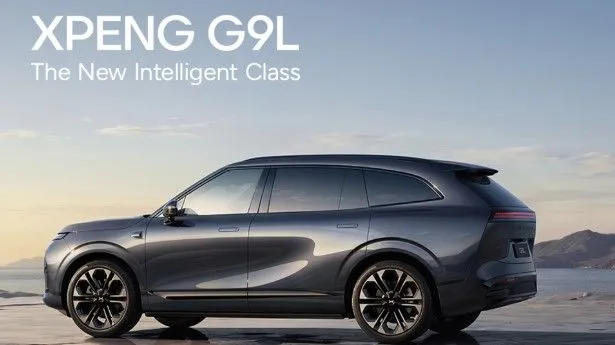
The XPeng G9L enters the market with a concept quite different from that of many large SUVs emerging in China. Rather than trying to maximize space by adding a third row of seats, XPeng has chosen to do the opposite: offering five seating positions and using all available space to enhance passenger comfort and trunk capacity.
This decision makes sense in a category where we are increasingly seeing more six- and seven-seater models. XPeng aims to target those who need a large car for family trips but don’t regularly need to transport six or seven people. To achieve this, it developed the G9L from the start as a five-seater model, rather than simply converting a six-seater SUV into one with five seats.
The result is a model that shares much of its technological foundation with the XPeng GX, but adopts a different tuning approach. The brand emphasizes a combination of space, comfort, and dynamic performance, which also has another interpretation: the G9L is designed as a global model, with Europe among its target markets.
A large five-seater with top-tier technology
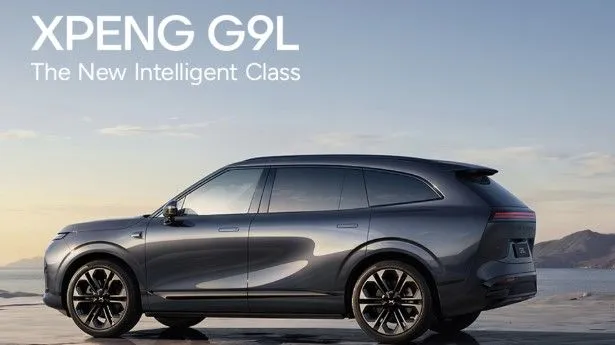
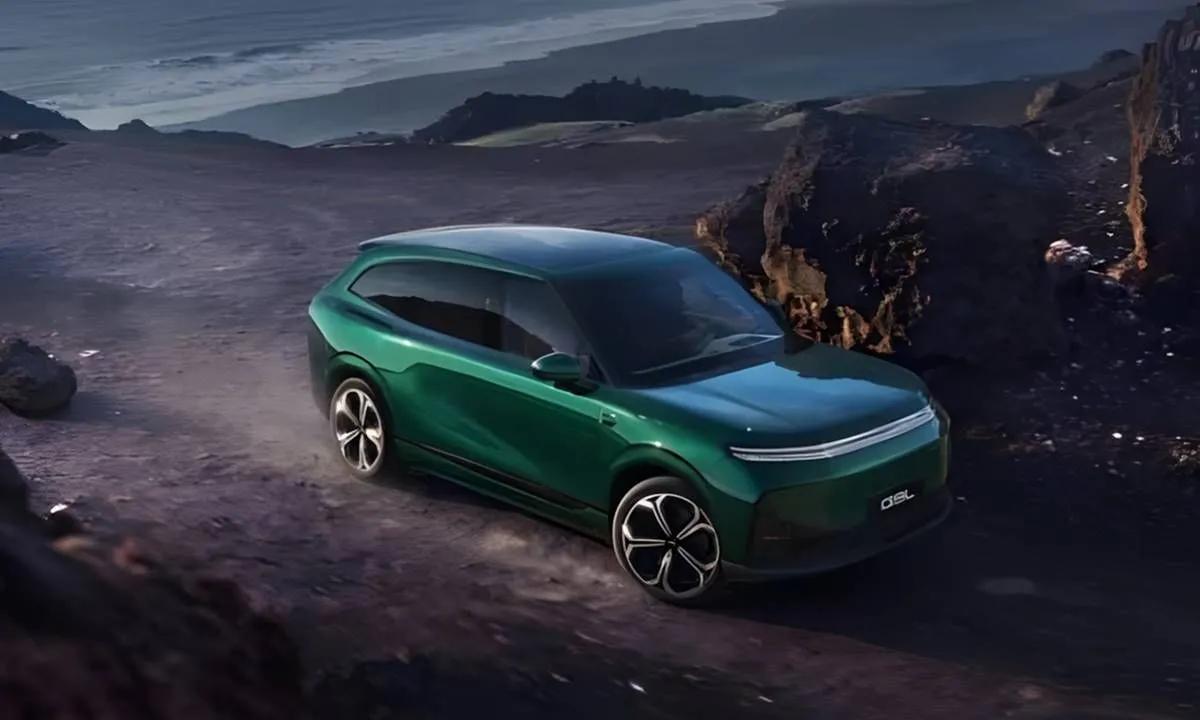
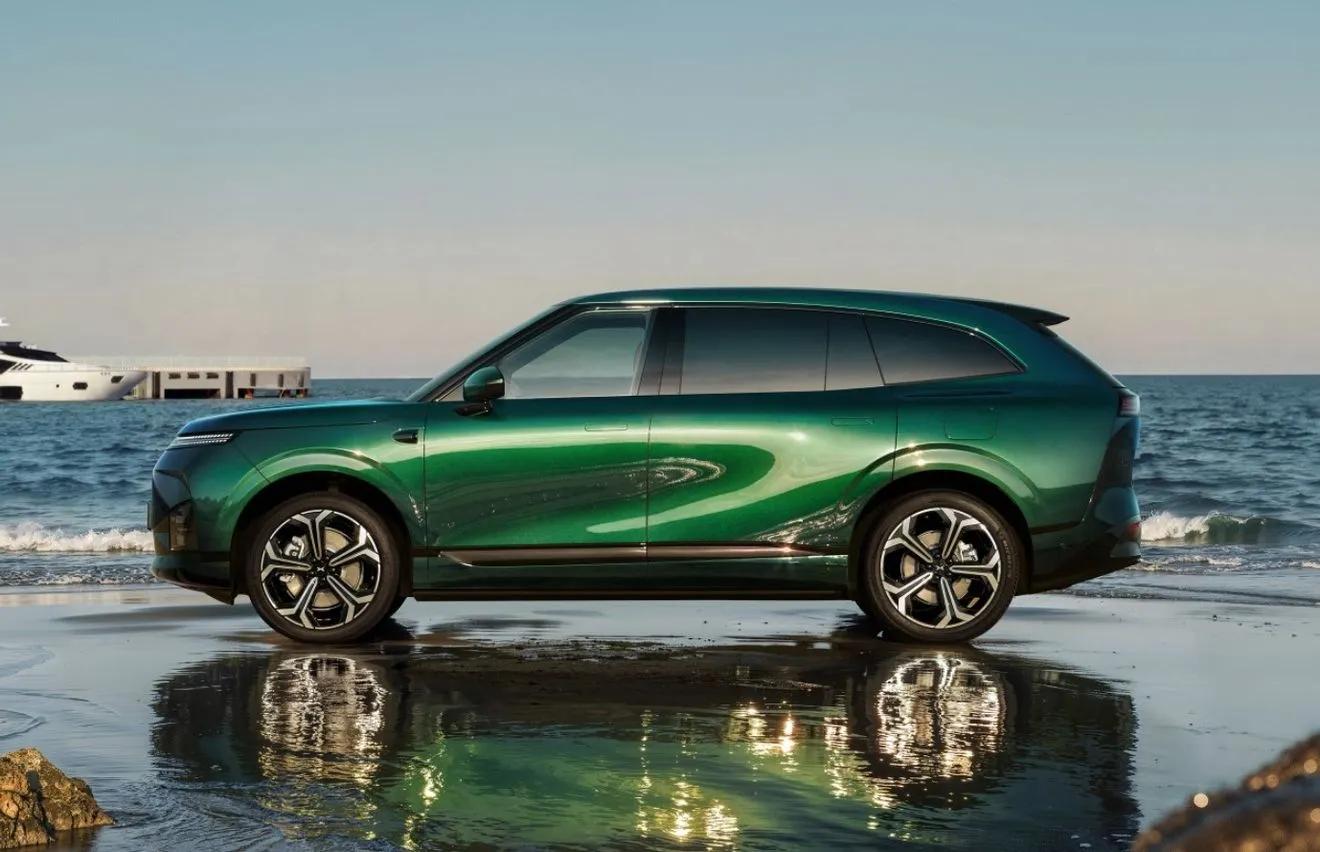
The difference from the XPeng GX starts with its proportions. The G9L is 5.12 meters long, 1.999 meters wide, and 1.782 meters high, with a wheelbase of 3.10 meters. These are substantial dimensions, but XPeng has utilized much of this space to create an especially spacious second row.
The brand claims a layout that combines the space of a six-seater vehicle with the advantages of a five-seater interior. There is enough room behind for tall passengers, and by eliminating the third row, the trunk capacity reaches 1,152 liters, plus an additional 230 liters in a lower compartment. This is a much more practical solution for those who use the car for long trips, vacations, or family outings and prefer having space for luggage over two extra seats.
The exterior design aims to convey the image of a large, tech-driven SUV, with a sloping roofline designed to prevent the proportions from appearing overly heavy. Among the most eye-catching features are the optical groups with digital projection and various exterior interaction functions, along with electric doors and other elements intended to enhance the sense of a high-end vehicle.
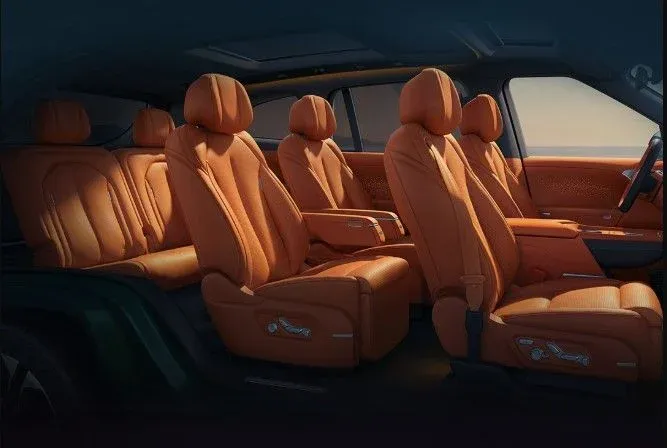
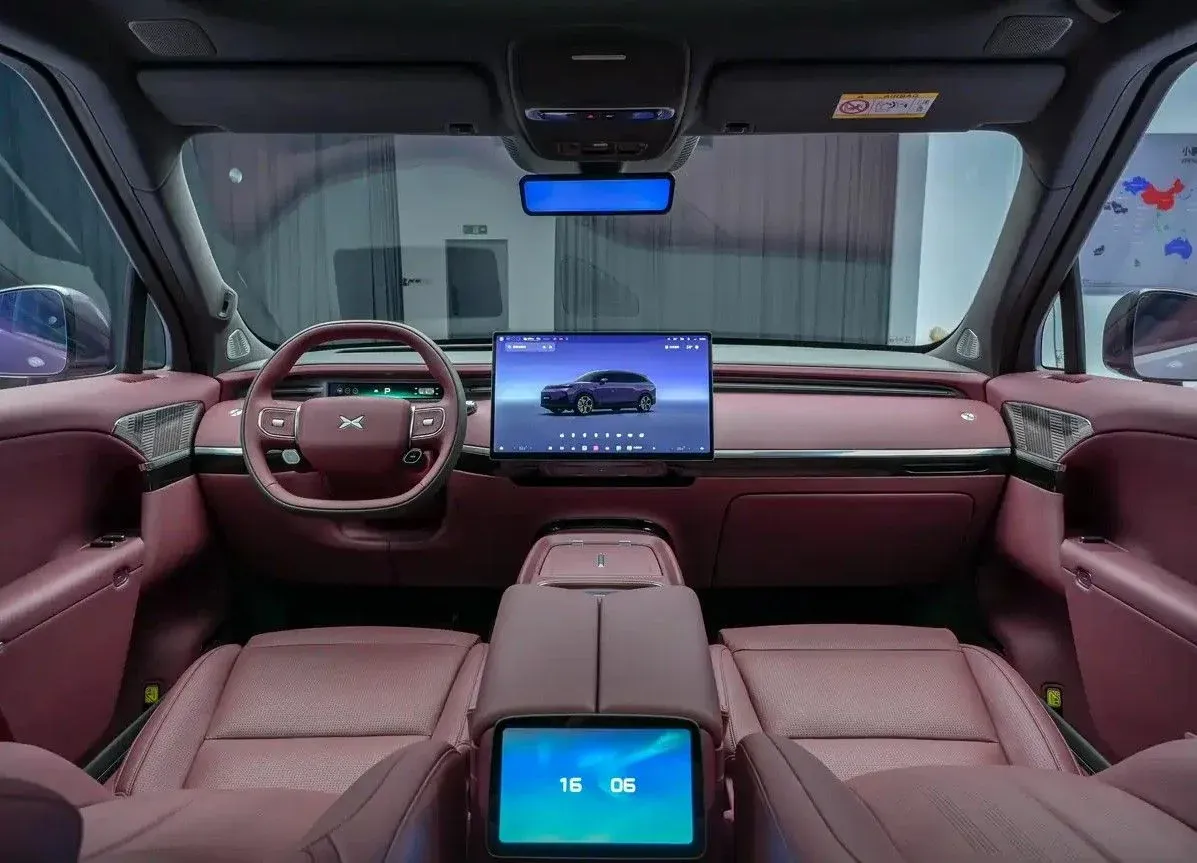
Inside, the G9L takes comfort even further. It can feature zero-gravity seats, heating, ventilation, massage functions, and electric adjustments, while the rear seats offer features designed for those who spend many hours on the road. It also comes with an advanced climate control system, a built-in refrigerator, and a 21.4-inch rear screen.
Technology plays a particularly important role here. The XPeng G9L can be equipped with up to three Turing AI chips, boasting a claimed computing power of 2,250 TOPS, in addition to XPeng’s second-generation VLA system. The Max version uses a Lite variant of the system, while higher trims come with the full configuration.
XPeng’s goal is for the car to be able to interpret increasingly complex traffic situations and use available information to adjust its behavior. Beyond the brand’s promises, what matters most for Europe will be seeing how this system performs on roads and under driving conditions different from those in the Chinese market.
But where the G9L tries to stand out particularly is in its chassis. All versions feature rear-wheel steering, along with a dual-chamber air suspension and variable-stiffness shock absorbers. The X-VMC dynamic control system coordinates steering, brakes, the engine, and the suspension to help keep the movements of a vehicle over five meters under control.
The rear-wheel drive configuration allows the turning radius to be reduced to 5.4 meters, a figure that is particularly impressive for an SUV of these dimensions. XPeng also claims that the model has exceeded 80 km/h in the deer test, while the most powerful version can accelerate from 0 to 100 km/h in 4.45 seconds.
In terms of mechanics, the G9L is available in two options. There’s the electric version, with rear-wheel drive and all-wheel drive configurations. The 702 Max model uses a rear-mounted motor with 270 kW of power, equivalent to 367 horsepower, generating 465 Nm of torque. The all-wheel drive variants feature two motors, delivering 430 kW of power, equivalent to 585 horsepower, with 695 Nm of torque.
The base electric version comes equipped with a 91.9 kWh battery and claims a CLTC range of 702 kilometers. Based on our estimates, this figure would be around 611 kilometers in a WLTP-equivalent cycle. The all-wheel drive version with the same battery boasts a CLTC range of 660 kilometers, which we estimate to be around 574 kilometers under WLTP conditions. Above that is the G9L 755, which uses a 110 kWh battery and achieves a CLTC range of 755 kilometers, estimated to be around 657 kilometers under WLTP conditions.
All of its electric vehicles use an 800-volt architecture with a 5C charging rate. XPeng claims they can regain up to 450 kilometers of range in just nine minutes, while fast charging from 10% to 80% takes around 11 minutes in the higher-capacity versions. This is one of the features that will make the biggest difference when the model arrives in Europe, especially for long trips.
The second option is the electric vehicle with extended range (EREV). In this case, the G9L uses a 63.3 kWh battery, which allows it to achieve 435 kilometers of CLTC electric range. According to our estimates, it would be around 378 kilometers in a WLTP-equivalent cycle. The announced combined range is up to 1,602 kilometers CLTC, around 1,394 kilometers according to our estimates, though this latter figure depends directly on driving conditions and how the system operates with the fuel tank.
The EREV system uses a 1.5 turbocharged internal combustion engine as an endurance extender, with 110 kW, equivalent to 150 horsepower. The all-wheel-drive version combines two electric motors that together deliver 370 kW, equivalent to 503 horsepower, with 695 Nm of torque. The 0 to 100 km/h acceleration is completed in 4.95 seconds.
The battery in the EREV model uses LFP chemistry and supports fast charging through an 800-volt architecture. XPeng claims it can recover around 300 kilometers of range in nine minutes. The fuel tank has a capacity of 60 liters, allowing this configuration to reduce reliance on charging networks in markets where the infrastructure still lacks the level of coverage found in China.
The decision to offer both technologies within the same model is not arbitrary. XPeng aims to use the G9L as one of its global products and believes that market differences make it advantageous to have both an electric version and a model with range extension.
The development has also been planned from the start with different markets in mind. XPeng claims that the G9L has accumulated 6.74 million kilometers of testing in 26 countries and regions over three years, exposing the vehicle to various weather conditions, road types, and usage scenarios. The brand further states that the model was developed with four major safety standards in mind and has undergone 192 crash tests.
This all leads to one obvious conclusion: the G9L is not merely a Chinese SUV modified later for sale outside its home market. XPeng’s strategy involves developing a single platform for different regions, with variations in drivetrain, steering, and propulsion systems to tailor the model to each country’s needs.
Europe is precisely one of the markets that can benefit most from this approach. The XPeng G9 has already shown there is demand for a large electric SUV from a Chinese brand in various European countries, and the G9L arrives with an even stronger focus on combining dynamic performance, spaciousness, and cutting-edge technology.
The positioning also differs in the Chinese market. There, the G9L starts at an extremely competitive price point compared to other large SUVs. In Europe, XPeng has historically positioned its products in a category closer to high-end brands, so it will be necessary to wait for the final prices to determine how much this strategy remains intact with the new model.
In China, the G9L was launched in six versions: four electric and two EREV. The rear-wheel-drive 702 Max starts at 29,300 euros, while the all-wheel-drive 660 Ultra SE is priced at 31,600 euros. Above those are the 660 Ultra at 35,400 euros and the 755 Ultra Flagship at 39,200 euros. The EREV versions start at 31,600 euros for the Ultra SE and go up to 37,900 euros for the Ultra Flagship.
These amounts refer only to the currency conversion of the prices listed in China and do not represent the price of the G9L when it arrives in Europe, where taxes, import costs, and the pricing strategy decided by XPeng must be taken into account.
The XPeng G9L thus has a fairly clear mission. It is not intended to simply be a replacement for the G9 or a two-seater version of the GX. It is a model developed from the start for those who want a very large SUV but prefer five seats, a huge trunk space, and driving dynamics closer to those of a conventional car.
The combination of up to 755 kilometers of CLTC range, an 800-volt architecture, 5C charging speed, and up to 450 kilometers of regenerative range in nine minutes puts the G9L in an interesting position on paper. The big question will be how well all of this translates to the European market, in terms of actual range as well as performance, price, and the functionality of its driving assistance systems.
XPeng has also decided that the G9L will have a global launch from the start. The international debut is scheduled to take place in Paris, with the company preparing production for Europe at Magna’s facility in Graz, Austria. If this strategy holds, it will be one of the models the brand uses to take another step forward in its international expansion.
