
7,500 electric cars per week: Due to soaring demand, Tesla boosts production at its German factory
11/09/2026 15:30
Updated to
11/09/2026 15:30
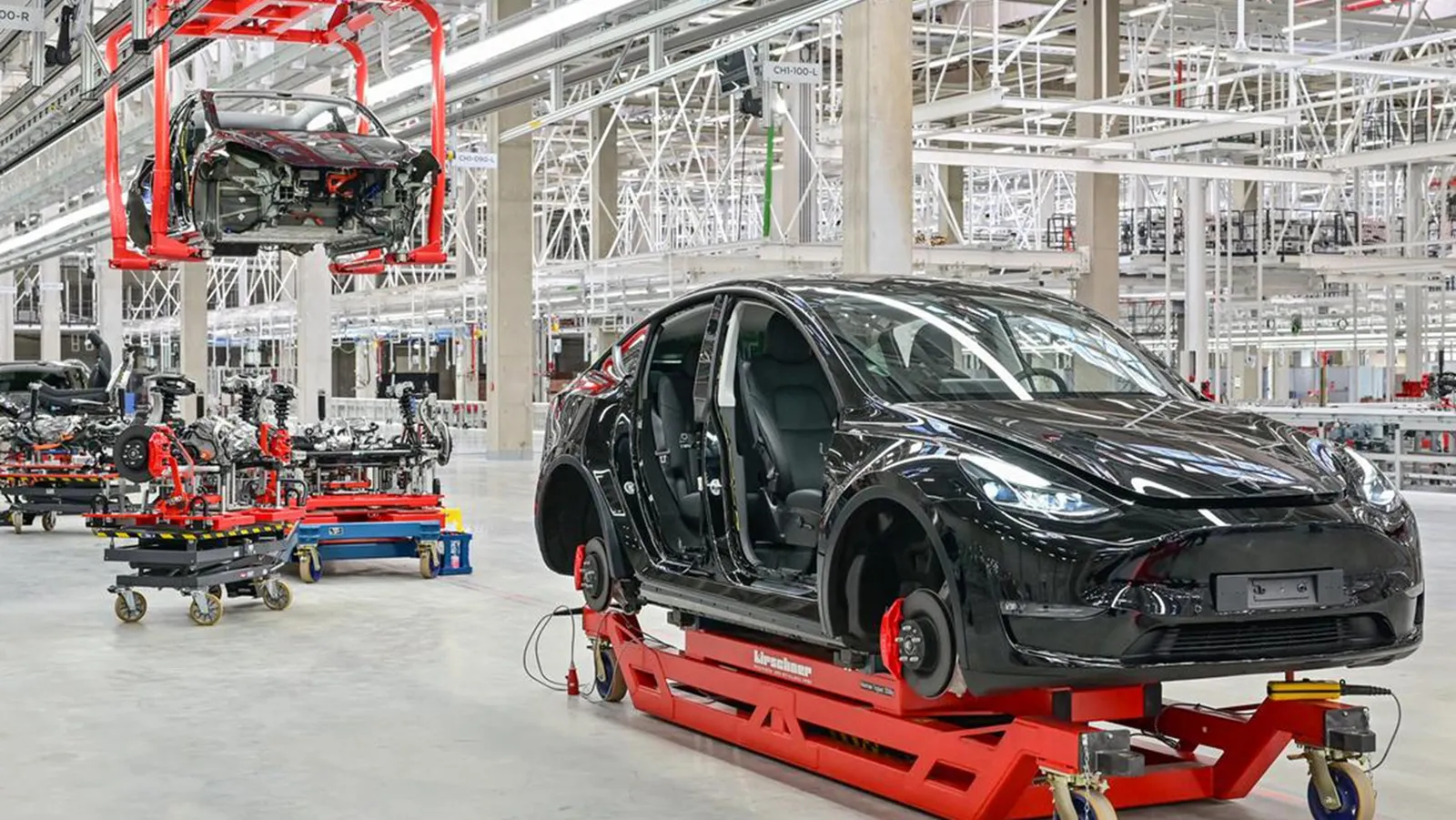
Tesla aims to produce significantly more electric cars in Europe. The American company is preparing another increase in production at its Gigafactory in Grünheide, near Berlin, where currently fewer than 6,500 vehicles leave the assembly lines each week. The next target has a set date: reaching 7,500 cars per week by mid-October.
This increase is driven by demand that Tesla considers high enough to keep accelerating production of the Tesla Model Y in Europe. The company had already announced in June that it would gradually raise production from around 5,000 to 7,500 cars per week. It first aimed to reach about 6,200 units before making the final jump scheduled for October.
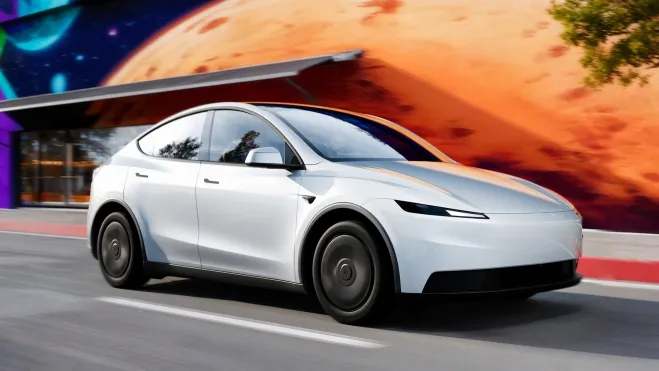
Tesla needs to produce about 1,000 more cars per week
The factory has not yet reached that second target. According to an internal Tesla document obtained by Handelsblatt, Grünheide currently produces less than 6,500 vehicles per week. To reach 7,500 units, it will need to add roughly another 1,000 cars per week at the current pace.
Tesla has decided to implement mandatory overtime on a temporary basis. The company and the works council have agreed to three such shifts in September. These will include a night shift on Friday, September 18, a morning shift on Saturday, September 19, and another night shift on Friday, September 25. Each of the three groups of factory workers will be required to work one of these additional shifts.
This measure affects all vehicle manufacturing and support functions, except for the Drive Unit, Battery, and Cell areas. Workers will receive a 35% bonus for these shifts, except those with a negative balance in their flexible hours account, who will use those hours to offset it.
The company is also significantly speeding up its production lines. The cycle time was supposed to go from approximately 80 seconds initially to 60, and eventually to around 45 seconds—a goal that, according to the latest reports, has already been largely achieved in most of the production. The current challenge is ensuring that this speed translates stably into the planned 7,500 units per week.
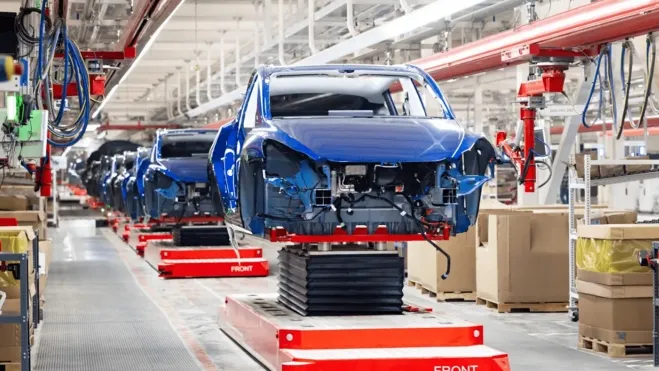
More workers to produce up to 375,000 Model Ys per year
Tesla is also expanding its workforce. For the first expansion, raising production from approximately 5,000 to 6,200 vehicles per week, it hired 1,000 additional workers. The next phase involves hiring another 1,000 employees starting in September to reach 7,500 units per week. Including positions related to cell manufacturing, the company has mentioned as many as 3,500 new jobs.
Sustaining a production rate of 7,500 vehicles per week for 50 weeks would equate to around 375,000 electric cars per year. Grünheide is currently Tesla’s only automobile factory in Europe and, since its opening in March 2022, it has produced exclusively the Model Y for European markets and certain exports. However, announcing such a production pace does not necessarily mean it will be maintained throughout the year.
The expansion comes at a time when Tesla is taking advantage of Germany’s new subsidy program for electric cars. As of September 1, 52,473 applications had been approved, with Tesla ranking second among manufacturers that received benefits, with 8,141 cars, just behind Volkswagen with 11,680.