
70,000 m3 of water at a temperature of 80-90ºC: this is the idea Denmark has come up with to store 3,300,000 kWh of renewable energy
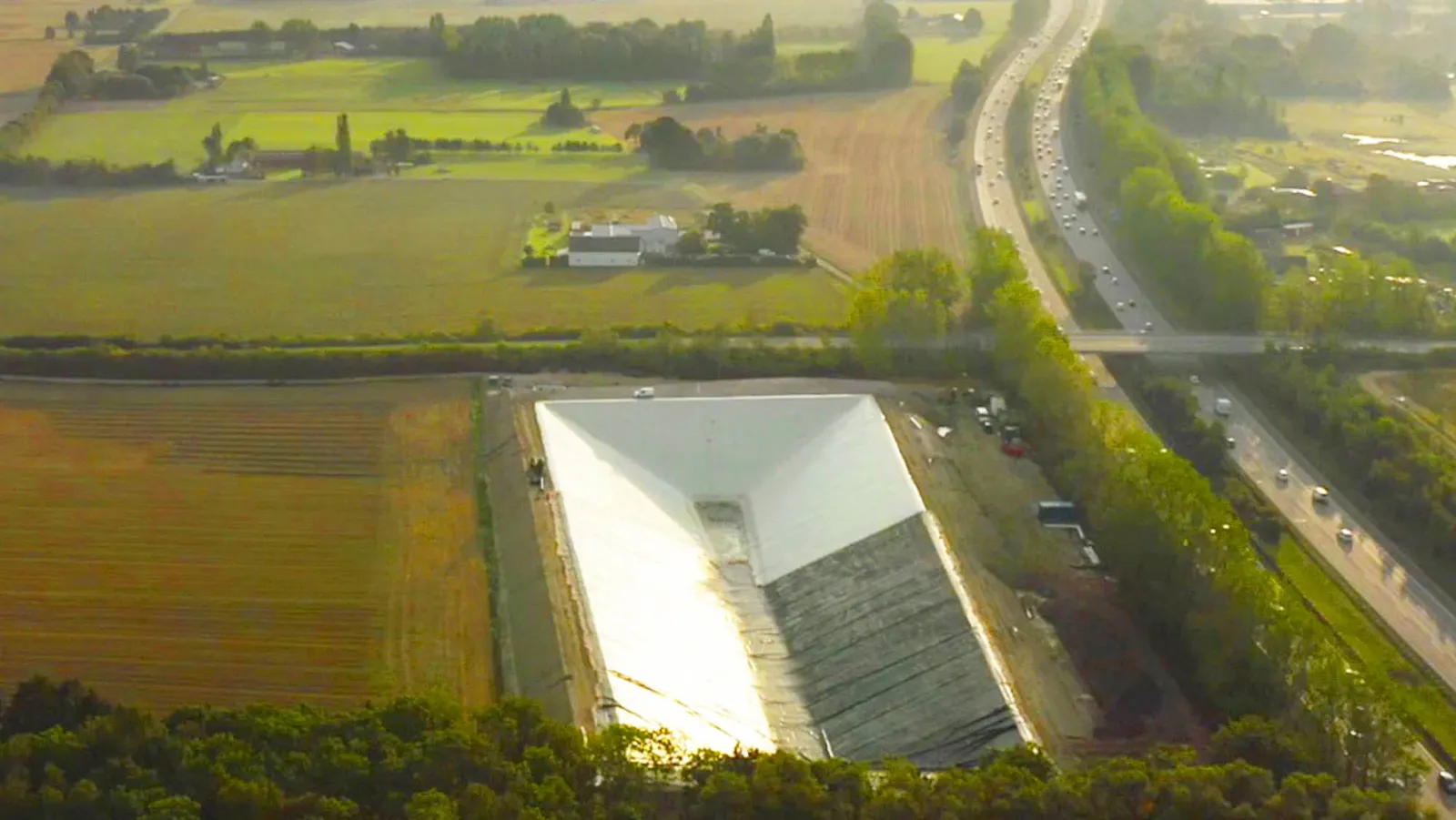
Denmark has taken the lead in a technology that remains largely unseen outside the energy sector: the so-called groplager, large thermal storage pits filled with hot water.
These pits can store energy from waste heat, solar energy, or excess electricity, with the aim of decoupling production from consumption and shifting the availability of heat to when it is most useful or cheapest.
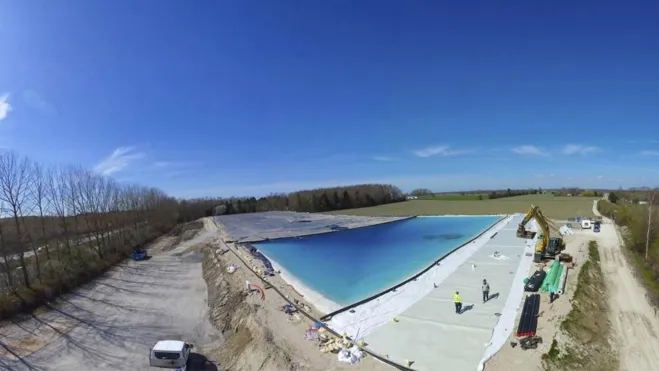
Denmark’s massive storage pit for heating
The most representative example is found in Høje Taastrup, a town located northeast of Copenhagen. There, a thermal storage facility with 70,000 cubic meters of hot water and a storage capacity of 3,300 MWh is in operation.
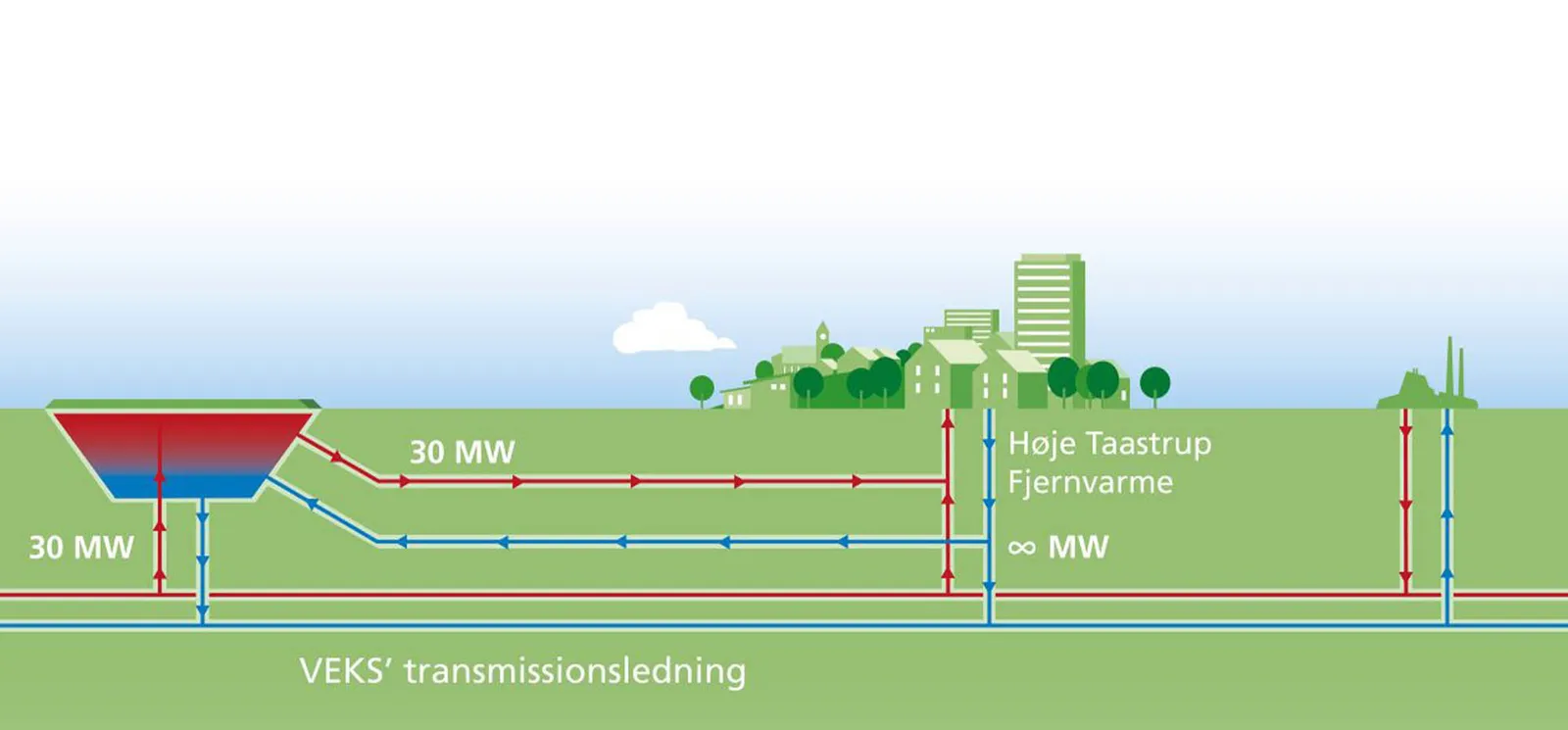
It is not connected to a specific heat source but rather to the main distribution pipeline of the capital’s urban heating network, allowing excess heat accumulated in that pipeline to be stored and used later when other heating options are more expensive.
The logic of the system is simple: when electricity is cheap, district heating companies can operate electric boilers or heat pumps to produce hot water, and the excess is stored in the reservoir. Later, when energy prices rise, the stored heat is released back into the network.
That energy can also come from solar heat, waste heat, or excess wind and solar electricity used to power heat pumps or electric boilers. At the Høje Taastrup storage facility, the water temperature ranges around 80-90 degrees.
Aalborg CSP, a company specializing in developing integrated energy solutions based on thermal storage, claims that this technology provides flexibility for heating companies by allowing them to store thermal energy when electricity prices are low and use it when prices rise.
The company designs and delivers turnkey solutions for integrated energy systems, relying on large heat pumps and thermal storage. In practice, the groplager functions as a thermal battery that helps balance supply and demand within the urban grid.
The main technical challenge lies in the cover of the reservoir. Aalborg CSP has patented two solutions for this “lid,” which functions as an insulating barrier. It is an open structure designed to allow steam to rise through the insulated system, and it is divided into sections to withstand rain and snow that accumulate on the surface. In the case of Høje Taastrup, this upper layer covers 11,000 square meters and is divided into 10 sections, each with a pumping well to remove water from the cover. The company claims that this design significantly reduces heat loss as well as operating costs.
The operation of the pit has also broken the traditional pattern of these storage facilities, which for decades were designed to be filled in summer and emptied in winter. In Høje Taastrup, operators carry out about 30 cycles per year—a frequency that improves investment profitability and reduces heat losses, as water stays inside the tank for less time. The company itself claims that the more loading and unloading cycles there are, the faster the infrastructure is amortized.
The next step being explored by Aalborg CSP is to install solar panels on the roof of the pit. The idea is to give the land a dual purpose: storing heat on one hand and generating electricity on the other. This proposal aligns with a broader vision of efficient energy infrastructure, where the same surface serves multiple functions and reduces pressure on available land.
Sweden is interested in this technology
Chris Bales, a professor of energy engineering at Dalarna University, recalls that according to a study conducted together with Halmstad University, more than 200 Swedish cities have favorable geological conditions for large-scale heat storage.
He adds that the vast majority of the country’s urban heating networks have areas suitable for heat storage at a reasonable distance from the network, although many are too small for the project to be profitable. In such cases, he says, it may be more appropriate to use an accumulator tank. He also notes that if a groplager is available, it’s easier to connect other heat sources, such as waste heat from local industries.