
654 km of range and a fuel consumption of 6.89 kWh/100 km: this is the Volkswagen Mission Efficiency
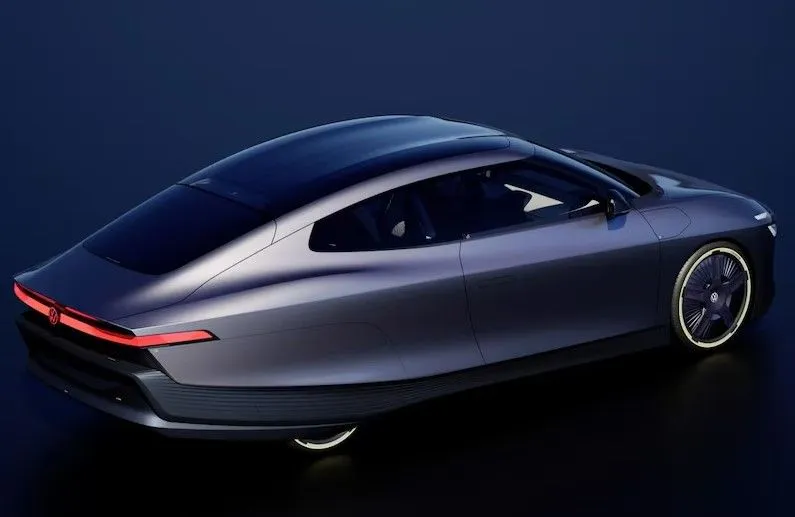
Volkswagen has revived one of its most unique obsessions to show that in an electric car, it’s not all about installing ever-larger batteries. The new Volkswagen Mission Efficiency is a four-seater prototype developed on the technical basis of the future ID. Polo, which pushes aerodynamics to an unusually extreme level and has achieved fuel consumption figures that, at least on paper, are astonishing.
The concept inevitably reminds one of the Volkswagen XL1, though this time the German brand applies that philosophy to an electric car. The goal is not merely to create a design showcase for an auto show, but also to demonstrate how much consumption can be reduced using technology that largely comes from production models. In fact, Volkswagen has taken the Mission Efficiency from its development center in Wolfsburg to Vienna to see what happens when it moves beyond the laboratory and onto the road.
The journey, spanning 1,278.36 kilometers, passed through Germany, Poland, and the Czech Republic before reaching Austria’s capital. The average speed was 67.72 km/h, with a top speed of 138 km/h, and the recorded fuel consumption was 6.89 kWh/100 km, excluding losses during charging. Including those losses, the figure rose to 7.51 kWh/100 km. This figure is particularly noteworthy because only one charge was needed throughout the entire trip.
Upon arriving in Vienna, the onboard computer still showed a remaining range of 164 kilometers. Volkswagen has also conducted an even more favorable test under ideal conditions, where the Mission Efficiency model managed to reduce fuel consumption to 6.48 kWh/100 km by traveling at a constant speed of 68 km/h, on flat terrain with systems like the air conditioner turned off.
Aerodynamics taken to the extreme based on the ID. Polo
The key to this achievement lies in a body design that differs greatly from that of a conventional car. The Volkswagen Mission Efficiency features a distinctive teardrop shape designed to allow air to flow away from the body in the most efficient manner possible. The roof slopes gradually toward the rear, and the body also narrows as it moves backward.
The result is an aerodynamic coefficient of 0.158, a figure Volkswagen claims is a record among cars approved for road use. The brand has also worked on seemingly minor details that have a cumulative effect, such as door handles integrated into the body, partially covered rear wheels, and front air inlets that can open or close actively.
The Mission Efficiency is also considerably longer and lower than the ID. Polo it is based on. Volkswagen reduced its height by 14 centimeters and increased its length by 72 centimeters to achieve this distinctive silhouette. The rear axle width was also reduced by 17 centimeters, a solution that helps narrow the rear section and improve air flow.
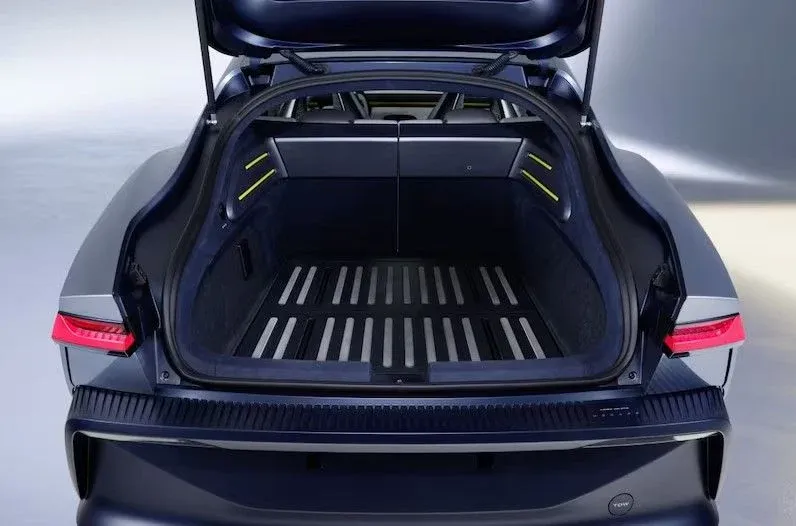
There is an obvious trade-off. The steep roof means the two rear seats are not suitable for people over 1.60 meters tall. In other words, this is more of a 2+2 vehicle rather than a traditional family car. On the positive side, the trunk capacity is surprisingly high at 481 liters, showing that Volkswagen didn’t just aim to reduce the vehicle’s size to turn it into a kind of wheeled laboratory.
The concept also serves as a tribute to the XL1. That model, initially presented as a prototype and later produced in a very limited series, pushed efficiency to even greater extremes by making significant sacrifices for its occupants. The Mission Efficiency aims to do something different: maintain an extremely aerodynamic body but with four seats and a considerably higher level of practicality.
Beneath that body lies technology from the MEB+ architecture, the same platform used for models like the ID. Polo and the ID. Cross. Volkswagen uses front-wheel drive and an electric motor with 135 horsepower in this model, demonstrating that achieving extremely low fuel consumption doesn’t require particularly high power figures.
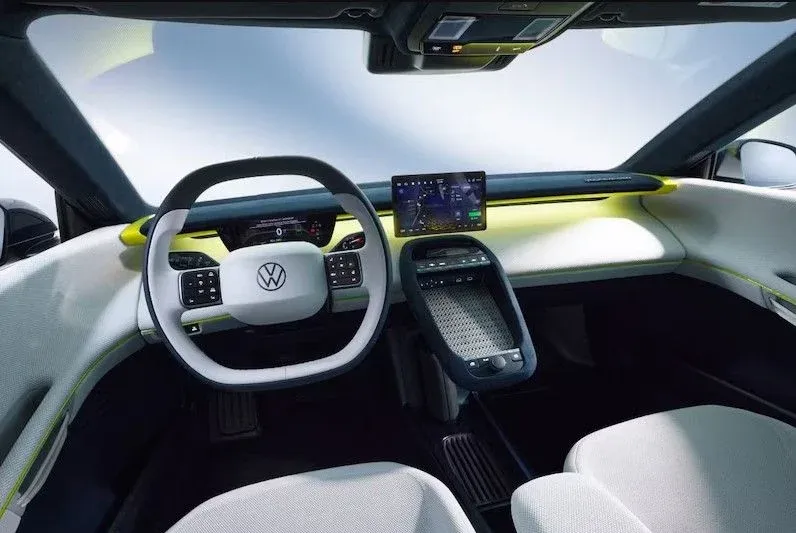
The battery has a net capacity of 54.9 kWh and is of the NMC type. Volkswagen claims a range of 654 kilometers for the prototype, though the more interesting figure isn’t so much that distance as rather the number of kilometers achievable per kWh. The journey from Wolfsburg to Vienna itself shows that a relatively small battery can provide very high range when consumption remains at such low levels.
This is precisely one of the most interesting insights from the project. A 100 kWh battery provides excellent range, but it also adds weight, cost, and energy consumption. The Mission Efficiency aims to take the opposite approach: first reducing the energy needed to move the car, and then determining the appropriate battery size.
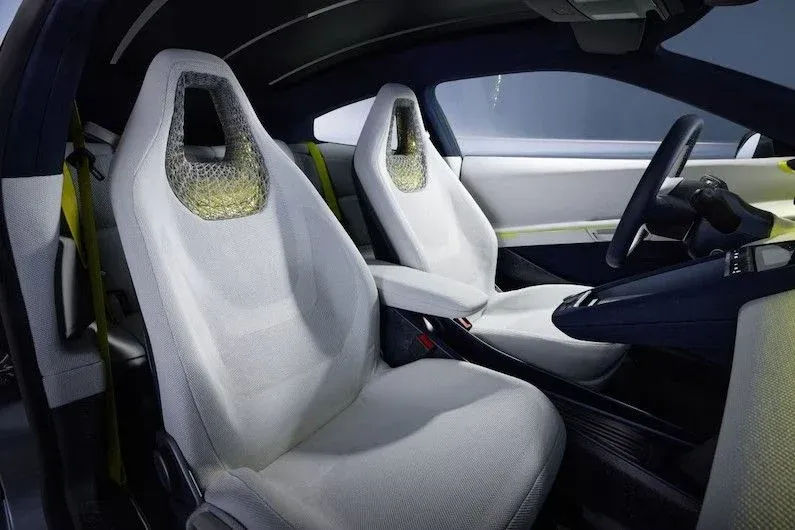
The prototype also features solar cells on the roof to power the vehicle’s electrical system. The installed capacity reaches 370 W, a figure that obviously isn’t enough on its own to move the car, but it can help supply certain systems and slightly reduce the energy that needs to come from the battery.
Another notable feature is the partially electric braking system. A conventional hydraulic system is used on the front axle, while an electromechanical system is employed on the rear. In addition to reducing weight and taking up less space, this solution allows for more precise control over braking distribution and can be combined with energy recovery.
The result is a car that, in theory, achieves something much more interesting than simply boasting about range figures. Volkswagen is demonstrating that efficiency can be an alternative to installing huge batteries. And this has direct implications for the brand’s future electric vehicles.
Opinion: A Waste of Time?
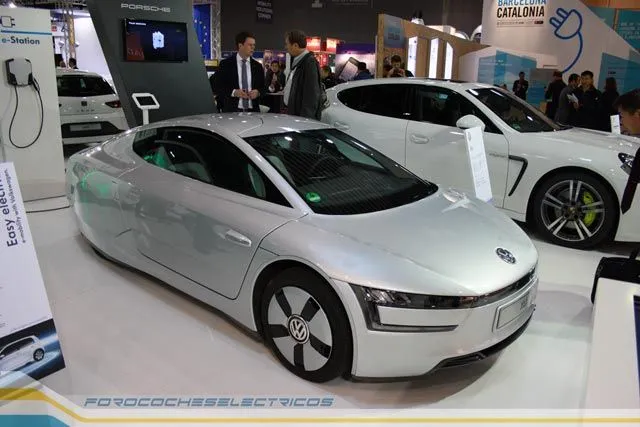
Nevertheless, the Mission Efficiency will not make it to market, unlike the XL1. It will serve as a learning exercise to apply its concepts to production models. And that’s where the project begins to make sense. Volkswagen can utilize the aerodynamic solutions, materials, thermal management, regenerative braking, and other features in much more conventional vehicles.
After all, everyone knows less is more. Less weight and reduced aerodynamic drag mean greater range. But typically manufacturers do not apply this principle to their SUV-style or similar models.
Efficiency must be one of the priorities, and that’s what Volkswagen shows us with a project we expected more from—something like a commercially viable and more “normal” designed model. Instead, it ended up being just another concept car that will offer little practical value. It’s a waste of time and resources at a critical moment for the European group, which is also dealing with plant closures and layoffs of hundreds of thousands of workers due to falling sales.