
5,600,000,000 euros per year: Toyota is hiring an army of 400,000 workers for its factories capable of working day and night.
23/09/2026 13:30
Updated to
23/09/2026 13:30
When an automobile factory relies on its most experienced workers for decades, the biggest risk isn’t competition but losing that knowledge when those employees retire. Toyota has decided to tackle this issue with a move of unusual scale in the industry: deploying 400,000 humanoid robots developed in-house at its manufacturing plants around the world starting in 2028.
The announcement puts Toyota far ahead of any competitor in terms of the scale of this project. It even surpasses Tesla and its Optimus robots, which were supposed to be operational by 2025 but have yet to show any signs of activity. The company plans to invest 1 trillion yen annually, roughly 55.83 million euros, specifically to automate its factories as they are upgraded or rebuilt.
Robot distribution between the headquarters and the rest of the group
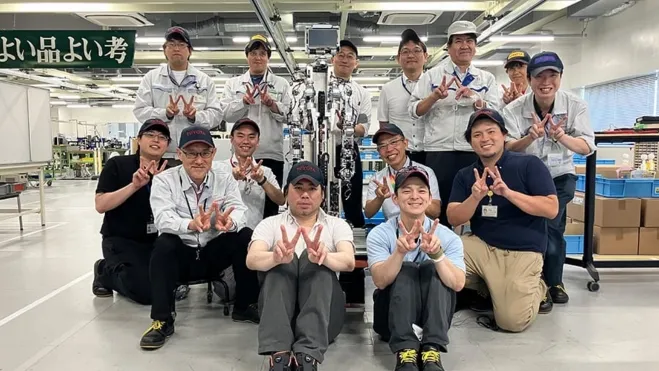
Of the total 400,000 units planned, Toyota will deploy 150,000 robots in its own factories, while the remaining 250,000 will be distributed across the group’s 60 production facilities worldwide. The installation of these robots will be timed with the factory renovations, the introduction of new car models, and capacity expansions, rather than replacing machines that are still in use.
ELEY, the robot that learns by observing workers
The robot protagonist of this deployment is named ELEY, which stands for "embodied learning robot for performance improvement" in English. It is a battery-powered platform with wheels instead of legs, weighing around 50 kilograms. Rather than having a fully humanoid hand, ELEY uses a two-fingered gripper—a choice that prioritizes proven reliability over the bipedal approach adopted by other robot manufacturers such as Tesla or Figure for their own robots.
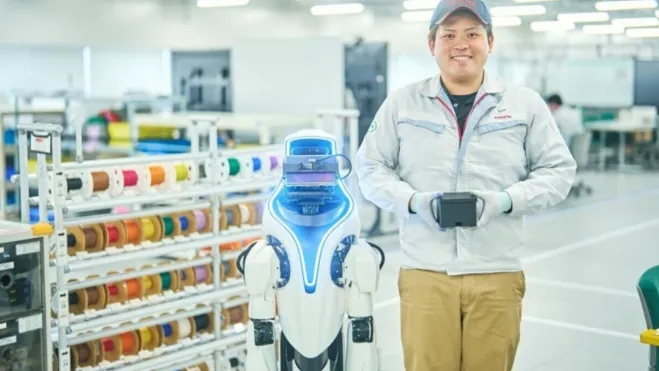
According to available information, ELEY is capable of performing tasks such as removing components from boxes and placing them where needed, or folding fabrics. These are basic functions. Currently, the robot is going through a learning process that includes observing the movements and tasks of workers on production lines.
Capturing the knowledge of 18,000 master craftsmen
Toyota’s workforce currently includes 18,000 experienced workers known as “takumi,” whose expertise the company aims to capture as training data before they retire. Toyota will centralize this learned data to program new robots, with the goal of creating an environment in the future where the robots themselves train newly hired employees while continuing to learn from existing workers.
Coexistence, not replacement, according to the company itself
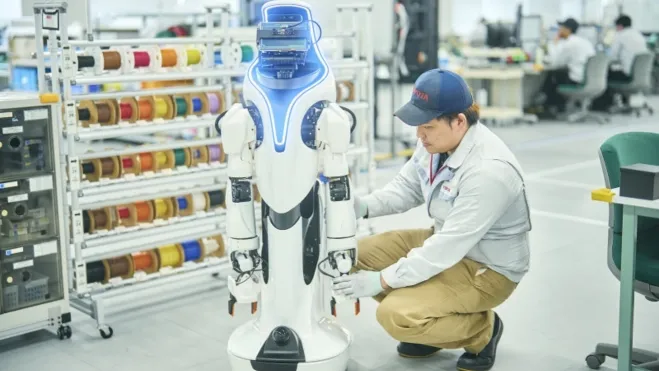
The company has made its intention clear with these words: "Robots are not designed to replace humans, but to coexist with them." Executive Vice President Hiroki Nakajima echoed this view, stating that the goal is to achieve "a world where robots coexist with humans, rather than replacing them."
It should be noted that the investment figure covers both humanoid and non-humanoid machines, including the replacement of existing equipment, and that Toyota has not definitively confirmed whether the investment will indeed take place or for how many years it will be sustained. The deployment will also rely on the infrastructure that Toyota has built over decades in its factories, rather than starting from scratch.