
500 km on the highway in an electric Renault Twingo with two charges — it’s possible! But…
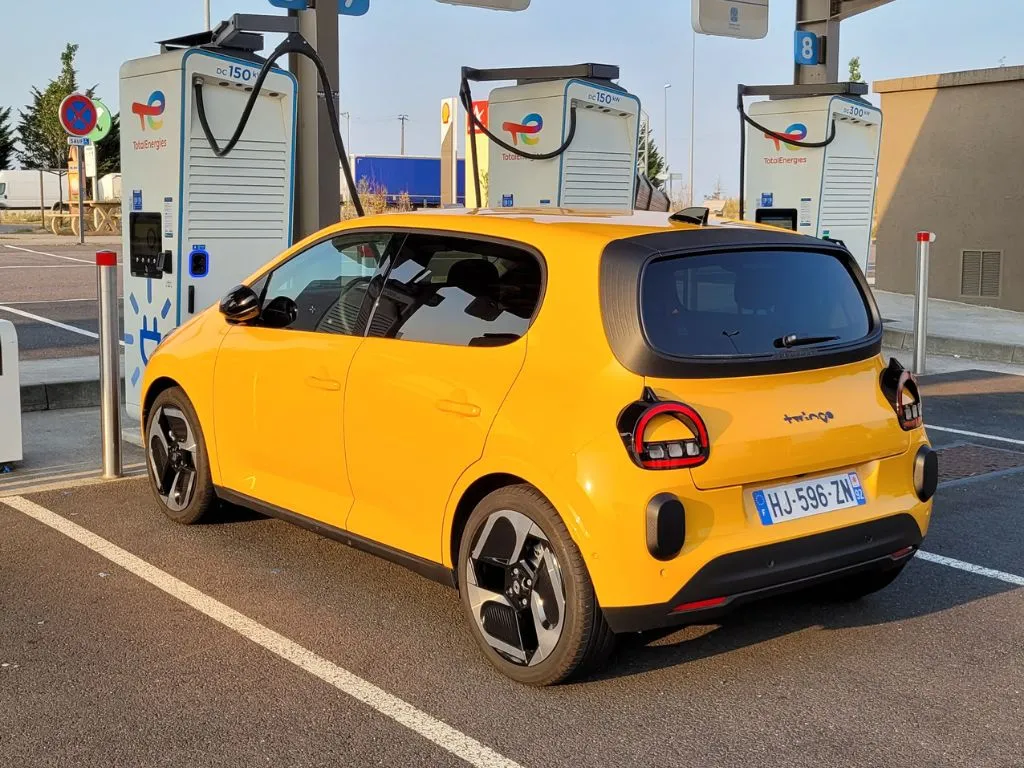
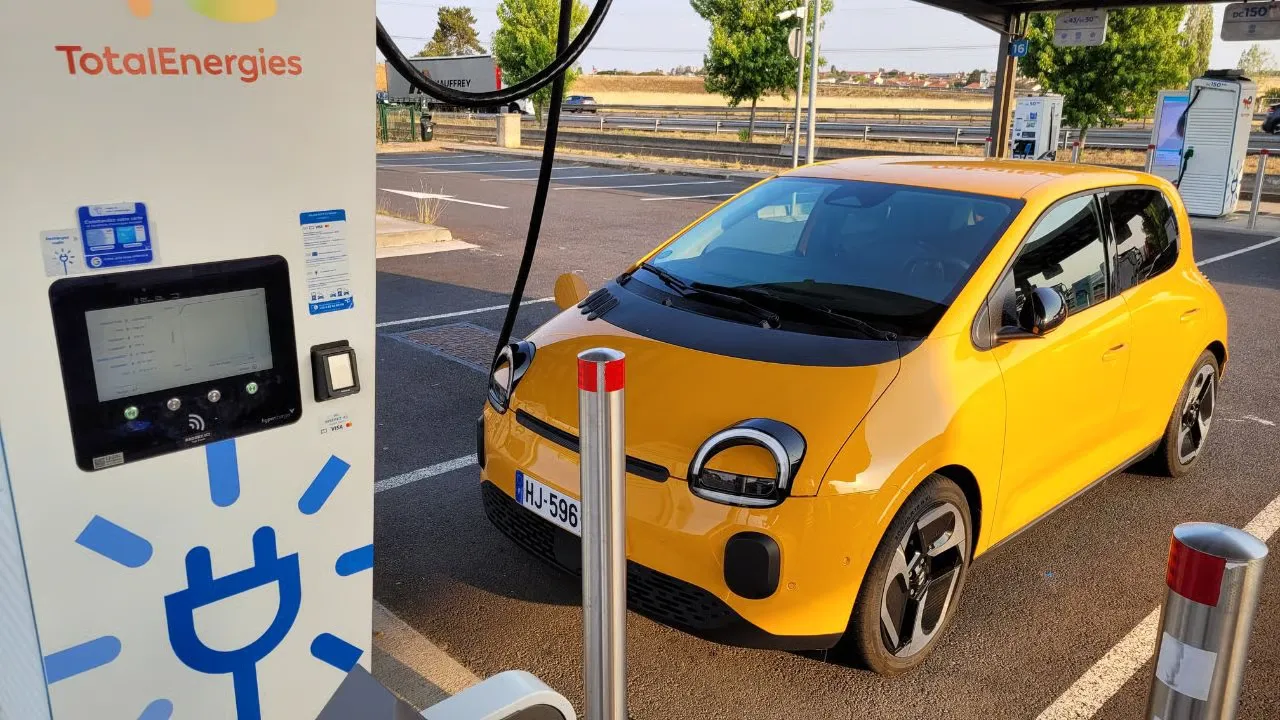
Can an electric car with only 27.5 kWh of air-cooled battery seriously consider a 500 km trip on the highway? To test our Renault Twingo after a month of use, we drove from Strasbourg to Boulogne-Billancourt via the A4 without using any route planner. But with a few compromises.
After a full month that was both enjoyable and productive driving the Renault Twingo, it’s time to take it back to the brand’s headquarters in Boulogne-Billancourt from our location in Strasbourg. We had ample time to test this compact city car on secondary roads before bringing it back to the Grand Est region, with results that were quite surprising. Then we tested it in urban areas where it naturally shone in its natural environment, but there was one final challenge left—the highway, the farthest from its comfort zone. Please play the sound effect of thunder.
Also read
Lunch in Paris, dinner in Strasbourg: 500 km on a single charge with the Renault Twingo electric
Can one safely travel on major roads in an electric car with less than 30 kWh of battery? Just a few years ago, it was undeniable that certain gaps between charging points made such trips dangerous, even suicidal. However, the density of the charging network has increased so much that it’s now a routine affair. Take the A4 highway, for example—connecting the capital of Alsace to that of France—it has as many as 36 rest areas, 12 of which include charging stations (along with equal numbers of gas stations to keep those still using internal combustion engines from getting jealous). These charging points are spread almost evenly, with minimum and maximum distances between them being 29 and 56 kilometers respectively. Even a well-tired Citroën C-Zero could thus make short trips all the way to the Eiffel Tower.
Eiffel. Thus, the task has shifted from impossible to complicated, and then from complicated to easy going forward.Easy, certainly, but at what cost compared to electric cars with larger batteries? Some concessions are necessary. We already know that frequent charging will be required, and the time cost will be significant. The Twingo’s built-in route planner shows 7 hours and 43 minutes to reach the destination, including four charges—the first one lasting 41 minutes after just 127 km. But is a route planner still needed on French highways in 2026? No, not with the current density of charging stations and especially thanks to the excellent signage, which always indicates the distance to the next station as you approach it. Check the remaining range on the dashboard; if it’s low, pull over at the nearest service area, otherwise continue to the next one.
Chained. Simple, right?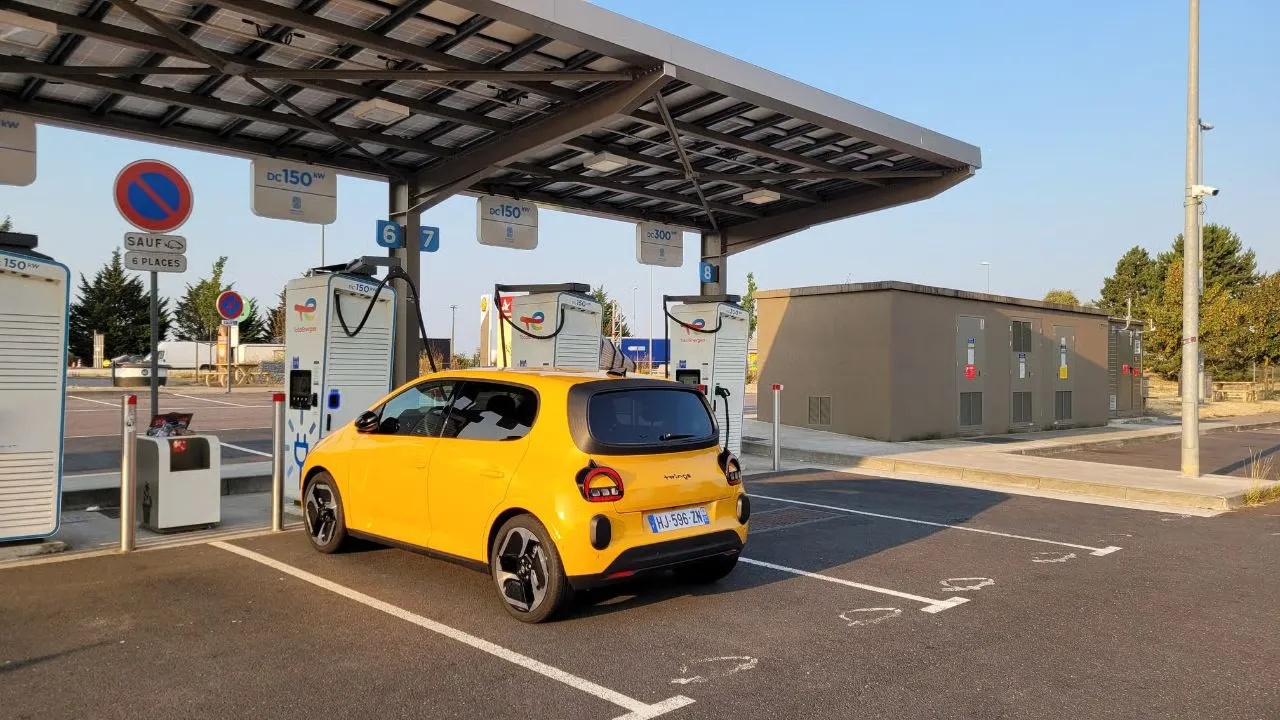
So, without any preparation for this electric trip, we set off on the A4 heading due west at 5:22 a.m., with the adaptive cruise control set at 110 km/h. At this speed, the Renault Twingo performs excellently, offering lateral wind resistance handling and sound comfort befitting a higher-class model. The kilometers flew by, and we approached the Longeville-lès-Saint-Avold Nord service area, where the route planner indicated our first stop. With 35% of charge remaining, we continued driving. Then the Metz-Saint-Privat service area came into view; the next one, Verdun – Saint-Nicolas Nord, was 42 km away. The dashboard showed 10% battery level and 22 km of range left, so it was time to stop for the first charge. We covered 177 km with an average consumption of 12.3 kWh per 100 km. Exactly 28 minutes and 15 seconds passed by then.
It was necessary to charge to 80% before we could continue on our journey.At the Reims Champagne Nord service area, the next one, Geux, is 30 km away. With 17% battery remaining, the 38 km range indicated would be sufficient to reach it, but we decided to charge earlier to accommodate the driver’s need to use the restroom. We traveled 319.7 km at an average of 12.7 kWh per 100 km. It took 19 minutes and 18 seconds to reach 66% before charging stopped unexpectedly. Once charging resumed, it took another 10 minutes and 27 seconds to reach 80%.
According to the data from the instrumentation, everything suggests that a third charge will be necessary, as there is only 20 km of range left to reach the destination. But this calculation is based on the highway speed we maintained so far, and we are well aware of what will happen from Noisy-le-Grand onward, along the A86 and N118 to Pont de Sèvres: at best, heavy traffic; at worst, endless congestion. So whether it’s one or the other or a combination of both, the cruising speed will result in the Twingo’s fuel consumption being in the single digits. And that’s how we arrived at our destination with 3% battery remaining and 8 km of range left. It’s 12:53, and we have covered 502.7 km with an average fuel consumption of 12.0 kWh/100 km.
The “buts”
We already know that the “but” in the title refers to the longer charging time required by the Twingo with its 27.5 kWh battery, even though it doesn’t need as many stops on this route as a Hyundai i10 or a Nissan Micra with nearly 50 kWh of capacity. The best electric cars in this test at 110 km/h would likely have completed the journey in one go, thus eliminating the total charging time, while most others require only a single charge, which cuts the downtime in half.
Also read
Breakfast in Bordeaux, dinner in Strasbourg: 1,000 km in an electric Nissan Micra without planning
Prioritizing the optimization of charging stops to minimize their number also means you cannot choose a charging network that might be more expensive than another for which you have a subscription card. You must also accept possible delays if the station is crowded, as you won’t have a way to proceed to the next charging area. However, experience shows that aside from peak summer times and contrary to what is shown on television, this rarely happens.
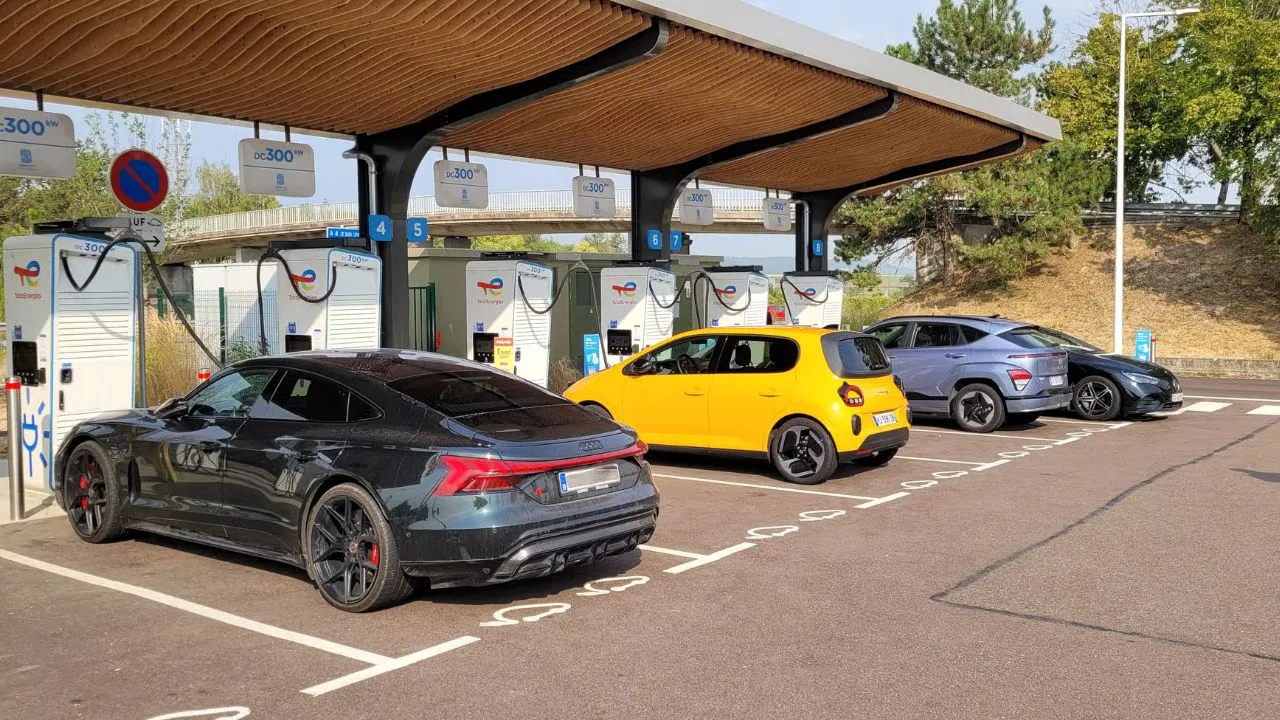
Finally, there are two reasons why we have adopted a cruising speed of 110 km/h: to reduce consumption, obviously, but also to prevent overheating of the air-cooled battery caused by multiple rapid charges within a short period, which prolongs charging time. Is this a real problem? Not according to me, whose advanced age has allowed me to extensively test each generation of previous Twingo models: none of the three offer comfort, handling, brakes, or performance that would enable safe travel at 130 km/h for 500 kilometers.
How much did it cost?
Already 44.70 euros in tolls. The two top-ups made accidentally on the TotalEnergies network cost 13.40 euros and 11 euros respectively (9.10 + 2.90) when paid with the Chargemap card. Add the 5.35 euros that Renault will need to pay to restore its initial 100% charge level (assuming the Renault brand charges 0.20 euros per kWh in July 2026) once the Twingo is returned, and you get a total of 30.75 euros in electricity costs, which is 6.12 euros per 100 km.