
500 km of range in 5 minutes: we’ve discovered the future of electric charging!
Chery recently invited us to their headquarters in China to discuss technology and automotive topics. It was an opportunity to drive the Omoda 4 hybrid ahead of its release, as well as to go on a road trip across China. Automobile Propre also took the chance to explore the new innovations presented at the group’s annual global summit. The most impressive feature was the Volt-Dragon Charging system, capable of delivering up to 1.44 MW (more precisely, 800 kW continuously, with up to 1.44 MW for 45 seconds). We also saw a robotic arm that automatically connects cars, as well as the Energy Cube 2.0, an energy storage solution designed for consumers. Beyond cars, Chery is developing a full ecosystem around electric mobility and energy.
Chery Volt-Dragon Charging: up to 1.44 MW to cover 500 km in 5 minutes
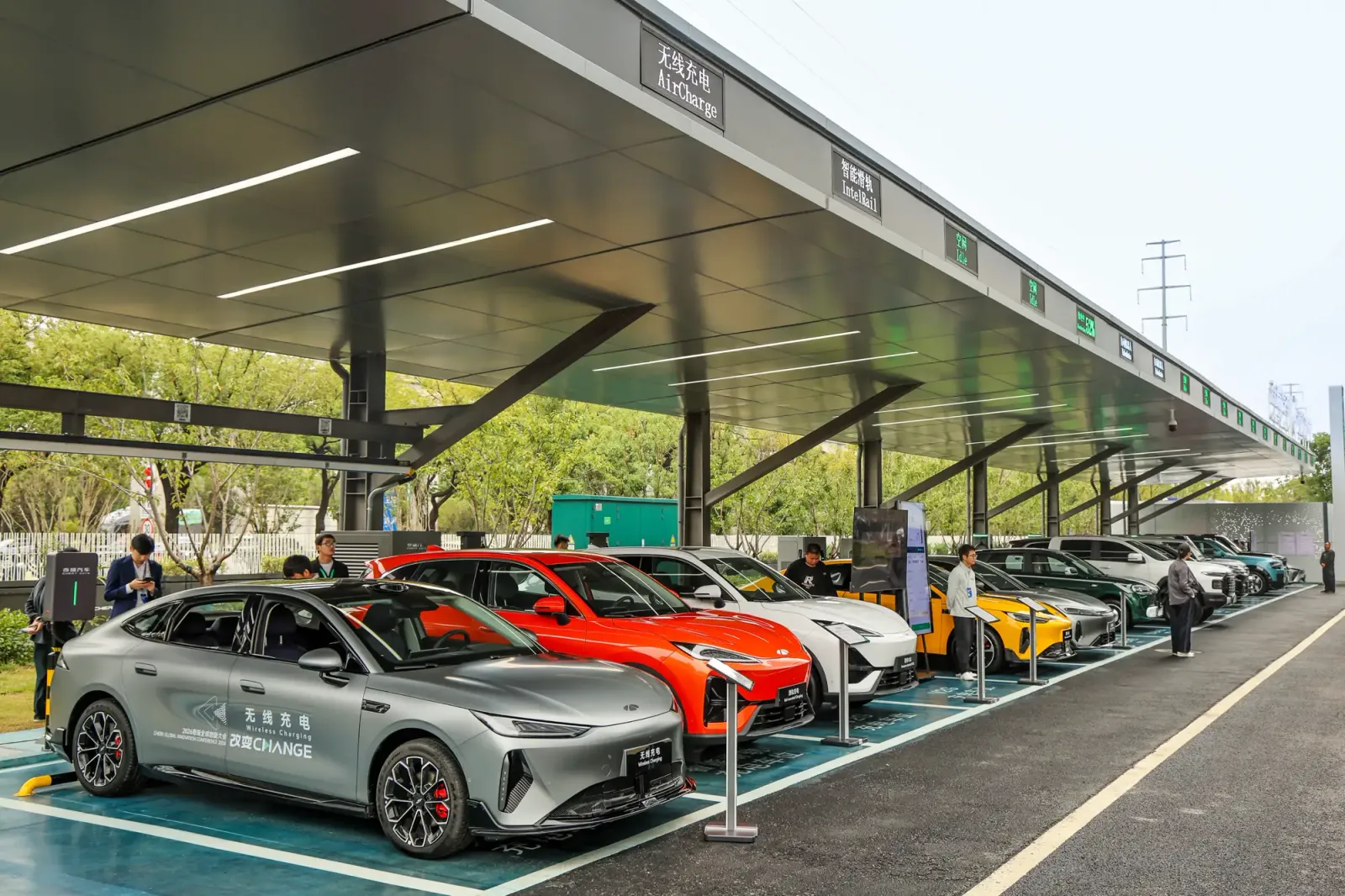
Electric charging is entering a new dimension. In Wuhu, Chery introduces its Volt-Dragon Charging station, capable of delivering 1.44 megawatts of power. The manufacturer claims that 500 kilometers of range can be restored in just five minutes, with a 10% to 80% charge completed in the same time. Even better, reaching 10% to 97% would take only 6 minutes and 50 seconds. These are figures announced by Chery, though they remain to be independently verified. Of course, a charging station alone is not enough to achieve such results. The vehicle must have a battery and electrical architecture capable of handling high power levels. Therefore, charging technology is just one part of the equation. For comparison, BYD’s Flash Charging system claims up to 1.5 MW, allowing a 10% to 97% charge in nine minutes. Geely and other Chinese companies are also working on megawatt-level charging solutions.
+2
The battle now takes place as much in battery technology as in the infrastructure capable of powering them. But how can a charging station deliver such high levels of power without overloading the electrical grid? Chery incorporates an energy storage system between the grid and the charging stations. This reserve allows for extremely high power outputs without relying solely on the immediate capacity of the electrical connection. It also helps maintain the station’s operation in case of a power outage. The installation further relies on silicon carbide (SiC) power electronics, combined with advanced liquid cooling. Chery claims a conversion efficiency of 96.5%. Intelligent energy management is also intended to optimize costs, particularly by taking advantage of off-peak hours. In the long term, the station will even be able to feed electricity back into the grid through V2G. This is a way to make use of the stored energy beyond just charging vehicles.
A robotic arm to automatically connect electric vehicles
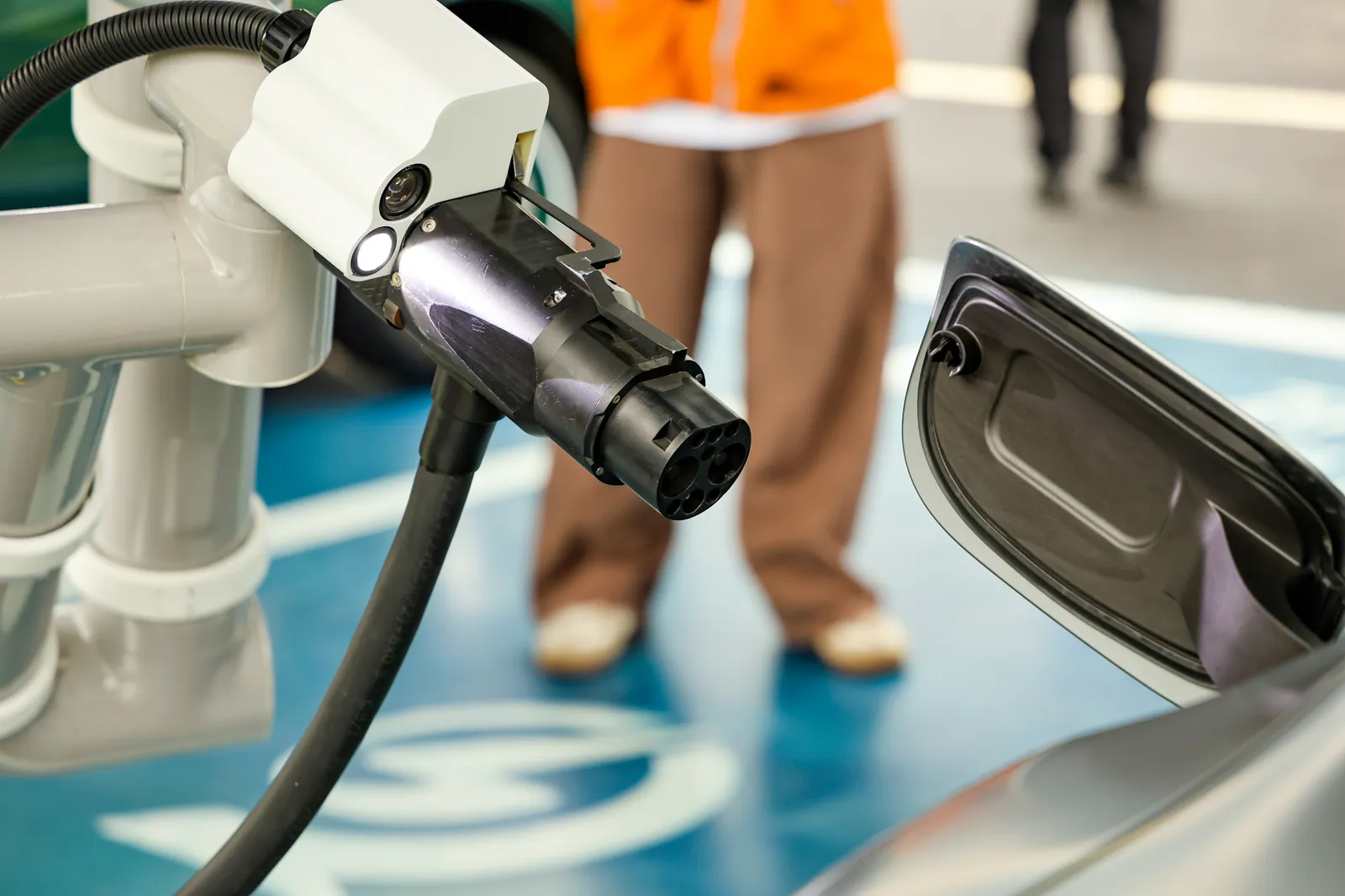
Another impressive demonstration in Wuhu: a robotic arm capable of automatically connecting the charging connector to the car. We got to see it in action on site. The system detects the charging port, positions its arm, and completes the connection with smooth and precise movements. There’s no need to handle the cable, unroll it, or find the right angle to insert the connector. The entire process is automated, promising a simpler charging experience. The interest extends beyond just the technological demonstration.
Also read
BYD makes a big splash: its new electric city car under 10,000 € charges in just 9 minutes!
Fast chargers and their cables remain bulky, despite efforts by manufacturers. Chery reports that its Volt-Dragon system includes a cable and connector set weighing about two kilograms. This remains a challenge for some users, especially the elderly or those with limited motor skills. An automated arm could therefore make charging more accessible without requiring physical intervention from the driver.
+3
This automation also becomes fully meaningful with the development of autonomous vehicles. In the future, a car or robotaxi could approach a charging station, position itself in a designated spot, and start charging without human intervention. The vehicle would then depart once the process is complete. Such a system could improve the availability of fleets, especially for autonomous taxis and shared vehicles. However, several questions remain before large-scale deployment can be envisioned. Compatibility with different models, positioning accuracy, handling of unexpected situations, and execution speed will be crucial factors. Chery has not yet detailed all the usage conditions for its device. But after seeing it in action, one thing is clear: automation could become a relevant complement to ultra-fast charging. Power reduces the time spent stationary, while the robot eliminates almost all manual handling.
+9
Energy Cube 2.0: When the electric car integrates into the home
The first two technologies relate directly to vehicle charging. The Energy Cube 2.0, on the other hand, expands the focus to home energy management. Introduced near the Volt-Dragon installations, this system combines battery storage, electrical conversion, and energy flow management. It can work with a photovoltaic system to store electricity generated during the day and release it when household demand increases. During our visit, the system even powered a small coffee shop set up for demonstration. This example clearly illustrates its usefulness: having a reserve of electricity available when the grid is unavailable, or simply when stored energy becomes more cost-effective than electricity drawn from the grid. Chery also highlighted a modular design, featuring stackable batteries and simplified installation. The manufacturer claims a discharge efficiency of over 95%, along with quick initial setup via a dedicated app.
The other concern relates to safety. Chery claims to have automotive-grade battery cells, active module balancing, and a mechanism to prevent the spread of thermal runaway. The manufacturer also asserts that re-ignition does not occur within 24 hours after a thermal incident. Of course, these performance features are based on the claims made by the company, rather than measurements we have been able to verify. The Energy Cube 2.0 is also designed for smart energy management. The system can analyze consumption patterns to gradually adjust its operation.
Also read
Why charging an electric car during off-peak hours might become troublesome
Chery also mentions compatibility with energy exchange between vehicles, homes, and the grid, depending on the associated equipment. This is where the three technologies showcased in Wuhu become truly meaningful: the electric car is no longer just a means of transportation. It becomes part of a system capable of storing, distributing, and utilizing electricity, from homes to public charging infrastructure.
20,000 stations by 2029: Chery’s ambitious vision
One crucial question remains: when will these technologies be available to drivers? Chery plans a first phase of testing in China, with ten pilot stations, before expanding deployment. The company aims to have up to 20,000 stations worldwide by the end of 2029. China is set to be the primary testing ground, with similar ambitions in Thailand and the United Kingdom. However, no specific date has been announced for France, nor is there a final list of compatible vehicles.
Because that is precisely where the main challenge lies. A charging station capable of delivering over one megawatt cannot fully utilize its potential with just any electric vehicle. The batteries, their cooling systems, and the vehicle’s electrical architecture must keep up. Moreover, the advertised performance levels need to be verified under real-world conditions, particularly depending on temperature, initial charge level, and battery profile. In Wuhu, Chery mainly gave us a glimpse of its ambitions: to master the entire energy chain, from ultra-fast charging to home storage. What remains now is to turn these technological demonstrations into solutions accessible to the broader public.