
496 km for less than 30,000 €, copying BYD and even sponsoring the Champions League: the electric car that aims to dominate
If there’s anything in European football that can be compared to the Holy Grail, it’s the Champions League. And if there’s something similar in the world of electric cars, it’s producing and selling an affordable vehicle with good range.
Those who achieve this are guaranteed success in sales. KIA has done it with the EV3 — read our review — and BYD with the Atto 2 — we drove it — allowing both SUVs to dominate the electric vehicle market in Spain. Now it’s Hyundai’s turn, which will launch its compact electric car in Spain for less than 30,000 € with a range of up to 496 km.
An electric car copying BYD to dominate the market… and the Champions League
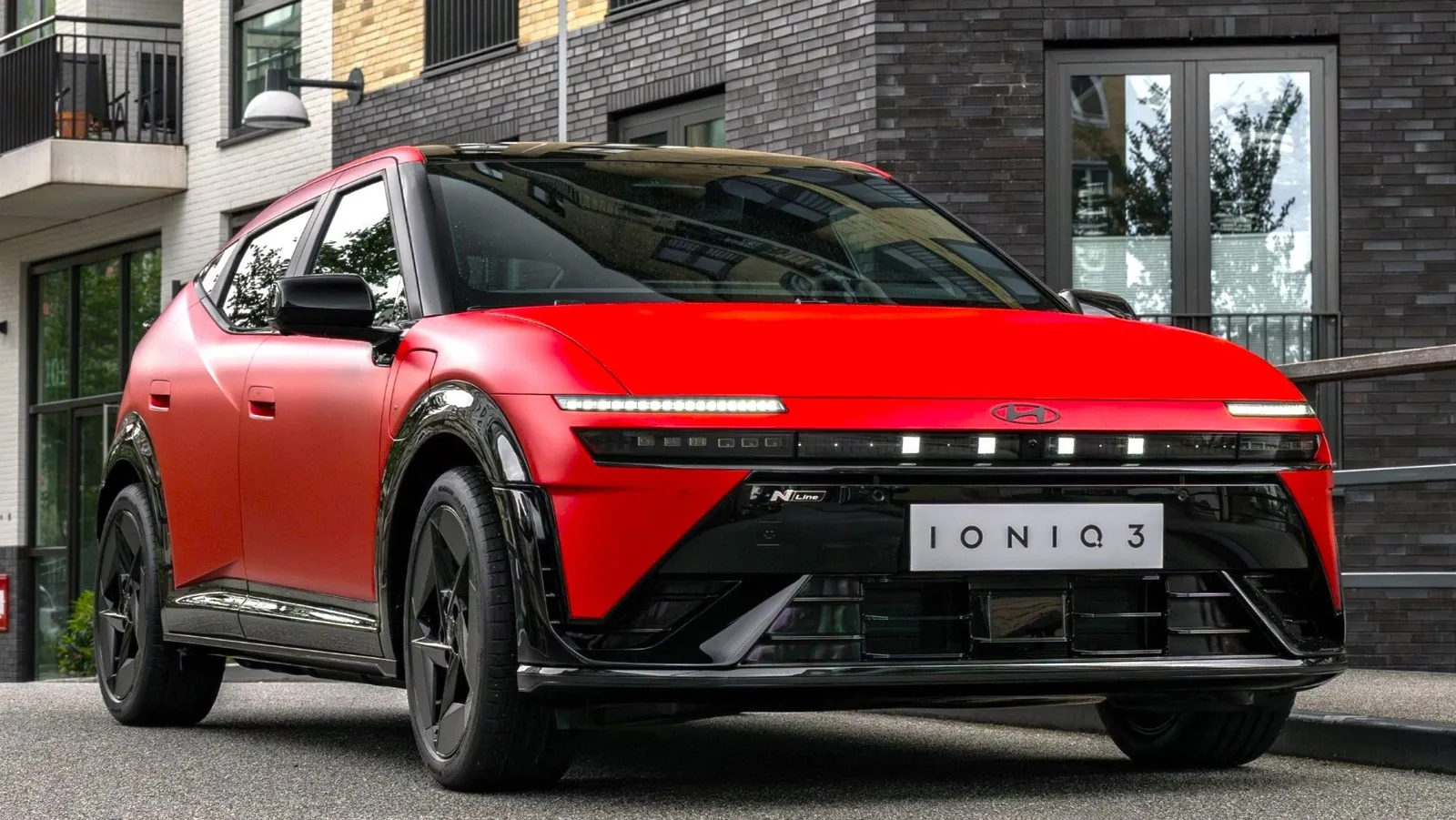
With a manufacturing strategy modeled after BYD that enables such a price point of under 30,000 euros—in France, including subsidies, this electric vehicle will be sold starting at 29,900 euros—Hyundai will launch its first compact electric car in Spain by the end of the year, offering a range of up to 496 km.
We are talking about the IONIC 3, which will arrive in Spain with a Cx value of just 0.263 and dimensions of up to 4.17 m in its most sporty N-Line version; 4.155 m in its base version—along with a width of 1.8 m and a wheelbase of 2.68 m. The best feature, however, is its trunk space of 441 L, divided into 322 L in the main compartment and another 119 L in the space beneath the floor.
This electric vehicle, priced under 30,000 €, will also come with two powertrains, each paired with a battery. The first and less powerful version features an electric motor delivering 99.5 kW /135 HP and a 61.0 kWh battery, enabling it to achieve a range of 496 km.
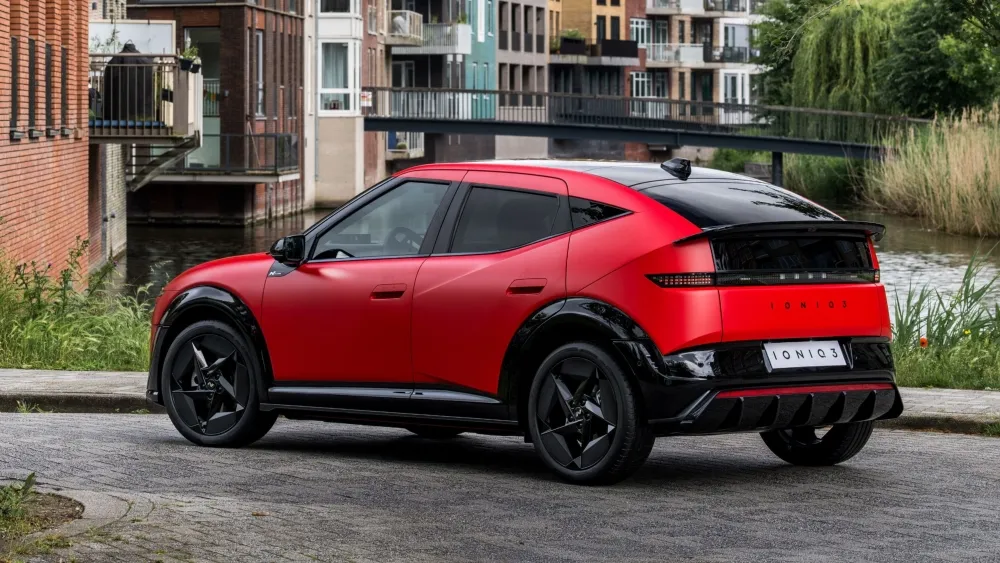
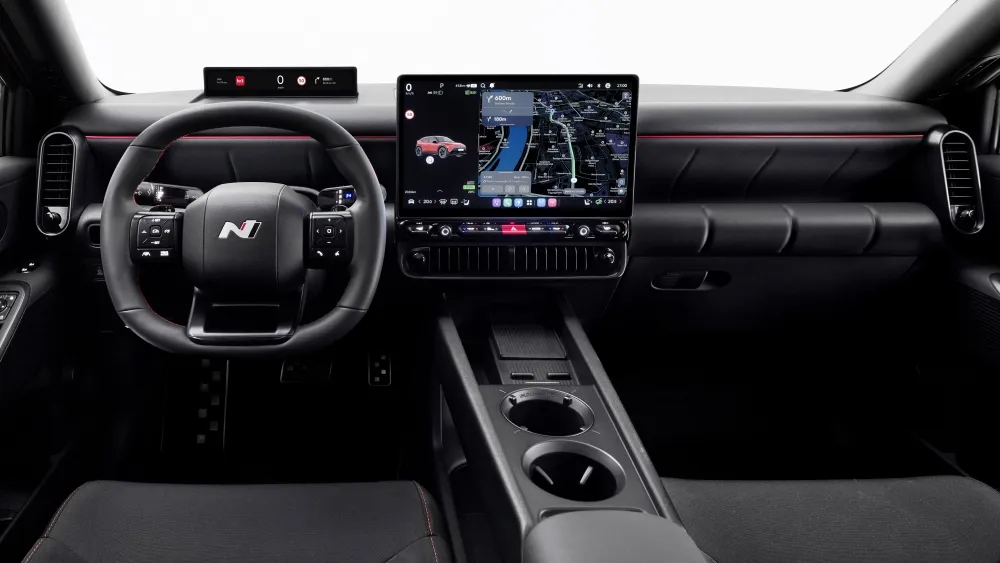
But Hyundai will also offer a more sporty variant, the N-Line, equipped with a 107.8 kW / 147 hp engine and a 42.2 kWh battery; naturally, this reduces its range to 344 km. Despite the difference in power, the performance of this electric vehicle remains very similar across both versions: both can reach 170 km/h and accelerate from 0 to 100 km/h in 9.6 and 9.0 seconds, respectively.
Located in one of the market segments with the highest sales volume, this compact electric vehicle, a competitor to the Leapmotor C05 with a 482 km range — read our review — aims to dominate the market. And if its price of less than 30,000 euros and its performance aren’t enough, it seeks to achieve this by becoming the new emblem of the UEFA Champions League.
Champions League’s flagship vehicle, following Nissan and Ford
Hyundai has just signed a sponsorship deal with UEFA under which the Korean manufacturer will become the main automotive partner for its biggest competition: the Champions League.
This sponsorship will begin in the 2026/27 season and run until the end of the 2030/31 season, with this compact electric car featuring a range of up to 496 km serving as the primary symbol—at least during its initial months.

Xavier Martinet, president and CEO of Hyundai Motor Europe, confirmed this by stating, “We are entering into this partnership with our strongest lineup to date. The IONIQ 3 is the first of five new models we will launch in Europe this season, designed and developed for our customers in this region, and it is the car that leads our future lineup.”
On his part, Hyundai’s president and CEO, the Spaniard José Muñoz, said that “the UEFA Champions League is the best club football in the world[…] and after Hyundai’s participation in this summer’s World Cup, the UEFA Champions League is an ideal platform to showcase our vehicles.”
Hyundai thus becomes the third car brand to sponsor Europe’s top football competition, following Ford, which began sponsoring the Champions League in 1992, and Nissan, which took over starting from the 2014/15 season.