
446 km of range for less than 25,500 € and made in Spain: we test the final version of the electric car that’s revolutionizing the market
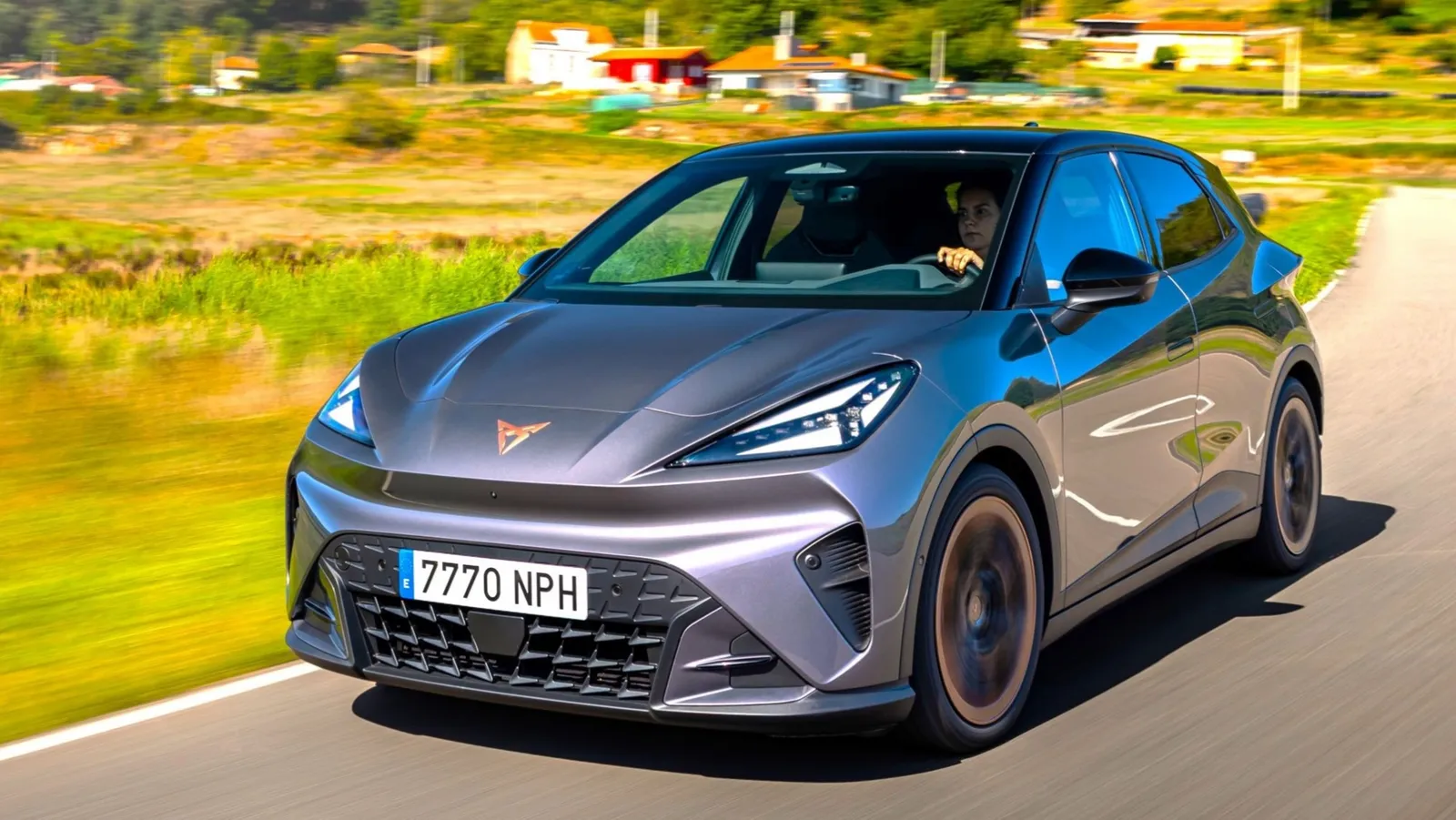
CUPRA Spain keeps emphasizing that “the CUPRA Raval is the best launch in our history,” a statement repeated by their sales manager, who says, “I’ve never seen anything like it in 30 years.” This is great news for Spain, or rather, for the Martorell factory where it’s produced.
CUPRA also states that this will be their most sold electric model, and the Endurance version has every reason to be so: 210 horsepower, a compact size of 4.05 meters in length, decent range of 446 kilometers on mixed cycles, and a price of less than 25,500 euros, which is very attractive given the discounts and incentives from Plan Auto + included.
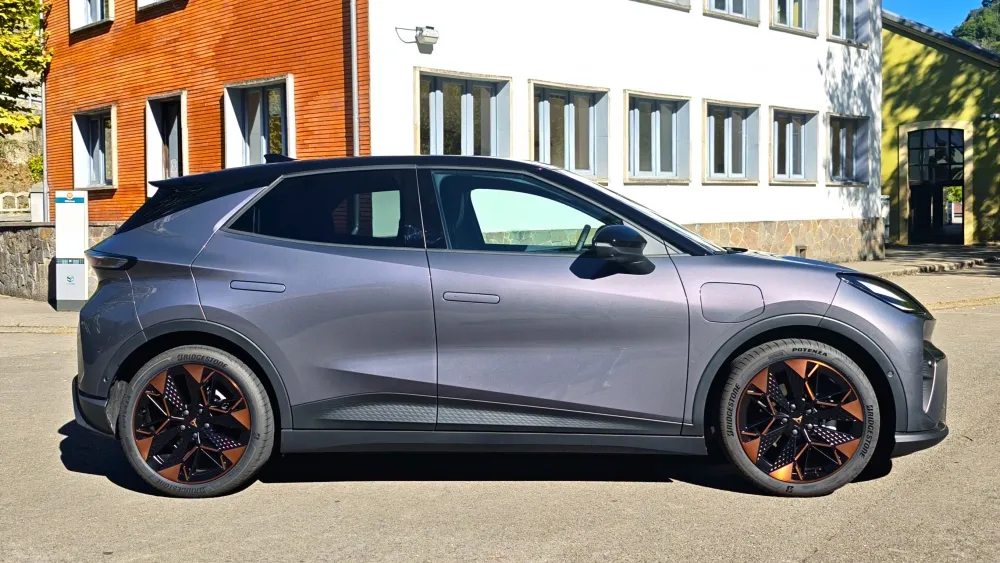
A car worth buying, with 446 km range and CUPRA spirit
The CUPRA Raval is a practical city car with a spacious interior and a trunk volume of 441 L, which is quite impressive and exceeds that of larger models like the CUPRA León, a bigger car with 4.4 meters in length that offers 380 L of trunk space.
It is already available with 37 kWh batteries—at 20,490 euros for the Plus version—and 51.5 kWh batteries, with the latter being the one we think is most worth purchasing given its 446 km range in mixed cycle testing for this Endurance version.
Yet it remains a highly eye-catching electric vehicle because, although it shares the MEB+ platform and development with Volkswagen Group’s new electric models such as the Skoda Epiq — read our review — or the Volkswagen ID. Polo, this 210 HP Endurance version is very pleasant to drive and preserves the dynamic character inherent in the brand born in Spain. It isn’t the sportiest CUPRA Raval in the range — we’ve already driven the 226 HP CUPRA Raval VZ — but it’s still worth considering, as it is also a very dynamic and enjoyable car.
Starting with its engine, this electric city car made in Spain is equipped with a 155 kW/210 HP unit producing 290 Nm of torque, which delivers power to the front wheels. It’s no weak performer, as evidenced by its ability to reach a top speed limited to 160 km/h or accelerate from 0 to 100 km/h in just 7.1 seconds. And from 0 to 50 km/h? In only 3.1 seconds.
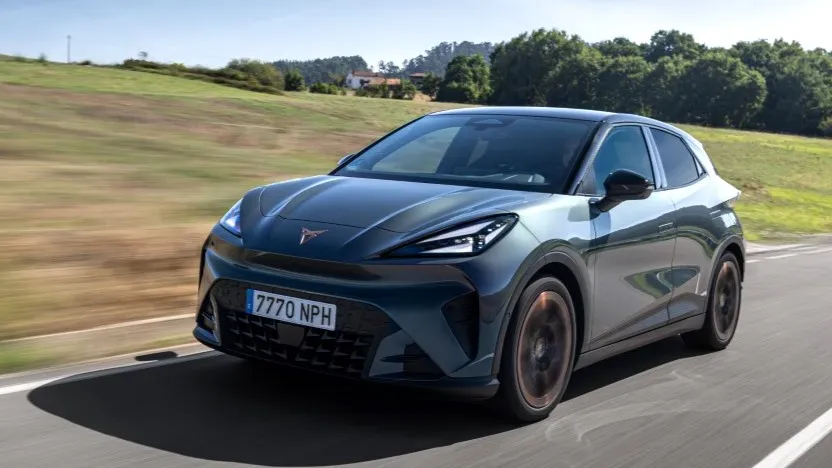
This 210 HP engine is paired with the vehicle’s large NMC battery boasting 51.5 kWh of net capacity, enabling a range of 446 km on mixed cycles. CUPRA does not provide city range figures, but given the efficiency and regenerative braking capabilities of this urban model—which we will discuss later—we dare to estimate that it could reach or even exceed 600 km.
The battery can be charged at 11 kW using AC or household power—taking 5 hours and 30 minutes to fully charge—and up to 105 kW with DC charging, allowing it to go from 5% to 80% charge in just 24 minutes.
A spacious and distinctive interior for four passengers
No car enthusiast can look at this CUPRA Raval without immediately recognizing it as a CUPRA. It retains the sporty appearance and distinctive features of models developed in Barcelona, but beyond its 4.05 meters in length, 1.78 meters in width, and 1.52 meters in height, what makes it even more interesting is its 2.6-meter wheelbase, which ensures ample interior space for four tall passengers.
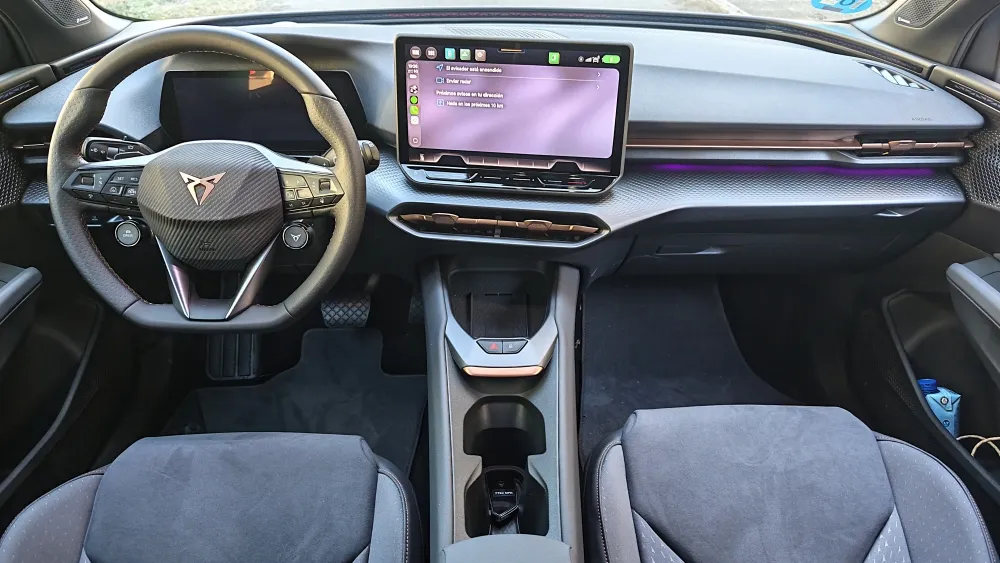
But first, it’s worth taking a look at the interior finishes, which also preserve CUPRA’s inherent character. Thus, this Raval offers the brand’s sporty atmosphere and its distinctive details—dark tones and copper accents—in a dashboard that features a clever combination of a top section finished with rubbery, textured plastics, harder plastics in the area just below that stand out with a raised finish, and more hard plastics in the lower section, which appear solid and, like the entire assembly, are well-fitted.
The dashboard features a 10.25” instrument cluster-style screen and a central 12.9” display, both of which have attractive designs. The instrument cluster allows up to four viewing modes to be selected via a button on the steering wheel, while the larger screen includes touch controls beneath it for adjusting the volume of the audio system—which delivers a good and clear sound response—as well as the temperature for both seats.
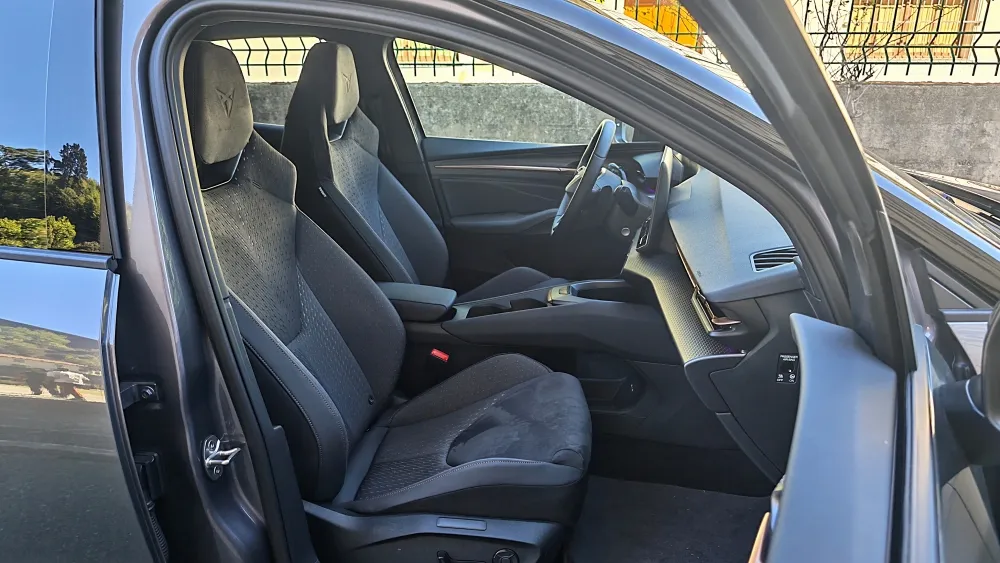
There are no additional physical buttons inside the cabin except for two on the center console: one for central door locking and another to activate the emergency flashers. But the multifunction steering wheel has up to 14 buttons... and two dials for selecting options. Very comprehensive, indeed, but it takes some time to master its full functionality.
Our unit came equipped with optional sports seats, which are worth mentioning as they provide excellent support for the body. In terms of space, two adults who are 1.90 meters tall or taller can travel comfortably without the center console—raised and featuring two USB C ports and a 12 V port in its lower section—being too intrusive. The 12 V port includes a wireless charger for the phone, two cup holders, and a practical compartment under the armrest.
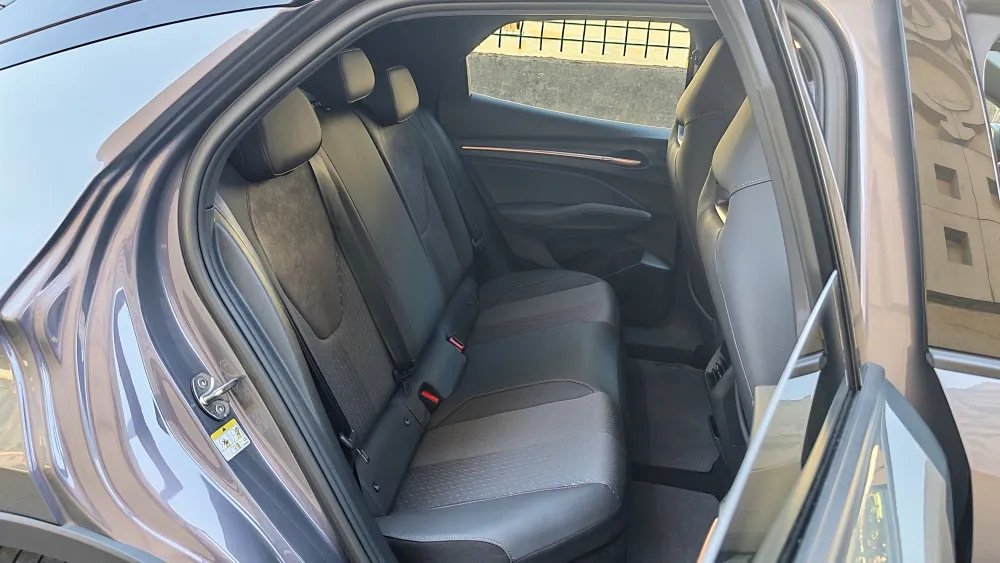
As for the rear seats, two adults will sit there—the central rear seat is wide enough to accommodate children who are not too tall, meaning over 1.85 meters in height. Be careful, as starting from that height and depending on their seating position, they might touch their heads against the slightly sloping end of the ceiling lining. Legroom is important—after all, this electric bus manufactured in Spain is designed for urban use—and adults of that height or taller won’t have their knees resting on the front seats. However, the seating position—somewhat low relative to the floor, like in many electric buses—means the knees are bent more than usual.
As we mentioned, the rear central seat is designated for children due to its narrow width. It remains practical thanks to the flat floor, but the presence of the rear area of the central console, which may have air vents and USB C ports, requires the passenger in this seat to place their feet on either side of it.
As for the trunk, it earns a good rating, notable and close to excellent. Not only does it feature a large, well-proportioned loading hatch, but the trunk space of this electric CUPRA Raval also includes a practical adjustable dual-height floor. In the highest position, this floor is just 3 cm from the loading threshold, while in the lowest position, it’s about 20 cm deep. What’s most interesting is that beneath the trunk floor, this electric vehicle with a range of 446 km offers a large and useful compartment, ideal for storing cables or various items. With this, the Raval’s trunk capacity reaches an impressive 441 L.
Finally, before buying this car, it’s worth knowing that this Endurance version comes with a fairly comprehensive suite of features, among which stand out the lowered chassis and sports suspension, which directly affect its driving dynamics. As for comfort features, it includes Full LED headlights, 18-inch tires, a leather multifunctional steering wheel with controls, and the CUPRA-specific accelerator sound. This trim also comes standard with voice control, Driving Mode B, parking sensors, light and rain sensors, as well as wireless connectivity for Android Auto and Apple CarPlay.
How does this CUPRA Raval Endurance with 446 km of range perform?
Firstly, it’s worth noting that we’re dealing with an electric city car that is very confident, agile, and features quick, direct handling — with a top speed of just 2.5 laps. With 210 horsepower, its driving experience is pleasant in any situation, aided by a firm suspension paired with similarly robust shock absorption.
The result? A car that handles body roll and yaw very well, as well as pitching during braking. Its handling is somewhat similar to that of a kart, giving the driver confidence and safety when driving dynamically. Its drawback? On roads with good surfaces or highways, there’s practically none. But on urban routes or poor-quality asphalt, it can become somewhat harsh and uncomfortable for passengers. This is something worth considering before buying this city car. After all, driving a CUPRA is rewarding, but it has its challenges.
An inherent feature of this car is its gradual delivery of power; with 290 Nm of torque, it isn’t overwhelming… until the CUPRA driving mode is selected, the most aggressive of the five available options: Range, Comfort, Performance, CUPRA, and Individual. The latter, by the way, allows us to customize parameters such as steering stiffness, engine response, and even whether or not the virtual CUPRA sound is active.
Curiously, all of these driving modes are accessed through two satellite buttons located beneath the side grips of the steering wheel. By pressing the button on the right sequentially, we can switch between the five modes mentioned, while pressing the button on the left switches only between the most sporty CUPRA mode and Comfort mode.
As its name suggests, the Range mode is most focused on efficiency and fuel consumption. With this mode selected, the CUPRA Raval limits its top speed to 130 km/h and also has its power output restricted. It is undoubtedly the best choice if we want to spend less, though this city car manufactured in Spain loses some of its charm as a result.
The Comfort mode, given the 210 HP of this electric vehicle which is also not very heavy—reaching 1,610 kg in this Endurance version—is the most suitable for all-around use, with a steady power delivery that ensures good responsiveness. The Performance mode, on the other hand, seems best for those who enjoy driving with a bit of excitement but also want progressivity... without too many compromises on comfort. Finally, the Cupra mode, being the most extreme, is only appropriate for rare situations—such as a mountain stretch—because although it is extremely efficient, it delivers power in a very abrupt manner, which is quite extreme; this reduces the comfort of driving this CUPRA Raval.
I have a ‘complaint’ regarding CUPRA. Whether I select the Performance mode or the CUPRA mode, regenerative braking activates automatically at the second level of the three available—there’s also a fourth level, which is off—for the first mode; and at the third and final level for the CUPRA mode. It would be more logical and convenient to separate these two modes and levels, as if you don’t like the default setting, you’re forced to fiddle with the levers behind the steering wheel—to which I must say they feel good and respond quickly—to adjust the driving experience to your liking.
And be careful, because although the differences between the various levels of regenerative braking aren’t significant, the third and final mode can become somewhat intrusive and counterproductive if you’re trying to drive as fast as possible, which is very easy when behind the wheel of this CUPRA Raval.
Ah, and the topic continues; this CUPRA Raval features a B mode on its automatic transmission control — located on the right lever that extends from the steering column — which acts like a One Pedal system. That is, if you activate it without keeping the accelerator pressed, the car will come to a stop. In this B mode, you can still select two levels of regenerative braking using the aforementioned levers. It must be due to the various options available...
Setting aside the issue of regenerative braking, let’s focus on traditional braking. Here, CUPRA once again boasts a very pleasant tuning. When you press the brake pedal, almost immediately — with barely an inch of “response in vacuum” from the pedal travel — this CUPRA Raval begins to stop with a very progressive braking feel and consistent grip.
Thus, thanks to a braking system with ventilated discs at the front and ventilated discs at the back, this Spanish-made CUPRA Raval can be brought to a stop whenever you want. That said, during emergency braking, we personally would have preferred a more pronounced feel in the final stage of pedal travel.
We did notice, however, that compared to its counterpart among Volkswagen’s compact electric vehicles, the Skoda Epiq, this Spanish-made CUPRA Raval is somewhat less insulated from external noises. Good soundproofing is expensive and therefore rare in urban vehicles, but we did detect aerodynamic noise that appears at speeds above 100 km/h.
We need to discuss fuel consumption and range. The first thing to know before purchasing a Raval Endurance is that the 446 km range it claims is achieved with the standard tires, sized 215/50 R18. Our test unit was equipped with optional tires sized 235/40 R19, which reduced comfort and, more importantly, lowered fuel consumption to 419 km of range.
The approved fuel consumption for this CUPRA Raval is 13.6 kWh/100 km, but it rises to 14.8 kWh/100 km with the 19-inch tires on our test unit. With those tires, after traveling 240 km both on highways and challenging mountain roads—without focusing on minimizing consumption—we achieved an average fuel usage of around 17 kWh. This figure seems reasonable and entirely acceptable given the driving pleasure—as well as practicality—that this Spanish-made city car offers.
Compared to the 28,890 euros — including trade discounts, financing offers, and subsidies from Plan Auto+ — for the more extreme CUPRA Raval VZ, CUPRA offers this Raval model at a slightly more reasonable price — and we emphasize, the one most worth purchasing due to its range — for less than 25,500 euros, specifically 25,490 euros.
This is already a notable final price when compared to the 35,010 euros it costs without any subsidies or trade discounts, and that price can even be reduced further. How? Simply put, those 25,490 euros do not include the discount for CAE, which you can qualify for by trading in a conventional car when purchasing this Raval. That means an additional reduction of almost 1,000 euros on the already low price of 25,490 euros.