
44 minutes charging an electric car and a bill of 360 euros: the mistake was in something many drivers take for granted
13/09/2026 13:30
Updated to
13/09/2026 13:30
A public charge of around 40 kWh should hardly result in a bill of several hundred euros. Even with some of Spain’s most powerful and expensive chargers, a similar amount of energy would cost around 20 or 30 euros. Yet an American driver was initially charged 418 dollars, approximately 360 euros, after charging a rented Chevrolet Bolt for 44 minutes.
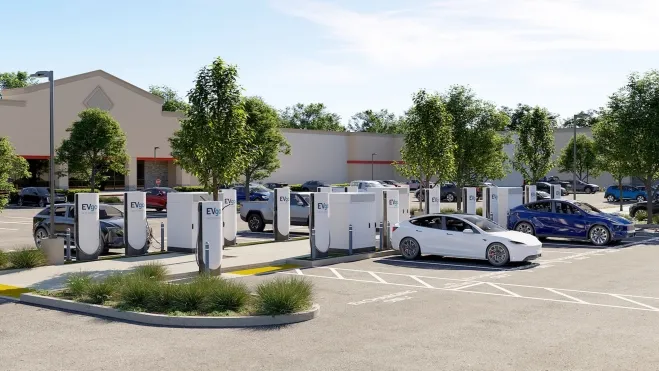
The high bill wasn’t due to a vehicle malfunction or an energy supply issue. The cause lay in the settings configured for the chosen charger, and especially in the fact that that location appeared available within the EVgo app, even though the dealership where it was installed intended to reserve it for its own customers and vehicles.
A rate designed to prevent anyone from using the charger
The incident occurred in Michigan. Stanley Kpenkann was heading home after dropping off a friend at the airport when he realized the battery in his rented Chevrolet Bolt wouldn’t be enough to complete the journey. To find a nearby charging station, he turned to EVgo, whose app showed him a location at a Hyundai dealership in Macomb Township.
The charger belonged to ChargePoint, but it could be activated using an EVgo account thanks to an existing interoperability agreement between the two networks. The session lasted 44 minutes and supplied approximately 39.6 kWh, but the surprise came later: the facility had set a rate of $5 per minute connected and another $5 per kWh consumed.
The result was $220 just for staying plugged in during those 44 minutes, plus another $198 for the electricity used. The dealership later explained that these extremely high prices were intended to deter outside drivers, as the charger was meant for their own customers and vehicles. According to the facility, the rates were also displayed on the charger’s screen.
The problem was that the app allowed it to be used as any other station
The situation was particularly notable because the charger wasn’t completely isolated from public networks. EVgo confirmed that the location had roaming enabled with ChargePoint, allowing its users to start charging there using their own accounts. The company also stated that the price wasn’t set by EVgo but by the station owner, in this case the dealer.
Kpenkann filed a complaint precisely over this contradiction: the facility considered the spot reserved for internal use, but it still appeared as an option accessible through a public app. After several attempts and after the case made its way to the local station WXYZ, EVgo eventually refunded $405. The final amount was reduced to $13.27, which the company said would have been the cost of a charging session under the driver’s subscribed plan.
In Spain, an equivalent top-up would be far below that figure
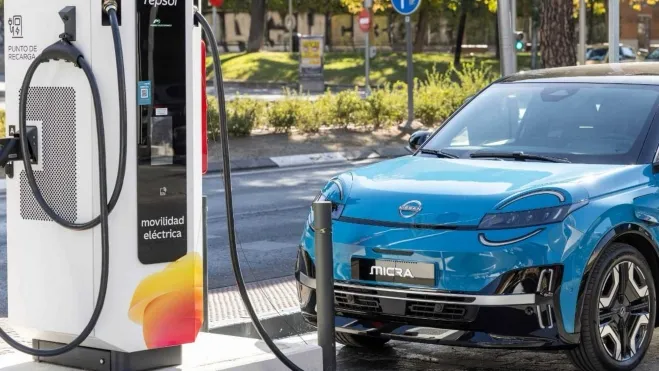
Comparing it to Spain’s major networks helps illustrate how exceptional this price is. Repsol currently charges 0.48 euros/kWh for fast charging and 0.56 euros/kWh for ultra-fast charging, though it notes that rates can vary depending on the provider and location. With 39.6 kWh, the cost would be approximately between 19 and 22 euros.
Iberdrola | bp pulse lists its public rates at 0.35 euros/kWh for slow charging and 0.67 euros/kWh at stations with over 200 kW capacity. Even using this higher rate, charging 39.6 kWh would cost around 26.5 euros. In the U.S. case, the initial bill was more than ten times higher than some of the most expensive public charging options available in Spain today.