
43 videos show Tesla drivers asleep at the wheel: authorities are already demanding explanations
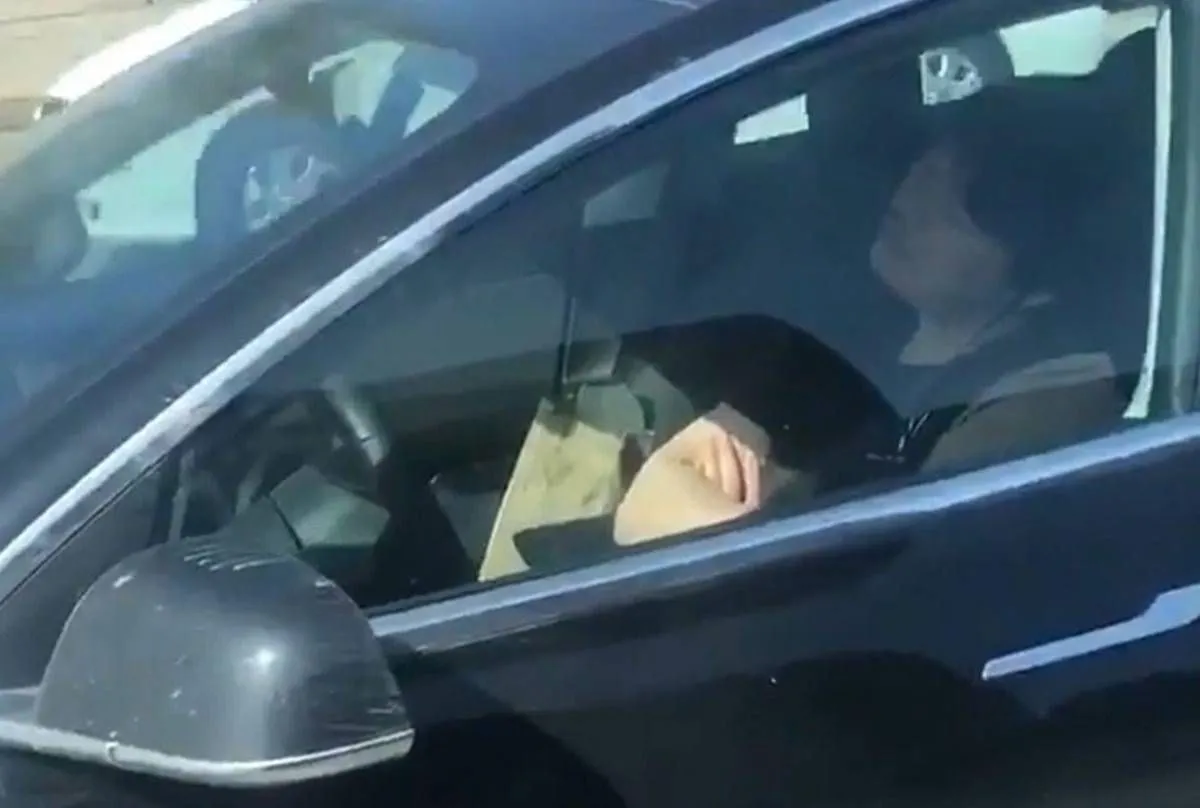
The more capable Tesla’s Full Self-Driving system appears to be, the greater the risk that some drivers may forget its limitations and their own responsibilities. An NBC News investigation identified 43 videos in the United States showing people apparently asleep behind the wheel of a moving Tesla while FSD was active.
This issue has reached the U.S. Congress as well. Illinois Democrat Raja Krishnamoorthi has asked the Department of Transportation and NHTSA to investigate whether Tesla is doing enough to prevent such misuse of its driving assistance systems. The lawmaker also wants to know if there are shortcomings in driver monitoring measures that could justify future action by federal authorities.
The issue stems from a point Tesla has been trying to clarify for years: Full Self-Driving does not make the car fully autonomous. Although the system can handle much of the driving, the driver must remain alert, monitor what is happening, and be ready to intervene at any moment. Tesla’s own documentation outlines these conditions, while the NHTSA believes that level 2 systems require the driver to stay fully attentive.
43 videos of drivers sleeping and 13 cases penalized
The investigation that has brought the issue back to the forefront has identified 43 videos showing people apparently asleep in the driver’s seat of a Tesla while the car continues moving. 17 of these recordings were posted this same year, suggesting they are not just old videos still circulating online.
In addition, the investigation uncovered 13 other cases where police issued penalties or filed charges against drivers for such behavior, although in these cases there was not necessarily a recording proving what happened. Four of these incidents also occurred in 2026.
For Krishnamoorthi, the issue goes beyond the recklessness of certain owners. The congressman believes that if such behavior can be anticipated, it is also necessary to examine whether Tesla’s safety systems are effective enough to prevent it.
Teslas equipped with FSD have a camera in the cabin that monitors the driver’s attention. The system can detect certain behaviors and issue warnings to prompt the driver to focus back on the road. However, some of the footage collected has shown that some users attempt to evade or trick this monitoring system, such as by wearing sunglasses or partially blocking the camera.
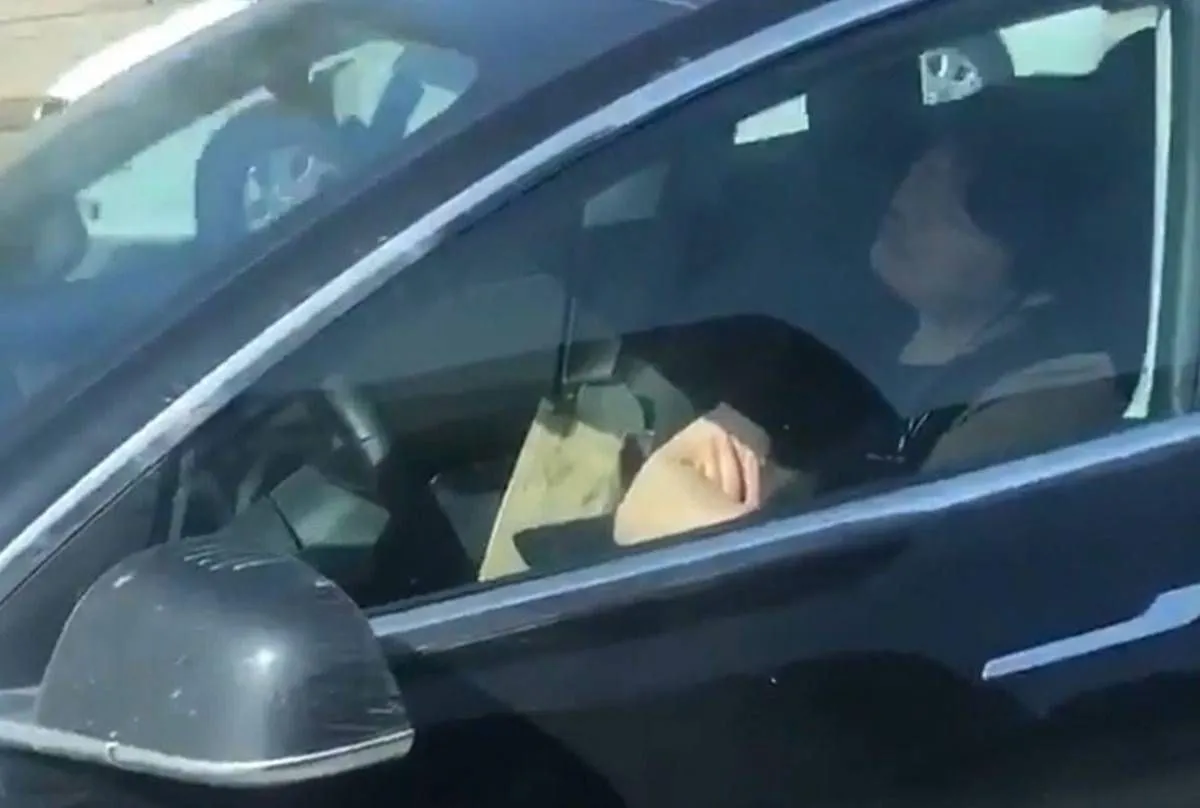
Here lies one of the most uncomfortable issues for Tesla. The problem isn’t merely that a driver chooses to ignore the manufacturer’s instructions, but rather determining to what extent such a capable assistance system can create excessive confidence in the driver. This is an issue that affects virtually any advanced assistance system, but it becomes particularly significant when the car can maintain its trajectory, accelerate, brake, and perform maneuvers for extended periods.
Krishnamoorthi has also focused on some messages that Tesla began showing to certain drivers. Among them is a warning related to drowsiness detection, which, according to the congressman, poses a particularly delicate situation: if the car detects that the driver is tired, there should be no risk of the message being interpreted as an invitation to rely even more on FSD.
The request comes at a particularly sensitive time for Tesla. The NHTSA has been conducting an engineering investigation into the performance of FSD in low-visibility conditions since March 2026, affecting around 3.2 million Teslas equipped with this system. The agency is examining whether the system can properly detect situations that degrade camera visibility and whether it alerts drivers in time for them to react. The investigation covers nine incidents, one of which was fatal and another resulted in injuries.
NHTSA has also pointed out issues related to situations such as glare or the presence of particles in the air that can impair camera visibility. In some of the accidents analyzed, the system reportedly failed to detect the worsening conditions until just before the accident occurred.
For now, the NHTSA has not determined that Tesla’s driver monitoring system constitutes a defect requiring a recall. This is precisely what the congressman wants to clarify. Krishnamoorthi has posed five questions to the agency, including whether it believes these videos could reveal a systemic issue, what information it has requested from Tesla, and what circumstances might justify corrective actions or a recall. The deadline he set for receiving a response is September 30, 2026.
The conclusion is clear: driving to sleep in a Tesla with FSD is safer than doing so in a car without it, but it remains irresponsible since the technology is not perfect and makes mistakes. These mistakes include failing to detect other vehicles or objects on the road, even some of considerable size, leading to accidents due to the driver’s inattention.
A system that enhances safety, especially when combined with our own attention, results in an unbeatable combination at present.