
416 kWh of batteries behind the cabin: Scania upgrades its electric truck for greater efficiency
16/09/2026 15:30
Updated to
16/09/2026 15:30
Electrifying a heavy truck isn’t simply about replacing the diesel engine with electric motors. The massive batteries required take up considerable space in the chassis and can conflict with fuel tanks, hydraulic systems, auxiliary equipment, or the specialized bodies needed for certain commercial vehicles. Scania has just introduced a new solution specifically to address this issue.
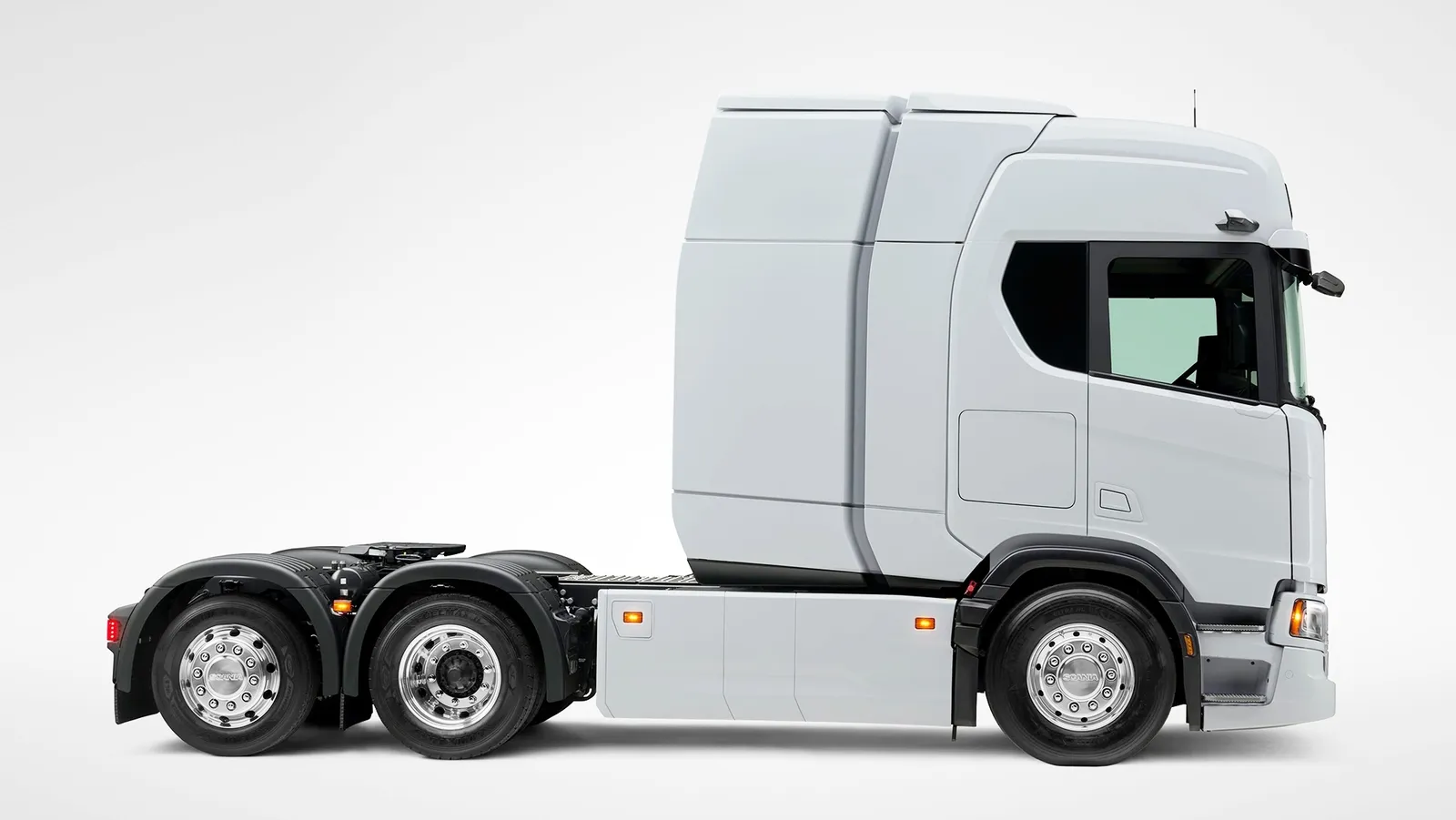
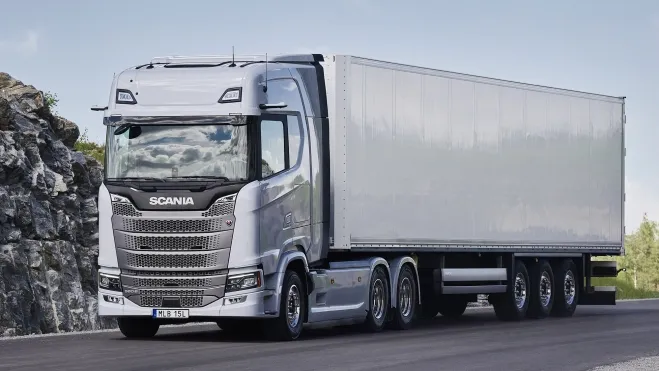
The Swedish manufacturer has developed a configuration that allows some of the batteries to be installed immediately behind the cab, instead of placing all modules solely along the sides of the chassis. This solution is designed especially for tractor-trailers and applications where having free space in the chassis is crucial, expanding the possibilities for electrification beyond conventional setups.
Up to four batteries behind the cab
The new system allows for the installation of up to four battery packs behind the cab. Each offers 104 kWh of installed capacity and around 90 kWh of usable capacity, so this location can hold up to 416 kWh in total and approximately 360 kWh that is actually usable. Scania can combine these modules with other batteries placed in the chassis to tailor the total capacity to each application. The manufacturer offers configurations that reach up to 624 kWh of installed capacity and about 540 kWh of usable capacity, depending on factors such as axle spacing, the vehicle’s body type, and specific operational requirements.
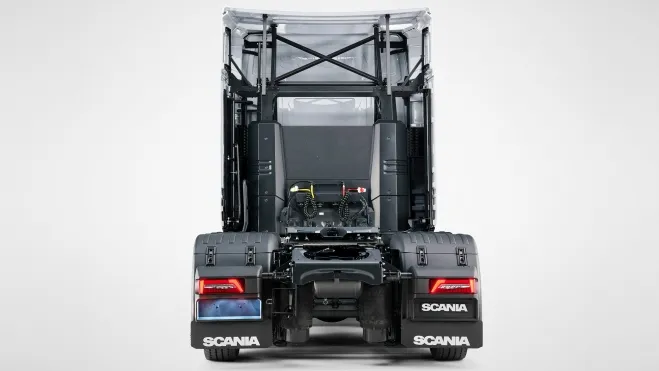
The main advantage is not merely increasing the amount of available energy. Placing the batteries behind the cabin frees up the sides of the chassis and greatly simplifies the work for bodybuilders, who have more space to install the specific equipment needed for each task. It also makes it possible to develop electric vehicles with shorter wheelbase distances.
The battery placement can also help distribute weight more evenly across the different axles. This is particularly important in industrial vehicles, where knowing only the total mass of the truck is not sufficient. The distribution of this load determines the final configuration, its ability to accommodate certain equipment, and the legal payload it can carry.
For trucks that have been harder to electrify so far
Scania is focusing particularly on applications such as garbage trucks, construction vehicles, wood transport vehicles, and other tasks that require additional equipment mounted on the chassis. In these cases, finding enough space for a high-capacity battery can be much more complicated than in a conventional tractor unit designed for road transport.
The manufacturer will make this new configuration available for vehicles equipped with its P, G, and R cab models, allowing it to be combined with various axle configurations. In this way, Scania aims to enable bodybuilders to develop specialized vehicles without electrification forcing excessive compromises in design or the installation of equipment needed for their work.
The solution will be available for orders starting in November 2026, with production beginning in the first quarter of 2027. Scania is thus expanding the possibilities of its electric range precisely in applications where adapting a conventional truck to battery-powered operation is more complex.