
3,200 km in the Nissan Ariya: Why we were wrong to overlook this Japanese SUV?
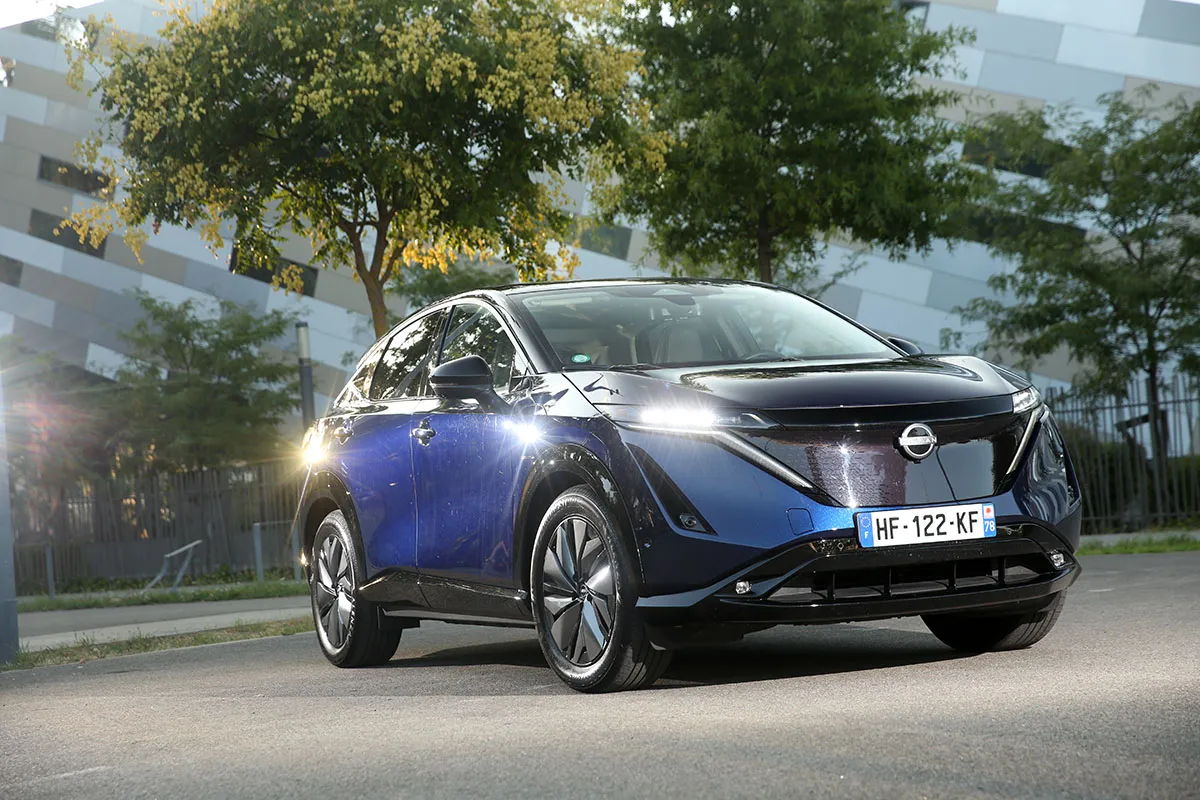
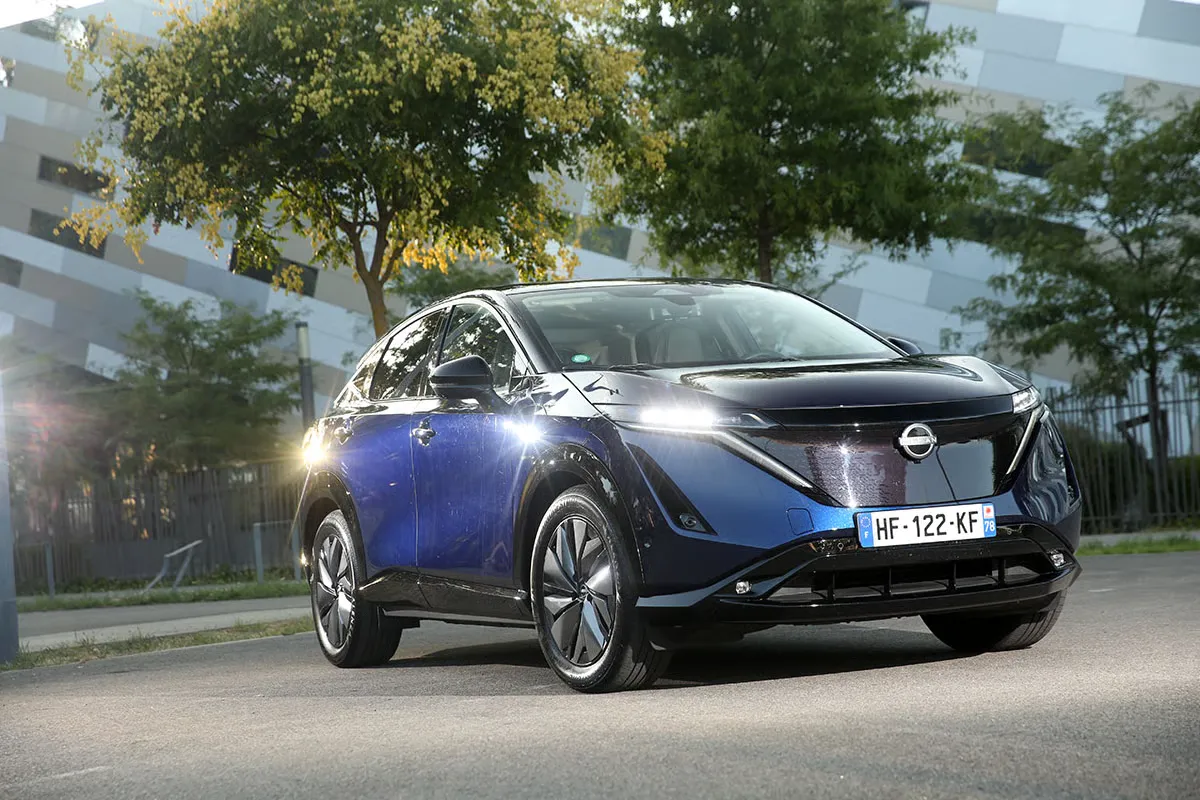
We spent half of the summer driving a Nissan Ariya. Practicality, fuel consumption, operating costs... Here is our comprehensive review!
The series production of the concept car that gave name to the CMF-EV platform developed for the Renault-Nissan-Mitsubishi Alliance meant the Nissan Ariya was quickly forgotten—already in its early years of availability. The SUV wasn’t helped by market conditions at the time, as it entered the market after a very long wait (almost two years!) between its debut and release. With modest specifications, somewhat high prices, and especially a serious lack of brand image, the SUV failed to secure a prominent position in the market. By 2025, only 706 units had been sold here!
Yet, the Nissan Ariya certainly has its strengths for those looking for a stylish SUV capable of covering long distances with the family. That’s why we decided to give this model another look through a month-long test drive. It was an unusual choice, I admit, but it served one purpose: to understand why this Japanese SUV hasn’t been as popular as it could be.
Also read
Test drive – Nissan Ariya 87 kWh: measured fuel consumption, range, and performance
A spacious interior but limited storage options
At 4.60 meters in length, the Nissan Ariya occupies as much floor space as an Audi Q4 e-tron or a Volkswagen ID.4. Like those models, the SUV offers ample interior space. This is especially true in the back, where the knee clearance remains very comfortable even with two adults seated in the front, while the completely flat floor further enhances comfort. A plus is that the rear doors open at a near 90° angle, making it easier to seat children in their seats.
At the front, the design is appealing and the finish quality is perfectly high. Indeed, the hard plastics in the lower areas scratch easily, but it’s not unique to this model. However, at this price point, it’s the only SUV equipped with continuous, thick floor mats that almost encourage you to take off your shoes before getting in. Still at the front, the sense of space is enhanced by the absence of a surrounding center console, replaced here by an electrical module. Smart? Definitely. Practical? Why not. In any case, one ends up keeping the seat in the most forward position. Because even though the central armrest isn’t at the same level as the left one, it allows more space in the back and prevents the elbow from pressing on the central touch controls. In short, it’s a false good idea since the motorized system limits i
Uselessly wasting the module’s carrying capacity, which will eventually stop moving altogether.And that’s exactly where the Ariya falls short, with few storage options for passengers—meager door pockets, a narrow glove box, and an extremely small slit at the bottom of the center console that’s practically unusable. Only the central glove box allows passengers to empty their pockets, though it’s a large compartment that requires searching to find items. This task is particularly difficult at night, as the fold-down tray blocks any additional lighting. Additionally, it’s best to close the glove box every time to avoid knees hitting the compartment. While driving, operating it is challenging because you have to take your eyes off the road to find the touch button on the center console. Even if it doesn’t open sequentially, it at least does so quickly (2.5 seconds). In short, attention to detail is present here too, but it’s not very practical for everyday use.
Average trunk space for the Nissan Ariya
In terms of trunk capacity, the Nissan Ariya claims 468 liters, which is average for its class and nothing more. How does this translate in real life? The trunk can comfortably hold a month’s worth of groceries or some belongings even with a large stroller present. When heading out, it’s possible to fit a folding stroller at the bottom (to make use of the space lost due to the reclined seats), two overhead bins, two tote bags, and two water packs.
The volume isn’t a drawback, but the modularity doesn’t revolutionize the category. Once folded inward, the seats form a flat floor. This floor is divided into two removable panels, one of which can serve as a partition. They conceal a thin underfloor that allows space for safety equipment, cables, and a few flexible items with a bit of effort. Two large compartments in front of the wheel wells can also hold many small items. This modularity is useful in daily use, as are the two lights that provide excellent lighting in the trunk at night. On the downside, it’s unfortunate there’s no ski hatch that would allow access to the trunk from the rear seats. Finally, note that the Nissan Ariya lacks space under the hood due to its CMF-EV technical platform.
As Peaceful to Look At as It Is to Drive
As its appearance suggests, the Nissan Ariya is a gentle giant on the road. Despite its specifications listing 242 horsepower and 300 Nm of torque, its performance is rather basic. With a curb weight of 2,160 kg and a very linear power delivery to prevent the front end from overloading, this SUV doesn’t press drivers tightly into their seats. It performs better in acceleration, reaching 80-120 km/h in just under 5.0 seconds. In corners, the front end handles well, and the steering is fairly well-calibrated. However, the limited feedback doesn’t always allow drivers to accurately gauge where the wheels are positioned.
In terms of ride comfort, the SUV delivers mixed results. On roads, the vehicle is well-controlled thanks to its fairly stiff suspension. However, this stiffness is also felt in urban areas, resulting in some vibrations that slightly affect comfort. On the other hand, on highways, the vehicle experiences significant body movements that disturb passengers, especially those in the back who lack proper support—every steering adjustment is transmitted to them! But once on a straight road, the SUV offers good comfort levels, thanks to its fairly effective noise insulation.
In terms of comfort, the excellent performance of the air conditioning system during hot summer days is worth highlighting. Once it starts, the device quickly lowers the temperature inside the vehicle, even with a panoramic sunroof featuring an electric shade. However, its energy consumption is quite high (see the consumption section). At the back, tinted windows eliminate the need for additional protective covers. On the other hand, the two rear vents are completely ineffective: all the airflow is directed to the front, and closing the vents in the driver’s area does not change this. Finally, the ventilated seats are also inefficient and produce more noise than they actually cool the backs of the front passengers.
Finally, the regenerative braking system isn’t intuitive. There are three deceleration forces available, but accessing them requires switching through the three driving modes. In Eco mode, which releases nearly 80% of the maximum power, the free-wheeling mode is extremely efficient. In Normal mode, the engine brake is sufficient, nothing more. To go further, one must either activate Mode B using the gear selector or use the e-Pedal mode, which does not offer automatic stopping. Steering wheel controls or, at the very least, a menu on the center screen would be more practical.
An aging infotainment system
The Nissan Ariya features a large, continuous digital display along with a customizable wide instrument cluster and an infotainment system. The display itself is beyond criticism—its image quality is pleasant, it shows all the essential information (including charging time based on charge rates and the charger’s power), and navigating through its menus is straightforward.
On the road, the Nissan Ariya features the Pro-PILOT Assist semi-autonomous driving system, which offers an adaptive cruise control with speed limit adjustment and lane-keeping assistance. In practice, the system is well-calibrated but quite basic. It doesn’t provide features like automatic lane changes, but it’s possible to set the vehicle to the speed limit with just a button press. We never encountered issues such as hesitation or phantom braking. Lastly, those who dislike adaptive cruise controls and similar aids can choose conventional cruise control and disable electronic stabilizers using a dedicated setting.
Interesting fuel consumption on the highway
During this long-term test, we paid special attention to fuel consumption. It’s inevitable for us to do so, as it allowed us to truly assess its efficiency levels under various conditions. To start, recall that our test model is a front-wheel-drive version in the Evolve trim equipped with an 87 kWh battery, rated for a WLTP range of 525 km with a fuel consumption, including charging losses, of 18.5 kWh/100 km. This is better than the average: a Volkswagen ID.4 with a 77 kWh battery boasts a range of 555 km and a consumption of 16.1 kWh/100 km.
Also read
Test: Nissan Ariya Nismo, horseradish paste
Let’s start with the general details. At constant speeds of 110 and 130 km/h under an outdoor temperature of 25 °C, we measured fuel consumption of 18.6 and 23.5 kWh/100 km respectively. This is consistent with our initial measurements at 15 °C (19.2 and 24.5 kWh/100 km). On an empty highway at the speed limit, we recorded a maximum value of 22.9 kWh/100 km. This too is consistent with our first Supertest. Therefore, it can be concluded that the combined fuel consumption on our test route would remain around 16.0-16.5 kWh/100 km.
During our annual report on the Montélimar area during the rush hour traffic, we took both road and highway routes. For the first leg, despite starting in cold conditions, the SUV showed a fuel consumption of 14.3 kWh/100 km after traveling 160 kilometers (with a minimum of 13.7 kWh/100 km before hitting the highway). On the return leg using only the highway, the consumption was 20.5 kWh/100 km. At the end of this 414-kilometer day, the SUV’s overall fuel consumption was 17.9 kWh/100 km. This results in a theoretical total range of 460 kilometers under these conditions.
This is precisely the figure we recorded on the crowded highway during the holiday period, before reaching an average of 19.9 kWh/100 km upon arriving at our destination 415 km further away. On the return trip at night, consumption rose to 22.5 kWh/100 km due to the steeper gradients. Thus, an 825-km round trip on the highway to soak up some Mediterranean sun resulted in an average of 21.2 kWh/100 km, meaning a theoretical total range of 400 km when accounting for the battery degradation shown on the dashboard of this test model, which indicated a SoH of nearly 97%.
But high consumption on short daily trips
But as we’ve seen, the Nissan Ariya is not very suitable for short trips in the heat of summer with the air conditioning on. While highly effective, it is also energy-intensive. As a result, all these daily short trips resulted in an average consumption of over 21 kWh per 100 km. It was even worse at the vacation location, where short commuting trips consumed 25.5 kWh per 100 km over 87 kilometers driven in just one week!
The temptation to find out more was too strong, so we conducted some investigations. On a typical 6 km drive, the Nissan Ariya achieved an impressive average fuel consumption of 12.3 kWh/100 km without the air conditioning and with the windows open. Under exactly the same conditions (28 °C), the dashboard showed an average of 20.7 kWh/100 km with the air conditioning turned on from the start. There’s nothing unusual here: based on distance and driving time, this indicates an average power output of 2.5 kW during the first 10 minutes of use. This is roughly the average recorded for other cars, such as the Skoda Elroq.
Finally, at the end of this test covering exactly 3,221.5 km, we recorded a total fuel consumption of 20.8 kWh/100 km on the dashboard. This is a high figure overall, but it’s influenced by daily short trips and an air conditioning system that is both effective and energy-intensive. It’s a shame that the dashboard doesn’t allow for an accurate measurement of the actual consumption per system, but it’s clear that thermal regulation on hot days has a significant impact on fuel usage.
Sufficient fast charging
On paper, the Nissan Ariya can handle a peak power of 130 kW, enabling an 0-80% charge in 40 minutes. In reality, we recorded a maximum of 129 kW, which is already better than during our first test when the SUV managed only 115 kW. However, the 10-80% charge still takes 33 minutes, with an average power at the charger of 107 kW. Despite a charging curve that doesn’t suggest it, this is above the market average for 400 V vehicles. It’s on par with a Tesla Model Y Long Range, which showed an average power of 105 kW with its 75 kWh battery. A Renault Scenic E-Tech achieves this charge time at an average of 101 kW, while a Skoda Enyaq 85 delivers 124 kW. Here is a comparison of the charging curves:
Based on highway driving conditions, this results in a 280 km increase in range within 30 minutes. That’s excellent! However, it’s difficult to make direct comparisons due to the favorable conditions in summer. On the other hand, according to our data from Supertest, it has nothing to be ashamed of, as shown in the following graph.
But of course, in the case of home use, optimizing charging isn’t always easy, and it’s mainly the younger users who set the guidelines. As with most users, we end up doing partial charges. So we took advantage of relatively free charging stations at the end of August to put ourselves in the shoes of an average user, especially to gather statistics for this usage scenario. We managed to charge from 38% to 90% in 34 minutes (with an average power of 82 kW) or from 54% to 80% in 18 minutes (with an average power of 80 kW). In these cases, the Nissan Ariya performs no worse than other vehicles: it’s right at the average level for fast charges during summer, as revealed by our on-site testing during the charging race.
For slow AC charging, the SUV is equipped with a built-in 7.4 kW charger in series. With a price of 1,500 €, the optional 22 kW system becomes essential. While the cost of this option is high, its benefits in terms of versatility are clear. It takes around 5 hours to achieve a 10-100% charge. However, just over an hour at a public charging station is sufficient to regain 30% of charge, which is enough for a week at a vacation destination, for example.
Also read
Chase and evasion: How do charging sessions work on the road to vacation? Our exclusive figures!
It’s difficult to quantify the losses during charging, as they depend on numerous factors that we didn’t attempt to control in this fairly standard test. Outdoor temperature, battery temperature, and even the charging duration can all affect the results. However, we recorded an average of 59 kWh delivered by DC chargers for a 10-80% charge, and 85.5 kWh for AC charging over a 10-100% range. In the latter case, the average loss was 14.5% relative to the actual usable capacity of our test model.
One month in a Nissan Ariya: how much does it cost?
But there’s no need to overcomplicate things with these technical details; let’s just do the math. At the end of this test, taking into account a final DC charge to 100%, we recorded a total of 747.6 kWh charged during the test, at a final cost of 410.32 €. This results in a rate of 0.55 €/kWh and a total usage cost of 12.70 €/100 km, without attempting to optimize costs through any subscriptions and without benefiting from a home charging solution. As for consumption at the charging station, it averaged 23.2 kWh/100 km, which is 11.6% higher than the consumption shown on the dashboard.
Note that at the end of this test, the dashboard indicated a total of 52 hours and 23 minutes spent behind the wheel of the Nissan Ariya, with an average final speed of 61 km/h. According to the carefully recorded data, the SUV was plugged in for 27 hours and 59 minutes, accounting for 53% of the driving time.
Also read
Fast charging: here are the subscriptions that will truly save you money in 2026!
By considering the average cost of charges and the specific losses associated with each type of charging, we also calculated the usage cost under several scenarios. If we had only used AC charging at public stations (0.48 €/kWh), the total usage cost would have been 11.7 €/100 km. With only fast charging, the cost would rise to 14.2 €/100 km. If we had opted for an Ionity Power subscription (11.99 €/month and 0.31 €/kWh), the cost would be 7.5 €/100 km. Finally, if we had replaced all AC charging at local stations with home charging, the final cost would have been 8.9 €/100 km. This cost would be almost halved to 4.9 €/100 km if all charges in this trial had been done at home, but such a scenario is not feasible for long trips.
The Nissan Ariya doesn’t deserve its commercial failure!
After this extended test under perfectly normal and family-friendly usage conditions, the Nissan Ariya turned out to be a reliable choice. It’s quite comfortable, spacious enough for family trips or everyday tasks, features nice finishing touches, and is well-equipped—making it an excellent road companion. Of course, nothing is perfect, and the lack of storage inside or a trunk that might be a bit too small for some users could be drawbacks. But these aren’t deal-breakers, as other more common SUVs on the road don’t perform much better in these areas.
The same is true for fuel consumption. In reality, the Nissan Ariya isn’t as thirsty as WLTP standards suggest, nor as much as other SUVs of similar size that serve as benchmarks. Of course, to get a clear picture, it would have been necessary to compare competitors under the same conditions, which is impossible here. This is why standardized tests are important. But based on our observations, it isn’t among the most inefficient. According to the manufacturer, it’s even slightly more economical than a Renault Scenic E-Tech or a Volkswagen ID.4 on highway driving cycles, allowing it to achieve more than sufficient range in real-world conditions. Finally, the results are similar when it comes to fast charging. While the technical specifications may not match those of top models, its performance isn’t far behind in reality. At any rate, we haven’t
I’ve never had to wait for a fast charge to end before I could keep driving.After a month and over 3,000 kilometers behind the wheel, nothing really seems to work against the Nissan Ariya, so its failure remains surprising. Even price doesn’t seem to explain this outcome, as the Nissan Ariya wasn’t significantly more expensive than its direct competitors at launch. In short, the reason likely lies in its poor image following a failed market rollout. Sometimes, that’s all it takes to seal the fate of a model.
Today, the Nissan Ariya is no longer available for ordering, and the brand is only selling its existing inventory. However, this worn-out vehicle holds an advantage in the used car market, where it can be found at attractive prices. With 10,000 km on the odometer like our test model, this Japanese SUV can now be purchased for under 40,000 euros on the second-hand market, which is nearly 15,000 euros less than its original price.