
29,990 euros and 344 km of range: the Hyundai Ioniq 3 aims to revolutionize the European market
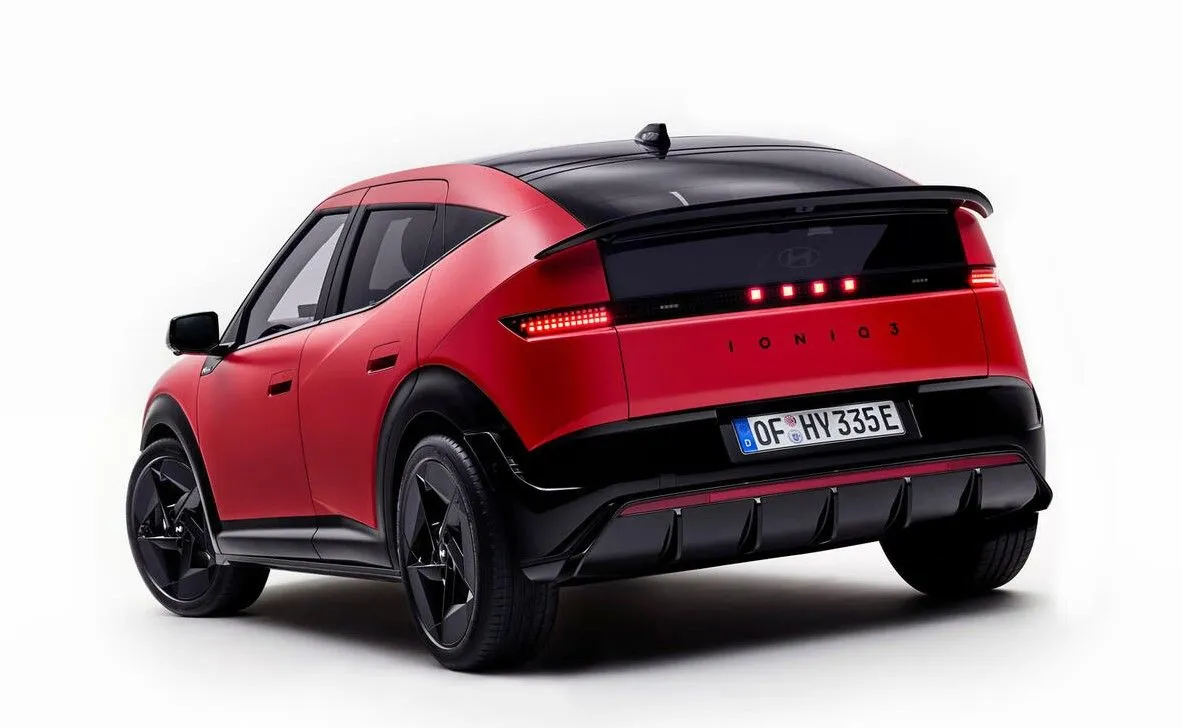
Hyundai has already begun marketing the new IONIQ 3, a compact electric vehicle that had generated excitement for months due to one of its main promises: offering cutting-edge technology and long range at a price much lower than other IONIQ series models. In France, pre-orders are now open at a starting price of 29,995 euros. If Hyundai maintains a similar pricing strategy in Spain, these figures should also apply to our market.
The IONIQ 3 thus becomes Hyundai’s eighth electric vehicle model, occupying a particularly interesting position within the lineup. Below it are the smaller INSTER and Kona, while above it lie models such as the IONIQ 5, IONIQ 6, and IONIQ 9. Its target market includes vehicles like the Renault Megane E-Tech, Volkswagen ID.3, Peugeot E-308, and MG4, but its balance of price, range, and features could make it one of the most competitive rivals in this segment.
Two batteries, up to 497 kilometers of range, and prices starting at less than 30,000 euros
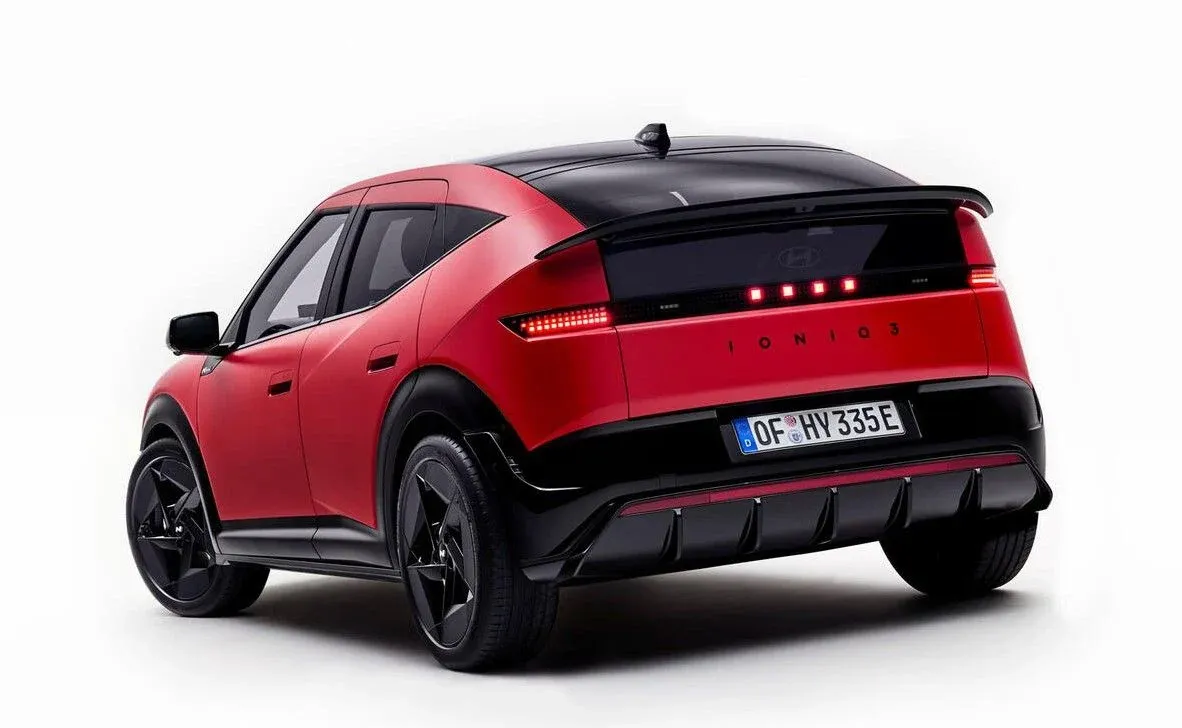
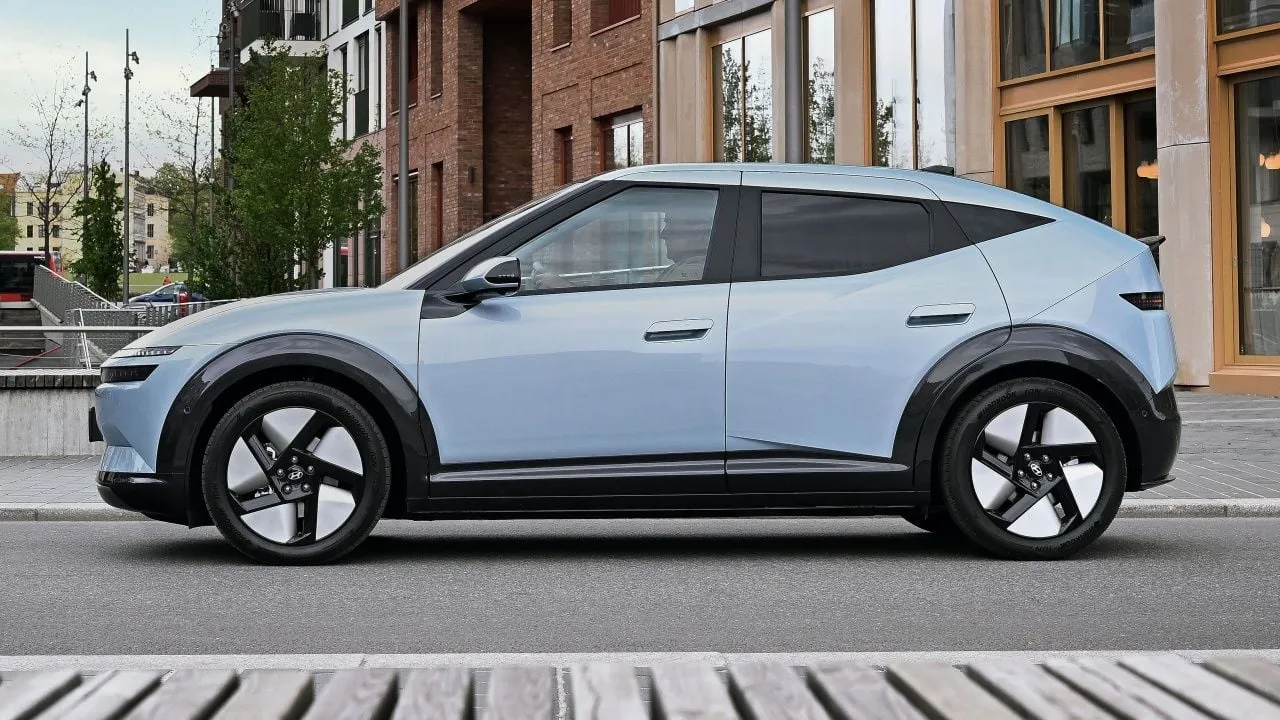
The design of the Hyundai IONIQ 3 is one of its main distinguishing features. The Korean brand has opted for a five-door body with a silhouette that lies between a traditional compact car and a small crossover, which Hyundai calls the Aero Hatch. The IONIQ 3 measures 4.155 meters in length, 1.80 meters in width, and 1.505 meters in height, while the N Line version increases the length to 4.17 meters. The wheelbase reaches 2.68 meters, a figure that helps explain the ample interior space for a car of these dimensions.
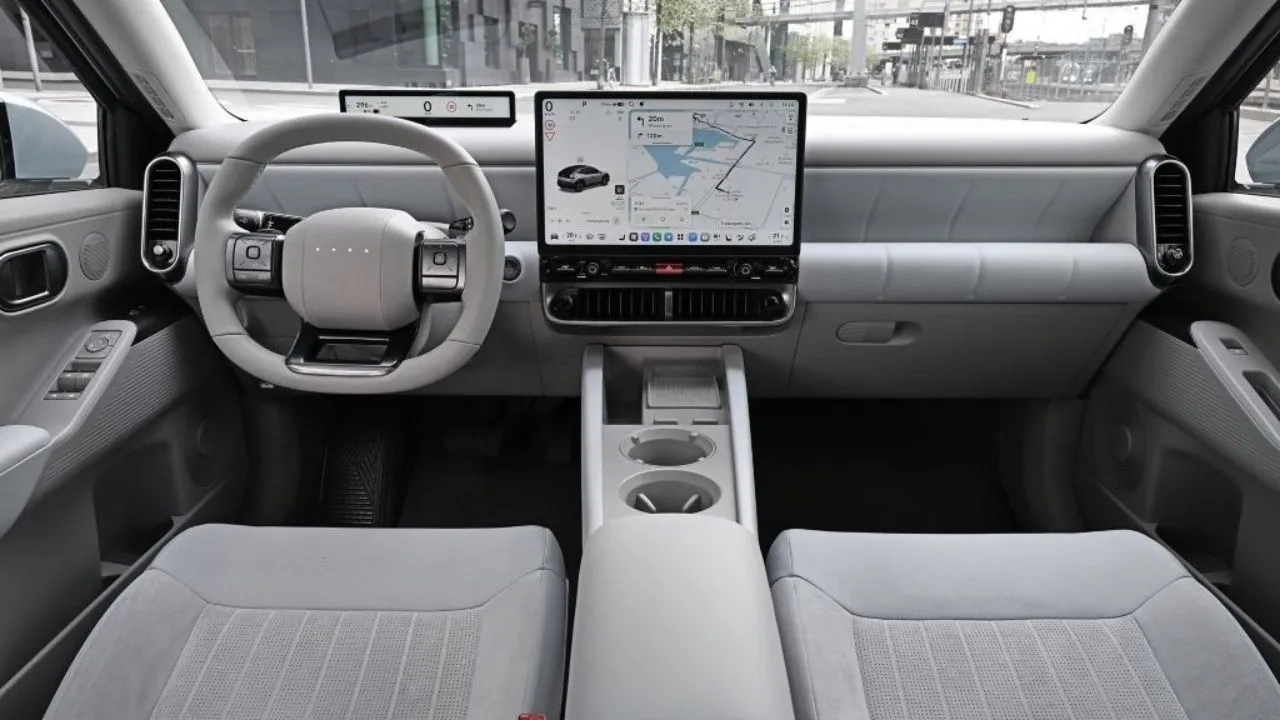
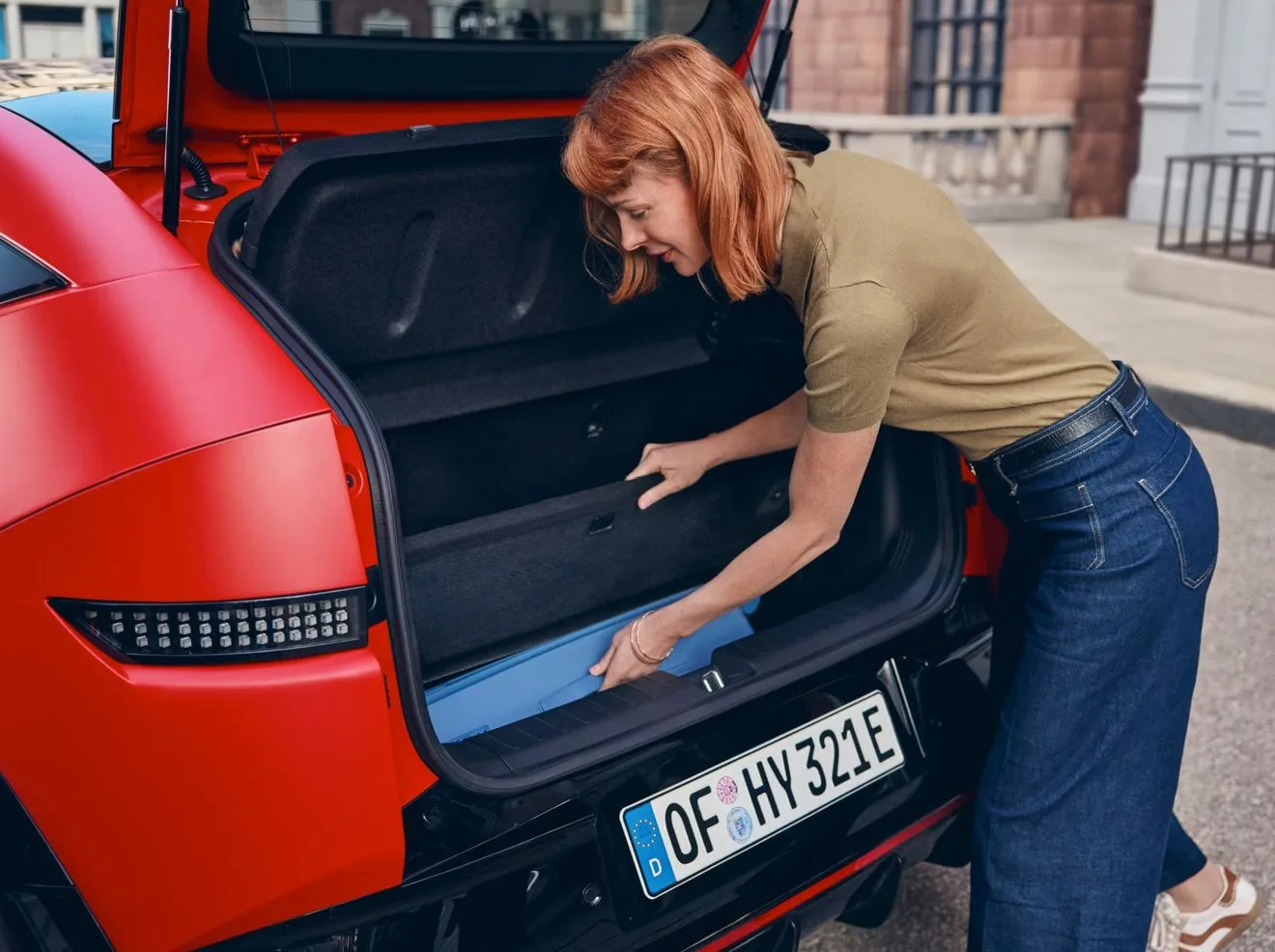
The design continues inside the cabin, where Hyundai has aimed to balance space and technology without making the IONIQ 3 an overly complicated vehicle. The compact model offers five seats and a trunk volume of 441 liters, including the space known as Megabox. Depending on the trim level, it features amenities such as a 12.9-inch central display, dual-zone automatic climate control, a multimedia system with mobile connectivity, a rearview camera, parking sensors, and various safety and driving assistance features.
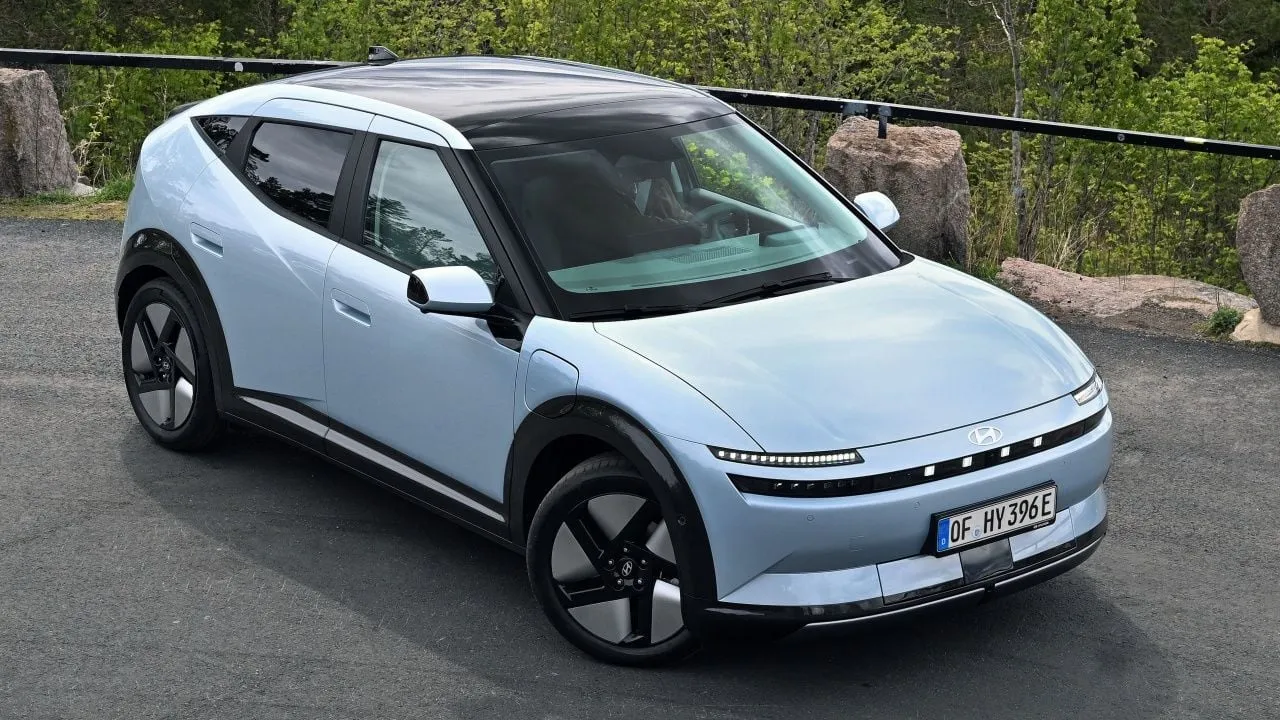
The equipment is particularly interesting in the access version. The Select trim already includes features such as a two-zone automatic climate control, 12.9-inch touchscreen, audio system with six speakers, rearview camera, front and rear parking sensors, smart key, blind spot assist, and automatic emergency braking. It can also come with a comfort package that includes a heat pump and charging cable.
In the mechanical aspect, we find two configurations. The first combines a front electric motor with 147 HP and a battery of 42.2 kWh. Interestingly, this is the most powerful version among the two available. With it, the IONIQ 3 accelerates from 0 to 100 km/h in about 9 seconds and reaches a top speed of 170 km/h. It is the variant designed for those who primarily seek a reasonable price and a battery size suitable for daily use.
The second option uses an electric motor with 135 HP and a battery of 61 kWh. Although it has less power compared to the base model, it clearly offers better range. This configuration allows the IONIQ 3 to achieve up to 497 kilometers of WLTP range, while the 42.2 kWh version is limited to around 344 kilometers. In both cases, the drive type is front-wheel drive, with a maximum torque of 250 Nm.
The large battery is particularly interesting because it enables a range of nearly 500 kilometers per charge in a car that is only 4.17 meters long. Hyundai uses a 400-volt electric architecture, which is sufficient to provide decent charging speeds without relying on the 800-volt system used in other IONIQ series models.
At a fast charging station, the IONIQ 3 can go from 10% to 80% in approximately 29 minutes with the smaller battery and around 30 minutes with the larger one. It features a 11 kW charger for AC charging, though a 22 kW option is also available. It also has V2X two-way charging capabilities, allowing the battery to power certain electrical devices.
And now we come to what is likely of most interest to Spanish buyers. In France, Hyundai lists the IONIQ 3 with a 42.2 kWh battery and 147 hp starting at 29,995 euros in the Select trim. The next tier, Trend, raises the price to 32,300 euros. For the version with a 61 kWh battery and 135 hp, the price starts at 33,995 euros again in the Select trim, while the Trend version costs 36,300 euros.
The more equipped versions follow next. The N Line trim costs 39,800 euros, while the Vision retains the same price. Above that are the Prime version at 41,695 euros and the N Line Evo at 43,595 euros. Thus, the French lineup is well-structured, allowing consumers to choose between prioritizing price or range without having to go straight for the most expensive versions.
If Hyundai introduces this same configuration to Spain, the IONIQ 3 could become one of the most interesting compact electric cars on the market. A price of 29,995 euros would be particularly significant, as it would place the model below the 30,000 euros psychological barrier before any potential marketing campaigns or incentives available in Spain are applied.
The 61 kWh version would also offer a very strong advantage. For around 33,995 euros, buyers would get a compact electric car with 135 horsepower capable of reaching up to 497 kilometers of range. This is a combination that’s hard to find in the current European market and could force competitors such as the Volkswagen ID.3, Renault Megane E-Tech, or Peugeot E-308 to adjust their prices to maintain their market position.
It should be noted, however, that the French prices are not yet the official Spanish price. Hyundai Spain has already unveiled the IONIQ 3 and confirmed its key features, including the option to choose between 42.2 kWh and 61 kWh batteries, offering ranges of up to 344 kilometers and 497 kilometers respectively. Nevertheless, the brand states that certain specifications may vary by market.
Therefore, until the final price for Spain is announced, it is most prudent to use French prices as a reference. Everything suggests they will be quite similar if Hyundai wants to maintain a consistent business strategy across Europe. The fact that the IONIQ 3 is manufactured in Turkey also works in its favor when setting a competitive pricing strategy in the European market.
The new Hyundai IONIQ 3 thus comes with a fairly clear proposition: a compact electric vehicle with modest size, five seats, 441 liters of trunk space, up to 497 kilometers of range, and a starting price that is already below 30,000 euros in France. If these figures remain the same in Spain, Hyundai will have one of the best price-to-range ratios among electric vehicles in its category.
And that is precisely the key. The IONIQ 3 doesn’t need to offer spectacular performance to be interesting. Its real appeal lies in something much simpler: making an electric car with nearly 500 kilometers of range once again fall within a reasonable price range.
If Hyundai manages to keep the starting price at 29,995 euros and the price for the larger battery at 33,995 euros in Spain, the IONIQ 3 could become one of the brand’s most significant electric vehicle launches in Europe.