
262 km of range for around 20,000€: Nissan will have its own cheap and 'retro' electric car through Renault
12/09/2026 10:15
Updated to
12/09/2026 10:15
Nissan is preparing a new electric car for Europe, targeting the most affordable segment of the market this time. The Japanese brand has confirmed that on September 23rd it will unveil the new Nissan Pixo globally—a small urban electric vehicle that will sit below the current Micra and mark its return to the European A-segment. While there were earlier rumors about it being called Wave, Nissan will ultimately use a name it previously employed in Europe from 2009 to 2013.
Nissan describes its upcoming model as “small in size, but with a strong personality.” The company states it will be designed specifically for urban living, combining compact dimensions, user-friendly technology, and a unique design. It also positions it as “a new and more affordable option for daily electric driving,” clearly highlighting its role as a new entry-level model in its European electric vehicle lineup.
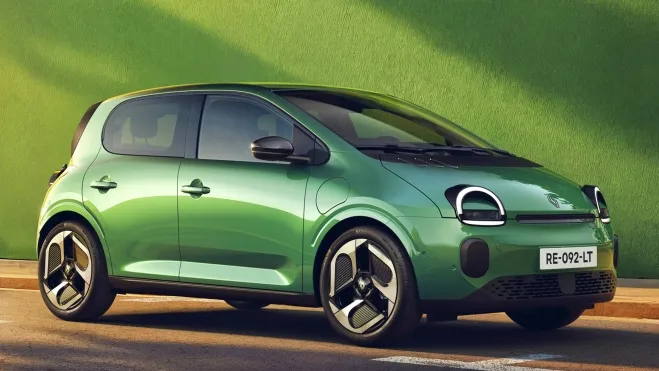
The Nissan Pixo will be the electric sibling to the Renault Twingo
Although its final specifications have not yet been released, the basis of the new Pixo is known. It will be a derivative of the Renault Twingo E-Tech and use the same platform. Nissan and Renault agreed in March 2025 that the French company would develop and manufacture this small electric vehicle for Nissan starting in 2026, taking advantage of the significant cost savings that come from sharing architecture and components.
The design, however, will be the responsibility of Nissan. The goal is for the Pixo to have a clearly distinct identity despite its close technical relationship with the Twingo. The only image released so far barely reveals any details, but everything suggests that Nissan will modify the front end, lighting, and various exterior elements to visually distinguish it from the Renault model.
It will also share its place of origin. The Nissan Pixo will be manufactured at Renault’s plant in Slovenia, where the electric Twingo and the new generation of Dacia Spring will also be produced. These three small electric vehicles will thus benefit from the same industrial and technical foundation, although each brand will aim to target a different audience.
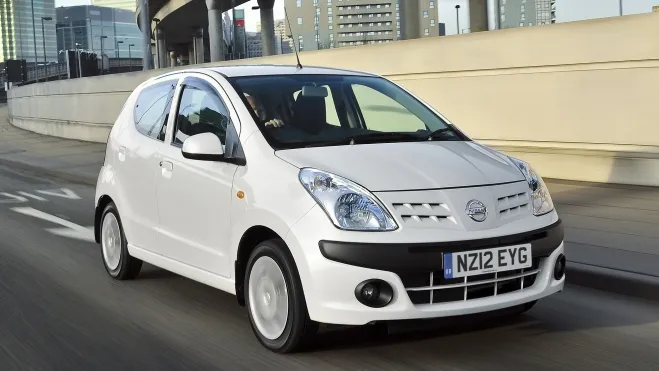
An electric vehicle expected to have around 260 km of range
Nissan has not yet confirmed the battery, power output, or range, so the figures for the Renault Twingo are only meant to give us an idea of what to expect. The French model is 3,790 mm long, and its entry-level version uses a 27.5 kWh battery along with a front-mounted 60 kW motor, equivalent to around 82 horsepower, offering an approved range of 262 km. The Pixo is expected to have similar figures, though we’ll have to wait until its launch to know its final specifications.
Its length should also be around 3,800 mm. For reference, the Twingo is 3,790 mm long, while the new Dacia Spring, also built on this platform, measures approximately 3,850 mm. Nissan intends to use these compact dimensions as one of the main selling points for the Pixo, positioning it as a vehicle designed primarily for urban use.
The new model will also have an important commercial mission. Nissan already utilizes its partnership with Renault for the new electric Micra, which is closely related to the Renault 5 E-Tech, but the Pixo will allow Nissan to enter an even lower price point as well as a smaller size category. It will thus be Nissan’s true budget electric vehicle in Europe and a model through which the company returns to competing in the A-segment, a category many brands have abandoned over the past few years.

Some of its most important details remain unknown, such as the price, final battery capacity, range, charging speed, and date it will arrive at dealerships. Nissan will clarify many of these uncertainties on September 23rd. What is already confirmed is that the Pixo is returning, this time as a small electric car developed on the same platform as the Renault Twingo, with Europe being one of its key markets.