
246,322 units sold so far, but Xiaomi needs 75,900 deliveries per month to meet its goal of 550,000 by 2026

06/09/2026 13:00
Updated to
06/09/2026 13:00
Xiaomi continues to solidify its position as an automaker, surpassing the 30,000-unit delivery mark once again in August. This marks the fifth consecutive month that the Chinese tech company’s automotive division has exceeded this figure, though the company has once again avoided providing an exact number and has not specified how many units belong to each of its models. The final figures are expected to be released later through the China Passenger Car Association (CPCA).
The problem for Xiaomi lies not so much in its current sales volume as in the ambitious target it has set for 2026. In the first 7 months of the year, it delivered 216,322 vehicles, 14.83% more than during the same period in 2025. However, the company aims to deliver 550,000 vehicles by the end of December. Even if it delivers at least 30,000 units in August, Xiaomi would currently have around 246,322 deliveries, which is only 44.8% of its annual target.
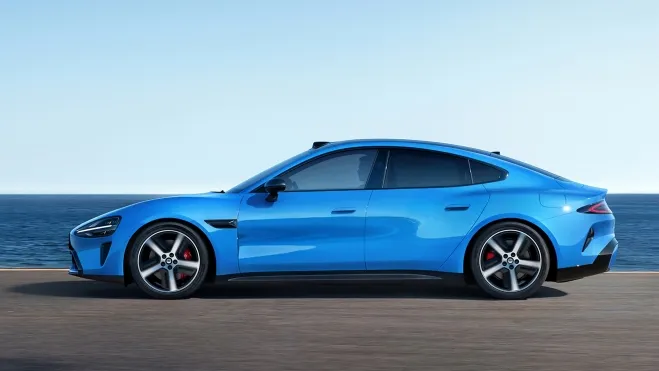
Xiaomi would need around 75,900 monthly deliveries
Mathematics clearly illustrates the scale of the challenge. If August’s deliveries were exactly at that minimum of 30,000 units, Xiaomi would still need to deliver around 303,678 cars between September and December to reach the target of 550,000 units. This means maintaining an average of approximately 75,900 vehicles per month for each of the remaining four months.
This figure is especially difficult given their current pace. Xiaomi delivered 31,267 cars in July, so they would need to roughly double that monthly volume for the rest of the fiscal year. In July, their deliveries increased by 2.68% compared to the same month last year, although they dropped by 9.99% from June.
The manufacturer has managed to stabilize production above 30,000 units in recent months. It delivered 39,002 vehicles in January, but February and March saw figures drop to 20,414 and 21,440 units respectively. Recovery came in April with 36,702 cars, followed by 32,759 in May, 34,738 in June, and the aforementioned 31,267 in July. August thus marks the fifth consecutive month with deliveries above 30,000 units, but such a pace remains clearly insufficient to meet the annual target.
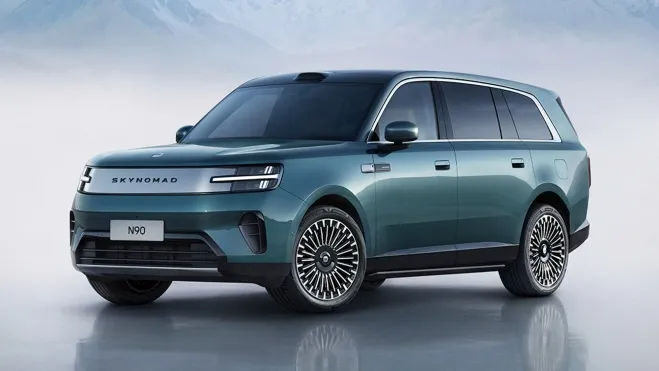
SkyNomad will need to help Xiaomi accelerate
A significant part of Xiaomi’s hopes now rest on SkyNomad, its second vehicle lineup and the first to feature extended-range electric technology. The company officially unveiled this new series on July 30th and is preparing for commercial launch and the first deliveries of its two initial models in September.
The first models to be released will be the SkyNomad N90 Max and N70 Max. The former is a large seven-seater SUV that serves as the flagship of the new lineup, while the latter offers a five-seater interior. Subsequently, Pro and Standard versions of both models are expected to be introduced, expanding the range and enabling Xiaomi to compete in a much broader price spectrum.
The problem is that Xiaomi is entering a market segment that is facing difficulties in China. Retail sales of extended-range electric vehicles totaled approximately 535,000 units from January to July, representing a year-on-year decline of 15.35%, according to CPCA data. Therefore, SkyNomad will need to grow rapidly in a market for EREV vehicles that is currently contracting.
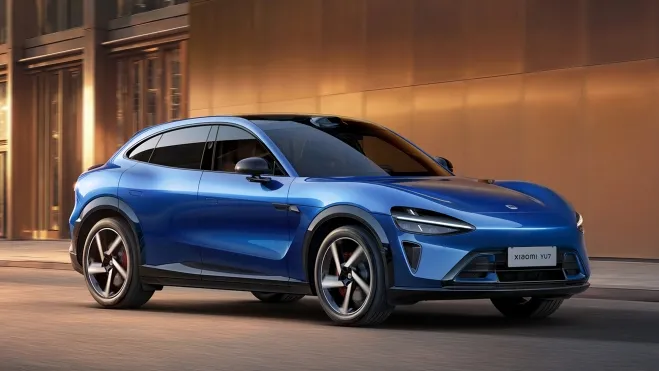
The 550,000-vehicle target becomes more challenging
The contrast is even greater when considering Xiaomi’s rapid growth since it entered the automotive industry. The company ended 2025 with approximately 410,000 deliveries and raised its target for the year to 550,000 units, an increase of around 34%.
In addition, its first car has already achieved a significant milestone. The Xiaomi SU7 family surpassed 500,000 cumulative deliveries on August 17th, just 28.5 months after deliveries began. Xiaomi itself confirmed this figure in its financial results later on.