
24 hours underwater in the sea and it still works: Chery pushes the battery of ‘our’ plug-in hybrid EBRO S900 to its limits
30/09/2026 15:00
Updated to
30/09/2026 15:00
What would happen to the battery of a plug-in hybrid if it remained completely submerged in saltwater for a day? Chery sought to answer this question through a rather unusual test, particularly striking due to the conditions it subjected one of its battery packs to.
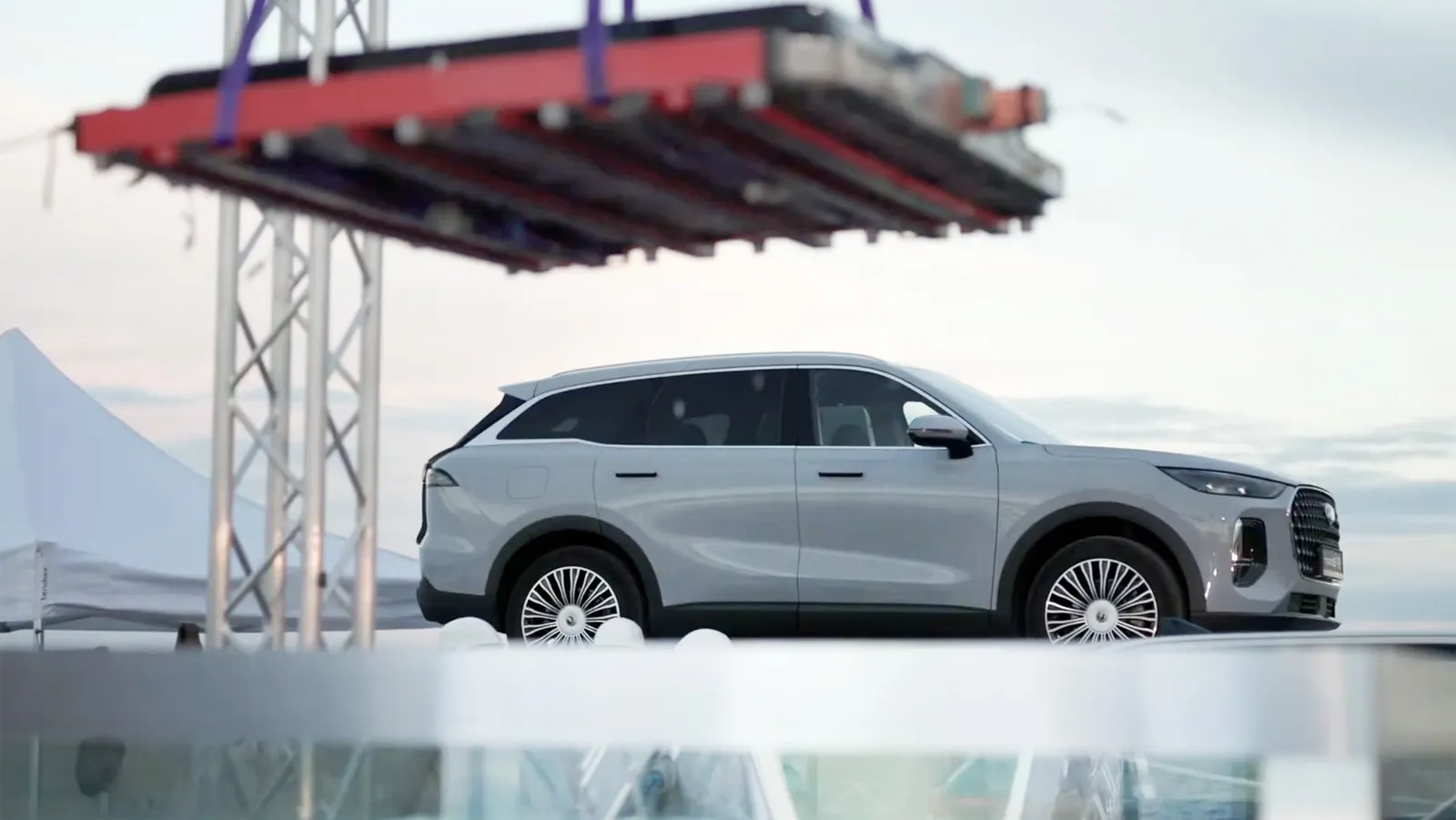
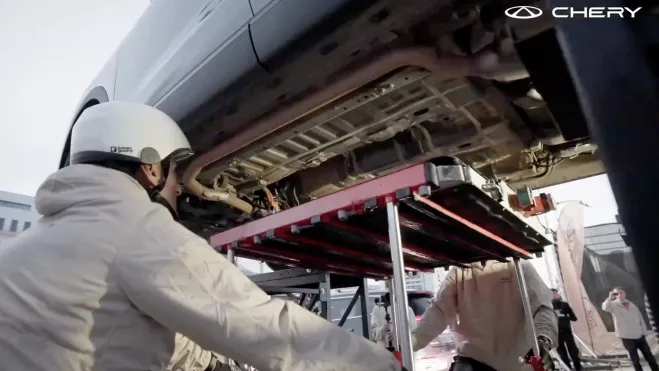
The vehicle chosen is also especially well-known in Spain. It’s a Chery Tiggo 9 CSH, the large plug-in hybrid SUV sold in our market as the EBRO S900. The company removed its battery, kept it submerged in seawater for 24 hours, and then reinstalled it in the vehicle to see if it still functioned.

24 hours underwater and then back in the car
The test was conducted on China’s Shenzhen coast. Chery submerged the entire battery pack in a container filled with seawater and left it there for 24 hours. The high salinity makes this environment particularly harsh on the electrical components and connections within the battery pack.
After the immersion period ended, technicians removed the battery and checked its condition. According to results provided by the manufacturer, no water leaks, electrical faults, short circuits, or other significant damages were detected. The insulation voltage also remained within the expected parameters.
Chery wanted to go a step further and test whether the battery could continue functioning after the experiment. The battery pack was reinstalled in the Tiggo 9 CSH from which it had been removed, and the plug-in hybrid was able to start and drive normally. According to the company, no battery-related warnings or errors appeared after restarting the vehicle.
It’s the same SUV we know as the EBRO S900
This test is particularly relevant to the Spanish market because the Tiggo 9 CSH is the model known here as EBRO S900. The Spanish brand, relaunched through its industrial partnership with Chery, uses this Chinese SUV as the basis for the model that currently tops its lineup.
With a battery capacity of 34.46 kWh and an electric range of 140 kilometers, the system can operate in “zero emissions” mode for most daily trips, switching to a combustion engine for longer journeys. It is precisely this high-voltage battery that Chery wanted to test through prolonged exposure to saltwater.
The CSG technology can withstand such extreme conditions.
CHERY subjected the TIGGO 9 CSH to a sequential safety test — 24 hours of battery immersion followed by scraping the underbody at 25cm depth.
22/23 - Sep.
Constanța, Romania, Europe
One vehicle. One continuous challenge.
Safety proven. ️… pic.twitter.com/xkKtX1GVjx
— Chery International (@CheryAutoCo) September 25, 2026
A extreme test to demonstrate battery isolation
The purpose of this experiment is to show the battery pack’s ability to remain isolated even under conditions that are unlikely to occur during normal use. Chery emphasizes the sealing of the casing and various measures taken to prevent water from reaching high-voltage electrical components.
The company has long used particularly eye-catching tests to promote the safety of its batteries. The tests conducted include scenarios involving impacts, pressure, high temperatures, or exposure to water. It should be noted that this refers to a controlled demonstration whose results were reported by the manufacturer itself, not an independent test. Nevertheless, this experiment is especially interesting from Spain’s perspective because the subject vehicle is not one unfamiliar to our market.
