
225,000 electric cars per year and a factory that doesn’t exist: this report exposes the major flaw in Spain’s industry
19/10/2026 12:30
Updated to
19/10/2026 12:30
Projections for the Spanish market indicate a significant shift in purchasing preferences over the next decade, with electric vehicles playing an increasingly important role and internal combustion engines gradually losing ground. This development will force manufacturers based in Spain to adjust their investments and industrial capabilities to meet a demand that is very different from the current one.
This transformation occurs at a time of increasing international competition, particularly due to the expansion of Asian brands and the development of new technologies that are reshaping the automotive industry, according to consultancy Deloitte in its report “The Transformation of the Automotive Industry in Spain,” which analyzes the decisions manufacturers, suppliers, and distributors must make to maintain their position in the European market.
Electric cars will account for 64% of sales in Spain by 2035
The estimates from the study identify hybrid vehicles as the dominant technology in the short term, with a projected share of 43% by 2027, declining to 35% by 2029. Meanwhile, pure electric vehicles would start the period with a 14% share and gradually increase their presence to account for 64% of registrations by 2035, compared to 14% for plug-in hybrids and 12% for conventional hybrids.
This development would also result in a significant reduction in the market reserved for internal combustion engines, whose share would drop from 32% in 2027 to 23% just one year later, falling to 21% by 2031 and ending at 10% by 2035. This scenario aligns with an increase in the diversity of manufacturers in Spain, where currently eight brands are needed to account for half of all vehicle registrations, compared to just four a decade ago.
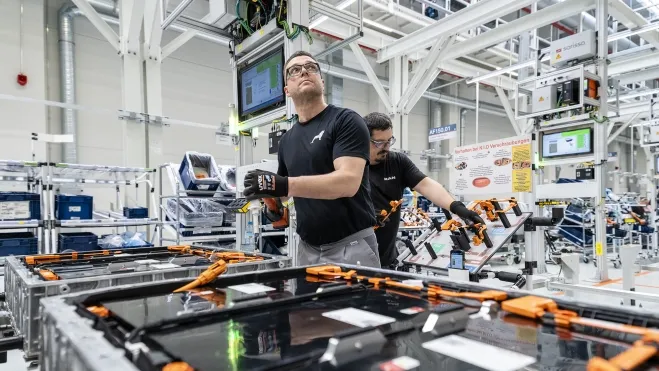
Spain needs to accelerate its battery factories to maintain its industrial strength
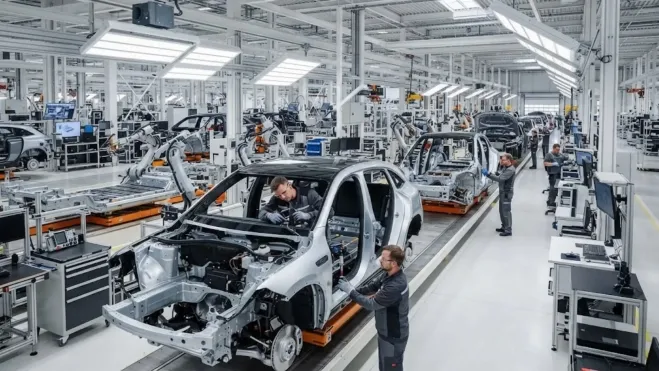
The economic significance of this sector explains why these decisions are crucial for Spain, Europe’s second-largest automobile producer. With an industry that generates over 120 billion euros annually from manufacturers and component companies, it accounts for around 11% of GDP and employs roughly 9% of the working population through direct and indirect jobs.
Beyond increasing battery production, Deloitte identifies four key decisions to maintain industrial competitiveness: determining how to respond to new international manufacturers, selecting the vehicle technologies and segments where investments should be focused, diversifying revenue streams through digital services and solutions, and leveraging regulatory requirements to create new competitive advantages.
The report concludes that Spain has a sufficiently strong industrial base to enhance its role in Europe’s electric mobility sector, though it warns that maintaining current production levels will not be enough if the country fails to develop its own capabilities in batteries, software, and other high-value technologies—areas that will determine an increasingly larger share of automotive competitiveness in the years to come.