
22 electric cars undergo the same range test, and here are the results
For years, range has been one of the main factors considered when comparing electric cars. The higher the number of kilometers a model claims, the better it seems on paper. However, once you move beyond the technical specifications and enter real-world conditions, differences emerge that can significantly affect driving experience.
That is exactly what the Canadian Automobile Association (CAA) set out to test with its 2026 trial. A total of 22 electric cars traveled the same 230-kilometer route between Blue Mountain and Vaughan in Ontario, covering urban roads, rural paths, and highways. They did this without a single stop to recharge, including the model with the lowest official range rating.
But the most interesting aspect of the test wasn’t just confirming that everyone could complete the route. CAA also measured each model’s energy consumption, and after finishing the journey, it subjected all vehicles to a 15-minute loading test. The results show that efficiency and actual charging capacity can be just as important as the maximum range claimed.
From Toyota bZ to Lucid Gravity: huge differences in consumption
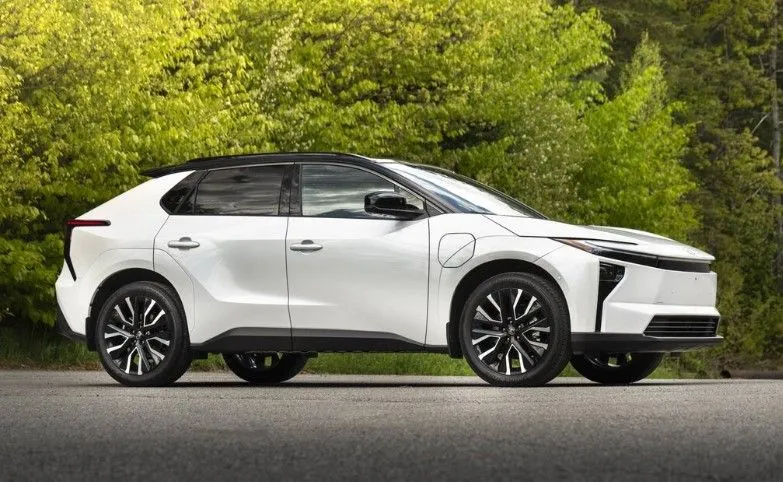
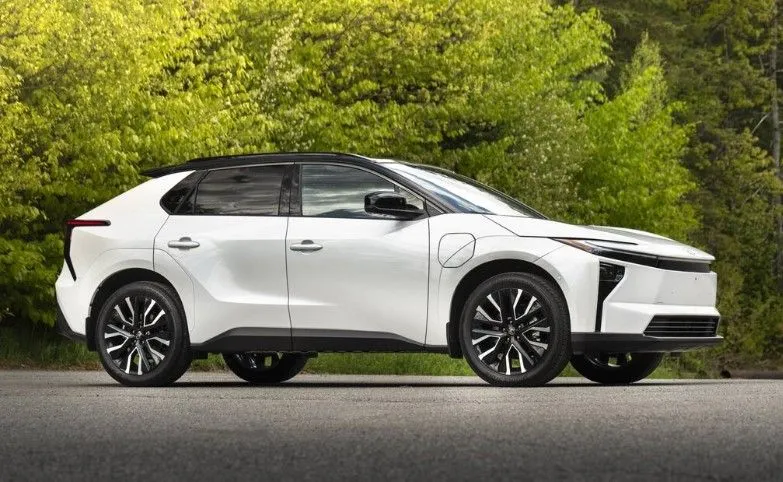
The 22 electric cars showed significant differences in energy consumption. The Toyota bZ (bZ4X in Europe) was the most efficient model in the entire test, with 11.43 kWh/100 km, closely followed by the Tesla Model Y at 11.81 kWh/100 km, and the Tesla Model 3 at 11.85 kWh/100 km.
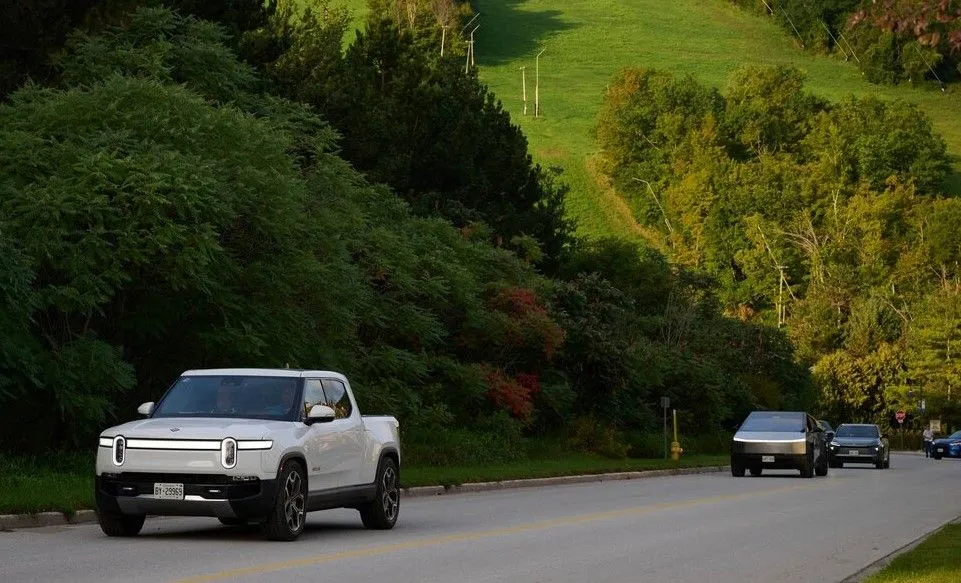
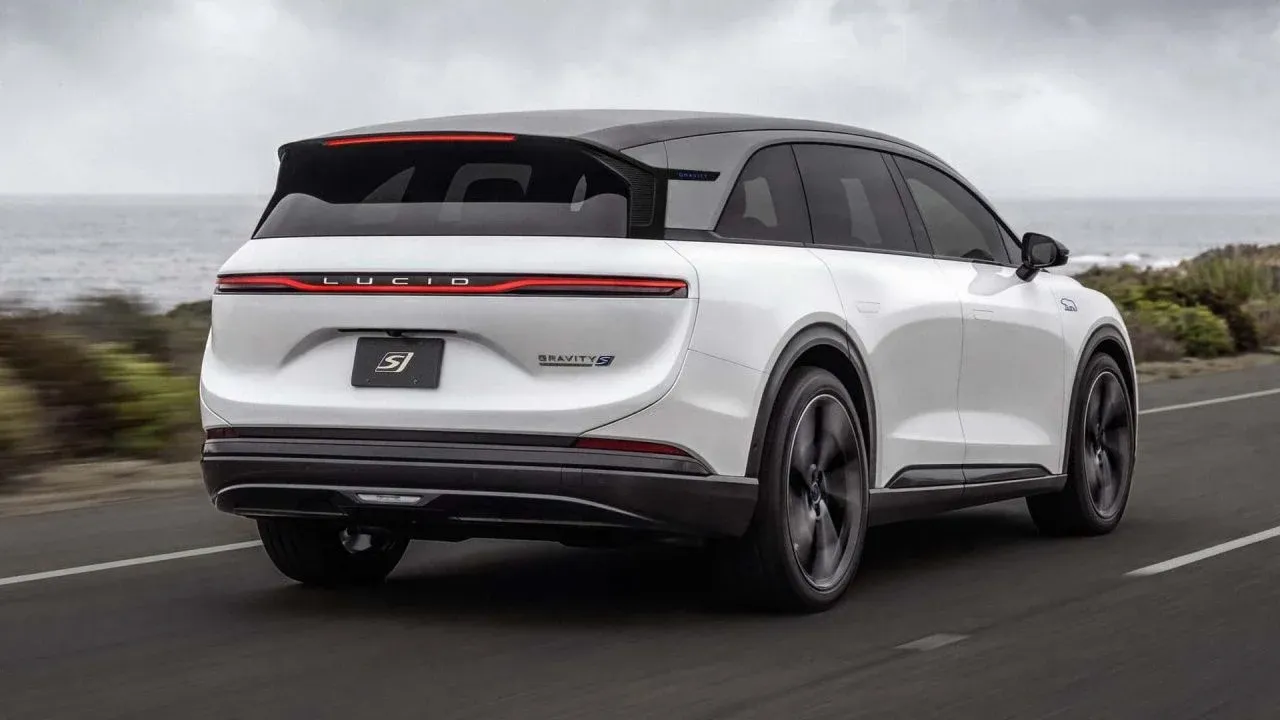
The KIA EV4 also performed well, with 11.89 kWh/100 km, while the Nissan Leaf recorded 12.48 kWh/100 km. At the other end of the spectrum was the Lucid Gravity, which had an astonishing 28.91 kWh/100 km. The GMC Hummer EV SUV achieved 23.55 kWh/100 km, the Tesla Cybertruck 23.41 kWh/100 km, and the Rivian R1T 19.96 kWh/100 km. The Cadillac Lyriq finished at 19.10 kWh/100 km.
The difference between the two extremes is significant. The Lucid Gravity required more than twice and a half the energy of the Toyota bZ to cover the same distance, a difference that goes beyond just fuel consumption figures. The more efficient an electric car is, the less energy it needs to complete a given distance, and thus the less electricity it will have to recharge later.
Model
Consumption
Kilometers covered in 15 min
Toyota bZ
11.43 kWh/100 km
99 km
Tesla Model Y
11.81 kWh/100 km
97 km
Tesla Model 3
11.85 kWh/100 km
123 km
KIA EV4
11.89 kWh/100 km
104 km
Nissan Leaf
12.48 kWh/100 km
126 km
Hyundai IONIQ 5
13.40 kWh/100 km
136 km
Hyundai Kona Electric
13.64 kWh/100 km
105 km
Volkswagen ID.4
14.39 kWh/100 km
125 km
Chevrolet Equinox EV
14.47 kWh/100 km
71 km
Mercedes CLA with EQ technology
15.22 kWh/100 km
135 km
Hyundai IONIQ 9
15.52 kWh/100 km
108 km
Lucid Air
16.25 kWh/100 km
58 km
BMW iX3
16.59 kWh/100 km
121 km
Ford Mustang Mach-E
16.82 kWh/100 km
105 km
Chevrolet Silverado EV
17.23 kWh/100 km
80 km
Polestar 4
17.60 kWh/100 km
—
Volkswagen ID. Buzz
18.47 kWh/100 km
118 km
Cadillac Lyriq
19.10 kWh/100 km
131 km
Rivian R1T
19.96 kWh/100 km
123 km
Tesla Cybertruck
23.41 kWh/100 km
98 km
GMC Hummer EV SUV
23.55 kWh/100 km
90 km
Lucid Gravity
28.91 kWh/100 km
178 km
The second part of the test is even more interesting for those who use electric cars for travel. After completing 230 kilometers, the 22 models underwent a 15-minute fast charging session under standardized conditions. On average, they regained 110 kilometers of range, though the differences between them remained significant.
The Lucid Gravity, which had consumed the most electricity during the journey, was also the model that regained the most distance in those 15 minutes: 178 kilometers of range. The Hyundai IONIQ 5 added 136 kilometers, the Mercedes CLA with EQ technology reached 135 kilometers, the Cadillac Lyriq achieved 131 kilometers, and the Nissan Leaf regained 126 kilometers.
On the opposite end, the Lucid Air showed up. Despite having a high-capacity battery, it only managed to add 58 kilometers of range during those 15 minutes. The Chevrolet Equinox EV added 71 kilometers, the Chevrolet Silverado EV 80 kilometers, the GMC Hummer EV SUV 90 kilometers, and the Tesla Model Y 97 kilometers. This demonstrates that having a high maximum charging power isn’t everything.
The distance an electric car can travel on a single charge during a stop depends on numerous factors. Battery temperature, charging level at the start, the vehicle’s own charging system, and the charger used can significantly affect the result. Therefore, the maximum power specified by the manufacturer alone does not tell us how long we will need to be plugged in during a trip.
There is also a particularly interesting comparison with the winter test conducted by CAA in February 2025. The electric cars tested in September 2026 consumed on average about 40% less energy than the models evaluated during that winter test. The organization itself notes that this is not a direct comparison, as the conditions and participating vehicles were different, but the result still highlights the impact of temperature on energy consumption.
The difference was also evident when analyzing fast charging performance. During the 15 minutes of charging, the models tested in September managed to regain approximately 15% more range on average compared to the vehicles from the 2025 winter test. Once again, the CAA notes that the conditions of both tests were different, so this data serves as a reference rather than a scientific comparison between specific models.
All of this slightly changes the way we evaluate an electric car. A very high certified range can be attractive, but lower energy consumption allows for better use of every kWh stored in the battery. And when it’s time to travel, the ability to cover many kilometers during a short stop can be just as important as battery size.
In fact, the CAA’s own results show seemingly contradictory situations. The Lucid Gravity was the car that covered the most kilometers in 15 minutes, but it also required significantly more energy to do so. The Tesla Model 3, for example, consumed only 11.85 kWh/100 km and covered 123 kilometers during the same test session. These are two completely different approaches to handling a long journey.
The test also serves as a reminder that mileage alone doesn’t determine how well an electric car will perform in real use. Two models with similar figures on paper can have very different energy consumption rates and behave differently when connected to a fast charger.

The CAA conducted the test using the same settings and following a standard methodology for all 22 vehicles to ensure comparable results. All of them completed the 230-kilometer journey without needing to recharge, using approximately 40% of their battery capacity on average during the trip.
In addition, the study introduces another factor that is often overlooked: the cost of using an electric car. CAA also calculated the cost to restore 100 kilometers of range during a public charging session. In this regard, the Tesla Model 3 had the lowest cost among the participants, followed by the Tesla Model Y, Nissan Leaf, KIA EV4, and Hyundai IONIQ 5. At the other end of the spectrum were larger models such as the GMC Hummer EV SUV and Chevrolet Silverado EV.
However, CAA itself notes that this measurement represents a high-cost public fast charging scenario and is not intended to reflect the typical cost of charging an electric car at home or at work. According to the organization’s data, public fast charging accounts for only a portion of the charges users make.
In short, the test leads to a fairly simple conclusion. Range remains important, especially for long trips, but consumption and the charging curve can have a much greater impact on daily use than what the stated range figure suggests.
For those comparing electric cars, focusing only on how many kilometers each model claims can mean missing a significant part of the picture. Actual consumption, the ability to regain distance during a stop, and charging behavior under different conditions provide much more useful information about how each electric car will truly perform when it’s time to go on a trip.