
17,000 euros, 660 km range and LiDAR: here’s Volkswagen’s new electric SUV
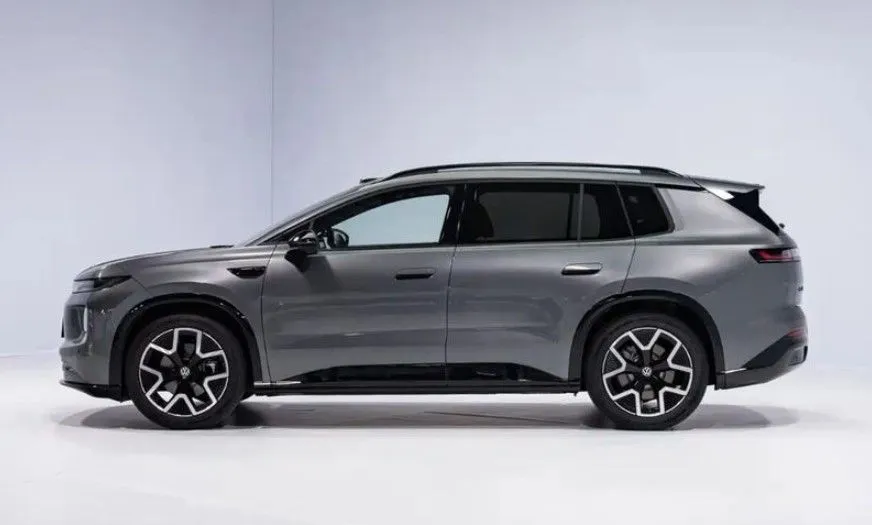
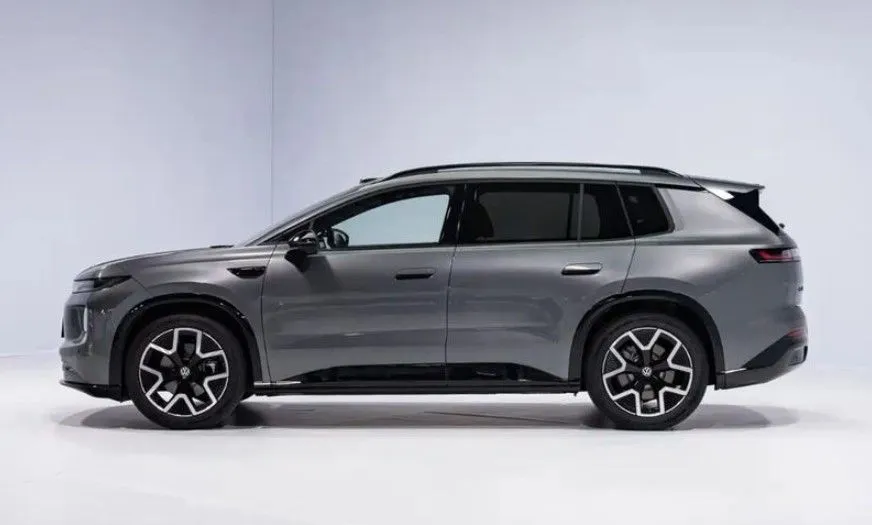
Volkswagen has begun delivering one of its most important models in China as part of its new strategy for the Asian market. The ID. AURA T6 features a mid-size SUV body, five seats, and a design that combines the German brand’s aesthetic with many technologies developed specifically for the Chinese market.
This model is part of FAW-Volkswagen’s new AURA lineup and represents a strategic shift for the company, as it aims to compete in one of China’s most competitive market segments with a product designed from the outset to meet the needs of local customers. The ID. AURA T6 is currently available in four different versions.
A 4.81-meter SUV with technology developed in partnership with Xpeng
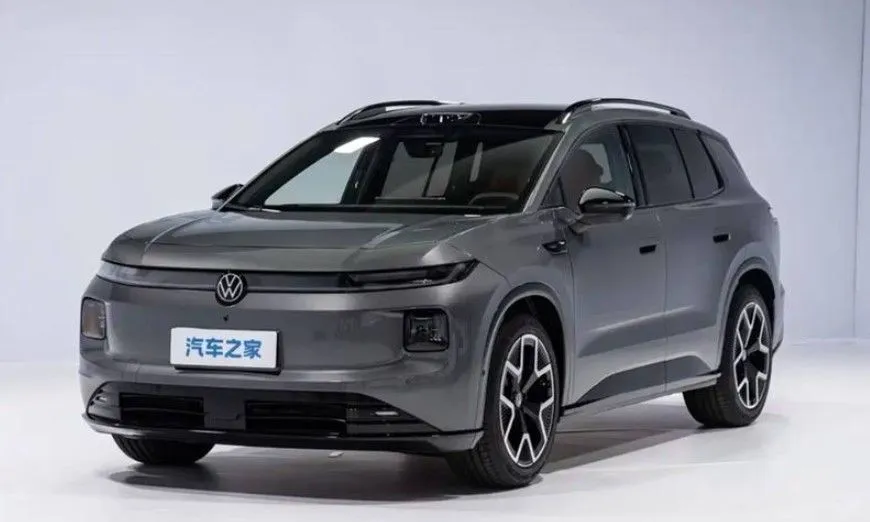
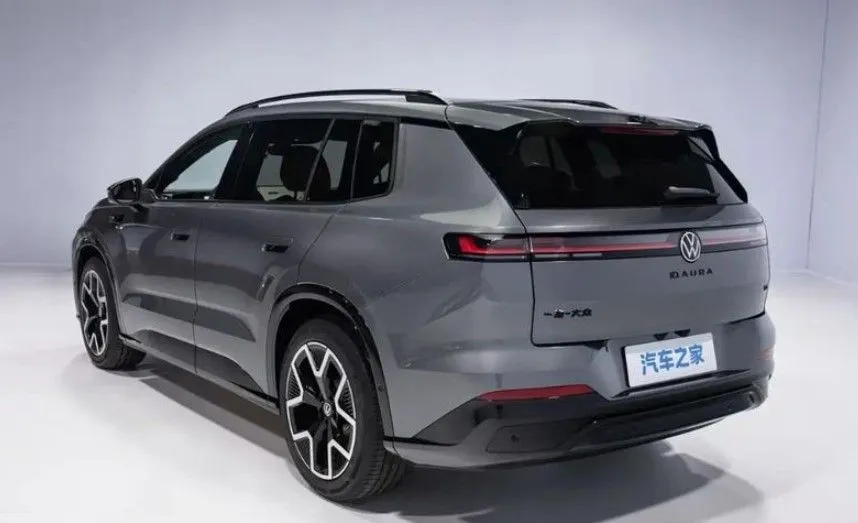
The Volkswagen ID. AURA T6 features a sleek design with split headlights and a prominent front lighting strip that runs across much of the front end. On the sides, there are clearly defined wheel arches and partially hidden door handles, while the wheels can be 19 or 20 inches in diameter. With an aerodynamic coefficient of 0.245, it measures 4.81 meters in length, 1.88 meters in width, and 1.65 meters in height, with a wheelbase of 2.84 meters.
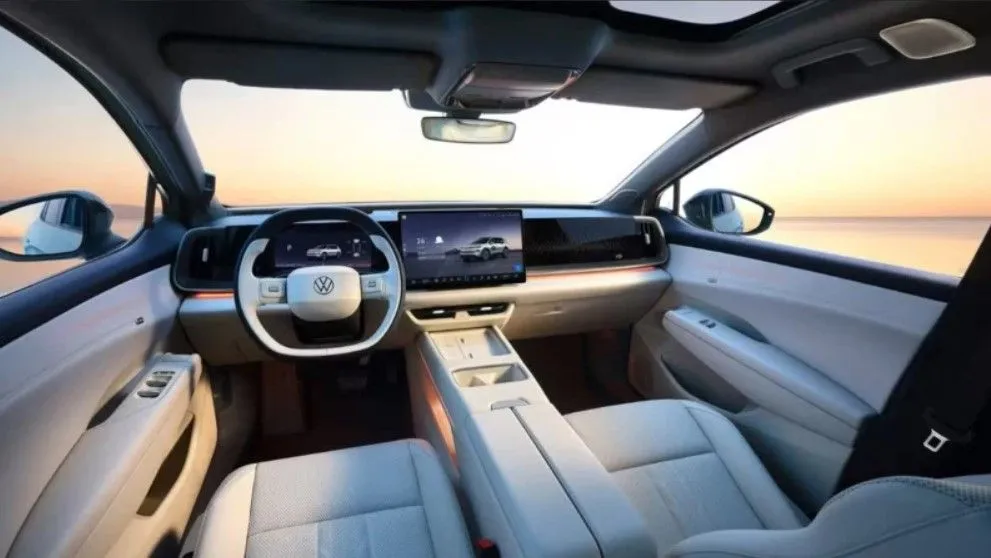
The interior clearly emphasizes technology. The dashboard features a central floating 15.6-inch screen, along with a 10.25-inch digital instrument cluster and a 25.8-inch augmented reality windshield information projection system. The multimedia system uses a 4-nanometer processor with up to 20 TOPS of computing power and is compatible with Apple CarPlay, HiCar, and CarLink. The trunk has a capacity of 576 liters, and the SUV retains a five-seater configuration.
In terms of mechanics, the ID. AURA T6 features a single electric motor located above the rear axle, delivering a maximum power of 170 kW (231 hp). The base version takes 7.2 seconds to accelerate from 0 to 100 km/h, while Volkswagen claims that the charging system allows energy recovery in about 22 minutes, though this figure depends on the version and charging conditions.
The range includes two battery options of 59.9 and 77.5 kWh, both using LFP technology. The former allows for a range of 540 kilometers on CLTC tests, while the latter increases this to 660 kilometers on CLTC. According to our estimates, these figures would correspond approximately to 470 and 574 kilometers respectively under the WLTP cycle, although the official information for this model states that the 540 and 660 km CLTC versions achieve around 446 and 541 kilometers on WLTP.
One of the most notable features of the ID. AURA T6 is available in its higher-end versions. The 660 Max and 660 Ultra trims come equipped with an advanced driver assistance system based on a 192-channel LiDAR, along with the Horizon Robotics Journey 6H processor featuring a computing power of 420 TOPS. This system provides road and urban driving assistance functions, as well as various parking aid features.
This technology is closely linked to Volkswagen’s strategy in China. The ID. AURA T6 uses the CEA electronic architecture, developed jointly by Volkswagen and Xpeng, featuring a centralized control system along with various control units distributed throughout the vehicle. It represents one of the first tangible outcomes of this partnership and illustrates how much the German brand relies on its Chinese partners’ technical expertise to accelerate the development of its new models.
The range consists of the ID. AURA T6 540 Pro, 660 Pro, 660 Max, and 660 Ultra models. The prices announced in China start at 129,900 yuan, equivalent to around 17,200 euros, and go up to 166,900 yuan, roughly 22,150 euros at the current exchange rate. The two intermediate versions cost 139,900 and 149,900 yuan respectively, approximately equivalent to 18,500 and 19,900 euros.
