
10 smart charging innovations to look forward to
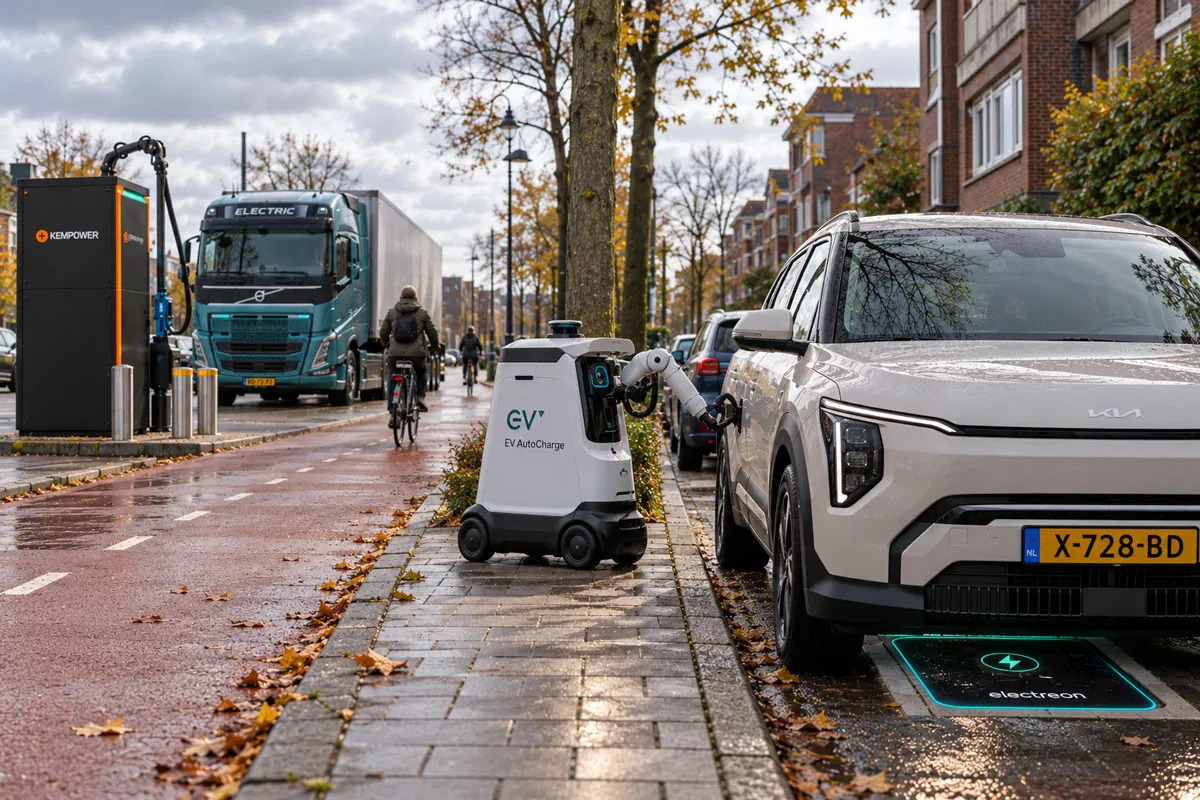
From charging posts that disappear into the pavement to asphalt that charges electric cars while driving. In 2026, we will see numerous surprising developments in the field of electric charging. Some technologies are already in use, while others are on the verge of wider adoption. These ten charging innovations could lead to a breakthrough in 2027.
Smart charging innovations could significantly change the way we drive electric vehicles in the coming years. Those who drive electric cars are already accustomed to street charging stations, home wallboxes, or fast chargers along highways. Yet, this familiar charging method might look very different in a few years. While automakers compete to outdo each other with higher charging capacities and larger battery packs—some electric cars now having capacities exceeding 200 kWh—technology companies are focusing on ways to make charging smarter and more convenient.
Some solutions are surprisingly simple, such as a charging station integrated into the sidewalk. Others go even further and eliminate the need for a charging cable altogether. Not every innovation will become immediately popular, but these ten developments show the direction electric driving is heading.
1. The charging post disappears into the sidewalk
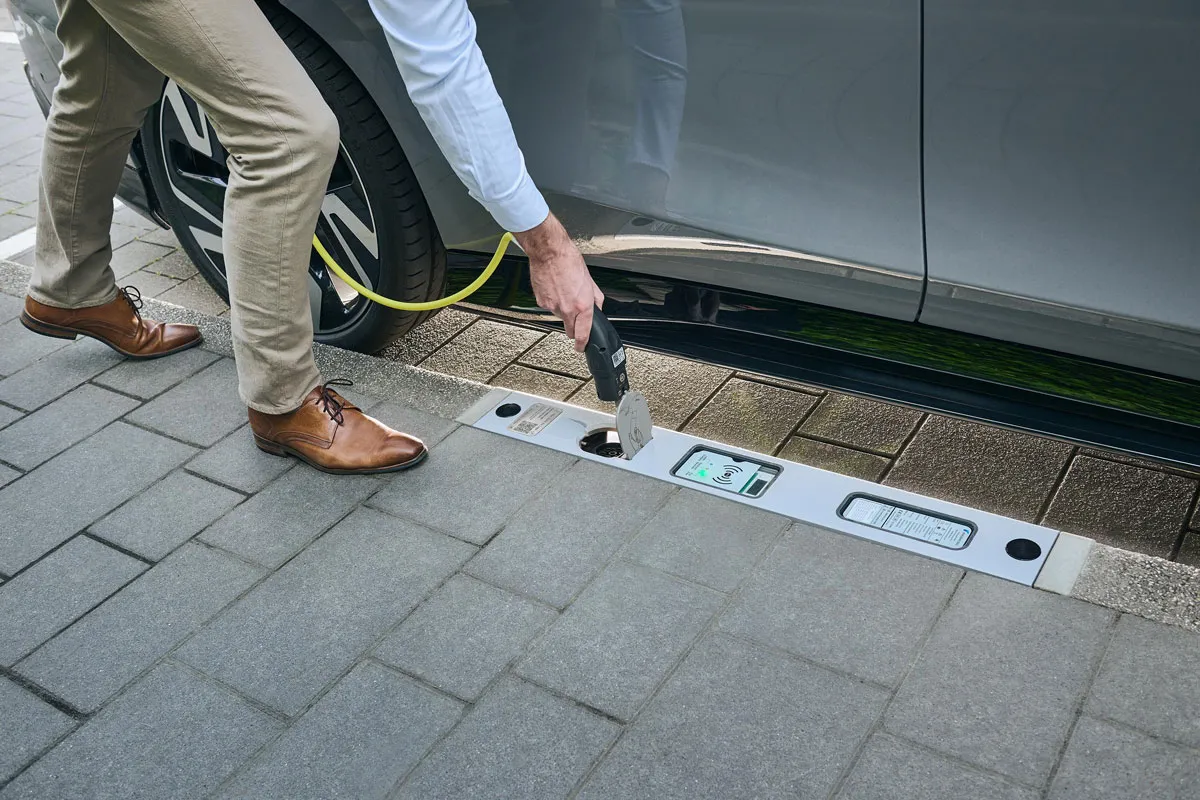
Why install a full charging post when you can incorporate the connection directly into the sidewalk? That’s the idea behind Rheinmetall’s Curb Charger from Germany. The charging technology is built into a special sidewalk element, requiring little extra space on the road. This can be particularly useful in crowded residential areas where sidewalks are already crowded with bicycles, trees, and street furniture.
The technology is now far more than just an interesting prototype. Rheinmetall has already installed the Curb Charger in various German cities, including Cologne, Düsseldorf, and Dortmund. In June 2026, the company also introduced new variants, including a sturdy cast-iron version and a flat model suitable for parking lots and commercial vehicles. With a charging capacity of up to 22 kW, it demonstrates that a charging station doesn’t need to be large to be useful.
2. A charging post that emerges from the ground
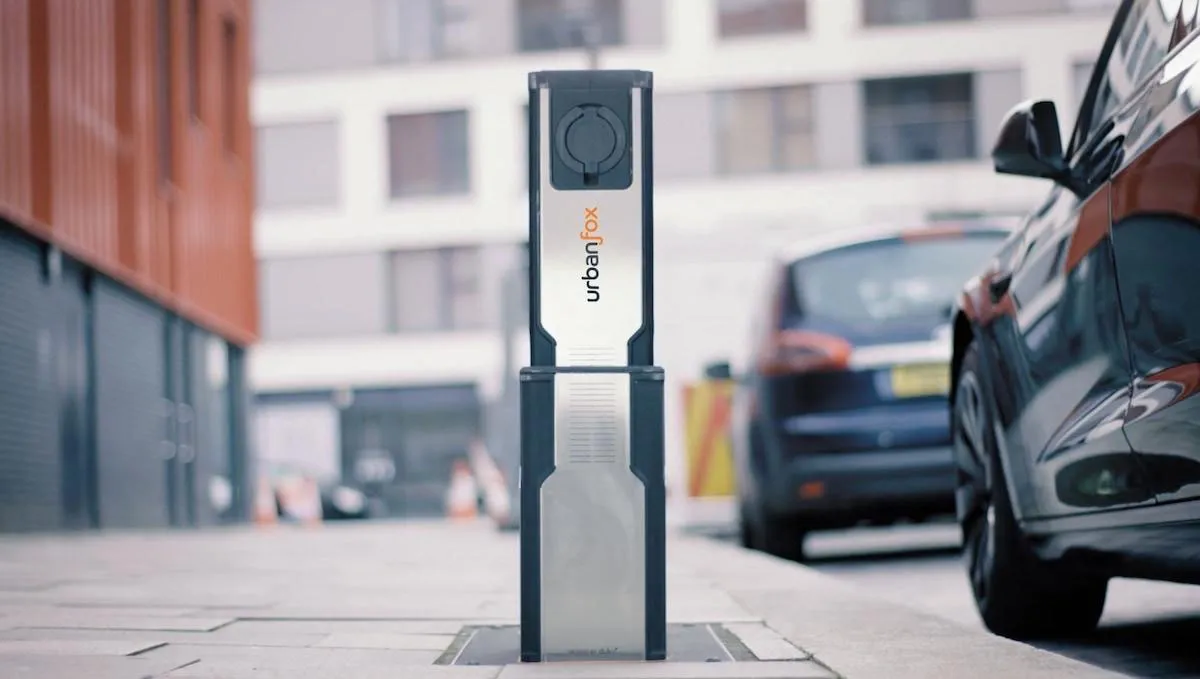
A charging station that is only visible when you need it. That’s the concept behind the UEone from British company Urban Fox. The charging station completely disappears into the sidewalk when no one is using it. As soon as a driver wants to charge, the charging point rises up. After charging, it drops back down, keeping the sidewalk clear.
This might sound like a complicated solution to a relatively small problem, but in historic city centers and narrow residential streets it can make a significant difference. Moreover, the system is no longer just a demonstration model. In March 2026, Urban Fox was commissioned to install over a thousand charging points in Suffolk, UK. This is an interesting development for Dutch municipalities that want more charging stations but not more obstacles on the streets.
3. Vehicle-to-Grid: using your car as a home battery
The fact that electric cars can also supply power back is not new. Yet 2027 could be a significant year for Vehicle-to-Grid (V2G). This technology becomes increasingly attractive, especially for households with solar panels. Starting January 1, 2027, the offsetting rule will be removed, making it even more financially advantageous to use self-generated electricity or store it temporarily.
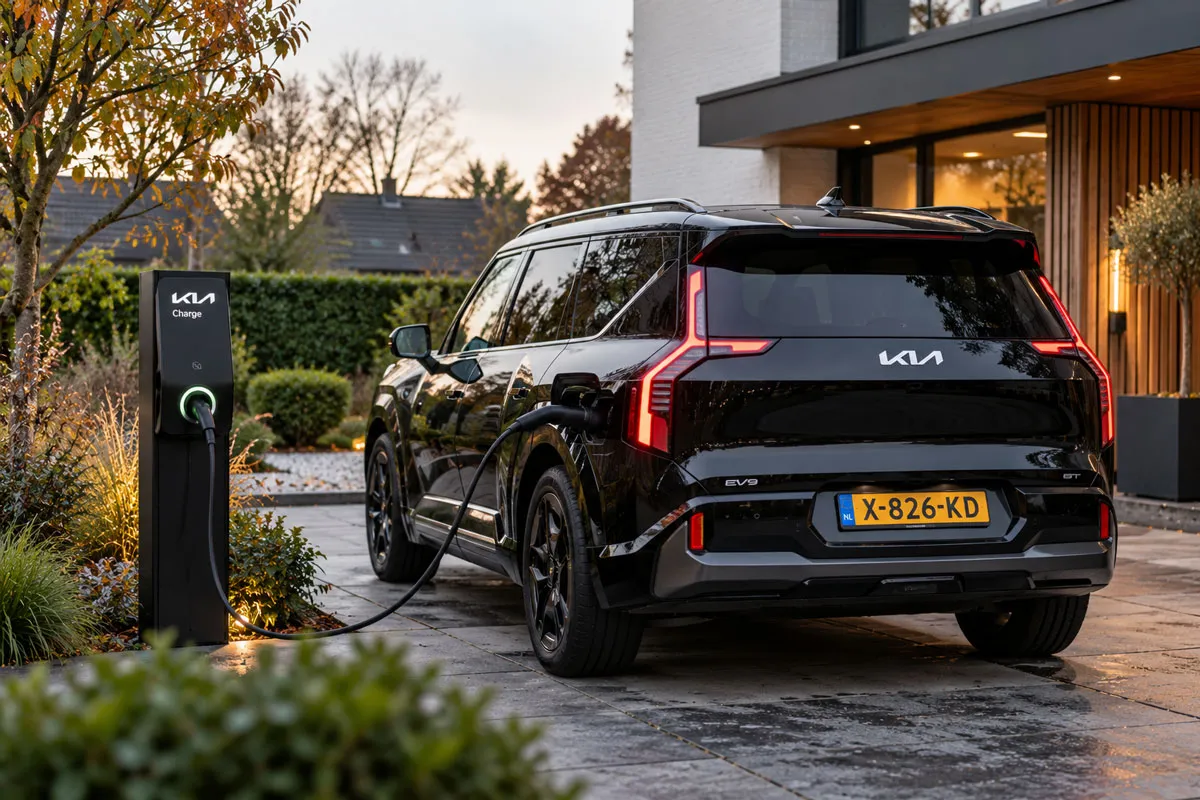
And that’s where electric cars come into play. With two-way charging, a suitable car can store solar power and later feed it back to the home or the electricity grid. At e-Drivers, we not only keep an eye on this development but are also actively involved in it. In collaboration with Kia Nederland, we are the first in the Netherlands to test this technology in practice using our Kia EV9 GT endurance tester. We focus especially on what it actually offers drivers—how easy it is to use and how much they can save with it. We will soon share our first practical experiences on e-Drivers. Those who want to learn more about the technology behind two-way charging can find explanations on Kia Charge’s website regarding how V2G works, the required charging technology, and the smart software that controls charging and power return.
V2G can also help reduce grid congestion. By charging cars at optimal times and feeding power back during peak hours, the electrical grid is less overloaded. However, both cars and charging stations need to be suitable for this purpose. In Vehicle-to-Home (V2H), the car supplies power to the home, while in V2G, electricity is sent back to the public grid. Manufacturers are preparing for both applications. For example, the go-e Charger PRO and Charger CORE are already hardware-ready for V2H and V2G. The reverse feeding function still needs to be made available through a software update.
4. Charging while driving on the highway
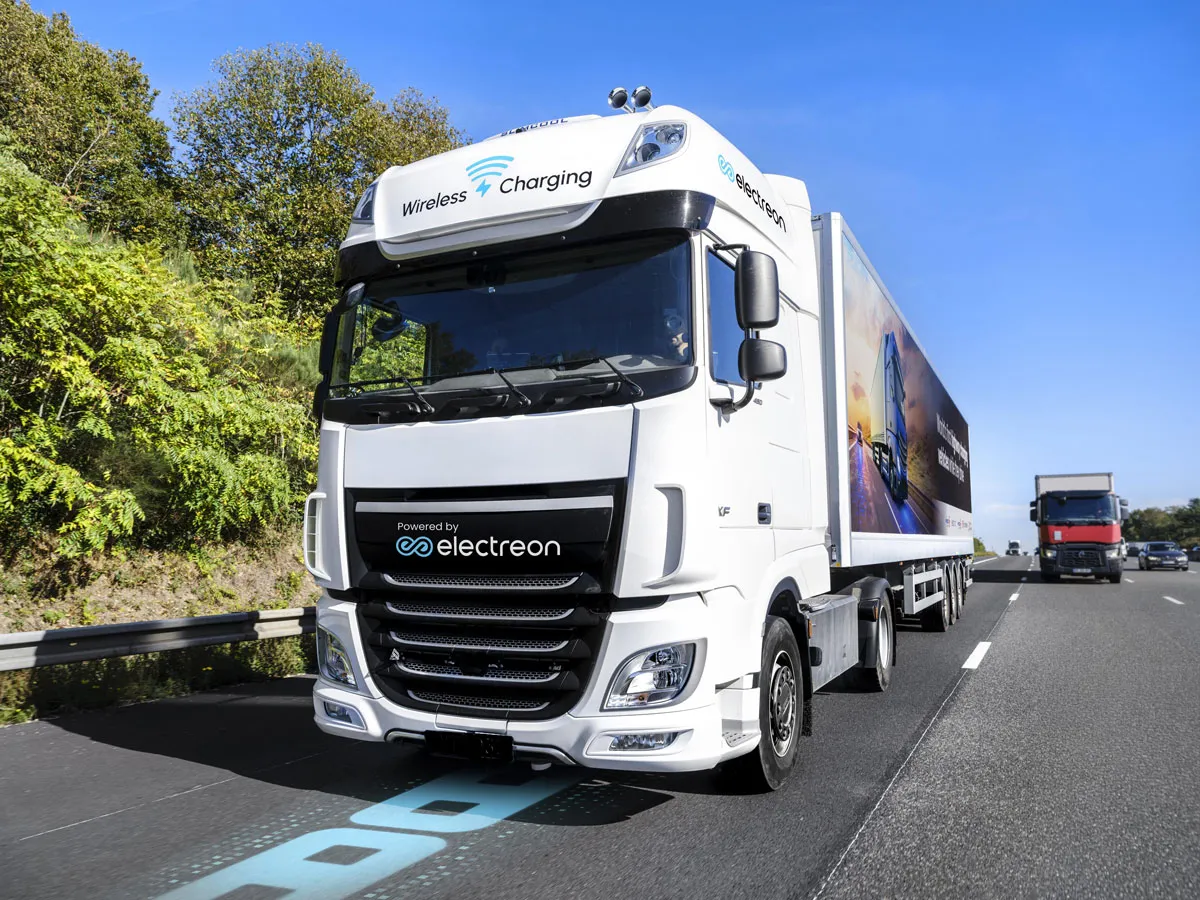
Imagine your electric car being charged while you drive. No stops, no charging card, and no cables. This idea isn’t entirely new. As early as 2022, we reported on Stellantis experimenting with wireless charging via the road surface at the Italian test track Arena del Futuro. Since then, the technology has advanced significantly. On France’s A10 highway near Paris, testing has been underway since 2025 on a public road, with other drivers and under normal traffic conditions.
Over a 1.5-kilometer stretch, Electreon’s inductive technology has been installed beneath the asphalt. Specialized vehicles, including electric trucks, cars, vans, and buses, can thus be charged while in motion. During the initial trials, average charging capacities of over 200 kW were measured under optimal conditions, with peaks exceeding 300 kW. These are impressive results, but complete highways will not be equipped with this technology for now. The installation is costly, and vehicles must be fitted with special receivers. This technology could be particularly useful for electric trucks, as it may allow them to operate with smaller and lighter battery packs.
5. Wireless charging: park and go
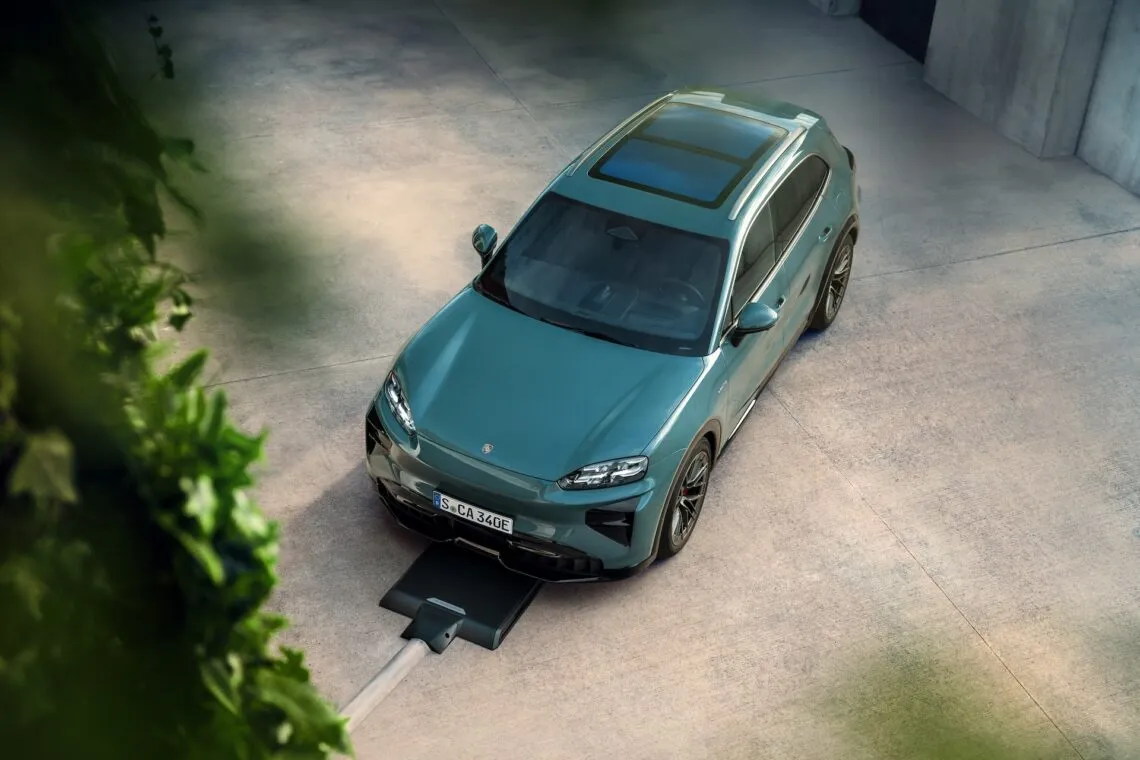
We’ve known wireless charging for years from smartphones, but it’s not new either in the automotive world. BMW already had an inductive charging system for the 530e plug-in hybrid in 2018, though with a modest charging capacity of 3.2 kW. Porsche is now taking it a step further with the all-electric Cayenne. As we reported when the Cayenne Electric was introduced, this SUV can be equipped with an inductive charging system of 11 kW. You park on a special floor plate, and charging starts automatically. No cables, no hassle—just park and charge.
Yet this convenience also has a downside. Inductive charging usually comes with extra energy loss, partly due to heat generation. According to Porsche, the system achieves an efficiency of around 90 percent. This is remarkably high for wireless charging, but it still means that up to about 10 percent of the energy used is lost. Additionally, wireless charging is much more expensive than a regular home charger. The hardware required in the car alone costs €1,976, while the charging pad adds another €5,724. That totals over €7,700, not including any potential installation costs. It’s a considerable amount to spend just to save a few seconds of work using a charging cable every day. Though some Porsche drivers likely won’t be bothered by this.
6. The charging robot comes to your car
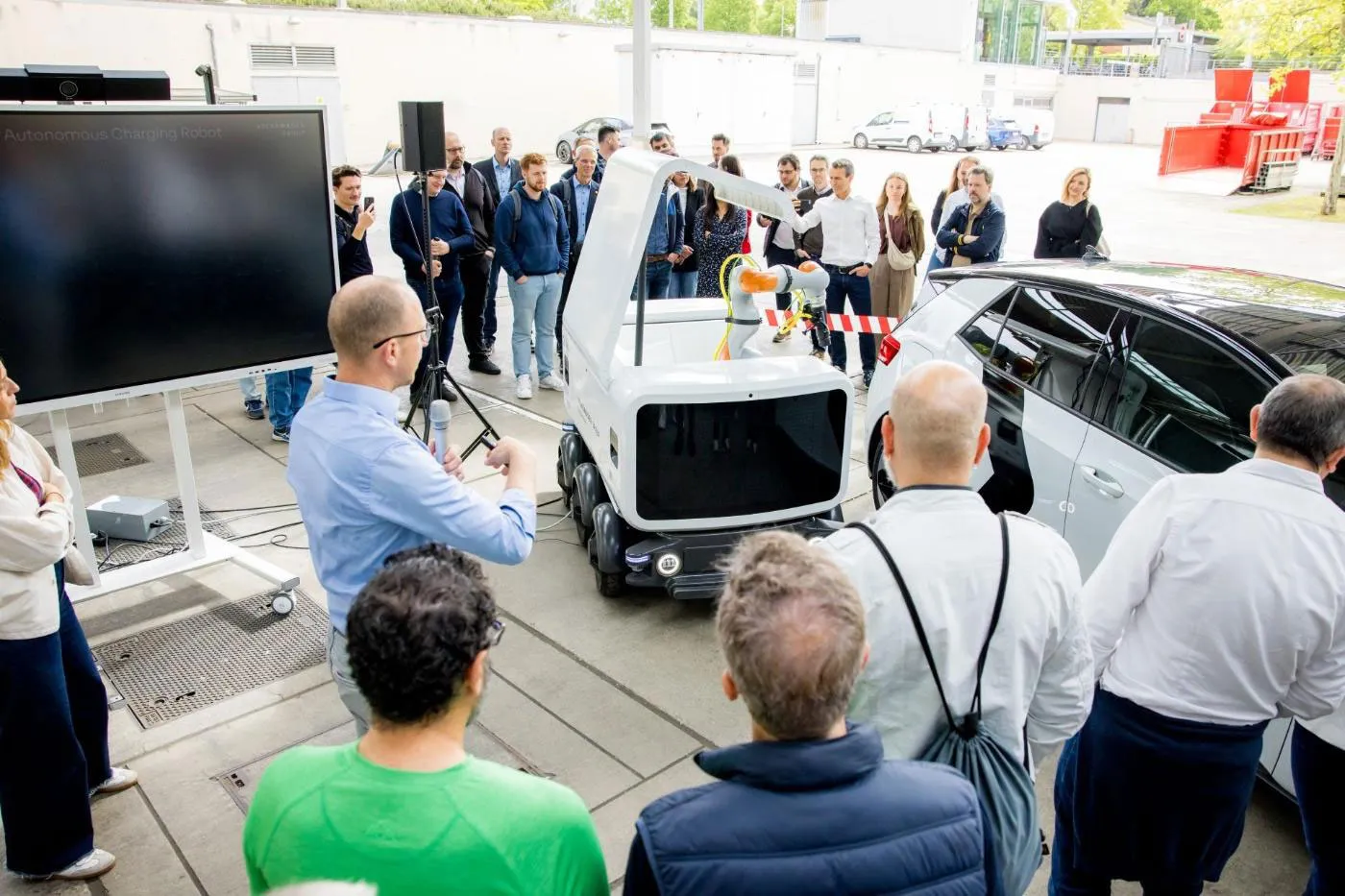
Why should a driver look for an available charging station when the charger can come to the car instead? In June 2026, Volkswagen showcased a prototype of a mobile charging robot in Dresden. This system is part of the European research project MOBILITIES for EU and aims to help make more efficient use of available charging capacity in parking lots.
The idea is particularly interesting for locations where cars are parked for extended periods, such as parking garages, airports, and large event venues. Instead of equipping each parking space with its own charging facility, mobile charging technology can be used more flexibly. For now, it remains a prototype, and it remains to be seen whether the technology is reliable and cost-effective enough for daily use. But the principle is appealing: it’s not the driver who searches for the charger, but the charger that finds the driver. The research project was also explained by IAA Mobility in June 2026.
7. Street lamps are also becoming charging stations
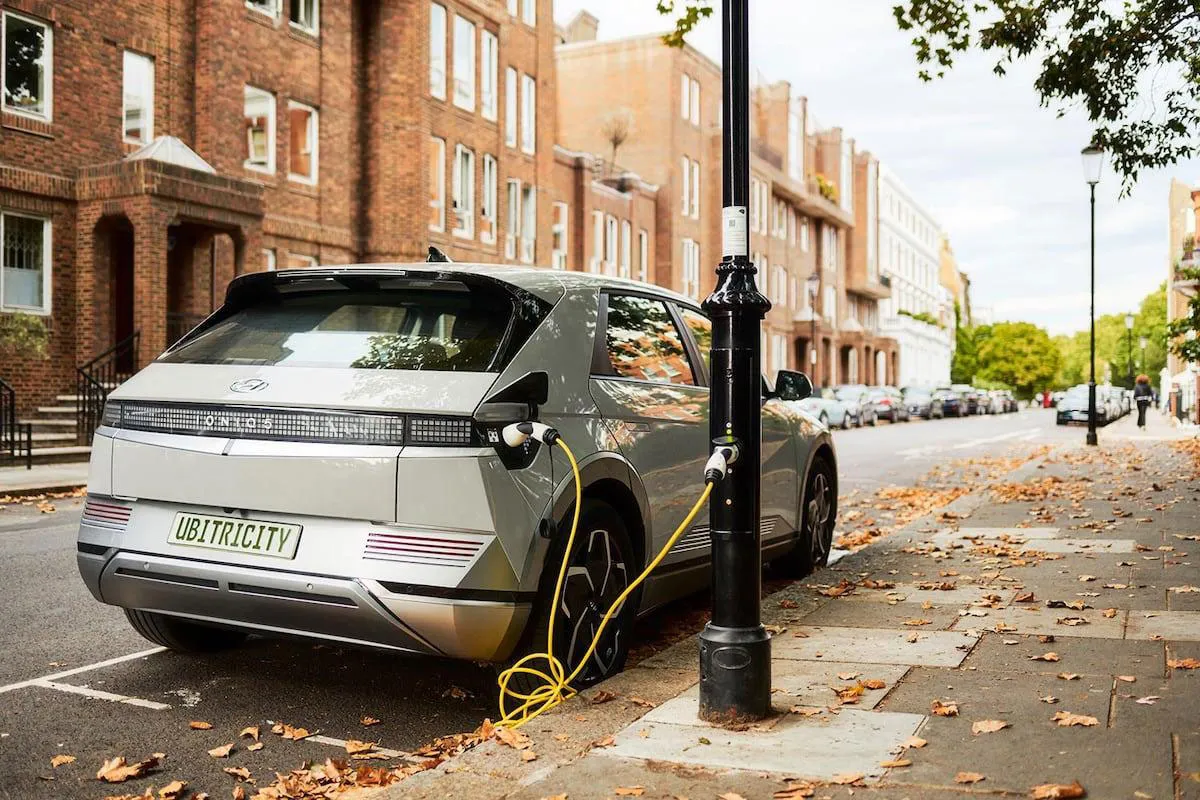
Why install new charging poles when there are already millions of street lamps along the roads? The idea is by no means new. The German company Ubitricity, now part of Shell, introduced charging points integrated into existing street lighting as early as 2016. The Netherlands also experimented with this technology years ago, notably in Zeist and Delfzijl. By switching to energy-efficient LED lighting, part of the available electrical capacity can be used to charge cars under suitable conditions.
Now, it’s no longer just limited to experiments. In the United Kingdom, Ubitricity has already installed thousands of charging points, mostly in existing street lamps. Other providers such as the British company PLUG Charging and the Dutch company CityCharge also use street lighting as charging infrastructure. The major advantage is that fewer separate charging posts are needed, and sometimes significantly less excavation work is required. Of course, the electricity grid must have sufficient capacity, and the cables must be able to be connected safely. But precisely because this technology is now mature, charging via street lamps could become available in many more locations by 2027.
8. FLASH Charging: charging a nearly full battery in nine minutes
While many European automakers pride themselves on fast charging capabilities of 300 to 400 kW, BYD has set the bar even higher in 2026. The Chinese brand introduced FLASH Charging, a charging system that can deliver up to 1,500 kW through a single connection under ideal conditions. Combined with the new Blade Battery 2.0, BYD claims a suitable car can be charged from 10% to 70% in five minutes. It only takes nine minutes to go from 10% to 97%.
This brings the charging time closer and closer to that of a traditional fuel fill-up. However, there is an important caveat. Not every electric vehicle can handle such high charging speeds, and the infrastructure also needs to be adapted accordingly. Therefore, BYD uses local battery storage to enable high power levels without continuously placing a heavy load on the electrical grid. The manufacturer plans to roll out this technology outside of China soon. If BYD achieves its goals, it could give rapid charging a significant boost by 2027.
9. Megawatt charging for electric trucks
A lot is also changing for electric trucks. While a passenger car can often get enough energy recharged in half an hour, heavy trucks with their massive battery packs require much more power. Therefore, the Finnish company Kempower introduced the Mega Satellite Flex in 2026, a charging setup that supports both the existing CCS connector and the new Megawatt Charging System connector (MCS).
Through MCS, the system can deliver up to 1.2 megawatts. This makes it possible to transfer large amounts of energy during truck drivers’ mandatory breaks. Additionally, the available charging capacity can be dynamically distributed across multiple vehicles. Since July 2026, Kempower has been offering this system in Europe and North America. Although the innovation is primarily designed for freight transport, further development of megawatt chargers could also impact charging infrastructure for passenger cars.
10. Power Swapping: a full battery without charging
The latest innovation is actually an alternative to charging. Chinese company NIO continues to invest in battery swap stations, where the empty battery of an electric car is automatically replaced with a full one. On August 7, 2026, NIO opened its first fifth-generation battery swap station in China. The new Power Swap Station 5.0 is also compatible with the compact Firefly model, allowing all three brands under the company—NIO, ONVO, and Firefly—to use the same battery swap infrastructure. A battery swap takes only a few minutes and occurs entirely automatically, without the driver needing to connect a charging cable.
In Europe as well, the network continues to expand. On October 26, 2026, NIO opened its 22nd battery swap station in Germany, located near Staufenberg-Lutterberg on the A7 highway between Hannover and Frankfurt. This brings Europe’s total to 61 Power Swap Stations. The new German station is still of the third generation, but it demonstrates NIO’s continued commitment to investing in European infrastructure. A battery swap takes about three minutes and is fully automated. Whether battery swapping will ultimately become a serious alternative to fast charging depends mainly on costs, the number of available stations, and battery standardization. However, the ongoing expansion is making this technology increasingly attractive to European drivers.
2027: Smarter charging, less hassle
The greatest advantage of these smart charging innovations lies not only in speed but especially in ease of use. For drivers without their own driveway, smart charging solutions can make charging much simpler. Those who can charge at home have even more options to use their car as an energy storage device. This makes electric driving not only more practical but possibly also more cost-effective.
By 2027, we expect an increasing number of these innovations to be put into practice. The key development will be that charging becomes not only faster but also smarter and easier, so that drivers have to worry about it less and less.
Text: Marc Verweij