
Plan
Add route point
New point will be added to the top of the route and later you can arrange the chain of points
Points
Holiday itinerary
Nine days through England’s emptiest county, from the cathedral rock of Durham to the quays of Newcastle. The road follows Hadrian’s Wall along the crags of the Whin Sill, climbs into the forest around Kielder Water, where the night sky is among the darkest in Europe, and then turns towards the sea: Cragside, the first house in the world lit by water power, the Percy castle at Alnwick, the kipper smokehouses of Craster, Dunstanburgh alone on its headland, Bamburgh above the dunes and Holy Island across its tidal causeway. Berwick’s ramparts close the circle at the Scottish border. Fast chargers wait in Durham, Hexham, Alnwick, Berwick and Newcastle; the Kielder valley and the small coastal villages are slow-socket country.
Season: Best from April to October. Puffins nest on the Farne Islands from May to late July; in October and November grey seals have their pups there, and the boats keep sailing whenever the sea allows. The Holy Island causeway is passable only during the published safe crossing times, which change every day with the tide: check them before you set out and never drive on when water is over the road. Kielder’s dark skies are at their best from September to March, when the nights are long — book the observatory weeks ahead. Many castles, Alnwick among them, close from November to March, and winter winds on the coast cost range, so charge fully in Alnwick or Berwick before the quieter stretches.
Landmarks
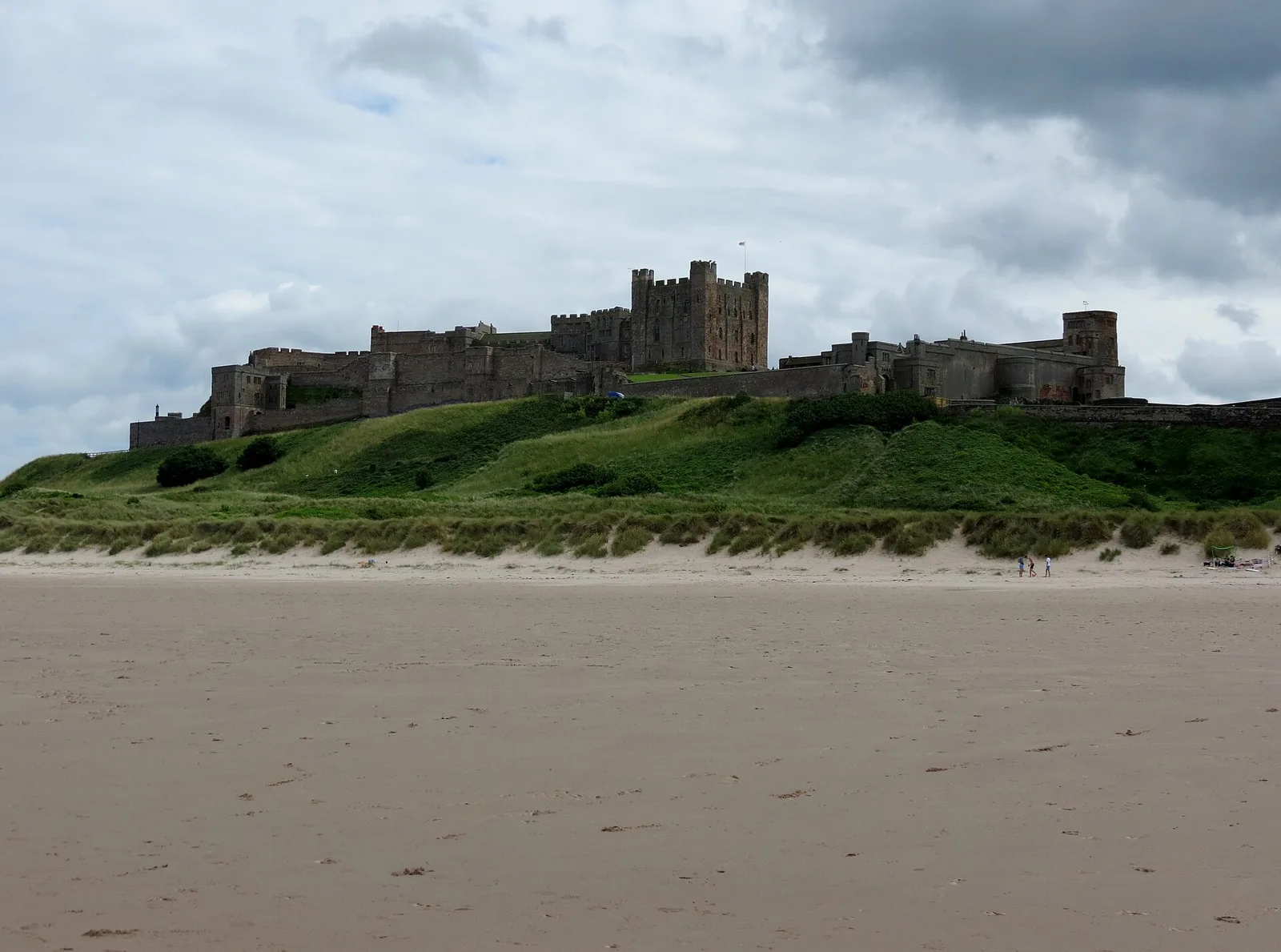 Bamburgh Castle above the beachPhoto: Martin Dawes / Wikimedia Commons (CC BY-SA 2.0)
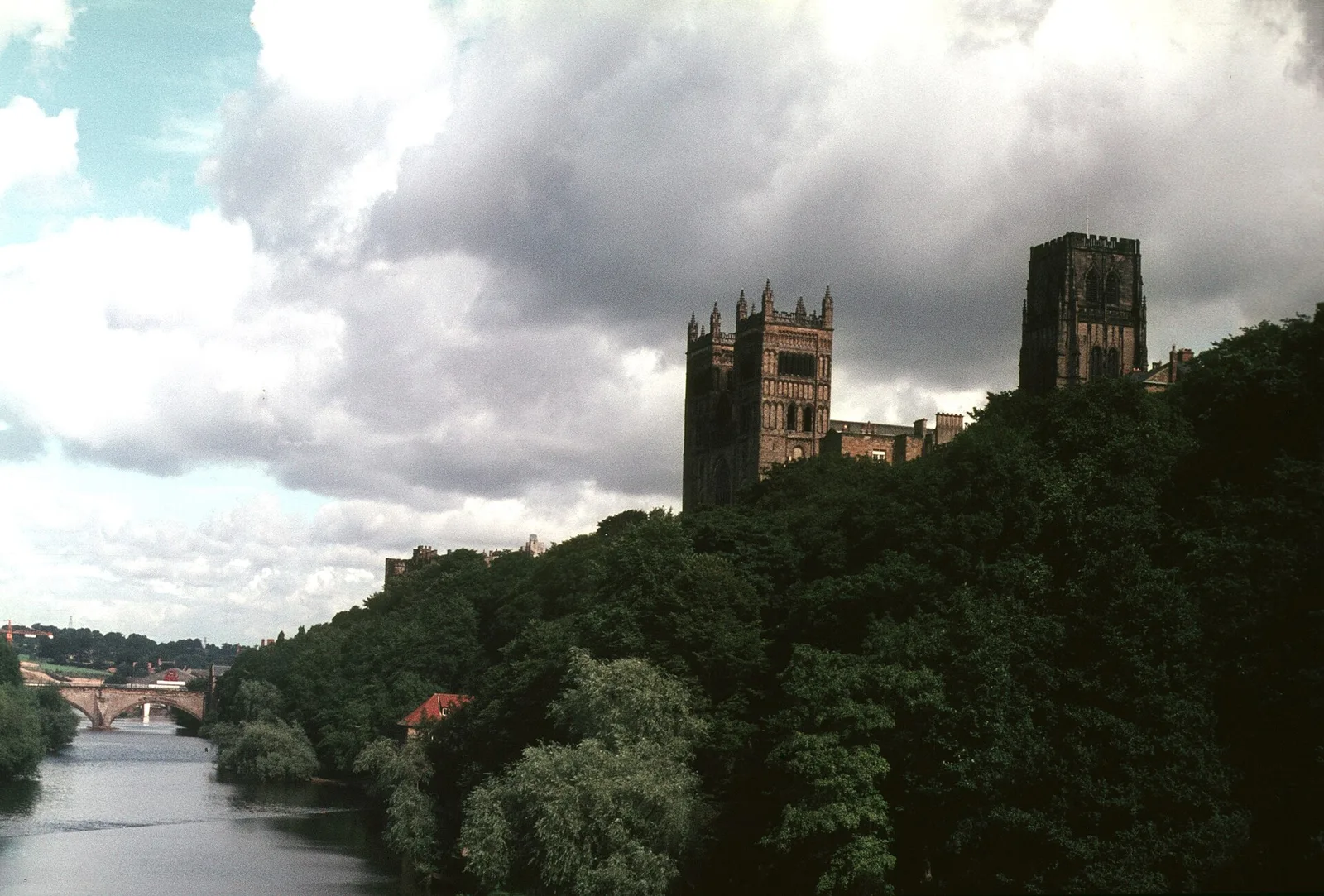 Durham Cathedral above the River WearPhoto: David Purchase / Wikimedia Commons (CC BY-SA 2.0)
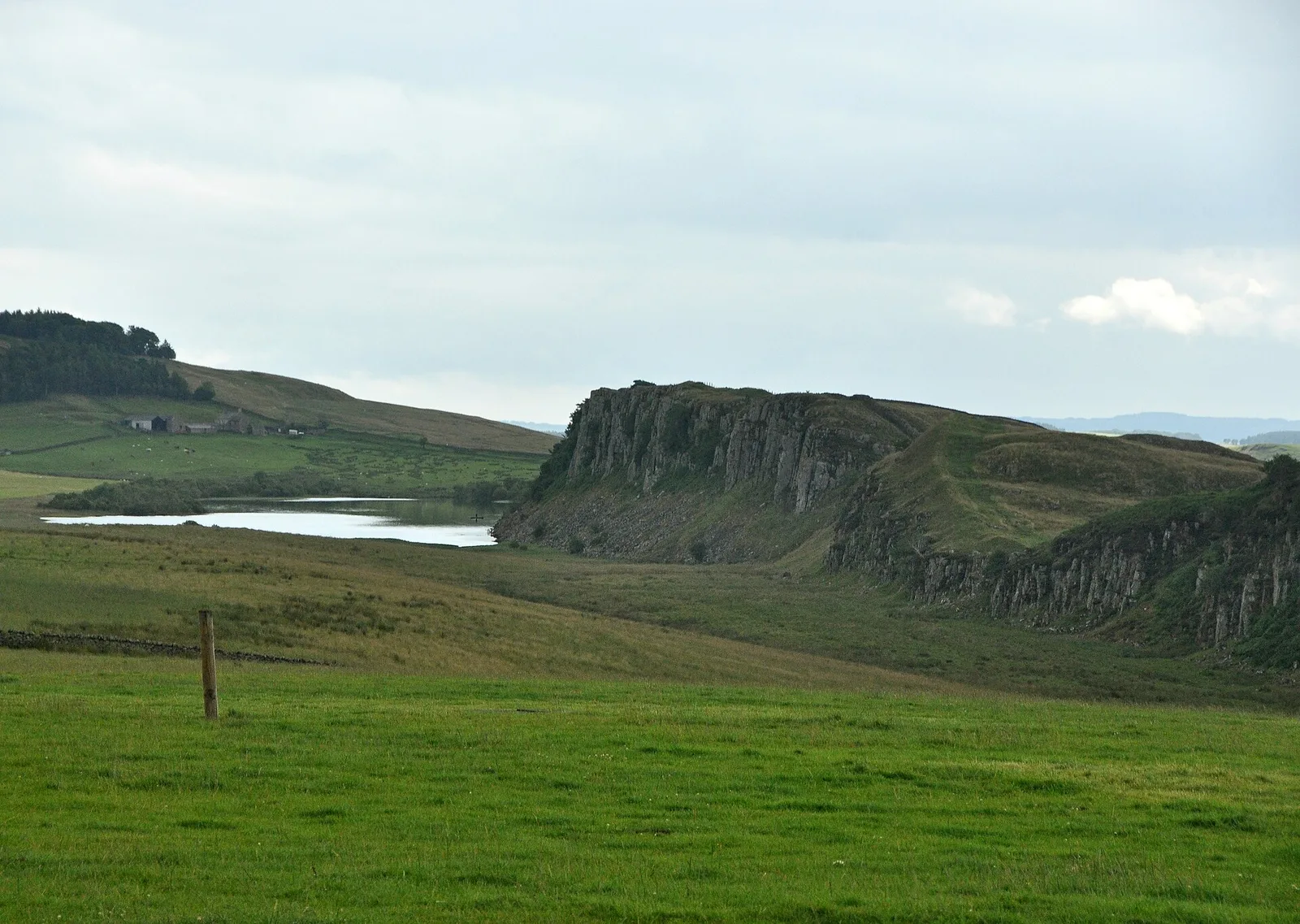 Hadrian’s Wall and Crag Lough from Steel RiggPhoto: Nilfanion / Wikimedia Commons (CC BY-SA 3.0)
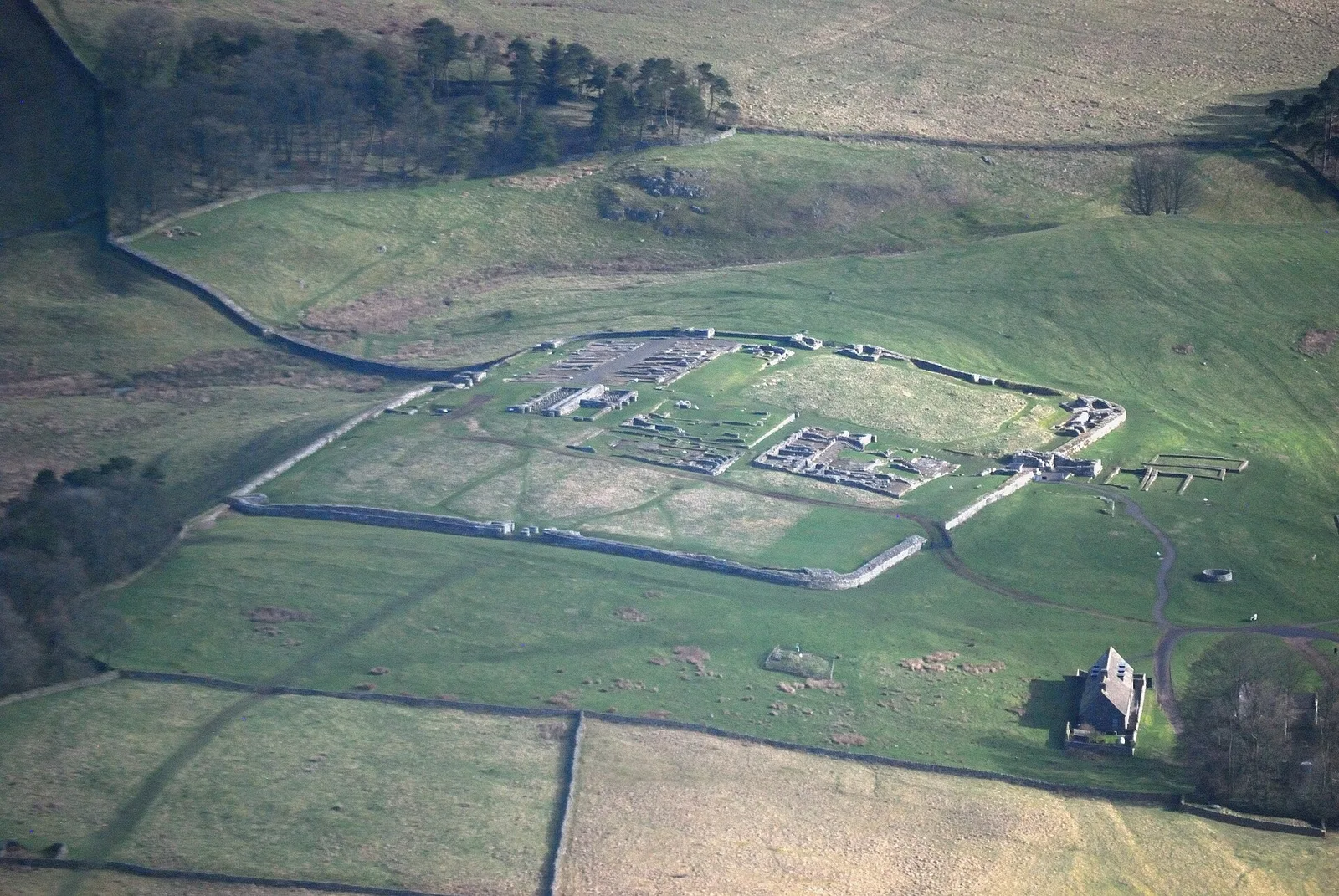 Housesteads Roman Fort from the airPhoto: Lieven Smits / Wikimedia Commons (CC BY-SA 4.0)
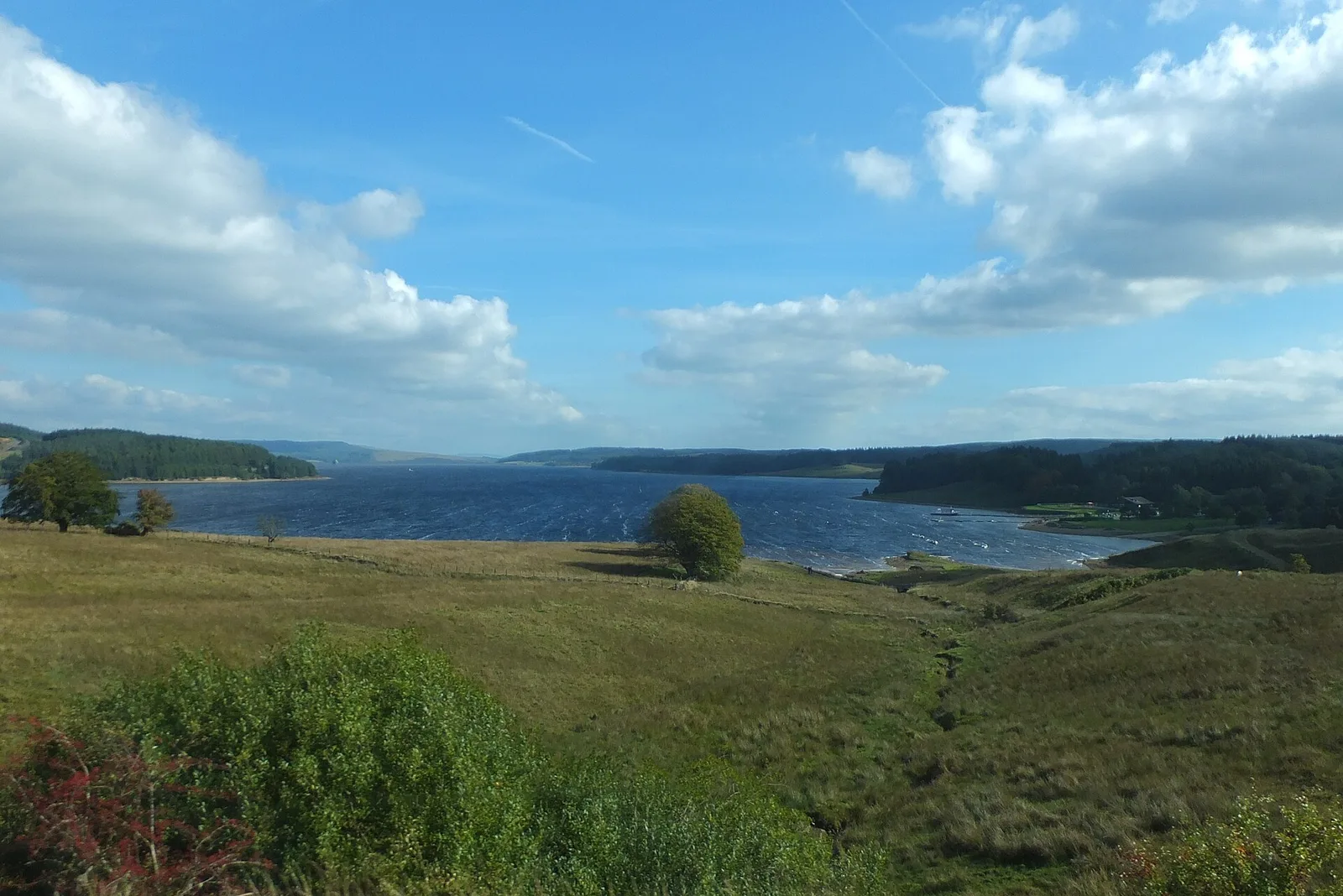 Kielder Water in the forestPhoto: Barbara Carr / Wikimedia Commons (CC BY-SA 2.0)
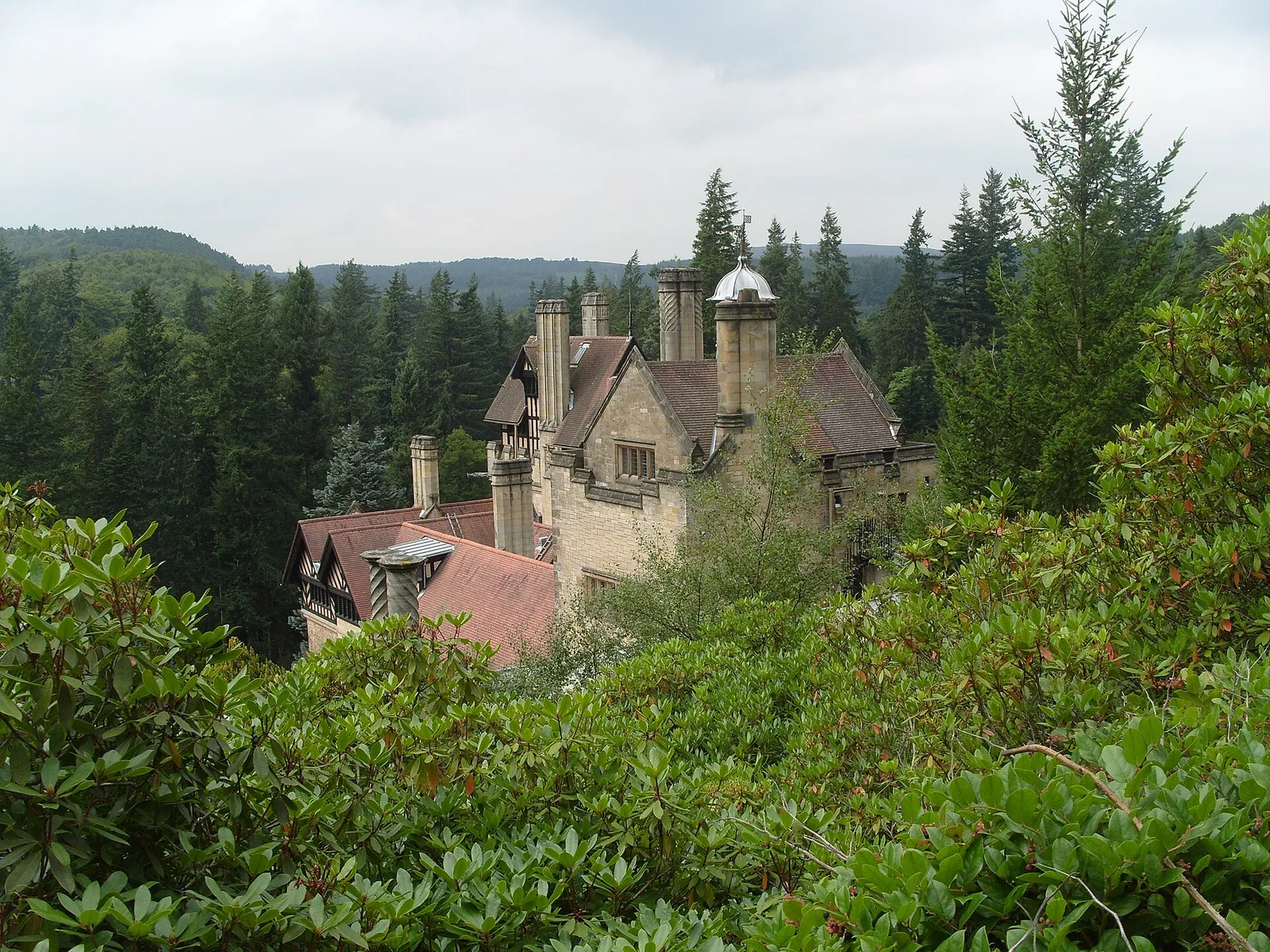 Cragside, the first house lit by water powerPhoto: Hadrianus1959 / Wikimedia Commons (CC BY-SA 4.0)
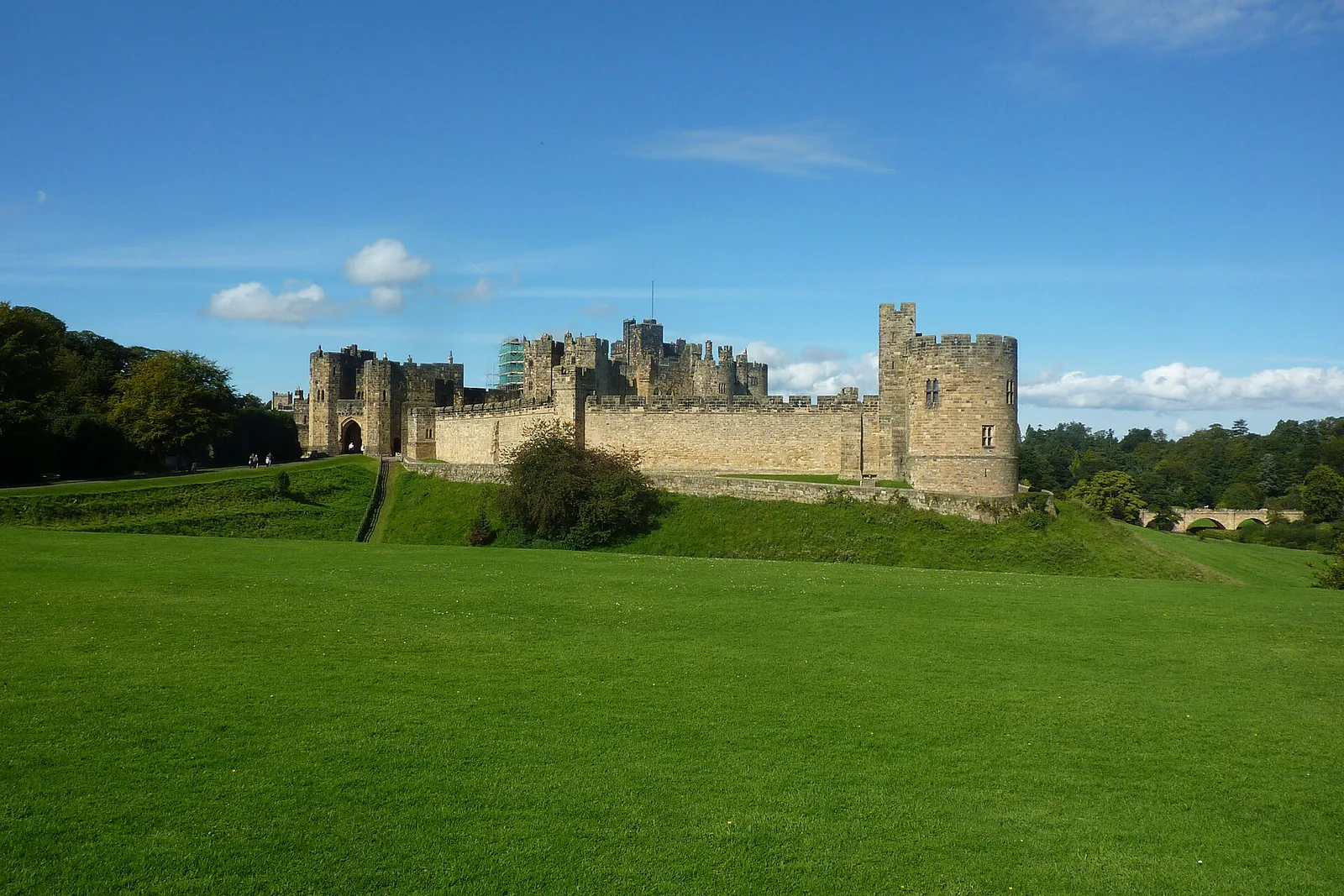 Alnwick Castle, seat of the PercysPhoto: Dr.Haus / Wikimedia Commons (CC BY-SA 3.0)
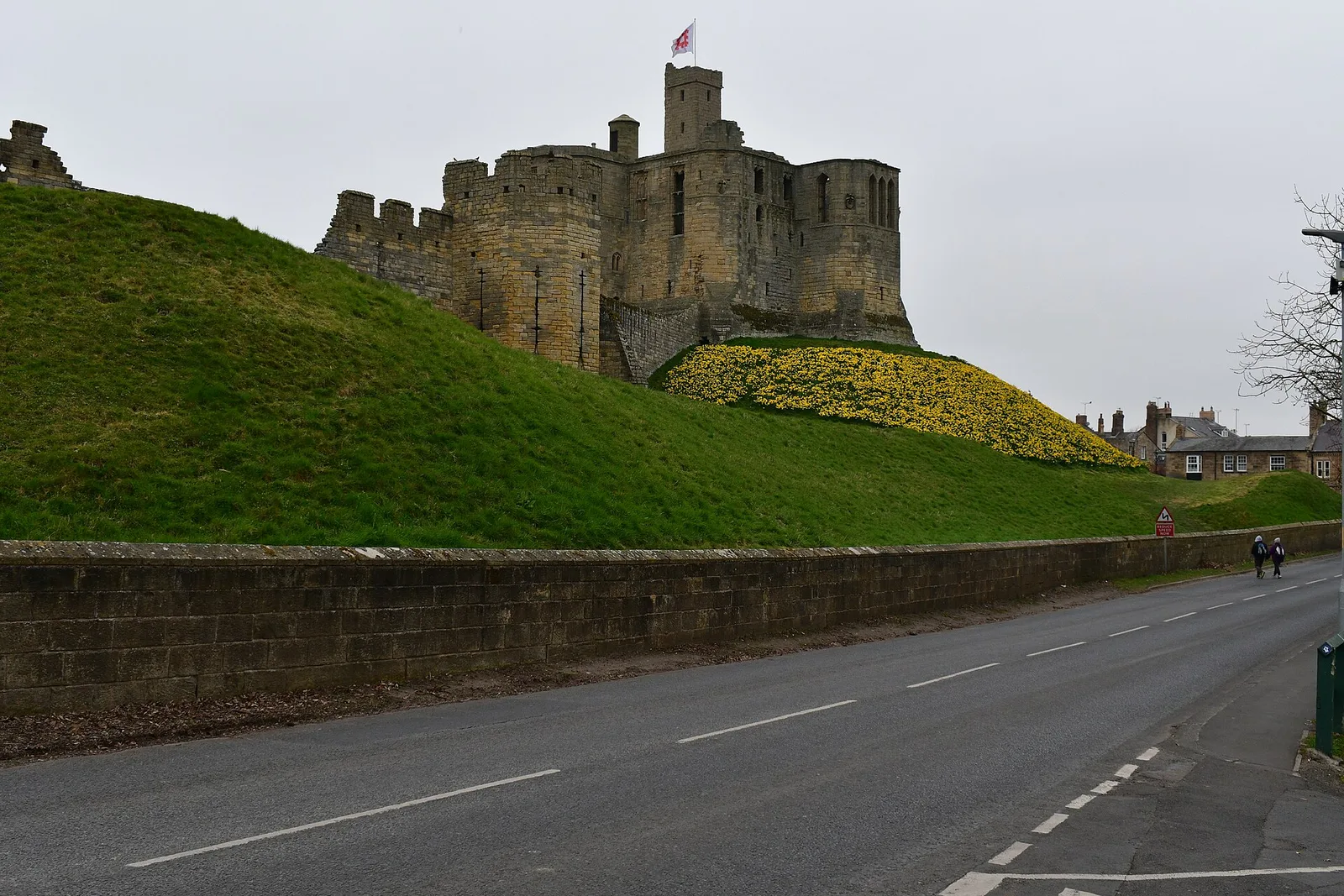 Warkworth Castle above the CoquetPhoto: Simon Cobb / Wikimedia Commons (CC0)
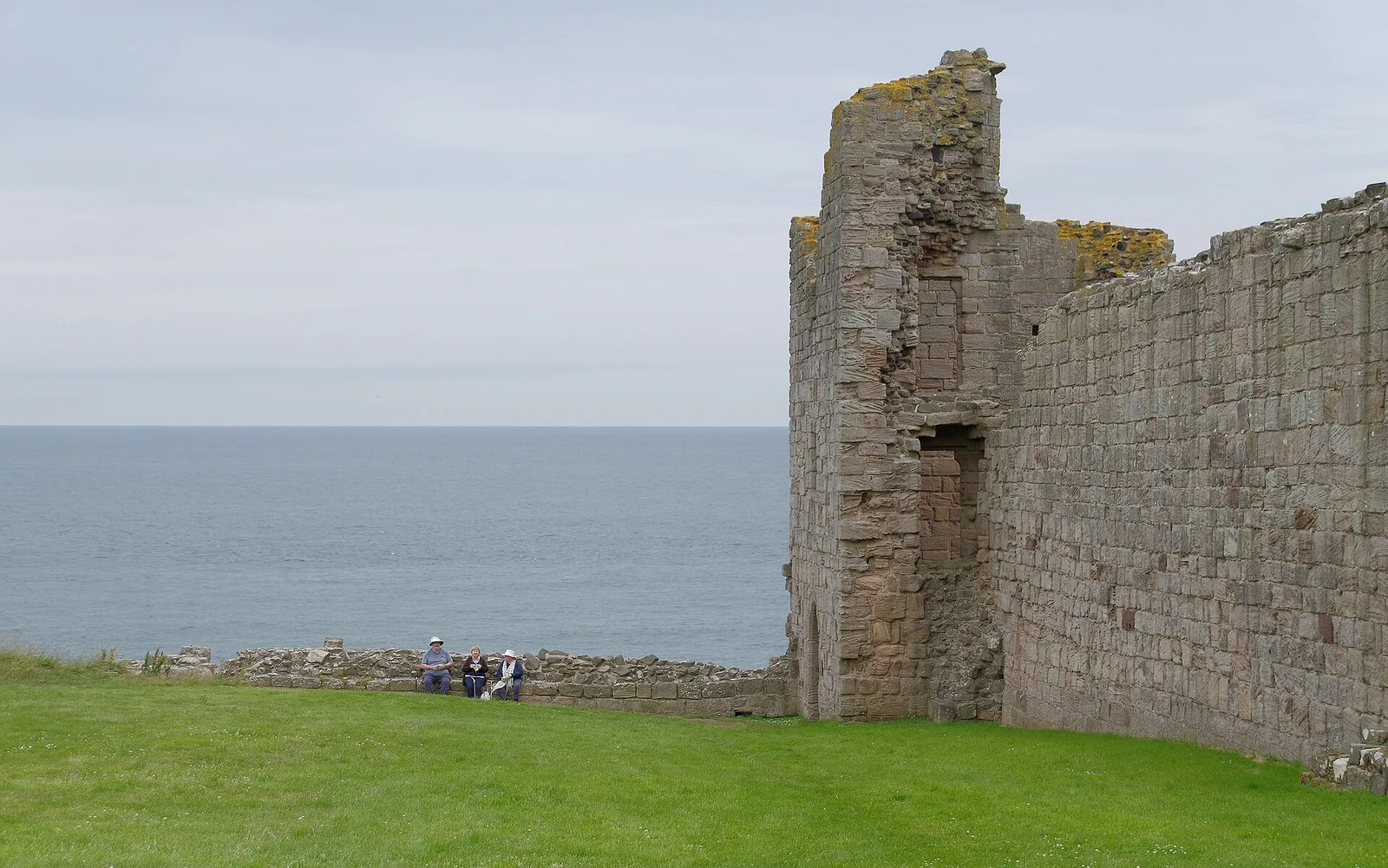 The ruins of Dunstanburgh on their headlandPhoto: mattbuck (category) / Wikimedia Commons (CC BY-SA 4.0)
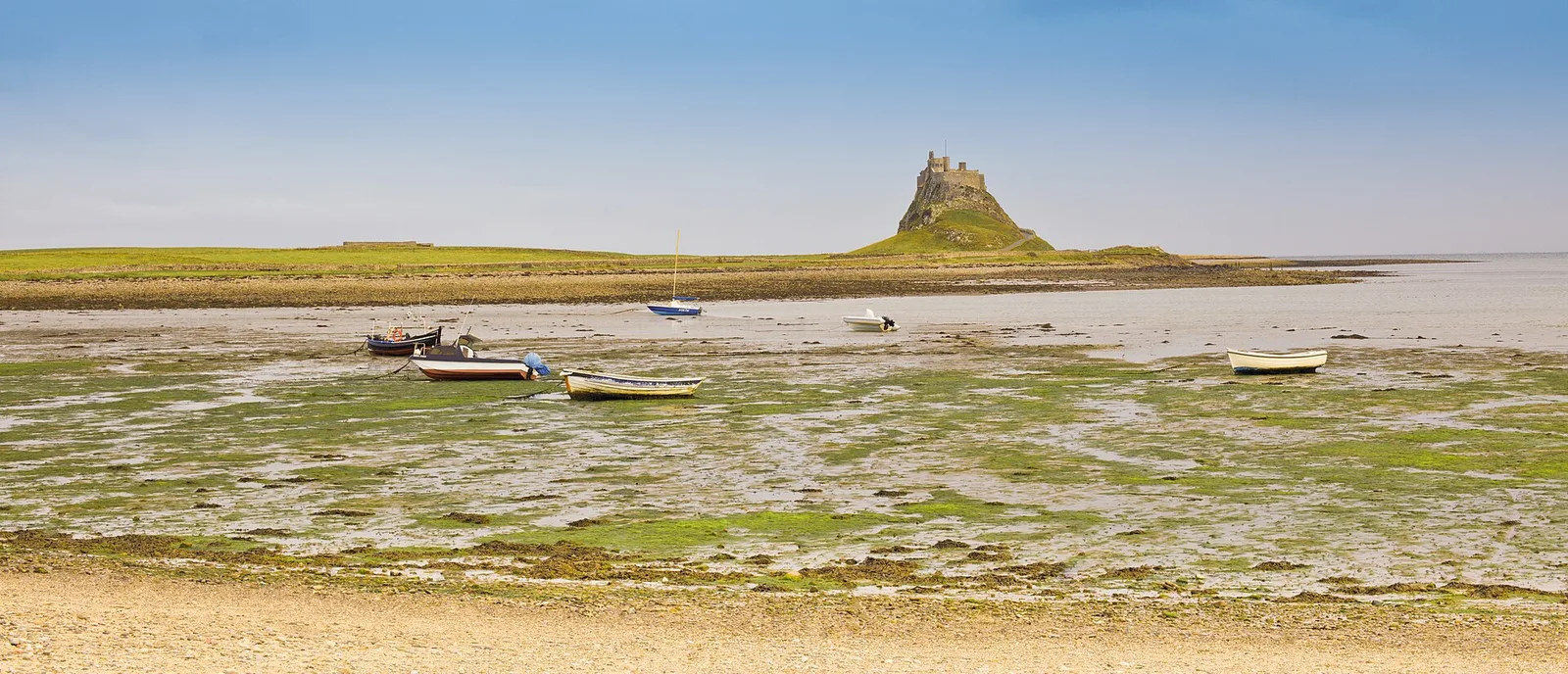 Lindisfarne Castle on Holy IslandPhoto: Michael D Beckwith / Wikimedia Commons (CC0)
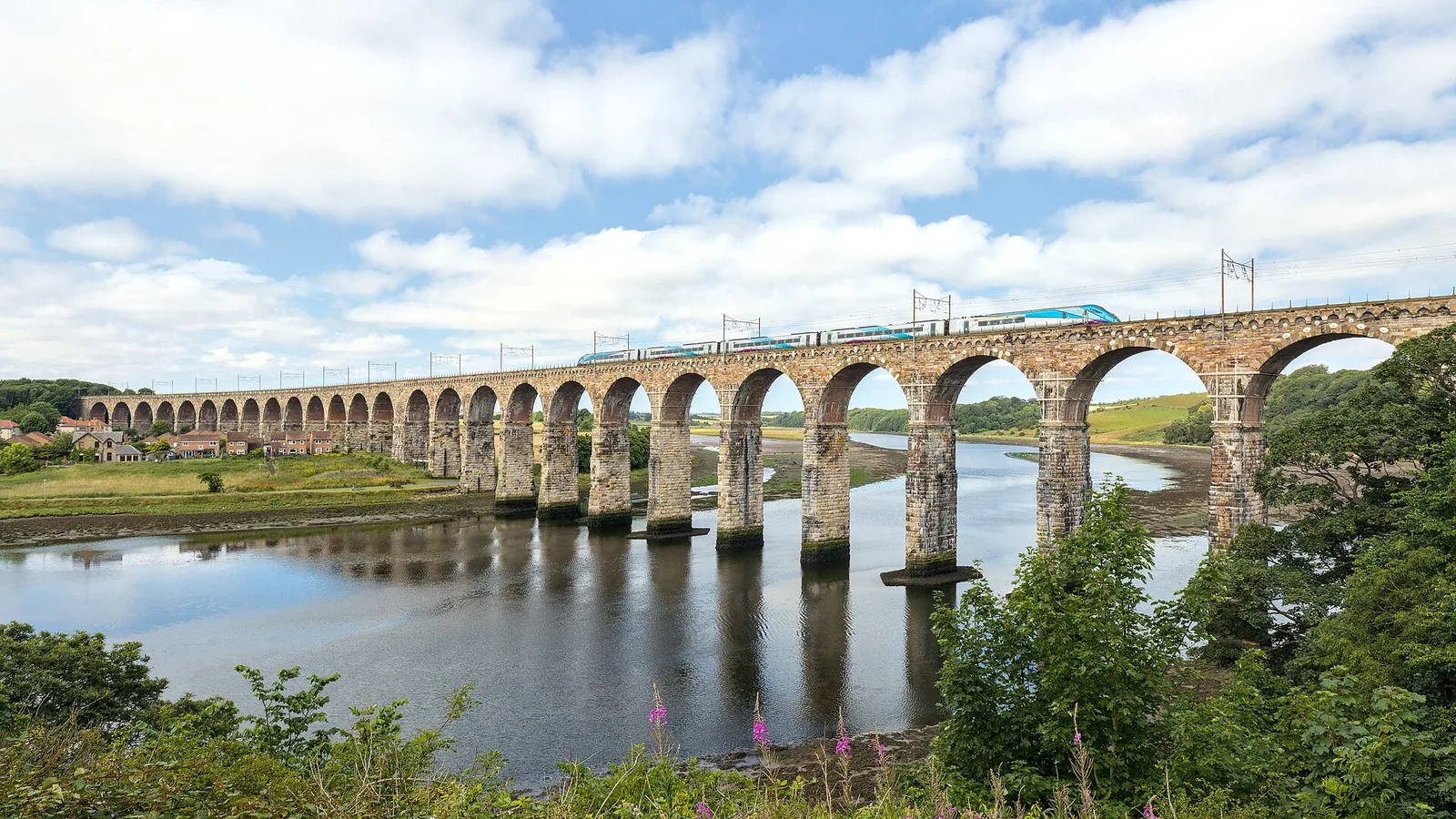 The Royal Border Bridge over the TweedPhoto: Benjamin Smith / Wikimedia Commons (CC BY-SA 4.0)
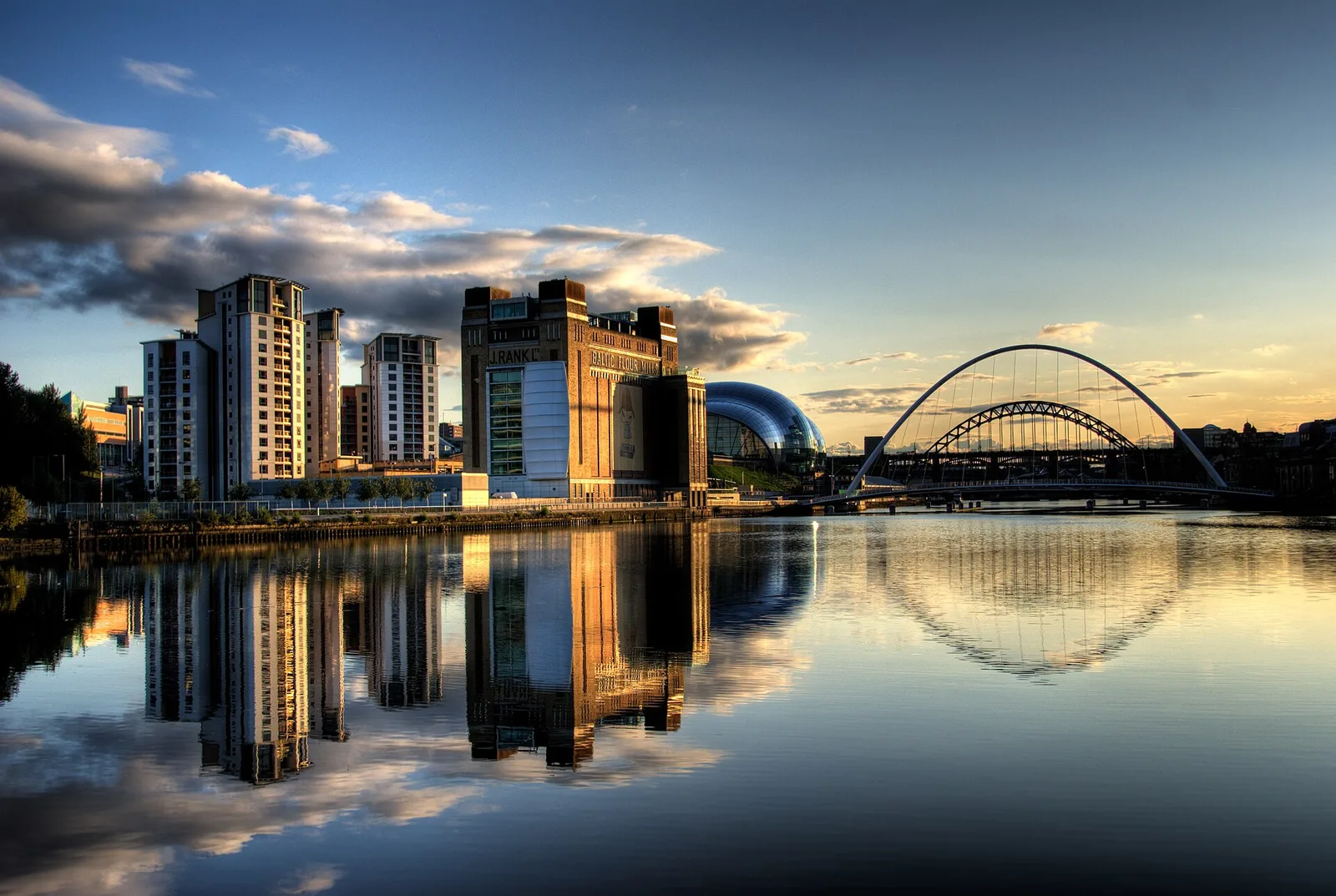 Newcastle Quayside and the Tyne bridgesPhoto: Wilka Hudson from Newcastle, UK / Wikimedia Commons (CC BY 2.0)
Holiday itinerary
- Day 1 · Durham
Durham sits on a rocky loop of the River Wear, and the first view of it — cathedral and castle shoulder to shoulder above the trees — is one of the great sights of England. Walk up through the cobbled Bailey to the cathedral, begun in 1093, whose massive carved pillars still feel as if they were set there to hold up the sky. Behind the high altar lies the shrine of St Cuthbert, the hermit of the Farne Islands you will meet again on the coast, and in the Galilee Chapel the tomb of the Venerable Bede. In the evening follow the riverside path round the peninsula to Prebends Bridge, where the west towers rise out of the woods exactly as Turner painted them. Charge at InstaVolt on Frederick Street North or at the Tesla Supercharger by the A1 at Bowburn.
- Day 2 · Hexham
Head west into the Tyne valley. At Corbridge the Roman supply town of Coria lies open to the sky, its granaries and paved main street the very stones that once fed the soldiers of the Wall. A few minutes up the road, Hexham Abbey has stood over the market place since Wilfrid founded his church in 674: go down into the Saxon crypt, built from reused Roman blocks whose inscriptions are still legible, and find the Frith Stool, a stone seat of sanctuary thirteen centuries old. Spend the evening in the small market town, among the old gaol, the Shambles and the long view down to the river. Charge at the Be.EV hub on Station Road.
- Day 3 · Hexham
Today belongs to Hadrian’s Wall, begun in AD 122 to run from sea to sea. Start at Chesters, where the regimental bathhouse sits beside the North Tyne, then take the Military Road west to Housesteads, a fort laid out along a ridge with its barracks, granaries and stone latrines open to the wind. From Steel Rigg walk the most dramatic stretch, where the Wall rides the crest of the Whin Sill above the dark water of Crag Lough, to Sycamore Gap, where the famous tree stood until it was felled in 2023 and the dip in the ridge still draws people to it. Finish at Vindolanda, where the wooden writing tablets were found, among them a birthday invitation from Claudia Severa to her friend. Top up at the bp pulse charger on the A69 near Bardon Mill on the way back to Hexham.
- Day 4 · Kielder
Leave the Wall and follow the North Tyne upstream through Wark and Bellingham into wilder country, where the farms thin out and the forest begins. Kielder Water, the largest artificial lake in the United Kingdom by volume, lies in a valley of spruce with almost no lights around it, which is why this corner of Northumberland is one of the largest protected dark-sky areas in Europe. Walk part of the Lakeside Way to the sculptures hidden along the shore and visit Kielder Castle, once a hunting lodge of the Dukes of Northumberland. After dark, if you have booked, the Kielder Observatory opens its telescopes on the hill above the trees. There is no fast charger in the valley, so leave Hexham well charged and plug into the socket at your lodge.
- Day 5 · Alnwick
Drive east over the moors to Rothbury and Cragside, the house where Lord Armstrong lit his rooms with hydroelectricity in 1880, making it the first home in the world powered by water. The six-mile carriage drive winds past lakes, rhododendrons and giant conifers, and the house itself is full of early electric lamps — a fitting stop on an electric journey. In the afternoon reach Alnwick, where the Percy family’s castle has stood since the eleventh century and played Hogwarts in the first Harry Potter films. Next door, the Alnwick Garden has a grand stepped cascade and a locked Poison Garden, and Barter Books fills the old Victorian railway station with second-hand books, model trains and a coal fire. Charge at Be.EV at Willowburn Retail Park.
- Day 6 · Bamburgh
The coast day. Begin at Warkworth, where the castle stands above a loop of the River Coquet and, in summer, a rowing boat takes you upriver to a medieval hermitage carved into the cliff. Pass through Alnmouth, a village of bright houses on the estuary, to Craster, a tiny harbour where kippers are still smoked over oak in the same smokehouse as a century ago. From there a coastal path leads across sheep fields to the ruins of Dunstanburgh Castle, a broken gatehouse standing alone on a basalt headland while the waves boom in the gullies below. In the evening drive north to Bamburgh, where the castle glows above the dunes. The nearest fast charger is the Tesla Supercharger at Adderstone near Belford; other cars should top up at Alnwick before leaving.
- Day 7 · Bamburgh
A day without long drives. From Seahouses harbour, boats sail out to the Farne Islands, where puffins nest in their thousands from May to July and grey seals give birth to their pups on the outer rocks in October and November; Inner Farne also keeps the little chapel of St Cuthbert. Back on land, the RNLI Grace Darling Museum tells the story of the lighthouse keeper’s daughter who rowed out into a storm in 1838 to rescue survivors of the wrecked Forfarshire, and she lies in the churchyard of St Aidan’s across the road. Bamburgh Castle, rising from a basalt outcrop where the kings of Northumbria once ruled, is best seen from the beach at low tide in the late afternoon. Charge overnight if your accommodation allows, or at Adderstone.
- Day 8 · Berwick-upon-Tweed
Check the tide tables before you set off: Holy Island is reached by a causeway that the sea covers twice a day, and every year cars are caught by the tide. Lindisfarne was where Aidan founded his monastery in 635 and where the Lindisfarne Gospels were made; today the red sandstone ruins of the priory stand beside the village, and the little castle on its rock, remodelled by Edwin Lutyens with a walled garden by Gertrude Jekyll, looks out over the flats. Continue north to Berwick-upon-Tweed, a town that changed hands between England and Scotland more than a dozen times. Walk the Elizabethan ramparts that still ring it completely and look down on the twenty-eight arches of Robert Stephenson’s Royal Border Bridge. Charge at InstaVolt at Loaning Meadows.
- Day 9 · Newcastle upon Tyne
Head back south through quiet farmland to Chillingham, whose park keeps a herd of wild white cattle that has lived there, unmixed and untamed, for centuries; a warden leads visitors close enough to see them watching from the trees. Then take the A1 to Newcastle upon Tyne. Walk the Quayside under the green arch of the Tyne Bridge, opened in 1928, cross the tilting Gateshead Millennium Bridge to the BALTIC gallery in an old flour mill, and finish at the Angel of the North, Antony Gormley’s rust-red steel figure whose wings span fifty-four metres above the A1. Charge at Be.EV on Shields Road before the journey home.