
Plan
Add route point
New point will be added to the top of the route and later you can arrange the chain of points
Points
Holiday itinerary
Eight days through the green heart of Slovakia, where medieval towns grew rich on silver, gold and copper and the forests of the Štiavnica and Kremnica hills still hide the shafts and ponds of the old miners. From Bratislava the road climbs the Váh valley past the castle rock of Trenčín to Bojnice, a fairy-tale castle above a spa park, and on to Čičmany, a village of log houses painted with white patterns. Kremnica has minted coins without interruption since 1328; Banská Štiavnica, a UNESCO town spilling down the slopes of an old volcano, keeps its Baroque Calvary, two castles and the mountain lakes the miners dug to drive their machines. Banská Bystrica and the copper village of Špania Dolina lead north to Vlkolínec, a hamlet of wooden houses under the hills, and to the Low Tatras, with ice caves, a cable car to Chopok and the wide reservoir of Liptovská Mara. Fast chargers wait in the larger towns; in the small mining towns it is worth arriving with a good margin and charging overnight.
Season: Best from May to early October, when the water in the tajchy is warm enough for a swim, the mountain roads are open and the cable car runs to the summit of Chopok. In September Banská Štiavnica celebrates its Salamander days, with a night procession of miners in historic uniforms through the streets. The caves keep the same cool air all year, so bring a jacket even in July; from December to March the Low Tatras become a ski area, the passes can be snowy and winter tyres are a must.
Landmarks
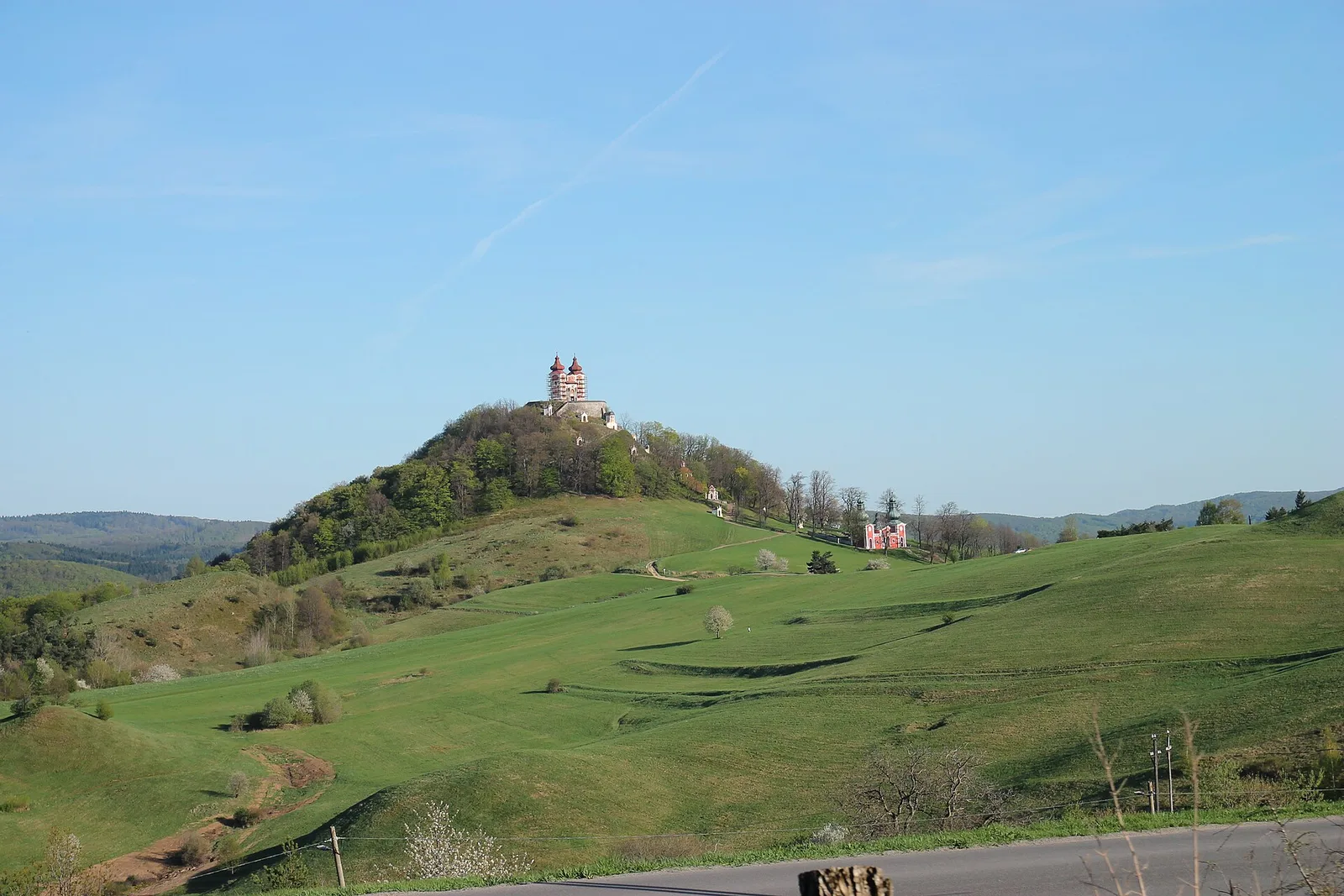 Banská ŠtiavnicaPhoto: Draceane / Wikimedia Commons (CC BY-SA 4.0)
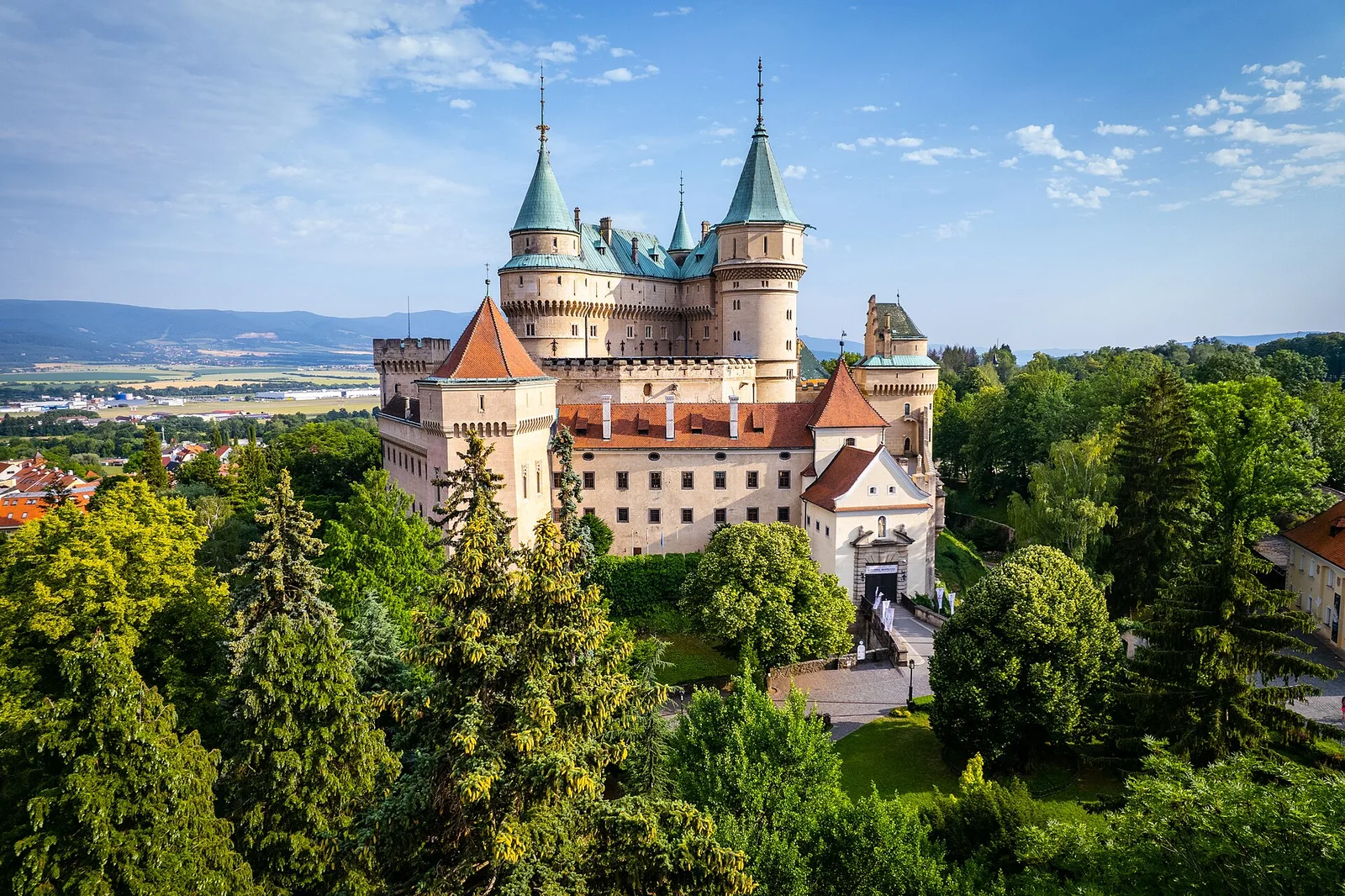 Bojnice CastlePhoto: Studiowacho / Wikimedia Commons (CC BY-SA 4.0)
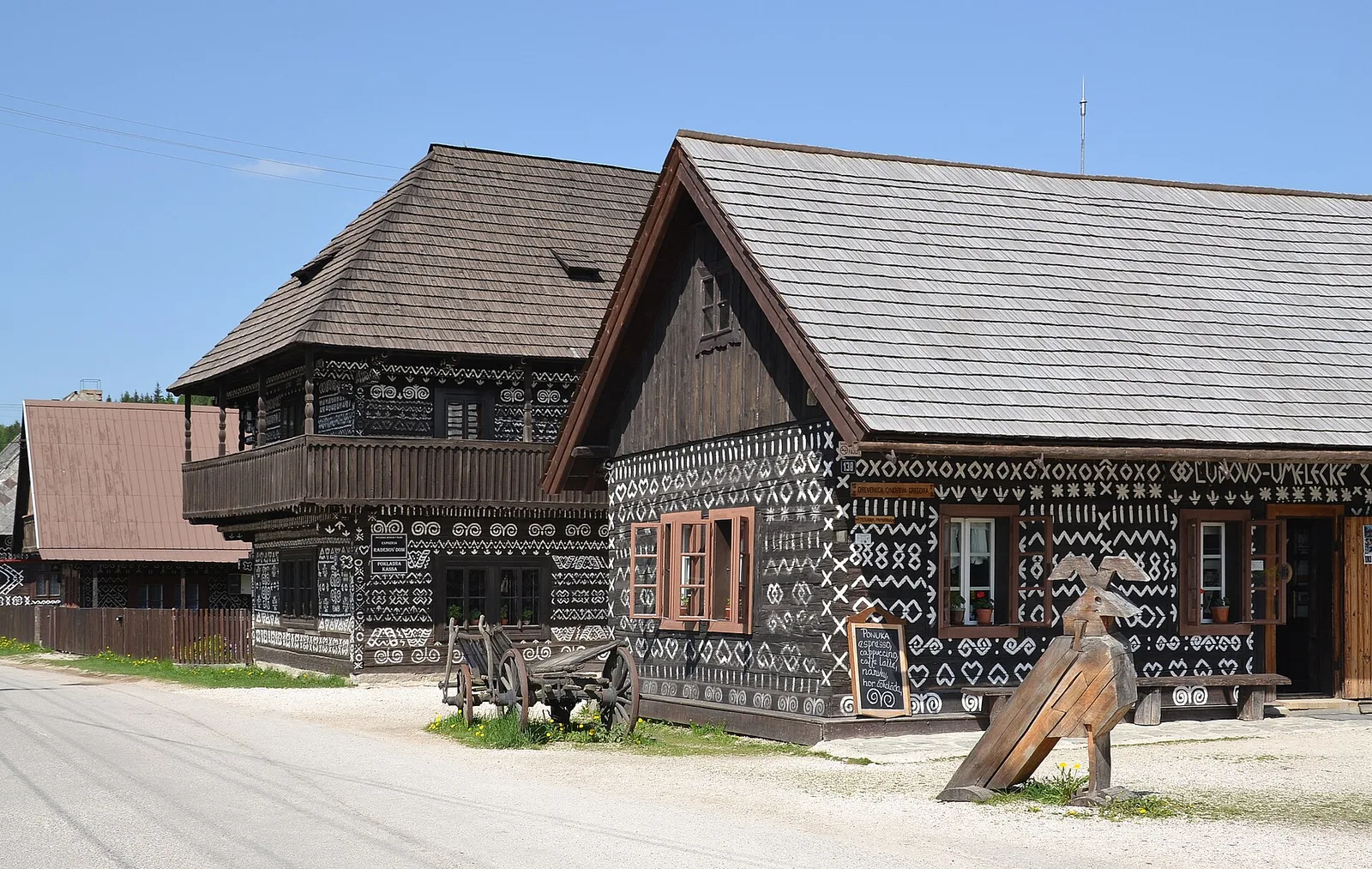 Painted log houses in ČičmanyPhoto: Pudelek / Wikimedia Commons (CC BY-SA 4.0)
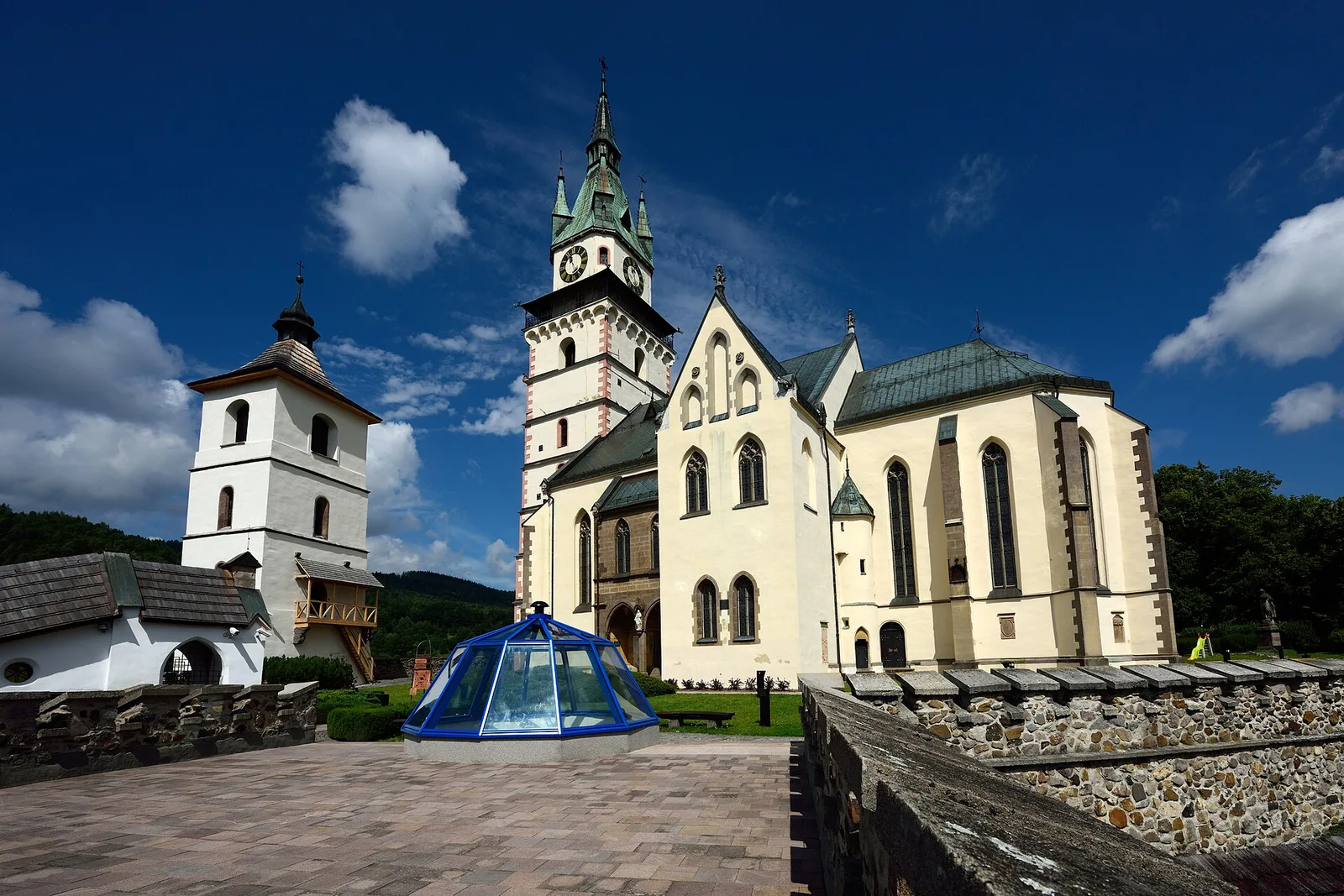 Kremnica Town CastlePhoto: 10ricardo / Wikimedia Commons (CC BY-SA 4.0)
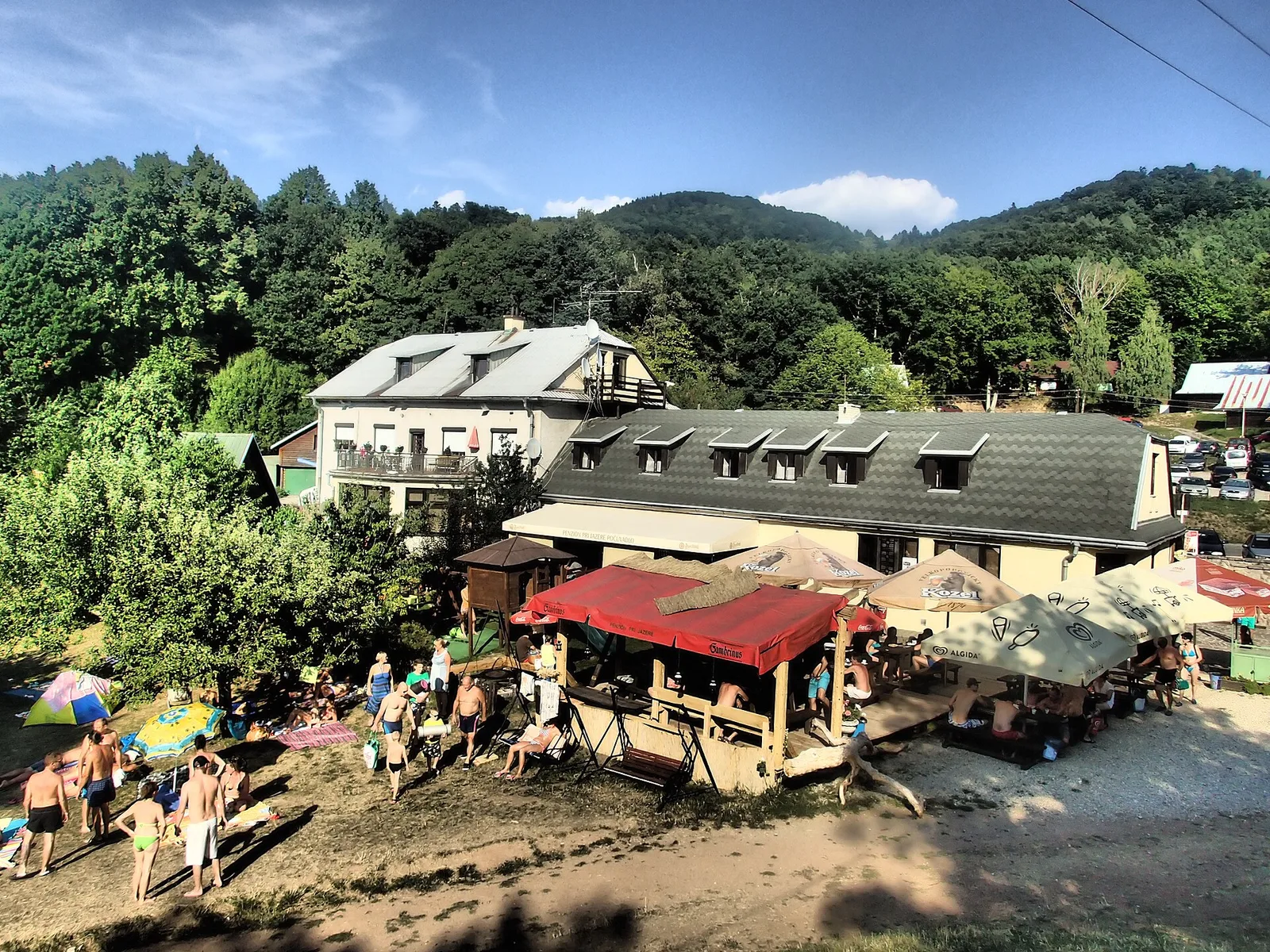 The Počúvadlo reservoirPhoto: sharepublicplaces / Wikimedia Commons (CC BY 3.0)
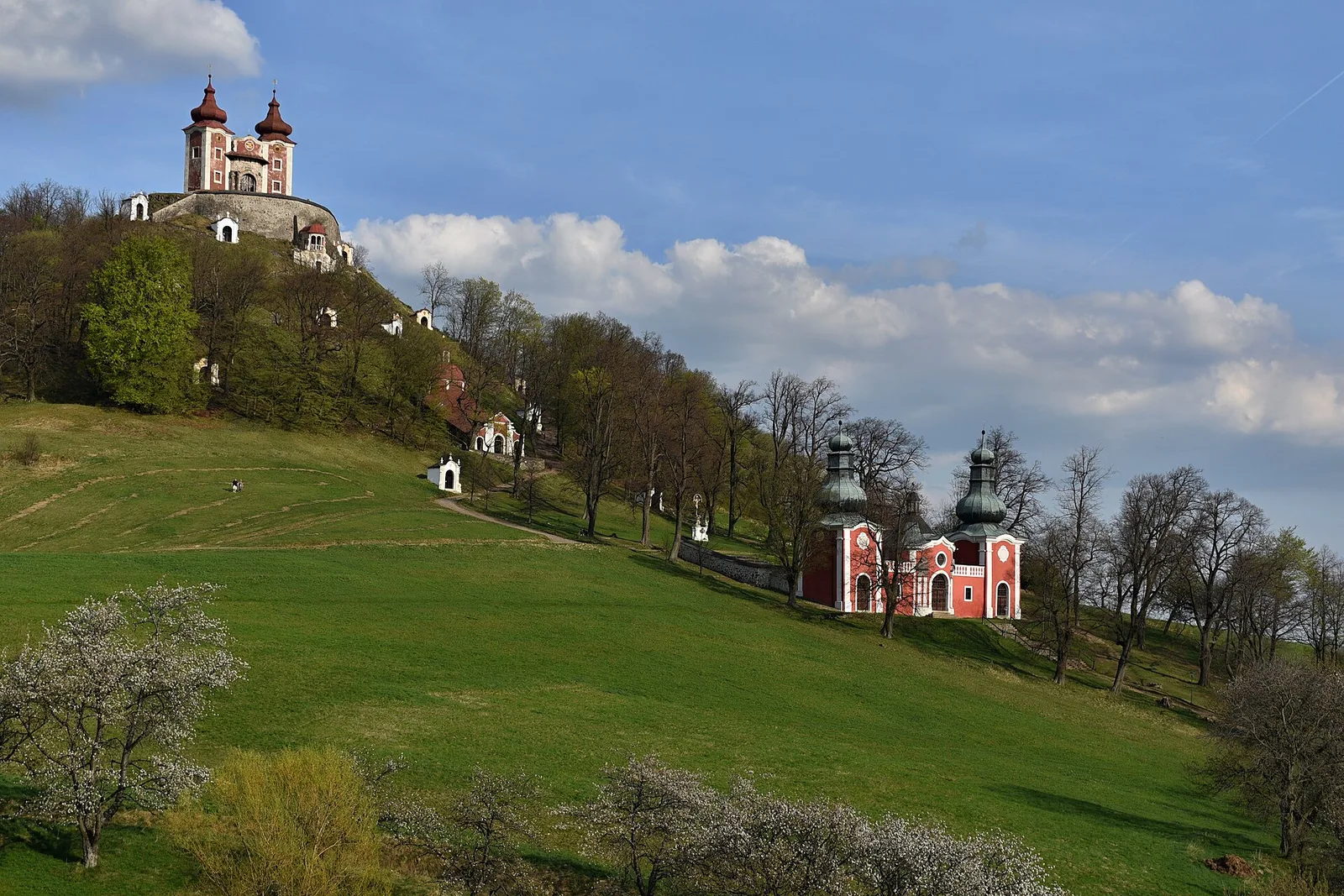 The Calvary above Banská ŠtiavnicaPhoto: Synalik (talk) / Wikimedia Commons (CC BY-SA 4.0)
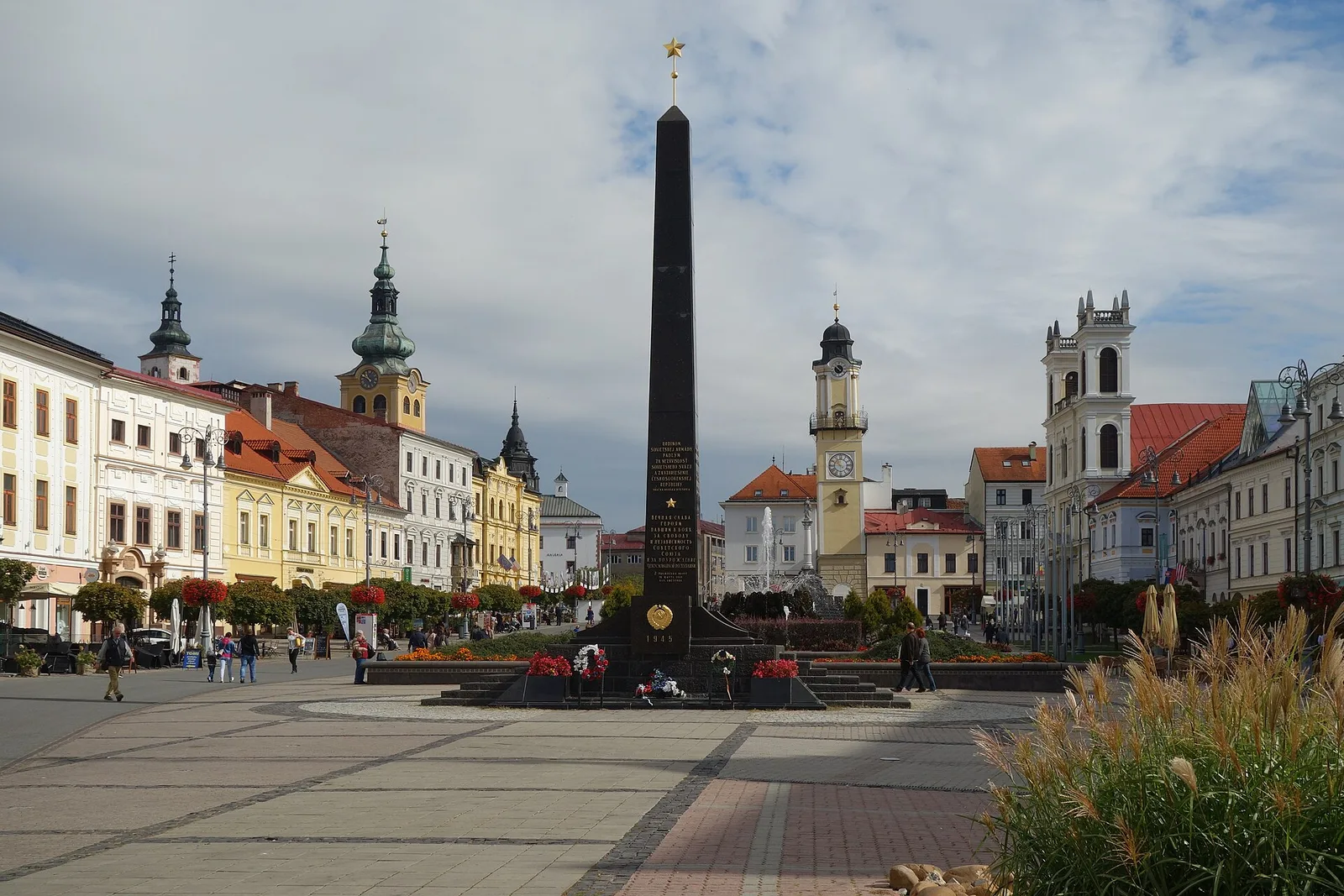 SNP Square in Banská BystricaPhoto: Milan Bališin / Wikimedia Commons (CC BY-SA 4.0)
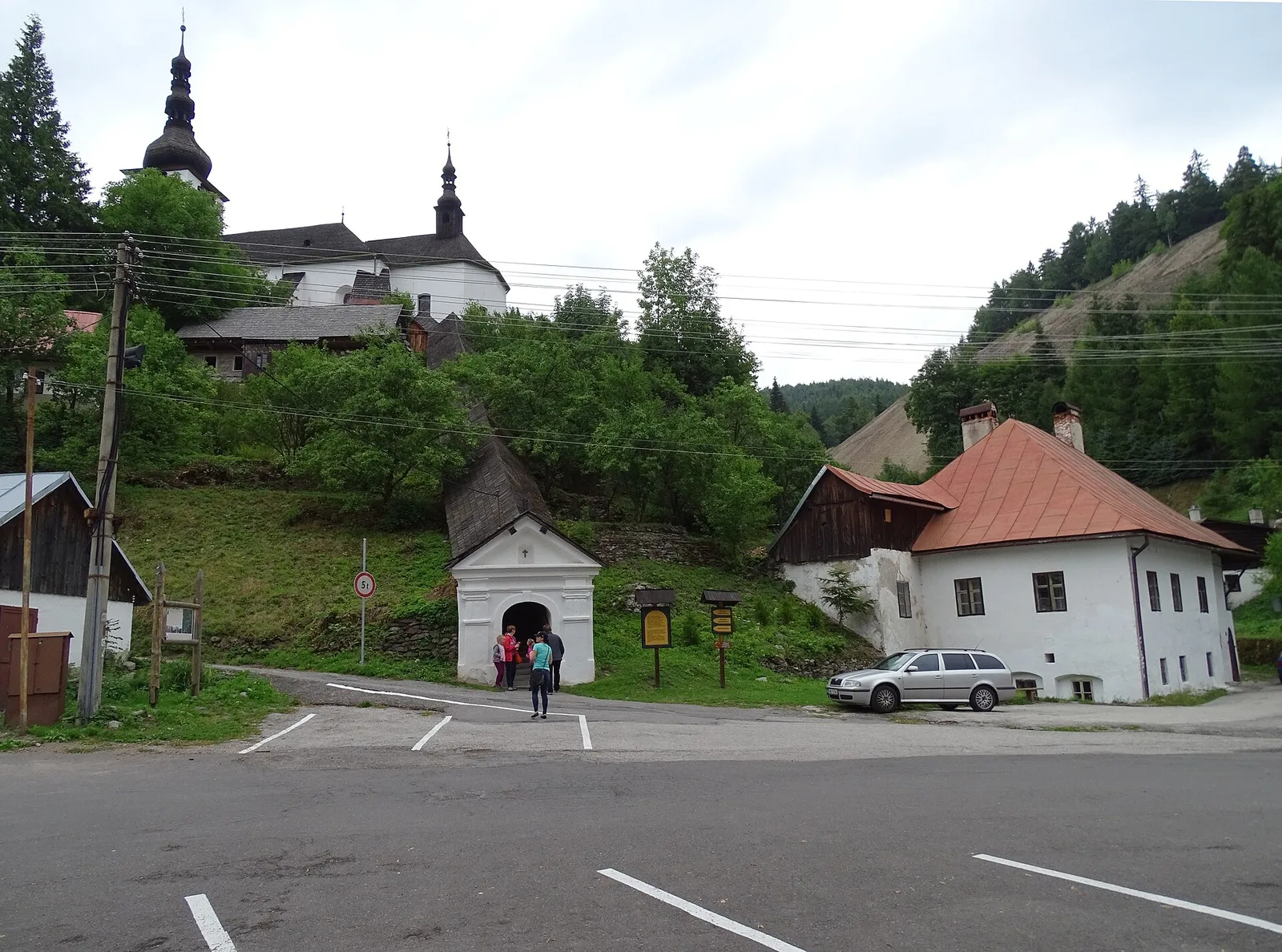 The church of Špania DolinaPhoto: ŠJů / Wikimedia Commons (CC BY 4.0)
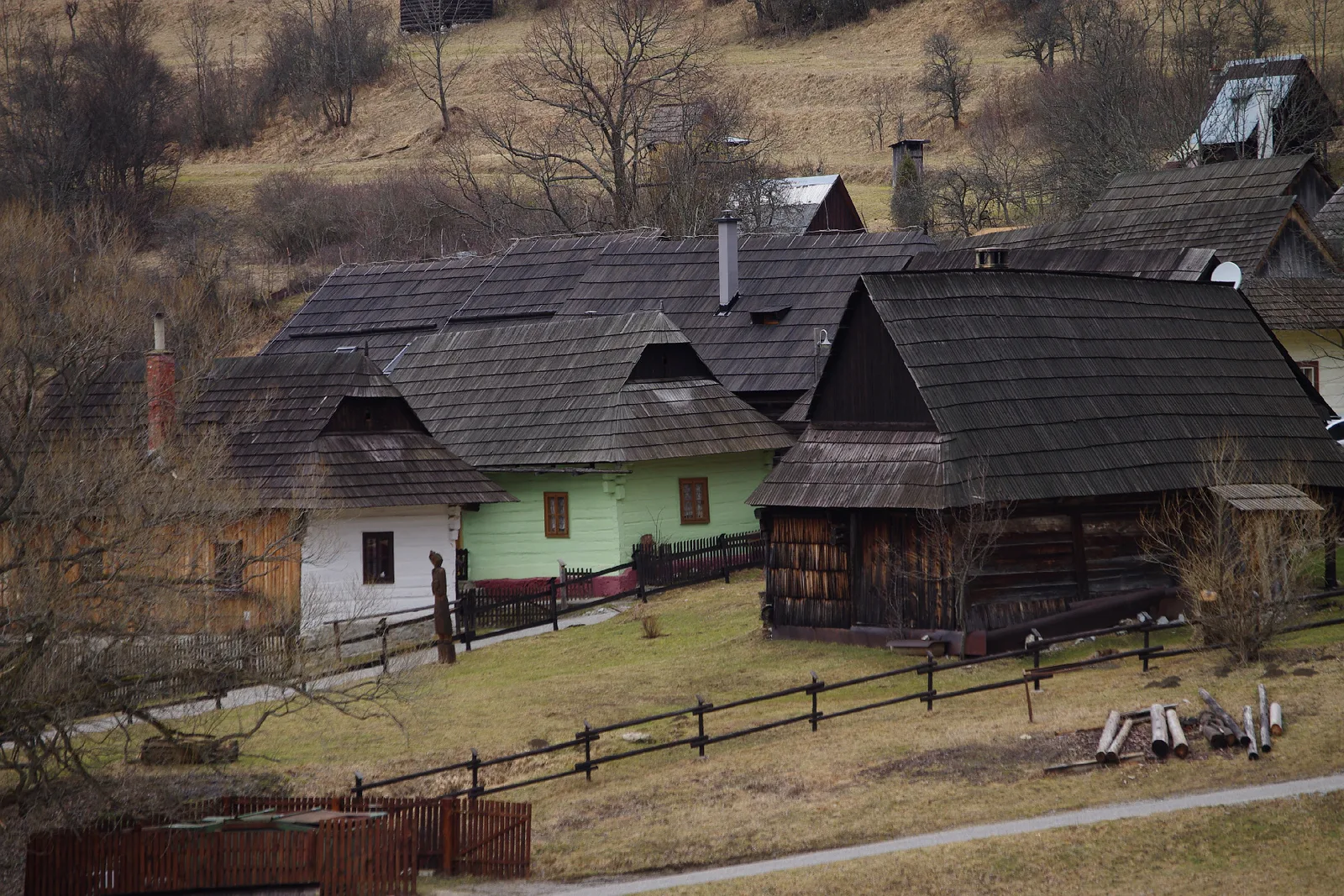 Log houses of VlkolínecPhoto: Mineralysk / Wikimedia Commons (CC0)
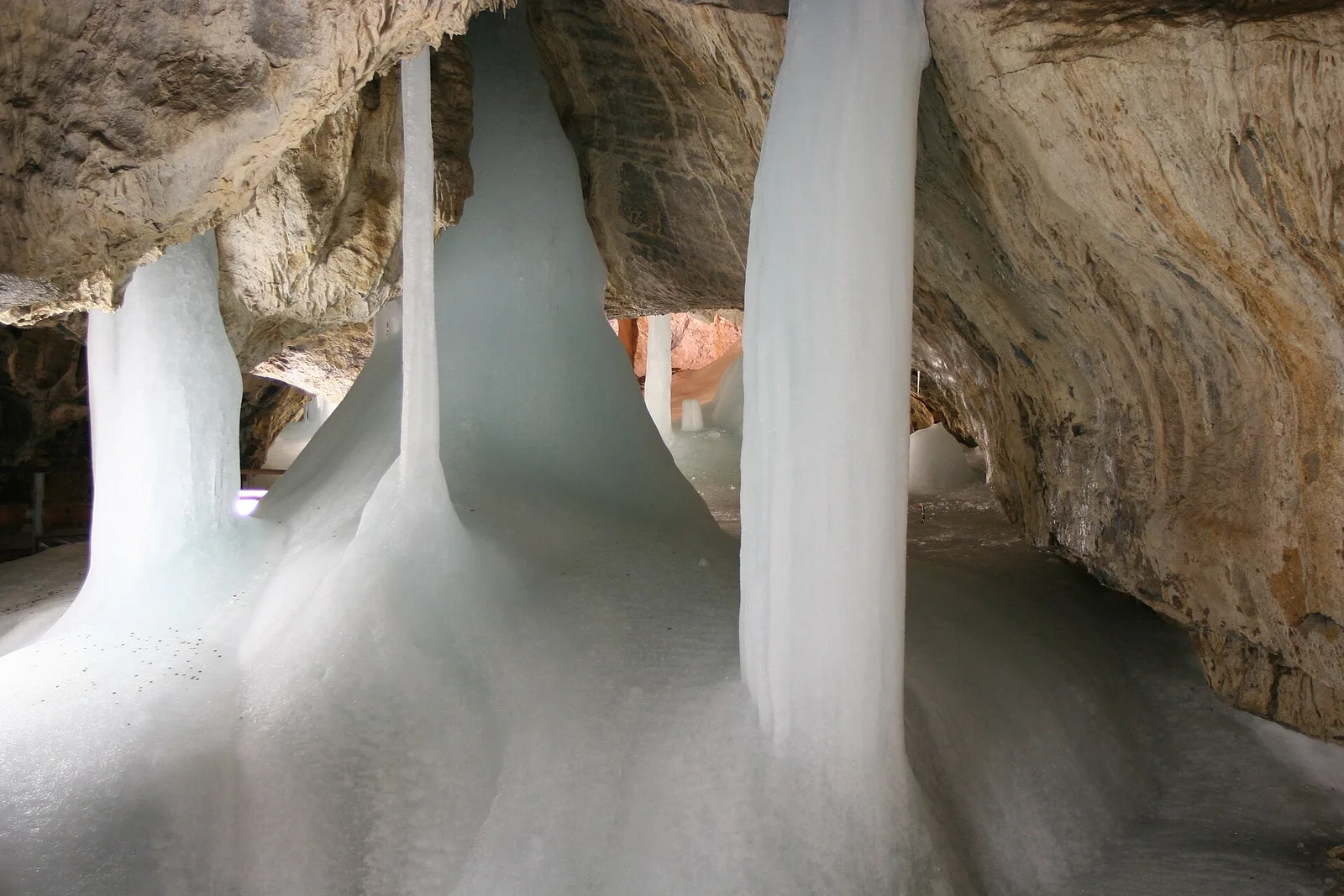 Inside the Demänová Ice CavePhoto: Jojo, en:Jojo_1, pl:Jojo / Wikimedia Commons (CC BY-SA 3.0)
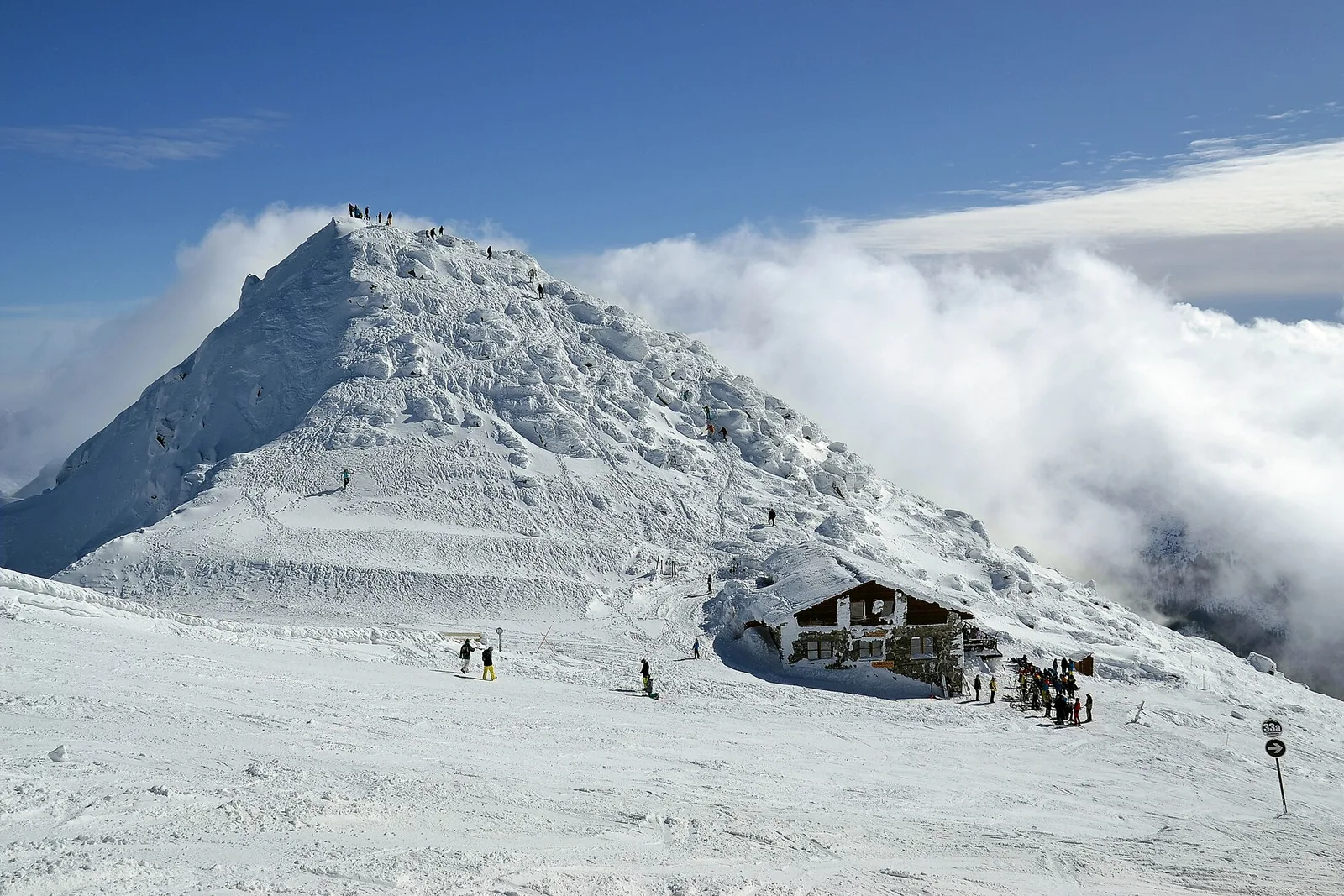 Chopok above JasnáPhoto: Pudelek (Marcin Szala) / Wikimedia Commons (CC BY-SA 3.0)
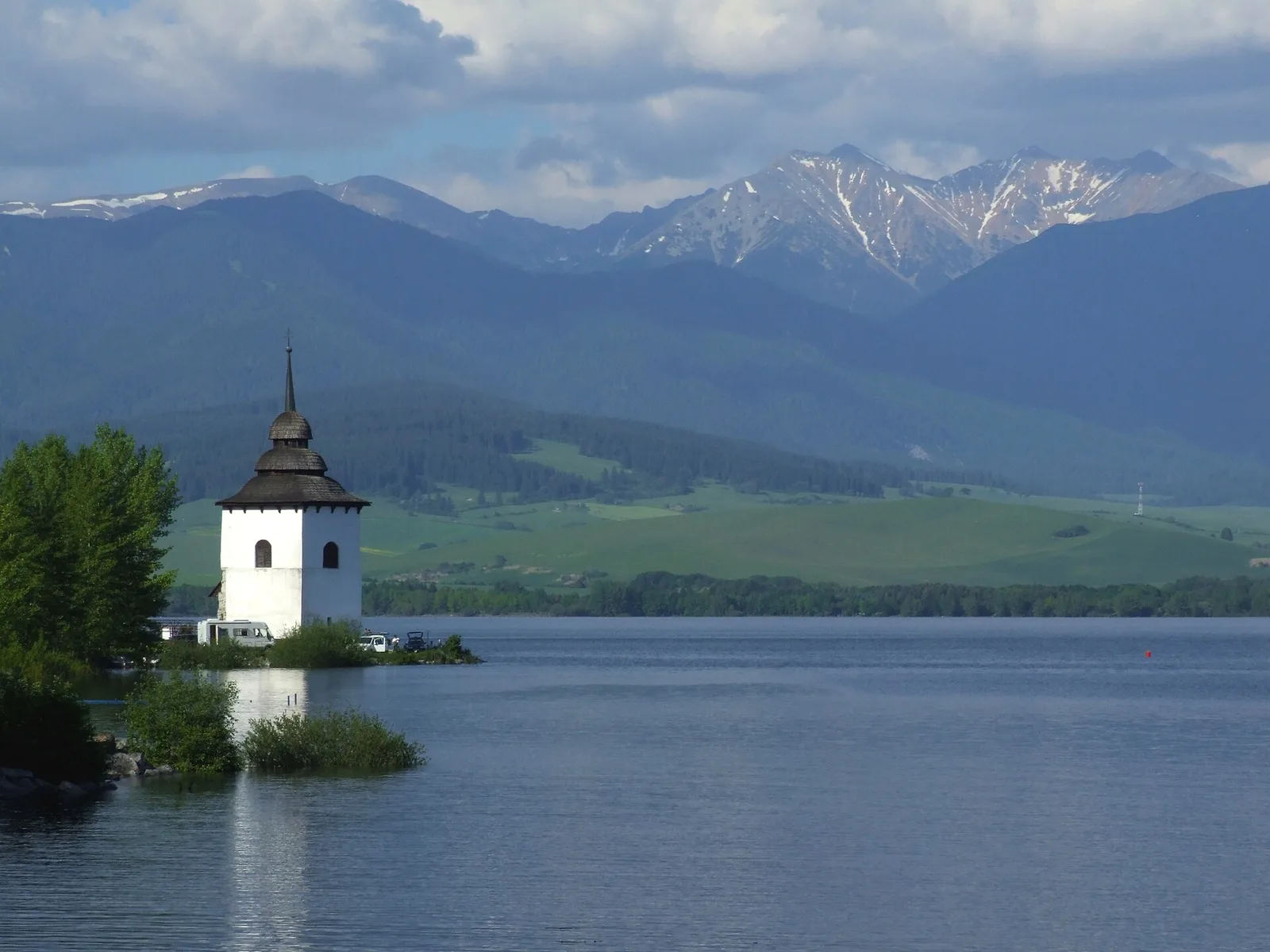 The church tower by Liptovská MaraPhoto: Pudelek (Marcin Szala) / Wikimedia Commons (CC BY-SA 3.0)
Holiday itinerary
- Day 1 · Bojnice
Leave Bratislava along the Váh and stop at Trenčín, where a castle rises on a rock above the river; on the same cliff a Roman inscription of 179 AD recalls the legion that wintered here, at Laugaricio, the northernmost trace of Rome in Central Europe. Charge in the town, then follow the valley of the Nitra to Bojnice. Its castle, rebuilt between 1889 and 1910 by Count Ján Pálffy in the manner of the Loire châteaux, lifts turrets and steep roofs above the spa park; walk around the walls in the evening light and past the old linden named after King Matthias.
- Day 2 · Kremnica
Give the morning in Bojnice to the castle halls, with their carved ceilings and the Pálffy collections, and to the zoo on the hill next door, the oldest in Slovakia. Then drive north into the valleys of the Strážov hills to Čičmany, where dark log houses are covered with white geometric patterns, once painted with lime to protect the wood; in 1977 the village became the first reserve of folk architecture in the world, and the Raden house shows how the families lived. In the afternoon cross the hills to Kremnica, a gold-mining town enclosed by walls, and settle in below its castle.
- Day 3 · Banská Štiavnica
Kremnica has struck coins since 1328, and its mint is among the oldest working mints in the world; the Museum of Coins and Medals on the main square tells that story in gold and silver. Climb to the town castle, with the Gothic church of St Catherine inside its walls and a view over the red roofs, then drive a few kilometres to Kremnické Bane, where a small church stands near the spot said to be the geographical centre of Europe. In the afternoon the road winds south through beech forests to Banská Štiavnica; stop on the way at Počúvadlo, one of the best-loved of the miners’ reservoirs, for a swim or a walk along the shore.
- Day 4 · Banská Štiavnica
Give the day to Banská Štiavnica, a town of silver built on the slopes of an extinct volcano and listed by UNESCO in 1993 together with the technical monuments around it. Start on Holy Trinity Square with its plague column, look into the Old Castle, a Romanesque church turned into a fortress, and the New Castle, a white tower raised against the Turks in the sixteenth century. After lunch go down into the Bartolomej shaft at the open-air mining museum, then climb to the Calvary on Scharfenberg hill, a Baroque ensemble of chapels and churches begun in 1744, where the whole town lies below you at sunset.
- Day 5 · Banská Bystrica
Drive north to Banská Bystrica, the third of the great mining towns, whose long square is framed by burgher houses and a leaning clock tower. By the river stands the Museum of the Slovak National Uprising, a split concrete building opened in 1969 in memory of the revolt against the Nazis that broke out here in August 1944. In the afternoon take the short road up to Špania Dolina, a copper-mining village on a steep slope, where a covered wooden stairway climbs to the church and women still make bobbin lace; spend the night back in the city.
- Day 6 · Liptovský Mikuláš
Charge in Banská Bystrica and cross the Low Tatras by the pass of Donovaly into the Liptov valley. Near Ružomberok a narrow road climbs to Vlkolínec, a hamlet of some forty-five log houses with a wooden belfry, listed by UNESCO in 1993 as one of the best-preserved villages of its kind; walk up its single street in the morning quiet, before the visitors arrive. Then continue east along the valley to Liptovský Mikuláš at the foot of the mountains, where you stay for two nights.
- Day 7 · Liptovský Mikuláš
A day in the Demänová valley, which runs straight into the heart of the Low Tatras. In the Demänová Ice Cave the lower halls stay frozen all year, and the walls still carry the names of early visitors; a little further up the valley the Cave of Liberty opens a different world of dripstone and underground lakes. From Jasná the cable car rises to the summit of Chopok at 2,024 metres, with a view across the ridges to the High Tatras on a clear day. In the evening drive along Liptovská Mara, the largest reservoir in Slovakia, where a lone church on the shore recalls the villages beneath the water.
- Day 8 · Bratislava
Return west down the Váh valley past Žilina, with the hills of the Malá Fatra close by and castle ruins on the rocks above the river. Charge again in Trenčín and, if there is time, walk up to its castle for a last view over the valley you followed on the first day. In the evening you are back in Bratislava: leave the car and climb to the castle above the Danube, where the plain opens towards Austria and Hungary.