
Plan
Add route point
New point will be added to the top of the route and later you can arrange the chain of points
Points
Holiday itinerary
Eight days in Romania’s far southwest, where the plain of the Banat breaks against limestone mountains and the Danube forces its way through the Carpathians. The loop begins in Timișoara, a city of Secession façades and wide baroque squares, and climbs to Oravița, home of the oldest theatre in the country and of a mountain railway built for steam. From the village of Sasca Montană a path follows the turquoise Nera into its gorge, and the road meets the Danube at Moldova Nouă to run beside the great river for a whole day. At the Cazane the cliffs close in, a king’s face is carved into the rock and small boats slip into caves that open onto the water. Roman Drobeta and the faded imperial spa of Băile Herculane come next, then the road crosses the Iron Gate of Transylvania to Ulpia Traiana Sarmizegetusa, the stone church of Densuș and the towers of Corvin Castle. Fast chargers are rare along the Danube: charge fully in Timișoara and Drobeta, and choose guesthouses that let you plug in overnight.
Season: Best from May to early October, when the boats run through the Cazane and the guesthouses along the Danube are open. Late spring brings lilac to the gorge villages and full water to the Nera; September is warm, clear and quiet. In winter many river guesthouses close and the mountain roads around Anina and Sasca can be icy.
Landmarks
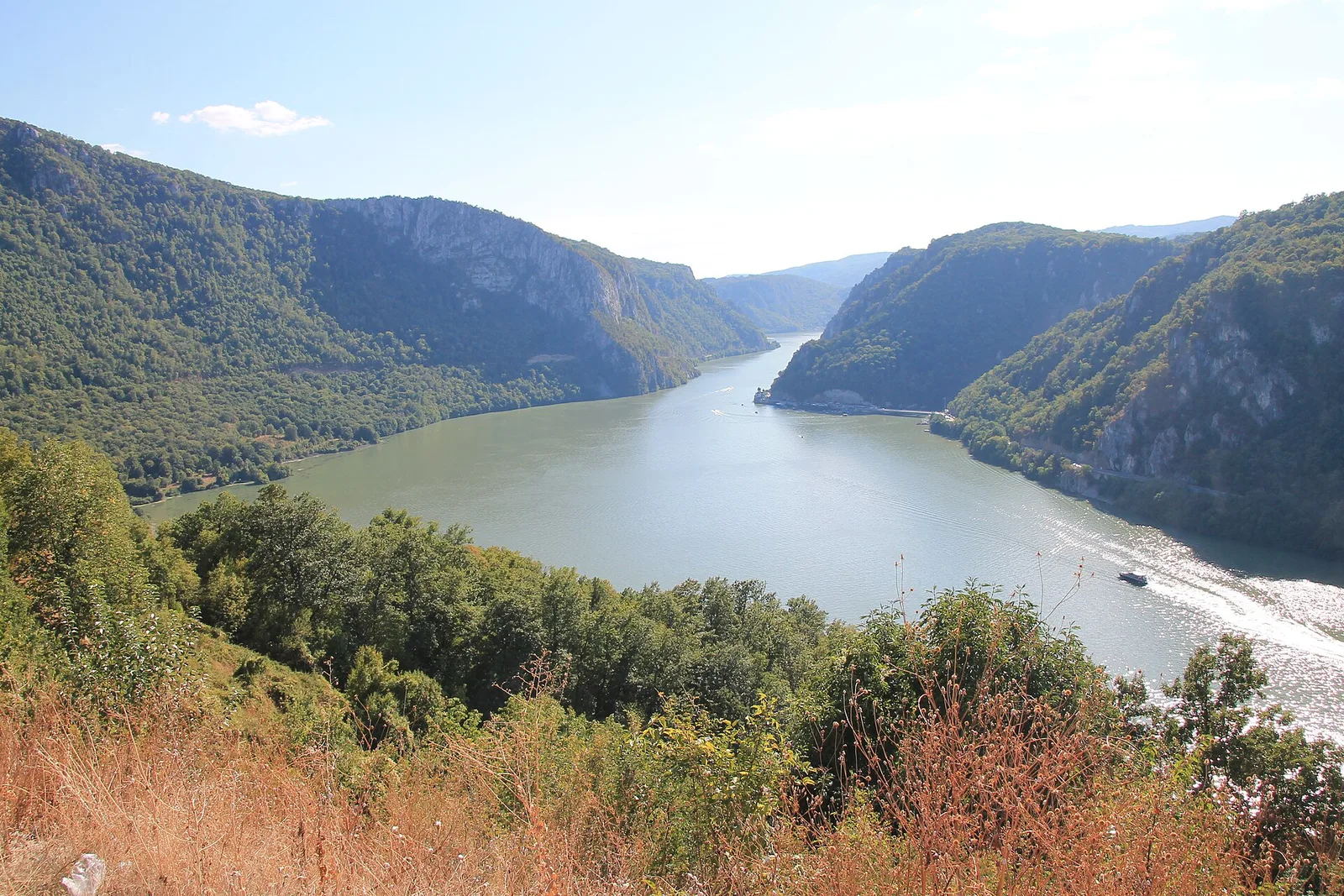 The Danube in the Cazane gorgePhoto: Ванилица / Wikimedia Commons (CC BY-SA 4.0)
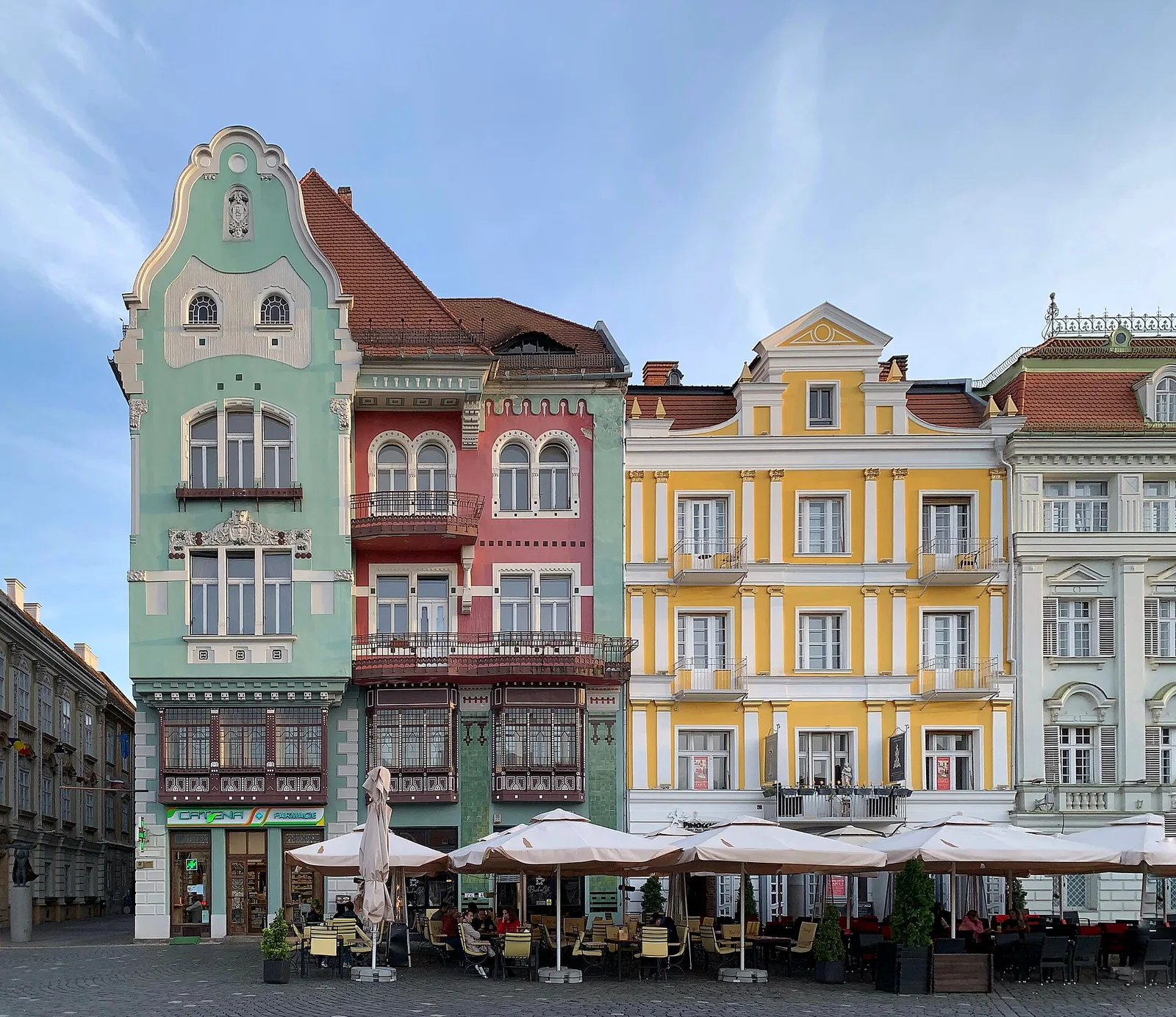 Union Square in TimișoaraPhoto: Chainwit. / Wikimedia Commons (CC BY 4.0)
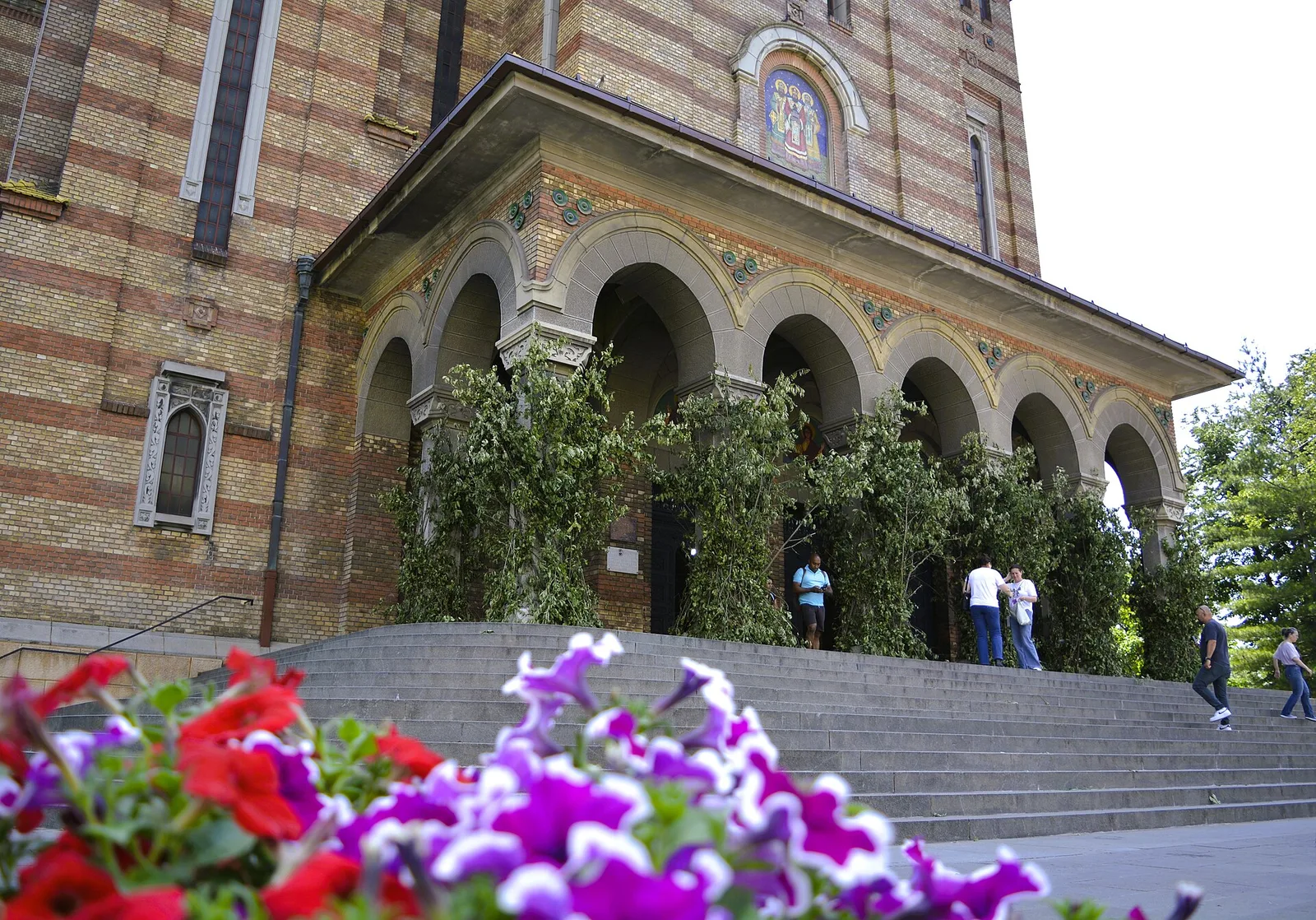 The Metropolitan Cathedral of TimișoaraPhoto: Irimia florin / Wikimedia Commons (CC BY-SA 4.0)
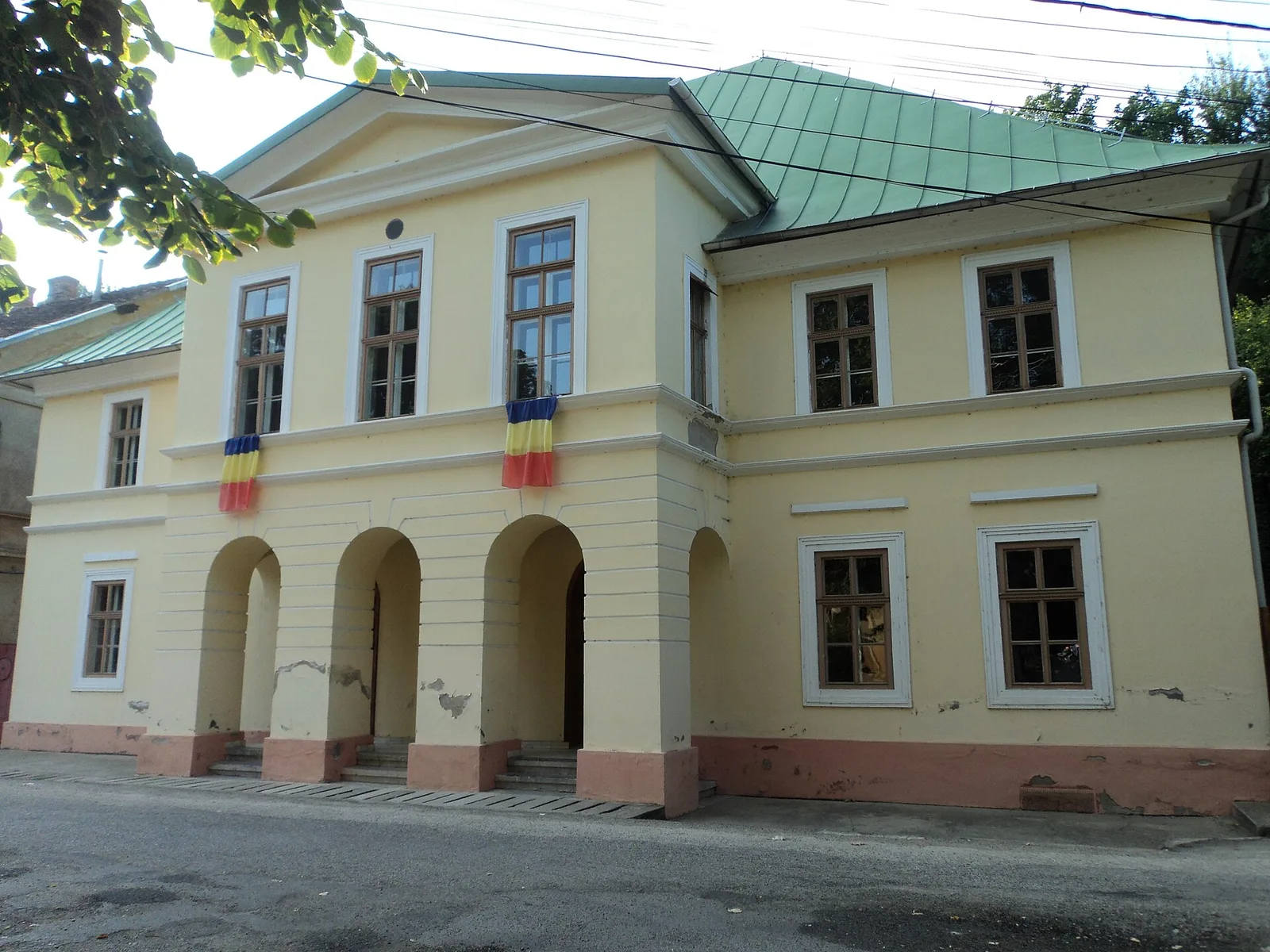 The old theatre of OravițaPhoto: Victoria Popa / Wikimedia Commons (CC BY-SA 3.0)
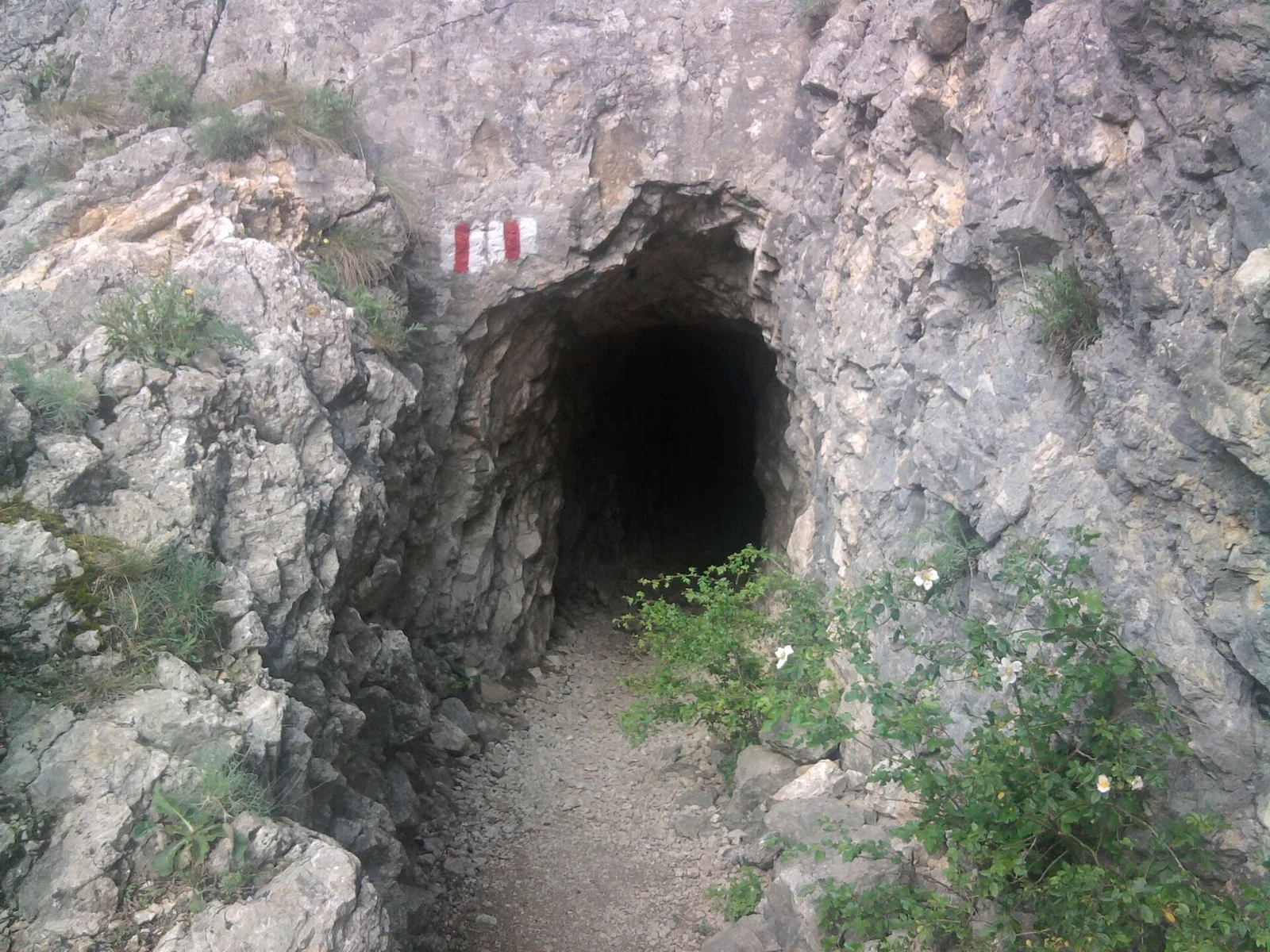 The Nera gorgePhoto: Stadtigel / Wikimedia Commons (CC BY-SA 4.0)
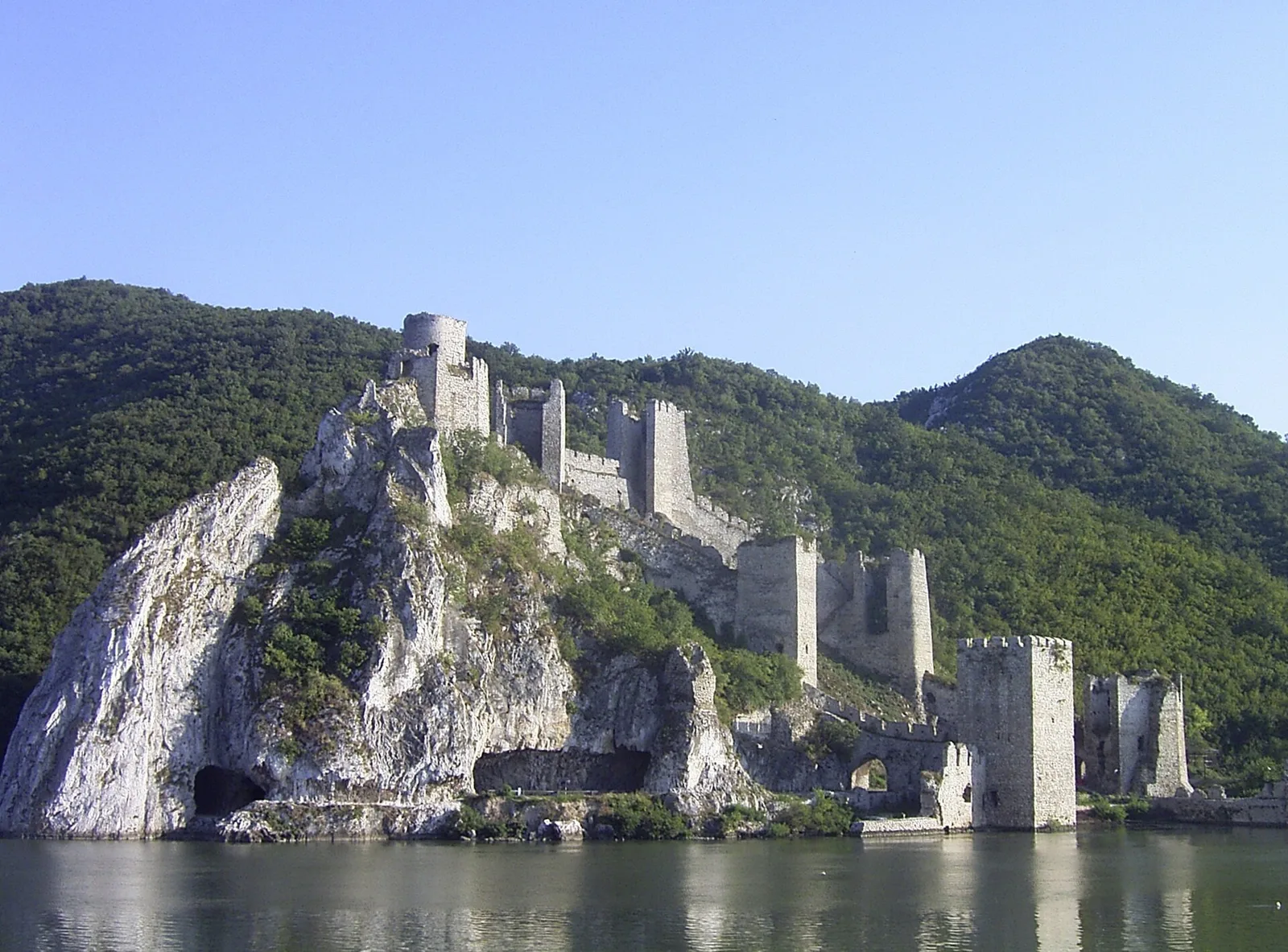 Golubac Fortress across the DanubePhoto: Denis Barthel / Wikimedia Commons (CC BY-SA 3.0)
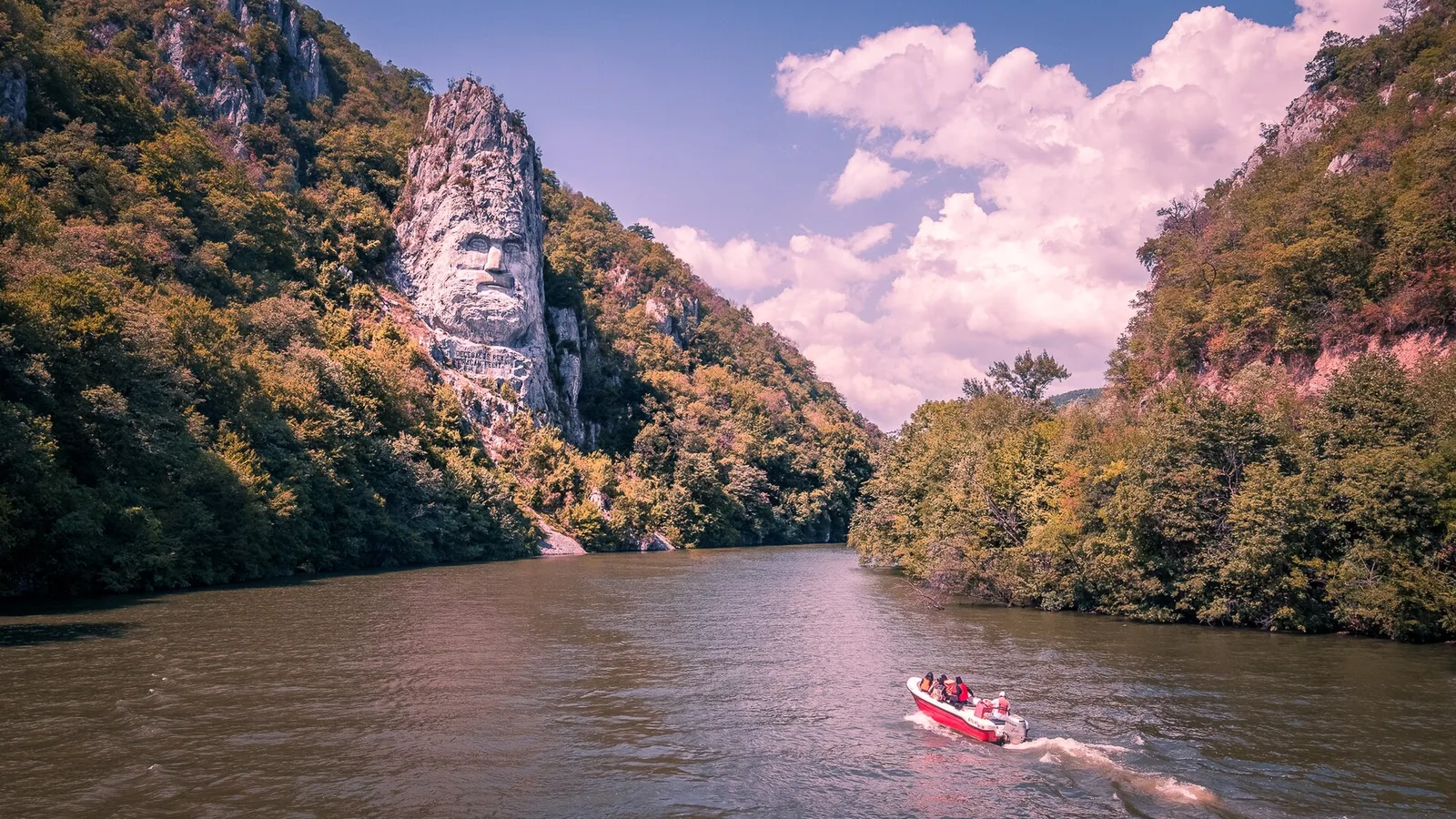 The rock face of DecebalusPhoto: Giuseppe Milo from Dublin, Ireland / Wikimedia Commons (CC BY 2.0)
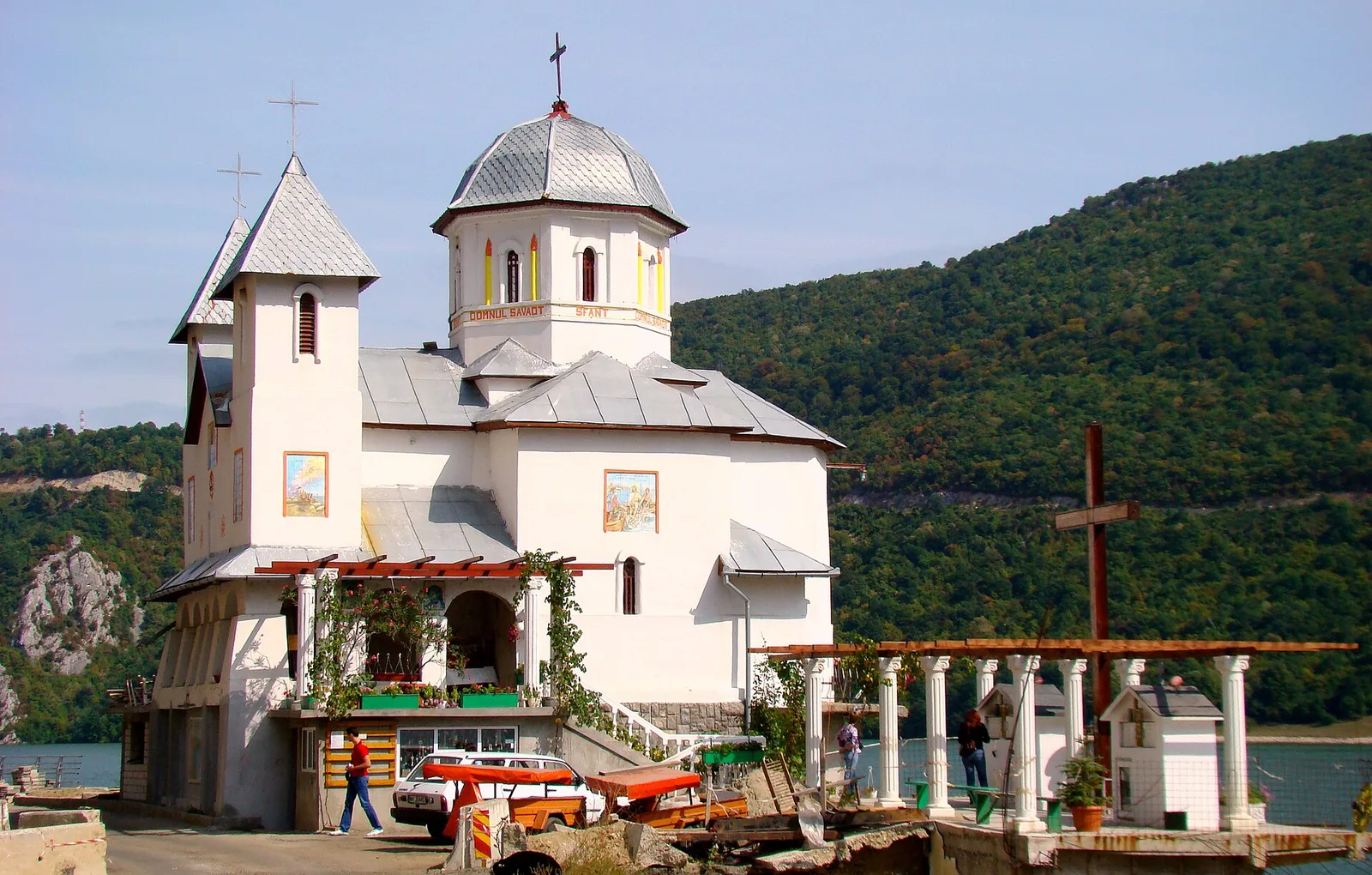 Mraconia Monastery on the DanubePhoto: Țetcu Mircea Rareș / Wikimedia Commons (CC BY-SA 4.0)
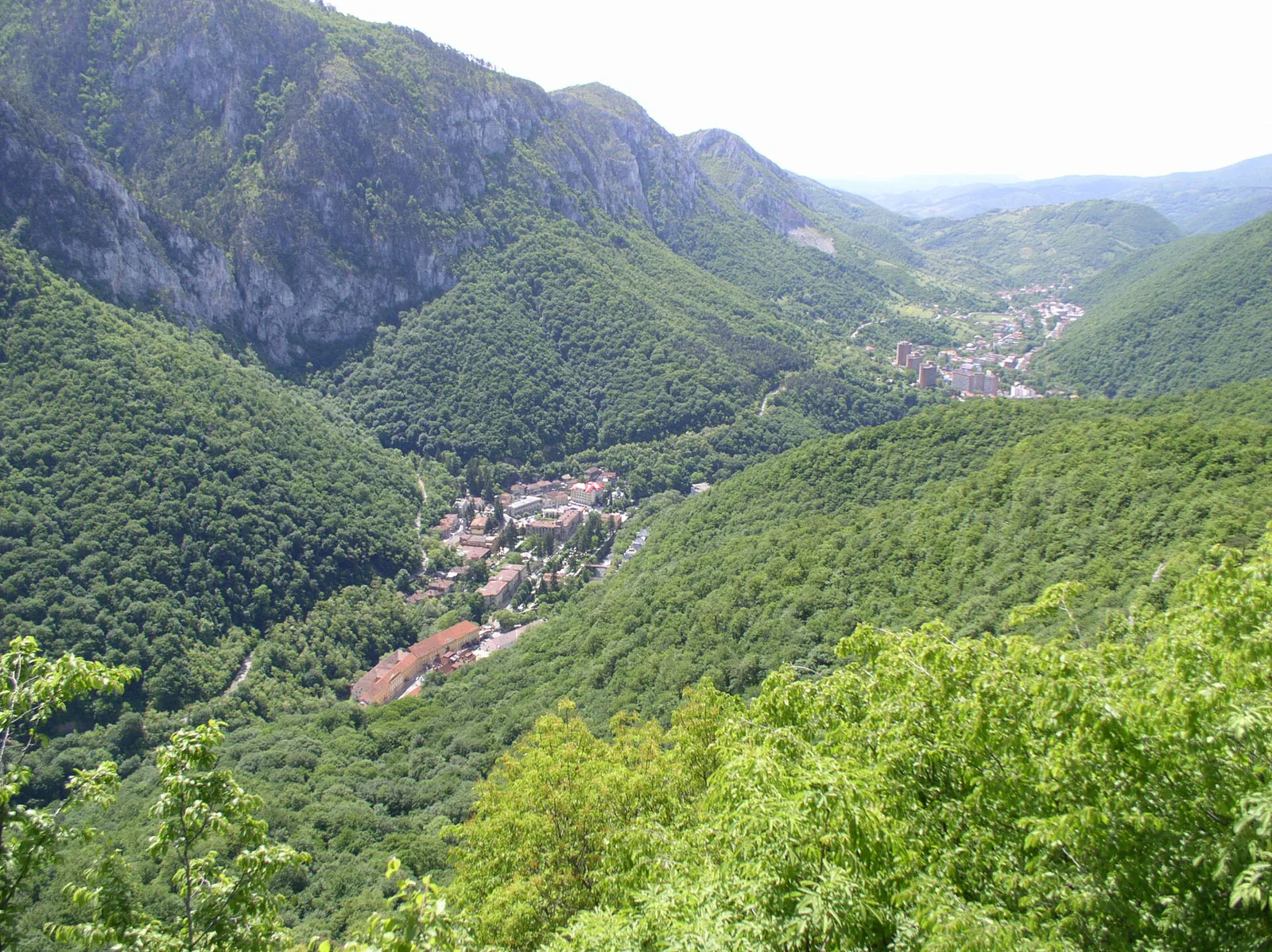 The old spa of Băile HerculanePhoto: Original uploader was Zamolx at ro.wikipedia / Wikimedia Commons (CC BY-SA 3.0)
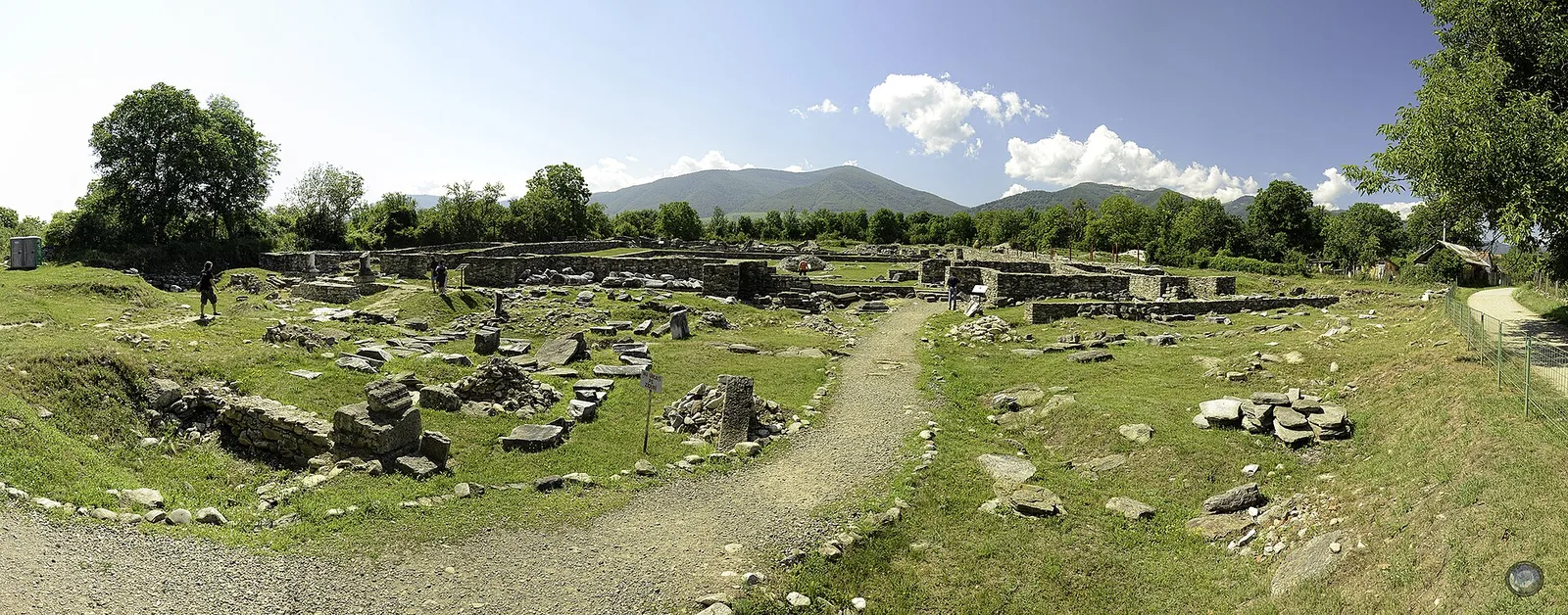 Ulpia Traiana SarmizegetusaPhoto: Levente Nuber / Wikimedia Commons (CC BY-SA 4.0)
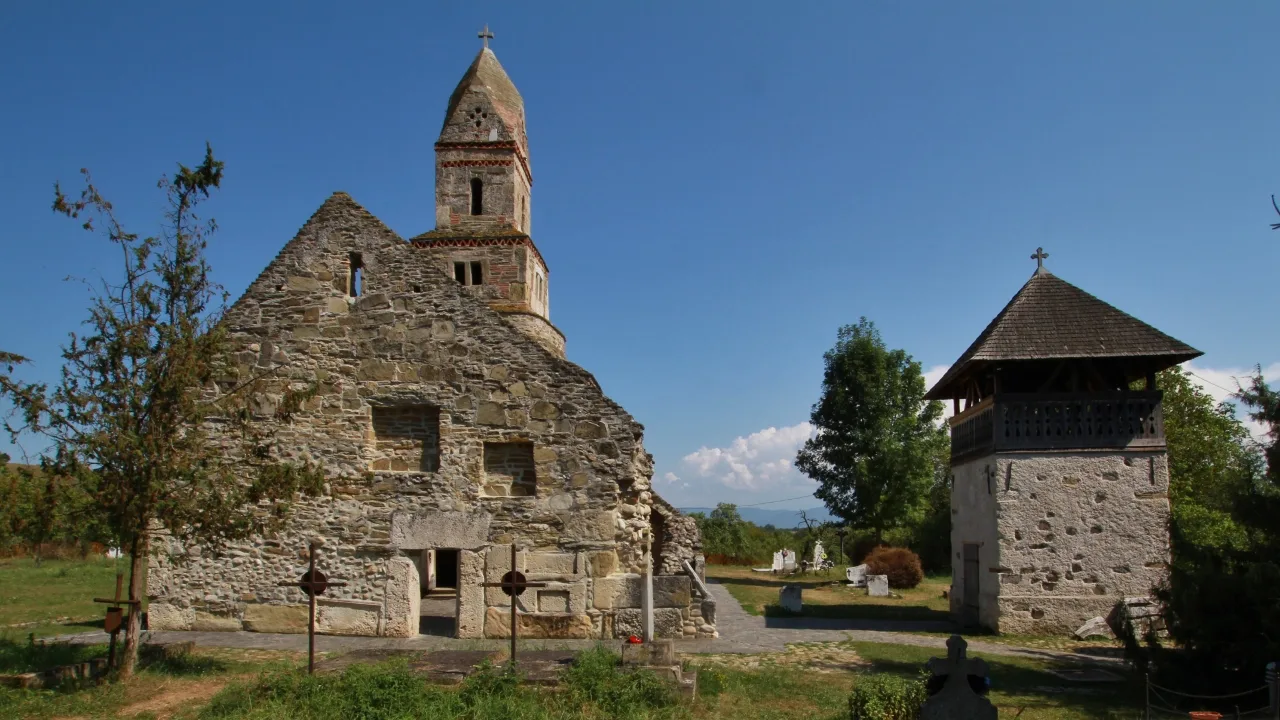 The stone church of DensușPhoto: Motacilla / Wikimedia Commons (CC BY-SA 4.0)
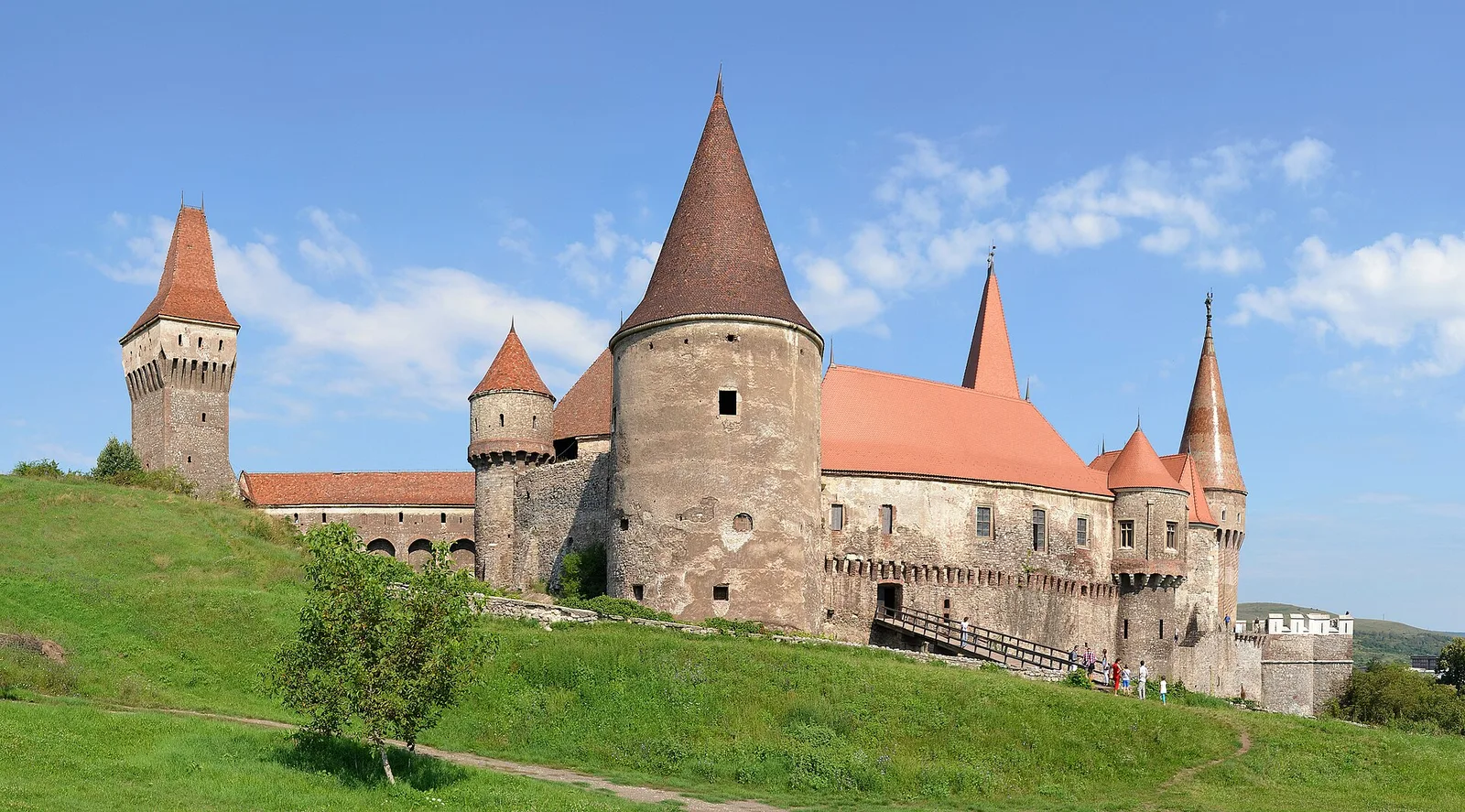 Corvin Castle in HunedoaraPhoto: Pudelek / Wikimedia Commons (CC BY-SA 4.0)
Holiday itinerary
- Day 1 · Timișoara
Arrive in Timișoara and spend the afternoon on foot. Union Square opens like a stage between the Roman Catholic and Serbian Orthodox cathedrals, with a plague column of the Holy Trinity in the middle; a few streets away Victory Square runs from the opera house to the Metropolitan Cathedral, whose green and yellow tiled roofs glow in the evening sun. It was here, in December 1989, that the revolution against the regime began. Walk through the Theresia Bastion, the last large piece of the Habsburg fortress, and look up at the Secession palaces with their tiles and ironwork before dinner in one of the courtyards of the old town.
- Day 2 · Sasca Montană
Leave the plain by the road southeast to Oravița, a small mining town tucked into a valley of the Anina Mountains. Its theatre, opened in 1817 and modelled on the old Kärntnertortheater in Vienna, is the oldest in Romania; a guided visit shows a tiny gilded hall with painted boxes. The town is also the start of the Oravița–Anina railway, the oldest mountain line in the country, which winds through fourteen tunnels and over ten viaducts; check the timetable if you want to ride it. In the afternoon continue south to Sasca Montană, a village of a few streets at the mouth of the Nera gorge, where guesthouses serve trout and the evening smells of walnut trees.
- Day 3 · Dubova
Start the morning on foot. From Sasca Montană a marked path follows the Nera upstream into a limestone canyon, slipping through short tunnels cut into the rock; after an hour and a half you reach the Devil’s Lake, a deep green pool hidden at the foot of a cliff. Back at the car, drive south to Moldova Nouă and meet the Danube. Beyond Coronini the river widens into a lake, the ruined towers of Golubac Fortress rise on the Serbian bank, and on the Romanian side the lone rock of Babakai stands in the water. The road then follows the river east for about eighty kilometres, past fishing villages and steep green slopes, to Dubova at the entrance of the Cazane.
- Day 4 · Dubova
This is the day of the Cazane, the ‘cauldrons’ where the Danube squeezes between walls of limestone. Take a small boat from the shore at Dubova: it passes beneath the fifty-five-metre face of Decebalus, the last king of the Dacians, carved into the cliff, slows beside the little Mraconia Monastery at the water’s edge and noses into the Ponicova Cave, which runs right through the hill. On the Serbian bank, look for the Tabula Traiana, the Roman plaque that marks Trajan’s road along the gorge. In the afternoon walk up to the Ciucaru Mare viewpoint, a steep hour on a rocky path, for the famous view of the river bending between the cliffs as the light turns gold.
- Day 5 · Băile Herculane
Follow the Danube to Orșova, rebuilt on a hillside when the Iron Gates dam drowned the old town and the island of Ada Kaleh in the early 1970s. In Drobeta-Turnu Severin, the Iron Gates Region Museum stands beside the stumps of Trajan’s Bridge, which in 105 AD was the longest bridge in the Roman world; a model inside shows how it crossed the river on twenty stone piers. Walk past the ruins of the medieval Severin fortress and the old water tower in the park, then drive back north into the Cerna valley to Băile Herculane, where the imperial spa lies in a narrow gorge under walls of white limestone.
- Day 6 · Băile Herculane
Give a whole day to Băile Herculane, one of the oldest spas in Europe. The Romans bathed here, and the Habsburgs built a little town of arcades, pavilions and baroque baths; today the grand Neptune Baths and the old casino stand half ruined, beautiful and melancholy, while newer pools still draw on the hot sulphur springs. Greet the bronze Hercules on the central square, then walk along the Cerna to the Haiducilor Cave, where outlaws once hid. For a view over the gorge, take the trail up into the Domogled forest, a national park of old beech and Banat black pine where butterflies drift over limestone meadows. End the day in warm water beside the river.
- Day 7 · Hunedoara
Head north through Caransebeș and climb to the pass called the Iron Gate of Transylvania, where the plain of the Banat gives way to the Hațeg Country. Beyond it lie the ruins of Ulpia Traiana Sarmizegetusa, the capital of Roman Dacia, with its amphitheatre and forum standing in open fields beneath the Retezat mountains. A few kilometres away, the church of Densuș is one of the oldest in Romania, built from Roman stones, tombstones and columns, with a squat tower and faded frescoes inside. The Hațeg region is also a geopark famous for its dwarf dinosaurs. End the day at Corvin Castle in Hunedoara, a Gothic fortress of towers, drawbridge and pointed roofs rising above a ravine.
- Day 8 · Timișoara
On the way home, stop in Deva and ride the inclined lift up to the fortress on its volcanic hill, from where the Mureș valley spreads out below like a map. The motorway west then crosses rolling farmland to Lugoj, a quiet town on the Timiș whose iron bridge joins two old quarters, once Romanian and German; it is a good place for coffee and a charge. By late afternoon you are back in Timișoara. If you still have the energy, walk along the Bega canal to the Rose Park and finish the journey with a glass of Banat wine from the Recaș hills.