
Plan
Add route point
New point will be added to the top of the route and later you can arrange the chain of points
Points
Holiday itinerary
Eight days through the green, stone-walled east of Ireland, where five thousand years of history lie closer to the road than anywhere else on the island. The loop leaves the Georgian squares of Dublin for the Boyne Valley, where Newgrange is older than the pyramids, follows the Shannon to the monastic ruins of Clonmacnoise and climbs the Rock of Cashel, the seat of Munster’s kings. Medieval Kilkenny and Viking Waterford lead to the wild Copper Coast and the oldest working lighthouse in the world at Hook Head, before the Wicklow Mountains and the lakes of Glendalough close the circle above Dublin Bay. Fast chargers line the motorways and every county town; country houses gladly lend a socket overnight.
Season: Best from April to October. In spring the hedges along the Boyne foam with hawthorn, and late September and October bring golden bracken to the Wicklow passes and quiet roads after the summer crowds. Newgrange is visited only on a guided tour from the Brú na Bóinne centre, and places run out early in summer, so book ahead; around the winter solstice the chamber is lit by the rising sun for a few minutes, and the lucky few are chosen by lottery. Winter is mild but wet and short of daylight: the Sally Gap can be closed by snow or ice, so check before you climb.
Landmarks
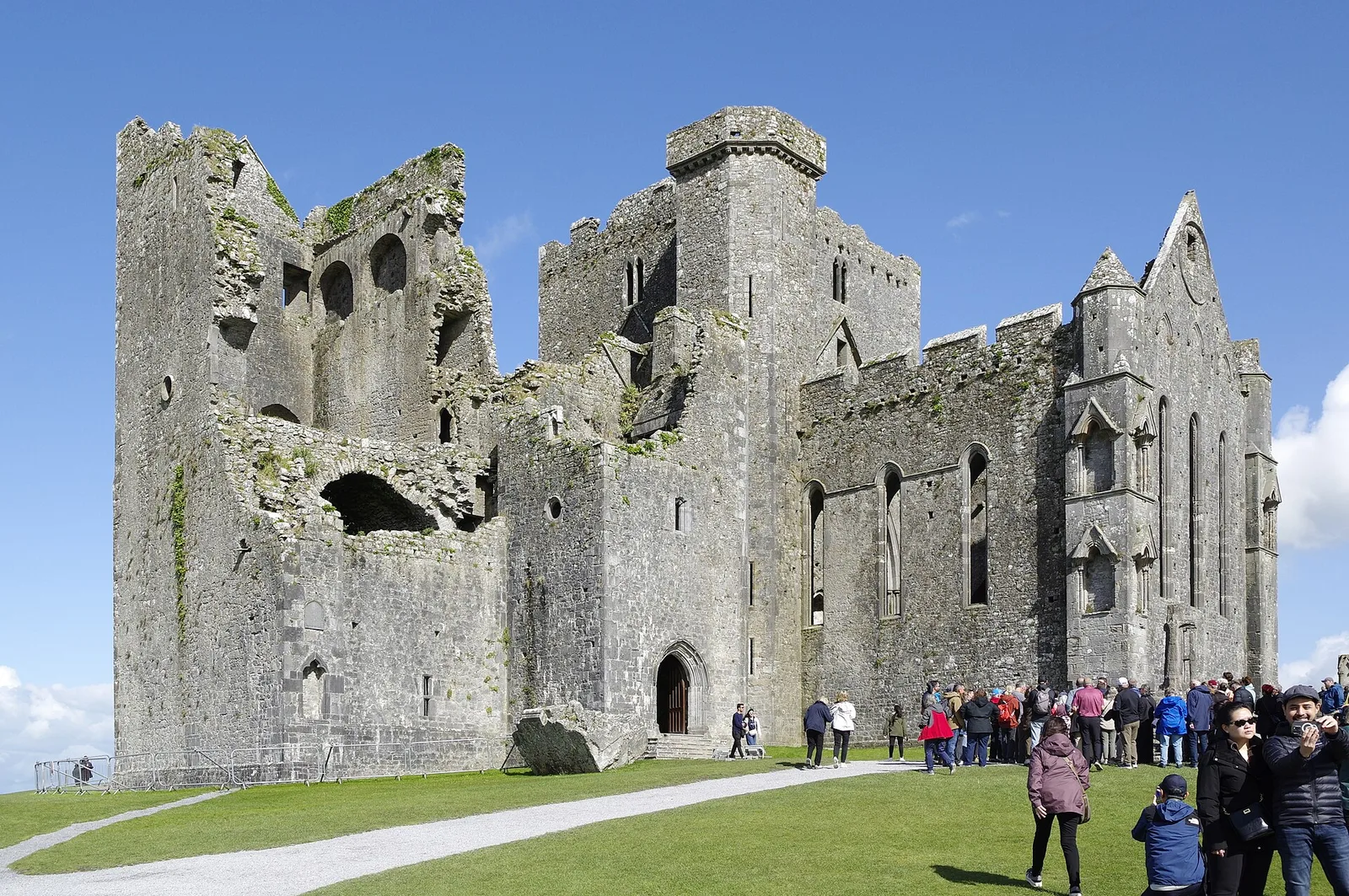 The Rock of Cashel above the Golden ValePhoto: Berthold Werner / Wikimedia Commons (CC BY-SA 4.0)
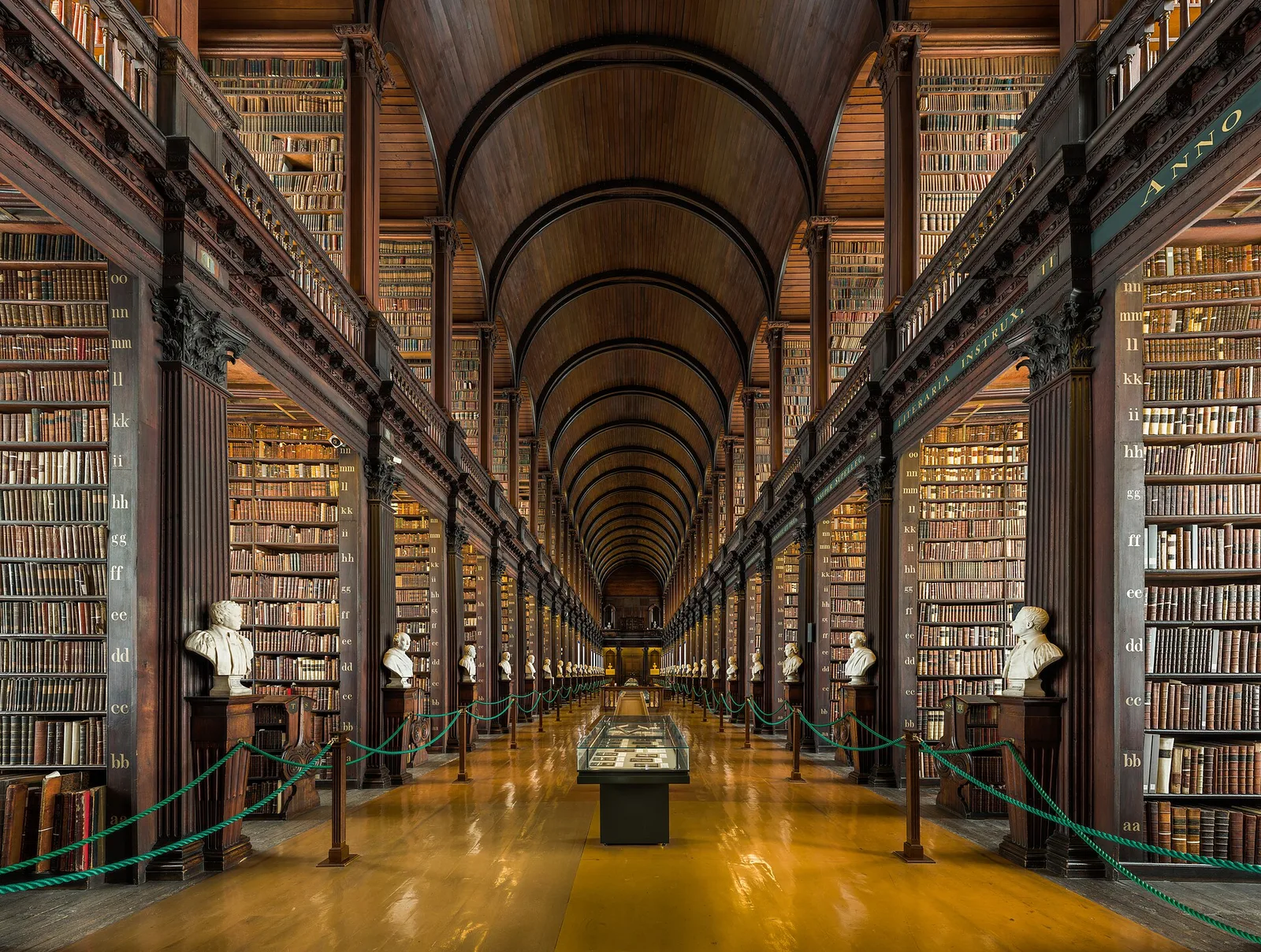 The Long Room of Trinity CollegePhoto: Diliff / Wikimedia Commons (CC BY-SA 4.0)
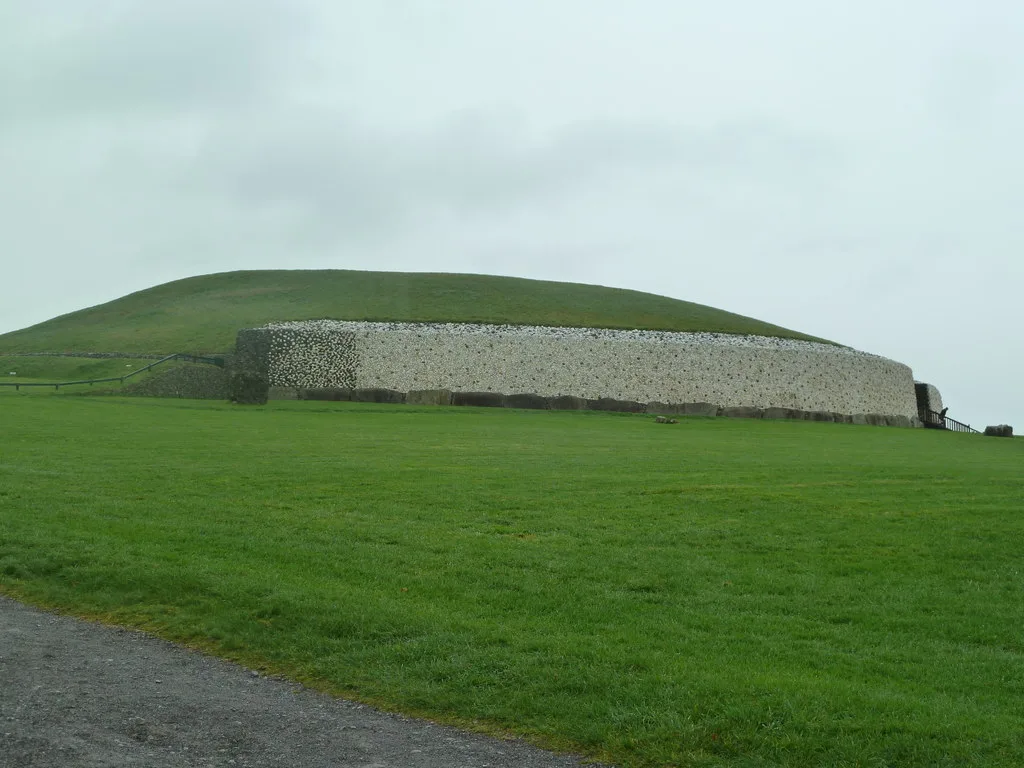 The great mound of NewgrangePhoto: Graham Hogg / Wikimedia Commons (CC BY-SA 2.0)
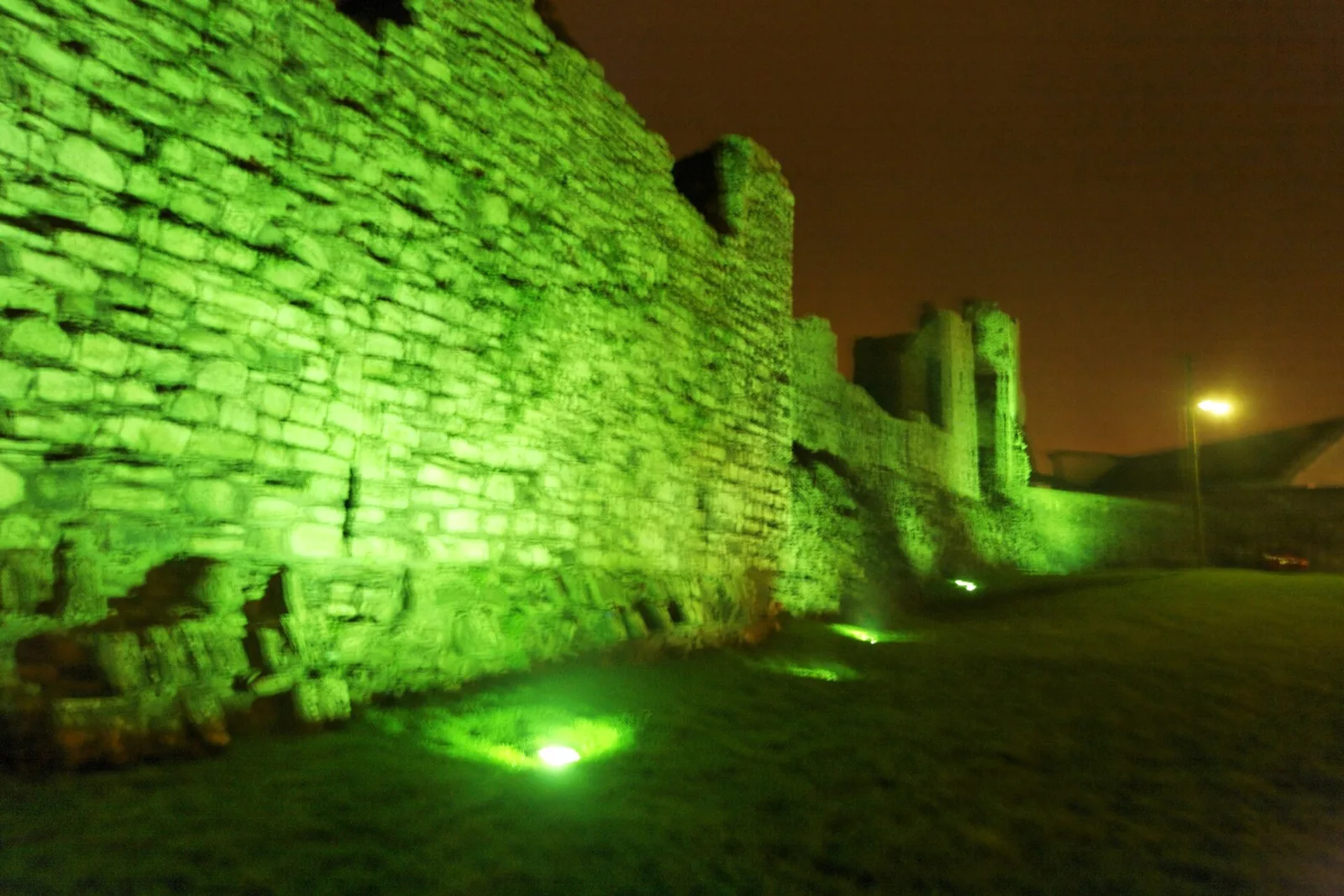 Trim Castle on the BoynePhoto: William Murphy / Wikimedia Commons (CC BY-SA 2.0)
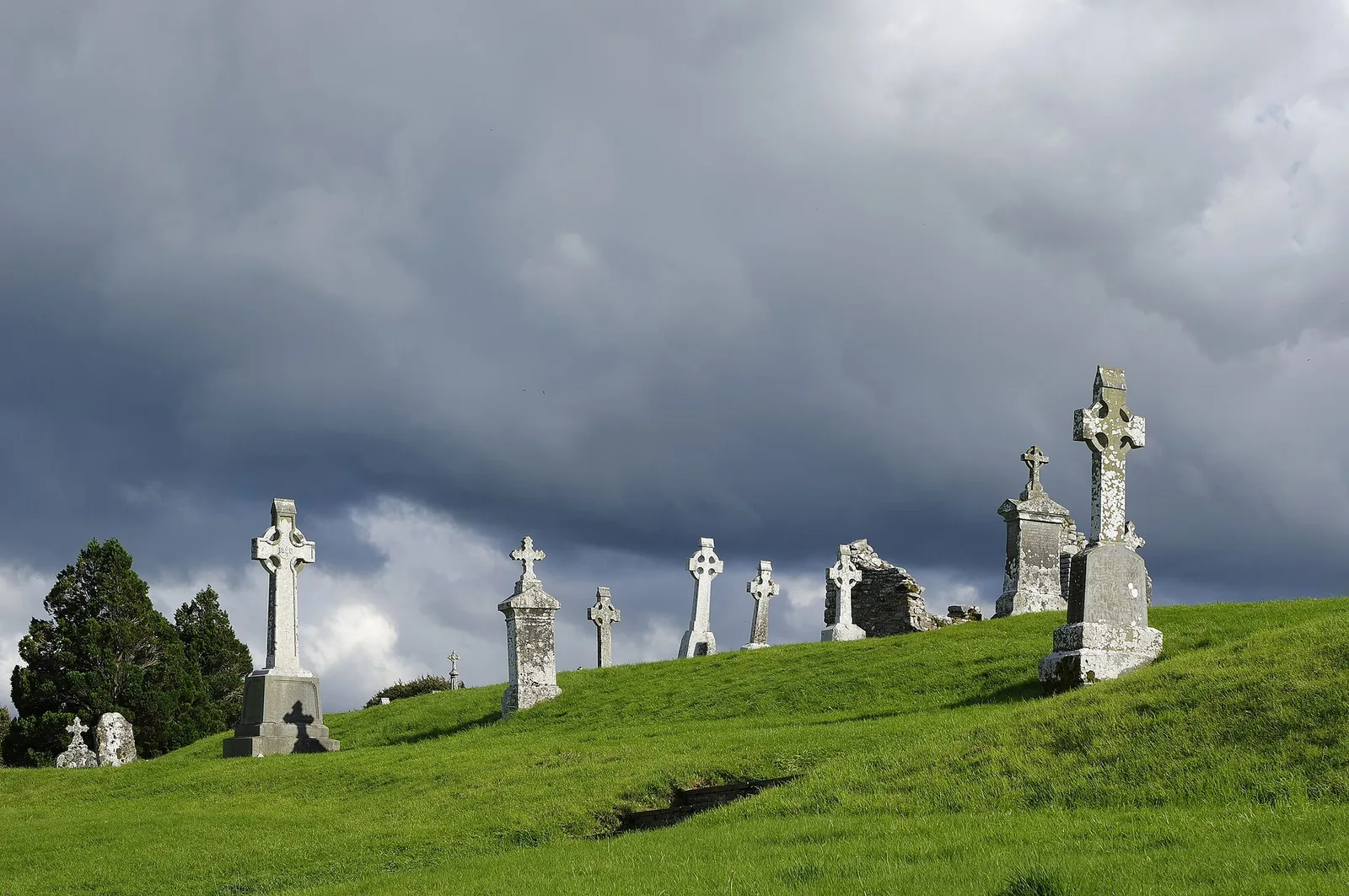 Clonmacnoise above the ShannonPhoto: Berthold Werner / Wikimedia Commons (CC BY-SA 4.0)
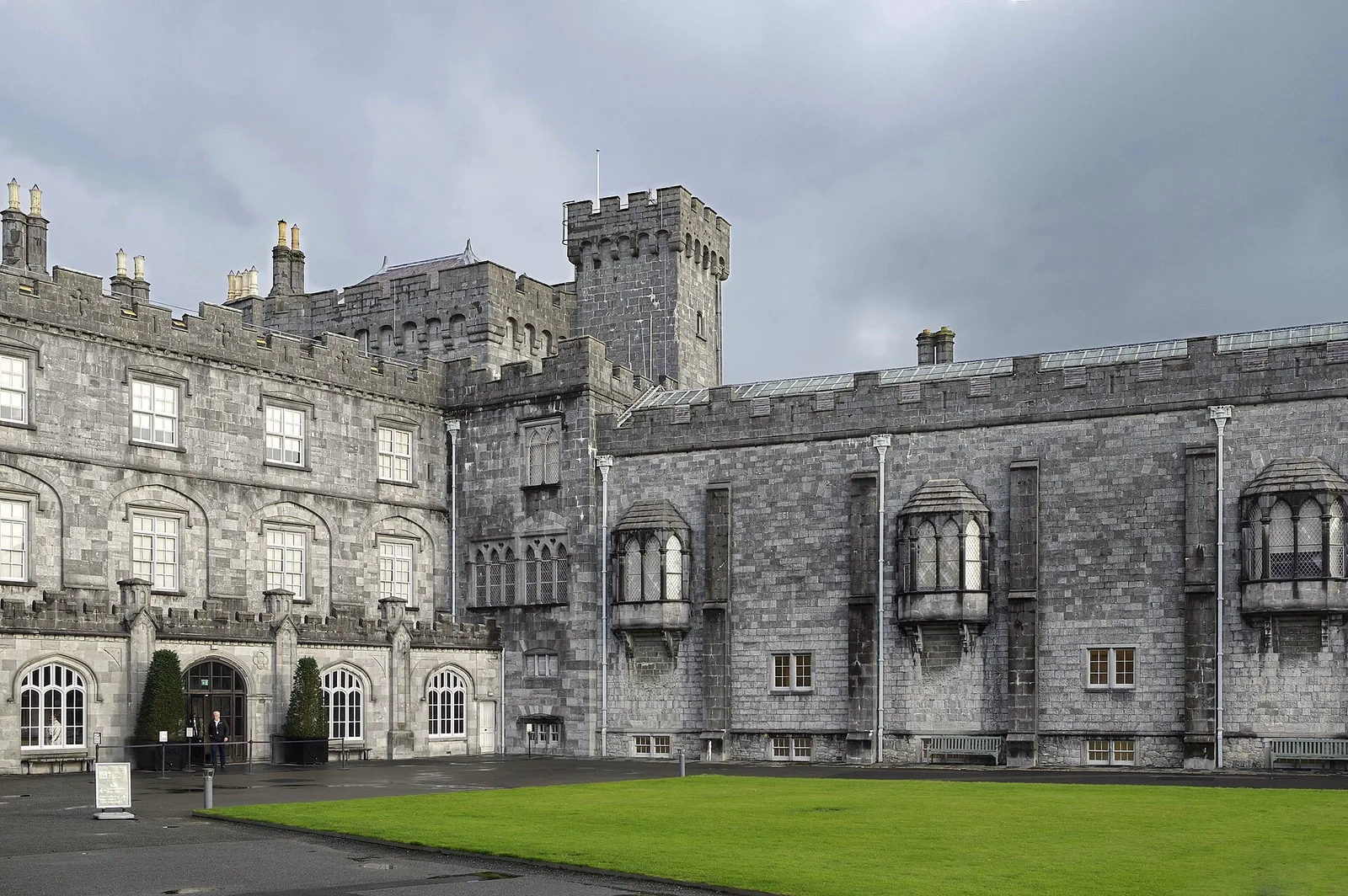 Kilkenny CastlePhoto: Berthold Werner / Wikimedia Commons (CC BY-SA 4.0)
 Coves of the Copper CoastPhoto: Ingo Mehling / Wikimedia Commons (CC BY-SA 3.0)
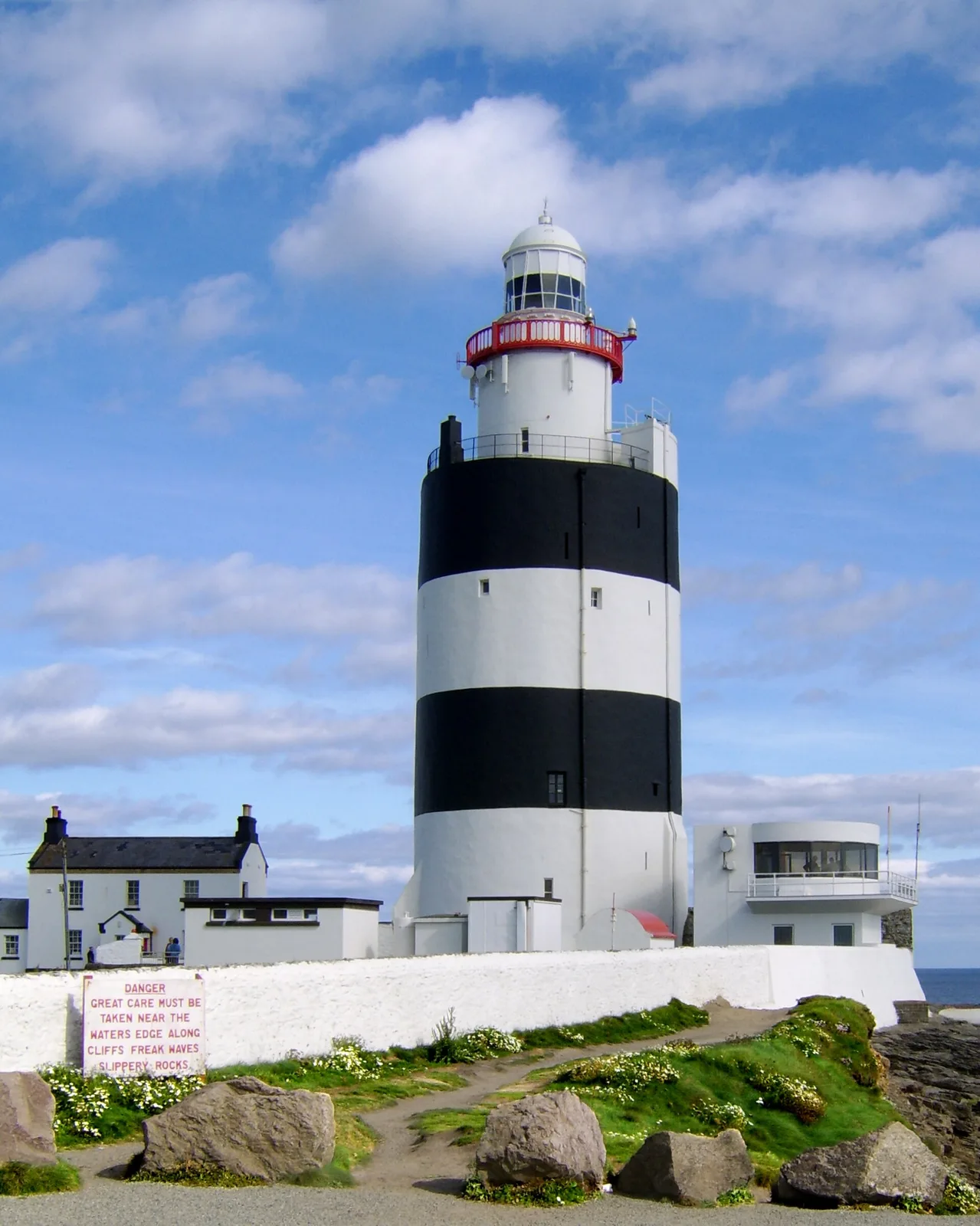 Hook Lighthouse at the tip of the peninsulaPhoto: Athena Flickr / Wikimedia Commons (CC BY 2.0)
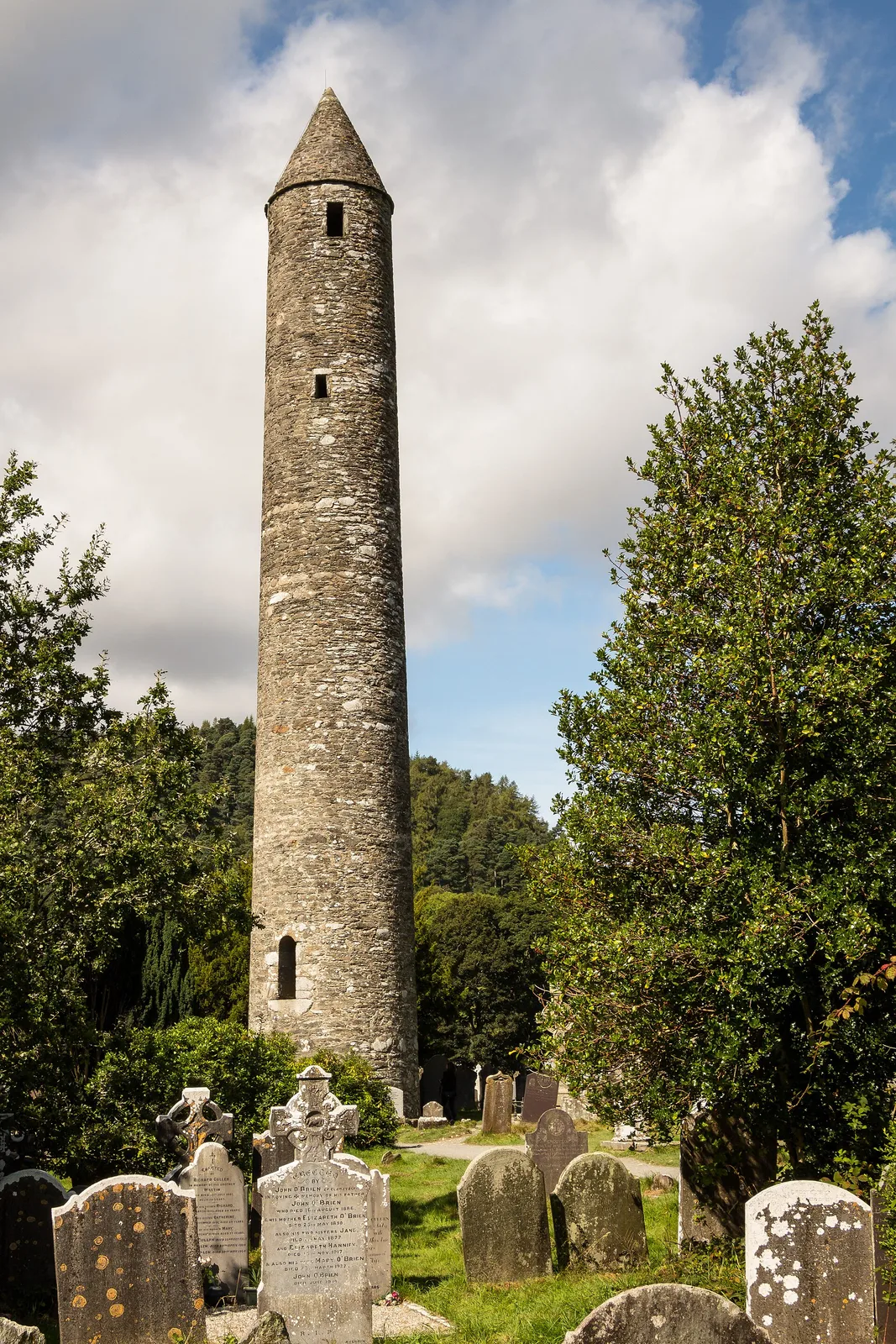 The round tower of GlendaloughPhoto: Rafesmar / Wikimedia Commons (CC BY-SA 4.0)
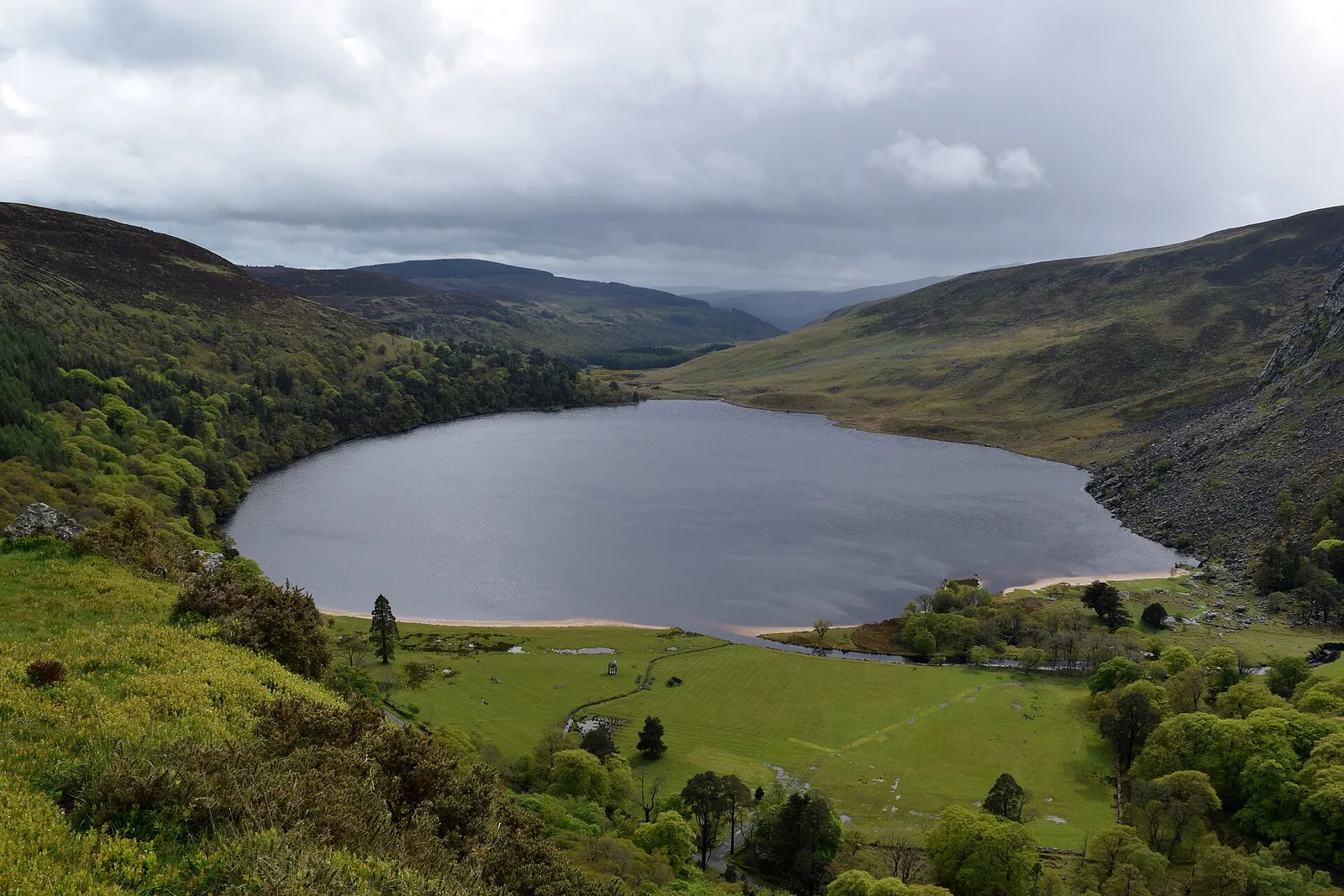 Lough Tay below the Sally Gap roadPhoto: kilgarron / Wikimedia Commons (CC BY 2.0)
Holiday itinerary
- Day 1 · Dublin
Dublin begins in the Long Room of Trinity College, a barrel-vaulted hall of two hundred thousand old books where the Book of Kells lies open under glass, its pages a tangle of spirals, cats and angels painted by monks twelve centuries ago. Walk through the Georgian squares with their coloured doors to Dublin Castle and Christ Church, whose crypt is the oldest structure still in use in the city, and cross the Ha’penny Bridge to the river’s north bank. In the late afternoon drive out to Howth and walk the cliff path round the headland, with gannets below, the Baily lighthouse ahead and the whole bay glowing behind you. Charge at the fast hub on the M50 before the road north.
- Day 2 · Trim
An hour north, the River Boyne loops through a valley of pasture where farmers raised great mounds of stone five thousand years ago. At Newgrange you duck into a passage lined with carved spirals and stand in a corbelled chamber that has kept out the rain since before Stonehenge; nearby Knowth is ringed with smaller tombs like moons around a planet. Stop at Monasterboice, where Muiredach’s High Cross still shows Bible stories carved in sandstone, then drive west to Trim, whose Norman castle is the largest in Ireland and played York in a famous film about Scotland. Walk the riverside path to the ruins of St Mary’s Abbey at dusk, and charge at the fast charger in the town.
- Day 3 · Birr
The road crosses the flat bogs of the Midlands, brown and purple under a wide sky, to the Shannon. On a bend of the river stands Clonmacnoise, founded by Saint Ciarán in the sixth century and for five hundred years one of the great schools of Europe: two round towers, a cluster of roofless churches and carved high crosses stand among the graves above the water meadows, and on a still morning the only sound is the corncrake and the river. Continue south to Birr, a calm Georgian town around a castle where the Earls of Rosse built the largest telescope in the world in 1845; the restored Leviathan still points at the sky in the demesne gardens. Charge at the town-centre charger in Birr.
- Day 4 · Cashel
Across the Slieve Bloom foothills the land opens into the Golden Vale, and suddenly the Rock of Cashel rises from the plain, a limestone outcrop crowned with a round tower, a roofless Gothic cathedral and Cormac’s Chapel, whose Romanesque frescoes are the oldest in Ireland. Here, legend says, Saint Patrick baptised the King of Munster, piercing his foot with his crozier by mistake. Below the rock, walk across the field to the ruined Hore Abbey for the classic view back. In the afternoon drive fifteen minutes to Cahir, where a twelfth-century castle stands on an island in the River Suir, and follow the riverside path to the thatched Swiss Cottage. Charge at the motorway service area near Cashel.
- Day 5 · Kilkenny
Kilkenny is the most medieval of Irish towns, a ribbon of slate roofs and limestone between a castle and a cathedral. Start at Kilkenny Castle, rebuilt by the Butlers as a Victorian home, its long gallery hung with portraits under a painted roof, and its park sloping down to the River Nore. Then walk the Medieval Mile past the Tholsel and Rothe House, a merchant’s home of three houses and three courtyards, to St Canice’s Cathedral, where you can climb the ninth-century round tower by ladders for a view over the town. In the afternoon drive twenty minutes south to Jerpoint Abbey, whose cloister pillars are carved with knights, saints and a dragon. Charge at the car park by the castle.
- Day 6 · Waterford
Waterford was founded by Vikings in 914 and still keeps their triangle of streets by the quay. Climb Reginald’s Tower, the oldest civic building in Ireland, walk through the Bishop’s Palace and the medieval museum with its golden cloth-of-gold vestments, and watch master craftsmen blow and cut glass at the House of Waterford Crystal. In the afternoon follow the Copper Coast west from Tramore: a road of coves, sea stacks and old mine engine houses above red and green cliffs, a UNESCO geopark where the rocks tell of volcanoes and ice. Stop at Bunmahon and Dungarvan for chowder by the harbour before returning to Waterford for the night. Charge at the fast charger by the city quays.
- Day 7 · Wexford
Cross the Suir on the little car ferry from Passage East and drive down the long, flat Hook Peninsula to its tip, where Hook Lighthouse has warned ships off the rocks for eight hundred years; climb its thick-walled medieval tower and look out over the meeting of three rivers and the open sea. Nearby stands the vast ruin of Loftus Hall, said to be the most haunted house in Ireland, and the Cistercian Tintern Abbey among the woods. In New Ross go aboard the Dunbrody, a replica of a famine ship that carried emigrants to America, then follow the Slaney to Wexford, a harbour town of narrow streets where the opera festival fills the autumn evenings. Charge at the fast charger on the edge of Wexford.
- Day 8 · Dublin
The last day climbs into the Wicklow Mountains. At Glendalough, the valley of two lakes, Saint Kevin’s monastic city lies in a wooded glen: a round tower thirty metres high, a stone church with a little belfry known as Kevin’s Kitchen, and a path along the Upper Lake beneath cliffs where deer come down to drink at dusk. Then drive the Military Road over the Wicklow Gap and the Sally Gap, a bare upland of heather and bog cotton, past the dark mirror of Lough Tay, with its white beach below the crags. Descend to Powerscourt, where Italian terraces and the highest waterfall in Ireland frame the Sugar Loaf, and roll down to Dublin Bay. Charge at the M50 hub before returning the car.