
Plan
Add route point
New point will be added to the top of the route and later you can arrange the chain of points
Points
Holiday itinerary
Nine days through the green heart of Germany, where poets, reformers and organists left their names on almost every square. The loop starts on the cathedral steps of Erfurt and its inhabited Krämerbrücke, lingers two days in Goethe and Schiller’s Weimar, follows the Saale past the cliff-top palaces of Dornburg to Jena and drops into the coloured caverns of Saalfeld. Then the road climbs into the Thuringian Forest: Goethe’s hut on the Kickelhahn, the ridge of the Rennsteig, the wide view from the Großer Inselsberg and finally the Wartburg, where Luther turned the New Testament into German. The last days cross the beech canopy of the Hainich to the Kyffhäuser, where Barbarossa is said to sleep inside the hill. Fast chargers stand in every town of any size; the forest villages live on the hotel socket.
Season: Best from May to mid-October. Late September and October turn the beeches on the Rennsteig to copper, and on the second weekend of October Weimar holds its Onion Market, when the old town fills with braided onions, onion tart and new wine. The Anna Amalia Library admits a limited number of visitors per hour, so book a time slot online; the Fairy Grottoes run guided tours all year but are crowded in the summer school holidays. From December to March the Thuringian Forest is ski and biathlon country: the roads over the Rennsteig are cleared, but frost takes a noticeable bite out of range, so charge to full before climbing from Ilmenau or Eisenach.
Landmarks
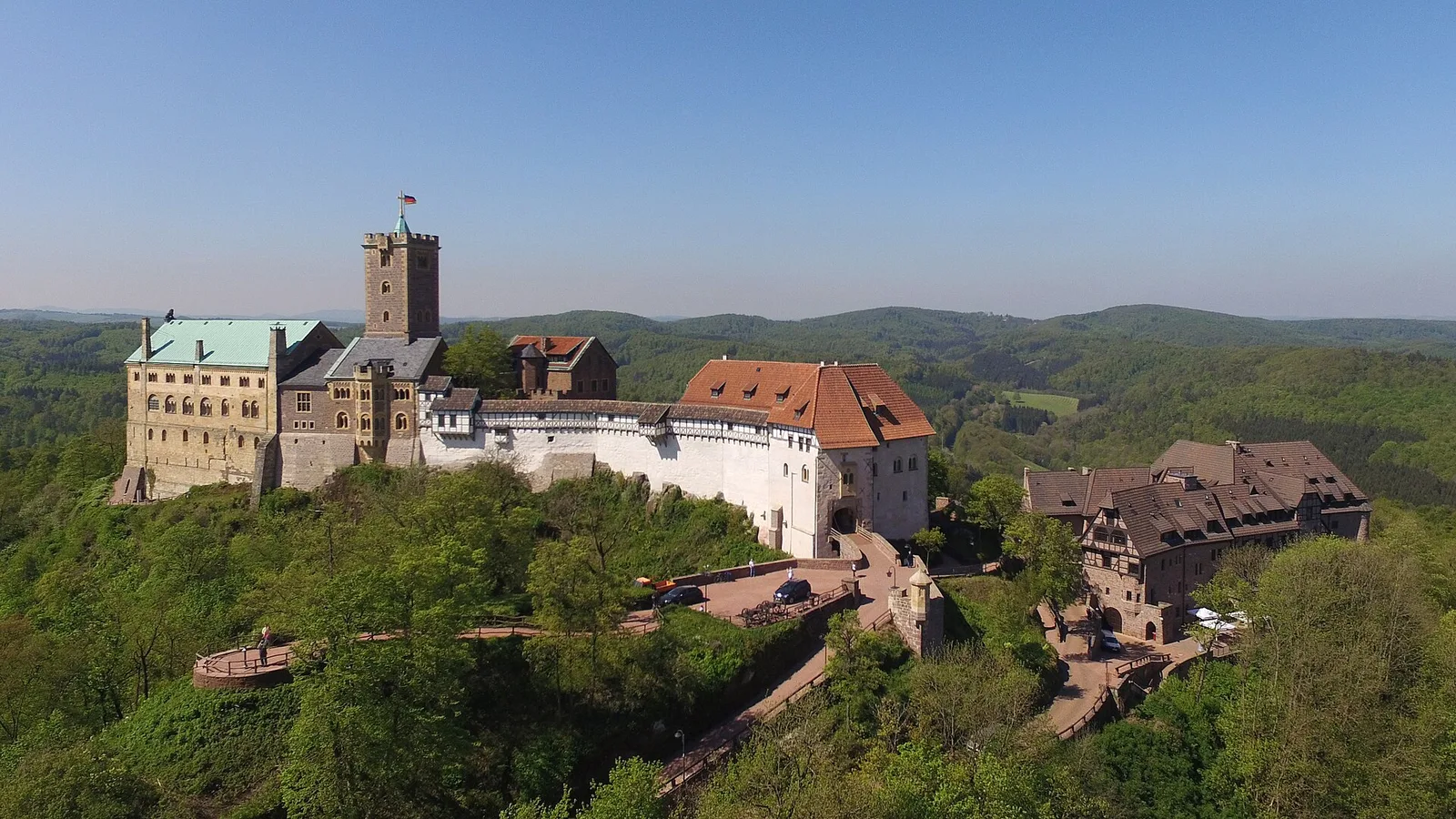 The Wartburg above EisenachPhoto: Moritz Grenke / Wikimedia Commons (CC BY-SA 3.0)
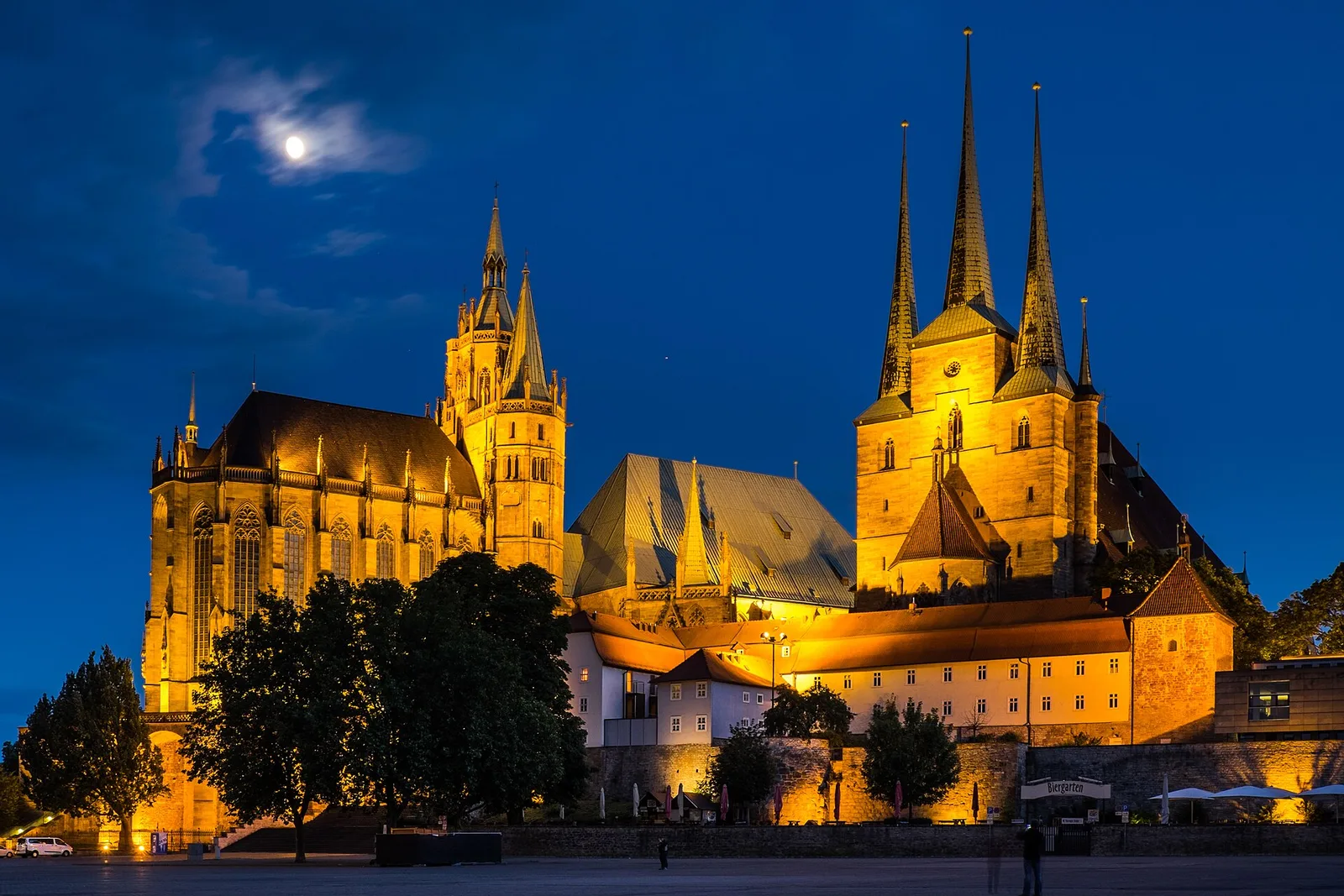 Erfurt Cathedral and St SeverusPhoto: Clewe2807 / Wikimedia Commons (CC BY-SA 4.0)
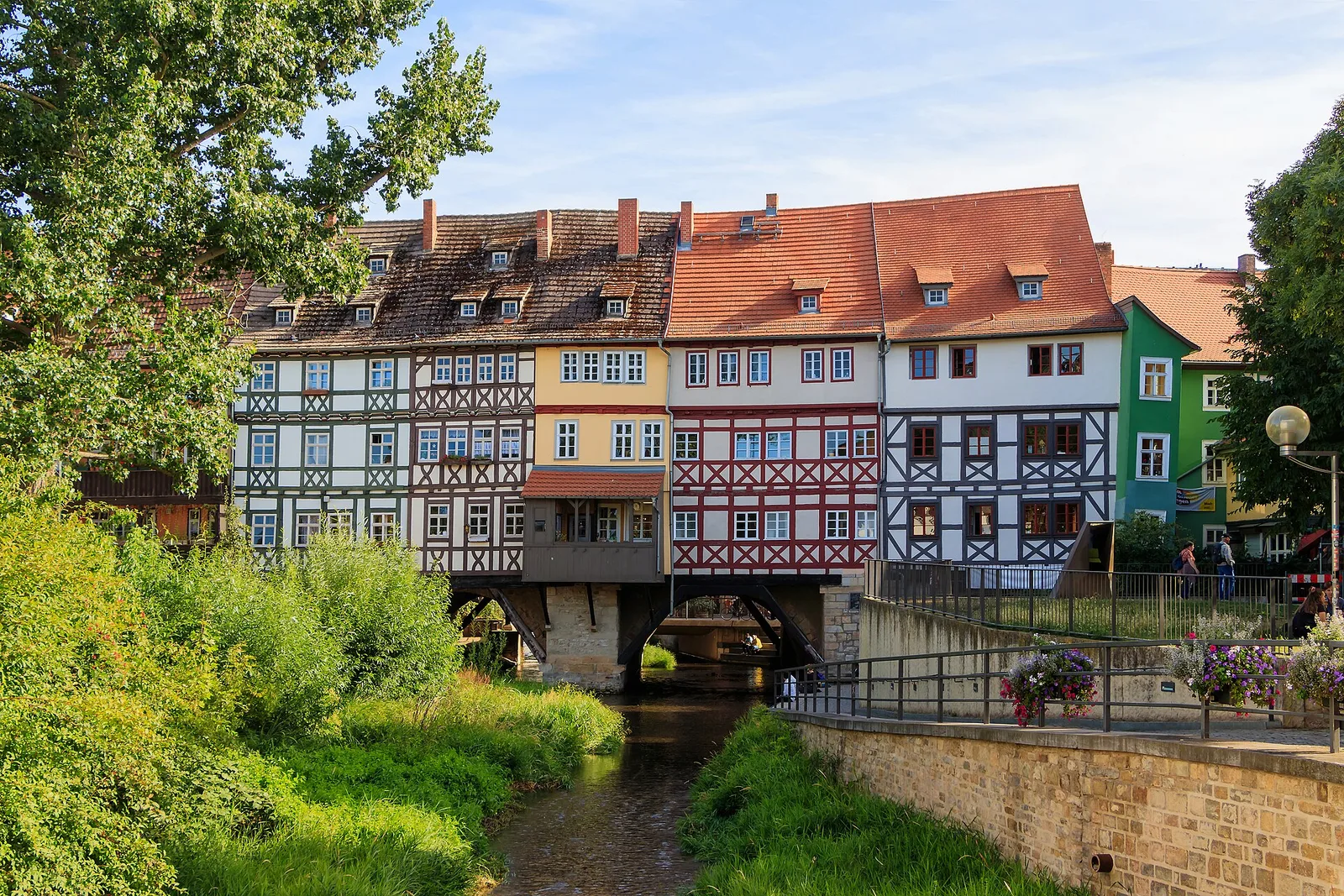 The inhabited KrämerbrückePhoto: H. Zell / Wikimedia Commons (CC BY-SA 3.0)
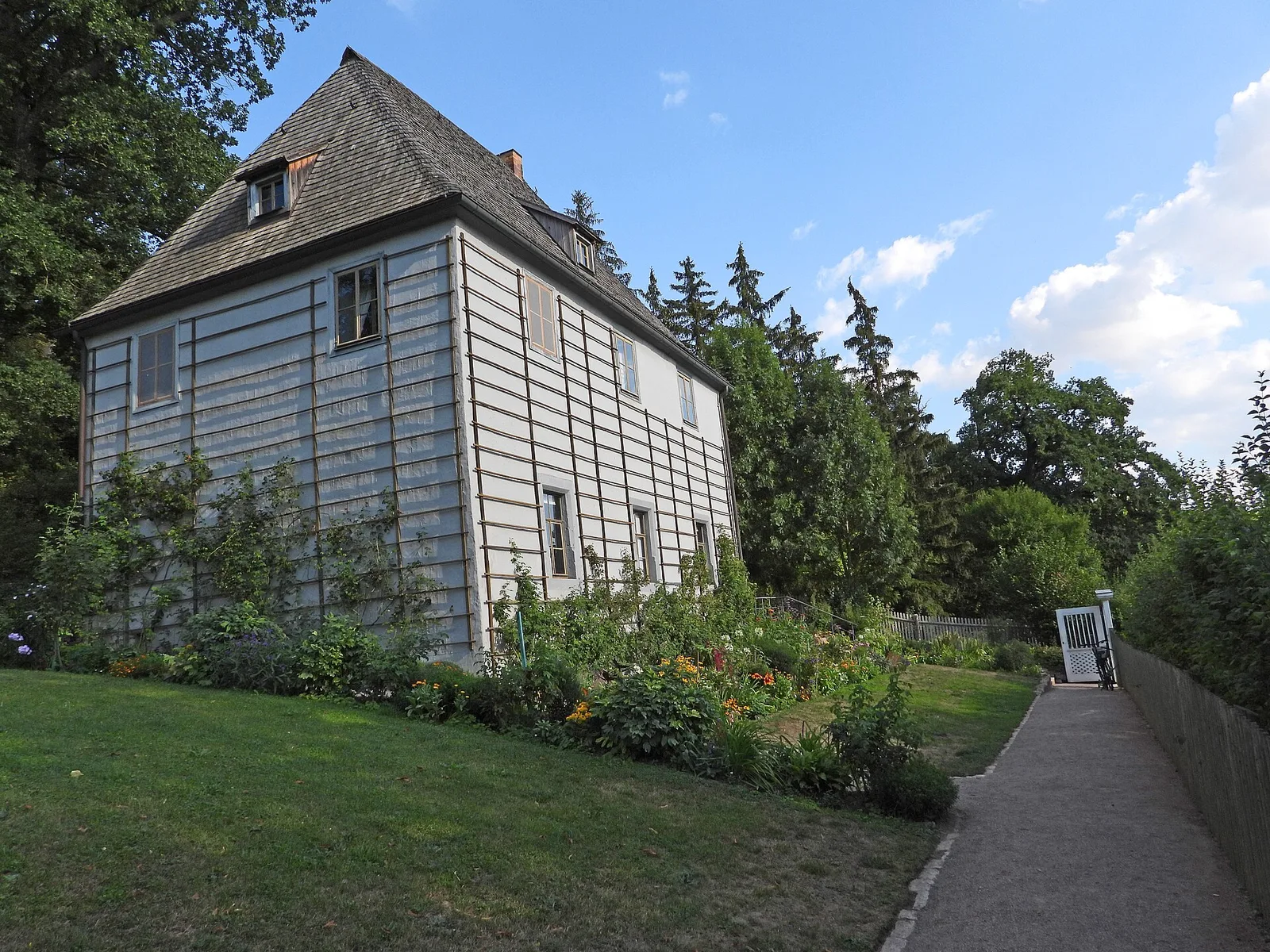 Goethe’s garden house in the Park an der IlmPhoto: Bettina Vier / Wikimedia Commons (CC BY-SA 4.0)
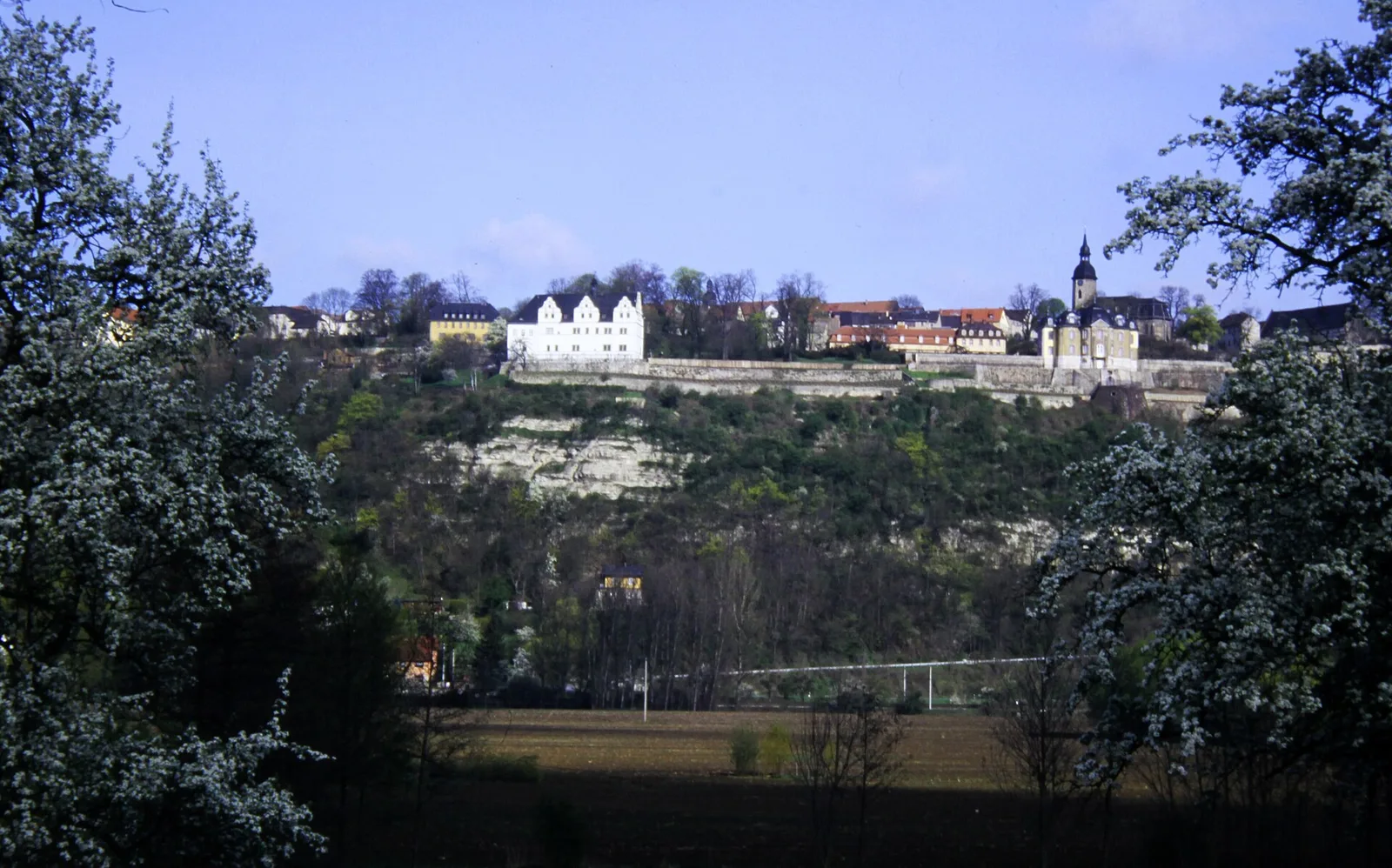 The Dornburg palaces above the SaalePhoto: Michael Köhler / Wikimedia Commons (CC BY 4.0)
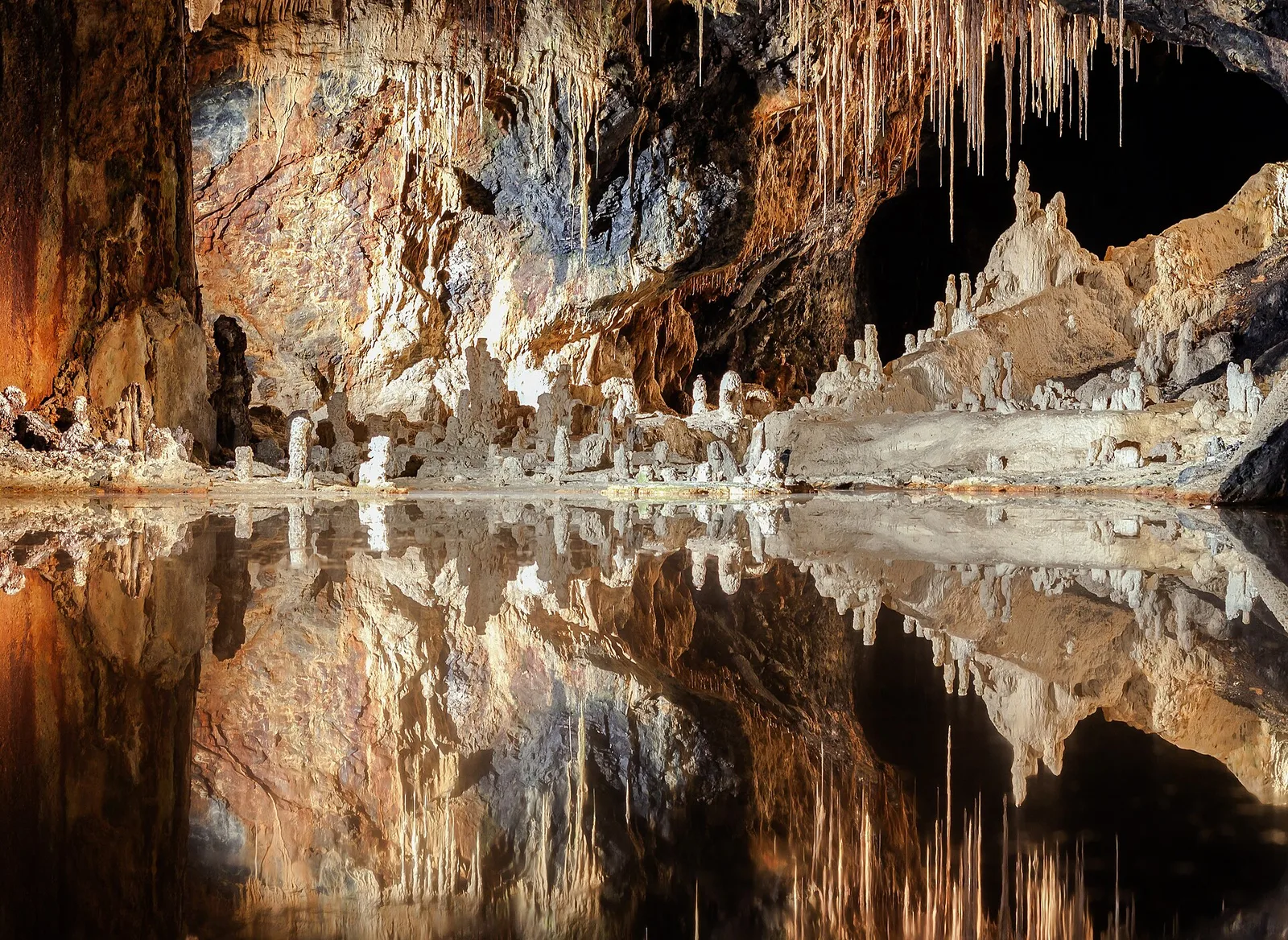 The Fairy Dome in the Saalfeld Fairy GrottoesPhoto: Ansgar Koreng / Wikimedia Commons (CC BY 3.0 de)
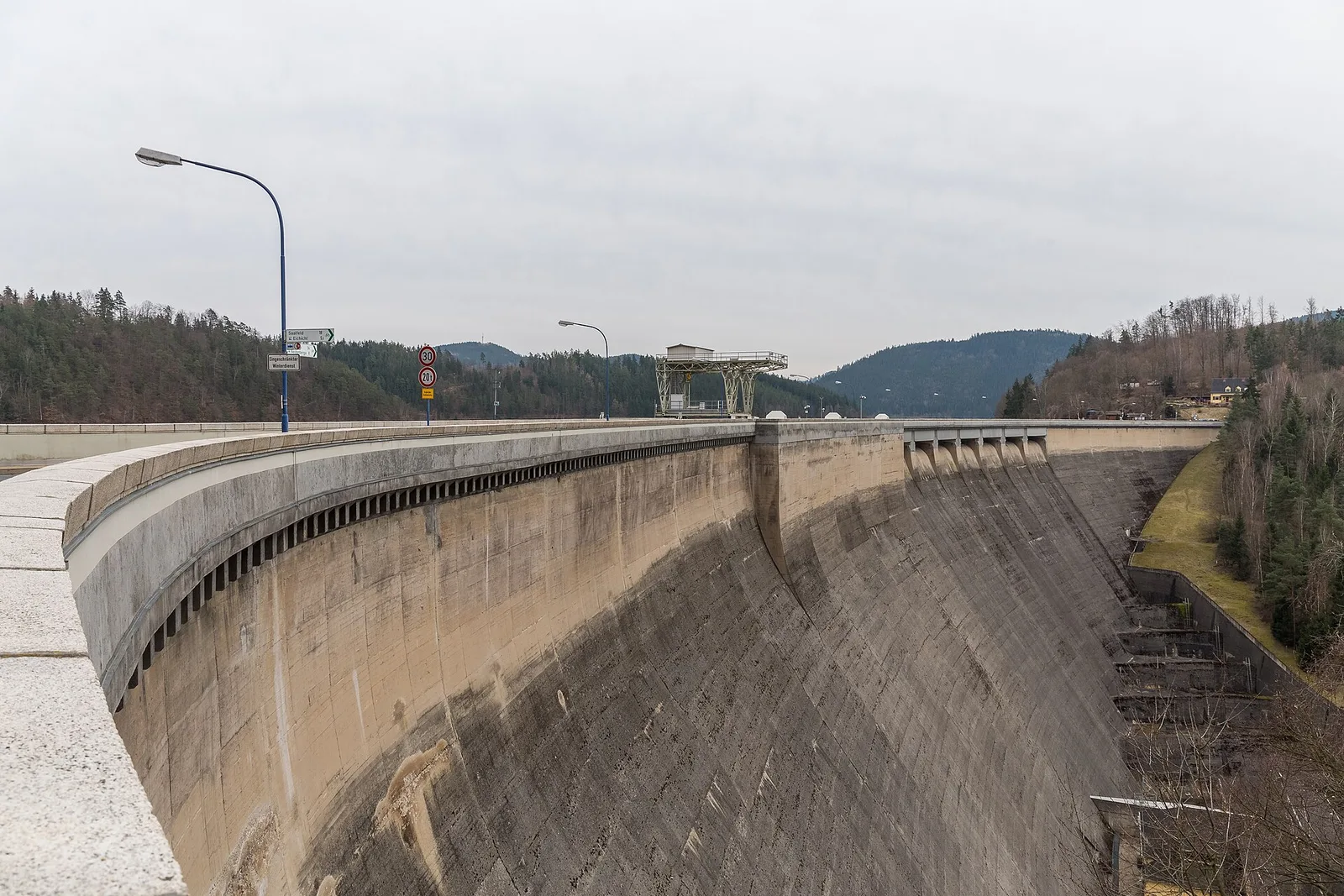 The Hohenwarte reservoir, the ‘Thuringian Sea’Photo: Ansgar Koreng / Wikimedia Commons (CC BY-SA 3.0 de)
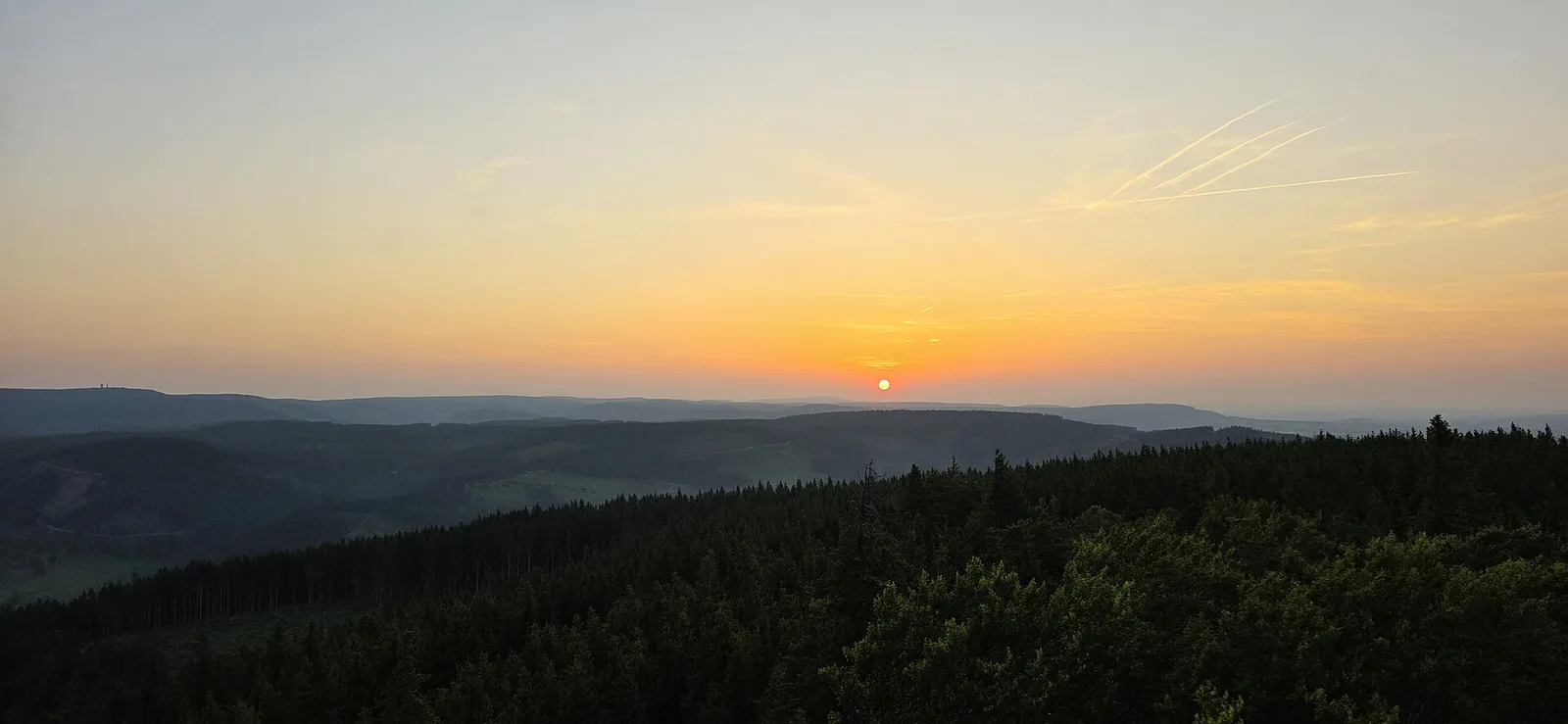 Evening over the Thuringian Forest from the KickelhahnPhoto: JensKunstfreund / Wikimedia Commons (CC BY 4.0)
 On the Großer InselsbergPhoto: John Samuel / Wikimedia Commons (CC BY-SA 4.0)
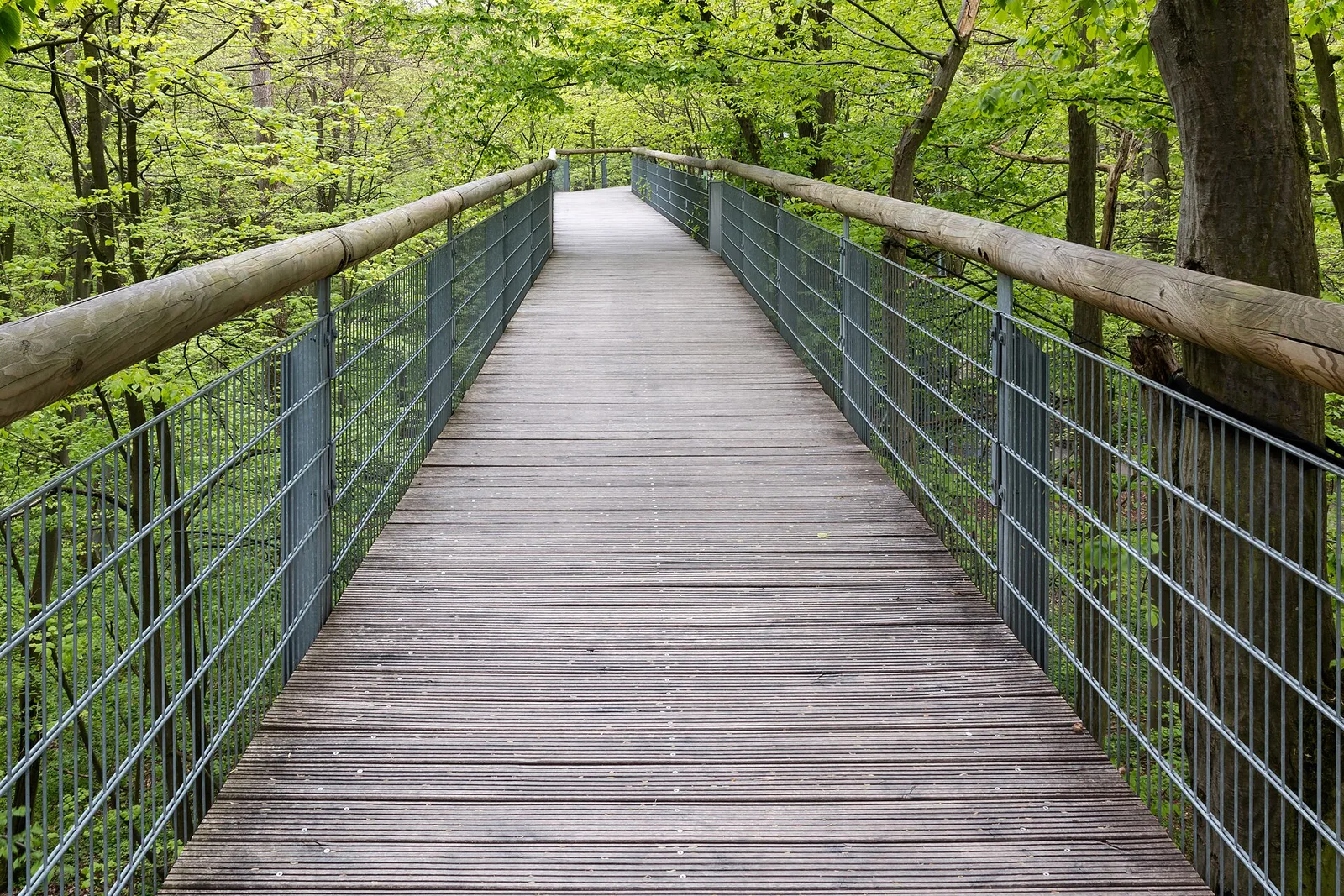 The treetop walk in the Hainich National ParkPhoto: Dietmar Rabich / Wikimedia Commons (CC BY-SA 4.0)
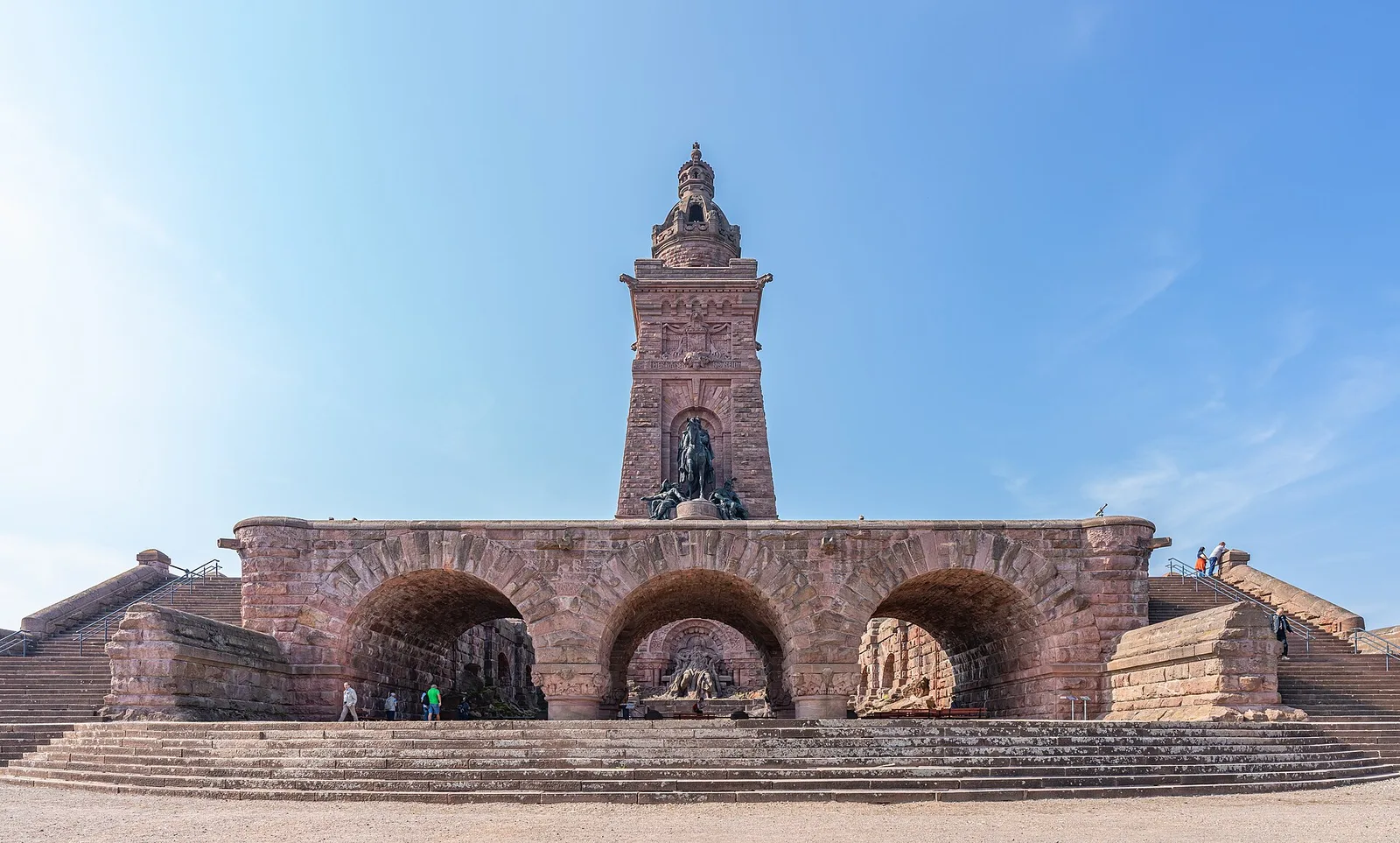 The Kyffhäuser MonumentPhoto: PantheraLeo1359531 / Wikimedia Commons (CC BY 4.0)
Holiday itinerary
- Day 1 · Erfurt
Erfurt rises from the little river Gera like a town that never lost its medieval appetite. Climb the seventy Domstufen to the cathedral and St Severus, two Gothic churches standing shoulder to shoulder on one hill; in the cathedral tower hangs the Gloriosa, cast in 1497 and still one of the great swinging bells of the Middle Ages. Below, the Krämerbrücke carries thirty-two half-timbered houses across the water, and people still live above the shops of chocolate, pottery and woad-blue cloth. Nearby, the Old Synagogue, among the oldest standing in Europe, guards a hoard of medieval silver and a golden wedding ring. Before dusk walk up to the Petersberg Citadel, where the city spreads below the bastions as a sea of roofs and towers. Charge at the TEAG Mobil hub on Schwerborner Straße.
- Day 2 · Weimar
Weimar is small enough to cross on foot in twenty minutes, and almost every corner carries a poet’s name. Begin at Goethe’s house on the Frauenplan, where his study is kept as plain as he wanted it, then walk to Theatre Square, where Goethe and Schiller stand together in bronze, sharing a single laurel wreath. Book ahead for the rococo hall of the Duchess Anna Amalia Library, a white-and-gold oval of books restored after the fire of 2004. In the afternoon follow the Ilm through the landscape park to Goethe’s garden house, a plain cottage among meadows, and end at the Bauhaus Museum, a reminder that modern design was born in this town in 1919. The Tesla Supercharger on Kastanienallee and the TEAG chargers on Untergraben cover the evening.
- Day 3 · Weimar
Give the morning to the Ettersberg above the town, where the Buchenwald Memorial keeps the camp gate with its iron words ‘Jedem das Seine’ and a silent field of foundations among the beeches. It is a hard visit, and it belongs to the story of Weimar as much as Goethe does; allow time for the museum and for silence. Afterwards drive south down the long avenue to Belvedere Palace, the dukes’ yellow summer house, with its orangery, a collection of old carriages and an English park sloping down towards the fields. Back in town, take an evening walk through the Park an der Ilm, where the meadows smell of cut grass and the little Roman House glows on its terrace above the river.
- Day 4 · Jena
Leave Weimar for the Saale valley. Above the river at Dornburg three palaces stand in a row along the edge of a limestone cliff: a rococo pavilion, a Renaissance manor and an old castle, linked by terraced rose gardens and vine arbours. Goethe retreated here in the summer of 1828 after the death of his friend Duke Carl August and wrote some of his last poems looking down into this same valley. Follow the Saale south to Jena, a town of lenses and philosophers: ride up the JenTower for the view over the shell-limestone hills, then lie back under the dome of the Zeiss Planetarium, the oldest working planetarium in the world, opened in 1926. Charge at the Tesla Supercharger on Keßlerstraße or at the Stadtwerke Jena chargers in Göschwitz.
- Day 5 · Saalfeld
South of Jena the Saale winds between wooded slopes and red-roofed villages. Stop in Rudolstadt, where the baroque Heidecksburg sits high above the roofs with its rococo ballroom and a view straight down the valley. Further on, at Saalfeld, the Fairy Grottoes open in an old alum-slate mine: water seeping through the rock for three centuries has painted the chambers in rust, ochre and green, and in the Fairy Dome the dripstones are mirrored in a still pool. In the late afternoon drive up to the Hohenwarte dam, where the Saale is held back into a long, fjord-like lake that locals call the Thuringian Sea, its wooded arms quiet in the evening light. Overnight in Saalfeld, with the Stadtwerke Saalfeld charger on Mittlerer Watzenbach.
- Day 6 · Ilmenau
The morning road follows the Schwarza through one of the narrowest, greenest valleys in Thuringia, past Schwarzburg Castle on its wooded spur, where the river flashes dark between the pines. In Ilmenau leave the car and walk the Goethe Trail up the Kickelhahn, 861 metres high. Near the summit stands a small wooden hut where Goethe, one September evening in 1780, pencilled ‘Over all the hilltops is rest’ on the wall — eight lines that every German child learns by heart. From the lookout tower beside it the Thuringian Forest rolls away in dark green waves towards the Schneekopf. Charge at the Stadtwerke Ilmenau chargers on Bahndamm before the forest days.
- Day 7 · Eisenach
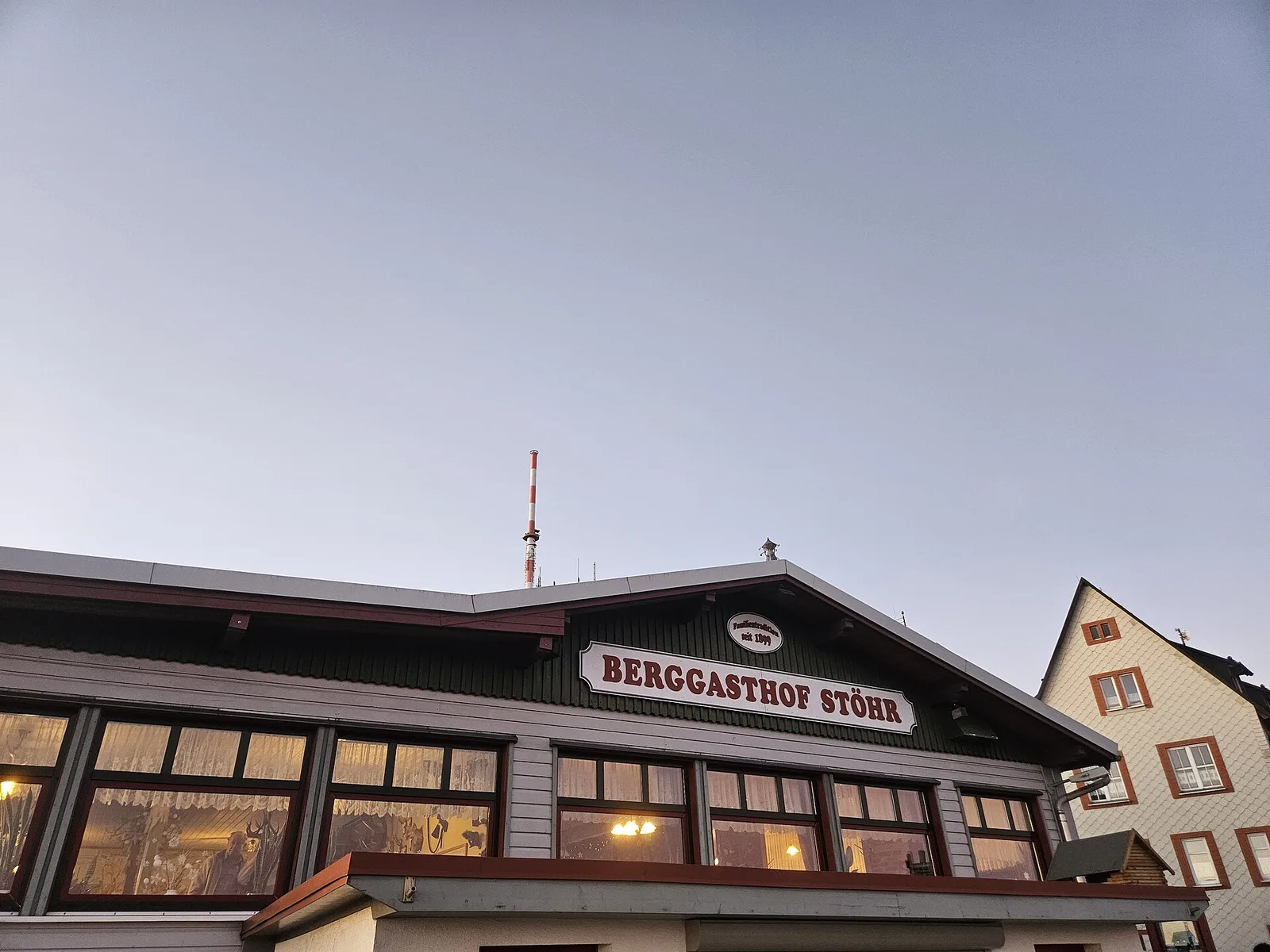
Today you drive the Rennsteig, the old ridge path that runs 169 kilometres through the Thuringian Forest and still marks ancient borders with weathered boundary stones. Stop at Oberhof, the winter-sports village whose biathlon stadium lies green and empty in summer, and top up at the charger by the car park. The road then crosses the ridge to the Großer Inselsberg, 916 metres: on a clear day you can see the Rhön, the Harz and, far to the west, the Wartburg on its rock. In the evening reach Eisenach and walk up to the Wartburg itself, where Luther, hiding as ‘Junker Jörg’ in 1521–22, translated the New Testament into German in a bare wooden room. Charge at the Eisenacher Versorgungs-Betriebe point on Heinrich-Ehrhardt-Platz.
- Day 8 · Mühlhausen
Begin with a short walk through the Drachenschlucht south of Eisenach, a gorge so narrow that in places you can touch both mossy walls at once while the stream runs beneath the boardwalk. Back in town, visit the Bach House — Johann Sebastian was born in Eisenach in 1685 — and stay for the short concert on old keyboard instruments. Then drive north into the Hainich National Park, part of the UNESCO ancient beech forests of Europe: the treetop walk climbs 44 metres to look out over an unbroken sea of crowns. End in Mühlhausen, a town of Gothic churches and a medieval wall you can walk along; St Mary’s Church remembers Thomas Müntzer, the radical preacher of the Peasants’ War of 1525. Charge at the TEAG Mobil hub on Industriestraße.
- Day 9 · Erfurt
The last day crosses open farmland to the Kyffhäuser hills. Legend says that Emperor Frederick Barbarossa sleeps inside the mountain, his red beard growing through a stone table, waiting for the ravens to stop circling; the colossal monument on the ridge shows him waking beneath an 81-metre tower, with the whole Golden Meadow spread below. Down in Bad Frankenhausen the round Panorama Museum holds Werner Tübke’s painting of the Peasants’ War, 123 metres long and crowded with three thousand figures, a whole world turning on one wall. In the old town look up at the church tower that leans further than Pisa’s. Charge at the TEAG Mobil station on Seehäuser Straße, then drive back to Erfurt for a last evening by the Krämerbrücke.