
Plan
Add route point
New point will be added to the top of the route and later you can arrange the chain of points
Points
Holiday itinerary
A week in the west of Flanders, from the cobbled hills of the Flemish Ardennes to the dunes and wide beaches of the North Sea. Oudenaarde, with its lace-like Gothic town hall, is the home of the Tour of Flanders, and the steep cobbled lanes of the Koppenberg and the Oude Kwaremont climb through the fields around it. Ypres, rebuilt after the First World War, keeps the memory of the trenches: every evening at eight the Last Post sounds under the Menin Gate, and the cemeteries of the old Salient lie quietly among farmland and the hop gardens of Poperinge. Beyond the Yser Tower at Diksmuide and the Flemish Renaissance square of Veurne the road reaches the coast, where the Westhoek dunes, the horseback shrimp fishers of Oostduinkerke and the promenade of Ostend lead on to Damme, a canal town with a windmill, and the salt marshes of the Zwin. Belgium has a dense charging network: fast chargers stand along the motorways and in the larger towns, and many hotels offer charging overnight.
Season: Best from May to September, when the beaches are open, the coast tram runs often and the dune paths are dry. The horseback shrimp fishers of Oostduinkerke ride out at low tide on many days of the warmer months, and at the end of June the village holds its shrimp festival; on the last Sunday of July Veurne stages its Penitents’ Procession. In early spring the Tour of Flanders races over the hills around Oudenaarde, and on 11 November Ypres fills with visitors for Armistice Day; winter on the coast is grey and windy, but the museums and cafés stay open.
Landmarks
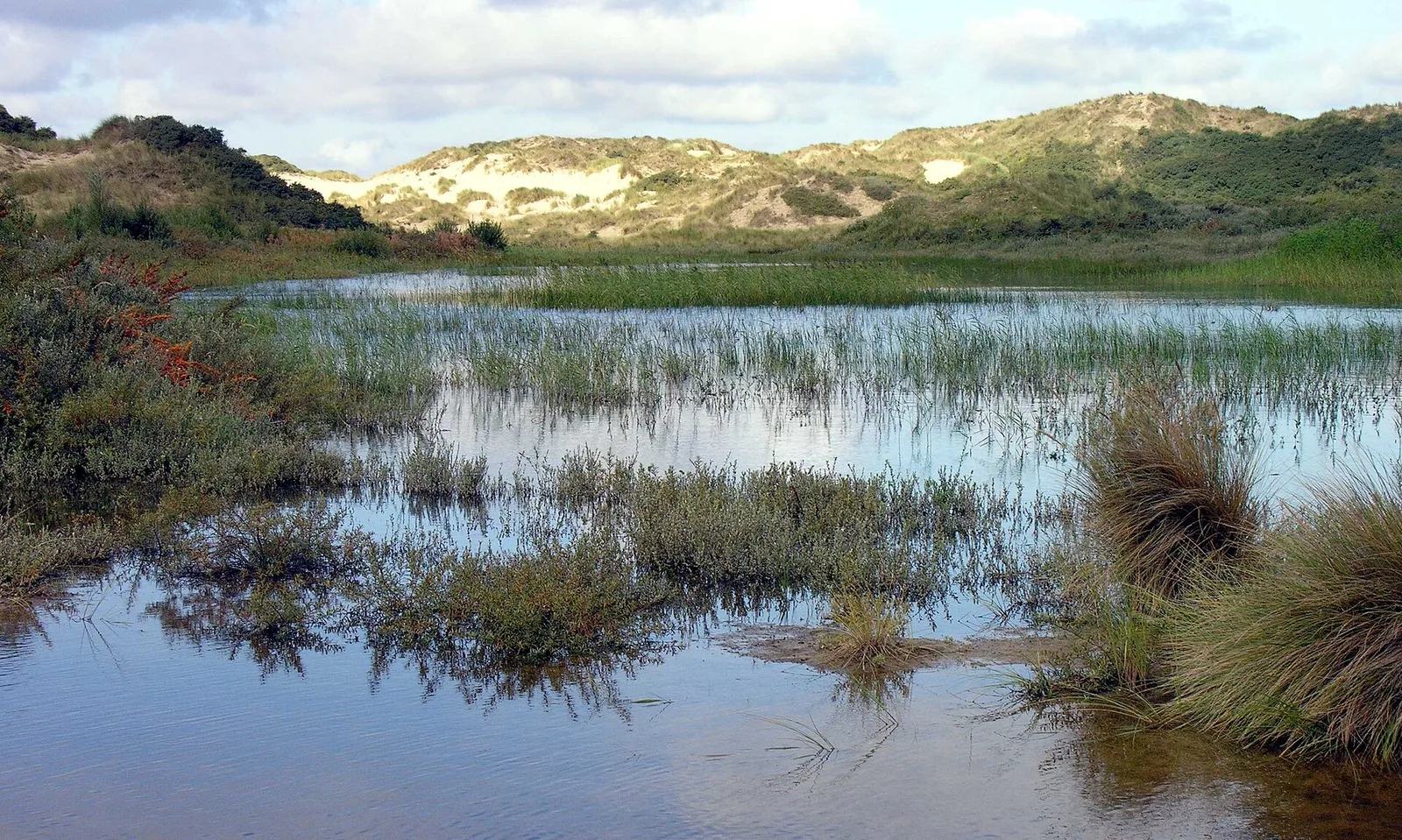 A dune hollow in the Westhoek nature reservePhoto: Godfried Warreyn / Wikimedia Commons (CC BY-SA 3.0)
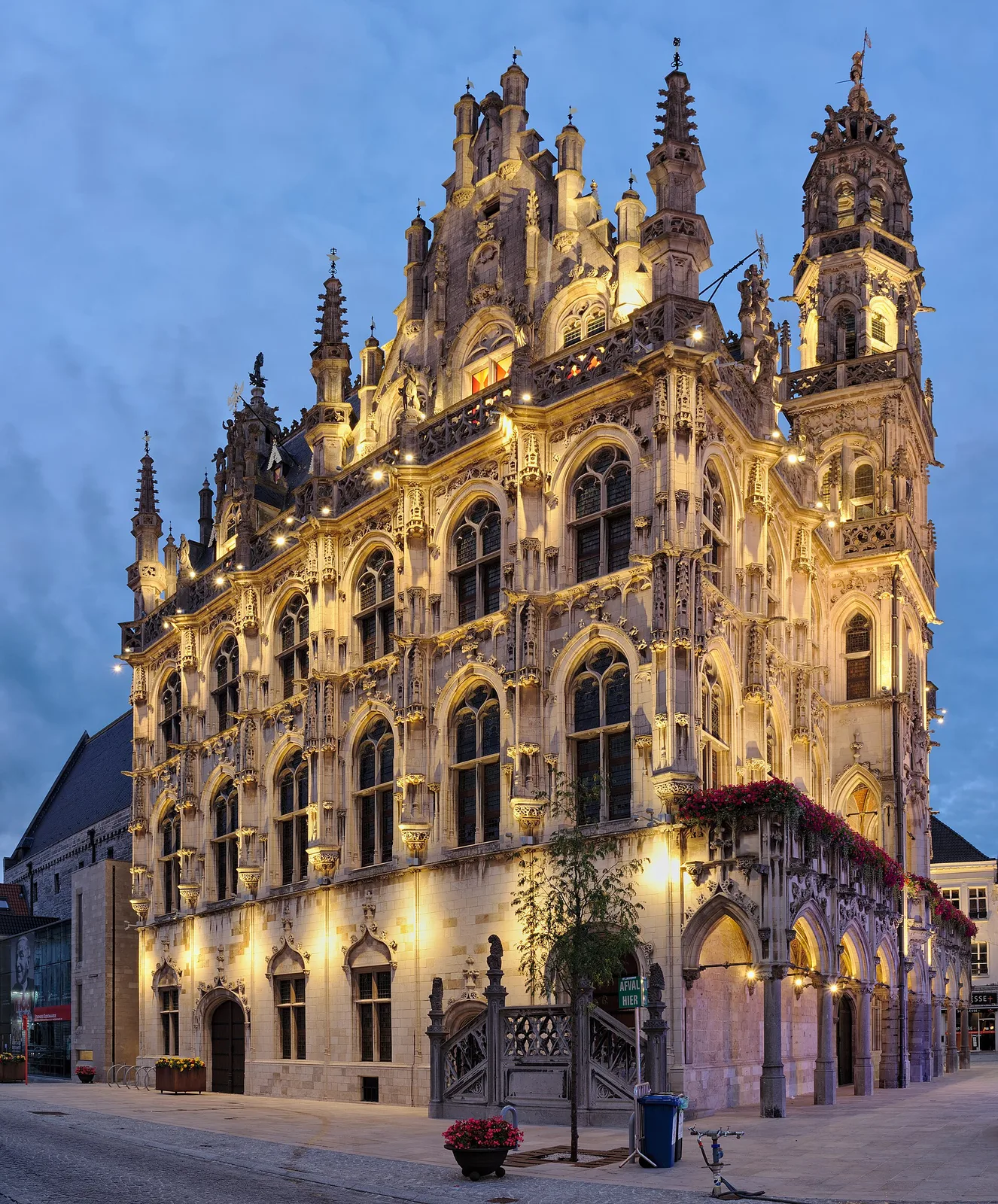 Oudenaarde town hall at duskPhoto: Trougnouf (Benoit Brummer) / Wikimedia Commons (CC BY 4.0)
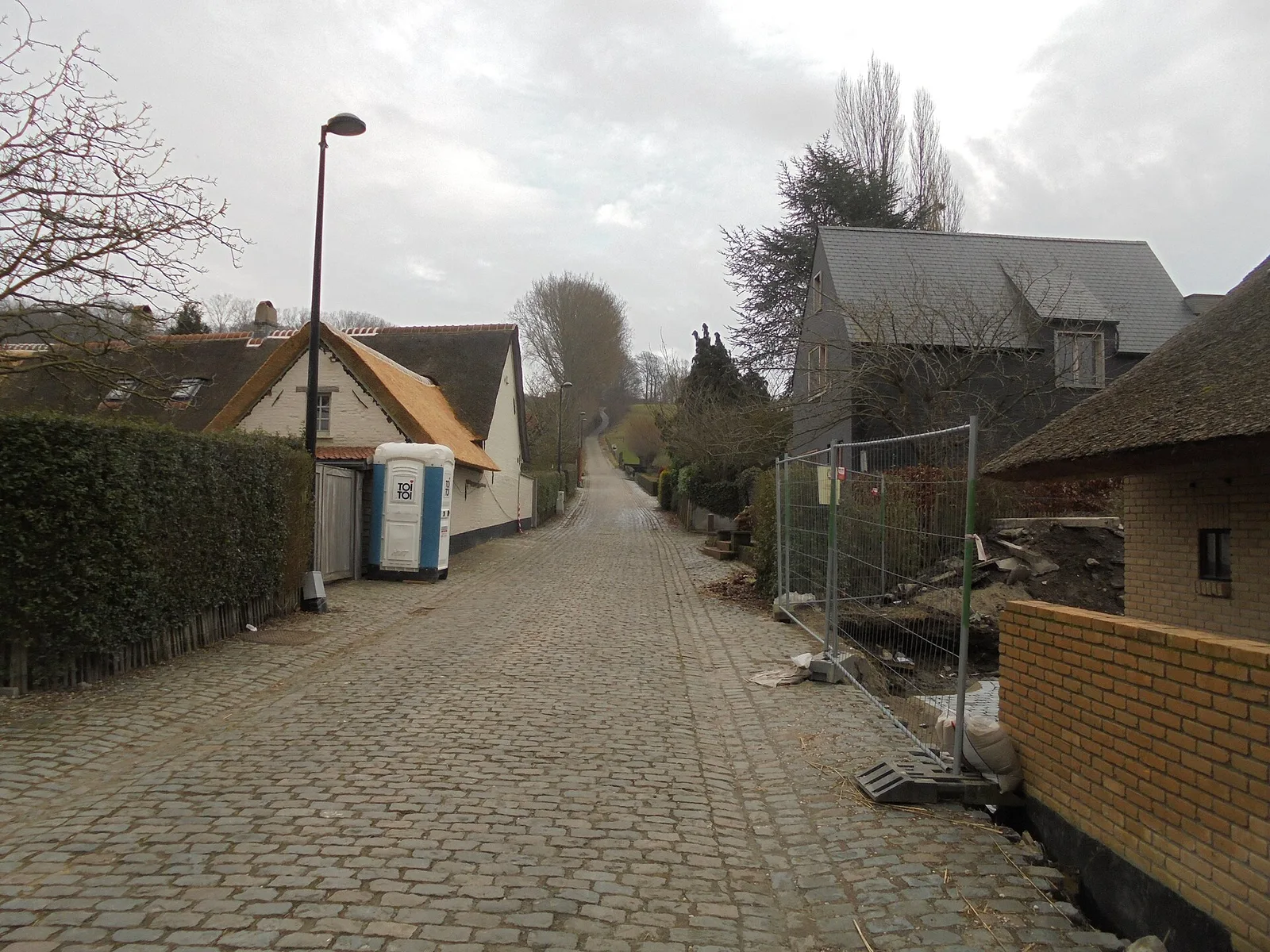 The cobbled lane of the KoppenbergPhoto: Spotter2 / Wikimedia Commons (CC BY-SA 4.0)
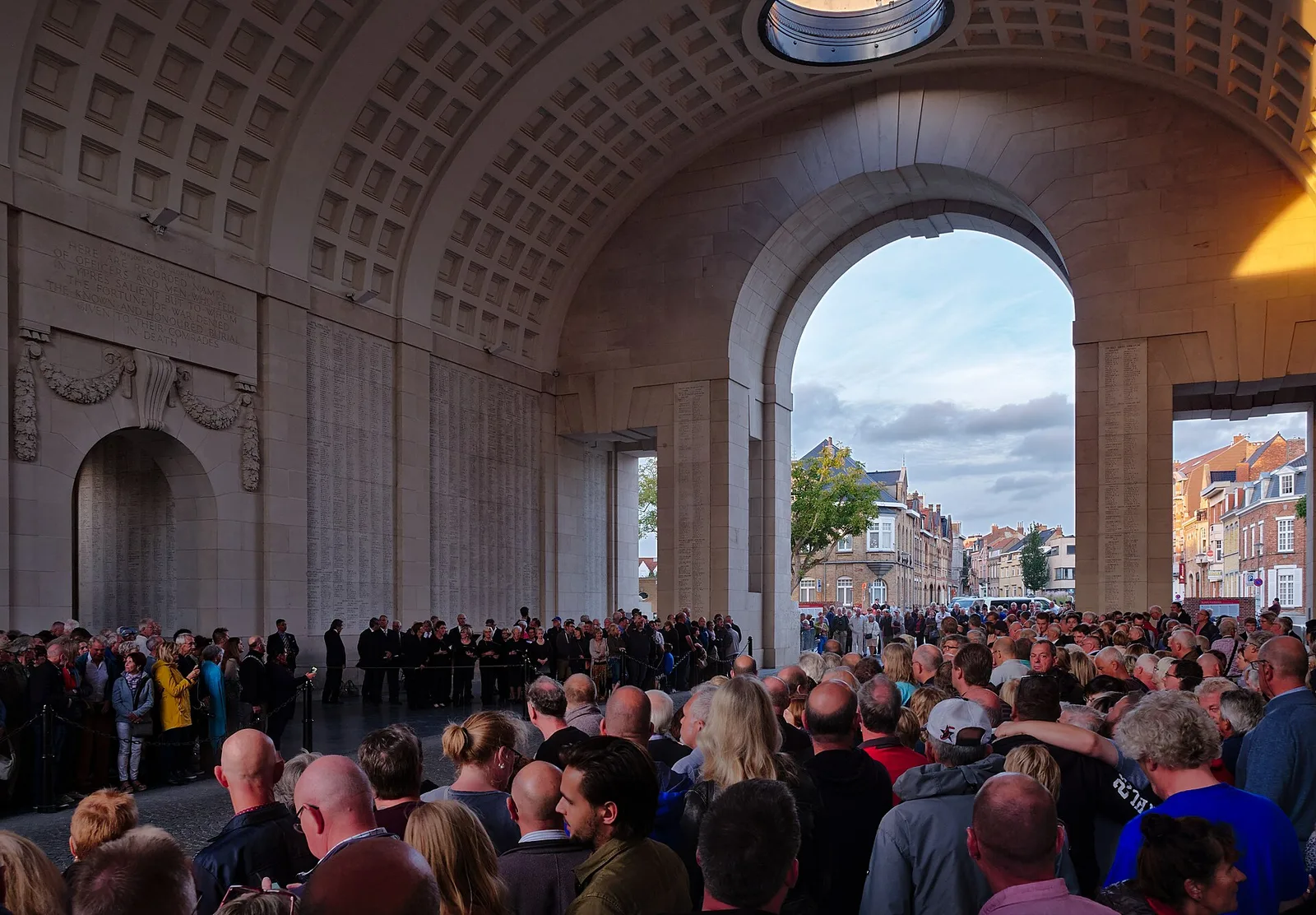 The Last Post under the Menin GatePhoto: Trougnouf (Benoit Brummer) / Wikimedia Commons (CC BY 4.0)
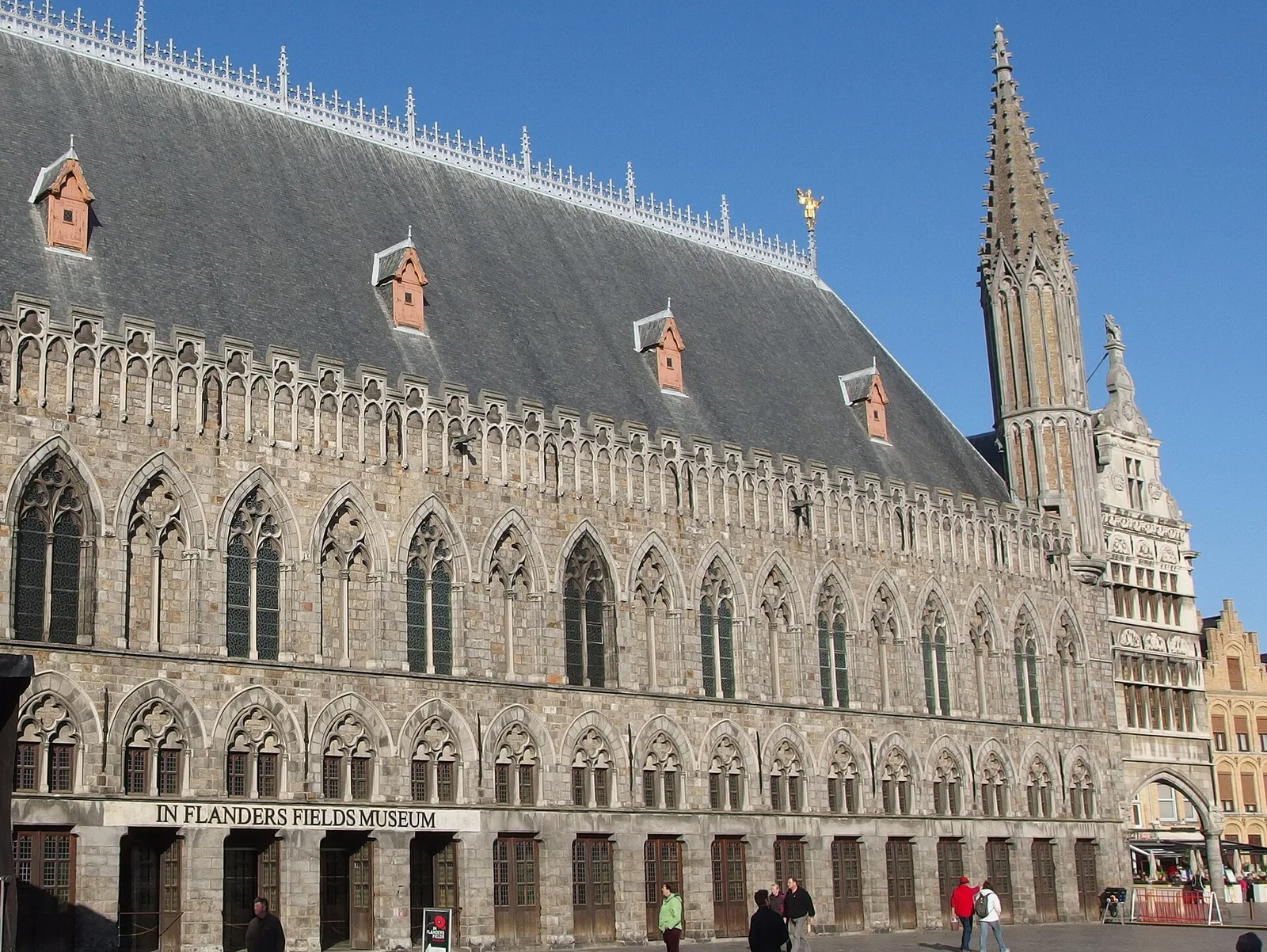 The Cloth Hall in YpresPhoto: Mark Ahsmann / Wikimedia Commons (CC BY-SA 4.0)
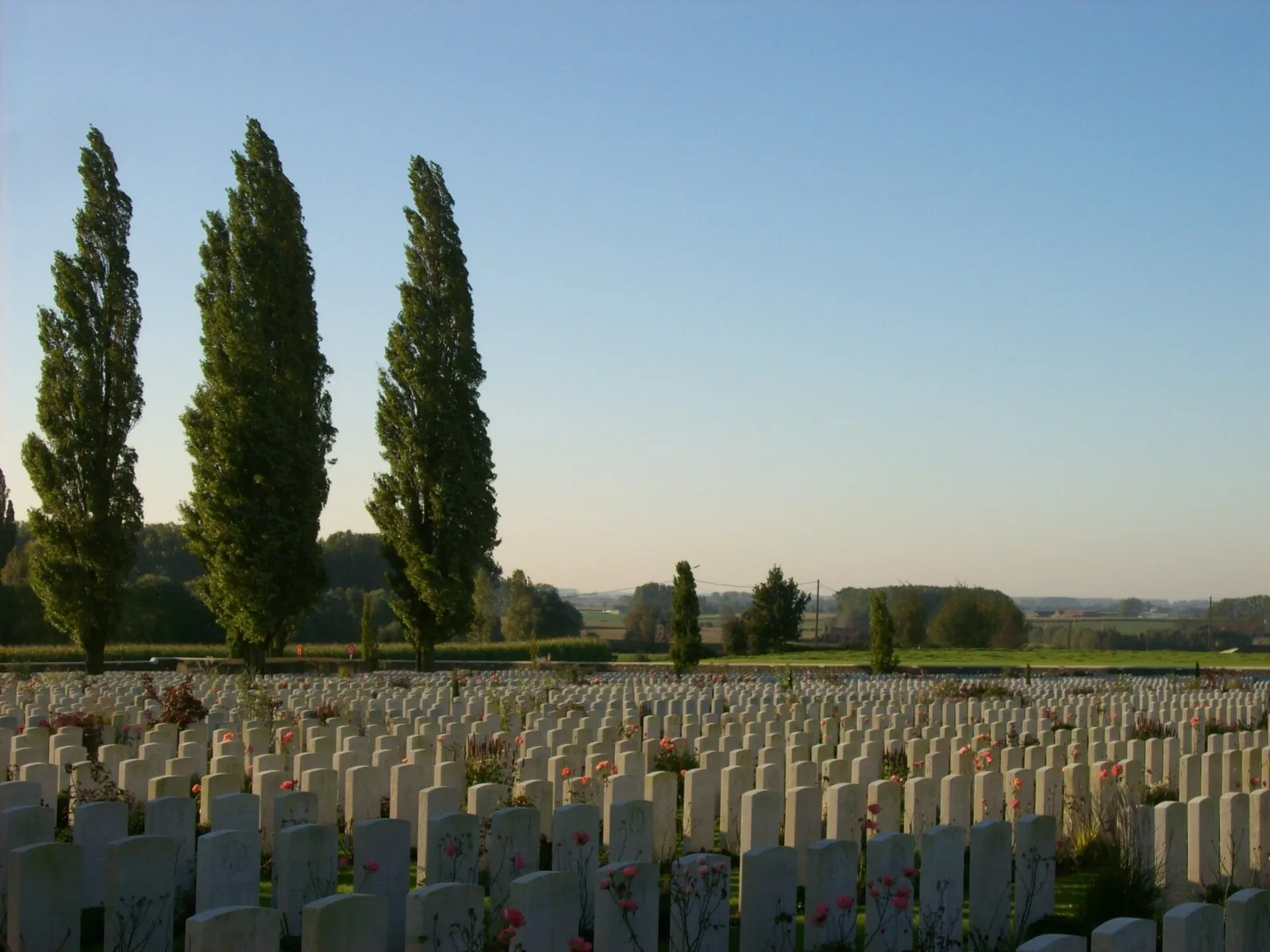 Tyne Cot cemeteryPhoto: Tony Grist / Wikimedia Commons (Public domain)
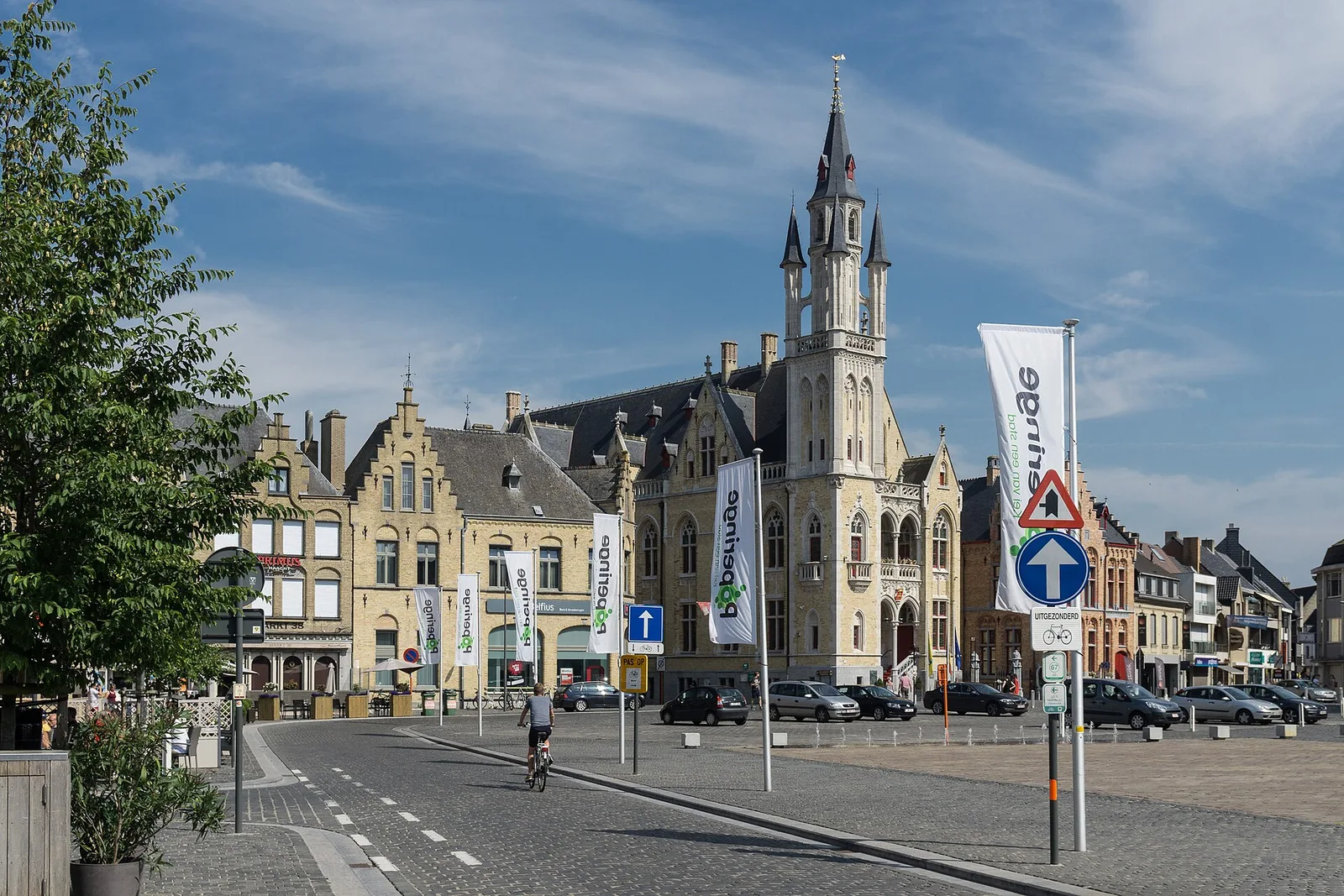 Poperinge town hall and the Grote MarktPhoto: Kenneth C. Zirkel / Wikimedia Commons (CC BY-SA 4.0)
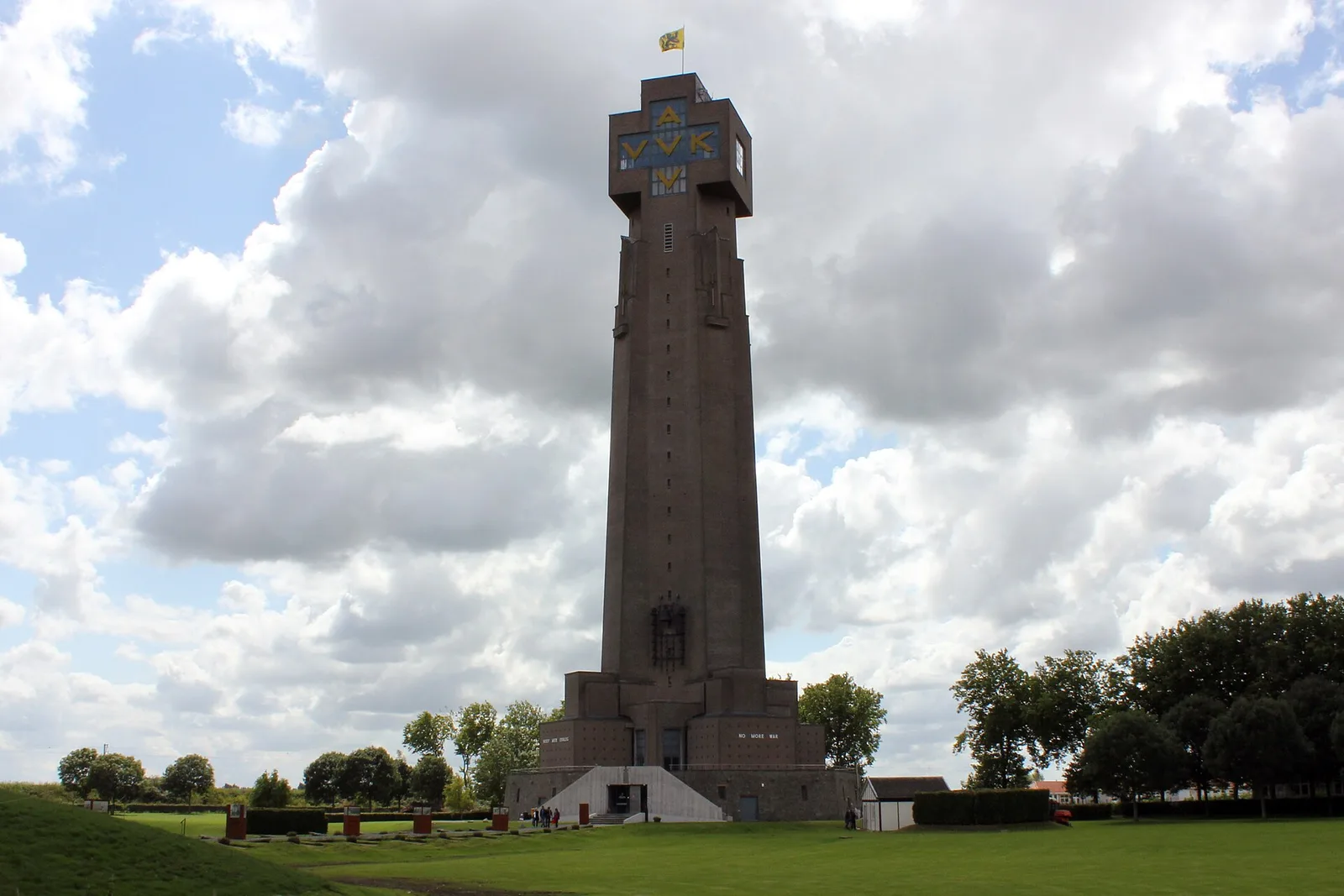 The Yser Tower in DiksmuidePhoto: Bertvg / Wikimedia Commons (CC BY-SA 3.0)
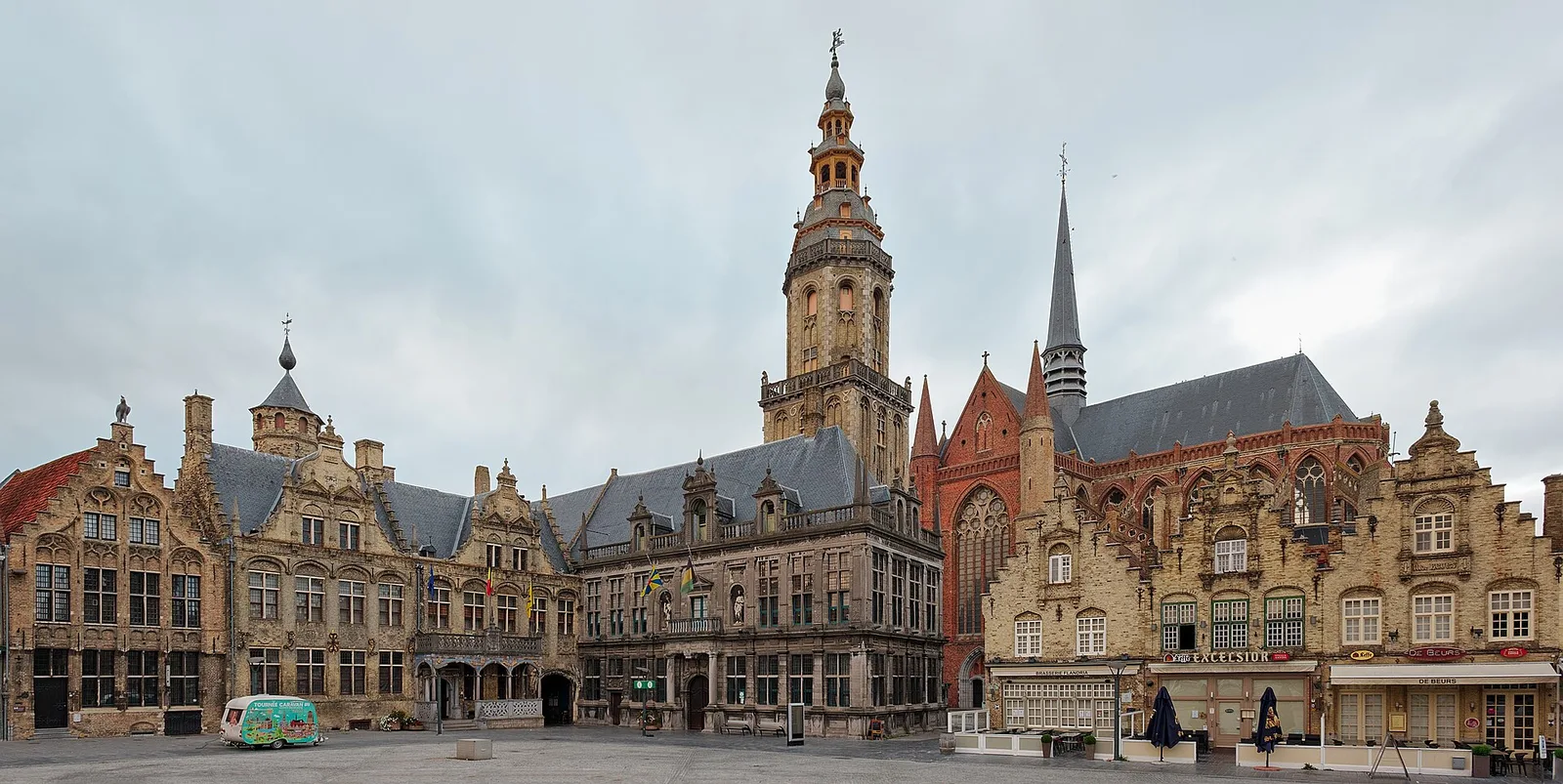 The Grote Markt in VeurnePhoto: Trougnouf (Benoit Brummer) / Wikimedia Commons (CC BY 4.0)
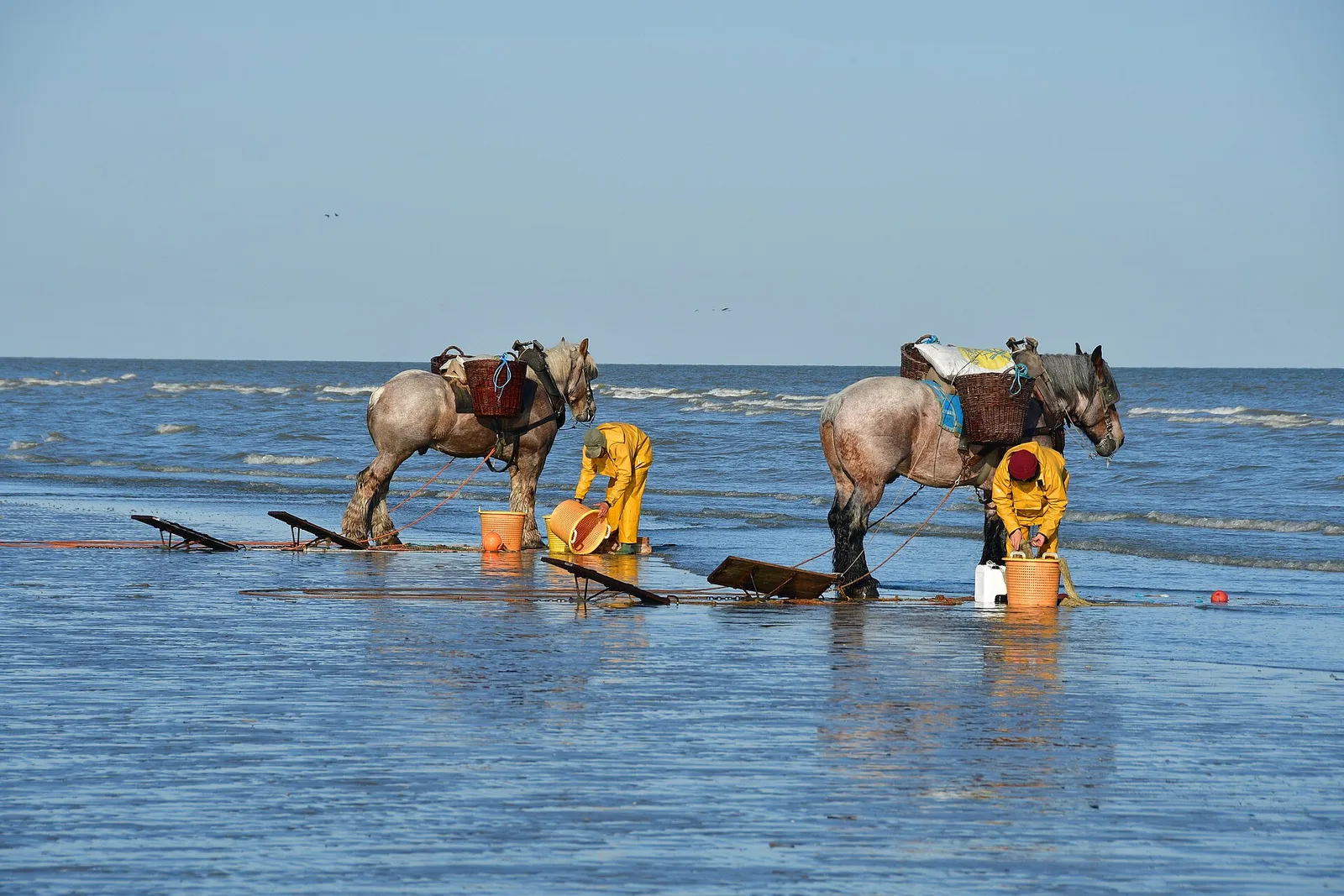 Horseback shrimp fishers at OostduinkerkePhoto: Herman.vandenbroeck / Wikimedia Commons (CC BY 4.0)
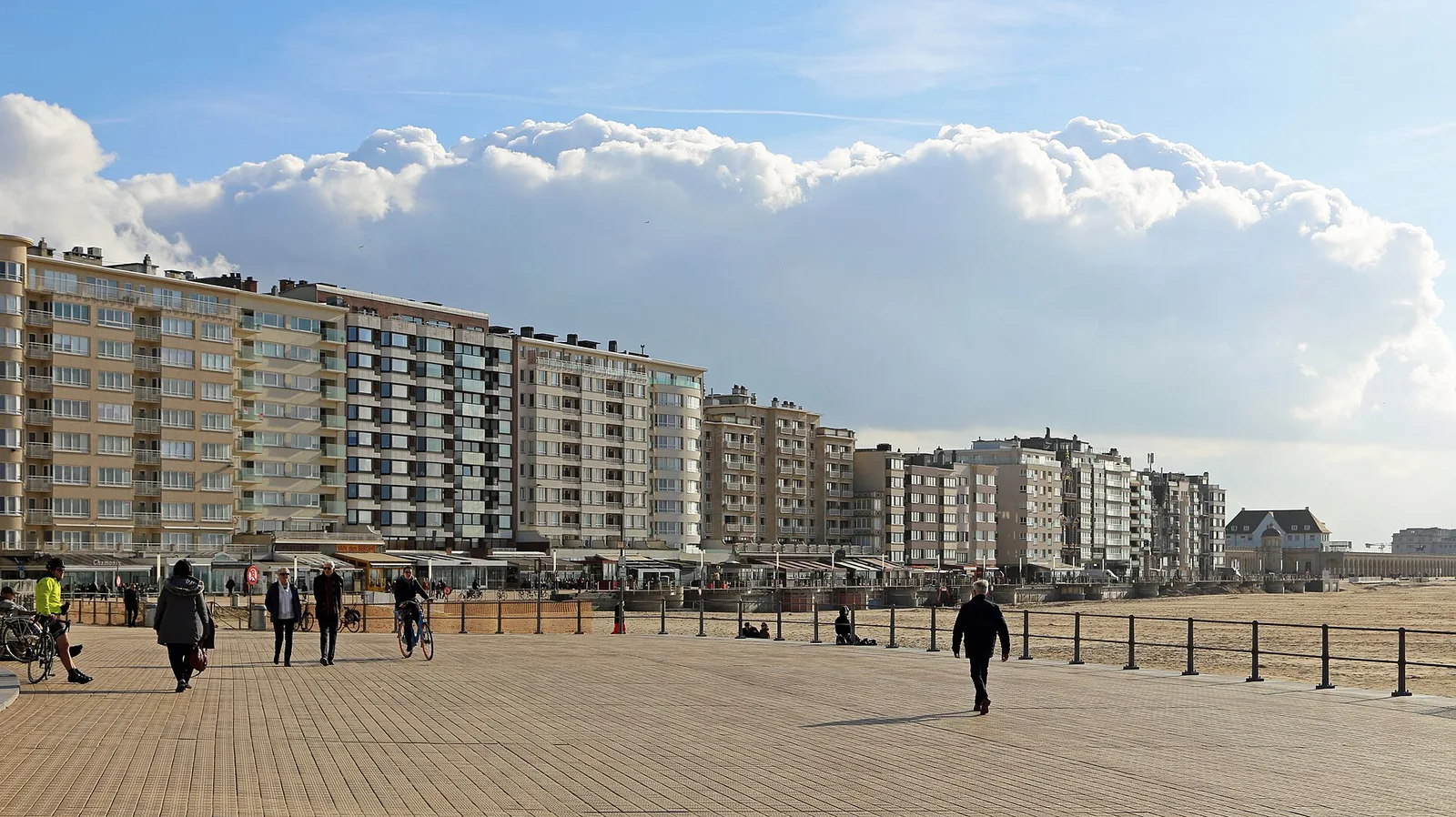 The seafront promenade in OstendPhoto: Marc Ryckaert / Wikimedia Commons (CC BY-SA 4.0)
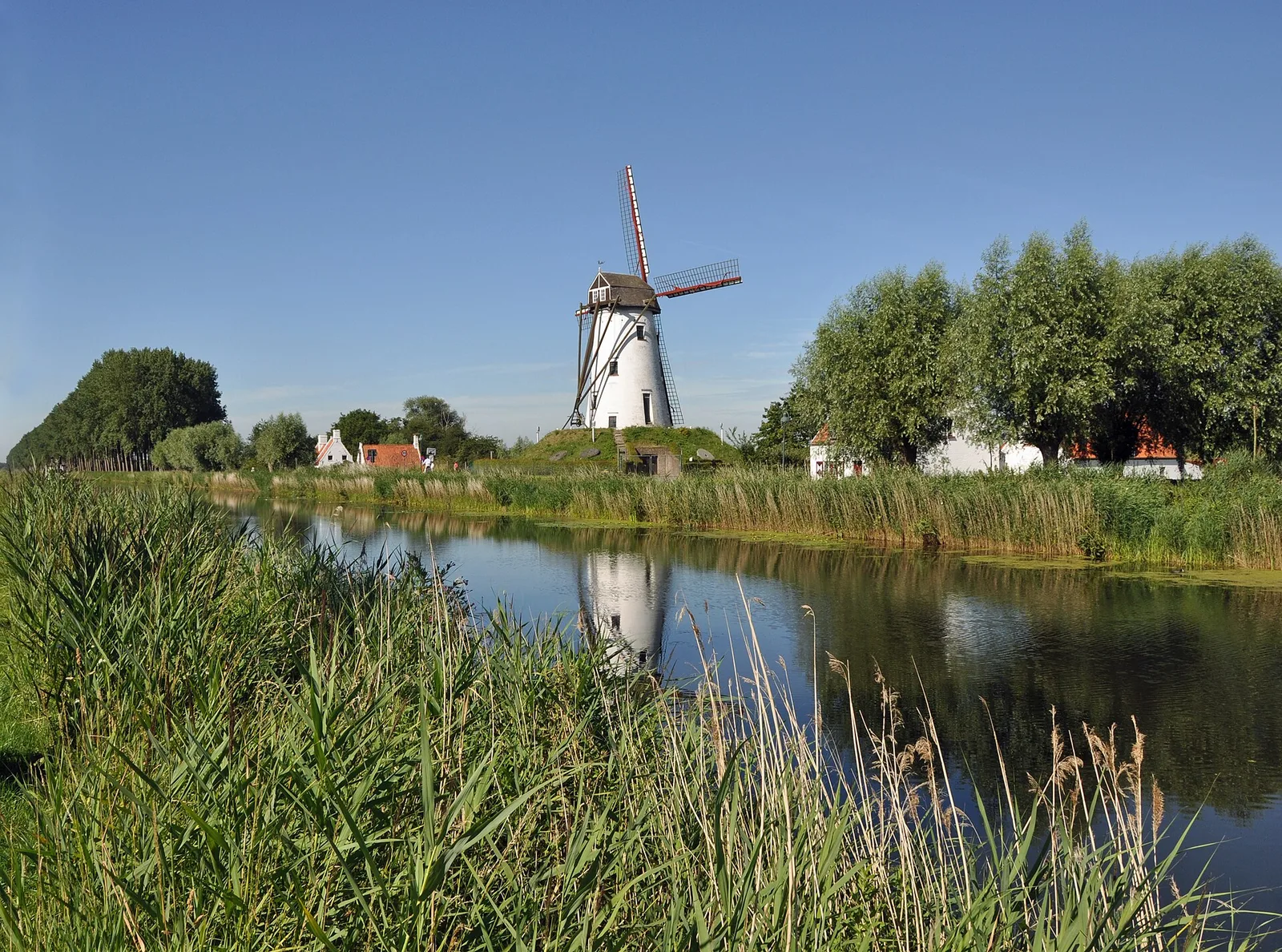 The Schellemolen windmill by the canal in DammePhoto: Marc Ryckaert / Wikimedia Commons (CC BY 3.0)
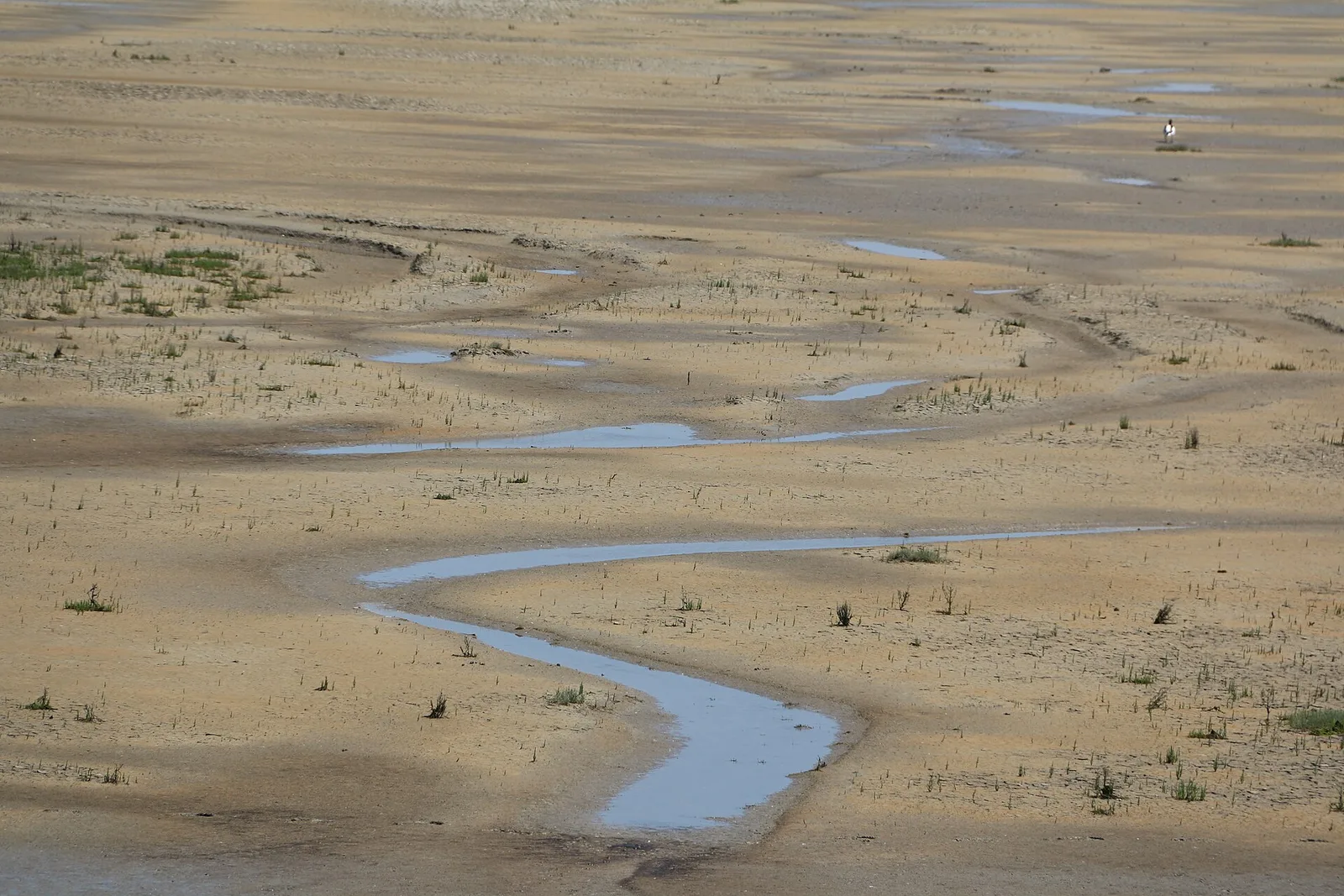 Tidal creeks in the ZwinPhoto: FrDr / Wikimedia Commons (CC BY-SA 4.0)
Holiday itinerary
- Day 1 · Oudenaarde
Leave Brussels to the west and stop first at Geraardsbergen, where the cobbled Muur climbs steeply through the town to the chapel on the Oudenberg, one of the legendary climbs of the Tour of Flanders; the local mattentaart, a small curd tart, is the reward at the top. From there quiet roads cross the Flemish Ardennes, a landscape of rolling fields, beech woods and hilltop villages, to Oudenaarde on the Scheldt. Its town hall, built in the sixteenth century in a flamboyant late Gothic style, stands on the market square like a piece of carved stone lace, and the town was once famous across Europe for its tapestries.
- Day 2 · Ypres
Morning on the climbs of the Flemish Ardennes: the narrow cobbled lane of the Koppenberg, so steep that even professional riders have had to walk it, and the long drag of the Oude Kwaremont, followed by the Tour of Flanders Centre in Oudenaarde, a museum devoted to the race and to cycling in Flanders. After lunch drive west past Kortrijk to Ypres. Walk the green ramparts around the old town to the Menin Gate, whose walls carry the names of more than fifty thousand Commonwealth soldiers with no known grave, and be there before eight in the evening, when buglers sound the Last Post, as they have done almost every evening since 1928.
- Day 3 · Poperinge
Spend the morning at the In Flanders Fields Museum inside the rebuilt Cloth Hall, then drive out into the former Ypres Salient. At Zonnebeke the Memorial Museum Passchendaele 1917 recreates the dugouts and trenches of the battle, and nearby Tyne Cot, the largest Commonwealth war cemetery in the world, holds nearly twelve thousand graves on a gentle rise with a view back to the towers of Ypres. Return south-west via the Kemmelberg, a wooded hill with a French ossuary and a wide view over West Flanders, to Poperinge, the town of hops, where Talbot House, a club for soldiers opened in 1915, still welcomes visitors, and the Hop Museum fills the old municipal weighing house.
- Day 4 · De Panne
Head north across the polders to Diksmuide on the Yser, where the tall Yser Tower, a memorial to peace, holds a museum of the war and of the Flemish movement and opens a view from the top across the flat land that was flooded in 1914. Just outside the town the Trench of Death preserves a line of sandbagged trenches along the river. In the afternoon stop at Veurne, whose Grote Markt, framed by the belfry, the Spanish Pavilion and gabled guild houses, is one of the most harmonious squares in Flanders, and finish at De Panne, where the dunes run down to a beach so wide that it is used for sand yachting.
- Day 5 · Ostend
Begin the day in the Westhoek nature reserve, a wild landscape of white dunes, hollows and scrub on the French border, crossed by marked paths. A few kilometres along the coast lies Oostduinkerke, one of the last places in the world where shrimps are still fished on horseback, a tradition on UNESCO’s list of intangible heritage; at low tide the fishers ride their heavy Brabant horses into the surf, and the NAVIGO fisheries museum tells their story. After Nieuwpoort, where the King Albert I monument stands by the sluices that flooded the Yser plain in 1914, continue to Ostend for an evening walk along the promenade.
- Day 6 · Damme
Ostend rewards a slow morning: the house of the painter James Ensor, filled with masks and shells above the souvenir shop his family once ran, the paintings of Mu.ZEE and, west of the town, the Atlantic Wall open-air museum at Raversyde, with bunkers and trenches hidden in the dunes. Then follow the coast to De Haan, a resort of Belle Époque villas where Albert Einstein stayed in 1933, and turn inland to Damme, once the outport of Bruges, a small town of brick houses on a canal lined with poplars, with a windmill, a Gothic church tower and a statue of the prankster Tijl Uilenspiegel.
- Day 7 · Brussels
In the morning drive to the edge of Knokke-Heist and the Zwin nature park, a tidal salt marsh on the Dutch border where storks nest by the visitor centre and spoonbills and avocets feed on the mudflats. On the way back, the poplar-lined road along the canal from Damme towards Bruges makes a last beautiful stretch before the motorway leads east, past Ghent, to Brussels, about an hour and a half away.