
War in the charging station: BEV, PHEV, or EREV – which drive type makes sense in Poland, and which is just wasting money?
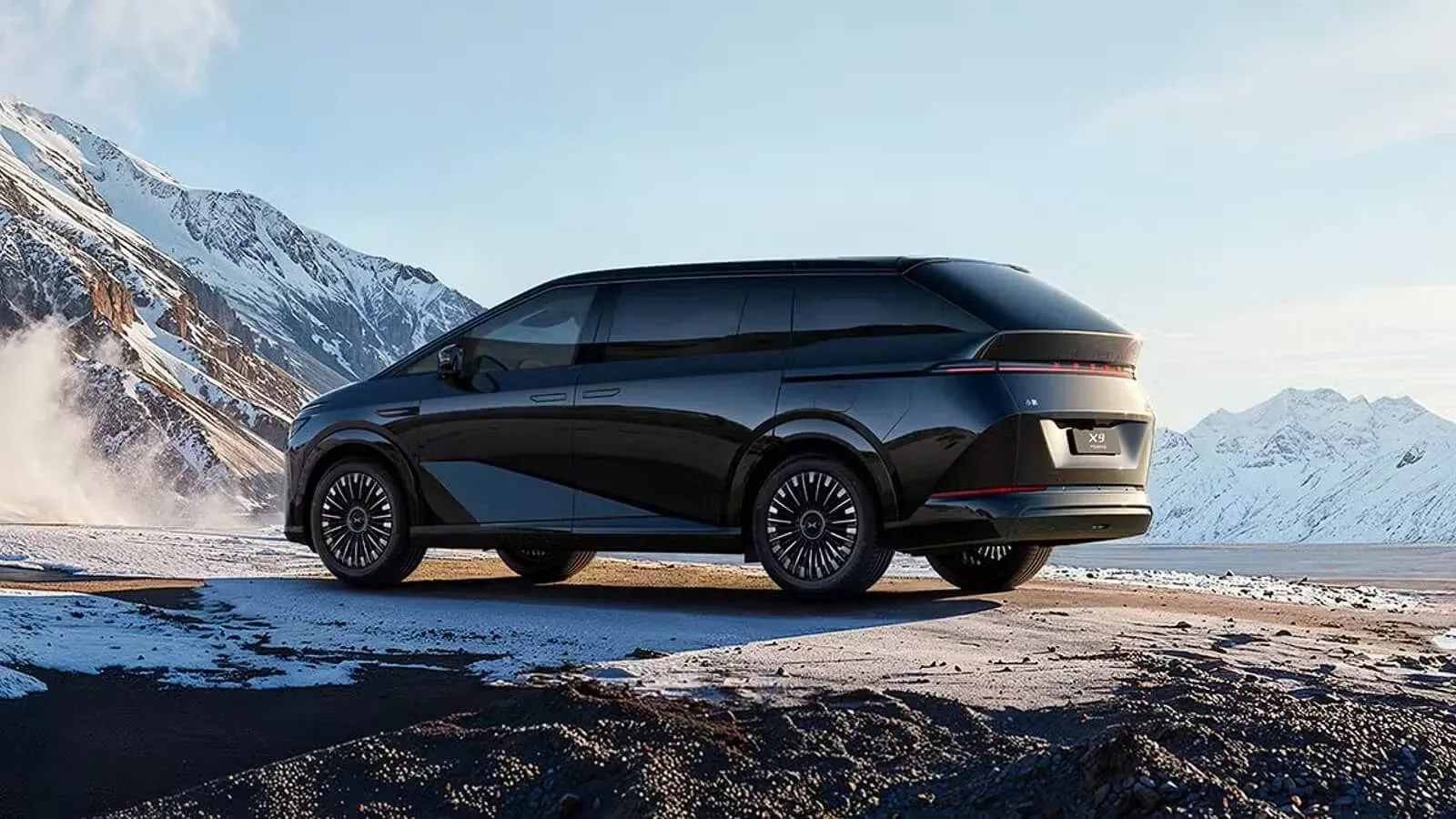
You're faced with choosing a new car with plug-in capabilities, but confused by the jargon of BEV, PHEV, and EREV? We examined which of these technologies will actually reduce your fuel costs without any subsidies, and which is just an eco-friendly trap that drains your wallet. Find out what’s most cost-effective to own in a Polish garage by 2026.
Table of Contents
Show
Hide
For many drivers, electric mobility remains a confusing topic. Which is more environmentally friendly? Which works better in daily use, and which will leave you stuck at a charger on your way to vacation? We break down these three technologies thoroughly.
Let’s decode the abbreviations. What are the differences between these various powertrains?
Before discussing costs and affordability, we need to define the main differences in the architecture of these vehicles. These are three completely different engineering philosophies.
BEV (Battery Electric Vehicle): 100% Electric
This is a fully battery-powered electric vehicle. It has no exhaust pipe, internal combustion engine, or fuel tank. It features a large battery pack (50-100 kWh is standard today) that powers the electric motors directly driving the wheels. Energy is replenished solely from an external power source such as a household outlet, wallbox, or public fast charger (DC). Examples include the Tesla Model Y, Volkswagen ID.4, and Ford Mustang Mach-E.
PHEV (Plug-in Hybrid): Plug-in Hybrid
The vehicle comes with two complete powertrains. It has both a gasoline engine and an electric one, along with a small battery (usually 8-20 kWh). The battery can be charged from a wall outlet. Modern plug-in hybrids offer real electric range of around 50-100 kilometers. When the battery is depleted, the car switches to hybrid mode and functions like a conventional hybrid, with the gasoline engine becoming the primary power source. Examples include the Toyota Prius Plug-in and the Volvo XC60 Recharge.
EREV (Extended Range): Electric vehicle with its own generator
EREV is a specific type of series hybrid. The wheels are always and exclusively driven by an electric motor. There is also a combustion engine on board, but it has no mechanical connection to the wheels. It functions only as an onboard power generator that activates when the battery is nearly depleted. The best-known modern examples are Chinese models such as BYD and Xpeng.
Quick comparison: what each technology offers
Powertrain type
BEV (100% Electric)
PHEV (Plug-in Hybrid)
EREV (Electric with Generator)
Range on electricity alone
350 – 600+ km
50 – 100 km
80 – 150 km
Presence of combustion engine
NO
YES (drives wheels)
YES (only charges battery)
Need for daily charging
YES (for driving)
YES (for savings)
YES (for cost savings)
No fear of range on the road
Requires planning
Refueling at every station
Refueling at every station
The battle over ecology and Poland’s energy mix
To answer the question about ecology, one must consider the entire vehicle’s life cycle. Plug-in hybrids (PHEVs) spark the most controversy in this regard. In WLTP laboratory tests, they perform excellently, achieving fuel consumption levels of 1-2 liters. However, studies by organizations like Transport & Environment show that actual emissions from PHEVs are on average 3 to 5 times higher than declared.
This is because users rarely charge their batteries daily. As a result, they end up driving a heavy gasoline car with a small fuel tank. PHEVs require a strict approach to charging—otherwise, they are simply expensive gasoline cars.
BEV vehicles produce zero emissions from their exhaust pipes. In Poland, where the energy mix relies heavily on coal, there are skeptical voices. However, analyses show that even when charging a car using the Polish grid, a BEV becomes cleaner than a gasoline vehicle after traveling 60,000 to 80,000 kilometers. As renewable energy’s share grows in Poland, every electric vehicle is charged with increasingly clean energy year by year.
Convenience, range, and everyday concerns
In the showroom, we make the final decision based on convenience and cost. Owning a BEV requires changing habits. If you have the option to charge at home, driving electric becomes extremely cheap. The cost to travel 100 kilometers on night-time rates is now only 10-15 zł. There’s no need to visit gas stations during daily urban commuting.
The challenges start for residents of apartment buildings without access to their own charging outlets. Relying solely on public DC fast chargers significantly increases operating costs. Long distances require planning stops, though with current ranges of 400-500 km and the expansion of charging networks along major routes in Poland, this is much easier than it was a few years ago.
Here, plug-in hybrids and EREVs show their main advantage to skeptics: complete freedom from range concerns. On the road, when the battery runs out, you can simply fill up with gasoline at any station and keep going. The cost of this convenience is the need to service two propulsion systems and significantly higher fuel consumption on roads due to the vehicle’s weight.
Who will remain in the race before 2035?
Many signs indicate that PHEV technology is a dead end and merely a temporary solution. The European Union is tightening regulations on emission calculations, while governments in various countries are phasing out subsidies for plug-in hybrids. Moreover, the ban on registering new gasoline vehicles in the EU by 2035 also applies to PHEV and EREV vehicles, as they still burn fossil fuels.
BEVs are becoming more efficient every year. Battery energy density is increasing, and 800V charging architectures allow vehicles to be fully charged in less than 20 minutes. For manufacturers, fully battery-powered vehicles are ultimately cheaper to produce due to the drastically reduced number of moving parts compared to complex hybrids.
Verdict: Portfolio or convenience? What you should park in your garage
In 2026, the choice of powertrain depends 100% on your living conditions and lifestyle. There is no single ideal answer, but costly mistakes are easy to make.
Choose a BEV if:
You have access to an outlet or wallbox at home or work.
Most of your trips are daily local and urban commutes.
You want to minimize maintenance and fuel costs (by charging using off-peak rates or your own solar power).
Choose a PHEV / EREV if:
You will consistently charge your car at home every day to drive in the city using cheap electricity.
You have only one car in your family and regularly drive long distances without time to stop.
If you don’t have a place to charge your car, avoid plug-in hybrids. You’ll quickly regret their high fuel consumption.
The path to full electrification is full of compromises, and hybrids were one of them. Ultimately, however, it is fully electric vehicles that drive the market forward.
How do you view this technological race? Is a PHEV still the ideal middle ground for you, or are you slowly preparing to switch to a fully electric vehicle? Share your experiences in the comments.