
VW ID. Polo im Test: Where Volkswagen’s promises fall short
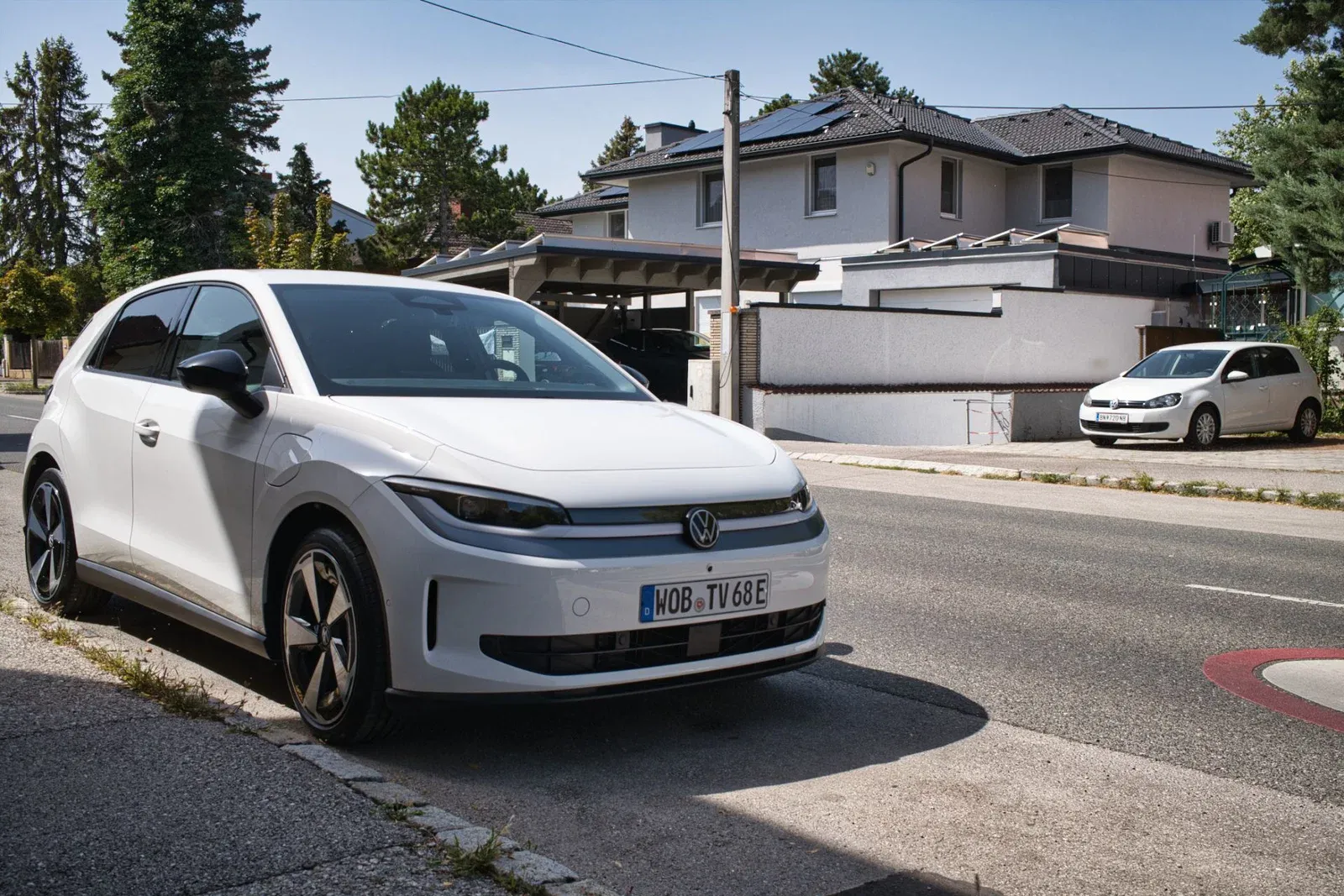
Volkswagen sees the VW ID. Polo as more than just a new model designation. This compact car is the first vehicle to be fully built around the “True Volkswagen” concept, through which the company is reorienting its electric strategy: familiar names instead of numbers, buttons rather than touchscreens, and technology typically found in higher-class models offered in the entry-level segment. The ID. Polo will go on sale in September for 24,995 euros, and according to Volkswagen, over 30,000 buyers have already placed pre-orders. I got to experience whether this promise holds true firsthand during the “True Volkswagen Experience” in Vienna over a distance of about 150 kilometers.
The pressure behind project ID.2all, as ID. Polo was called during the development phase, is considerable. Brand Group Core aims to save around one billion euros by 2030, a large portion of which will come from platform synergies. ID. Polo, ID. Cross, Cupra Raval, and Škoda Epiq share a technical foundation as part of the Electric Urban Car Family. Dr. Erwin Gabardi, who has been in charge of Volkswagen’s product portfolio and the entire Brand Group Core since January 2025, described this principle in an interview with Elektroauto-News publisher Sebastian Henßler as follows: “Standardization where the customer doesn’t see it, and differentiation where it can be experienced.” The goal is to achieve over 80 percent shared components, with the resulting efficiency being applied to design, equipment, and brand consistency.
The fact that the ID.2all eventually became the ID. Polo is part of the same logic. “Names like Polo or Golf represent entire vehicle classes, offering trust and a clear reference point for our customers,” Gabardi continued. For existing customers, the familiar name provides direction, while younger target groups need to be attracted through design, technology, and value for money. At the same time, he warned against resting on this historical foundation.
In his view, the biggest misunderstanding in the European automotive industry is the belief that “the successes and strengths of the past will automatically guarantee a strong position in the future.” The ID. Polo must therefore be both the Polo people know and a car capable of competing with Chinese rivals in the same price segment.
VW ID. Polo – a new beginning in the electric entry-level segment
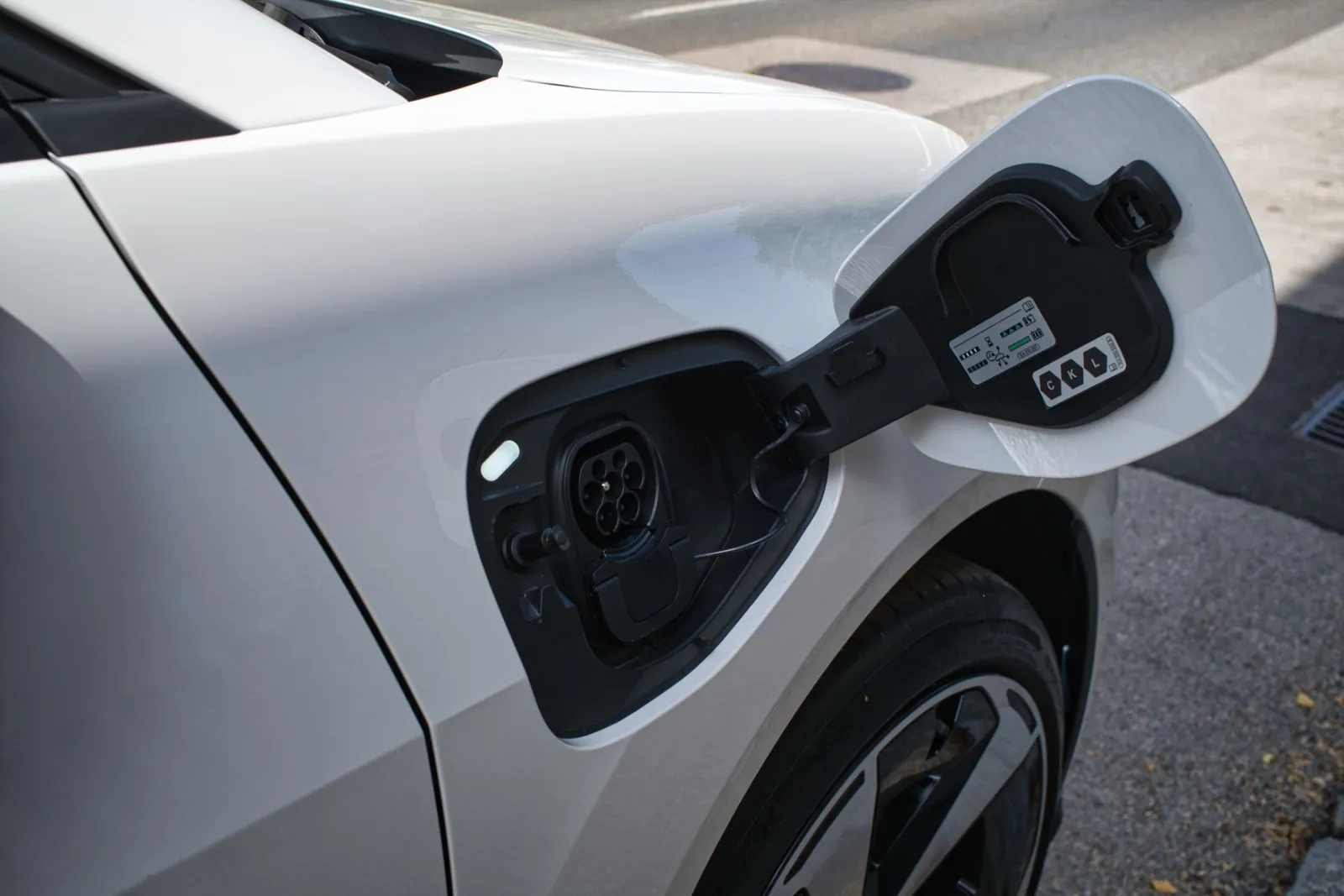
Technically, the ID. Polo marks a new beginning for Volkswagen. While the larger ID. models come with rear-wheel or all-wheel drive, this compact car adopts an electric front-wheel drive system for the first time, built on the upgraded MEB+ platform. The new APP290 electric motor weighs 75 kilograms and delivers 85, 99, or 155 kW of power depending on the version. The two lower-powered versions are paired with a 37 kWh LFP battery that supports charging at up to 88 kW, while the 155-kW version comes standard with a 52 kWh NMC battery that can charge at up to 105 kW. It takes approximately 23 minutes to charge from 10% to 80% with the smaller battery and around 24 minutes with the larger one. The WLTP range varies between 323 and 454 kilometers.
At Volkswagen in Wolfsburg, they are aware that Chinese competitors can charge faster in this price range. Nevertheless, Gabardi considers this design approach to be correct because it aligns with customer expectations in this segment: “In this context, the charging speed is absolutely competitive and appropriately sized.”
Volkswagen has also reorganized the equipment logic. Instead of starting with battery size as in previous ID models and adding packages on top, it now uses the classic hierarchy of Trend, Life, and Style. The Trend version always comes with a small battery and 85 kW of power, while Life and Style start at 99 kW and can optionally be paired with a larger battery for 155 kW of power. One detail in the configurator may spark discussion: the light interior is only available on the top-tier Style version. Those who want it must choose the most expensive option.
VW ID. Polo’s first drive from Vienna Airport, through the Leithagebirge, into the Wienerwald
Volkswagen’s choice to unveil the ID. Polo in Vienna is driven by practical reasons. Within an hour’s drive around the airport, one can experience all the road conditions a compact car encounters in daily use: city traffic, country roads leading to Neusiedler See, the hills of the Leithagebirge, highways, and the winding forest roads of the Wienerwald. Add to this the weather at the end of August, which could hardly be better for an electric car: around 30 degrees, overcast skies, and dry roads. And unlike the covered pre-production test drives in previous months, Vienna featured only fully production cars with final software. This is enough reason to take a closer look at the ID. Polo.
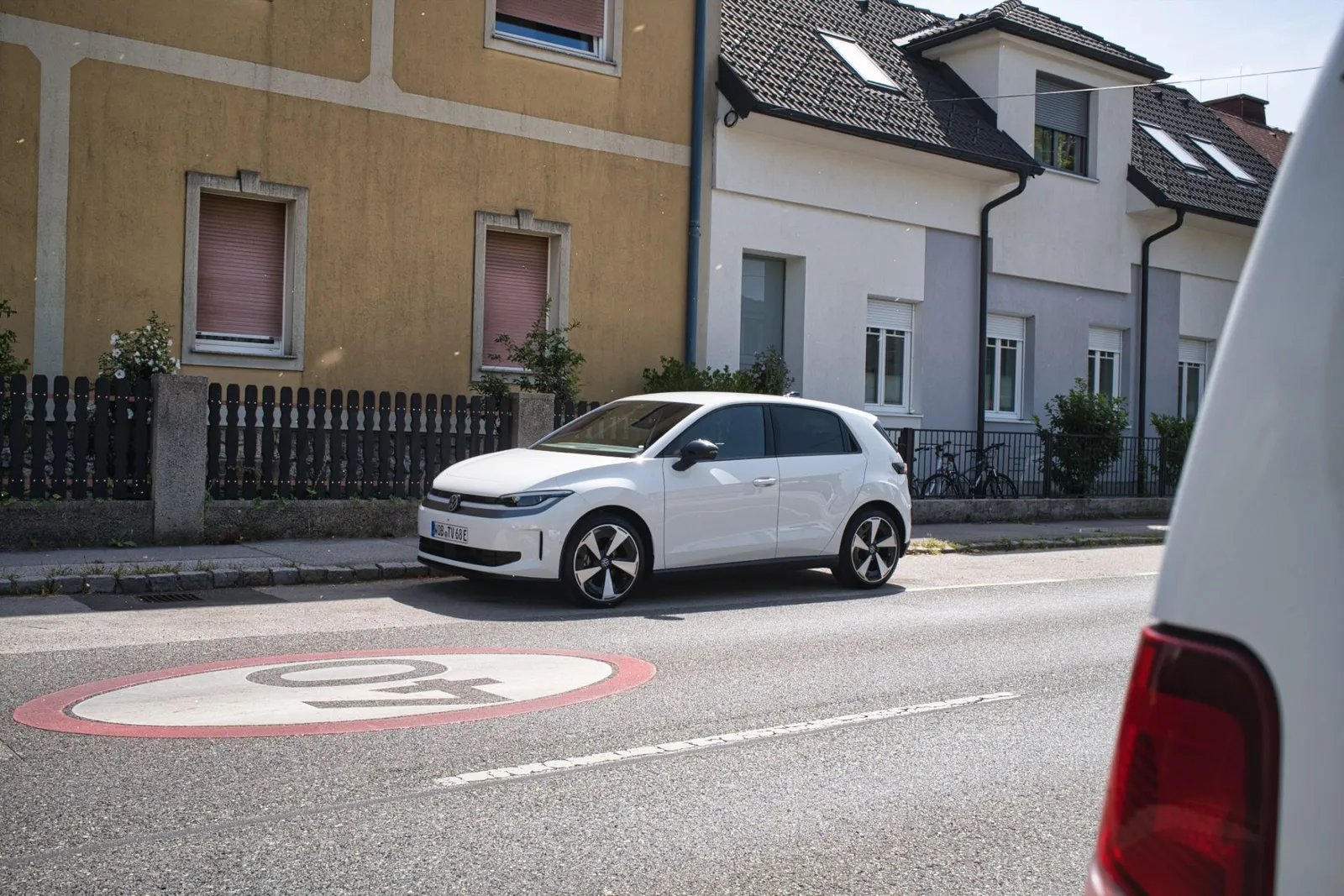
The route proposed by Volkswagen was designed so that the features advertised in advance could be tested one after another. Starting from the airport, we first drove through the city to get to know the interior and controls, then along country roads with an eye on fuel consumption, further into the Leithagebirge to experience the driving dynamics. From there, the loop took us via highway A3, where the Connected Travel Assist and lane-changing features could be tried out, into the Wienerwald and back to the “Relaisstation” — the location for lunch — just outside Vienna, where Volkswagen had specialists in assistive systems and user interfaces on hand.
I was driving an ID. Polo Style in Candy White, equipped with 155 kW of power and a 52-kWh battery — the highest specification available currently. I started with 99 percent battery charge and an estimated range of around 360 kilometers. And to give you a preview, the 390 km figure also seems quite achievable in real-world driving conditions, not just according to the WLTP cycle.
From the outside, the ID. Polo makes no effort to hide its powertrain, nor does it need to. Volkswagen calls this design language “Pure Positive,” and indeed the front end with its pupil-like LED elements and the strip between them appears more friendly than aggressive. The silhouette features a straight window line and a C-pillar design that dates back to the original Golf, representing what Volkswagen has been known for for decades.
In my style model, the VW logos are illuminated at the front and back, along with 17-inch wheels and a cw value of 0.264. At 4,053 millimeters in length, 1,816 millimeters in width, and 2,592 millimeters in wheelbase, the ID. Polo remains a compact car, and it looks that way too: even without logos, it would still be instantly recognizable as a Polo — it hardly gives away the presence of an electric motor under the hood.
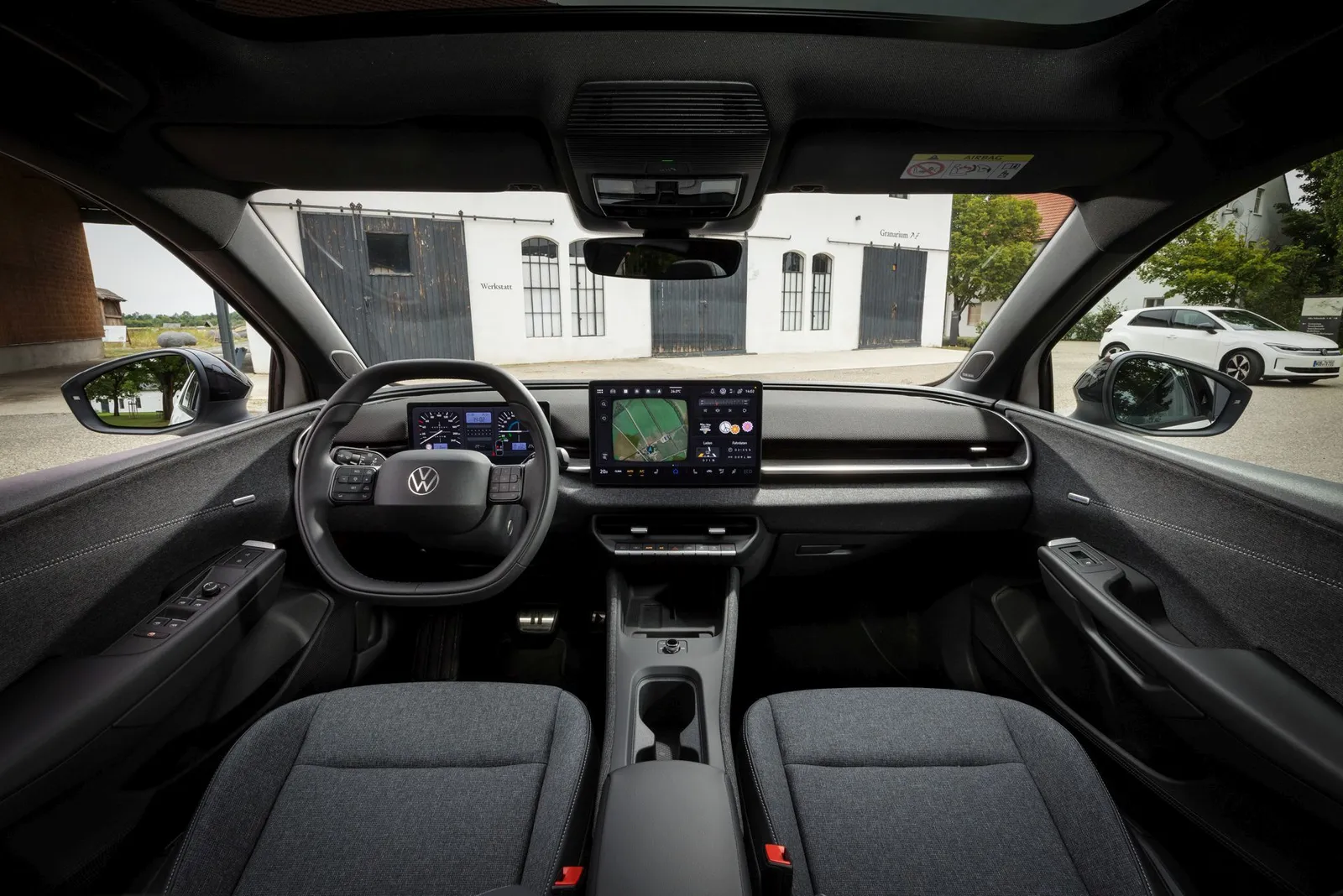
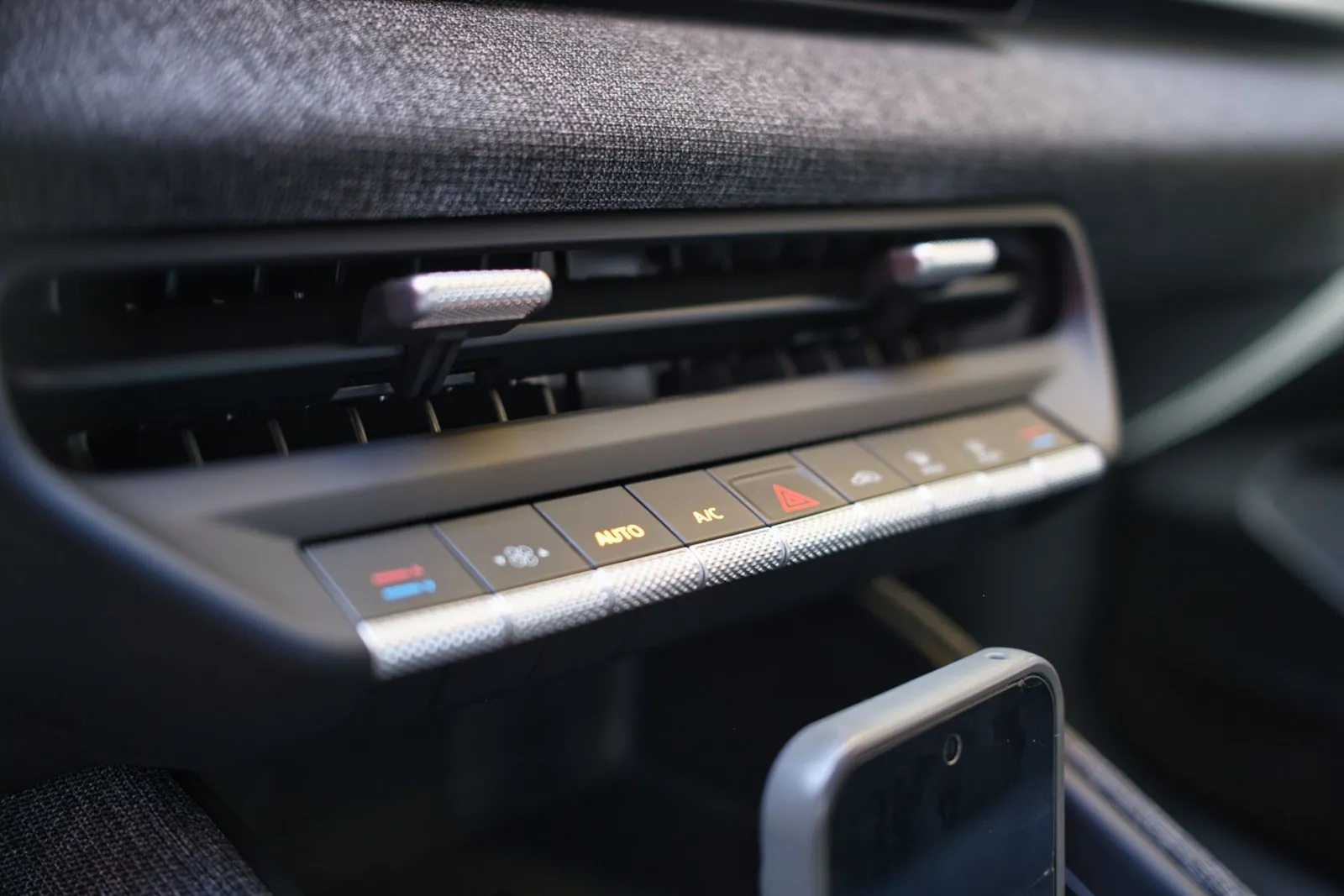
Inside, Volkswagen implements what has been promoted for months as the core of “True Volkswagen”: a return to physical controls. There are four actual window lift buttons on the driver’s door, and beneath the infotainment display is a separate control panel for temperature, fan speed, recirculation, and defrosting, along with a classic rotary knob for volume on the center console. According to Volkswagen employees on site, those who get into the car at night at an airport should be able to use it without any learning curve. And it succeeds in doing that.
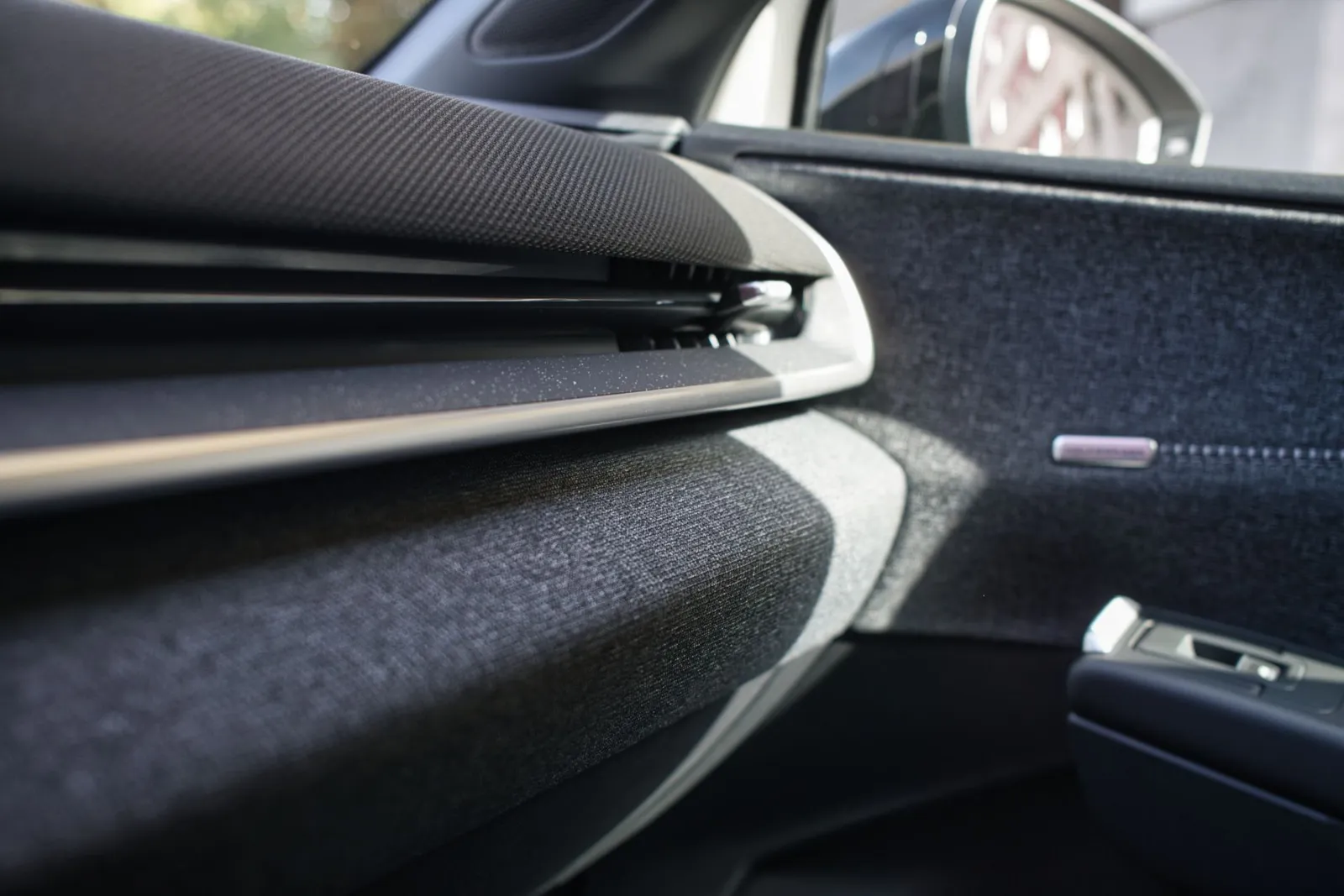
The new, flatter top and bottom steering wheel fits well in the hand, and the two button panels appear spacious at first glance but become intuitive quickly. The materials in visible and accessible areas feel high-quality; according to Volkswagen, all textiles are made from recycled PET, while the seats in the Style version are crafted from yarn derived from collected marine plastic. The seat itself provides good support while remaining comfortable, as can be felt after just a few minutes of driving. Decorative stitches with small Volkswagen badges on the door panels complete the design. The dark interior of my test vehicle appears tidy and one class higher than its price would suggest—a theme that persists throughout.
VW’s Retro Charm with Excessive Display Visualization
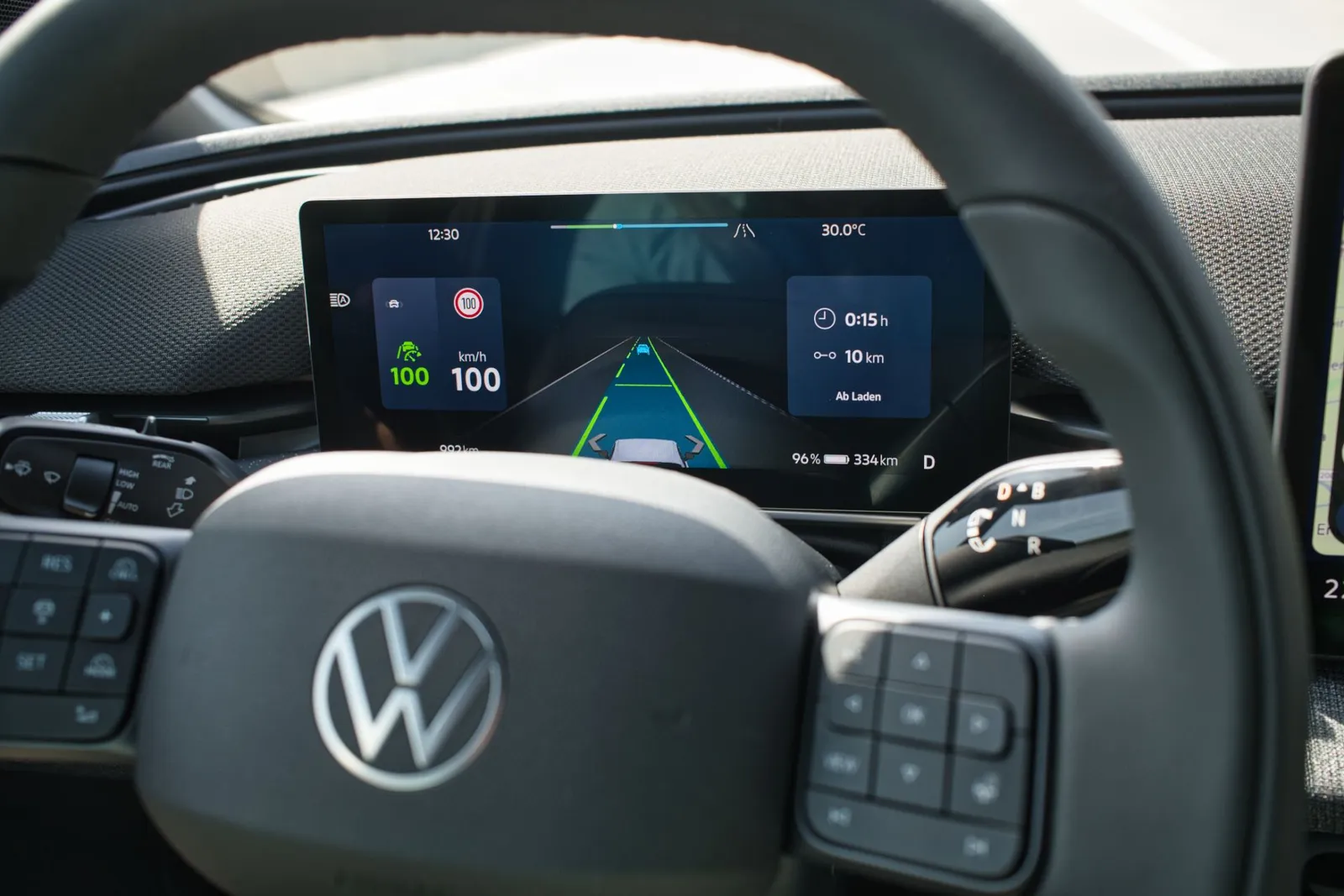
In terms of a clean design, the displays—or rather their visualization—don’t quite fit this image. The 10-inch digital cockpit offers four views, including the standard retro display with instruments from a late Golf I model, where the former tachometer serves as a power meter. Volkswagen calls this its “Secret Sauce,” an emphasis on unique details. While driving, the display seems overly cluttered to me: many graphics, lots of gimmicks, and few clear numbers. It might be enjoyable on home roads, but for everyday use, I quickly switched to one of the more straightforward views. There is no head-up display that could reduce the load on the main display, which is understandable for an electric entry-level model—costs need to be cut somewhere.
Similar to the digital cockpit, my experience with the 13-inch infotainment display is the same. It’s positioned in the center, not aligned toward the driver, and is divided into three layers: a top bar, a home screen, and a bottom bar. In navigation mode, the interface appears overloaded. There’s a customizable quick selection bar at the top, another at the bottom, additional quick access options via swipe gestures, and beneath that a physical button strip that offers many of the same functions once more. Thus, the climate control can be operated both through touch and buttons. Less would have been better here, as this dual functionality contradicts the goal of simple operation. In the future, an over-the-air update might solve this by allowing for a single function to occupy the space. However, it’s not yet ready for that yet.
The retro interface, with the navigation map appearing on a 1970s-style TV and the media player depicted as a cassette, remains a matter of personal preference. A keyboard design marketed deliberately as a return to simplicity should have carried the same consistency in terms of software functionality.
In terms of interior space, the ID. Polo benefits from its compact front-wheel-drive layout. Its interior length is 19 millimeters greater than that of the still-offered Polo with a gasoline engine, the seating position is slightly higher, and there is more shoulder room in width. The trunk holds 441 liters, over 25 percent more than the MQB Polo, and this increases to 1240 liters when the rear seats are folded down. However, those who opt for the optional 425-watt Harman Kardon sound system lose storage space under the floor, as that area is occupied by the subwoofer.
The VW ID. Polo is more fuel-efficient than initially expected
The ID. Polo shows two different sides on the road. Regarding the suspension, the manufacturer’s claims differ slightly from my initial impression. Volkswagen promises a level of comfort in handling that is rarely seen in this class, claiming it can handle both short and long bumps with ease. On the uneven country roads around Neusiedler See, I experienced a rather stiff setup: some potholes were transmitted relatively directly to the cabin, and even average-quality roads were noticeably felt. For a car in this class, this isn’t a major issue. However, those who advertise a suspension from a higher class set expectations that the ID. Polo fails to fully meet on poor roads.
In the Leithagebirge and later in the Wienerwald, where left-right combinations occur one after another, the ID. Polo performs well overall and handles with precision. However, at higher speeds it noticeably pulls the car to the outside, and when I took the curves in the Wienerwald a bit faster, the front engine drove smoothly while the rear began to sway slightly. The low center of gravity thanks to the battery mounted between the axles helps, but the ID. Polo is still not a corner warrior. It remains a car for everyday use that can also handle long distances, and those who drive it in this manner will get along well with its suspension.
The fuel consumption in normal driving mode is all the more impressive. Throughout the entire test distance, it ranged from 11.8 to 12.4 kWh per 100 kilometers, and this was achieved with a driving style that consistently stayed within the legal limits on highways, country roads, and in urban areas—intentionally so to obtain a realistic figure. The WLTP value for this version is 13.4 kWh.
The ID. Polo’s below-average consumption is partly due to the summer weather and partly to the new front-wheel drive system, whose high efficiency and low weight are explicitly promoted by Volkswagen as efficiency advantages. When the measured consumption is applied to its 52 kWh net capacity, the range comes out to between 420 and 440 kilometers, which is significantly higher than what the car predicted at launch. Things will look different in winter, but Volkswagen offers a heat pump as an optional feature for that purpose.
This is complemented by the noise comfort, which Volkswagen also places at the level of higher-class vehicles. This holds true even on country roads, likely thanks to the climate compressor that is decoupled from the chassis and the vibration damper on the rear axle. However, at speeds of around 80 to 85 km/h, air turbulence becomes audible, becoming more noticeable as the speed increases. This is not a disqualifier for longer trips, but it’s also not necessarily an argument in favor of the advertised luxury-level quietness.
Connected Travel Assist: When the car drives like the Viennese themselves
The technical standout feature of the ID. Polo in its class is called Connected Travel Assist. The combination of assisted longitudinal and lateral steering, assisted lane changing, and traffic light recognition has previously been available only in the ID.7 or ID.4; even the ID.3 did not have this level of functionality. According to sources within Volkswagen, a Polo customer has never had a Travel Assist system capable of such things, and competitors in the same segment also do not offer anything comparable. The “Connected” suffix refers to the use of cloud and swarm data, and that is where the real advancement lies. An Volkswagen employee explained to me what this means in practice.
Volkswagen has been gathering this data for years. Vehicles from the company, from the Golf 8 to the Audi A3 and ID.3, to name just a few, upload anonymized driving data to the cloud if drivers have agreed in their privacy settings. For this data to be useful, the car needs to know its exact location down to a few centimeters. GPS alone is not sufficient for this purpose. Therefore, cameras and radar identify fixed features along the roadside, such as a traffic sign, a tree, or a solid line, and compare them with what other cars have seen at the same location. This creates a map that includes not only roads but also the actual behavior of many cars on those roads.
The first result of this data is already known to MEB drivers, perhaps without them even realizing it. If the center line is missing on a country road, an assistance system might simply shut down. Volkswagen didn’t want this, so instead it makes the car calculate a virtual lane, displayed on the screen as triangles rather than solid lines. This lane follows not a programmed path but the route taken by other vehicles on that exact road. If many cars have slightly veered left at a certain spot due to a pothole, the ID. Polo will also take this slight curve without crossing any line.
The new feature in the ID. Polo is designed to respond to local average speeds. Previously, assistance systems adjusted speed before curves based on curvature data from navigation, which often resulted in either overly aggressive or overly cautious behavior. Now, the system checks how fast other cars were actually traveling at that specific location. Whether it’s a confusing hill, a tree close to the road, or a curve in the forest: wherever the crowd slows down, the ID. Polo does the same, even though the allowed speed is set at 100 km/h.
An algorithm weighs the freshness of the data to ensure that a road that has just been repaired isn’t forced to handle yesterday’s potholes indefinitely. Volkswagen stated that an average value is definitely not used. Instead, they rely on a specially developed algorithm, and no other manufacturer does this at present. The car never accelerates beyond the speed set by the driver; it always adjusts to a lower speed.
A small cloud symbol next to the speed display indicates what is happening currently. Green means the system is actively intervening based on crowd data. Gray indicates that data is available, but the driver is already driving slower. No cloud means either that the car is currently adjusting for a curve, roundabout, or exit, or that there is simply no crowd data available for that section.
Highways are intentionally excluded because the speed differences there, ranging from 80 to 250 km/h depending on driving behavior, would overwhelm any meaningful average calculation. This effect was particularly evident in Vienna: Viennese drivers are generally very skilled and tend to turn off curve-based regulations. With swarm data, the ID. Polo drives in the same way as locals do, which feels more natural than any pre-programmed speed reduction.
Traffic lights, signs, lane changes: What the ID. Polo’s assistance can do and where it falls short
No matter how convincing the swarm data worked on rural roads, the performance of the other functions was mixed. Traffic light recognition follows clear rules: when it’s red, the ID. Polo stops automatically; when it’s green, it signals to proceed, but the driver must press the pedal to start moving. Starting on its own is not legally permitted. It worked fairly well overall. However, there was one exception to note. In this case, the ID. Polo slowed down in front of a green light that showed no signs of changing color. Such phantom braking is annoying because it undermines trust in exactly the feature that the car aims to set it apart from competitors.
This was even more evident in traffic sign recognition, which is the basis for Travel Assist’s speed control. Right after departing the airport, it identified a 30 km/h zone where 70 km/h was already allowed, and later it reported 130 km/h when the required speed was 80 km/h. In total, it got it wrong four times, each time offering a speed adjustment that could be accepted or rejected. Those who rely on it blindly risk either a fine or creating an obstacle for traffic behind them. This isn’t an exclusive Volkswagen issue; other electric cars also struggle similarly with signs. However, when combined with an assistant meant to take on so much responsibility, it becomes a serious problem.
The attention monitoring works just as consistently: if the hands are away from the steering wheel for too long, the system first warns visually, then adds an auditory alert, and finally begins to brake the car quite strongly. This escalation is understandable. Compared to similar systems in the Chinese market, what stands out most is the relatively gentle and restrained approach of these assist systems. Less in this case means more.
Volkswagen’s built-in navigation performed well throughout the entire route. The announcements are delivered sparingly, only when necessary, and reliably guide the driver to the destination. Once, an exit was indicated too late, or I noticed it too late myself. The turn warnings along the route, sourced from the aforementioned crowd data, also reduce some of the mental effort required while driving. Volkswagen emphasizes that the driver remains the decisive factor despite all this, and experience with road signs and traffic lights confirms that.
A problem that caused a lot of criticism for the ID.3 has been resolved in the ID. Polo: all versions can be configured with a trailer hitch. The 85- and 99-kW versions can pull 500 kilograms when braking, while the 155-kW version can pull 1200 kilograms. The latter is not standard even in higher-class vehicles, as the ID.3 only offers a load capacity for bike racks. According to sources within Volkswagen, efforts are underway to increase the pulling capacity from 500 kilograms to 750 kilograms; it remains unclear whether this will be available for current models or at all. It should be noted that Volkswagen positions the trailer towing capacity intentionally as a versatile feature, not as a guarantee of performance for pulling heavy loads: garden waste, hardware store items, a small trailer, or perhaps a tiny camper van.
The ID. Polo will not remain the brand’s smallest electric car for long. For 2027, Volkswagen has planned another model below the Polo, which was only vaguely mentioned in Vienna and is reported in media as a production version of the ID. EVERY1, now named ID. Up, with an estimated price of around 20,000 euros. Thus, the ID. Polo is the first, but not the last, example of how Volkswagen intends to return to its core values through electric vehicles.
Disclaimer: Volkswagen invited us to Vienna, Austria, to experience the VW ID. Polo. However, this does not affect our honest opinions expressed here.