
Under 30,000 Euros: Is the GAC Aion UT suitable for Germany?
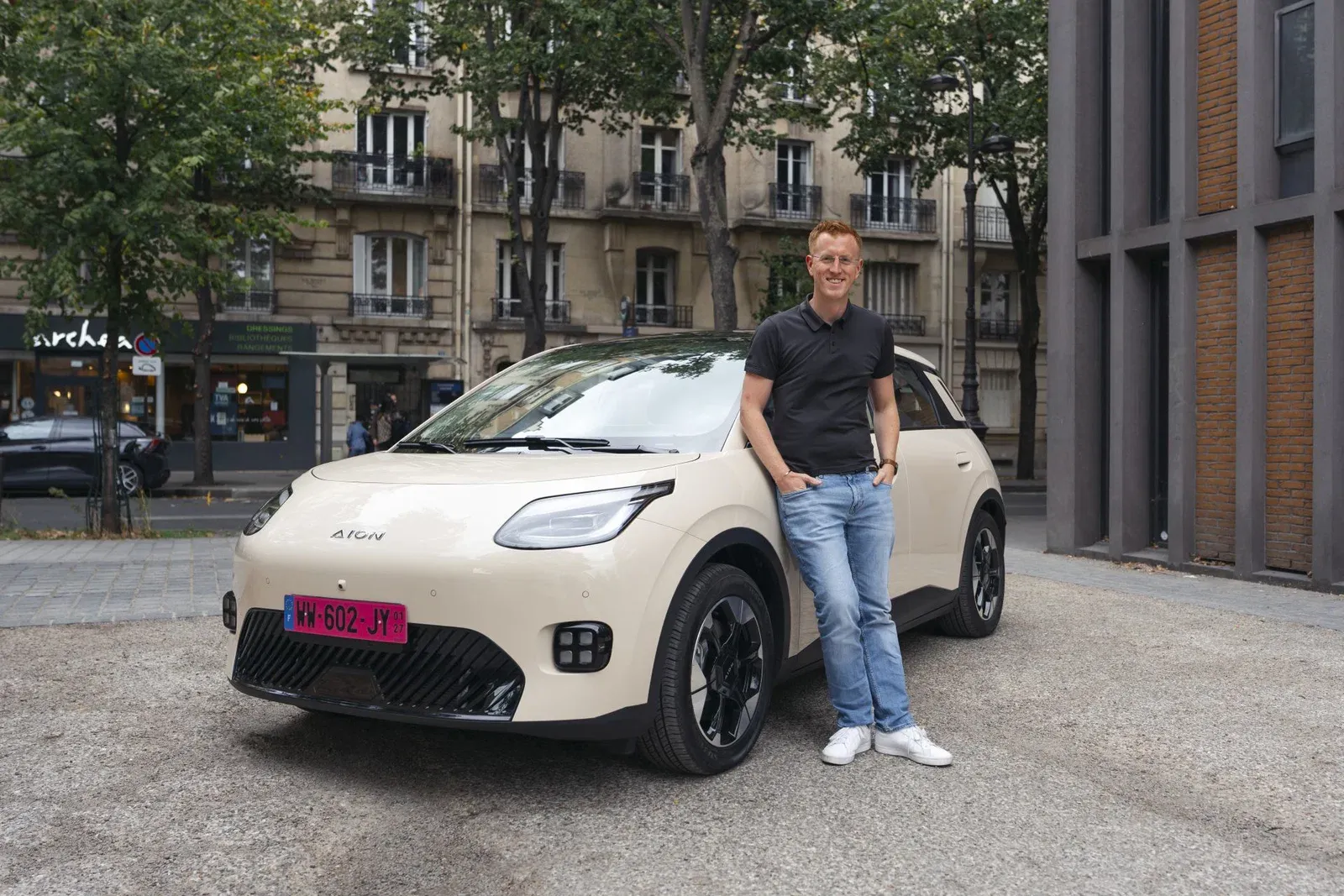
When we first got to drive the GAC Aion UT in January 2025, it was still running as a prototype on a closed test track in Foshan, China, using data partially intended for the domestic market. Nearly 20 months later, this compact five-door vehicle now sits on Parisian streets in the exact configuration that GAC plans to introduce in Germany by the end of 2026, having been manufactured at Magna in Graz for the European market. Ahead of the auto show, we had the opportunity to drive the top Luxury version through Parisian traffic for about 30 minutes. While this isn’t enough for a thorough test, it is sufficient to get a first sense of what has changed since our initial encounter.
Externally, the Aion UT has remained true to its original design since its first unveiling. It was designed at GAC’s Advanced Design Centre in Milan, and the smooth lines that were already noticeable on the prototype in China define the series version for Europe as well. With a length of 4.27 meters, width of 1.85 meters, and height of just under 1.58 meters, it falls within the category of a classic compact car, but its 2.75-meter wheelbase gives it a relatively long silhouette, which is evident in the rear compartment. LED headlights and taillights are standard, along with 17-inch aluminum wheels. In addition to white, GAC offers colors such as silver, black, green, red, and beige, which can optionally be paired with a roof in a contrasting color. The manufacturer lists its drag coefficient at 0.32.
Beneath the hood, it’s worth checking the specifications: For the European market, GAC uses an LFP battery with a usable capacity of 60 kWh, which is said to enable 430 kilometers of range under WLTP conditions and even 620 kilometers in pure city cycling mode. The Aion UT is powered by a 150 kW front motor producing 210 Nm of torque, allowing the vehicle to reach 100 km/h in 7.3 seconds according to the manufacturer. Charging is possible at up to 11 kW via a wall charger and at most 87 kW at fast chargers, enabling the battery to go from 10% to 80% in 32 minutes—a figure that isn’t the highest but is roughly on par with a BYD Dolphin.

In addition, there are details that matter more in everyday use than any peak performance. For instance, a heat pump is standard on board, the battery can be preheated specifically through the menu before fast charging, and during AC charging, the charging current can be gradually limited. Through the Vehicle-to-Load function, the Aion UT can also supply external devices with up to 3.3 kW, with a user-selectable minimum value preventing the battery from being discharged too much.
GAC Aion UT: More European handling, more driving intensity
Just a few meters into the dense city traffic, it becomes evident that GAC has worked on the suspension. The tuning is less stiff than that of the prototype in China, with bumps arriving more softly inside the cabin, and it’s clear the car has been adjusted for European roads. On some side streets where traffic lightened up briefly, quick accelerations confirmed that the electric vehicle launches swiftly from a standstill, whereas it had seemed rather sluggish on the test track in Foshan earlier.
The cabin is surprisingly quiet, even though the speed rarely exceeded 50 km/h. Whether this remains true at higher speeds will only be determined by a thorough test on country roads and highways. Based on the rest of the material choices, the sound insulation should fulfill its purpose there without reaching premium levels.

The situation regarding regenerative braking is more nuanced. Through the menu, the energy recovery can be turned off or set to low and medium levels, though a stronger setting is missing, making it impossible to drive to a stop using only one pedal. The test vehicle had the medium setting selected, and especially in urban traffic, where frequent braking is common, a finer yet more powerful adjustment would have been desirable. The individual settings could be better balanced to allow for a smoother transition between propulsion and braking. Therefore, those who drive frequently in the city will need to use the brake pedal more often than necessary with some of its competitors.
The flexibility is much greater with the other driving settings. In addition to the Comfort, Sport, and Power Save driving modes, an additional Super-Saving mode can be activated, and a feature called “Motion Sickness Relief” is intended to make driving easier for passengers with sensitive stomachs. Independently of this, the steering and braking can be adjusted separately: the steering can be switched between Comfort and Normal, while the braking response can be set between Standard and Sport. There’s also Autohold and a feature called “Comfort Parking,” which, according to the menu, is supposed to reduce body roll when stopping, except during emergency braking. During the test drive, the Sport mode with comfortable steering was chosen—a combination that worked well in Parisian traffic and matched the brisk acceleration.

The assistance systems operate in a pleasantly restrained manner while offering various customization options. For example, the lane-keeping assist can either issue warnings only or take corrective action, notifying the driver through sound, vibration, or both, and its sensitivity can be adjusted in three levels. The traffic sign recognition function worked reliably throughout the half hour, and essential safety features such as adaptive cruise control, emergency braking assist, blind spot warning, and a 360-degree camera are already included standard.
A lot of plastic, but cleverly concealed
In the interior of the Luxury trim, it’s easy to see where GAC cut costs to maintain the target price and where they deliberately didn’t. Areas where hands and arms rest frequently, such as the door panels and center armrest, are padded and pleasantly soft, but hard plastic dominates elsewhere. Notably, GAC skillfully hides this compromise in some spots. For example, the decorative stitching in the door areas is so convincingly replicated in plastic that the difference from real stitching isn’t noticeable at first glance and becomes apparent only upon touch. The seats and steering wheel are covered with synthetic leather, while the panoramic glass roof in the Luxury version, equipped with electric sunshade, significantly brightens the interior. Overall, the materials fulfill their purpose and appear well-made.

In terms of seating comfort, the Aion UT performs more impressively. The driver’s seat can be adjusted electrically in six directions, while the passenger seat offers four adjustments. The Luxury version includes a heated driver’s seat with ventilation as well, which proved very useful during short trips. Both features are controlled via the central screen, where in addition to individual settings there is also a “Smart” mode available, while the steering wheel heating can be activated directly next to it. On the passenger side, “only” seat heating is provided.
The ergonomics in detail are less successful. The seat position is a bit high, the thigh support could be longer, especially for taller drivers, and the steering wheel can only be adjusted in height, not length, just like in the prototype. Finding a truly comfortable seat position thus requires some patience, though visibility outward remains good. The back seat has not changed compared to the prototype. With a wheelbase of 2.75 meters, GAC claims 905 millimeters of legroom, and the interior width of 1385 millimeters is said to accommodate three people side by side. However, those over 1.84 meters in height will hit their heads on the roof lining. The trunk holds 440 liters and can be expanded to up to 1600 liters by folding down the rear seat.

The 14.6-inch screen in the center appears overly complex at first glance, but upon closer inspection it turns out to be thoughtfully organized. A side menu divides the settings into clearly labeled categories, ranging from lighting and interior to assistance systems and energy consumption, as well as suspension and chassis. Additionally, a fixed bar at the bottom keeps climate control, fans, windshield heating, and seat functions always within view. Driving modes, window locking, exterior mirrors, and the trunk lid can all be accessed with just a few taps of the fingers.
The central display is supplemented by an 8.8-inch digital instrument cluster behind the steering wheel. The software responds smoothly and offers that playful touch typical of Chinese manufacturers, without complicating operation. Smartphones can be connected wirelessly via Apple CarPlay and Android Auto, and in the Luxury version, the phone rests on a cooled charging pad with up to 50 W of power.

A detail that German interested parties should be aware of is that the menus in the driving car were set to English, and according to the configurator, voice control is currently available only in this language. For a market like Germany, this is an issue that GAC should resolve before launching the vehicle. In talks with EAN, the company announced it is working on adding support for additional system languages.
What fuel consumption and price reveal about the Aion UT
In this context, a look at the test vehicle’s consumption statistics is more informative than just half an hour of driving itself. As of September 22nd, it had traveled 1048 kilometers, consuming an average of 15.4 kWh per 100 kilometers. This figure is slightly below the combined WLTP consumption of 16.4 kWh, but significantly higher than the 11.5 kWh cited by GAC for the pure urban cycle. It’s difficult to interpret this number accurately, as it remains unclear who was driving, in what manner, on what routes, and with what level of climate control. Nevertheless, as a first clue from everyday use, it provides more insight than any snapshot of a short city drive.
GAC has not yet announced official prices for Germany. In other European markets, the Aion UT starts at around 27,990 euros, with slight variations depending on the country, and it is expected to cost under 30,000 euros here as well. The luxury version is likely to be above this price point, according to the editorial team’s assessment.
According to the data, this is a fair offer, as shown by comparison with competitors. A Renault 5 with a 52 kWh battery costs at least 29,290 euros according to the list, while the VW ID.3 Neo with a 50 kWh battery requires at least 33,995 euros, plus an additional 1,090 euros for the heat pump. The BYD Dolphin, with a similar-sized battery, 427 kilometers of WLTP range, and comparable charging performance, is priced at around 33,000 euros. Meanwhile, the MG4 EV Urban offers a lower starting price of 24,990 euros, with a 43 kWh battery and 325 kilometers of range. Based on battery capacity, performance, and standard equipment, the Aion UT has nothing to hide in this market segment.
In the end, it is likely not so much the list prices that matter but rather what customers actually pay. BYD advertises its own electric bonus, MG recently offered substantial manufacturer discounts, and Volkswagen once offered a purchase incentive of up to 4000 euros. Additionally, GAC enters the market as a new brand without any resale experience and with an ongoing network expansion, and its relatively modest charging speed also does not justify a higher price tag.
To some extent, GAC addresses this uncertainty with five stars in Euro NCAP ratings and an eight-year or 160,000-kilometer warranty on the vehicle; the drive battery also comes with an eight-year warranty, but up to 200,000 kilometers. To establish itself in Germany, the model will need to be judged less by its specifications and more by actual market prices and consumer trust in a brand that is still relatively unknown. A second, more detailed look will be worthwhile once the German prices are finalized and the Aion UT can demonstrate its performance outside of urban areas.
Disclaimer: GAC invited us to Paris for a meeting with the brand and to test drive the GAC Aion UT, covering the travel expenses. However, this does not affect our honest opinion expressed here.