
Tesla from the US — is it worth it? What needs to be modified and what might not work in Poland
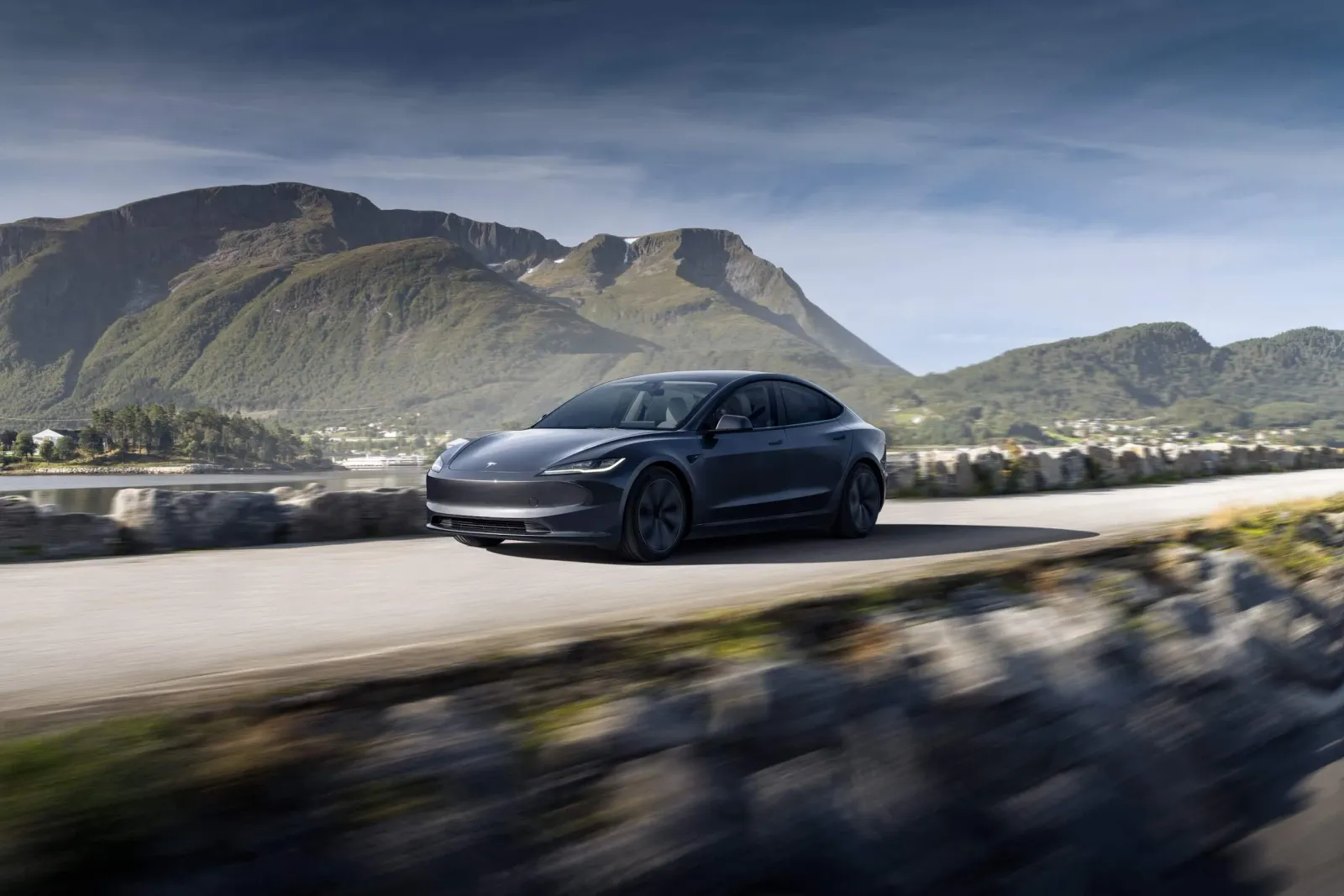
Importing cars from the USA has for years attracted Polish drivers with their lower prices. This is particularly interesting in the case of Teslas, as auctions such as Copart and IAAI offer damaged vehicles that, after repair, can still be significantly cheaper than those available on the European market. Additionally, starting July 1, 2026, the rules regarding tariffs on goods imported from the United States to the European Union have changed.
Table of Contents
Show
Hide
However, this doesn’t mean that a Tesla bought in the US for $25,000 will cost around 100,000 PLN in Poland. The auction price is just the beginning of the overall calculation. There are also transportation costs, auction fees, taxes, repairs, and for Teslas, adapting the car to European conditions is extremely important. The differences can relate not only to the charging port but also to electronics, software, lights, or network services.
Therefore, before purchasing, it’s worth asking a much more important question than “How much does a Tesla cost on Coparcie?”. One needs to find out how much it will cost to have a Tesla ready for driving and registration in Poland.
Teslas from the US might be cheaper, but the auction price tells little
Suppose you find a Tesla Model Y Long Range AWD at auction for $25,000. At an exchange rate of about 3.89 PLN per dollar, that amounts to roughly 97,000 PLN. At first glance, it seems very attractive, especially since a similar car in Europe costs significantly more.
However, 97,000 PLN is just the beginning. To the auction price, you need to add the auction house’s fee, transportation of the car across the US, ocean freight, insurance, port fees, and customs clearance. Additionally, there’s VAT, transportation to Poland, parts, repairs, possible conversion of the car to European specifications, a technical inspection, registration, and insurance.
This is where the real fun begins, because a Tesla purchased for $25,000 isn’t necessarily the same as one costing around 100,000 zł. After adding up all costs, we might end up closer to 140–150,000 zł, and if issues arise with the battery, electronics, or the need to replace additional components during repairs, the final amount could even increase further.
In the case of a car that has been in an accident, it’s especially important to consider what lies beneath the damaged parts. From the outside, the car might seem relatively easy to repair, but upon disassembly, it could turn out that high-voltage wires, battery components, electronic modules, or the charging system have been damaged.
What changed with tariffs on cars from the US?
As of July 1, 2026, new rules apply regarding tariffs on goods imported from the United States to the European Union. In certain cases, for goods eligible for preferential treatment, the tariff rate can be 0 percent. This also applies to vehicles covered by the relevant tariff codes.
This does not automatically mean that every Tesla purchased in the US will be cleared without tariffs. It is crucial to be able to prove the origin of the goods and meet the requirements set out in the regulations. The fact that a vehicle was bought at an American auction does not yet mean that a preferential rate can be applied without additional formalities.
This is an important factor in the calculation, because for a car worth tens of thousands of dollars, the difference between 0 and the standard customs duty rate can mean tens or even hundreds of thousands of zlotys. Therefore, it’s worth clarifying with the import company beforehand what documents are needed to qualify for preferential rates.
Then there’s VAT. In Poland, importing a car from the US requires accounting for a 23% VAT tax, while electric cars are exempt from excise duty since the rate for such vehicles is 0%.
The VIN is most important, not an auction photo
When buying a Tesla from the US, it’s not advisable to start with bidding. First, you need to thoroughly verify the specific vehicle.
The VIN allows for much more than just determining the model and year. It’s worth checking the car’s history, previous auctions, photos from before the damage, the type of damage, ownership status, and information on prior repairs. If the car was previously listed at another auction, photos showing its condition before the next shipment or repair might sometimes be found.
Special caution is needed for cars marked as flood damage, meaning they were damaged by water. Tesla has a highly complex electronics system with many control modules and high-voltage components. The car may drive normally after repairs, but issues with electronics or communication between modules could arise later on.
Even more attention should be paid to cars that have been in a fire. High temperatures can damage not only the visible parts of the bodywork but also wires, modules, the battery, and other components, whose replacement can be very costly.
That’s why photos from auctions are one of the most important elements in the overall assessment. If a damage is visible in the front area of the car in the photo, it’s necessary to check whether components related to the charging system, cooling system, or electronics have also been affected.
Teslas from the US and Charging in Europe
One of the biggest differences between Teslas from the US and those designed for the European market is charging. And here, there’s no one-size-fits-all solution for all cars.
Depending on the model, year, and architecture used, Tesla may have an American charging solution that is not directly compatible with European infrastructure. The situation is different in newer cars compared to older ones, so it is necessary to check the specific car before purchasing, rather than just focusing on the model name.
Simply installing an adapter does not always solve the problem. In some cases, a more thorough conversion is required, involving the charging port, appropriate modules, and the car’s electronics configuration.
This is particularly important in the case of Tesla Superchargers. European infrastructure uses charging standards tailored to the EU market, and a vehicle’s compatibility depends on factors such as its generation and charging solution. Tesla itself states that compatibility with European Superchargers depends on the specific vehicle configuration.
Therefore, before purchasing, it’s not enough to check whether the Tesla “has CCS” or if “an adapter can be installed.” One must be sure that after all modifications, the vehicle will charge properly at the stations of interest, including Superchargers.
Converting Teslas from the US can be a bigger problem than it seems
A vehicle imported from the US also needs to be adapted to European requirements. The scope of work depends on the model, year, and equipment.
In one car, only a few changes related to lighting and configuration are needed. In another, intervention will also be required for the charging system and electronics.
The differences can relate to things such as headlights, tail lights, rear fog lights, markings, unit configurations, the multimedia system, or communication modules. For some cars, it is also necessary to check the compatibility of the TPMS system, which monitors tire pressure.
Therefore, there is no single universal price for a “Tesla conversion from the US.” If someone provides a specific amount without checking the VIN, model, and year, it is wise to approach such an estimate with caution.
The safest approach is to send the VIN to a company that actually specializes in converting Teslas from the American market before making a purchase. This way, you can get a specific list of components that need to be changed along with an estimate of costs.
What about FSD and Autopilot?
This is another issue that’s easy to overlook when buying a car at an auction.
If the listing mentions Full Self-Driving, we shouldn’t assume automatically that once the car is imported to Poland, we’ll have exactly the same functions available as in the US.
Two things need to be distinguished here. The car may have the appropriate computer, cameras, and other hardware components, but that doesn’t mean all software functions will be available in Poland. The availability of specific functions depends on the market, software, regulations, and the configuration of the particular car.
Therefore, FSD should not be viewed as a guaranteed bonus that increases the value of an imported Tesla. If we buy a car mainly because the auction mentions FSD, it’s necessary to verify beforehand what will actually be available once the car arrives in Europe.
The same applies to Autopilot and other driver assistance systems. It’s worth checking the computer version, cameras, repair history, and whether the car has any issues with system calibration after an accident.
Tesla is not just a car and battery. A large portion of its functionality is related to software and online services.
A car imported from the US may require checking the modem, supported networks, service configurations, and the functionality of Tesla apps. Depending on the model year and generation, differences may also exist regarding maps, Premium Connectivity services, radio, or other multimedia features.
This doesn’t mean every Tesla from the US will have connectivity issues. It rather means that a car from the American market cannot be treated as an identical counterpart to the European version.
This is another reason why it’s worth checking the specific VIN before purchasing and asking the person handling the conversion what functions will be available after bringing the car in.
Documents and homologation
The car must of course go through the normal import and registration process. However, in the case of a car from the US, there is the issue of differences between American specifications and European requirements.
It should not be assumed that the vehicle documentation will be exactly the same as that of a Tesla purchased in Germany or Poland. Important documents include ownership papers, import documentation, technical specifications, and proof that the vehicle meets the requirements in Poland.
Therefore, before purchasing, it is wise to check not only the vehicle itself but also its documentation and the possibility of registering it in Poland. Repairing a car for 100,000 zł is not very meaningful if there are later issues with its official approval for road use.
How much can a Tesla from the US really cost?
It is easiest to see this with an example.
Let’s assume the Tesla Model Y Long Range AWD costs $25,000 at auction. At a rate of 3.89 PLN per dollar, that amounts to around 97,000 PLN. Additional costs include auction fees, transportation in the US, and sea freight. Then there are customs duties, VAT, transportation in Poland, repairs, and any necessary conversion.
If the car is slightly damaged, the overall cost can still seem very attractive. Problems arise when the damage is more severe or affects the battery, charging system, or electronics. In such cases, the price difference compared to a European car can quickly shrink.
Therefore, it’s important to create a complete cost estimate before bidding, rather than after purchase. It’s also wise to set aside a financial buffer for items that aren’t visible in the photos.
In practice, we don’t compare “a Tesla for $25,000” with “a Tesla for 160,000 zł in Poland,” but rather a ready-to-use, repaired, and registered Tesla from the US with a similar car already purchased in Europe.
Only such a comparison makes sense.
Is it worth importing a Tesla from the US?
Importing Teslas from the US can be cost-effective, but it’s not an easy way to get a car that is several dozen percent cheaper. Those who are well-versed in the auction market, able to assess damages, and have access to a reputable Tesla repair shop may have the greatest advantage.
For someone buying their first car from the US, however, the biggest risk is focusing solely on the auction price. The cheapest Tesla on Coparcie isn’t necessarily the cheapest one after being imported to Poland.
Before purchasing, you need to check the VIN, vehicle history, type of damage, battery, electronics, charging system, Supercharger capability, FSD, Autopilot, connectivity, and whether the required conversion is possible. Additionally, there’s a full calculation for transportation, taxes, repairs, and registration.
If there is still a significant price difference compared to a comparable Tesla from Europe after adding up all costs, importing might make sense. However, if the difference is only a few thousand or tens of thousands of zlotys, the risks associated with a crash-damaged vehicle, conversion, and potential issues may render the entire operation less attractive than it initially seemed.
What to check before bidding?
It’s advisable to have answers to at least these questions before buying:
What is the exact VIN and vehicle history?
What was the type of damage?
Was the vehicle exposed to water or fire?
What is the condition of the traction battery?
Has the high-voltage system been damaged?
What charging port and charging architecture are used?
Will AC and DC charging work after conversion?
Will the car be compatible with European Superchargers?
Which Autopilot and FSD functions will be available in Poland?
Do the modem, app, maps, and online services work?
What components need to be changed for the car to meet European requirements?
Does the car have documentation allowing it to be registered?
How much exactly does the repair cost?
How much do transportation, customs fees, and taxes cost?
How much will the conversion cost?
Will the car still be significantly cheaper than its European equivalent after all the work?
Tesla from the US can be a great purchase, but only if we consider the entire car, not just the auction price. For an electric Tesla, it’s especially important to look beyond the chassis. The battery, electronics, charging capabilities, software, and compatibility with European infrastructure can determine whether importing it will be a good deal or an expensive experiment.
Order your Tesla and take advantage of purchase bonuses using the referral link!