
The Tesla Model 3 with LFP ages the slowest. The cheaper battery turned out to be more durable than the “better” ones.
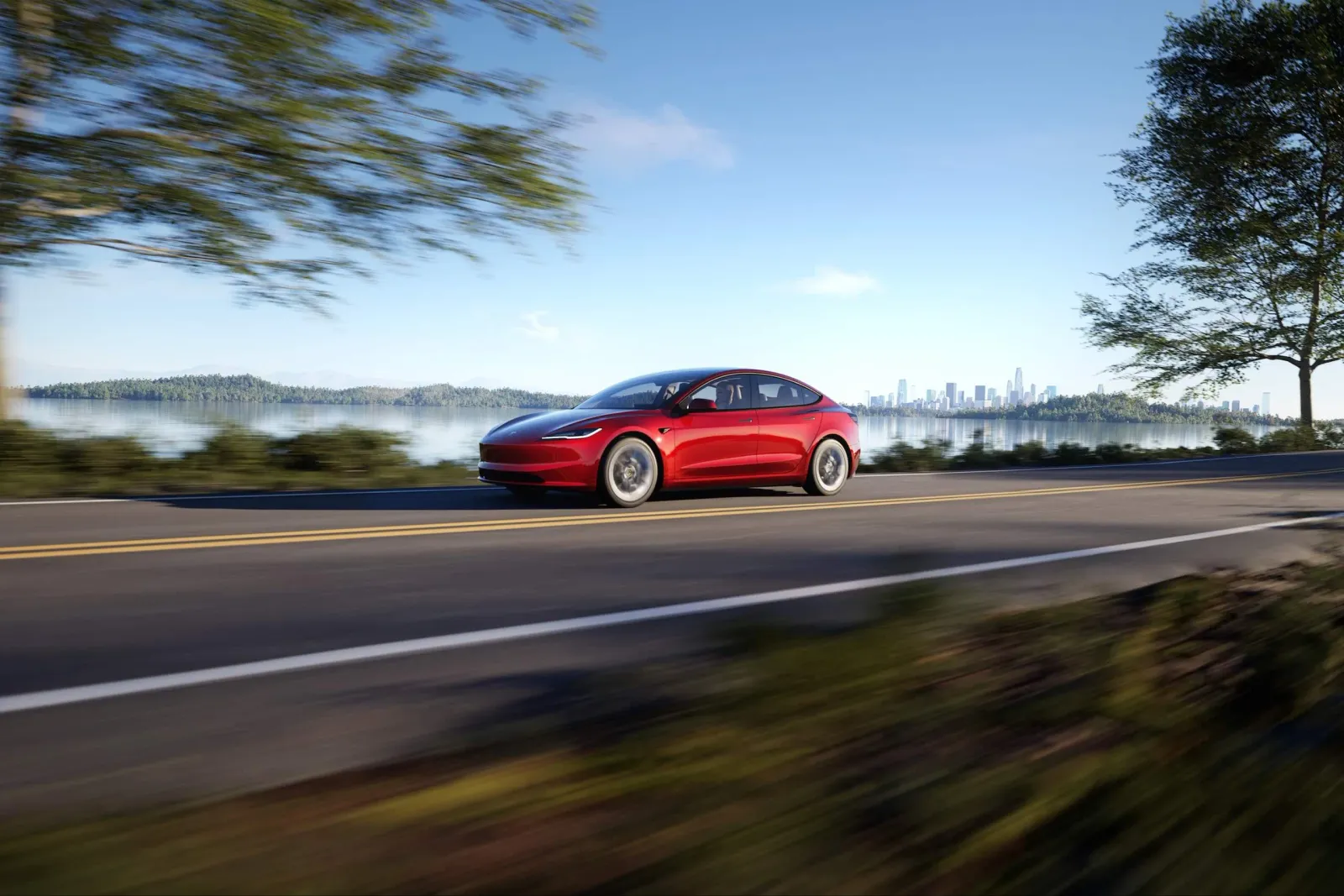
The Swedish company Carla analyzed 9,954 battery health tests conducted between 2022 and 2026 using AVILOO diagnostics. Comparing several versions of the Tesla Model 3 shows that the variant with a CATL LFP battery performs best after 100,000 km of driving. What’s interesting is that this refers to a cheaper, heavier battery that is typically considered budget-friendly.
Table of Contents
Show
Hide
Four Tesla Model 3s, four different results
The analysis compared four variants of the Model 3 with different suppliers and cell chemistries. All vehicles had accumulated at least 10,000 Swedish miles, which is equivalent to 100,000 km.
After this distance, the average battery health was as follows:
Battery version
Chemistry
Average health after 100,000 km
—
—
—:
CATL 60.5 kWh
LFP
93.3%
LG Energy Solution / LG Chem 78.8 kWh
NMC
91.5-92.8%
Panasonic 77.8 kWh
NCA
89.8%
Panasonic 52.4 kWh
NCA
88.2%
The best performer was thus CATL’s Chinese LFP battery pack, used in rear-wheel-drive Tesla Model 3 vehicles produced in Shanghai. The worst performer was the smaller Panasonic 52.4 kWh battery pack from vehicles built in the US.
The difference between the best and worst versions is about 5 percentage points. In the world of gasoline cars, this is a minor detail. But in the world of used electric vehicles, it represents a noticeable difference in actual range and vehicle value.
LFP once again proves it’s a “chemistry for years”
This isn’t the first indication that LFP ages more slowly than nickel-based cells. The new data is convenient because it compares essentially the same car, namely the Tesla Model 3, but with different batteries. This means we have fewer variables compared to comparing completely different models and manufacturers.
From the user’s perspective, the advantages of LFP stem from several features. Such batteries have a lower energy density, so they usually offer shorter range at the same weight. On the other hand, they are cheaper, more thermally stable, and better able to handle frequent charging to 100 percent.
And this brings us to practical considerations. Tesla recommends regular full charging in vehicles with LFP batteries because it also helps calibrate the readings. In models using nickel chemistry, the manufacturer typically suggests 80-90 percent for daily use, reserving 100 percent for longer trips. This difference in everyday usage can make a significant impact over the years.
The “more expensive” chemistry isn’t always better
Over the years, a simple assumption has developed around NCA and NMC cells: since they are more expensive and have higher energy density, they must also be “better.” But it depends on the criteria used.
If we look at performance, range, and pack weight, nickel still makes sense. That’s why such cells are used in the Long Range and Performance versions. However, if someone is looking at a car after 100,000 km or planning to keep it for a long time, data from Sweden shows the opposite: LFP performs better in terms of maintaining capacity.
This is also important for the used car market. Today, a used electric vehicle isn’t sold based on charging power figures from the catalog, but rather on battery condition. And if a cheaper chemistry retains more capacity over the years, it stops being just a “budget version.”
It’s not just Tesla. Kia and Hyundai are also at the top.
Categorizing the Model 3 by cell chemistry was only part of a larger comparison. Carla published a ranking of models with the highest average battery condition after 100,000 km.
At the top were:
Model
Average condition after 100,000 km
Kia e-Niro 64 kWh
97,25%
Hyundai Kona 64 kWh
97,18%
Kia EV6 77,4 kWh
95,95%
Volvo XC40 Recharge 69 kWh (CATL)
94,70%
Polestar 2 78 kWh (CATL)
94,35%
BMW i3 120 Ah
93,77%
Tesla Model 3 60,5 kWh (CATL LFP)
93,34%
This comparison needs to be read carefully, as different vehicles have varying batteries, temperature management strategies, and methods of reporting capacity. Therefore, it’s impossible to say that a vehicle with 97.2 percent performance is “that much better” than one with 93.3 percent in every scenario. But the trend is clear: most modern EVs retain over 90 percent of their capacity after 100,000 km, with drastic drops being more of an exception than the rule.
What exactly does AVILOO measure?
This is an important detail. The data doesn’t come from the gauge on the car’s dashboard but from AVILOO tests, which are external diagnostics for assessing the battery’s health. This matters because many cars only show drivers simplified data or fail to provide any meaningful reading of the battery’s condition at all.
Such a test isn’t, of course, an X-ray of the battery cells, but it offers a better reference point than guessing based on a drop in range indicated by the meter. That’s why data from the used car market is starting to be more interesting than manufacturers’ claims.
These results align with other large databases
The Swedish analysis isn’t isolated. Similar conclusions have appeared earlier in smaller comparisons, including tests of Model 3 vehicles with high mileage. There too, LFP batteries generally performed better than those using nickel.
Geotab, on the other hand, which analyzed fleet data from over 22,700 vehicles, calculated an average degradation rate of around 1.8 percent per year. This suggests that a traction battery can last up to about 20 years under normal use, longer than the car itself remains in the original owner’s hands.
Tesla has also long provided charts showing that the greatest drop in capacity occurs at the beginning of use, after which the curve levels off. The manufacturer previously stated that in Model 3 and Y Long Range vehicles, capacity loss after 200,000 miles is around 15 percent. Since these are the manufacturer’s figures, they should be viewed with caution, but they align well with the trend observed in independent measurements.
What this means for buyers of used Teslas
The simplest conclusion is that not every Tesla Model 3 ages in the same way. The logo on the hood alone doesn’t tell much about the car’s future condition. One needs to consider the model year, factory, battery pack capacity, and cell supplier.
If minimizing degradation over time is a priority, current data point to the RWD version with an LFP battery from CATL. If maximum range or performance is a priority, nickel-based batteries still have their advantages, but it’s hard to claim they are better in every aspect.
There is also another side to this. LFP batteries generally perform worse in cold weather and have lower energy density, so they aren’t the ideal solution. However, when it comes to durability, the answer becomes increasingly clear.
What interests me the most is that the market has reached a conclusion opposite to that of premium marketing a few years ago. A “better” battery isn’t necessarily the more expensive one with more flashy features in the catalog. Sometimes, a better battery is simply one that retains more capacity after 100,000 kilometers compared to competitors. If you’re buying a used EV, do you focus more on the battery chemistry these days or still mainly on range and charging speed?
Order your Tesla and take advantage of purchase bonuses using the referral link!