
Electric cars lose more value. This still doesn’t mean they cost more.
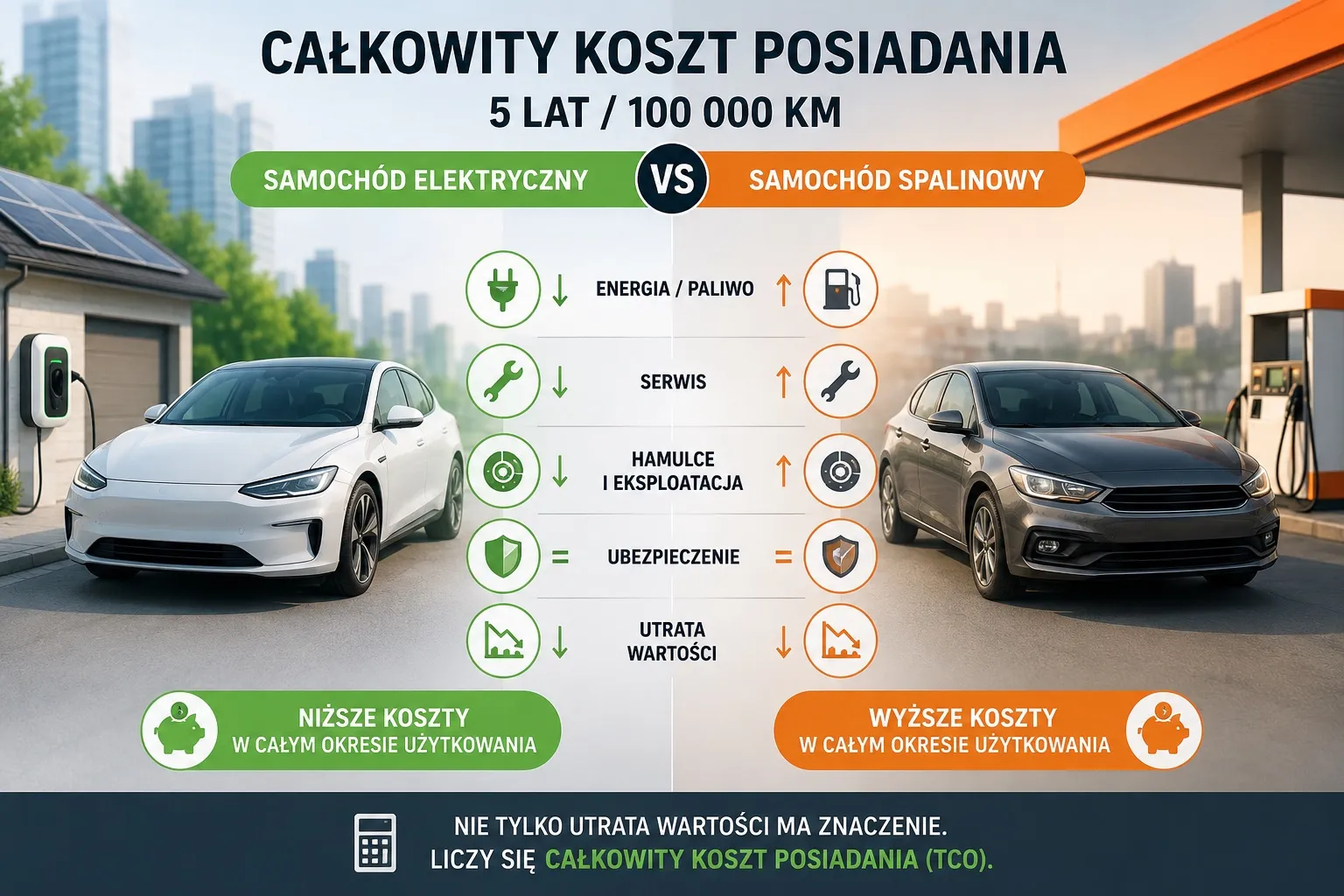
The depreciation of electric cars has become one of the main arguments against BEVs. The problem is that the loss in value alone shows only a small part of the overall cost. After 5 years and 100,000 km, the difference in fuel or energy costs can amount to tens of thousands of zlotys, significantly affecting the final figure.
Table of Contents
Show
Hide
TCO: the only meaningful starting point
If someone compares electric and gasoline cars solely based on purchase price or resale value, they are only seeing half the picture. In practice, what matters is TCO, or Total Cost of Ownership, which refers to the overall cost of owning a car.
In simplest terms, it looks like this:
TCO = purchase price – resale value + fuel/energy + maintenance + repairs + tires + insurance + other costs
That’s why the answer to whether an electric car is more expensive is: it depends. It depends on mileage, purchase price, resale value after years of use, charging method, and the specific model. A city hatchback and a large premium SUV can yield completely different results.
Fuel versus electricity. Here’s where it gets specific
Let’s assume the following: 5 years of use, 20,000 km per year, totaling 100,000 km.
Gas car:
7 l/100 km
Gas price:
7.00 PLN/l
Annual cost:
20,000 km x 7 l/100 km = 1400 l
1400 l x 7.00 PLN = 9800 PLN per year
Over 5 years:
49,000 PLN
Electric car:
18 kWh/100 km
At a charging cost of 1.21 PLN/kWh when charged only at home:
20,000 km x 18 kWh/100 km = 3600 kWh per year
3600 x 1.21 PLN = 4356 PLN per year
Over 5 years:
21,780 PLN
The difference compared to gasoline is 27,220 PLN. This is no longer a trivial amount.
Three EV charging options
Public charging prices can vary significantly depending on the provider, location, charger capacity, and tariff. Therefore, 2.10 PLN/kWh should be considered a model assumption for calculations rather than an established market reality.
EV charging option
Average energy cost
Annual cost
Cost over 5 years
Savings vs. gasoline
100% home charging
1.21 PLN/kWh
4,356 PLN
21,780 PLN
27,220 PLN
80% home / 20% public charging
1.388 PLN/kWh
about 4,997 PLN
about 24,986 PLN
about 24,014 PLN
50% home / 50% public charging
1.655 PLN/kWh
about 5,958 PLN
about 29,790 PLN
about 19,210 PLN
This is where the most practical point comes in. EVs perform best when you charge them a lot at home. If you mainly rely on public chargers, the cost advantage may still be significant, but it decreases over time.
Value loss. Yes, EVs can suffer more in terms of value loss.
Electric cars today can lose value faster than comparable gasoline vehicles. This isn’t a myth. It’s just important to understand where it comes from.
Firstly, technology is advancing very rapidly. Newer BEVs come with larger batteries, better efficiency, faster charging, and more sophisticated onboard systems. A car from 4-5 years ago might suddenly seem older than a gasoline car of the same age.
Secondly, manufacturers can significantly cut the prices of new EVs. Tesla demonstrated this mechanism clearly, but it’s not unique to them. If a new car’s price drops by tens of thousands of zlotys, used cars also see a corresponding reduction in price.
Thirdly, it’s important to distinguish between the listed price and the actual purchase price. If someone buys an EV with a large discount and then calculates the depreciation based on the listed price, the result will be misleading. TCO takes into account how much you actually paid.
Batteries add another factor. This is the element that most affects buyers of used EVs. In practice, what matters are: battery warranty, actual degradation, SOH, mileage, and charging history. The myth that a battery is only good for disposal after 8 years is simply unfounded. On the other hand, a battery diagnosis makes sense before purchasing a used EV. Just like with gasoline cars, a thorough inspection of the engine and transmission is also necessary.
A simple example. The depreciation alone gives a misleading picture.
Let’s consider this scenario:
Simulation
EV:
purchase price 200,000 PLN
value after 5 years 100,000 PLN
depreciation 100,000 PLN
Gas car:
purchase price 180,000 PLN
value after 5 years 110,000 PLN
depreciation 70,000 PLN
At first glance, the gas car seems to have an advantage of 30,000 PLN. And that’s usually where the online argument ends.
But when energy and fuel costs are taken into account, the picture changes:
The EV saves between 19,210 and 27,220 PLN over 5 years, depending on the charging method.
If lower costs for ongoing maintenance are added, the 30,000 zł difference in value loss can become quite significant. Sometimes it disappears, sometimes it doesn’t. It depends on the specific vehicle. But that’s exactly why value loss alone isn’t enough.
Breakeven Point
Under our assumptions, an electric vehicle could lose more in value by:
27,220 zł when charged only at home,
about 24,014 zł with an 80/20 charging mix,
about 19,210 zł with a 50/50 charging mix,
and still have similar costs to gasoline, even without considering potential maintenance savings.
This is the highest figure in the entire comparison.
Maintenance and Operating Costs. EVs aren’t maintenance-free, but they usually have fewer pitfalls.
In a gasoline car, costs can include things like engine oil, filters, spark plugs, timing belt, clutch, differential, transmission, DPF, EGR, AdBlue, turbocharger, or exhaust system. Of course, not every car has all these components, and not every one experiences the same issues.
EVs also require maintenance. This includes cabin filters, brake fluid, air conditioning, suspension, steering system, tires, electronics, battery cooling system, and the traction battery itself. The advantage is that a simpler powertrain usually reduces the number of expensive components typical of gasoline cars.
Regeneration and Brakes
Regeneration can significantly reduce wear on brake pads and discs. But no, EV brakes aren’t permanent. If the car is driven little or mainly in urban areas, the problem can sometimes be corrosion of the discs rather than wear.
Tires. Here, EVs may have an edge
Many electric vehicles are heavier, have high torque, and large wheels. This can increase tire costs and wear rates. It’s not an absolute rule for every model, but it needs to be taken seriously with SUVs and high-powered cars.
Insurance
Compulsory and voluntary insurance can complicate cost calculations. There’s no rule that EVs are always more or less expensive to insure. Factors include the car’s value, parts costs, driver profile, coverage level, and the specific insurer’s policies.
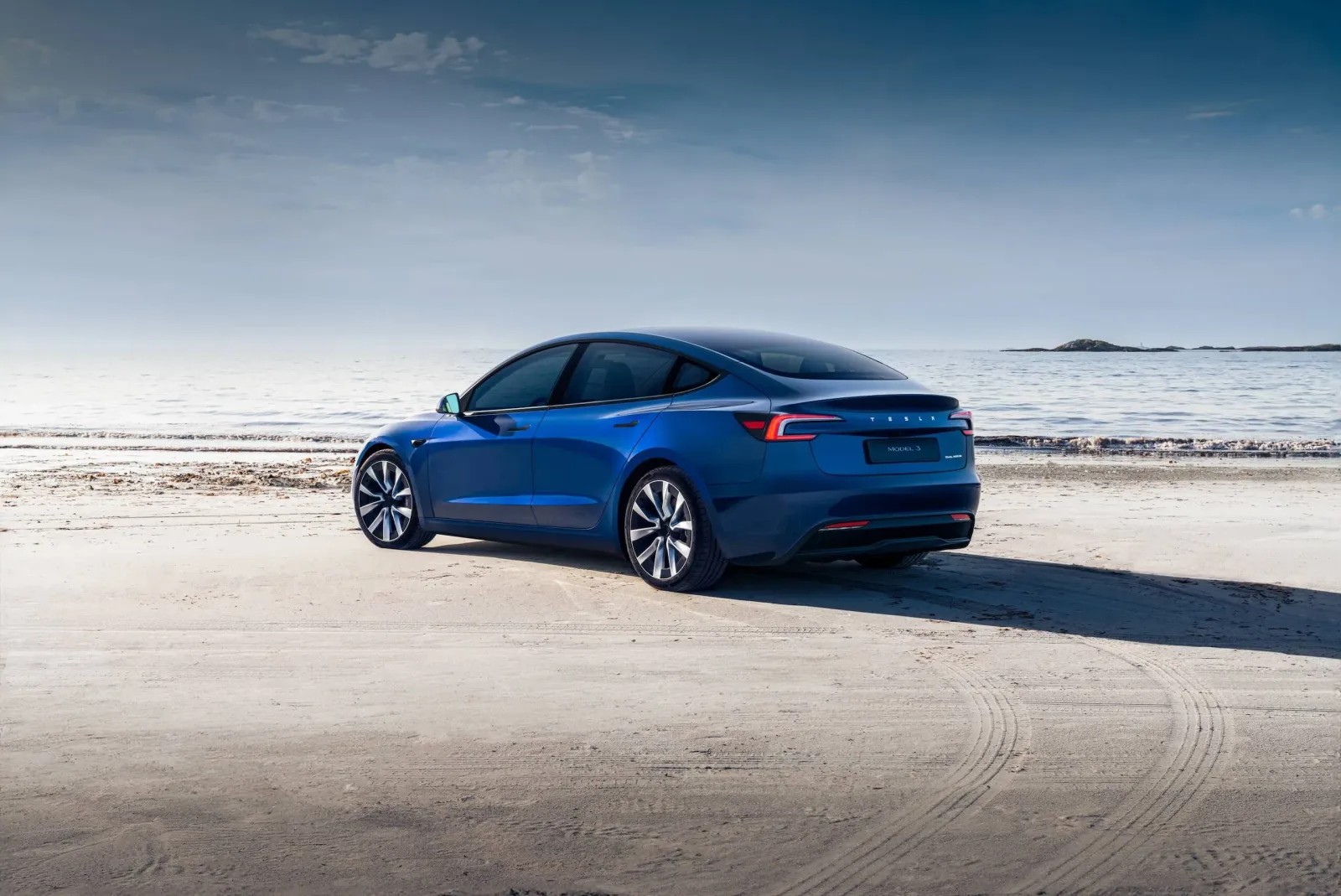
What is the actual cost of ownership? Tesla Model 3 LR vs Volkswagen Golf 1.5 TSI
Cost over 5 years
Tesla Model 3 Long Range
Volkswagen Golf 1.5 TSI
Mileage
100,000 km
100,000 km
Energy/fuel
about 24,600 PLN
Approximately 70,800 PLN
Service and tires
Approximately 6,600 PLN
Approximately 15,600 PLN
Insurance
Approximately 15,600 PLN
Approximately 13,800 PLN
Amortization/value loss
Approximately 55,200 PLN
Approximately 58,800 PLN
Total ownership cost
Approximately 110,400 PLN
Approximately 159,000 PLN
Average monthly cost
Approximately 1,840 PLN
Approximately 2,650 PLN
Cost per km
Approximately 1.10 PLN
Approximately 1.59 PLN
Data from TCO calculation by CzymPojade. Values are rounded. TCO includes amortization, energy/fuel, insurance, service, and tires. This is an example for specific models, not a universal calculation for all electric and gasoline vehicles.
Interestingly, in this specific comparison, depreciation is not the biggest difference between the cars. Tesla loses approximately 55,200 PLN according to the calculations, while the Golf loses around 58,800 PLN. The biggest differences appear instead in energy/fuel costs, as well as maintenance and tires.
The first owner and the second owner have different considerations
This is often overlooked. If a new EV costs 200,000 PLN and is worth 100,000 PLN after a few years, the first owner bears the largest portion of the value loss.
The second owner enters the market at a much lower entry price and still benefits from potentially lower energy costs and simpler maintenance. That’s why BEUC studies on the total cost of ownership show that the situation can be more favorable not only for the first owner but also for subsequent owners, depending on the segment and market. This doesn’t mean every used EV is a good deal. It simply means that the depreciation for one owner can be an advantage for the next.
3 years, 5 years, 8 years. Mileage plays a role
With 3 years, the purchase price and depreciation are the most important factors. If the manufacturer has just lowered the prices of new EVs, it can significantly impact the first owner’s financial situation.
At 5 years old, fuel or energy costs, maintenance, and mileage become increasingly important. This is where the advantage of cheaper home charging starts to show.
At 8 years old, the proportion of costs related to energy, maintenance, and repairs becomes even larger. On the other hand, the condition of the specific vehicle matters more, including the battery’s health or the components of the internal combustion engine.
10,000, 20,000, and 30,000 km per year
In our model, the difference in energy and fuel costs increases as mileage rises.
For an EV charged only at home:
Annual mileage
Annual gasoline cost
Annual EV cost
Annual difference
10,000 km
4900 PLN
2178 PLN
2722 PLN
20,000 km
9800 PLN
4356 PLN
5444 PLN
30,000 km
14,700 PLN
6534 PLN
8166 PLN
The higher the mileage, the harder it is to ignore fuel costs. And it becomes even more pointless to judge a car’s affordability based solely on its resale price. This isn’t some black magic — anyone can calculate it themselves using their own example.
Gasoline cars also lose value. This depends on mileage, age, service history, number of owners, introduction of new generations, emission standards, and changes in customer preferences. The real question is rather: will an ordinary gasoline car be just as attractive on the used market in 5-8 years as it is today? There’s no clear, honest answer to this.
Don’t just ask how much a car will lose in value. Ask how much it will actually cost you throughout its entire lifespan. When calculating TCO, do you mainly consider the purchase price, monthly payment, fuel cost, or resale value?
Information sources:
IEA – International Energy Agency
IEA – Difference in total cost of ownership between BEV and ICE cars
IEA – Global EV Outlook 2026
IEA – Trends in electric car affordability
BEUC – European Consumer Organisation
BEUC – Cost of zero-emissions cars in Europe
BEUC – Electric cars are a good deal for consumers
Ayvens
Ayvens – Car Cost Index 2026
Ayvens – The difference in costs between an EV and an ICE car
URE – Urząd Regulacji Energetyki
URE – Average price of electricity for households
URE – Prices and indicators