
Russians snap up Chinese EVs as Ukrainian attacks make fuel scarce
EV Engineering News
Posted October 12, 2026 by Charles Morris & filed under Newswire, The Vehicles.
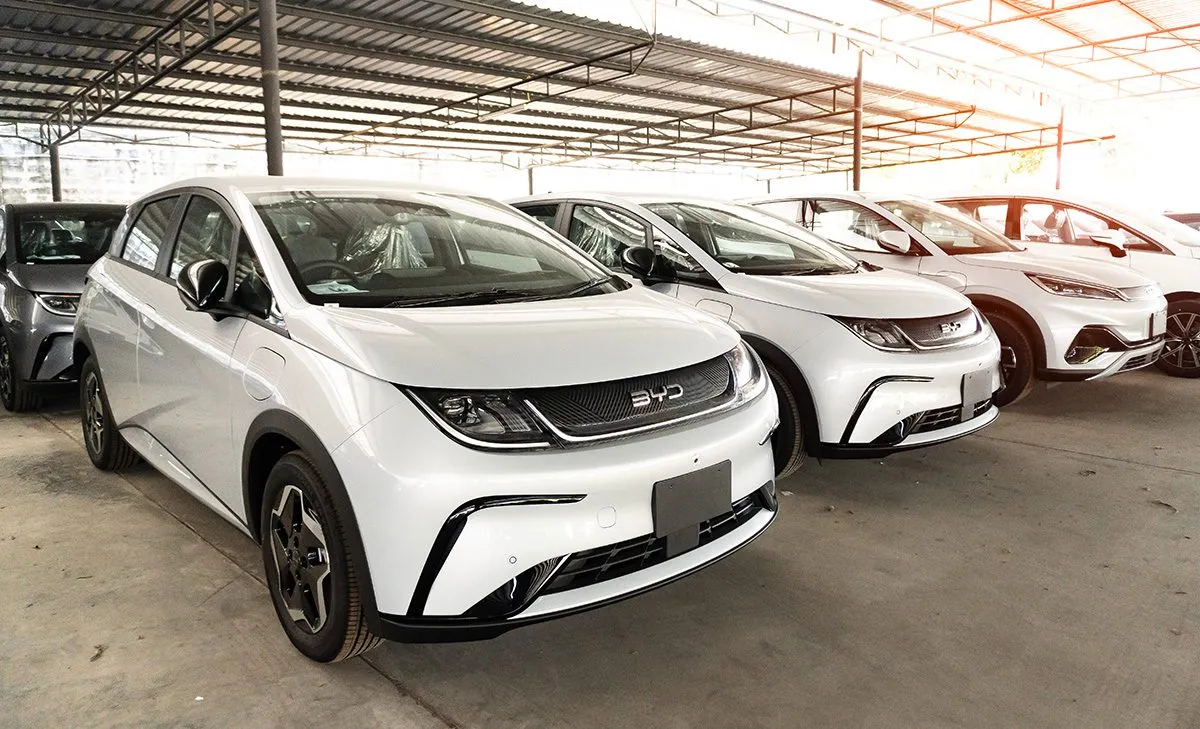
The front lines of electrification have spread to some seemingly-unlikely parts of the world, for various reasons. In Russia, the country’s war on Ukraine has resulted in major disruptions to the supply of refined oil products, boosting the demand for EVs. And, as elsewhere in the world, it’s mostly Chinese automakers that are meeting that demand.
The New York Times reports that the number of electrified vehicles (including hybrids), sold in Russia grew from 43,000 in the January-to-August period of 2025 to more than 83,000 over the same period this year, according to the Russian Ministry of Industry and Trade.
Tthe share of plug-in vehicles (EVs and PHEVs) recently reached 11.5 percent of the Russian car market, up from about 5 percent at the beginning of the year, according to auto research agency Avtostat. The EV market share in Russia is now slightly higher than in the US—but a mere fraction of China’s 45 percent.
Russian auto industry expert Sergei Tselikov told the Times that in July, as Ukrainian drone strikes against oil refineries left drivers across the country waiting for hours at gas stations, he bought a Chinese electric hatchback.
“I tried to fill up one of my cars and drove around to five nearby gas stations, but they had only diesel or lower-grade petrol,” he said.
To try to address the shortages, the government is allowing the sale of lower-grade gasoline and diesel—which are not healthy nourishment for cars. The manager of a Moscow repair shop told the Times that he had recently serviced 15 vehicles with clogged diesel soot filters, a problem caused by the cheap fuel.
Mr, Tselikov is not the only one who has seen the electric light. As the fuel crisis continues, EVs are selling out at dealerships, and online listings for used EVs are scarce.
At a huge dealership complex near Moscow, a manager at Evolute, a brand of Russian-assembled electric vehicles based on Chinese designs, said there was no inventory left on his lot. The complex houses more than 40 dealerships, most of which used to sell brands from the West, Japan and South Korea. When the Times visited, they counted 25 Chinese showrooms.
Lines are starting to appear at public charging stations—but shorter ones than seen at gas stations.
The Russian government has been interested in promoting EVs for over a decade, but actual adoption has been slow until now. EVs are generally exempted from transport tax and in Moscow and other big cities, from parking fees. Russian-made EVs are eligible for government subsidies.
In 2015, the government decreed that all gas stations must be equipped with public EV chargers by November 2016. That plainly didn’t happen—the Times reports that the number of public charging stations grew from around 1,500 in 2022 to 8,000 this year.
Moscow began replacing diesel buses with electric buses in 2018. In 2021, the city announced plans to electrify its entire fleet by 2032.
Source: New York Times
Create Account. Already Registered? Log In
Virtual Conference on EV Engineering: Free to Attend
Don't miss our next Virtual Conference on September 14-17, 2026.
Register for the free webinar sessions below to reserve your spot and watch them live or on demand.
LOAD MORE SESSIONS