
First drive of the Range Rover Electric over rough terrain in Gaydon
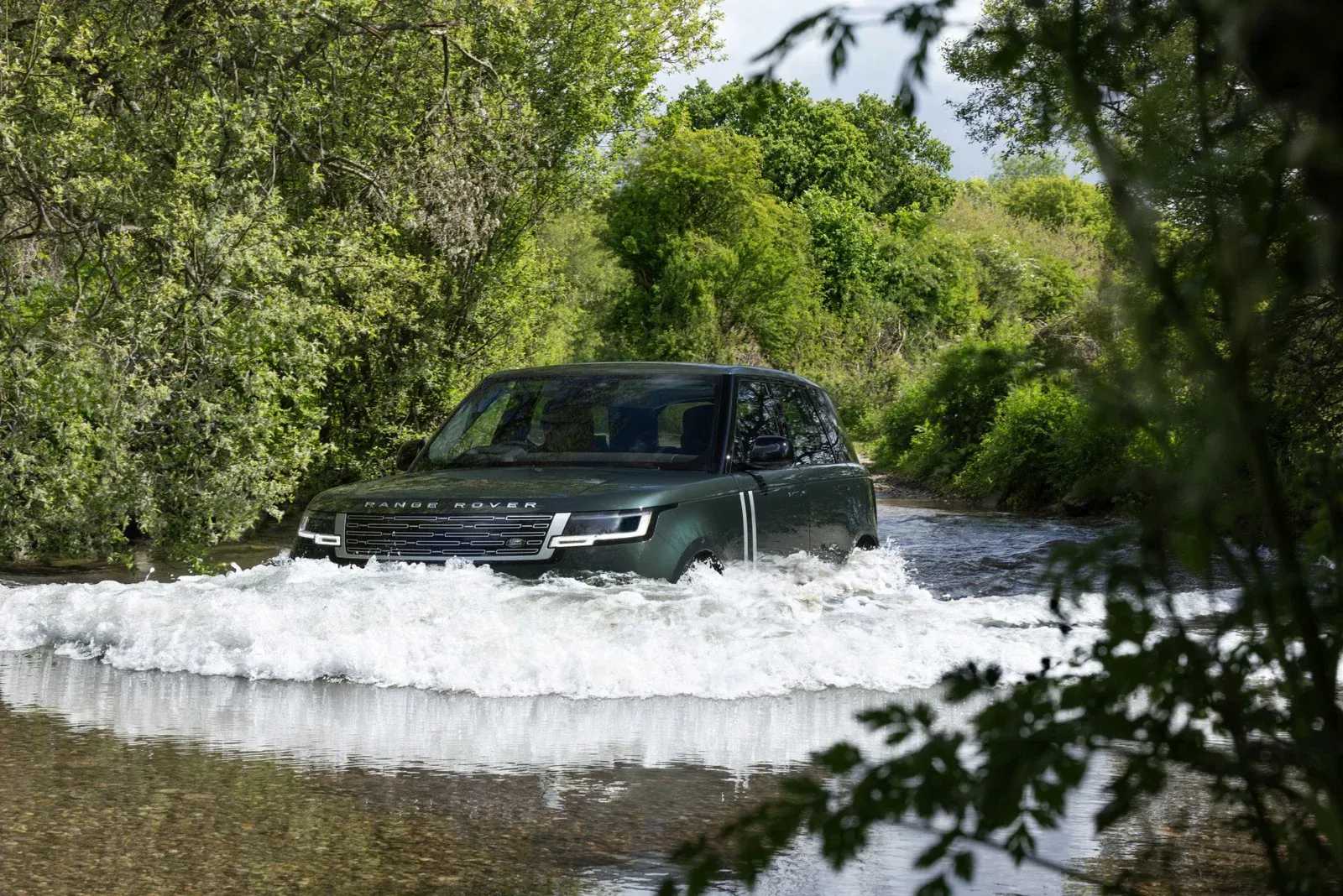
How does the first all-electric Range Rover drive? We were able to explore this question at Jaguar Land Rover’s (JLR) internal test facility in Gaydon, where a Range Rover Electric was available for our first drive. It wasn’t a full-scale test yet, as time behind the wheel was too short for that. Nevertheless, it provided a solid first impression of how this flagship model translates its approximately 404 kW (550 hp) system power, 850 Nm of torque, and 118.5 kWh battery capacity into driving experience. We’ve compiled all the technical details in a detailed report; here, we focus on our personal experiences.
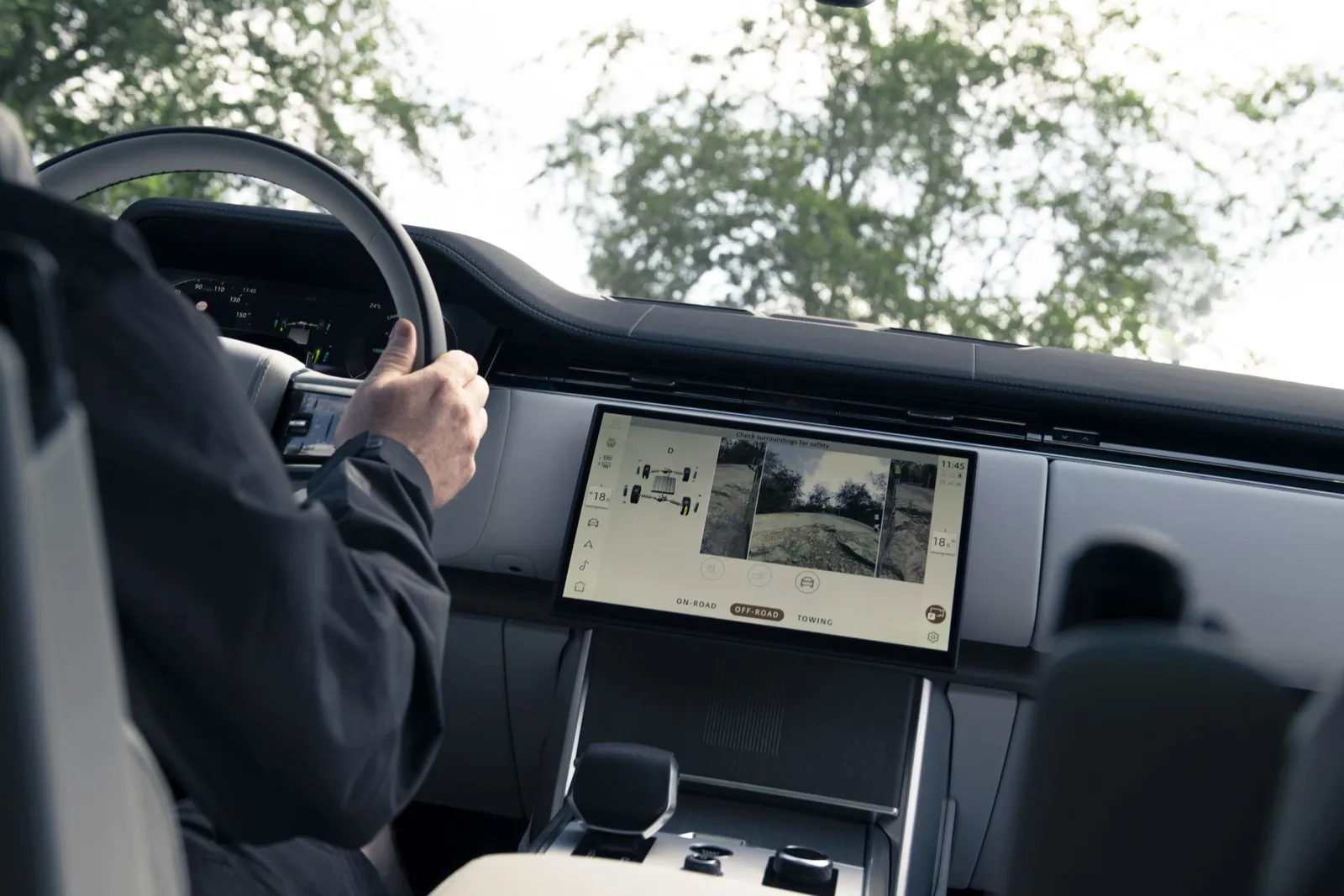
The entry experience feels familiar, and that’s intentional. The elevated seating position provides the usual excellent overview, enhanced by crystal-clear camera views that can be adjusted according to different situations and also keep side obstacles in sight. A minor detail that becomes important off-road: according to a local official, the camera lenses are coated in such a way that neither dirt nor sand or mud can stick to them. The menu matches the car’s premium standards—it appears high-quality, responds smoothly, and is easy to navigate without much searching, such as when adjusting regenerative braking or activating battery pre-conditioning with just two clicks.
As soon as you start driving, there’s a quick sense of being on the road inside a kind of protective cocoon. Road noise is largely kept out, and the quiet operation remains impressive even on varied surfaces. Even at higher speeds or on rough terrain, the noise level stays pleasantly low. The throttle response is finely adjustable, preventing the vehicle from lurching forward suddenly. What might seem like a minor detail on paper makes a real difference in practice when precision is required off paved roads.
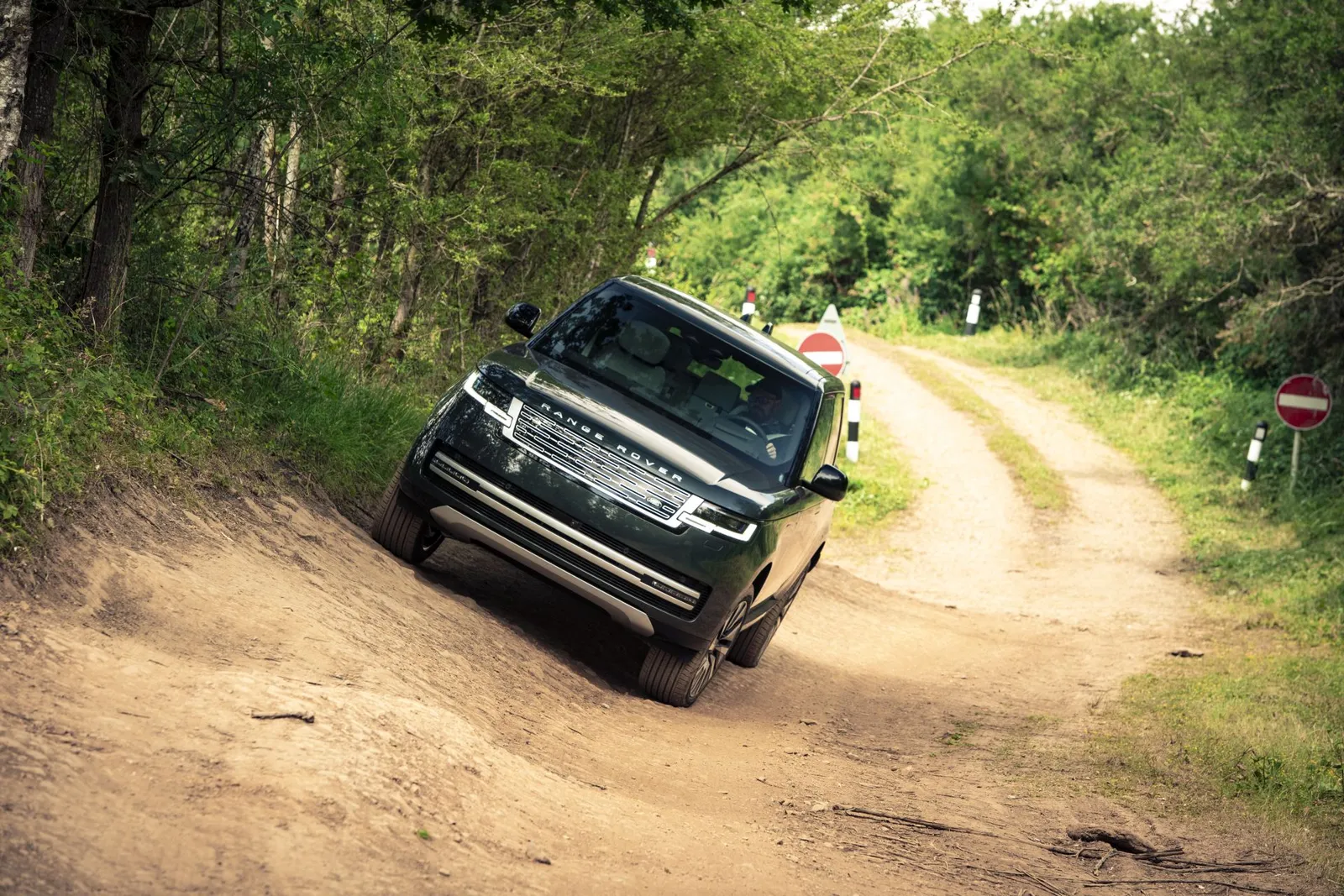
The steering also contributes to this impression. Even the slightest movements of the wheel were detected by the Range Rover Electric on the test track and transmitted smoothly to the tires, ensuring a constant sense of control. The low center of gravity brought about by the battery in the undercarriage further enhances stability, especially when driving on uneven terrain. In such situations, a driver might already imagine themselves falling over, while the car shows no sign of moving in that direction.
Where others struggle, the Electric remains calm
On the off-road course, we had to climb rocky slopes, descend again, and navigate various obstacles. The Electric handles this with ease, thanks to its advanced technology: the integrated torque management detects wheel slip within 50 milliseconds and adjusts both motors in one to two milliseconds, about 100 times faster than conventional traction controls. There’s almost no noticeable effect in the car, and that’s exactly the point. The electric vehicle no longer needs a lower gear ratio, as the Rock Crawl mode functions effectively at just one speed setting thanks to its high torque.
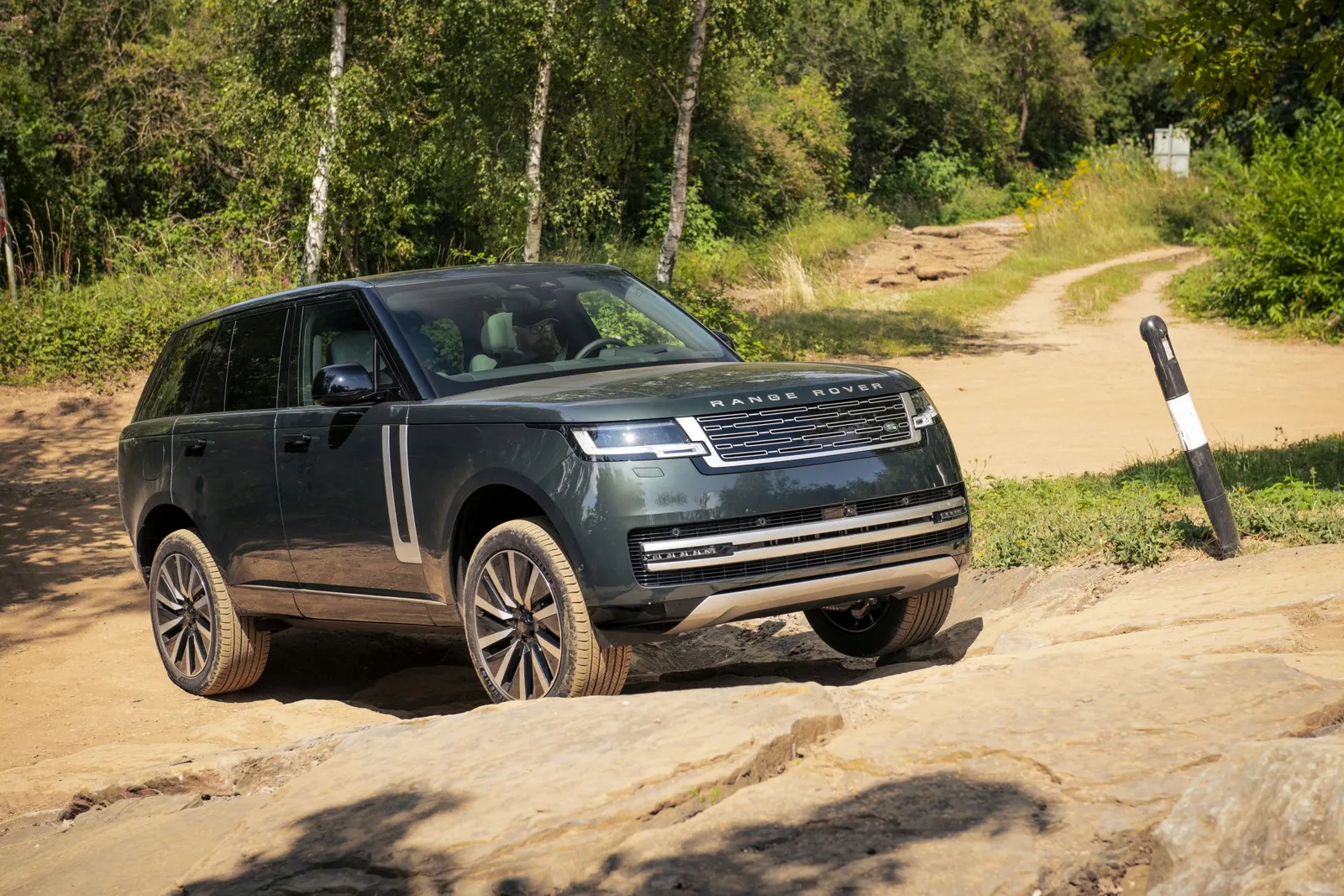
The downhill drive becomes truly impressive when Hill Descent Control and Single-Pedal Mode are combined, as Range Rover calls the driving method with one pedal that is otherwise known as One-Pedal-Drive. The electric vehicle then takes over almost entirely, braking at up to 0.2 g until it comes to a stop, and can be controlled as it descends the slope using only the throttle pedal.
The recovery levels of Light and Standard, which can be adjusted via the menu, are distinctly different from one another. The single-pedal mode is activated through the gear selector lever, which stands out even more clearly. There is no shortage of driving modes either: on roads, Eco, Normal, and Dynamic are available, while in off-road conditions the options range from Grass, Gravel, and Snow to Mud and Ruts, Sand, and Rock Crawl, up to the Wade mode — which can be selected manually or left to the Auto mode, which identifies the appropriate terrain on its own.
A local representative summed it up in a simple formula: the Range Rover Electric is easier to drive in most situations than its gasoline-powered counterparts, allowing one to visit more places. This is something that Range Rover drivers appreciate greatly.
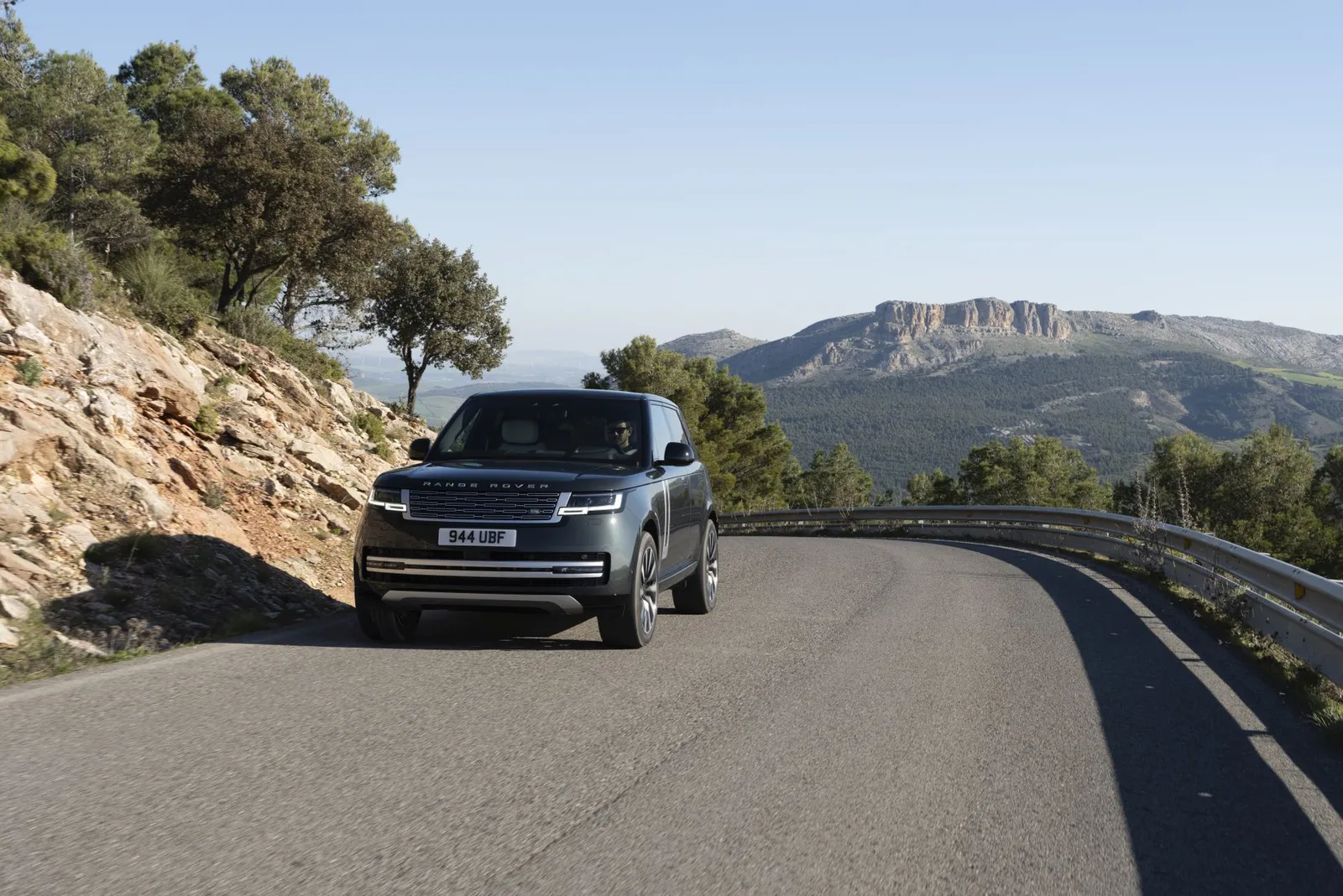
After driving around the test track, it’s hard to disagree with this. Especially in sand, the electric vehicle is supposed to showcase its strengths, as there’s consistent power delivery at all times without gear shifts. However, the test track in Gaydon failed to provide us with evidence of this due to a lack of suitable sections.
Even after this brief test, many questions remain: daily driving consumption, long-distance performance, and real-world charging behavior (the specs claim up to 350 kW charging power, 80% charge in 22 minutes, and a WLTP range of 600 kilometers), not to mention the price, which Range Rover plans to announce later. The first impression is clear, however: a Range Rover that is quieter, more responsive, and even more capable in off-road conditions than its gasoline counterparts. Driving it electrically doesn’t feel like a transition here; rather, it feels like completion.
Disclaimer: Range Rover invited us to Gaydon, UK, to experience the new strategy and the brand’s electric flagship, the Range Rover Electric. This does not affect our honest opinions expressed here.