
Planning for EV charging site success: cable pulling considerations and CIC alternatives
By Kevin Wahl, Lead Consulting Engineer, CableTechSupport™ Services, Southwire Company.
In a previous article, we explored how Cable in Conduit (CIC) can help simplify installations by combining cable and conduit into a single factory-assembled system. However, traditional cable pulling still remains the most common installation method used across the industry today. Understanding the benefits, challenges, and planning considerations associated with cable pulling can help contractors select the best installation approach for their next project.
Cable Pulling
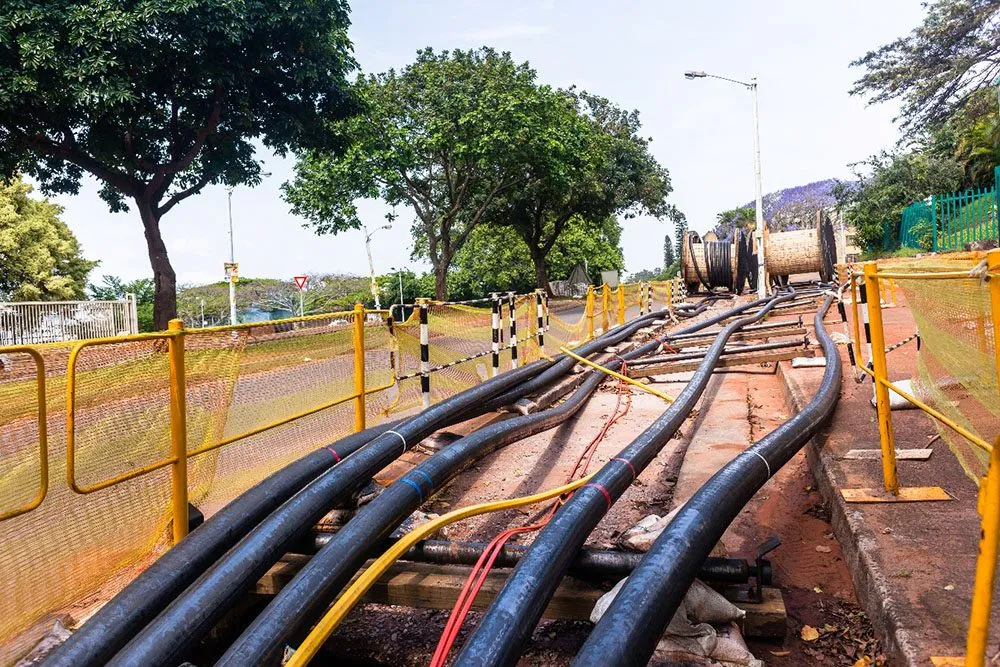
Cable pulling is often performed when installing large feeder cables through long or complex routing paths. Using pull ropes and mechanical tuggers, cables can be installed through conduit systems, cable trays, ducts, trenches, and other designated pathways. This practice is preferred by many installers because of its flexibility, efficiency, and ability to accommodate a wide range of cable types in various installation environments.
Despite its prevalence in the industry, cable pulling can present several technical challenges that can impact installation quality and long-term system reliability. Excessive pulling tension, inadequate lubrication, improper bend radii, or poor handling practices can damage the cable, compromise the conductors, or create small defects that may not become apparent until after the system is energized. These risks are often amplified on large projects where cables must navigate multiple bends, vertical risers, or extended underground conduit systems. To help mitigate these issues, installers frequently use cable rollers and corner sheaves along the cable route. Rollers can reduce friction by supporting the cable and preventing it from dragging across rough or sharp surfaces, while properly sized corner sheaves distribute forces around bends and help minimize sidewall pressure. By controlling the mechanical stresses applied during installation, these devices can significantly reduce the risk of jacket abrasion, insulation damage, or conductor deformation/breakage.
In addition to technical challenges, cable pulling introduces important safety considerations for installation crews. The high tensile forces involved in moving large power cables can create hazardous environments where potential personal harm, injury, or death can occur if proper pulling procedures are not followed. Workers may be required to install cables in confined spaces, trenches, underground vaults, elevated cable tray systems, or active construction zones where maintaining situational awareness is critical. Careful planning, including the use of cable pull calculations, can help ensure maximum tension limits are not exceeded. These calculations can also assist with route optimization and equipment selection to support a safe and successful installation. By leveraging tension monitoring devices along with proper route planning including the strategic placement of rollers and sheaves, contractors can protect a cable’s integrity, improve jobsite safety, and achieve a successful cable pulling installation.
Cable In Conduit
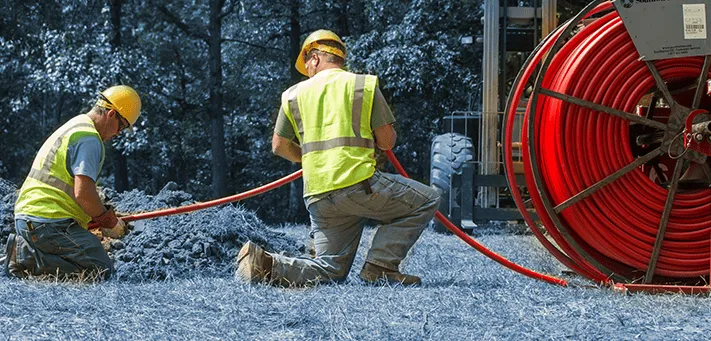
While cable pulling remains a proven and widely accepted installation technique, alternative approaches have emerged that can help reduce or eliminate many of the challenges associated with traditional cable pulls. As electrical infrastructure projects continue to grow in scale and complexity, contractors and engineers are increasingly seeking installation methods that improve productivity without compromising long-term system reliability. Cable in Conduit (CIC) addresses both challenges by combining cable and conduit into a single factory-assembled system, helping streamline underground installations while reducing labor requirements, project risk, and installation costs.
Because the conductors are preinstalled within the conduit during manufacturing, CIC arrives on-site ready for placement. This eliminates the need for separate cable pulling operations, allowing contractors to install both the raceway and conductors simultaneously. The result is a faster, more predictable installation process that can shorten schedules, reduce skilled labor demands, and help projects stay on track in today’s constrained labor environment.
Beyond installation efficiency, CIC can also improve long-term system reliability and job-site safety. Traditional cable pulls introduce the potential for cable damage caused by excessive pulling tension, debris, or abrasion. CIC eliminates this risk by removing the field cable pulling process entirely, preserving the cable’s integrity. At the same time, fewer crew members are typically required on-site, reducing worker exposure to hazards associated with cable pulling equipment, ropes, and the related tensioning systems. The result is a quicker and safer installation process with a lower likelihood of costly troubleshooting, long-term maintenance, and potential service interruptions that can occur later in life.
Another advantage of CIC is its compatibility with trenchless installation methods such as horizontal directional boring, allowing contractors to install underground power systems with minimal surface disruption. This can help avoid costly pavement removal & rework, traffic impacts, and other unforeseen project delays that often accompany traditional open trench installation. As power requirements continue to increase across applications such as EV charging, data centers, utility infrastructure, and industrial facilities, CIC remains a practical solution for accelerating installations while controlling overall project costs. To support these growing demands, Southwire’s CIC portfolio is offered in various sizes up to 4 inches. These products are designed to accommodate larger power conductors used in higher-amperage applications, giving engineers and contractors additional flexibility when deploying the next generation of power infrastructure.
Available services
Contractors planning a new installation have access to several free resources and calculators that can help improve installation planning and decisions. Tools such as the Cable Pulling Calculator can help evaluate pulling tensions and sidewall pressures, while the Voltage Drop Calculator assists with conductor sizing and circuit performance. The Conduit Fill Calculator helps verify compliance with conduit fill requirements and identify jam probability. As aluminum conductors continue to gain popularity as a cost-effective alternative to copper, the Cu-Al-Cu Conductor Conversion Calculator provides guidance on ampacity and sizing when substituting materials. By leveraging these freely available resources during the planning phase, contractors can make more informed decisions, improve installation efficiency, and help minimize costly field changes.
For projects that require a deeper level of analysis and coordination, Southwire also offers dedicated Construction Planning Services (CPS) to help optimize installations from design through execution. These services offer electrical contractors a more advanced approach to cable pulling installations by bringing pre-planning, coordination, and technical analysis into the process before work begins in the field. The CPS team helps bridge the gap between engineering drawings and real-world installation through Building Information Modeling (BIM) and Virtual Design and Construction (VDC). Their services also include design assistance, project management support, and cable pull calculations to help streamline complex projects. This added level of planning can help contractors reduce material handling, improve safety, increase productivity, and enhance quality control on complex installations. Additionally, CPS works with contractors to evaluate site-specific conditions that can significantly influence installation success, including route constraints, manhole and vault placement, elevation changes, congestion from other utilities, equipment access limitations, and available staging areas for reels and pulling equipment. By addressing these factors early in the project lifecycle, contractors can better anticipate challenges and develop practical installation strategies before pull crews arrive on site.
For longer feeder runs and complex duct bank installations, cable pulling success depends on understanding route conditions, equipment requirements, and the forces acting on the cable during installation. CPS pull calculation reports provide a summary and detailed analysis of each run, including route details, cable specs, max pull tension, max sidewall pressure, bend radius, angle considerations, and more. These services can help evaluate alternate routing options, identify opportunities to simplify installations, and assess how site-specific conditions may affect the overall installation. By identifying potential issues early, CPS can help improve installation planning, reduce unnecessary field changes, and, in some cases, uncover opportunities such as eliminating splices, reducing manholes, minimizing material handling, and lowering overall project costs.
Whether utilizing traditional cable pulling methods or leveraging alternatives such as CIC, successful projects depend on proper planning and execution. From free calculators to more advanced Construction Planning Services, contractors have access to resources that can help improve installation efficiency, enhance safety, and streamline installations. By evaluating installation considerations early in the project lifecycle, project teams can reduce field challenges, improve productivity, and help ensure a successful installation.
Create Account. Already Registered? Log In
Virtual Conference on EV Engineering: Free to Attend
Don't miss our next Virtual Conference on September 14-17, 2026.
Register for the free webinar sessions below to reserve your spot and watch them live or on demand.
LOAD MORE SESSIONS