
Chevrolet Bolt EV Review (2017–2021): A Scandalous Debut and Popularity in Ukraine

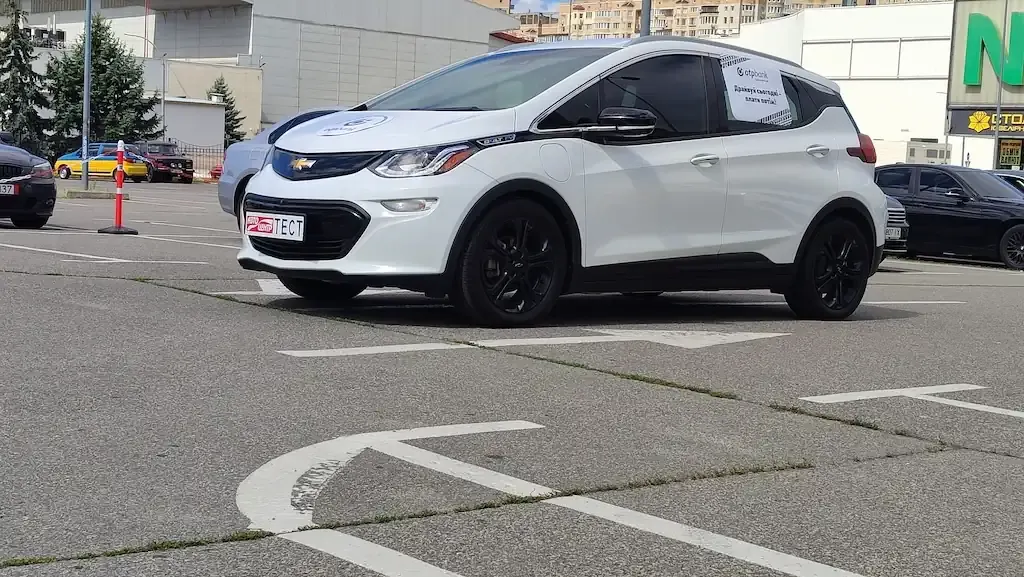
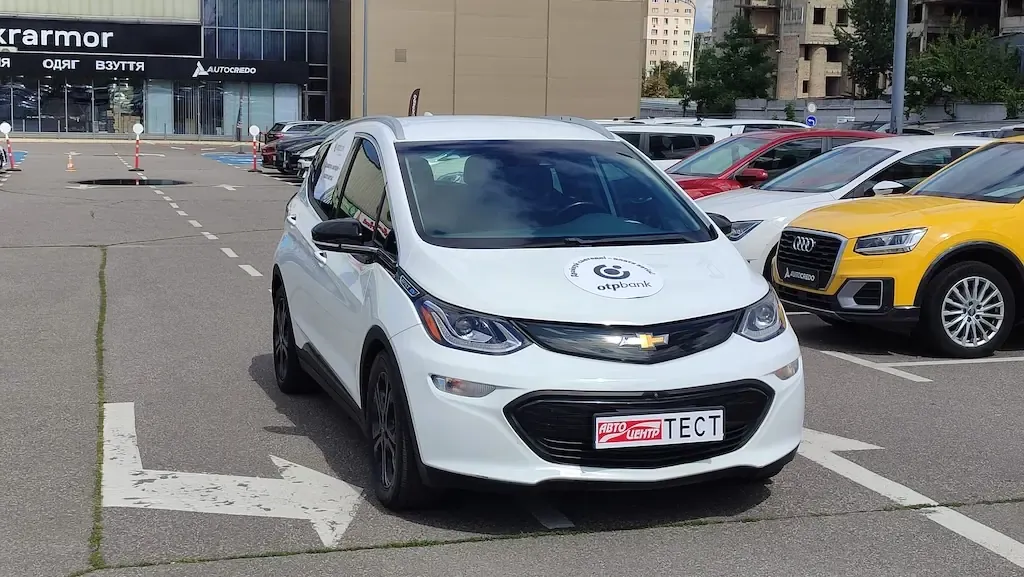

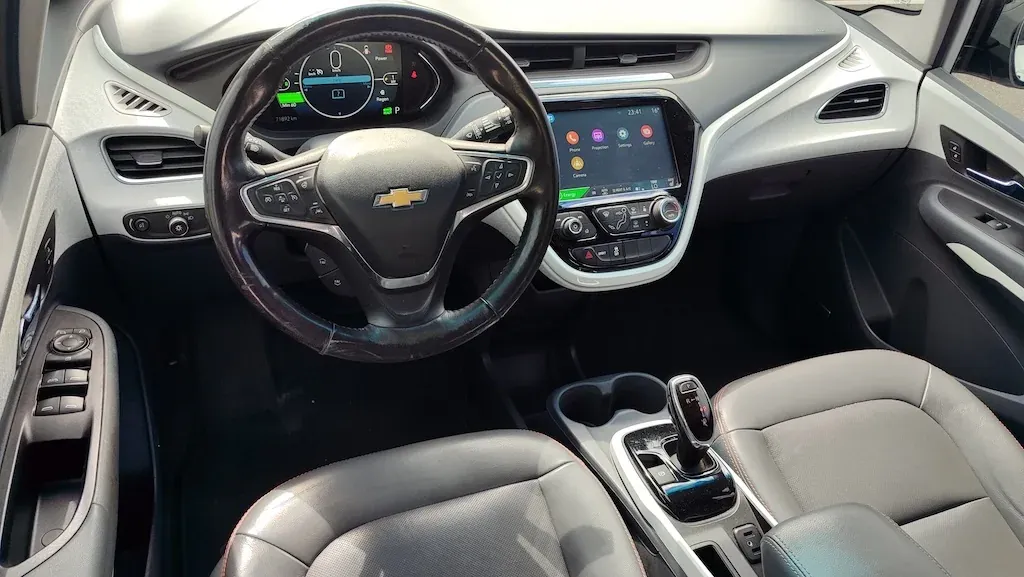
The Chevrolet Bolt EV is a vehicle that once changed perceptions of affordable electric cars even before Tesla dominated this segment in Ukraine. It’s compact but has a decent range. However, there is one aspect that scares many people. The Chevrolet Bolt became the subject of one of the largest recalls in automotive history due to cases of fire in its traction batteries. Does this mean it’s better to avoid buying it? Or on the contrary, is the Bolt more interesting today than when it was new? Let’s find out. https://youtu.be/U6sXay6sIWA
The history of the Chevrolet Bolt EV model
The Bolt EV debuted at the end of 2016 as a 2017 model and was produced until 2023.
At that time, it was one of the first affordable electric cars with a range of nearly 400 km.
The main competitors were:
Nissan Leaf;
BMW i3;
Hyundai Ioniq Electric;
Renault Zoe.
It was the Bolt that demonstrated that an electric vehicle can be a full alternative to a gasoline-powered car.
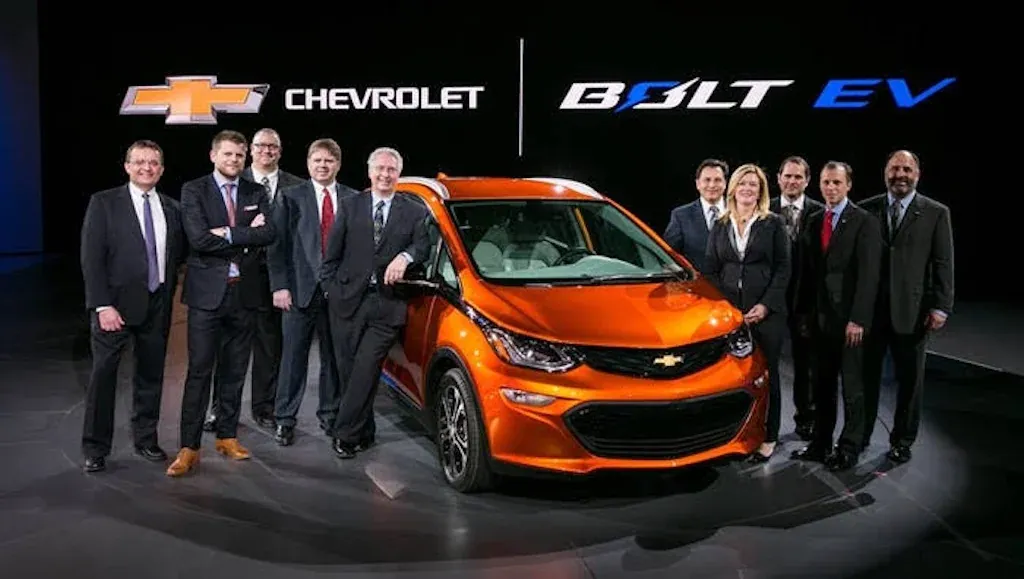
The Bolt model was developed in close collaboration with LG. The Korean conglomerate supplies almost all of the power electronics and electrical components for this model:
the traction battery pack
the traction motor
the inverter
the onboard charger
the high and low power distribution units
the battery heater
the electric compressor for the climate control system.
Prices for Chevrolet Bolt EV
It was the price that made the Chevrolet Bolt EV one of the most popular electric vehicles from the U.S. in the Ukrainian market.
As of now, the approximate cost is:
for a 2017 model, $11,500–$15,000.
2018–2019 - $13,500–$16,500.
2020–2021 - $16,500–$20,000.
The most expensive vehicles are those in the Premier trim with a battery already replaced under the Recall program and a verified service history. Typically, these cars are imported from Northern Europe rather than the U.S. and are undamaged.
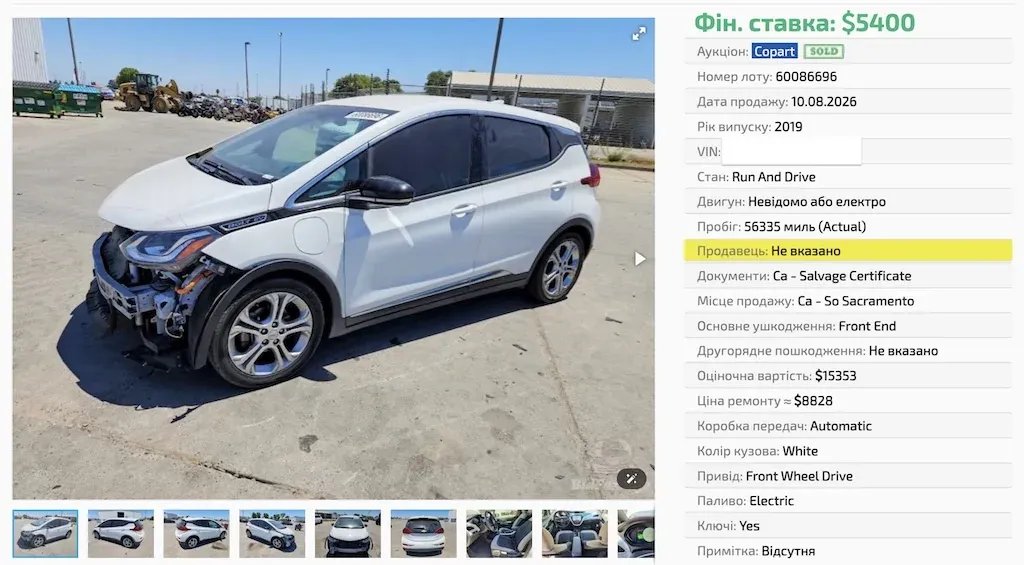
Many people check Copart or IAA and wonder, “Why does it cost $15,000 in Ukraine if it can be bought for five thousand at an auction?” The typical prices are as follows.
Vehicles after accidents: $3,000–$5,000.
Vehicles with minor damage: $5,000–$7,000.
Vehicles with minimal damage or almost intact: $7,000–$10,000, sometimes even more.
After that, there are auction fees, ocean shipping, customs clearance, delivery within Ukraine, repairs, and certification. As a result, a car won for $5,000 often costs 11,000–13,000 in Ukraine.
When I want to calculate the cost of a car from the US, I use the calculator on autocentre.ua for customs clearance estimates. It provides figures for regular cars, electric vehicles, motorcycles, trucks, and even buses.
People often view buying a car from an auction as a form of installment payment, as payments are made in stages—first buying the car, then paying for delivery, followed by customs clearance and repairs. However, it’s possible to do even better and more reliably here. Choose a car in Ukraine that is already available. The advantages of this approach include:
being able to
inspect it
check its technical condition
pick it up and buy it right away.
We found the car we used for inspection at the AUTOCREDO dealership.
However, this doesn’t mean the money has to be paid right away. It’s smarter to buy a car on credit. Here, our long-time partner OTP Bank with its financing program comes in handy. They have a separate program for purchasing electric vehicles on credit. So let’s calculate how much this will cost.
Our principle is to choose a car so that the monthly payment is around $200.
If our model costs $15,000, we cover “half” of it with the down payment. That leaves around 330,000 hryvnia, and we need to pay 8,563 hryvnia per month. This is less than the cost of 100 liters of diesel.

As always, you can choose a convenient payment amount individually using the credit calculator.
Interestingly, OTP also offers an auto financing program for used cars, meaning you can even buy a car from an auction on credit! The calculator for this service is available on the same website nearby.
Versions and Trims
The Chevrolet Bolt sold in our used car market mainly came from the US. They are available in two trims: the simpler LT, and the more luxurious Premier.
The Premier comes with additional features such as a leather interior, surround-view cameras, heated rear seats, a blind spot monitoring system, and overall more luxurious equipment. It is the Premier that represents the most attractive option in the used car market.
Does the body rust?
The Chevrolet Bolt hardly has any typical corrosion problems. It is resistant to corrosion, thanks in part to the widespread use of aluminum. The hood, front fenders, doors, and outer panel of the trunk lid are made of aluminum. The roof and rear fenders are steel. The structural components of the body are constructed from various high-strength steel grades.
However, most of these vehicles have been at U.S. insurance auctions. Therefore, it is important to carefully examine the quality of their restoration and body repairs. Special attention should be paid to the body’s structural elements and the condition of the undercarriage. If the integrity of the battery housing is compromised, it can lead to extremely costly repairs.
Don’t forget that some Chevrolet Bolts are imported not from the U.S. but from Europe, especially Norway. Such vehicles have no damage from serious accidents and are in better condition. That’s why they are the most expensive.
The interior: both a strength and a weakness
Thanks to the minivan-style layout of the electric vehicle, almost all of the car’s space is dedicated to the cabin. The powertrain takes up little space, and the hood is quite short.
As a result, the Chevrolet Bolt EV offers a fairly spacious second row, a completely flat floor behind the rear seats, and a large trunk.
The drawbacks are typical of American cars. The interior features rigid plastic trim, average sound insulation, and, according to users, not the most comfortable front seats. They are quite flat. But for short urban trips, this is acceptable.
This layout is convenient not only for family trips but also for working as a taxi. Getting in and out is easy, and although the interior plastic isn’t the most pleasant to touch, it is durable and easy to clean.
Another advantage of the Bolt EV is its large trunk. Compared to its competitors, it has the largest trunk space:
The Chevrolet Bolt EV has a range of 470 miles, compared to the Nissan Leaf (ZE1) at 435 miles and the Volkswagen Golf VII at 380 miles.
Engine Reliability
When it comes to engine options, there is no choice here. All vehicles are equipped with a single electric motor. It is quite powerful, delivering 204 horsepower (150 kW). More importantly, it boasts a high torque output of 360 Nm. As a result, the car accelerates from 0 to 100 km/h in about seven seconds.
Unusually for this class, modern electric cars with a single motor often feature rear-wheel drive. However, in the Bolt EV, just like in the Leaf, power is transmitted to the front wheels via a single-speed reducer. Like in the vast majority of electric cars, there is no transmission here.
The electric motor itself is considered virtually trouble-free. It performs well and requires no maintenance.
The reducer also exhibits very high reliability. However, it needs to be serviced occasionally — by changing the oil.
In the early years, GM referred to the transmission fluid as lifetime fluid and did not even include it in the maintenance schedule. Later, recommendations were issued for newer Bolt models to change the fluid after approximately 97,500 miles (around 157,000 km).
In vehicles with mileage, it is advisable to change the oil roughly every 100,000 kilometers. Although the oil was found to be dark when drained from these models, there is no issue with gears and bearings producing wear debris. Such problems are not uncommon in electric vehicles and hybrids, as the reducer operates under high stress — the torque generated by the engine increases instantly rather than smoothly like in gasoline vehicles.
A little more than one liter of transmission fluid is needed for replacement, as not the entire volume can be drained through the drain plug. Therefore, plan for 1.1 liters. This isn’t very convenient, as you still have to buy two one-liter containers of DEXRON HP ATF. However, a price of around 750 hryvnia per liter can’t be considered too high.
The Battery – A Strength, But Almost Costed the Model Its Life
And here is where it gets most interesting. It is the battery that serves as the main feature of the Chevrolet Bolt.
It is manufactured by LG Chem (LG Energy Solution). It’s a lithium-ion NMC battery, consisting of 5 modules and 288 cells.
The battery is advanced, featuring liquid cooling and heating. This is very important for its lifespan. It significantly reduces the risk of overheating and also makes it easier to warm up in winter so it reaches operating temperature faster. This active thermal regulation is a major advantage of the Bolt over the Nissan Leaf.
The majority of models produced from 2017 to 2019 came equipped with batteries of 60 kWh, which is quite substantial for a compact car. With this battery, the Bolt EV’s urban range is around 380 km.
Starting in 2020, the Bolt EV was fitted with an upgraded battery of 66 kWh. Interestingly, the battery pack’s structure remained unchanged; LG simply used cells with higher energy density. As a result, the range increased to approximately 415 km according to EPA testing.
Despite its well-thought-out design, the Bolt acquired a mixed reputation precisely due to its battery. This was caused by the fatal combination of two manufacturing defects in LG’s cells. In very rare cases, these defects could lead to internal short circuits and battery fires. Although such incidents were extremely uncommon, they were not ignored. Even after the vehicle was disconnected from the charger and fully charged, short circuits could still occur in the battery, causing it to catch fire.
Initially, General Motors only software-limited the maximum charge level and prevented it from reaching over 90%. But later, the company took an unprecedented step—replacing the battery modules, and many vehicles actually received a brand new battery as part of a recall and service program.
You can check whether your vehicle is affected using its VIN code through this link: https://experience.gm.com/recalls/bolt-ev?gad_source=1&utm_source=chatgpt.com
This is why many Chevrolet Bolts today have batteries that are newer than the vehicle itself. It’s not always due to the battery being damaged in an accident.
A 2017 model vehicle may now have a battery installed in 2022–2024. In other words, the buyer gets what is essentially a brand new, most expensive component of the vehicle.
How long do batteries last?
Thanks to its thermal regulation system, the Bolt exhibits exceptionally slow battery degradation and maintains its capacity for a long time. Even after 100,000 kilometers, most vehicles still have over 92–95% of their original capacity. In fact, even after 200,000 kilometers, they often retain around 90%. This is one of the best performance metrics among mass-market electric vehicles of its generation.
In any case, a diagnostic check is necessary before purchasing.
The following items need to be checked:
battery health status (SOH);
errors in the BMS (Battery Management System);
temperature of the battery modules;
voltage differences between modules;
operation of the cooling system;
seal integrity of the battery pack.
How does the BOLT EV handle cold weather?
It should also be remembered that in cold weather, recovery, DC charging speed, and maximum power output are temporarily limited. Once the battery warms up, all these limitations gradually disappear.
Slow charging is actually an advantage
The Chevrolet Bolt EV has two charging ports for charging. Slow AC charging is done via the J1772 (Type 1) standard at up to 7.2 kW. Starting in 2019, Premier versions came with charging capabilities of up to 11.5 kW.
Fast charging is available through DC CCS Combo 1 (CCS1) at up to 55 kW. This is low compared to modern electric vehicles that can charge at 270 kW. However, it is precisely because of the lower fast charging power, combined with a thermal management system, that the battery remains in good condition over the long term.
Suspension from Chevrolet Aveo
The suspension system of the Chevrolet Bolt EV is fairly simple and robust. The Bolt EV is built on the GM BEV2 platform, but during development GM made maximum use of existing components from the company’s compact models. As a result, many suspension parts have equivalents.
Owners and repair shops note that a significant portion of the suspension components come from the platform used for the Chevrolet Cruze and Chevrolet Aveo T300. This greatly simplifies the search for spare parts and allows the use of cheaper alternatives.
The paradox is that some users complain about poor ride smoothness, while others find the factory-installed Bolt shock absorbers too soft, especially considering the car’s weight of nearly 1.7 tons. As a result, upgrading to Bilstein B6 rear shock absorbers has become quite popular, and sometimes shock absorbers designed for the Chevrolet Cruze are used with small spacers. Many owners note a significant improvement in handling and comfort.
Brakes are durable, but they can rust
Thanks to regenerative braking, brake pads can last over 150,000 kilometers. However, there is another issue. Due to infrequent use of mechanical brakes, brake discs can rust and calipers can corrode. Therefore, during annual maintenance, the calipers need to be serviced and the brake lines lubricated.
Electronics
There are practically no serious systemic problems. The most common issues relate to the battery. And no, it’s not the traction battery, but the regular 12-volt one. This type is also found in electric vehicles. Paradoxically, without it, the electric vehicle won’t start, even if the traction battery is fully charged. So pay attention to this and charge it regularly.
Regarding onboard systems, occasional glitches in the multimedia system and certain software errors have been reported.
Is the Chevrolet Bolt EV worth considering?
The Chevrolet Bolt is a very unique electric vehicle. Its reputation was damaged back then due to battery recalls. However, many vehicles have already been equipped with new traction batteries, which means the buyer is essentially getting an upgraded version of the vehicle’s most expensive component.
The electric motor, reducer, and power electronics exhibit very high reliability. Indeed, the Bolt has its shortcomings. It features a simple interior, average noise insulation, and slow fast charging speeds. But if you need an affordable electric vehicle with a real range of around 350-400 km, the first-generation Chevrolet Bolt EV remains one of the best options on the used market in its price segment today.