
Mitsubishi Eclipse Cross: Independent Despite Renault Technology
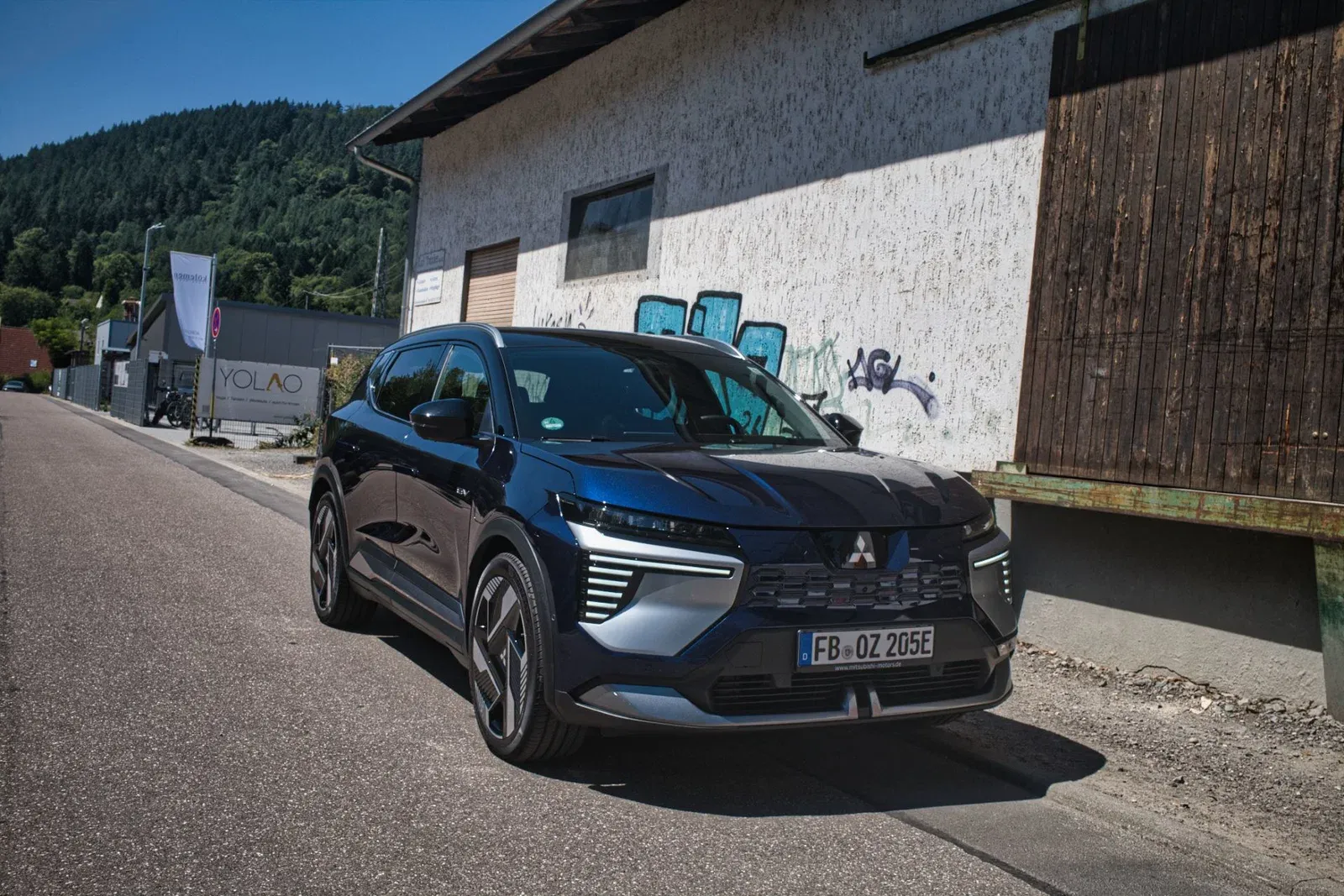
When an automaker like Mitsubishi launches its first all-electric compact SUV, attention almost naturally turns to the question of how independent such a model truly is. As is well known, the Mitsubishi Eclipse Cross EV shares its technical foundation with the Renault Scénic E-Tech. I wanted to form my own opinion on this, so I drove the electric SUV for about 450 kilometers around my home area. During those quiet summer weeks, I mainly drove on country roads and in urban traffic; longer highway trips simply weren’t an option for me.
This exact mix of driving scenarios shows what the Eclipse Cross is designed for: everyday use between home, work, and the routes in between. It’s not a car for big-stage performances but one that must impress in everyday situations. Whether it succeeds depends less on the specifications sheet and more on how all the details work together in real life.
Mitsubishi Eclipse Cross EV: An SUV with a distinct design language
The Eclipse Cross follows the brand’s current design language in its exterior appearance. The front end, dubbed “Dynamic Shield 2.0” by Mitsubishi, the side profile with its J-shaped design, and the hexagon motif at the rear are intended by the manufacturer to emphasize both the SUV character and functionality along with style. At the front, adaptive high-beam LED headlights stand out, complemented by LED daytime running lights and a light sensor. On the sides, chrome trim along the windows, a silver roof rail, and a roof antenna with a distinctive shark-inspired design add details that remain striking up close. The windows are heavily tinted starting from the B-pillar, further contributing to a compact look at the rear.
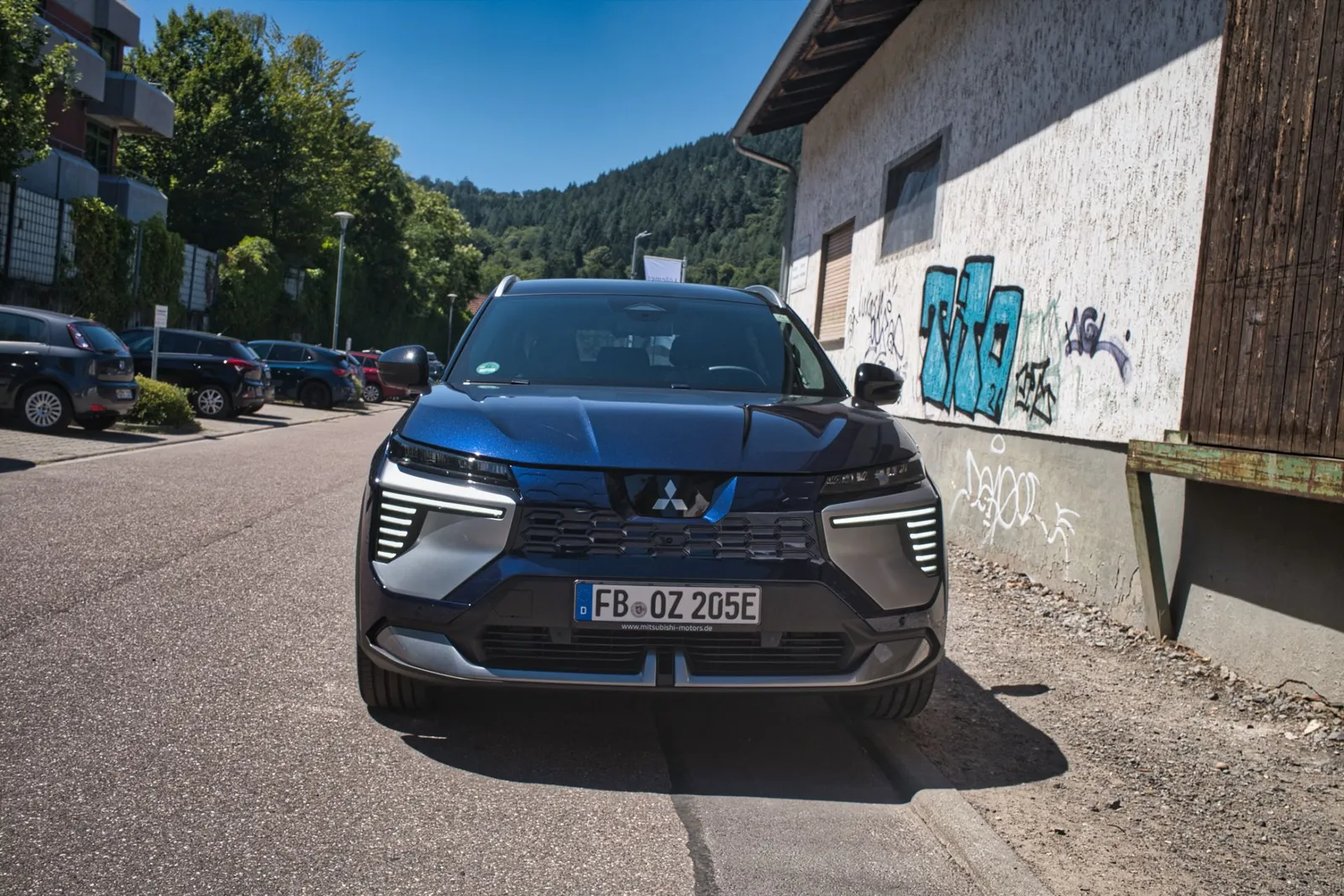
In terms of dimensions, the Eclipse Cross falls within the typical range for its class: 4489 millimeters in length, 1908 millimeters in width without mirrors (2085 millimeters with mirrors extended), and 1571 millimeters in height. The wheelbase is 2784 millimeters, which has an impact on the interior space. With a turning circle of 10.92 meters, it remains easy to maneuver even in tight urban conditions, and its ground clearance is 145 millimeters when unladen. Both the front and rear overhangs are kept short, and the track width fits well within the proportions of the vehicle’s design.
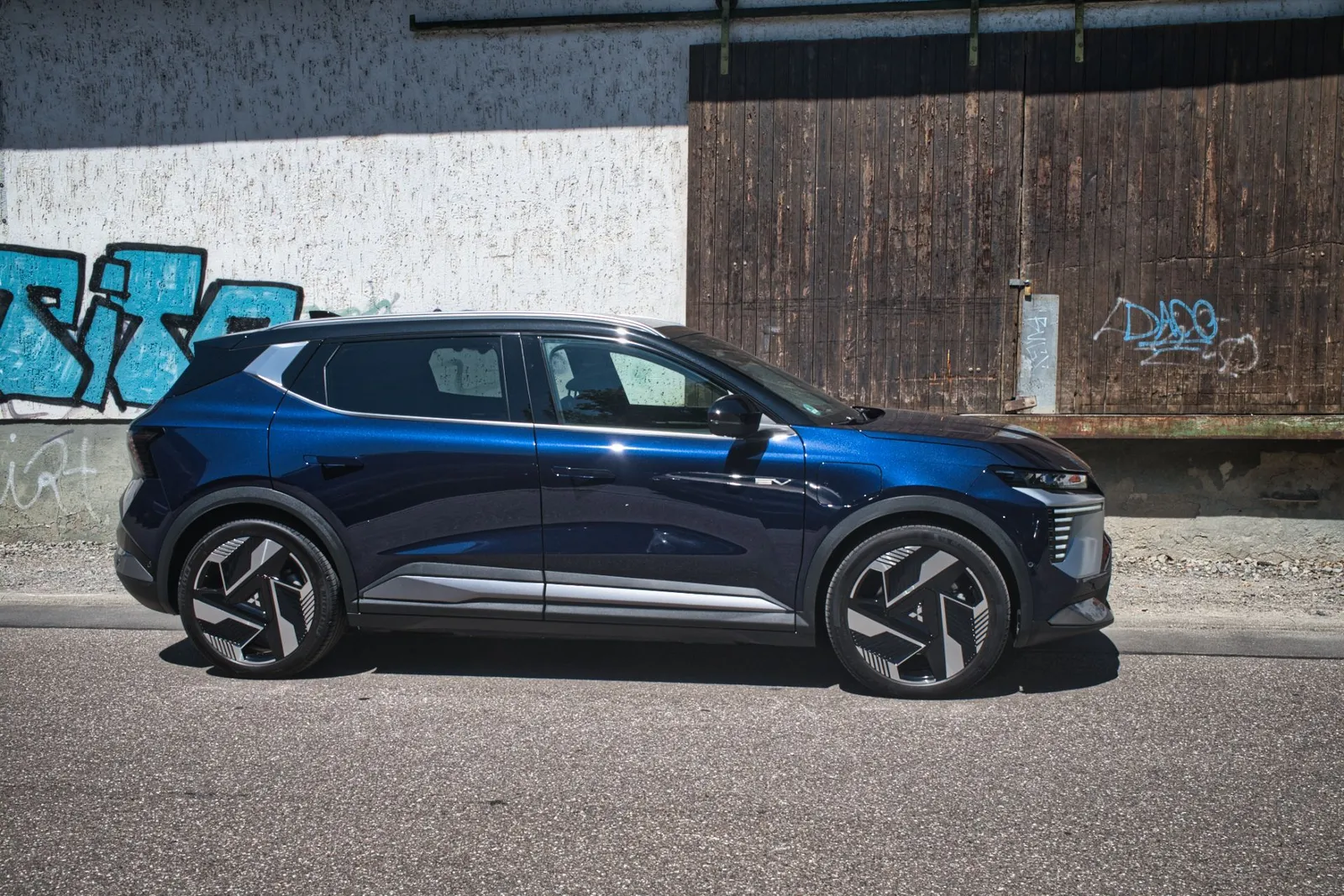
My test vehicle came in the two-tone Kosmos Blue paint with an onyx-black roof, complete with the standard 20-inch alloy wheels — a combination that gives the car a more distinctive look than a single-color paint job. It belongs to the Diamant Top trim level with the Luxury Package, which is the top model among the four available trims; the others include the base Diamant version, as well as the mid-tier Diamant Plus and Intro Edition. Details such as the door handles that match the car’s color, the shiny black grille with chrome accents, and the underbody protection elements at the front and rear show that Mitsubishi has also paid attention to creating a high-quality, unique appearance in every detail.
Interior: Cozy and tidy rather than flashy
Upon entering, the spatial impression takes center stage. The long wheelbase of 2784 millimeters provides ample space both at the front and rear without making the interior feel cluttered. The seats in the Diamond Top trim are covered in black synthetic leather; the driver’s seat is electrically adjustable and features an electrically adjustable lumbar support, a memory function, and a massage function that has proven to be a pleasant little extra, especially during longer trips. The passenger seat is also electrically adjustable in height. Personally, the seating comfort was very pleasant throughout the entire test period, even after long drives without any noticeable fatigue.
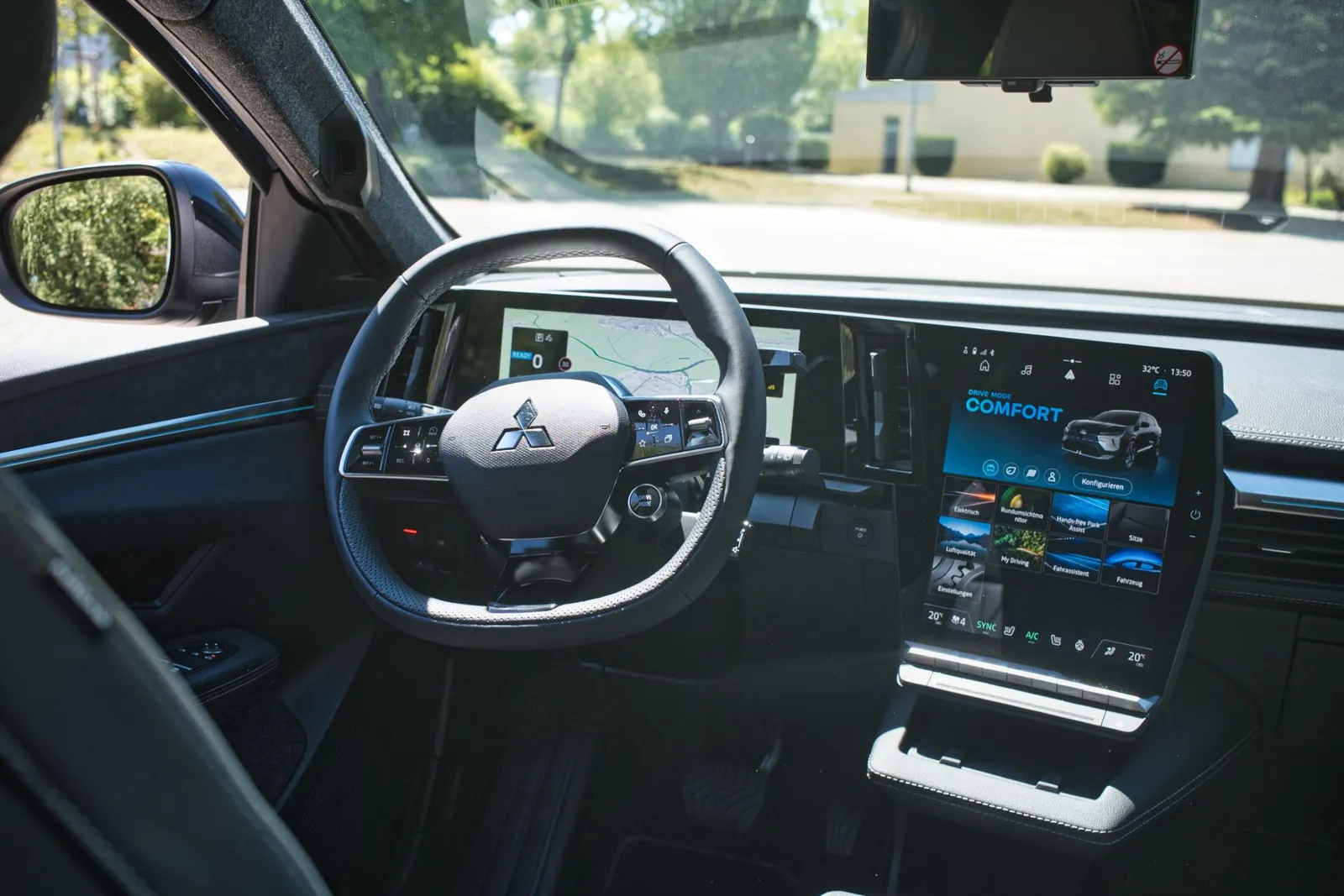
Visually and tactually, the interior appears organized and finely crafted. A center armrest in the front, another in the back along with cup holders, a height and depth adjustable steering column, and a heated, perforated steering wheel are part of the standard equipment in the top version. The roof canopy is in a dark gray, textured shade, which together with the ambient lighting creates a calm, premium atmosphere. Particularly striking is the electrochromic dimmable panoramic glass roof that extends far into the interior, significantly contributing to a comfortable climate on sunny days, without requiring complete darkness if desired.
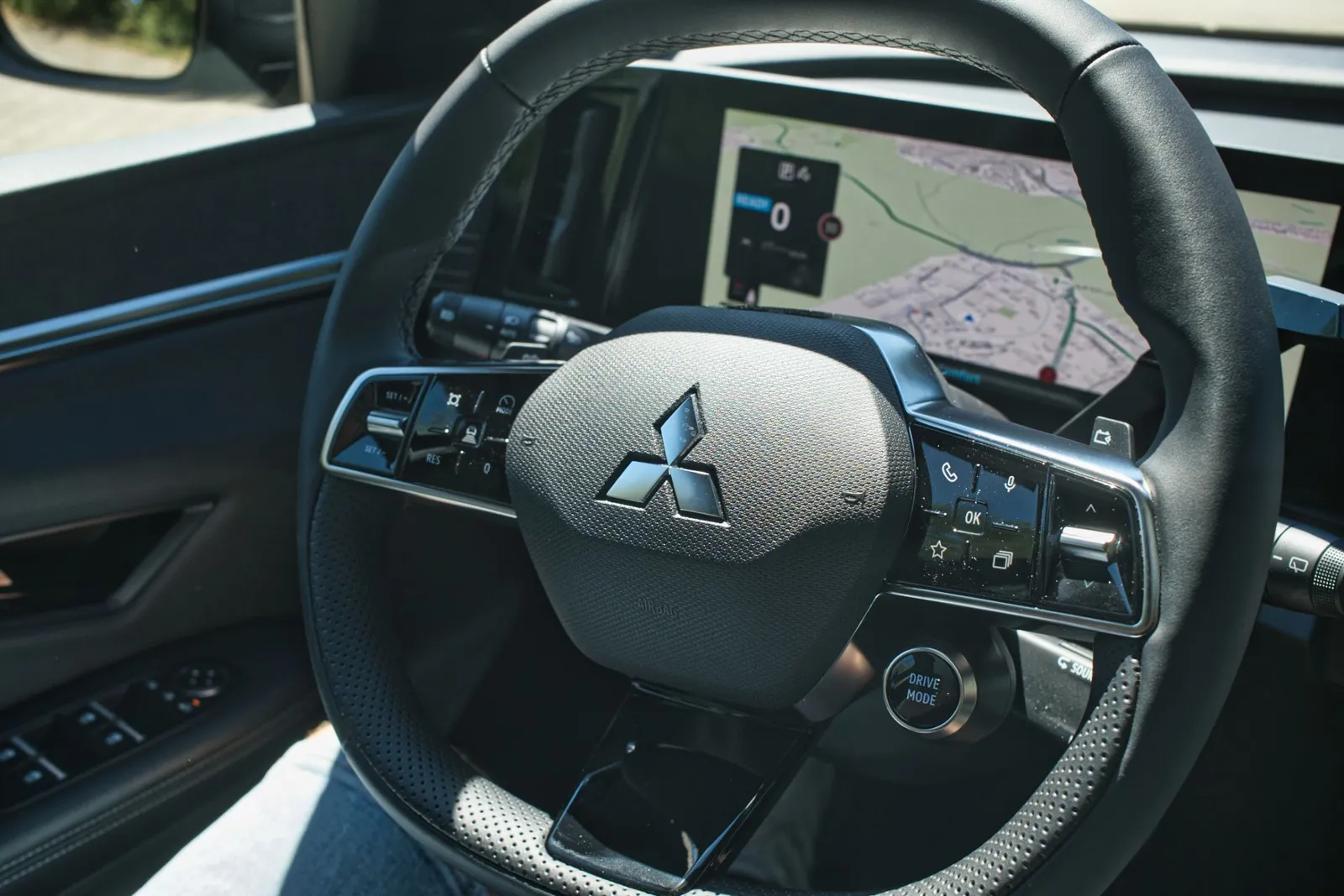
Small but practical details such as the inductive charging slot for smartphones, USB-C ports at both the front and back, along with an air conditioning system featuring a air purifier and heat pump plus pre-conditioning function, show that thoughtful attention was given to the equipment. The rear seat backrest can be folded in a 40:20:40 ratio, adding flexibility to the interior when transporting longer items. Driver face recognition and an automatically dimming digital rearview mirror are also part of the top-tier equipment—technical features that rarely stand out in daily use but are available when needed.
Control that works instantly
This is exactly where the Eclipse Cross impressed me positively. The combination of the 12-inch touchscreen and the digital instrument cluster with its own 12-inch color display appears straightforward and stylishly designed, without getting lost in complicated menus. Part of what makes this possible is Google built-in, which includes Google Maps and Google Assistant, and it’s standard in the Diamond top trim level. Wireless Apple CarPlay and Android Auto further enhance the options for those who prefer to use their own smartphone ecosystem.
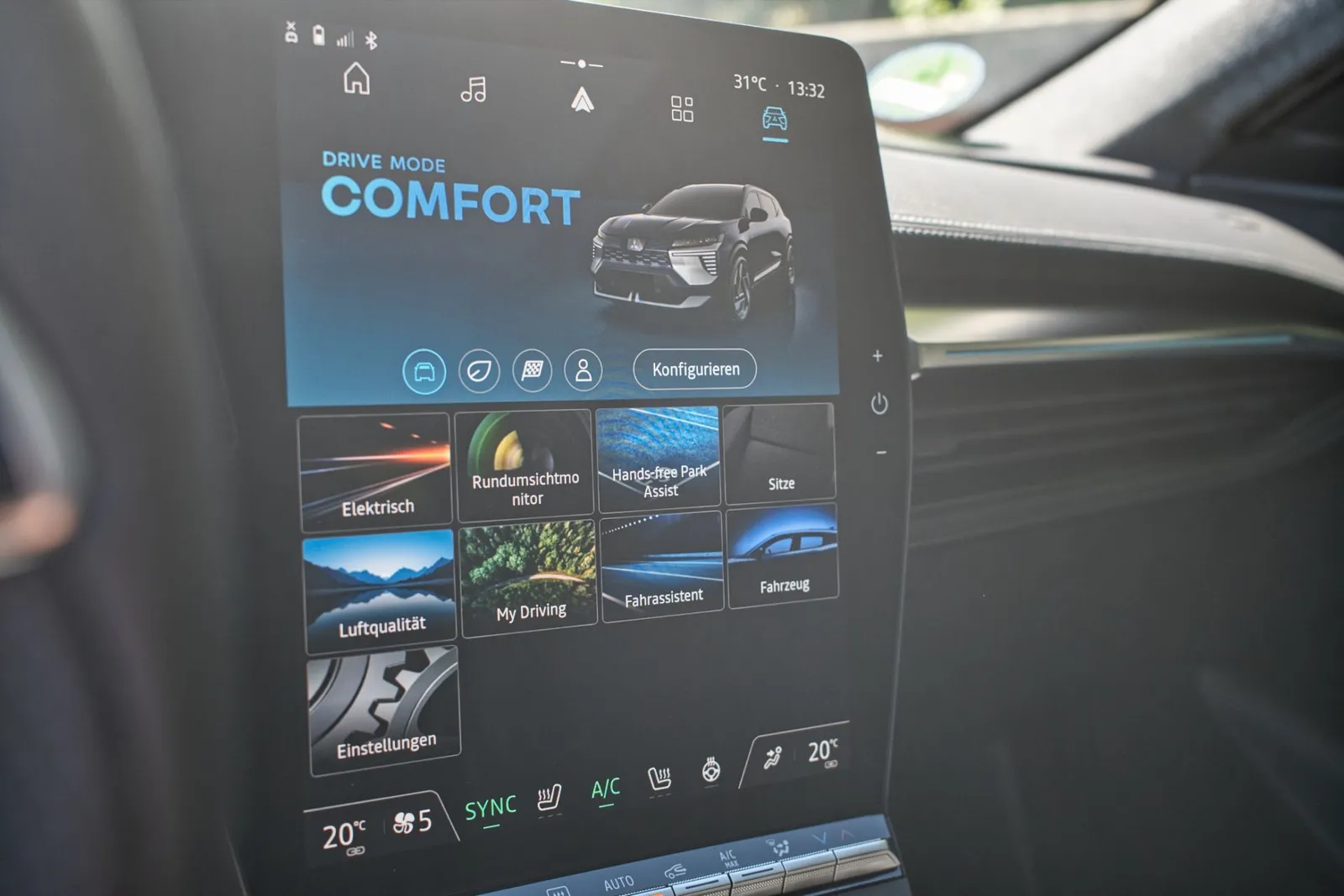
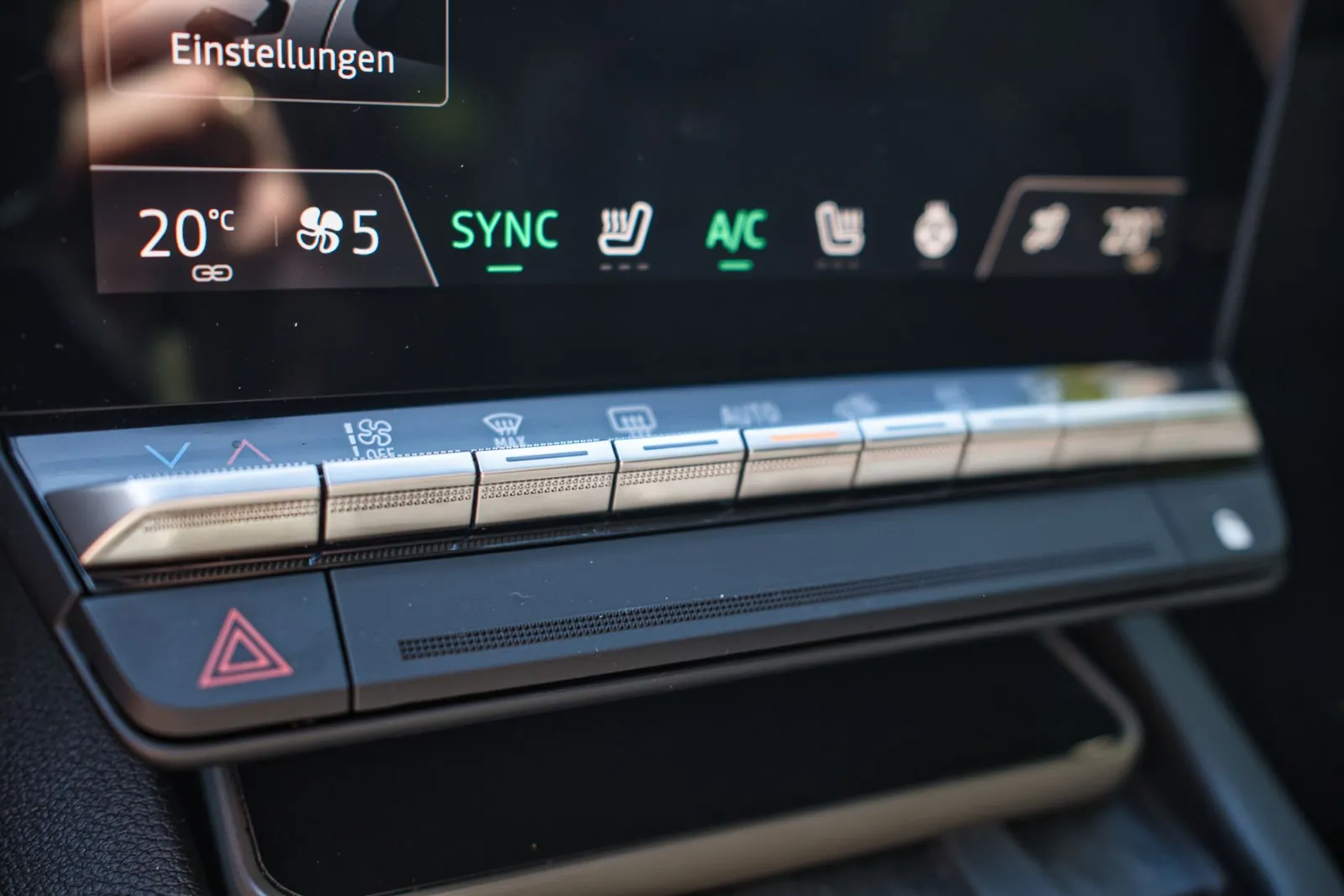
The multifunctional steering wheel allows access to the most essential functions without having to take your eyes off the road. Additionally, the Harman-Kardon sound system with nine speakers enhances the interior’s acoustic quality to a higher standard than one might expect based on the price. The Mitsubishi Motors app also enables wireless connectivity between the driver and the parked car, useful for things like pre-conditioning. I did not test this feature during my testing period, but in everyday use it could be a practical extra, such as finding the car pre-cooled on hot days.
Comfortable on the road without feeling sluggish
Beneath the hood lies an electrically driven synchronous motor with 160 kW (218 HP) and 300 Newton-meters of torque, which drives only the front wheels. It accelerates from 0 to 100 km/h in 7.9 seconds, with a top speed of 170 km/h. The curb weight varies depending on the trim level, ranging around 1950 kilograms—a fairly substantial weight for a car in this class that affects handling dynamics without overloading the propulsion system.
On my route of highways and city roads, the suspension proved comfortable while the steering felt pleasantly direct, a combination that gives the car a smooth and reassuring driving experience. Imperfections were handled effortlessly without the Eclipse Cross losing its responsiveness.
The regeneration can be adjusted in four levels using switches on the steering wheel. For everyday use, the strongest setting was sufficient for relaxed one-pedal driving without the need to constantly press the brake, providing a noticeable ease especially in urban traffic. The response was always well-controlled, and I did not experience any sudden or jerky braking during my test. In contrast, the regular brake applied quite noticeably and forcefully, even when trying to apply it more gradually.
More fuel-efficient than the specifications suggest
Mitsubishi states that for the tested configuration with an 87-kWh battery, the WLTP fuel consumption is 17.1 kWh per 100 kilometers. The manufacturer distinguishes between range figures based on the trim level: while the base version with the larger battery is said to achieve up to 635 kilometers under WLTP conditions, the specifications for my specific test vehicle configuration, the Diamond Top with Luxury Package, show a range of around 615 kilometers in mixed conditions and up to 806 kilometers in urban driving — indicating that the additional weight of the top-tier equipment takes its toll.
In my test, which mainly took place on country roads and in the city with little time on the highway, the dashboard computer showed a fuel consumption of 16.8 kWh per 100 kilometers after about 450 kilometers driven, which is slightly below the manufacturer’s figure. It should be noted, however, that I drove the electric vehicle under nearly ideal conditions for an electric car—during calm summer weeks, without cold weather and with no highway driving.
I was unable to collect my own charging data during this test, as charging mostly took place at home. For reference, here are the manufacturer’s specifications: The Eclipse Cross is supposed to charge at a DC fast charger with a peak charging power of up to 90 kW, allowing the battery to go from 10% to 80% in about 40 minutes according to the datasheet. It charges at 11 kW on AC power by default, which takes around 9 hours and 30 minutes to fully charge. My test vehicle was also equipped with the optional 22-kW onboard charger, which, per the manufacturer, reduces charging time at a compatible wallbox to about 4 hours and 45 minutes.
The premium diamond edition comes equipped with a wide range of assistance features, including MI-Pilot with adaptive cruise control, an active lane-keeping assistant, a 360-degree camera view, as well as emergency braking, parking assistance, and other systems for environment detection using ultrasonic sensors, cameras, and front radar. What impressed me most during parking was the excellent visibility provided by the various camera views, which significantly simplified maneuvering, especially in tight spaces.
A brand-specific feature is the so-called My-Safety button located right next to the steering wheel. By double-clicking it, predefined assistance systems can be activated or deactivated together, eliminating the need to navigate through the touchscreen menu structure. The similarly built Renault Scénic lacks a comparable dedicated quick access button; there, accessing the assistance system settings requires going through the menu.
Adequate space, but not quite enough
According to the specifications, the trunk holds between 545 and 1670 liters with a load width of 1019 millimeters, which is sufficient for typical family and weekend needs. I always had enough storage space in my daily use. One drawback is the relatively high load edge at 779 millimeters, requiring heavy items to be lifted over a noticeable step. A movable, adjustable trunk floor would have been desirable here, allowing luggage to be placed on a flat surface without having to overcome the load edge step.
I was positively impressed by a small but well-thought-out detail: a pocket attached to the side of the trunk for the charging cable. It keeps the cable in place instead of letting it slide around loosely in the trunk, a minor feature that truly makes a difference in everyday use. Those who want to tow heavier loads can rely on a braked towing capacity of 1100 kilograms, while the unbraked capacity is 750 kilograms, which is usually sufficient for light trailers or a small boat trailer.
What You Have to Pay for the Mitsubishi Eclipse Cross
The Eclipse Cross starts with the 87-kWh battery in the Diamant Plus trim level at 47,990 euros, with the base Diamant version set to follow in mid-2026; a smaller mid-range battery is also planned for that time. However, it is not yet available for configuration or ordering. Above these are the Intro Edition starting at 52,790 euros and the top model, Diamant Top, at 56,190 euros.
The base Diamond trim level already comes standard with numerous features according to the manufacturer, including LED headlights, a digital 12-inch instrument cluster, a 9-inch infotainment touchscreen, wireless Apple CarPlay and Android Auto, as well as a comprehensive suite of assistance systems. Each additional trim level adds more comfort and safety features, from seat heating and Google built-in in the Diamond PLUS, to an electric trunk lid and 360-degree camera in the Intro Edition, up to massage seats and a panoramic glass roof in the Diamond Top.
My test vehicle in the Diamant Topmit Luxury Package comes at a regular price of 57,590 euros, but it is currently on sale with a discount of 4,000 euros, bringing the price down to 53,590 euros. With the selected two-tone paint option of Kosmos Blue/Onyx Black, which costs an additional 1,750 euros, the total cost amounts to 55,340 euros. In terms of competition, the Eclipse Cross is positioned near the VW ID.4, Škoda Enyaq, and its technically related Renault Scénic E-Tech.
A advantage Mitsubishi can clearly claim over the Scénic is its warranty: five years or 100,000 kilometers is standard, and with regular maintenance at the authorized service center, this protection extends to eight years or 160,000 kilometers. This extended warranty applies automatically to the drive battery as well.
What remains after the first 450 kilometers is a car that does exactly what most buyers actually need in daily use: to move smoothly, charge efficiently, and drive without stress. It’s clear already that the Eclipse Cross doesn’t need to hide behind its Renault counterpart. With its warranty and well-designed Google infotainment system, it offers its own compelling advantages.
Disclaimer: The Mitsubishi Clipse Cross EV was provided to us by Mitsubishi free of charge for a period of two weeks for this review. This does not affect our honest opinion as expressed here.