
MG IM6 in the test report: strong suspension, cumbersome controls
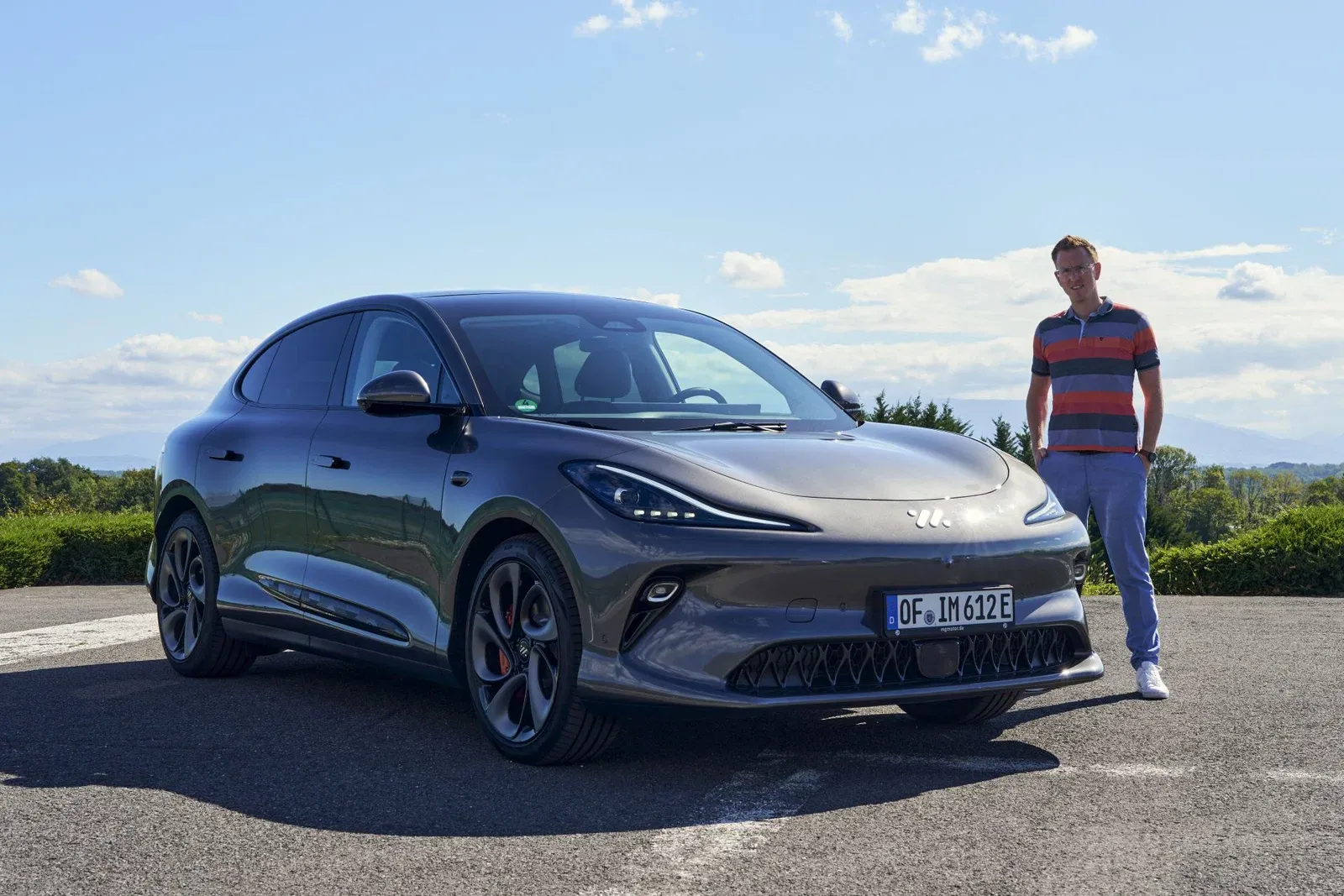
The morning in the French Jura begins with lingering fog over Lake Geneva and two cars parked in front of the resort in Crozet, which seem to belong to a higher price category. MG has established itself in Germany as a brand for affordable electric cars. With the subbrand MG IM, it now aims to enter the premium segment, sold through the same dealers. IM stands for Intelligent Mobility and is managed independently within SAIC’s brand portfolio alongside MG Motor, Roewe, Maxus, Wuling, and Baojun.
In Germany, the brand is launched alongside MG. “IM will represent the premium end in Germany through the same dealers,” summarized Marc Hecht, Director of PR and Communications at MG Motor Deutschland, in a press briefing.
The starting position for this brand is better than one would have expected from a Chinese manufacturer just a few years ago. By the end of August 2026, Germany saw 23,100 new registrations for MG, representing a 48 percent increase. The overall market grew by 4.8 percent during the same period, meaning MG expanded at roughly ten times the market’s pace. An even more telling comparison is with the previous year: by the end of 2025, MG had recorded 26,479 new registrations and a market share of 0.9 percent, the highest sales figure since its return to Germany. Just eight months later, the brand is only about 3,400 cars away from breaking this record, with its market share now at 1.2 percent.
Notably, it’s the timing that shows when the pace accelerated. In the first quarter, the increase was still 12.3 percent at 6,177 registrations; the jump to 48 percent came later, alongside the introduction of new volume models. The dealership network currently has 199 locations, with 220 targeted by the end of the year. Entering the premium segment requires such a footprint, as consulting services, repair facilities, and accessibility carry more weight there than with entry-level models.
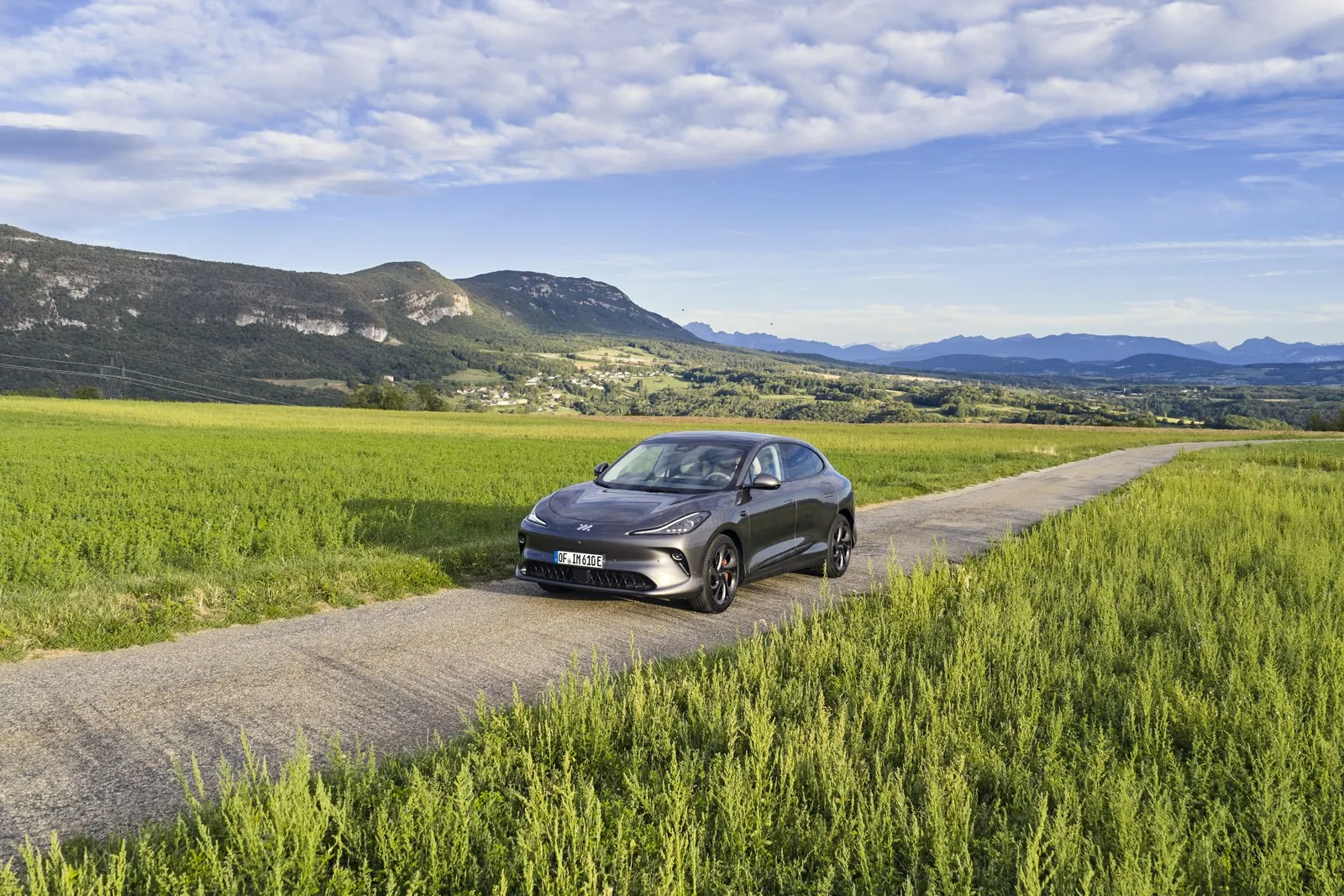
The car I’m interested in is the MG IM6, the SUV among these two new models, in the Premium AWD version. That is, the variant with two engines, producing 553 kW (751 horsepower) and 802 Nm of torque, starting at 60,990 euros. The rear-wheel-drive version with 300 kW (407 horsepower) costs 56,990 euros. The test vehicle also came equipped with adaptive air suspension, which MG offers exclusively as part of the Drive Pack for 2,000 euros and only for the all-wheel-drive version.
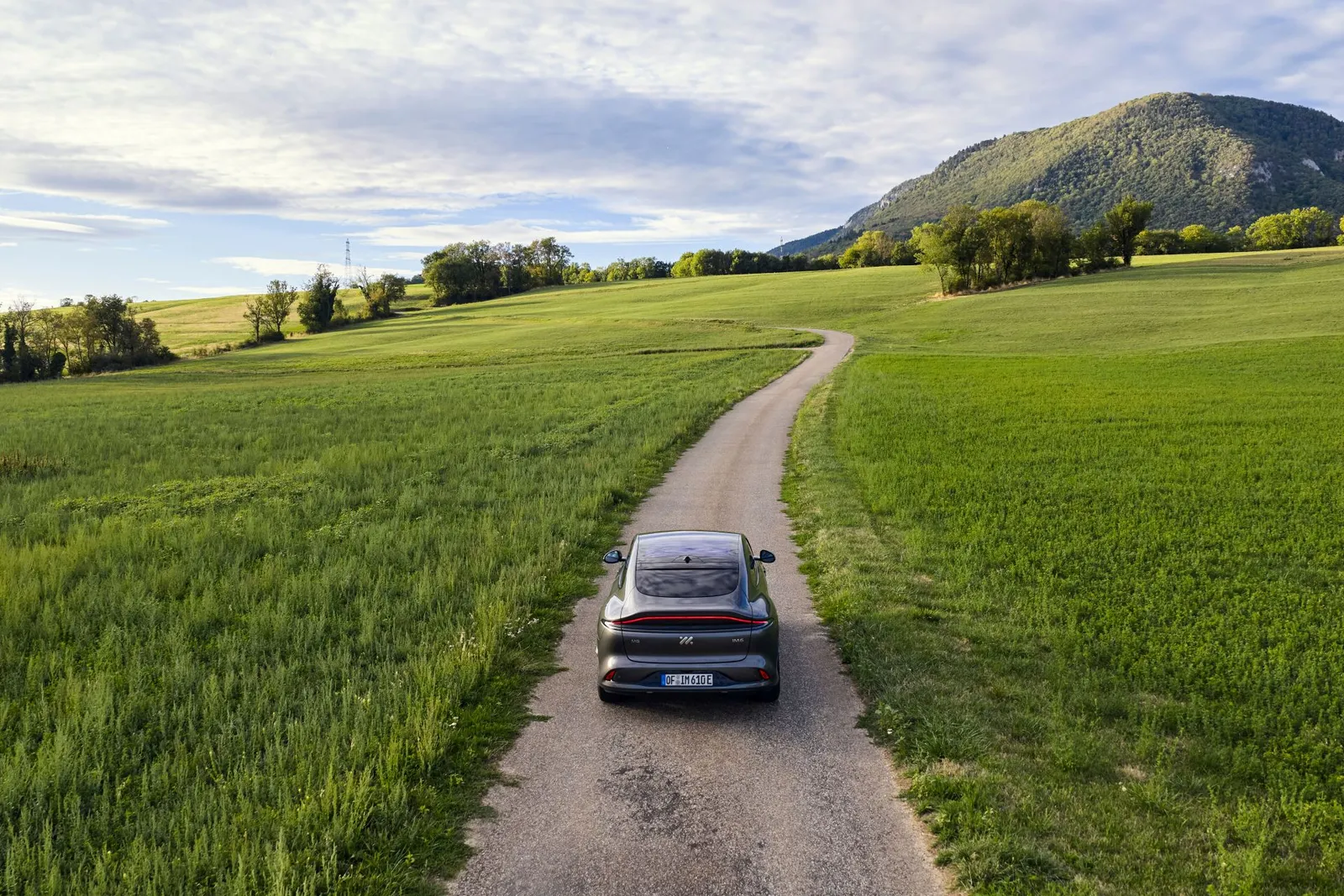
MG IM6: Four meters ninety, yet not imposing at all
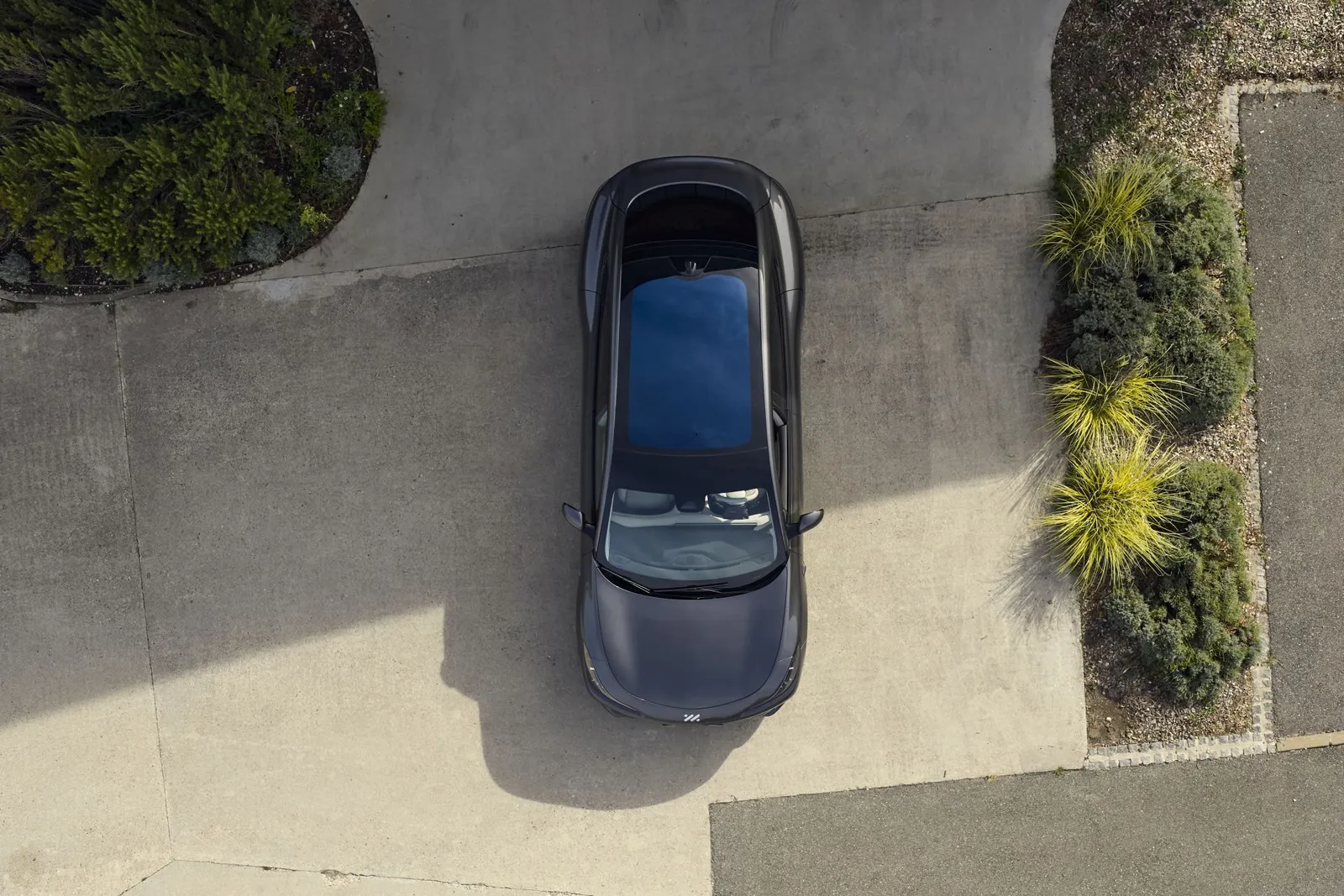
On paper, the IM6 is a large car: 4904 millimeters long, 1988 millimeters wide, 1669 millimeters high, with a wheelbase of 2.95 meters. Even when stationary, it doesn’t appear heavy, thanks to its roofline that extends far back. The result is more of a SUV with coupe-inspired features rather than a boxy vehicle on wheels. Its cw value of 0.259 likely stems from the same design approach.
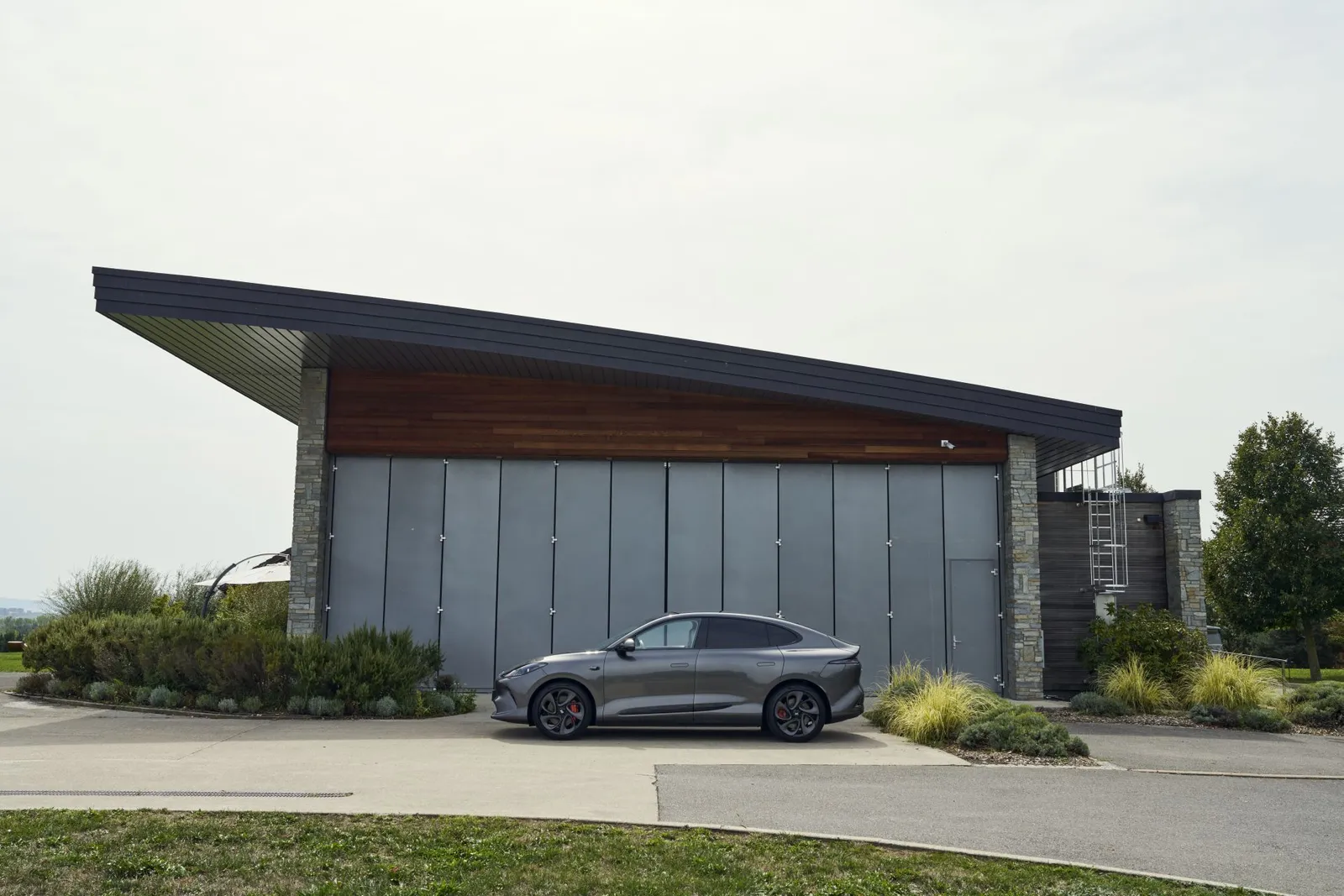
The door handles extend automatically and return to align flush with the side of the door as soon as pressure is applied or when locked from the inside. My test vehicle had a gray metallic paint that tends to soften rather than emphasize the edges. Combined with the frameless doors and the continuous lighting strip at the rear, this creates a calm and orderly appearance.
Inside, it’s consistently minimalist. Upon first entry, what stands out most is the absence of physical controls: no toggle switches, no buttons, no dials, just a display landscape. It’s minimalist to say the least, and at times even spartan. The construction is solid, using black synthetic leather with light accent stitching, foam under the door panels and center console, along with a gray-and-black decorative theme that looks good. While it doesn’t feel particularly high-end to the touch, it certainly fulfills its purpose. The MG IM favors smooth surfaces over numerous details, and that works well.
The driver’s seat can be extended at the knee area, allowing even taller individuals to find a comfortable position. There is also enough space in the second row for people with longer legs. The trunk appears smaller when viewed from behind, but it can hold quite a bit; there is an additional layer under the load floor for charging cables, a warning triangle, and first-aid supplies. MG states the capacity is 665 liters, which increases to 1640 liters with the seats folded down, plus an additional 32 liters in the front trunk area.
When the screen takes over everything
A 26.3-inch panoramic display spans half of the interior behind the steering wheel, with a 10.5-inch central screen located beneath it. There is no head-up display, which is noticeable at first glance. The driver’s display shows speed, selected driving mode, remaining range, and fuel consumption, and it allows the rear view to be displayed while driving. I haven’t figured out what practical use this has in everyday life. It becomes clearer when looking at the side mirror: the window facing backward is narrow, so not much can be seen there. It’s essentially an alternative to a digital side mirror.
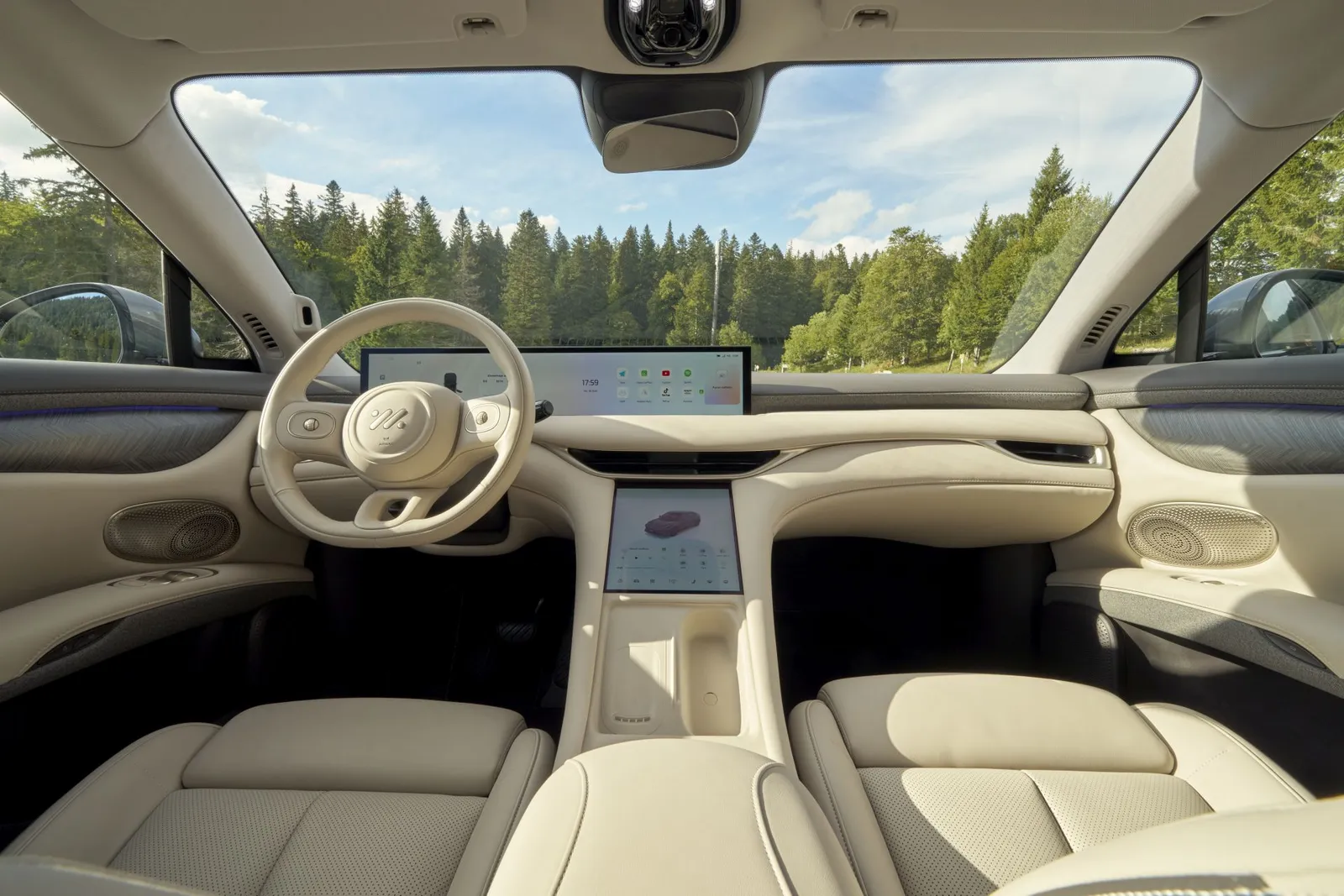
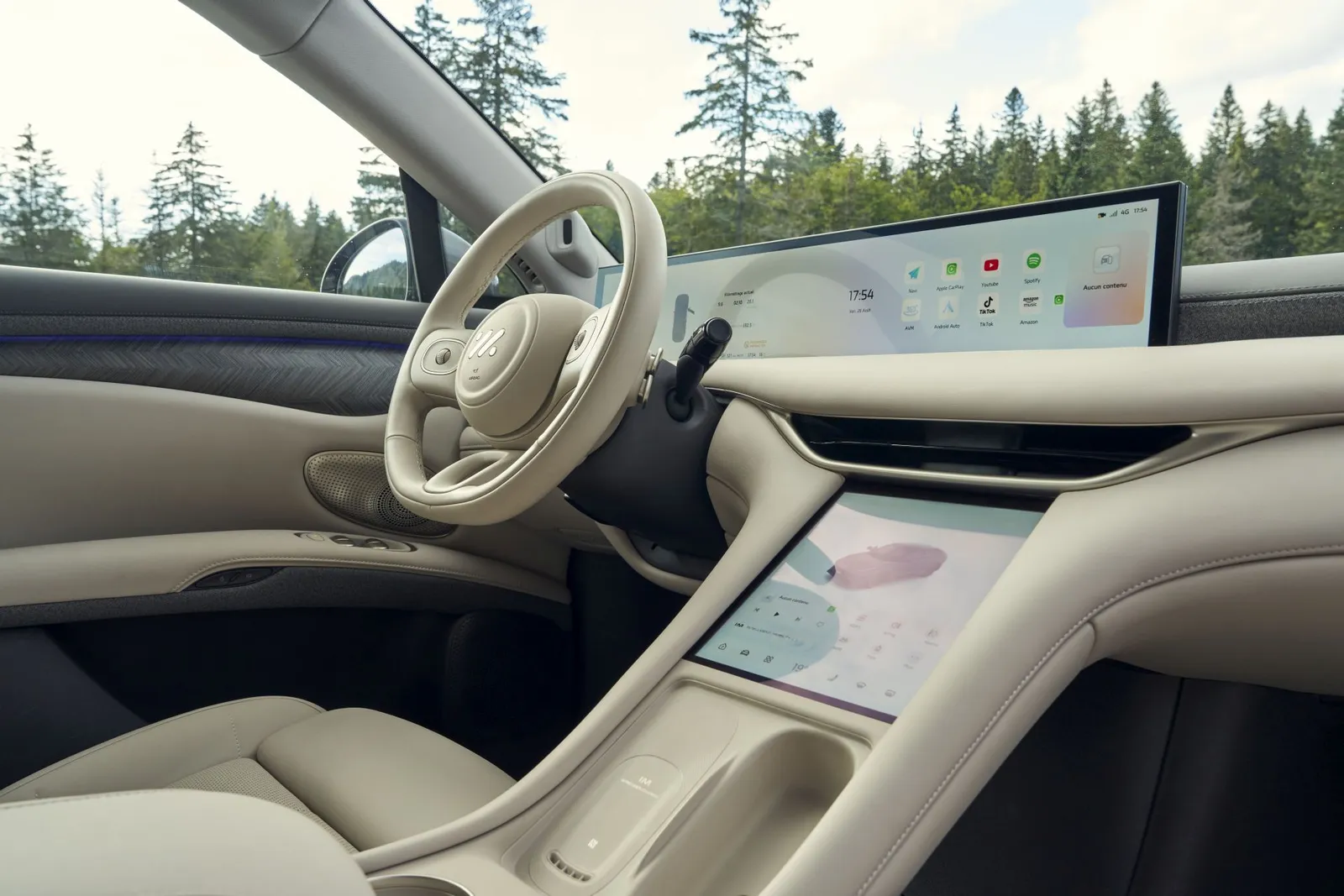
Android Auto connected wirelessly and effortlessly. The same was true for Apple CarPlay with other colleagues on site. What didn’t happen there, however, was that the connection to my smartphone dropped two to three times during the test drive, along with navigation. It would automatically reestablish itself after about 20 to 30 seconds, allowing me to get back on track quickly. I can’t definitively say whether it was due to the car or the phone. It shouldn’t happen more often, if at all.
I find the menu logic more difficult to navigate. Its structure differs significantly from what European manufacturers offer, making it hard to find things at first. Switching driving modes requires two to three clicks through submenus, the same being true for regen levels. This isn’t a good idea while navigating through a series of curves. On the positive side, the quick access buttons on the lower display can be customized freely, allowing users to set up direct access to driving modes and other frequently used functions. Once you’ve done this, it becomes much easier to use.
I still would have preferred a few physical buttons for temperature control, seat ventilation, and massage. The functions themselves are well thought out: the seat heating and cooling can be set to 30 minutes, 60 minutes, or continuous operation, while the massage function operates in three intensity levels. After two hours of continuous use, I remained comfortable, thanks in part to the massage function. The steering wheel also felt just as good in the hand at the end of the session as it did at the beginning.
The MG IM6 shines with a front-wheel-drive system
Once the road clears, you can tell what kind of propulsion system is installed. The IM6 accelerates to 100 km/h in 3.5 seconds and continues to deliver strong power even above that speed when the accelerator is pressed firmly. What impressed me most was the feeling during acceleration: the front end lifts slightly, and subjectively it seems like the thrust comes more from the front. With two engines and a curb weight of around 2.4 tons, the software distributes power dynamically based on the situation, but what’s most noticeable is the traction, which has never been an issue when accelerating out of tight turns.
In sport mode, the steering response becomes sharper, while the steering wheel’s rebound force increases significantly. However, the IM6 felt most direct to me in comfort mode, which is also where I spent most of the journey. The air suspension smooths out bumps but doesn’t completely eliminate feedback: you can sense what’s happening under the wheels without any jolts. It is this connection to the road that one wants in a car of this size.
Wind noise is present and becomes more audible above 100 km/h. It wasn’t bothersome, but I could imagine it being slightly better insulated. The regenerative braking didn’t impress me as much. It only offers low and standard levels, and even the strongest level provides braking that is too mild for my taste. There is no one-pedal mode, and according to MG, it cannot be added via software either because the hardware doesn’t support it. An additional, more powerful level above standard would be feasible, however. The switch levers on the steering wheel would be a logical place for this, but they are currently used to control the speed limiter distance.
More fuel-efficient than the spec sheet suggests
The route started from the Jiva Hill Resort near Crozet, passing through town streets with a 30 km/h speed limit, where I wasn’t able to go faster anyway due to garbage collection vehicles and construction traffic. After that, it was mostly country roads with a speed limit of 80 km/h, followed by about 20 kilometers of highway with a maximum speed of 110 km/h. I covered roughly 100 kilometers in two hours, with outdoor temperatures between 9 and 15 degrees, sunny weather, and dry roads.
By the end of the drive, the onboard computer showed a fuel consumption of between 21 and 22 kWh per 100 kilometers. The effects of climbing uphill and downhill are more pronounced in this region compared to other areas, and the longer the distance, the more stable the figure became. For context, MG claims that its Premium AWD model with Drive Pack has a fuel consumption of 23.4 kWh per 100 kilometers and a WLTP range of 505 kilometers. My actual consumption was lower than the manufacturer’s figure, which is not common in this vehicle class.
I can’t offer any insights on charging based on personal experience, as the time and distance were too short to deplete the battery. The specifications mention an 800-volt architecture, 100 kWh gross and 96.5 kWh net capacity, along with a charging power of up to 396 kW, which is said to allow the battery to go from 10% to 80% in about 17 minutes. During a press briefing, MG displayed an actual charging curve using a 400-kW charger: it took 17 minutes and 2 seconds to charge from 11% to 79%, with an average power of 256.53 kW and a peak power of 370 kW.
Button-activated parking, with a side effect
The assistance systems are all available on board, from adaptive cruise control and blind spot monitoring to cross-traffic alert and a 360-degree camera. I used the distance control in urban areas, where it worked quietly and reliably. However, in the tight curves of the Jura region, the lane-keeping system noticeably interfered, forcing me to apply significant counterforce at times to keep the vehicle turning where I wanted it to.
I tried the automatic parking feature, MG One-Touch iAD Parkassistent, and found it to be good. The system managed to pull the IM6 into the parking space even when there was distance and obstacles in between. However, there is one limitation: it parked so close to the car next to it that neither my passenger could get out nor the driver of the other car would have had a chance to get in. The precision is impressive, but it’s not always what you need in everyday use.
What Comes Out in the End
The IM6 starts at 56,990 euros, while the all-wheel-drive version I drove costs 60,990 euros. Additional options include the Drive Pack with air suspension and 21-inch wheels for 2,000 euros, the metallic paint finish for 790 euros, and the light interior trim for 650 euros. The rest are standard features, including all-wheel-drive steering, a panoramic glass roof, an audio system with 20 speakers, and the full suite of assistance features. MG offers a seven-year warranty up to 150,000 kilometers, with service intervals set at one year or 24,000 kilometers.
The combination of suspension and drivetrain is where it falls short. An SUV of this size that feels so agile on mountain roads is not commonly found in this price range. I found the controls less intuitive: the absence of any physical buttons is a design choice that causes inconvenience in daily use, although many issues can be mitigated with custom shortcut buttons. And those who, like me, prefer to use a pedal will have to get used to the regenerative braking system.
Disclaimer: MG IM invited us to France to test the MG IM6. However, this does not affect our honest opinion expressed here.