
MG IM5 im Fahrbericht: E-Limousine, die sich klein macht
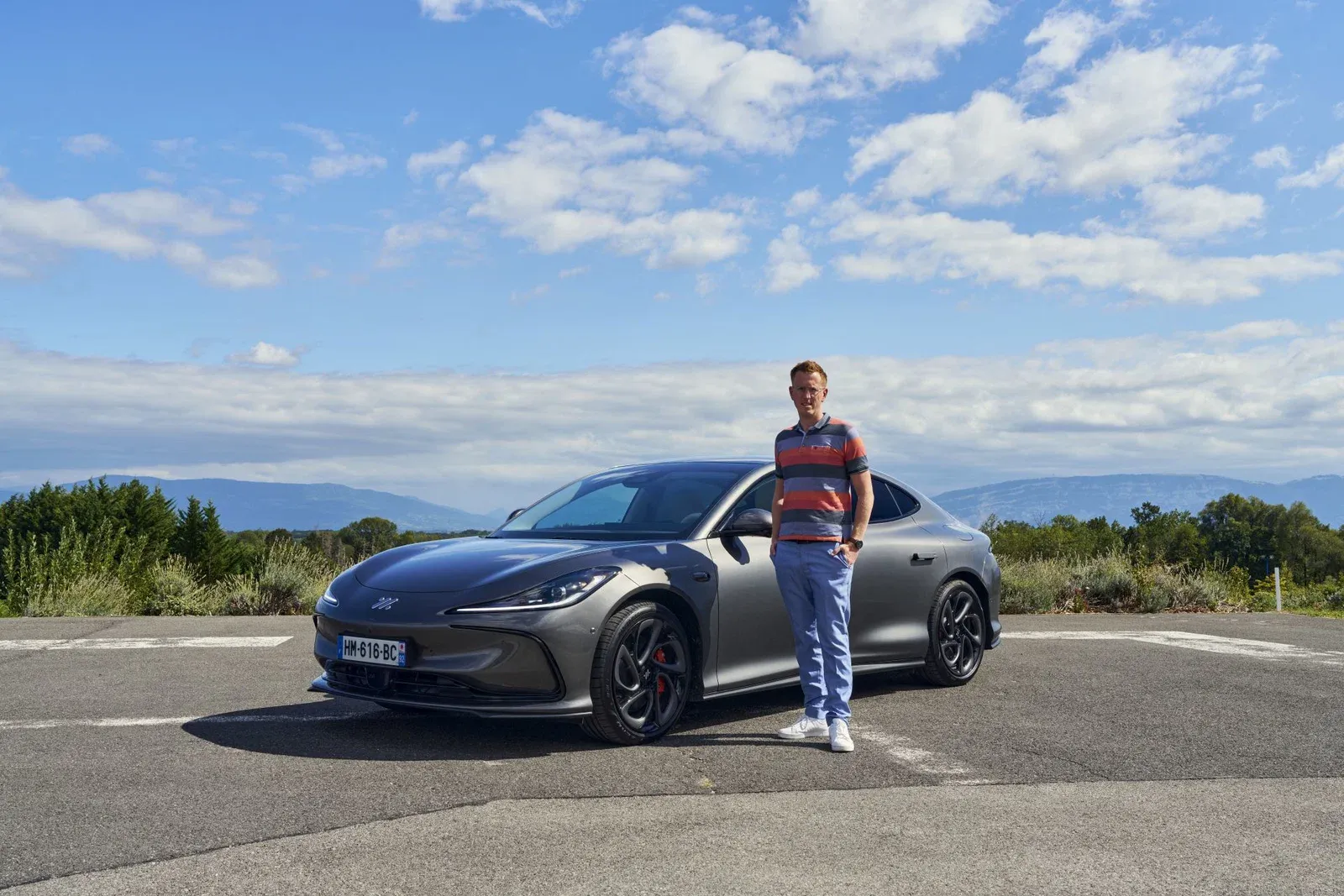
Limousines are struggling in Europe. Those who buy a car of this size these days usually opt for an SUV, and manufacturers adjust their model lines accordingly. It is into this market that MG introduces the MG IM5, one of the two models with which the IM subbrand debuts in Germany. IM stands for Intelligence in Motion and is managed independently within SAIC’s brand portfolio, but sales in Germany are handled through MG dealers. I drove it one afternoon in September at the foot of the Jura Mountains, on a short route from the Jiva Hill Resort in French Crozet down toward Lake Geneva and back via country roads.
The expectations were different from those for a regular model launch. In Germany, MG has represented a certain promise for years: plenty of car features for relatively low prices. With the IM, MG aims to create a higher-end model in its lineup, sold through the same dealerships, featuring technology that MG has not offered before. Whether a brand that started from the bottom can reach the premium segment is determined not by the price list but in the first few kilometers of driving.
MG IM5: A design that avoids sharp edges
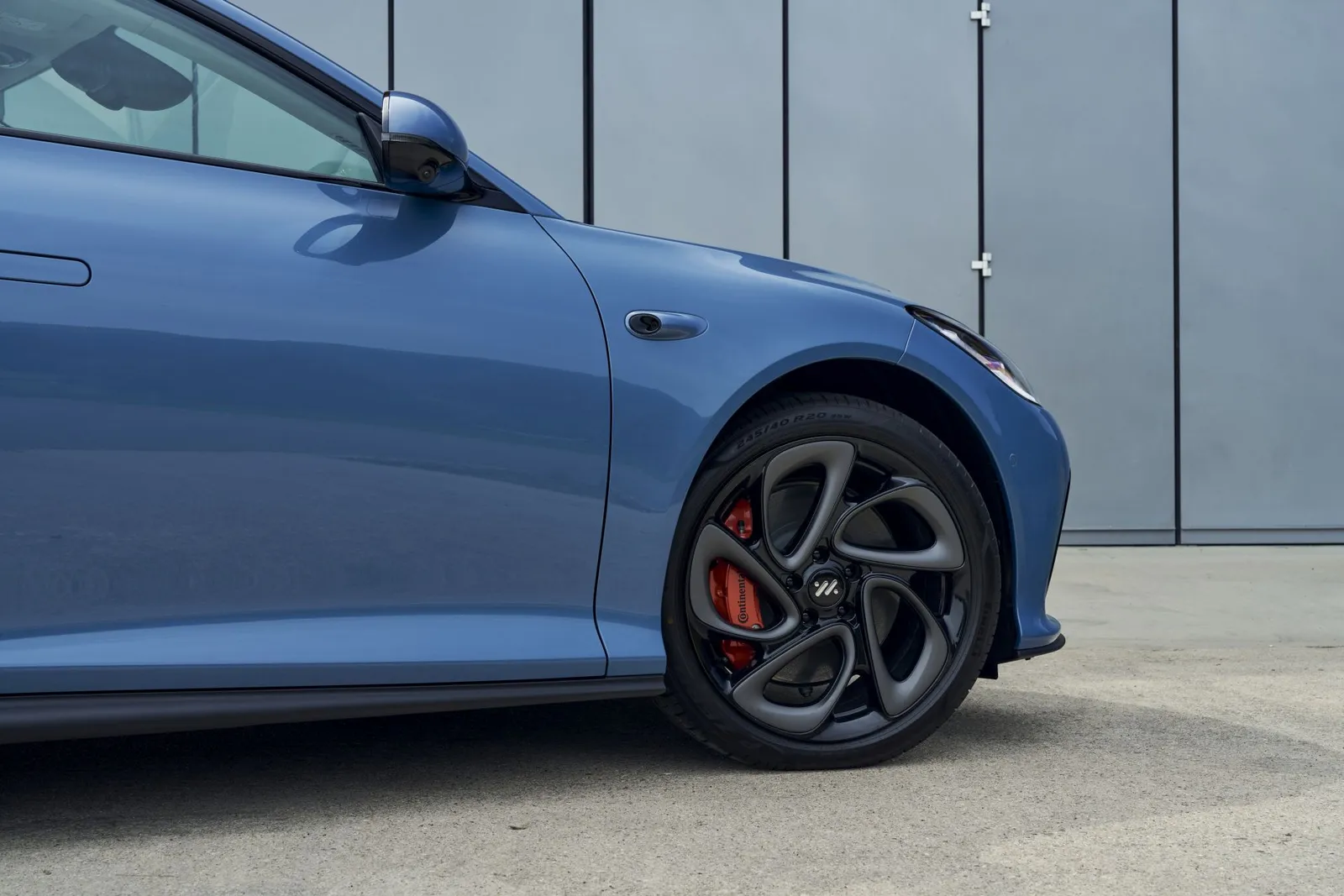
With a length of 4931 millimeters, a width of 1960 millimeters, and a height of only 1474 millimeters, the IM5 sits low and wide on the road. Its 2950 millimeter wheelbase further elongates its silhouette, resulting in relatively short overhangs. My test vehicle was painted in the dark metallic Rembrandt Grey and featured the 20-inch wheels from the all-wheel-drive version, equipped with 245/40 tires at the front and 275/35 tires at the rear. This mixed tire setup isn’t immediately apparent on the car, but it suits its design intent.
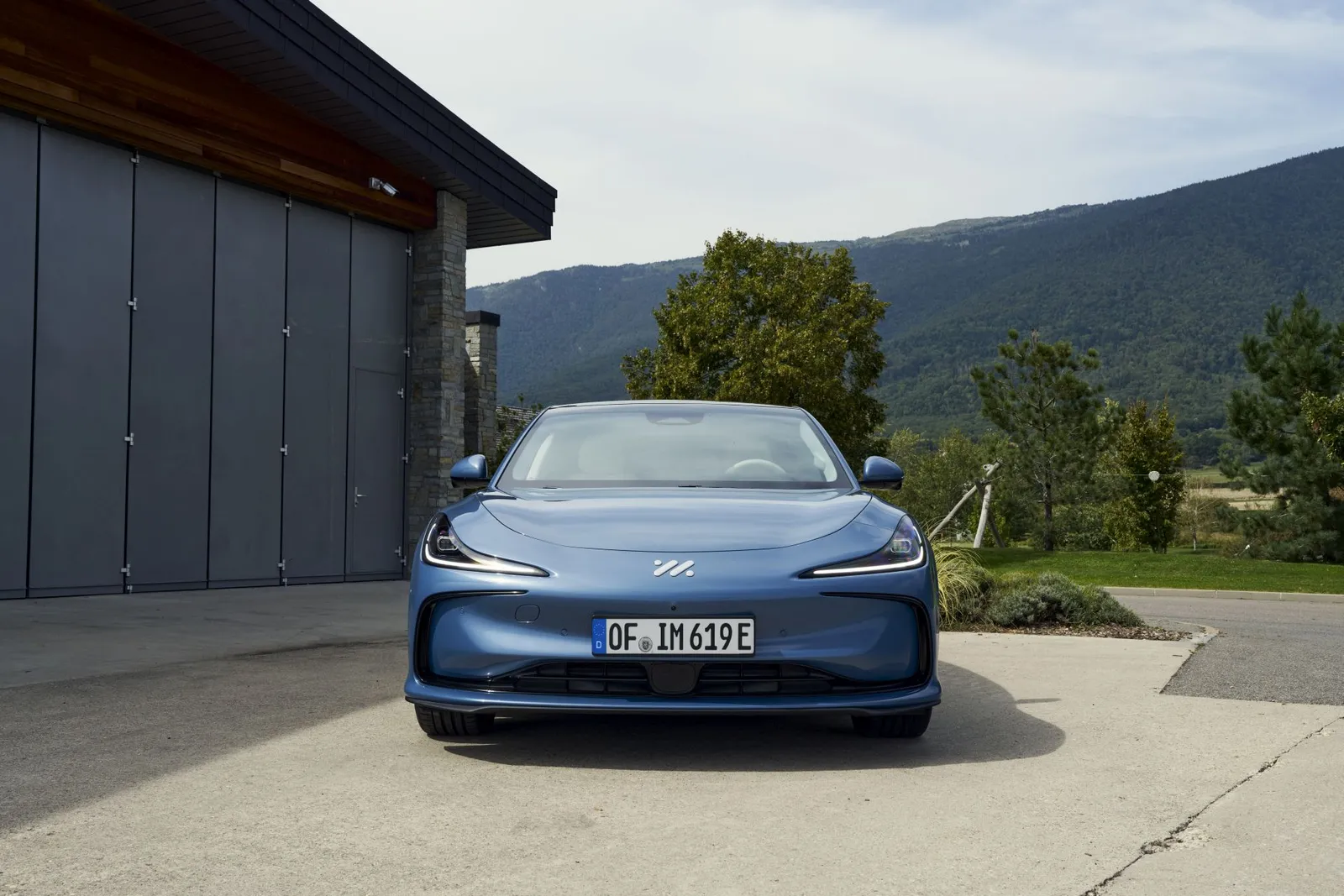
At the front, the limousine eliminates any form of fake radiator grille. The front end is flat, with narrow headlights embedded in the hood; beneath them, an active radiator grille automatically regulates airflow. What’s not visible are the door handles: they sit flush against the side of the car and extend only when approached. Touching them causes the door to open on its own. Combined with frameless windows and a streamlined roof line, this results in a drag coefficient of 0.237—a figure that is uncommon for this vehicle size and directly contributes to its range.
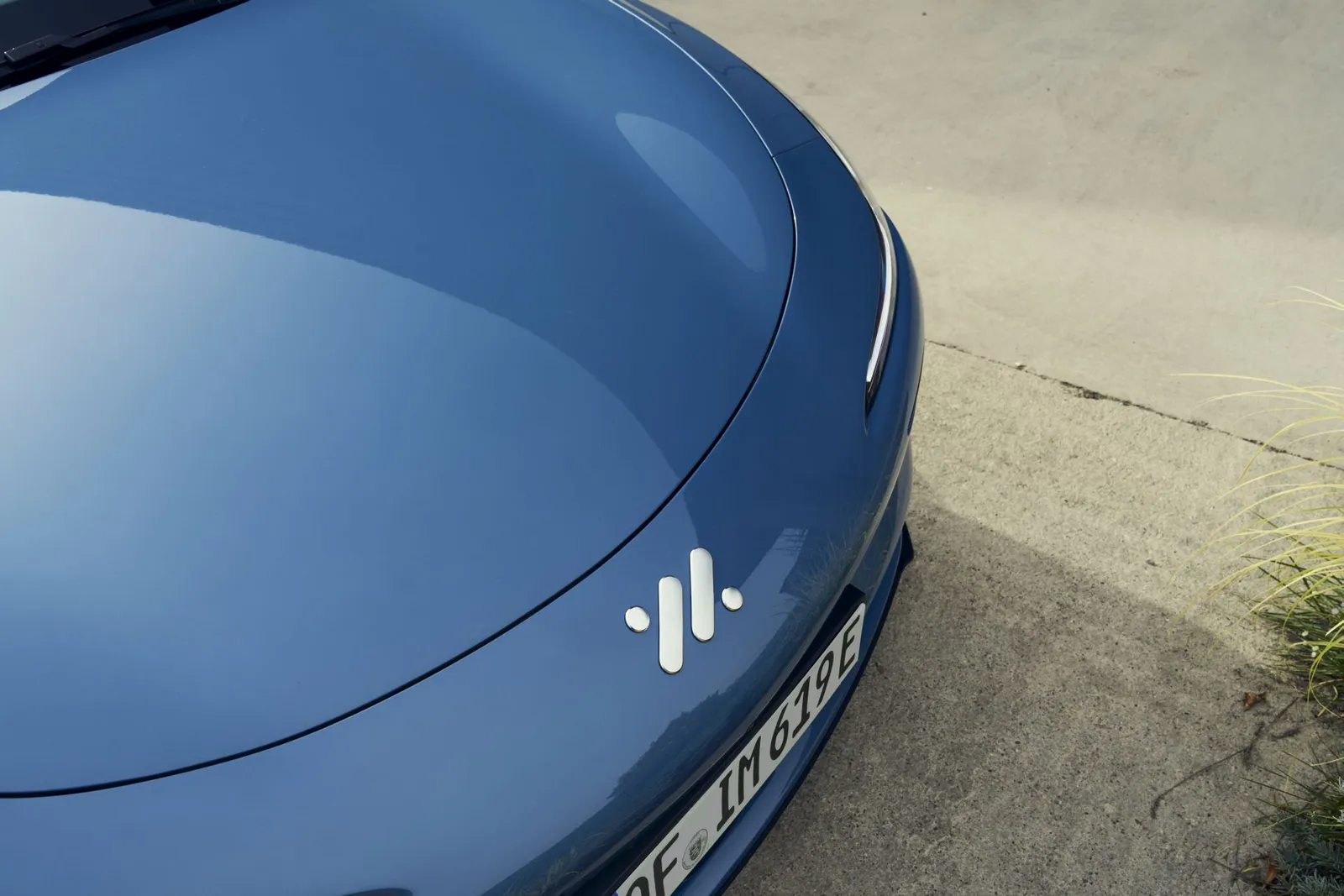
The roof line slopes backward to a sharp edge, beneath which a narrow lighting unit runs across the entire rear width. This light signature is what makes the car recognizable at night, and MG has deliberately emphasized it as a distinctive feature in collaboration with Electric Car News (EAN).
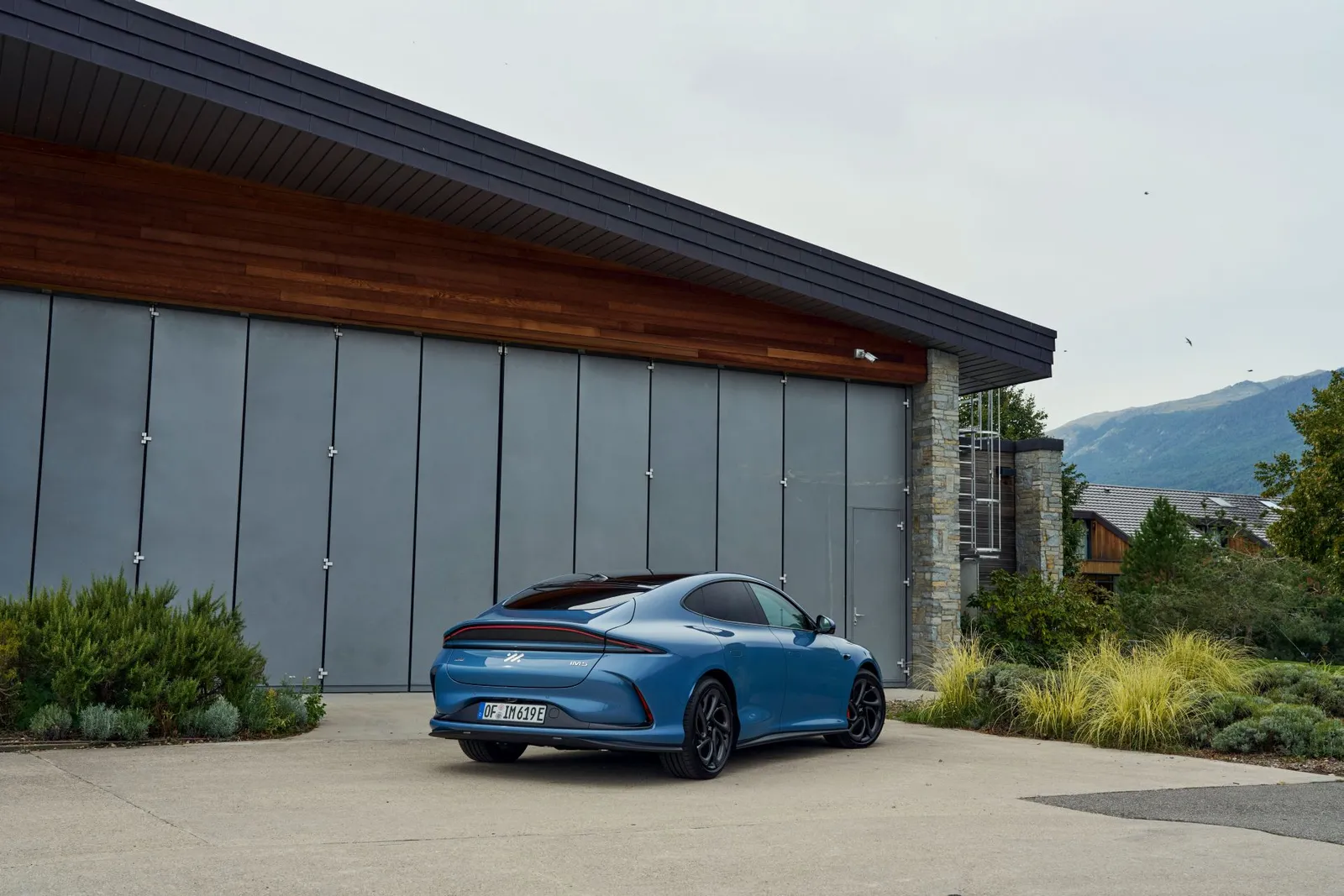
Otherwise, the rear remains unadorned, lacking visible exhaust trims or added diffusers. Overall, this is a car that keeps a low profile visually, which given its 4.93 meters length and performance level is likely a deliberate choice. Those seeking attention will need to rely on the color instead: York White is standard, while Black Pearl, Renoir Blue, and Rembrandt Grey cost an additional 790 euros.
More Space Than the Roofline Might Suggest
Inside, dark synthetic leather is standard in both variants, paired with color-matched surfaces and generously padded areas in the visible zones. The material choice is indeed one of the first things that stand out inside the cabin, and MG highlighted it in place of EAN not by chance. Above the heads lies a panoramic glass roof with a special coating designed to reduce interior heating. The seating position is lower than in an SUV, which benefits the sedan, and the ambient lighting with 256 colors can be adjusted so subtly that it doesn’t disturb.
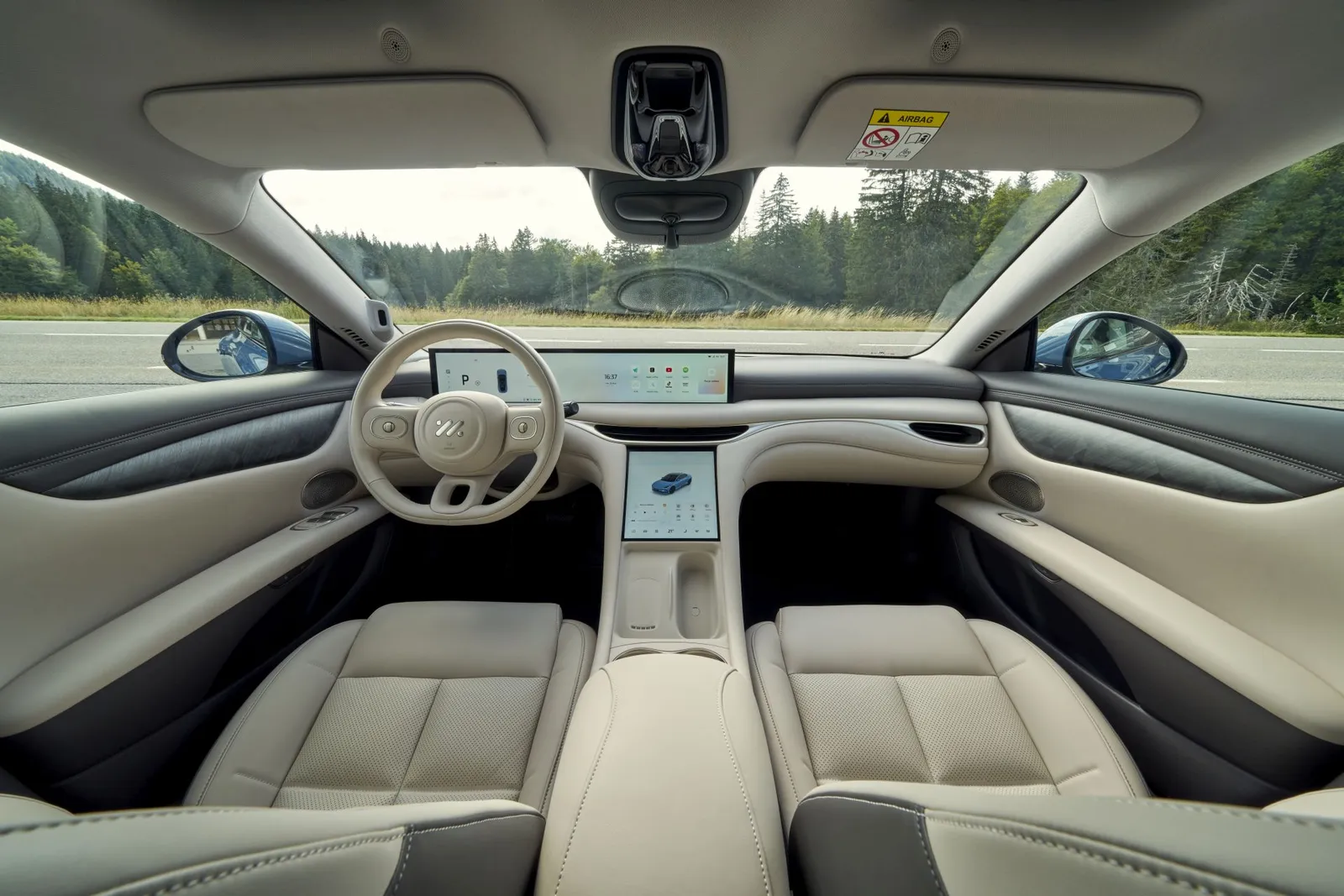
I expected a coupe-like sloping roof line at the back, and indeed, headroom is slightly lower in the second row at 948 millimeters compared to the front. It still doesn’t feel cramped, as the long wheelbase provides ample legroom, and the seating position is suitable for adults as well. Those who often ride in the back should try it out first, but they will be pleasantly surprised.
I had a similar experience with the trunk. The wide-opening rear hatch reveals a cargo space that seems modest at 457 liters on paper, but in reality it’s more spacious than one would expect from a flat sedan. By folding the rear seats in a 60:40 ratio, the volume increases to up to 1290 liters. There are an additional 18 liters under the hood, enough for the charging cable. A braked trailer load of up to 1500 kilograms completes the practical picture.
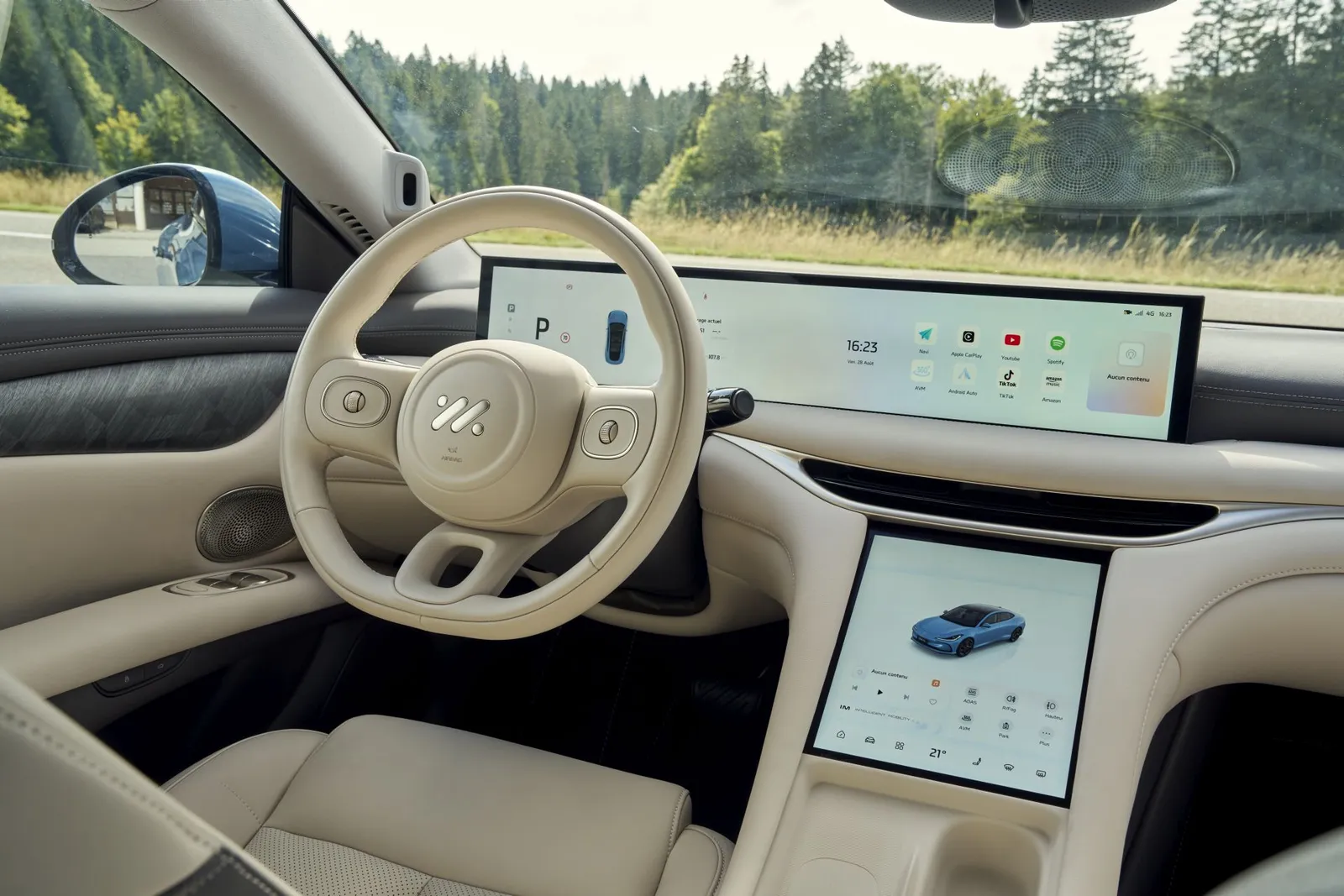
The interface is similar to what IM uses in SUVs. In front of the driver lies a 26.3-inch panoramic display, with a 10.5-inch vertical touchscreen beneath it. There are virtually no physical buttons, which requires adjustment during the first few minutes. This is alleviated by customizable shortcut fields on the lower display, allowing access to key functions from deeper menu levels. Those who take the time to use them can reach their destination much more quickly.
Android Auto worked wirelessly and without interruptions during my drive, though I was traveling much shorter distances in this vehicle compared to the SUV. The system accepts voice commands, and navigation functioned smoothly. The head-up display doesn’t list the features, which is forgivable given the screen size, but it should still be mentioned. The seats also lack a massage function; I didn’t miss it on the short trips, but it might be a problem on longer journeys.
Where MG Sets Limits with the Suspension
The powertrain delivers seamless performance. In the Premium AWD model I drove, two synchronous motors combined produce 553 kW (751 horsepower) and 802 Nm of torque, enabling the car to reach 100 km/h in 3.2 seconds and a top speed of 268 km/h. These figures are never displayed on public roads, but something else is noticeable: the IM5 responds instantly to the accelerator pedal and maintains strong thrust even at moderate speeds, making overtaking a breeze. With a curb weight of 2373 kilograms, this is no small achievement.
In terms of suspension, MG clearly separates the two models. Adaptive air suspension and active damping remain exclusive to the SUV, where they are offered as part of the Drive Pack for 2000 euros along with 21-inch wheels. This package is not available for the IM5; the sedan uses conventional suspension in all variants, featuring a double wishbone front axle and a multi-link rear axle. The brakes are from Continental, with 365 millimeters in diameter and four-piston calipers at the front, and the braking distance from 100 km/h is 33.8 meters according to the specifications.
This difference is noticeable, though less so than expected. The handling is tight, with short inputs responding more directly compared to the air suspension version, while the sedan seemed slightly more direct in its handling on curved sections. I tested it in both comfort and sport modes, and the differences between them remain modest. Those who expect the comfort of air suspension should opt for an SUV, whereas those seeking clear feedback from the front axle will find this model suitable.
The real breakthrough lies elsewhere. The standard all-wheel steering turns the rear wheels up to six degrees in opposite directions at low speeds, reducing the turning circle to 9.98 meters—a figure typically associated with compact cars. This is noticeable in tight turns as well as when parking in a hotel lot, where the car feels smaller than it actually is. At higher speeds, the rear wheels steer slightly in parallel to stabilize the vehicle. The Crab Mode, in which all wheels turn in parallel causing the car to move diagonally, was demonstrated to me by the IM team; I haven’t tested it myself. Its usefulness is still understandable, especially in parking garages and narrow entrances.
In terms of regenerative braking, there are still only two levels: Standard and Low. A one-pedal mode is absent and cannot be added via update either, as the hardware does not support it. Those accustomed to driving with a single pedal from other electric cars will need to adjust to this approach. Acoustically, the sedan is on par with SUVs, remaining pleasantly quiet in urban driving conditions, but wind noise penetrates despite the acoustic glass and noise reduction features at higher highway speeds.
Between specifications and reality
The onboard computer showed around 21 kWh per 100 kilometers at the end of my drive. With outdoor temperatures between 9 and 15 degrees, a mix of city roads, country lanes, and a short stretch on the highway, this figure is higher than the WLTP value of 19.7 kWh, but it remains within acceptable limits for a car of this performance class and weight. It should be noted, however, that the distance covered was short, so reliable conclusions about long-distance driving cannot be drawn from this. MG claims a WLTP range of 575 kilometers for the all-wheel-drive version, while the rear-wheel-drive model is said to achieve 710 kilometers.
I didn’t charge it myself, so everything else is based on the manufacturer’s specifications. The 100-kWh battery operates with an 800-volt architecture; the datasheet states a charging capacity of up to 396 kW, allowing it to reach 80% charge in about 17 minutes using a 400-kW charger. More interesting was the practical example of the similar IM6, which MG demonstrated during a press conference: it reached 79% charge in 17 minutes and 2 seconds, with a peak charging power of 370 kW and an average of around 256.5 kW. Therefore, the 396 kW figure listed in the datasheet cannot be achieved even under optimal conditions.
The assistance systems are grouped under the name IM AD and include a 360-degree camera, adaptive speed and distance control, lane-keeping and lane-changing assistants, as well as a cross-traffic warning with automatic braking. In everyday use, they remain restrained, but the lane guidance actively assists the driver by seeking to be directed rather than merely making corrections. Another feature that truly impressed me is this: with a button press, the IM5, like the IM6, drives the last 100 meters backward exactly along the path it took earlier, including all curves and maneuvering. In a narrow access road without room to turn, this is far more than just a gimmick.
With automatic parking, the same criticism remains that I noticed in the SUV. The system reliably finds the space and maneuvers the car into it neatly, but it parks the vehicle very close to the adjacent car. It makes it difficult for anyone trying to get in there. Technically, the process works fine, but I would prefer more space as a result.
MG IM5: What’s Included Standard at This Price
The IM5 starts at 53,990 euros for the Premium version with 300 kW (407 hp) and rear-wheel drive. The Premium AWD model I drove is listed at 58,990 euros, plus 790 euros for the metallic paint, bringing the test vehicle’s total to 59,780 euros, each amount plus 999 euros in shipping costs. There isn’t much else to include, as the options list is limited to paint and light interior trim. All-wheel steering, panoramic glass roof, the audio system with 20 speakers, heat pump, front seat heating and ventilation, as well as the assistance systems, are part of the standard equipment. A seven-year warranty up to 150,000 kilometers is also included.
This can only be understood within the context of the brand. By the end of August 2026, 23,100 new registrations were recorded in Germany, a 48 percent increase compared to the previous year, with the market share standing at 1.2 percent according to MG. The dealership network currently has 199 locations, with plans to reach 220 by the end of the year. For a model targeting the premium segment, this is more important than individual specifications listed in the data sheet, as personalized advice and proximity to service centers carry greater weight there.
Who buys such a car? Most likely someone who travels frequently, prefers a sedan over an SUV, and is not concerned about the brand name on the rear as a status symbol. The selection of fully electric sedans of this size is limited, and with this combination of performance, charging speed, and features, one can get a lot for just under 60,000 euros.
What stuck with me most was the contradiction between size and behavior. A car 4.93 meters long that feels smaller in tight curves and when parking is a rare experience. What I would change can be listed quickly: one more regenerative braking level, slightly more distance when parking automatically, and a few physical buttons for the functions needed while driving. The rest can be learned, and after an afternoon in the Jura, I wish I had spent more time with this limousine.
Disclaimer: MG IM invited me to France to get to know the MG IM5. However, this does not affect our honest opinion expressed here.