
Mercedes EQS 450+: Last Chance for the Electric S-Class
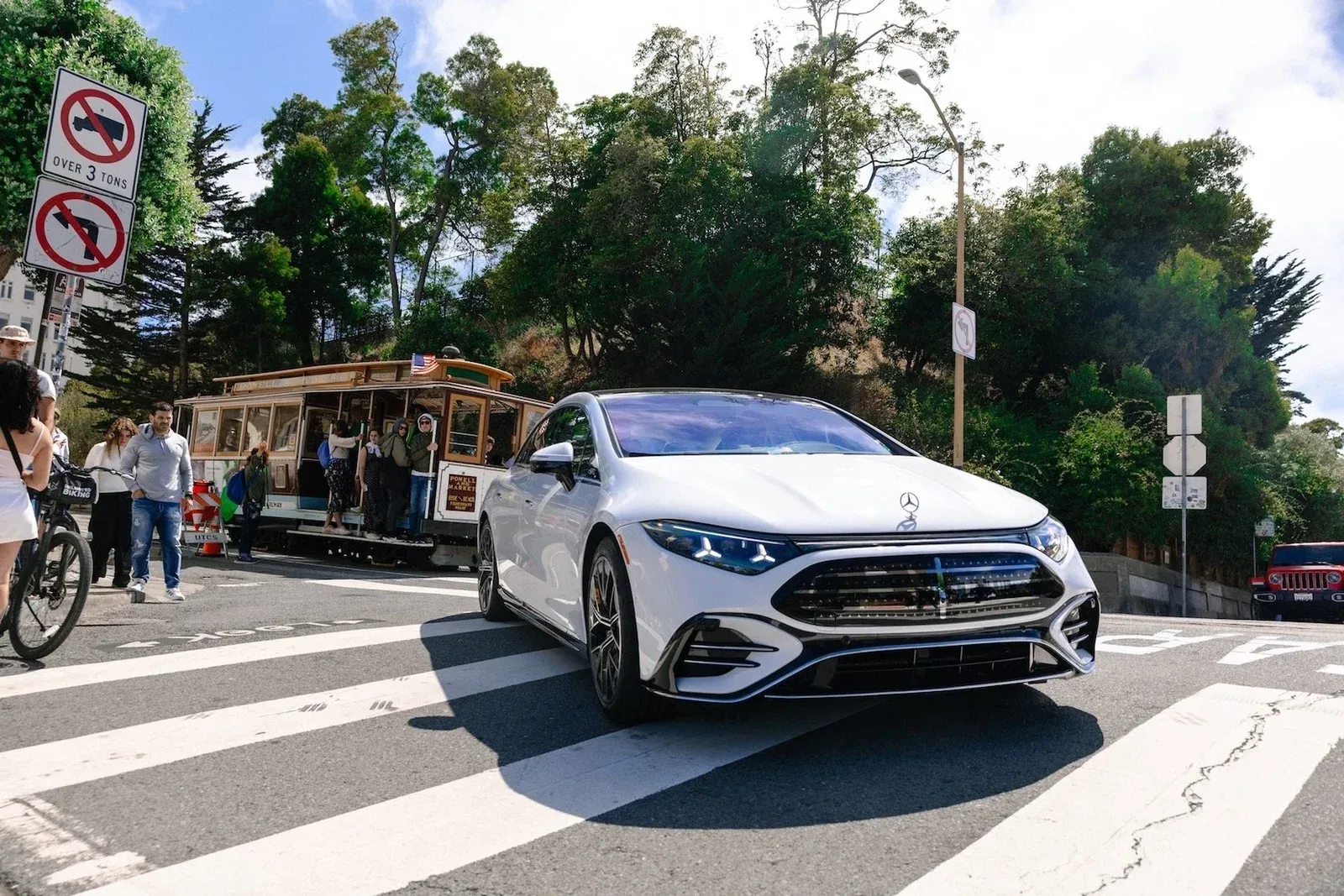
The EQS has yet to make the leap to the electric Mercedes S-Class and continues to struggle among customers. Following last year’s visual updates, there is now a major technological overhaul with 800 volts and steer-by-wire. Can the steering wheel in its current design still be considered impressive?
As the saying goes, there’s no second chance to make a first impression — and Mercedes failed miserably with its EQS. Arc-shaped design, no status grille, poor comfort in the back seat, and certainly not the luxury of the S-Class; no wonder this electric flagship from Mercedes has had a hard time selling. Originally planned as an electric CLS, it was supposed to evolve into the luxury model with a plug-in option, the electric S-Class. That didn’t work out. Now improvements have been made to both the design and comfort, especially in the second row.
The EQS offers optional new executive seats for a price of just under 3,900 euros, which provide significantly greater comfort. Details such as a specially angled footrest placed between the front seat tracks greatly enhance passenger comfort. Additionally, the passenger seat can be folded forward and the backrest can be adjusted to up to 38 degrees. The premium package also includes seat heating with additional neck and shoulder heating, as well as pneumatic adjustment of seat depth. Standard features on the Mercedes EQS now include the large Hyperscreen and a heat pump, combining high technology with comfort.
Mercedes EQS 450+ in Test: 300 km Range in 10 Minutes
The powertrain package has also been upgraded, as the battery pack under the floor has been significantly expanded, which greatly increases range depending on the model. Yet even more important for customers is the technically complex transition to an 800-volt electrical system, which accelerates charging at hyperchargers. A new cell chemistry now enables the battery pack, initially expanded to 118 kWh under the floor, to deliver up to 122 kWh. As a Mercedes EQS 450+, this means a maximum range of over 920 kilometers to the next charging stop — an absolute diesel-level performance. But the best part is that charging is now much faster than before, as a charging capacity of up to 350 kW allows for 300 kilometers or more in just ten minutes at a charging station.
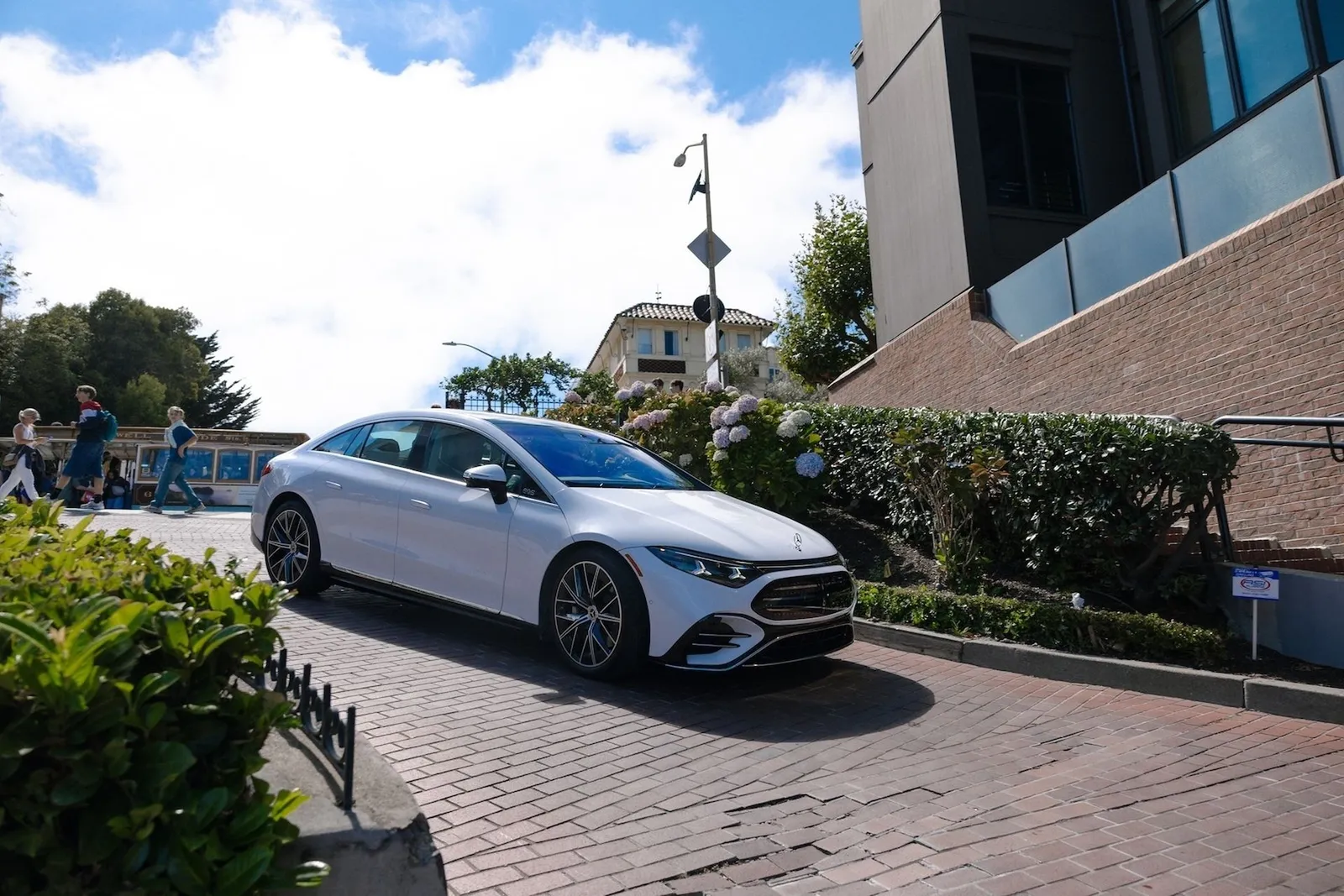
In terms of propulsion, electric-focused customers can choose the power level they desire for their vehicle. The entry model is the Mercedes EQS 400, which comes with 112 kWh of battery capacity and 270 kW / 367 horsepower, but costs less than 95,000 euros. The more interesting options are likely the higher-powered versions with rear-wheel or all-wheel drive, offering 408, 476, or 585 horsepower. Compared to its strong electric competitors, it remains relatively modest in performance, but the EQS focuses more on ride comfort, noise level, and range. Here, the Mercedes EQS 450+ volume model, with 300 kW / 408 horsepower, shines. The power output is more than sufficient thanks to 505 Nm of torque, and those who can do without all-wheel drive will be well satisfied with the 450 model, which strikes a balance between a casual cruiser style and the ability to accelerate to 210 km/h.
For an additional 2500 euros, the Steer-by-Wire system will be available starting at the turn of the year, marking the first time a German vehicle has abandoned a direct connection between the steering wheel and front wheels. The driver’s steering commands are transmitted to the front and rear axles via sensors and actuator motors. Drivers don’t need to get used only to the oddly upward-facing steering wheel with its Brezelle look, which offers no significant advantage. It is simply meant to be a visible indicator that the driver can turn large angles with minimal steering input, eliminating the need to reach over the wheel as in models from Lexus or Tesla.
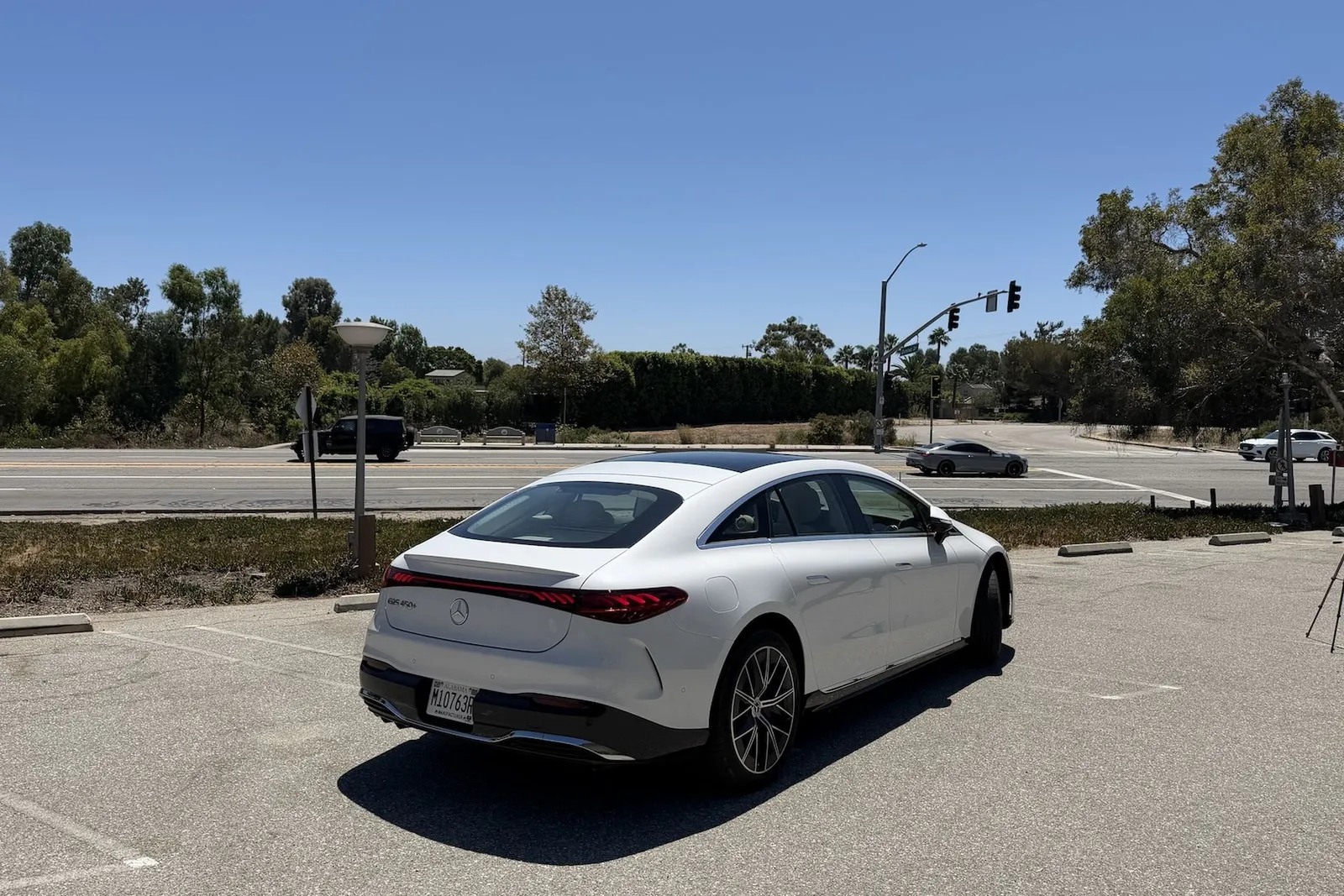
It takes a few minutes and several maneuvers before the 5.23-meter-long electric behemoth can be precisely maneuvered into a parking space with minimal angle adjustment or switched lanes. The feedback feels somewhat synthetic but highly accurate, and the lower arms hardly need to be twisted when turning at 90 degrees. Whether on the highway or country road, a slight twist of the steering wheel allows the electric sedan to navigate effortlessly. It works easier than expected. Is it really worth 2,500 euros to customers? Probably not, but the steer-by-wire control system is likely to become standard in the long term because it saves space and allows right-hand drive versions to be produced more cost-effectively.
How close is it to the S-Class?
In addition, along with its 800-volt powertrain, it gives the Mercedes EQS a true high-tech boost during its third technological refresh, which could turn some potential buyers into actual purchasers. The S-Class operates in a completely different league when it comes to comfort, but technically, a model like the Mercedes EQS 450+ still sets high standards. This luxury sedan aims to convey all of this visually as well, featuring a large grille between new LED headlights and a star emblem designed to project confidence outward.
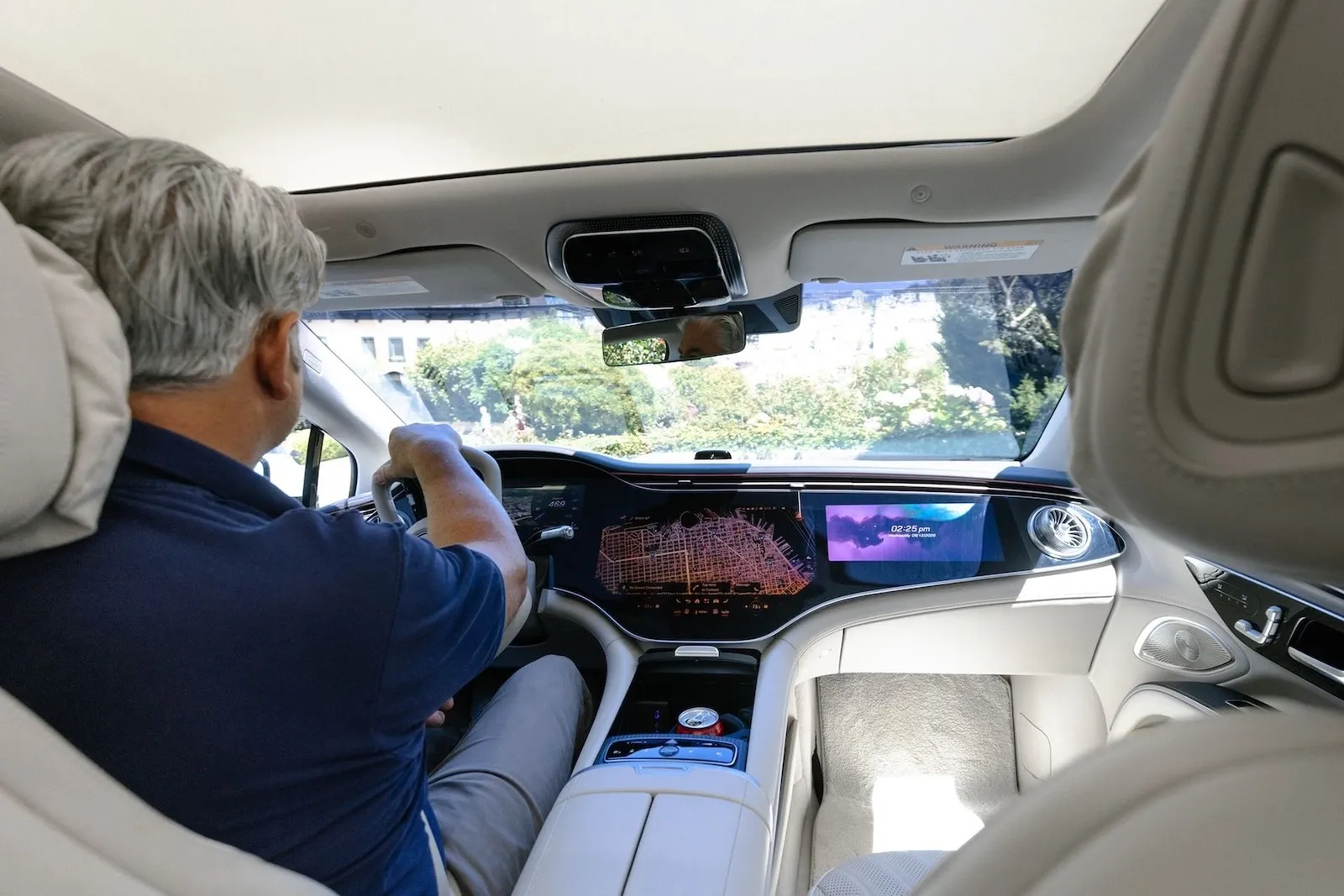
In terms of comfort, the Mercedes EQS offers several additional luxury features. However, the gap compared to the recently refreshed Mercedes S-Class remains. The seats in the front and especially in the back are far from as luxurious as those in its internal combustion engine counterpart. The same applies to interior trims and decorations, where even the new electric C-Class provides little less than what the EQS offers.