
Li-S Energy’s lithium-sulfur battery powers Pegasus drone through a near two-hour flight
EV Engineering News
Posted October 9, 2026 by Chris Ruoff & filed under Newswire, The Tech.
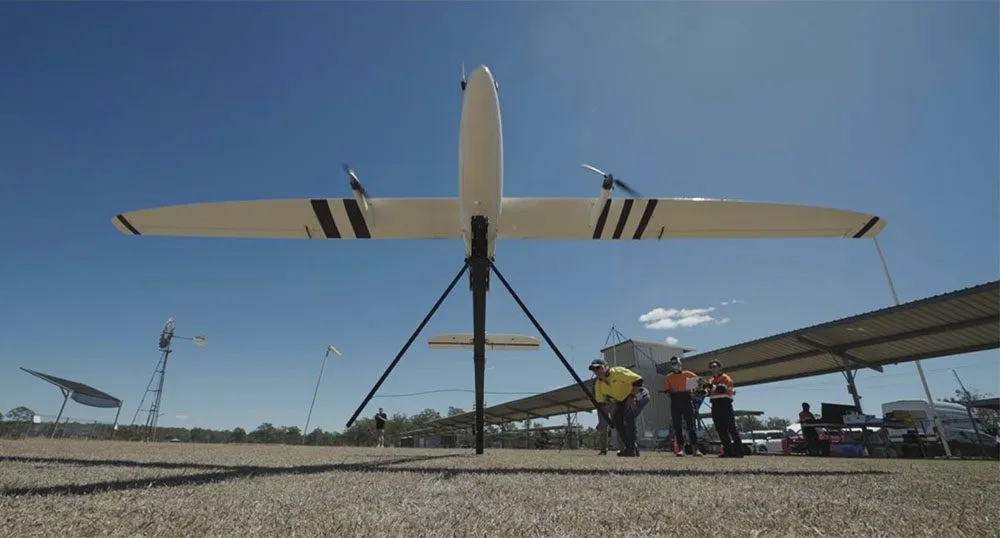
A single lithium-sulfur battery pack from Li-S Energy powered the Pegasus long-endurance drone through a test flight of almost two hours over Queensland, covering more than 75 km. The aircraft met its expected flight performance and landed with battery capacity to spare, according to the Australian cell developer.
Pegasus is a twin-motor drone with a five-meter wingspan, designed and built by three Australian companies. V-TOL Aerospace developed the airframe and power systems, and Li-S Energy supplied the 382 Wh lithium-sulfur battery packs and battery management system. Halocell Energy fabricated the perovskite solar array mounted along the wings.
Li-S Energy’s battery management system is integrated with V-TOL’s power management system. Together they control battery power to the twin motors and control systems, and they can manage feed-in from the solar array at the same time. Li-S Energy filed two patent applications during the project, covering the battery management system and the battery pack design.
The company benchmarks the 1.1 kg of lithium-sulfur cells flown on the endurance flight against a Tattu 6S lithium polymer drone pack rated at 16,000 mAh, which it puts at 355 Wh, about 1.85 kg and around 192 Wh/kg. On an equal cell-weight basis, Li-S Energy says its cells delivered 80% more range and flight time. The comparison excludes the weight of pack housings and battery management systems, and it assumes flight time scales linearly with cell energy.
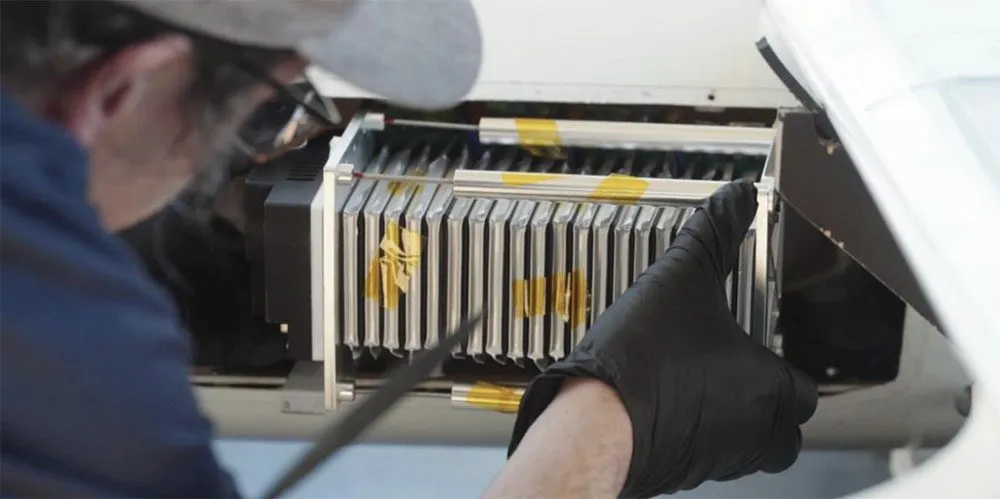
Pegasus was designed to carry two Li-S Energy packs. With both packs fitted and improved Halocell solar arrays, Li-S Energy expects the platform eventually to fly five- to eight-hour missions covering 250 km, which it says would suit long-endurance mapping, surveillance and agricultural, utilities and environmental monitoring.
The project received a grant of just over A$1.35 million from the Australian government under the Emerging Aviation Technology Partnership (EATP) program, matched by the three partners. The flight completes the EATP project’s development and flight test work.
The partners will analyze the flight data to characterize the platform’s performance and assess its commercial potential. They are aiming for future platform sales.
“The Pegasus flew exactly as our team designed it to. Our airframe and power systems performed faultlessly throughout the flight, and pairing them with Li-S Energy’s new lightweight pouch cell battery system gives the platform an endurance advantage operators will immediately recognise,” said Mark Xavier, Managing Director and Chief Executive Officer of V-TOL Aerospace.
Source: Li-S Energy
Create Account. Already Registered? Log In
Virtual Conference on EV Engineering: Free to Attend
Don't miss our next Virtual Conference on September 14-17, 2026.
Register for the free webinar sessions below to reserve your spot and watch them live or on demand.
LOAD MORE SESSIONS