
The Renault 8 Gordini concept: a legend entering the era of electric vehicles
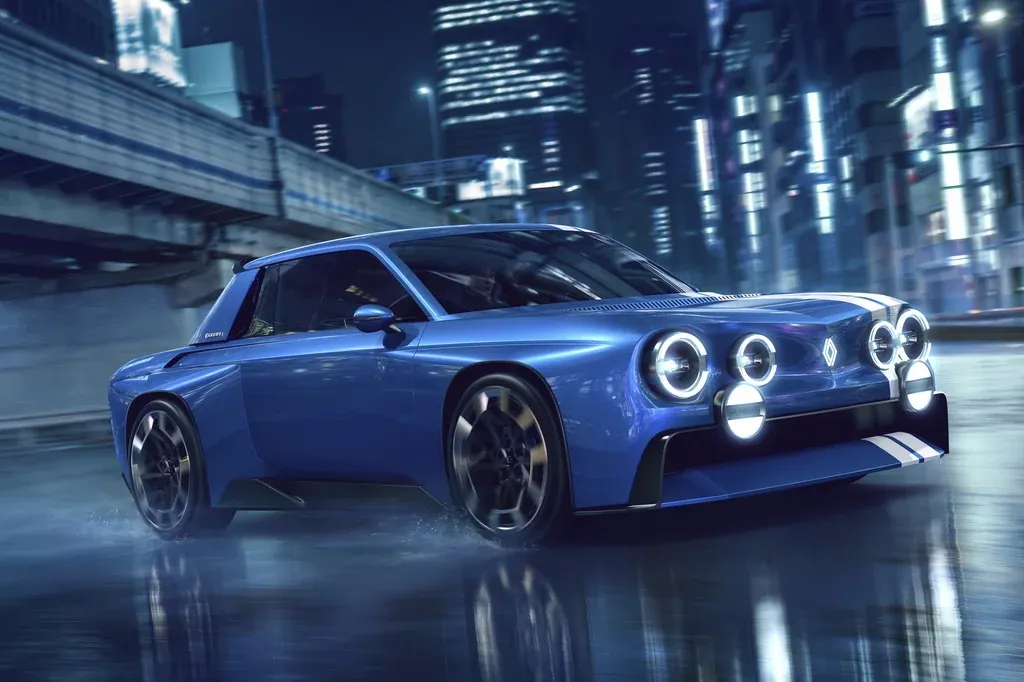
The Renault 8 Gordini concept is not just a tribute to an icon of French motorsport. It also shows how Renault preserves and reinterprets its own heritage. In recent years, the brand has revived several of its most iconic models, giving them a unique modern design that creates a dialogue between the past and the future. The Renault 8 Gordini concept is another manifestation of this approach. This concept car is meant to become part of the brand’s history and heritage, adding to the collection of historic vehicles, archival materials, and artistic works that will be displayed in the future Renault Collections museum in Flins. The opening of the museum to the public is scheduled in about fifteen months.
A Model to Follow
Launched in 1964, the Renault 8 Gordini was equipped with a 95-horsepower engine mounted at the rear and rear-wheel drive. It offered true racing sensations but also required a high level of driving skill. Efficient yet demanding to handle, the Renault 8 Gordini (“la Gorde”) became an excellent “driving school” for an entire generation of drivers, including Jean Ragnotti.
By labeling the Gordini as a sports version of the regular model, Renault made high performance accessible to a wide range of drivers even ten years before the GTI phenomenon emerged. Its distinctive double white stripes became an iconic symbol of the model and a true emblem of its style.
Adhering to the same philosophy, Renault is returning to this legendary model with a new experimental project that will undoubtedly delight enthusiasts of automotive history and motorsport.
Design by Renault
Unlike the concept car R17, created in collaboration between renowned designer Ora Ïto and the brand’s design teams, the Renault 8 Gordini concept is 100% an original development by Renault.
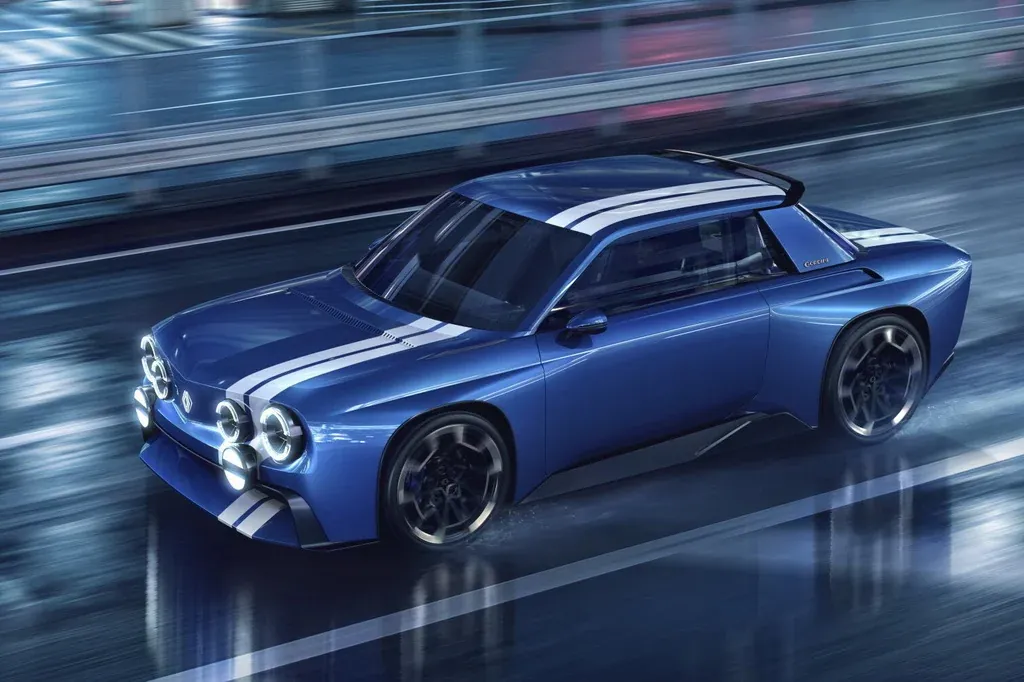
The project began with an internal competition at Renault Design that sparked great enthusiasm among the designers. Over 300 sketches were submitted spontaneously by the brand’s teams. A wide range of concepts was considered: from classic retrodesign to futuristic styles, from ideas that combined the brand’s heritage with modern trends to designs inspired by the world of GT cars. From these more than 300 proposals, two projects were selected for further development and brought to life as 2:5 scale models. This allowed the two concepts to be compared, enabling the creation of a new design foundation by combining the best elements from each.
Proportions Inspired by Motorsports
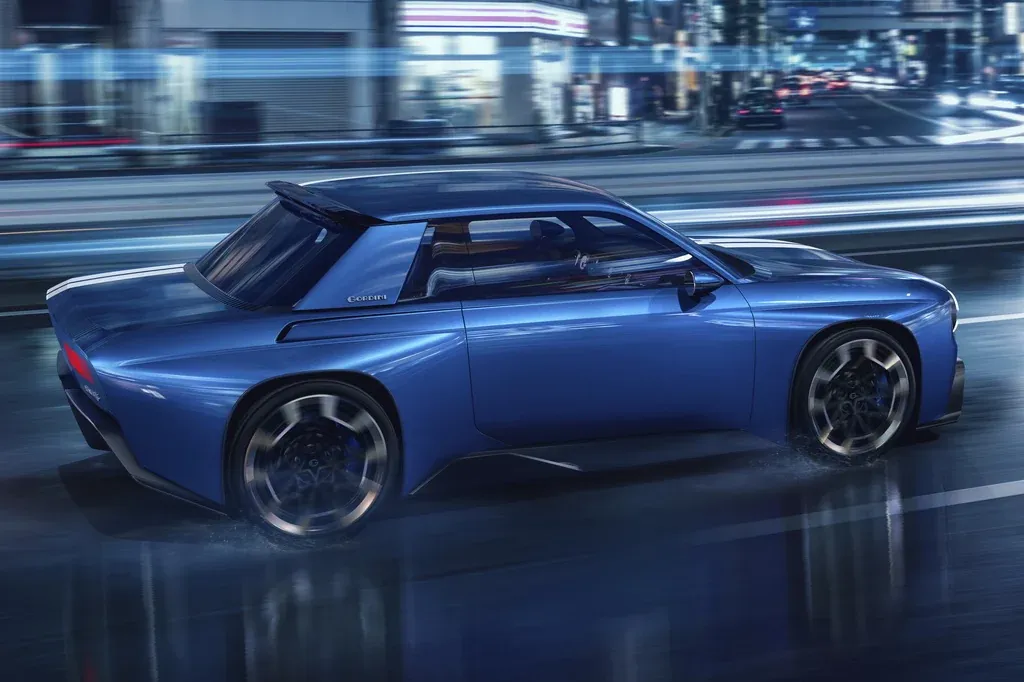
The Renault 8 Gordini concept measures 4.12 meters in length, 1.88 meters in width, and 1.27 meters in height, featuring compact and dynamic proportions. Equipped with 19-inch wheels at the front and 20-inch wheels at the back, it has a solid stance on the road, reminiscent of modern rally cars. This two-door coupe is significantly more dynamic than the original four-door model. Its appearance is defined by an aggressive front end with a V-shaped design and six headlights that give the vehicle a distinctive and sporty character.
The rear of the body is wide, athletic, and distinctly sculpted, reflecting the rear-mounted engine and rear-wheel-drive layout that were characteristic of the original model. Today, the vehicle is equipped with an electric motor producing 270 horsepower. Another element emphasizing the sporty nature of this concept car is the slight forward tilt of the body, which was absent in the original Renault 8 Gordini.
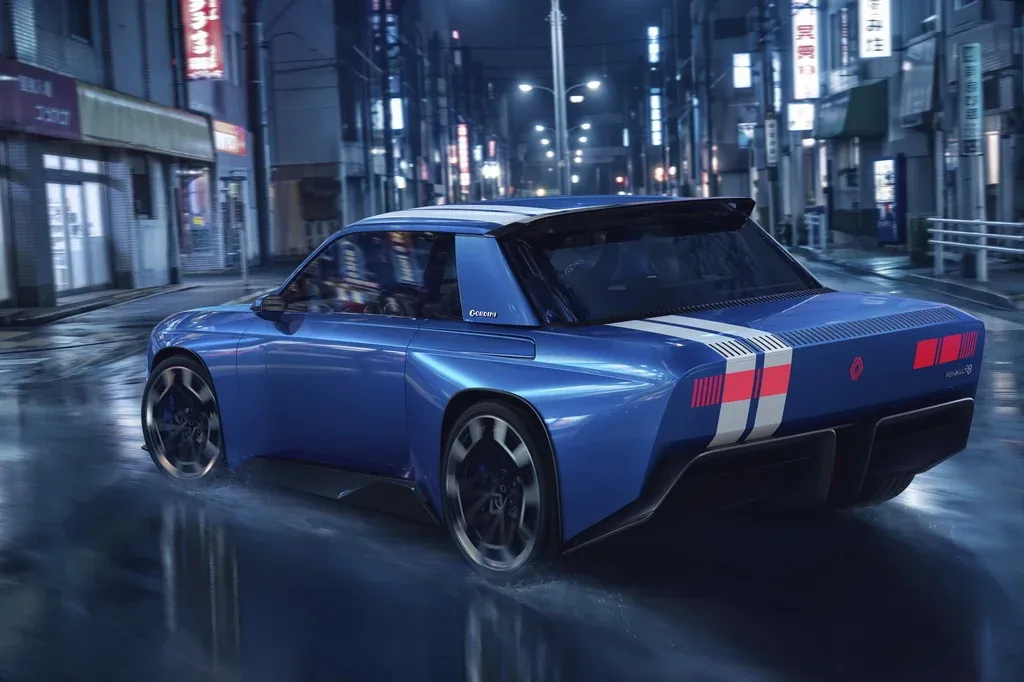
The “cafe racer” spirit
The Renault 8 Gordini concept car was created in the spirit of the “cafe racer” trend, which is gaining popularity in the world of custom motorcycles. Its essence lies in modernizing classic models by eliminating all unnecessary elements and focusing on the pure beauty of materials and mechanical components. This same approach was already used during the development of the Renault 5 Turbo 3E.
In the Renault 8 Gordini concept, this approach is realized through the elimination of unnecessary elements, including even retro details that reminded of the design of the original Renault 8 Gordini. For example, the former chrome side molding is now integrated directly into the body. Transforming into a distinct stamping line, it creates a sense of tension and dynamism that seems to originate from within the car’s body itself.
In addition, to emphasize the purity and integrity of the car’s sculptural forms, many joint lines between body panels were removed. For instance, there is no traditional hood seam in the front section: it is designed as a single piece that can be completely removed, similar to the solutions used in some racing cars.
Playing with References
Although the concept car shares few proportions with its predecessor, its design retains many distinctive features and recognizable elements from the original model in a modern interpretation.
Inspired by the 1964 Renault 8 Gordini, the Gordini script has been carefully reimagined and now features the iconic striped elements of the original emblem.
This recognizable stylistic detail is complemented by a new “8” logo made up of eight segments. All these elements highlight attention to detail and refined craftsmanship, while also referencing the mechanically crafted components typical of that era’s automotive design.
Finally, as a nod to the diamond-shaped logo that adorned the front of its predecessor, an emblem dedicated to the legendary “Gorde” can be found inside the car, created specifically for true fans of the model.
The distinctive deep recessed styling of the side body line, which was one of the recognizable design features of the original model, is also retained in this modern interpretation. However, it now serves a practical function as well by directing airflow toward the new air intake.
The rectangular shape of the wheel arches was also kept to give the car’s silhouette a more powerful and striking appearance.
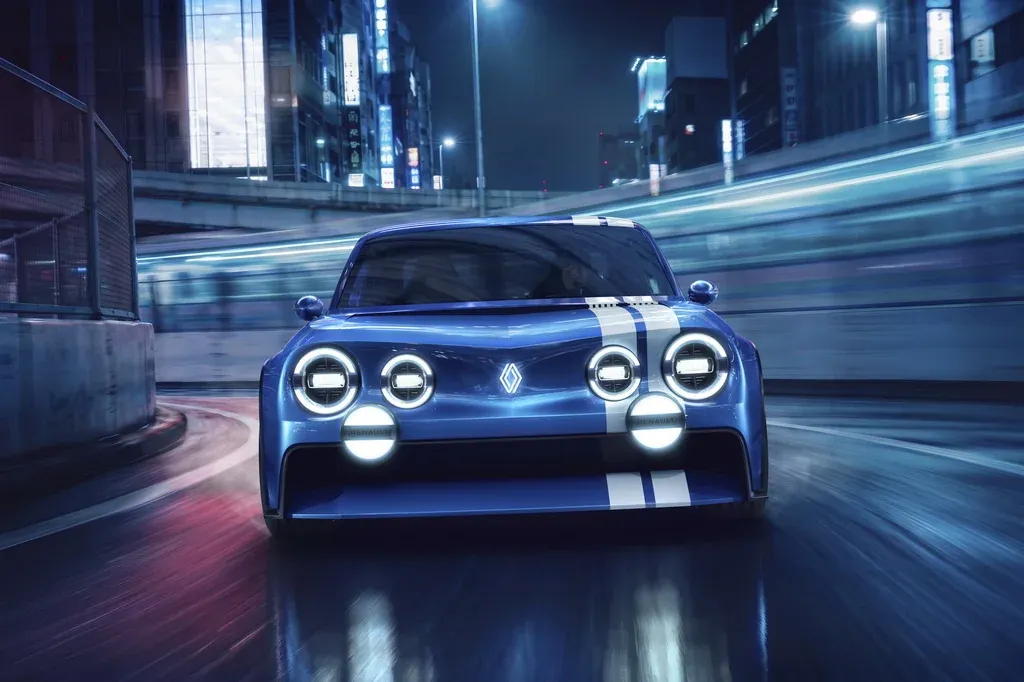
The front end, devoid of the traditional radiator grille, maintains its wedge-shaped profile and seems to slice through the air. The additional headlights characteristic of the rally version are now integrated into a single lighting setup, creating a light signature with six circular headlights arranged in the same pattern.
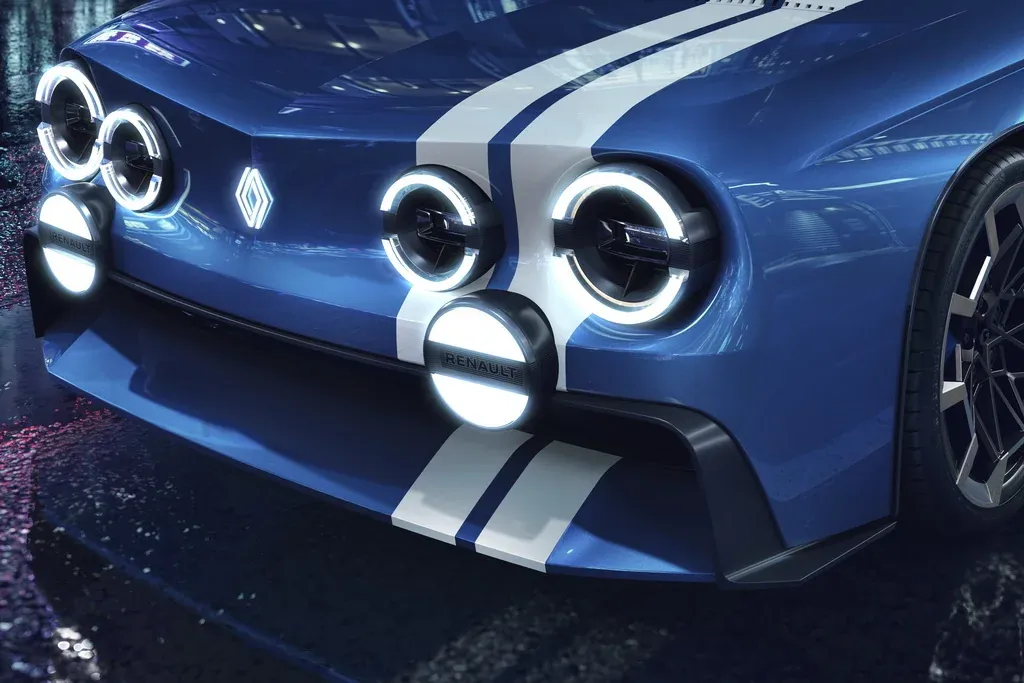
The double white stripe as a guide
Originally, the double white stripe was merely a decorative element on the body, but in the Renault 8 Gordini concept, it became an important structural component of the design. Today, it serves as a guide for various key elements of the vehicle, including the ventilation grille at the base of the windshield and the light graphic pattern inside the rear lights. The double stripe even extends into the cabin, continuing along the upper part of the dashboard where its color changes from white to blue.
Elegant interior with minimalist lines
The interior design of the Renault 8 Gordini concept reimagines the original model with a much bolder appearance. While the dashboard trim still runs across the full width of the cabin, the front panel itself is a horizontal strip of brushed aluminum featuring circular instruments. Their thick bezels echo the three-dimensional design of the headlights.
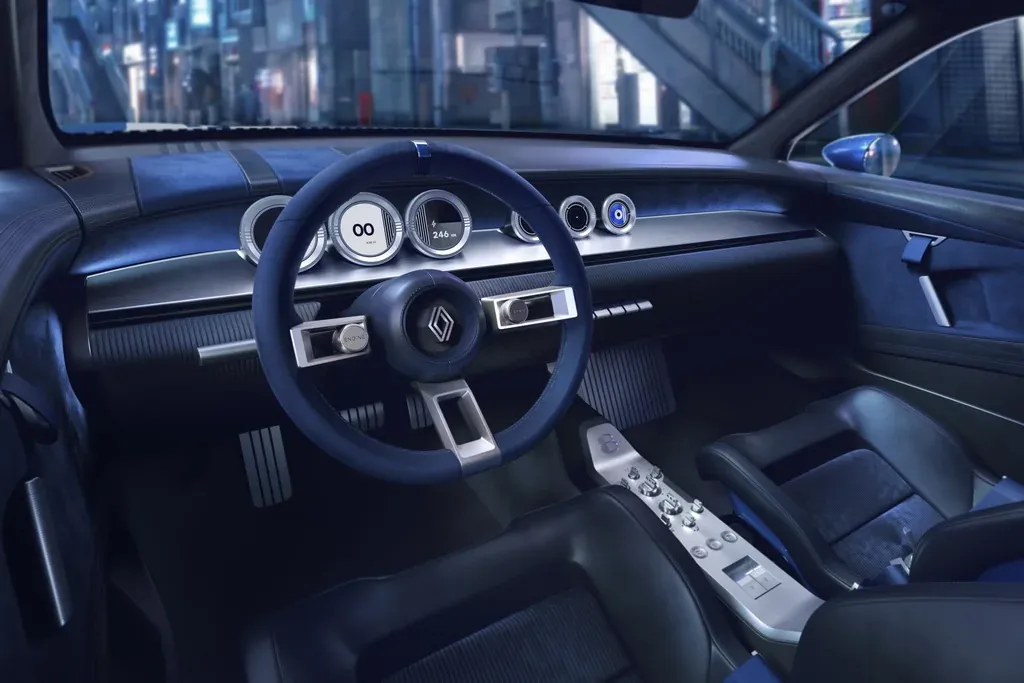
In keeping with the “café racer” aesthetic, plastic has given way to brushed aluminum, which is used for both control elements and large interior surfaces, creating contrast with areas covered in Alcantara.
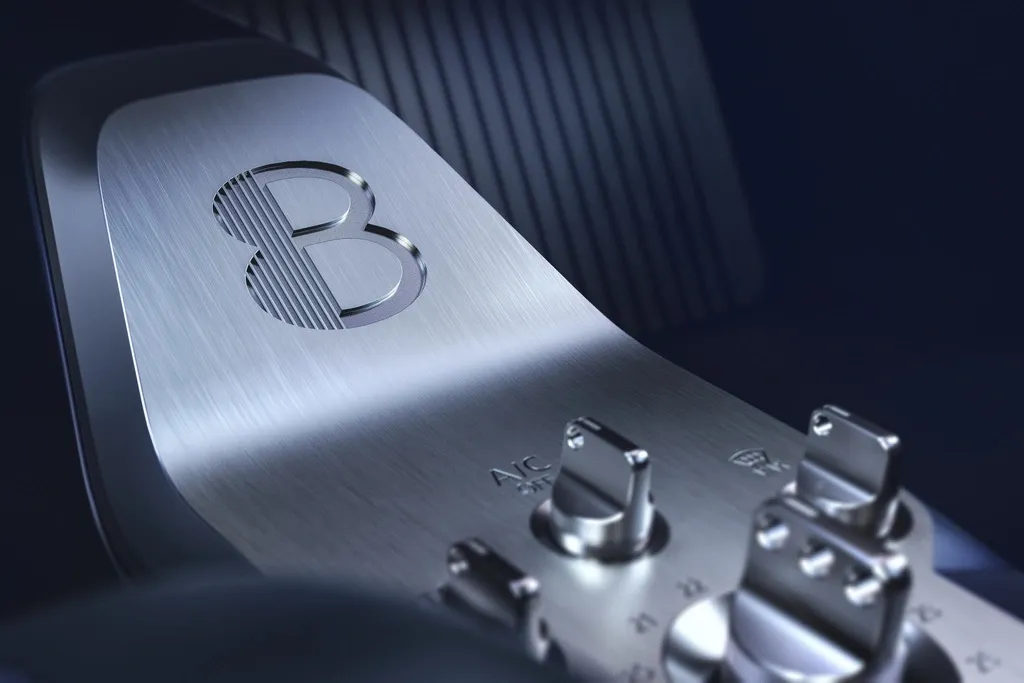
This minimalist design leaves almost nothing that could distract the driver. The focus remains undeniably on vehicle control. The only element that catches the eye is the red dot on the stopwatch button in the center of the dashboard.
The contrasting Alcantara trim on the door panels is complemented by a decorative strip that resembles the markings on a racing track’s kerbs. Meanwhile, the bucket seats essential to this vehicle visually echo those of its predecessor. The central parts of the seat cushions and backs are covered in blue velvet, which contrasts with the rest of the black bucket seats and recalls the older seats with flat designs without headrests.
Note that the carbon used for the body is not applied to the car’s interior. The circular instruments appearing above the brushed aluminum dashboard are digital displays that give the interior a high-tech appearance. The indirect ambient lighting beneath the dashboard creates a similar effect. https://youtu.be/vmfF-q0IgxY
“AC” Note
A true master of mechanics, Amédée Gordini first collaborated with Renault in 1957 by creating the Dauphine Gordini and increasing the engine power from 32 to 37 horsepower. Thus began a history of success. Later, the legendary Renault 8 Gordini emerged, thanks to which the double white stripe became one of the most famous symbols in motorsport.
Amedeo Gordini earned the nickname “The Wizard” thanks to his ability to turn even the most modest engines into true high-performance “steeds.” He didn’t even need a drawing board. He would simply stand beside the milling machine operator and explain exactly what needed to be done, detailing how to create a particular part directly from the metal stock. After that, the finished part was handed over to a draftsman who would then create the technical drawing. For any engineer who respected his profession, this was true magic.