
Kia PV5 in testing: a space giant with surprisingly fun driving
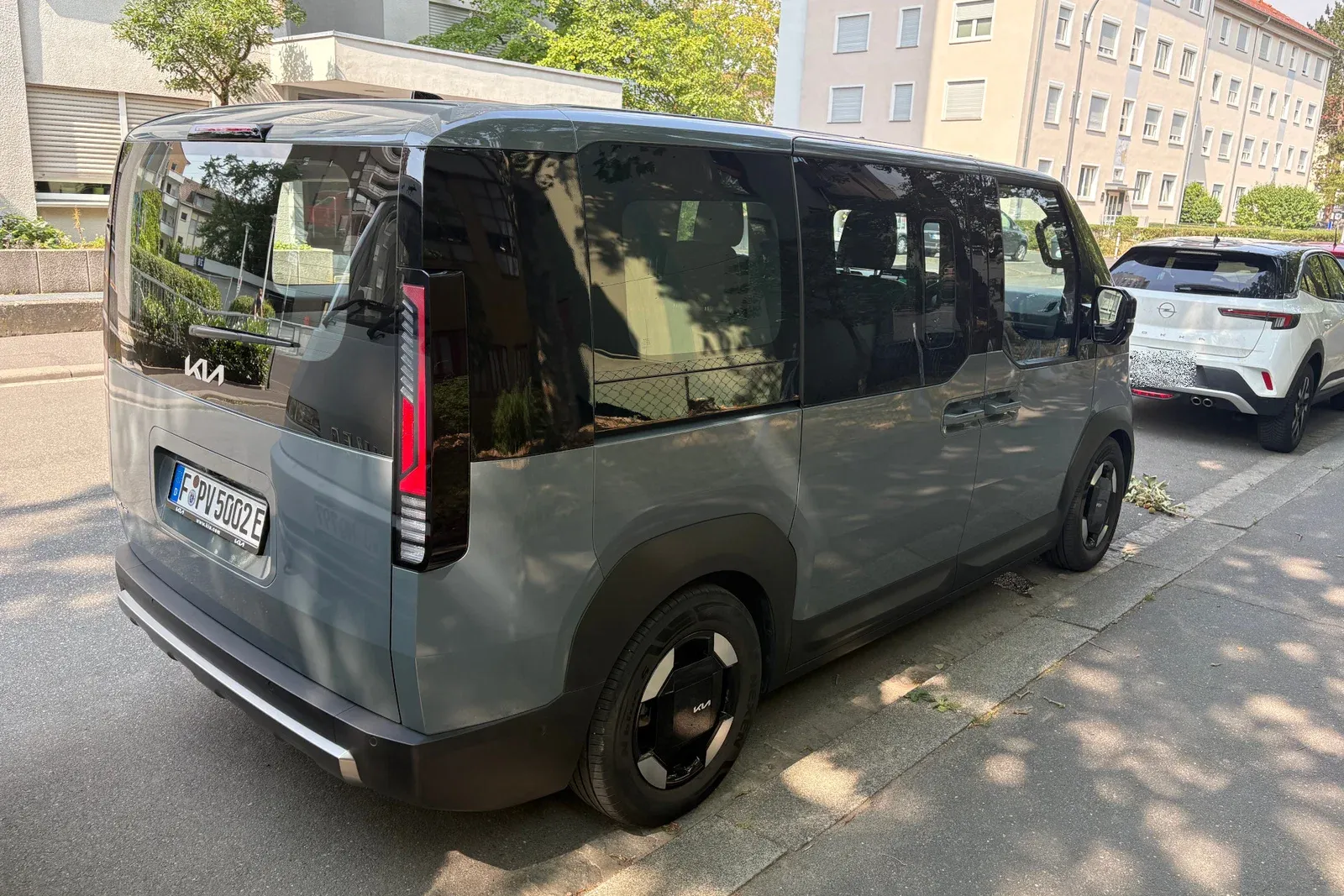
The Kia PV5 looks a bit like a combination of a minivan, an electric car, and a mobile living room. Indeed, as Kia’s first modular electric vehicle, it is above all one thing: remarkably practical. We tested the PV5 Passenger with a 71.2-kWh battery, 120 kW (163 hp) of power, and front-wheel drive. Our test vehicle in the Elite trim without a third row costs 48,990 euros, including extras such as a heat pump and power/smart packages.
The PV5 isn’t even particularly long at 4.70 meters. Without mirrors, it measures 1.90 meters wide, but with the mirrors extended it reaches around 2.26 meters — a figure that unfortunately would prove quite practical during our test.
The following aspects stood out to us in daily use:
Pros of the Kia PV5
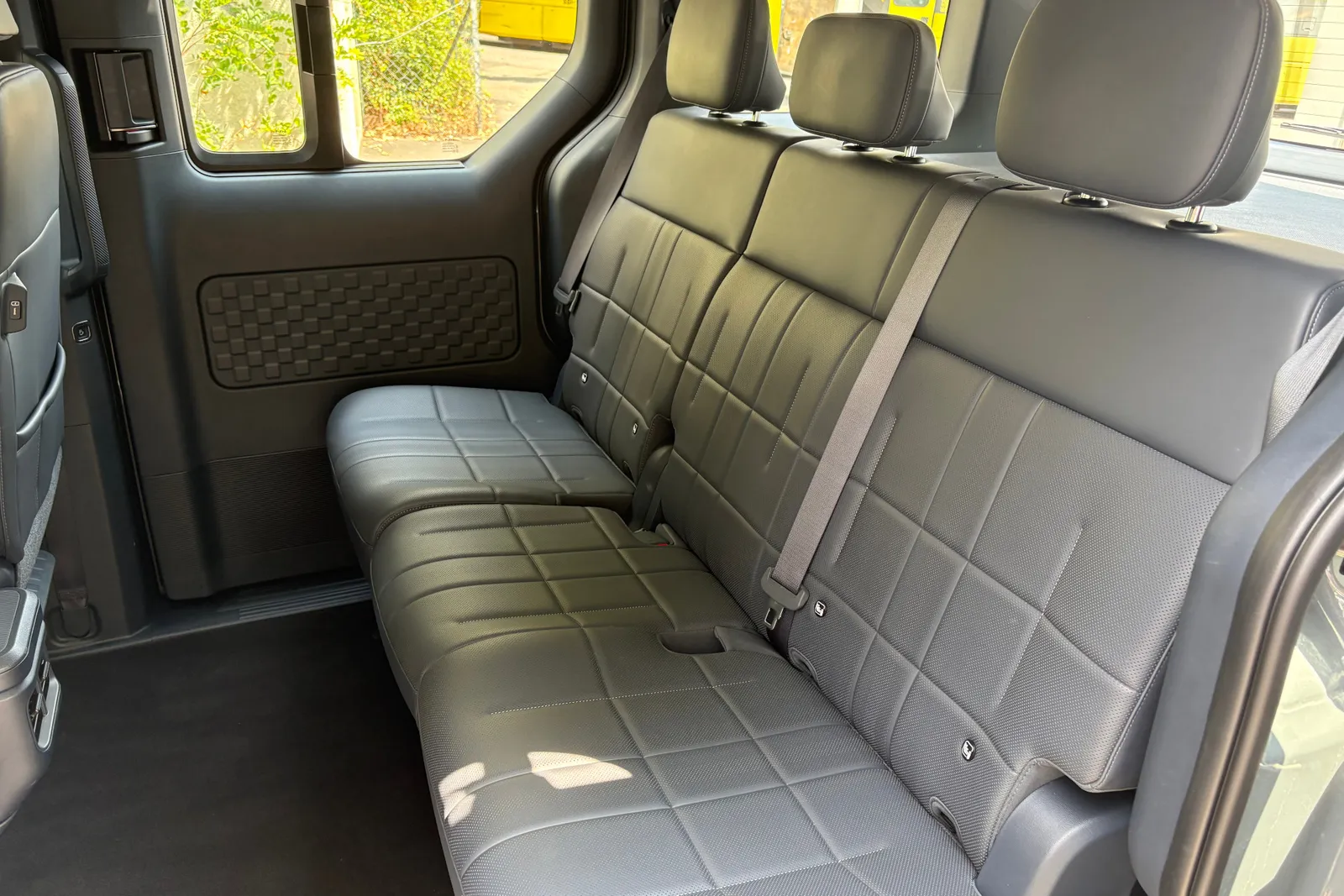
Space: Those who need plenty of space will likely appreciate the PV5 right away. Even with the rear seats up, there is ample room in the back seat area, and according to Kia, up to 1330 liters of cargo space is available behind the five seats. What’s even more impressive than these numerical figures is how airy the interior feels.
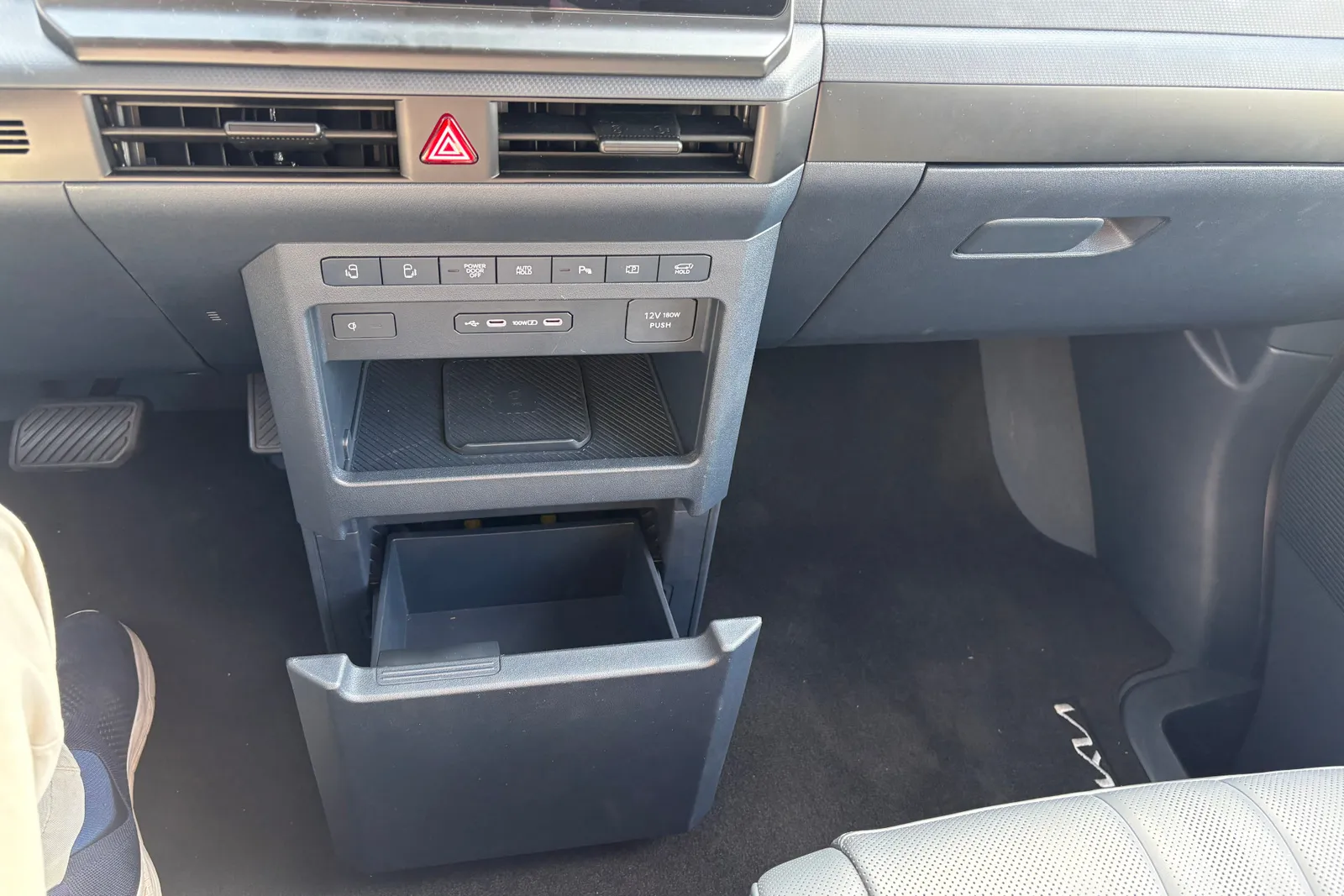
In addition, there are a surprisingly large number of well-organized storage compartments. Smartphones, water bottles, keys, cables, children’s toys, and all the usual miscellaneous items from a family trip find a place somewhere. Especially in the driver’s area, it’s clear that Kia didn’t design the PV5 merely as a large car, but as a vehicle where people can also work and spend plenty of time.
The cost-performance ratio: Just under 49,000 euros is certainly a lot of money. Yet, considering the interior space, battery size, and features, our test vehicle seems to have a fair price. The PV5 already offers up to 412 kilometers of WLTP range with a 71.2-kWh battery, and Kia specifies 120 kW of power and 250 Nm of torque for this version. Those seeking the ultimate premium experience will be better off elsewhere. On the other hand, those looking for the most electric vehicle features for their money and especially for its spaciousness will find a lot to like here.
Consumption: Even in terms of energy use, this large wardrobe-style car doesn’t demand excessive consumption. During our testing period at summer temperatures, we recorded 20.8 kWh per 100 kilometers. When driving quickly on the highway, consumption rose to up to 24.5 kWh, whereas at a constant speed of 110 km/h, the PV5 managed to stay below 20 kWh per 100 kilometers. In urban driving conditions, values below 15 kWh were also achieved.
For a vehicle that is almost 1.90 meters tall with a correspondingly large frontal area, this is an impressive result. Although we didn’t quite reach the official WLTP figure of 19.3 kWh/100 km, there’s also no huge difference between our results and that figure.
The driving experience: Perhaps the biggest surprise of this test. The PV5 looks like a van, but it drives far less like one. Those familiar with traditional combustion engine vans will likely be surprised by how agile such a vehicle can be on the road.
The electric drive responds instantly, the low center of gravity helps in corners, and with a turning radius of around eleven meters, the PV5 can be maneuvered through cities and parking lots with surprising ease. Of course, it’s not a sports car. But agile and almost nimble are terms one would hardly expect from this vehicle type at first glance.
The downsides of the Kia PV5
The interior materials: It’s possible to feel where the good value for money comes from in part. There is plenty of plastic inside, some of which appears more robust than high-quality. Those who spend nearly 50,000 euros on a car might expect more premium surfaces in certain areas.
However, this can also be an advantage when traveling with children: Since there are no piano lacquers or delicate premium surfaces, there’s less need to worry when shoes, toys, or sticky fingers leave marks. Kia itself explicitly highlights the materials designed for heavy use that are easy to clean.
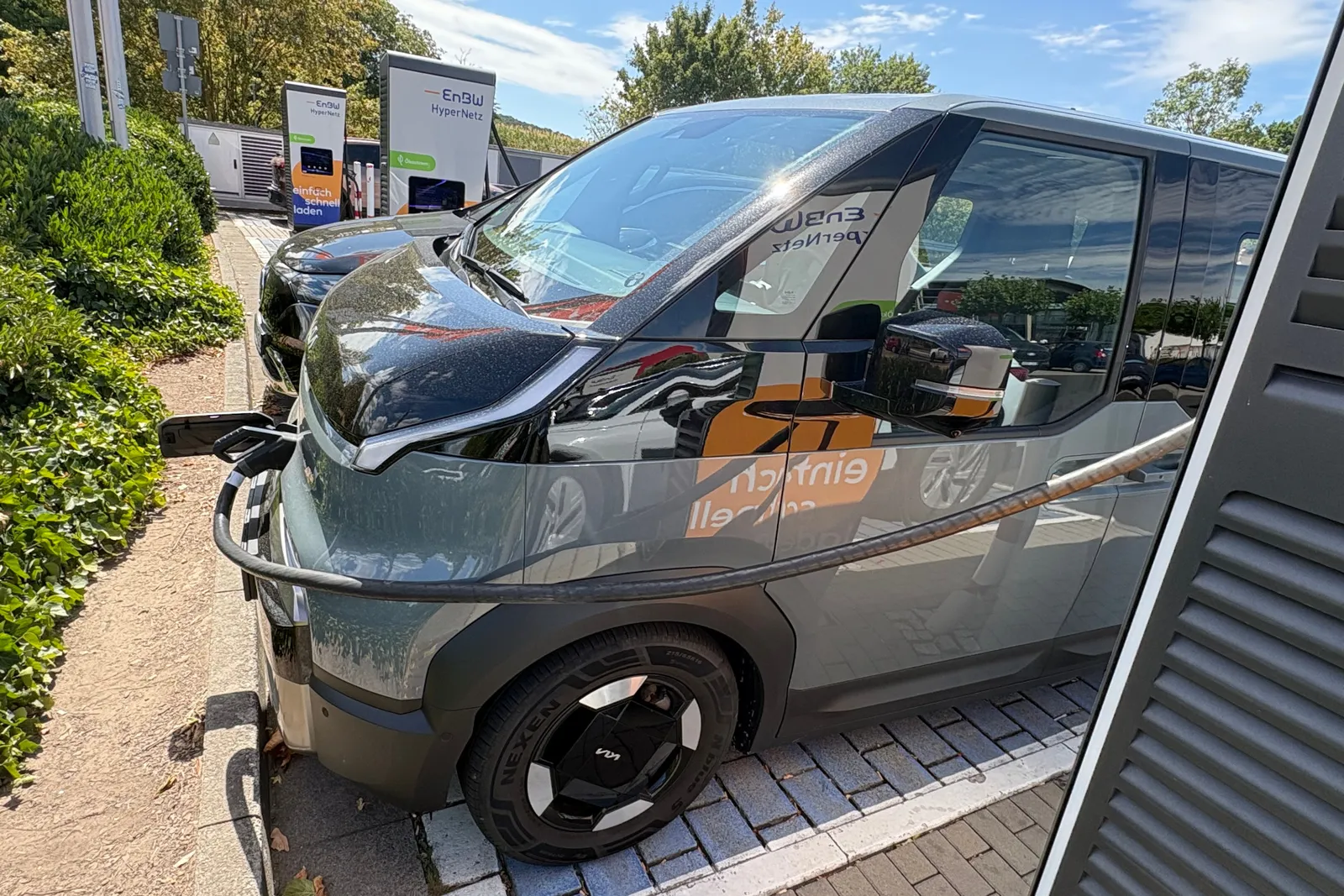
The charging performance: The relatively fuel-efficient driving style of the PV5 still doesn’t make it a long-distance champion. Kia relies on a 400-volt system and claims around 30 minutes to charge from 10% to 80%, a time that is generally achievable even under optimal summer conditions. This is satisfactory, but given the increasingly fast-charging electric vehicles available today, it’s not outstanding.
There’s also a small unique feature with the front-mounted charger. The charging port is located at the front, which can be particularly convenient at home charging stations. However, with some public fast chargers that use short cables, the PV5 must be parked so that its rear extends quite far out of the parking space. It’s not a big deal, but it’s one of those minor issues you only encounter in everyday use.
The limited variability: Kia squanders potential precisely when it comes to interior space. The rear seat of the five-seater cannot be moved longitudinally. This would have been practical for a vehicle that emphasizes variability so much—allowing more legroom one moment and more trunk space the next.
It becomes even more problematic when folding the seats. Although the usable interior space increases significantly, a noticeably higher step is created behind the folded seats. Those who want to transport or install bicycles, larger furniture, or an improvised sleeping area, for example, won’t have a completely flat loading floor. So while the space offered is excellent, its usability could be made more consistent.
And then there was the side mirror: As mentioned, the PV5 is only 4.70 meters long, making it shorter than many large sedans. The width is another story. Around 2.26 meters including side mirrors can suddenly feel like a lot in narrow garages.
Our right side mirror unfortunately learned this the hard way during testing, as it collided with a pillar while we were too focused on avoiding getting stuck at the front left corner while reversing. We would like to offer our sincere apologies to Kia. Still, after this unintentional practical test, we can confirm that when considering its dimensions, one should not overlook its surprisingly compact length.
Conclusion
The Kia PV5 is one of those electric cars whose advantages become apparent not so much from the specifications sheet but after a few days of everyday use. It offers enormous space, numerous storage compartments, surprisingly reasonable fuel consumption, and a remarkably agile driving feel for its class. Families or those with regular heavy hauling needs get a lot of vehicle performance for their money.
The concept isn’t perfect yet. You have to like the relatively simple materials, there are now much better electric cars available for fast charging, and precisely the non-removable rear seat along with the stepped loading floor limit the otherwise impressive versatility.
In the end, the advantages far outweigh the disadvantages. The PV5 particularly demonstrates the difference that a vehicle concept designed from the start to be electric can make in a van: instead of a cumbersome driving feel—as EAN editor Sebastian Henßler noted for the cargo version—there’s plenty of space without unnecessarily long dimensions, a sufficient electric drive system, decent infotainment (only the display for the blind spot camera is relatively small compared to other Hyundai Group models), and surprisingly light handling.
Transparency note: The test vehicle was provided to us by Kia free of charge for the testing period. This does not affect the honest opinion presented here.