
Kia EV6 AWD GT-Line in Test: The 800-Volt Bestseller Learns Manners
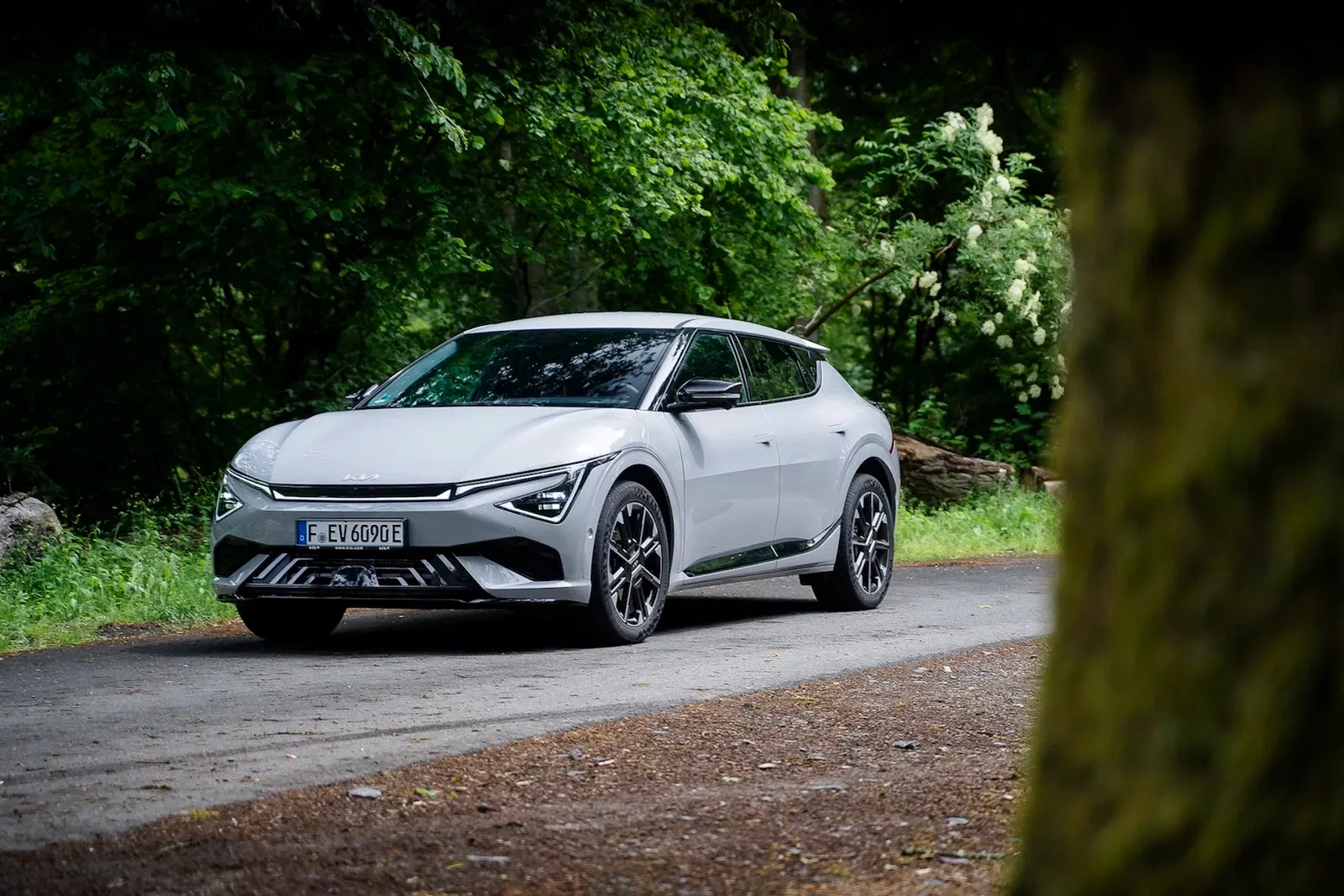
When the Kia EV6 launched, it disrupted the electric vehicle industry with its fast 800-Volt architecture and bold design. Yet where there is much light, there are also shadows: a somewhat sluggish handling feel and outdated infotainment systems tarnished its overall impression. With a facelift, an upgraded battery with 84 kWh capacity, and smart suspension updates, the Koreans have addressed these issues.
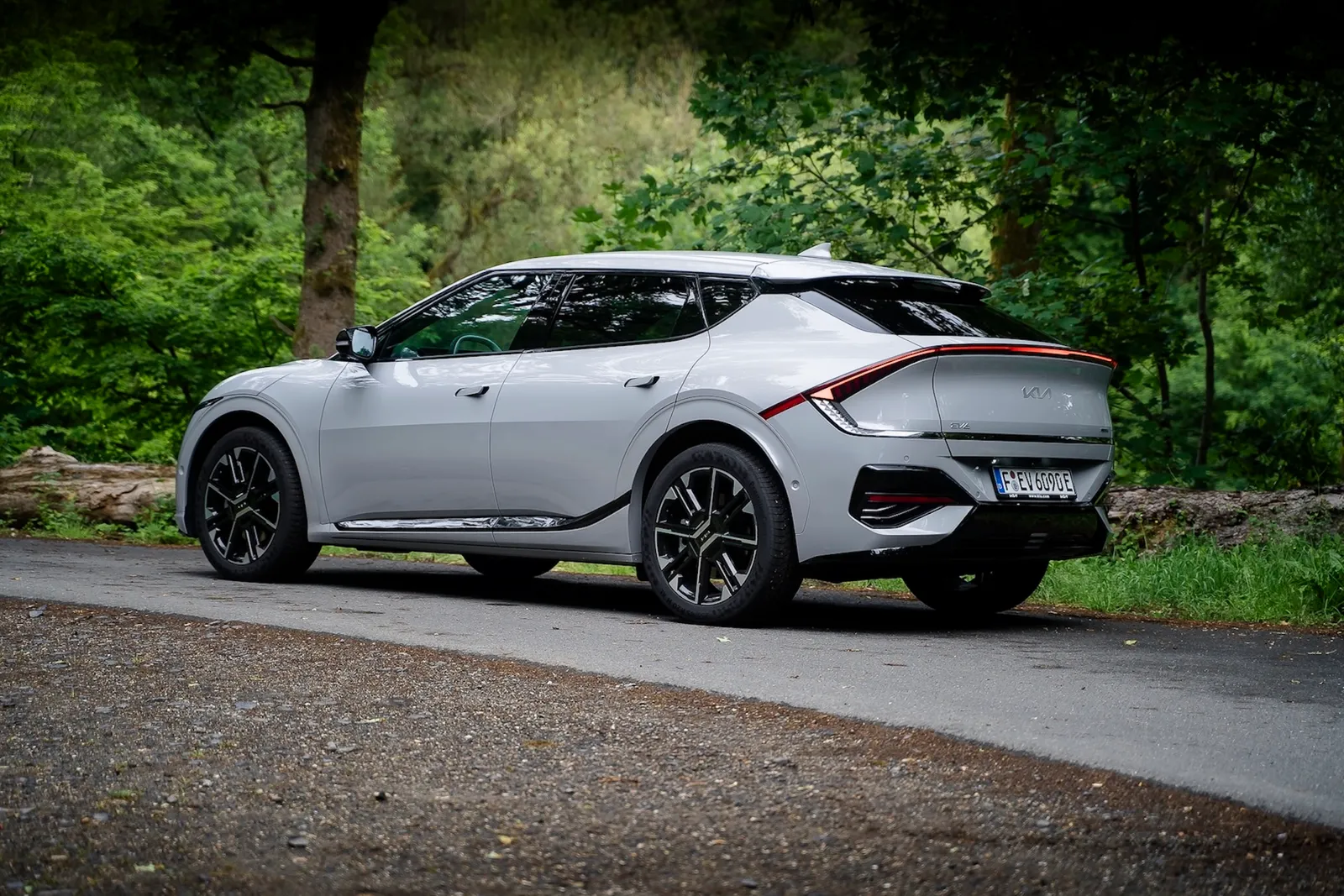
When handling a successful model, one must proceed with care. Kia left the coupe-like silhouette of its nearly 4.70-meter-long hatchback sedan unchanged during the refresh of the EV6, but gave it a sharper appearance. The new lighting design clearly draws inspiration from the brand’s sibling models, the EV3 and EV9, giving the crossover an even more imposing presence. Those driving at night also benefit from the improved lighting provided by adaptive LED technology.
The clever packaging conceals its impressive width of 1.89 meters. Thanks to the pure electric platform E-GMP, the wheelbase between the axles reaches a generous 2.90 meters. This is immediately noticeable inside: the first row and the back seat offer ample legroom. However, when it comes to headroom in the second row, the EV6 is limited by its aerodynamically sloping roof line, meaning tall passengers are quite close to the ceiling here. Practicality is provided by the trunk, which has a solid 490 liters of space that can be expanded to up to 1,290 liters by folding down the seatbacks. Only under the front hood is space limited in the all-wheel-drive version: the frunk holds only 20 liters due to design constraints. That’s still enough for the charging cable, though.
Inside, the Koreans have heeded customer criticism. The driver-focused dual display has been upgraded to a newer infotainment system. In practice, this means the menu navigation is now smooth without interruptions, the graphics look modern, and there’s a real convenience in everyday use: Apple CarPlay and Android Auto finally allow wireless connection to smartphones. The steering wheel, which also offers excellent haptic feedback, is flatter at the bottom in the sporty GT-Line version. A clever feature remains the dual control panel under the touchscreen, which can be switched between climate controls and infotainment shortcut buttons with a finger tap. After a short adjustment period, it works flawlessly. Additionally, the entire interior appears more premium: soft, partially recycled textures dominate the view, while hard plastic has been largely moved to the footwell. Another invisible advantage is
Model improvements: Kia has enhanced the body stiffness and improved sound insulation, making the EV6 noticeably quieter on the highway.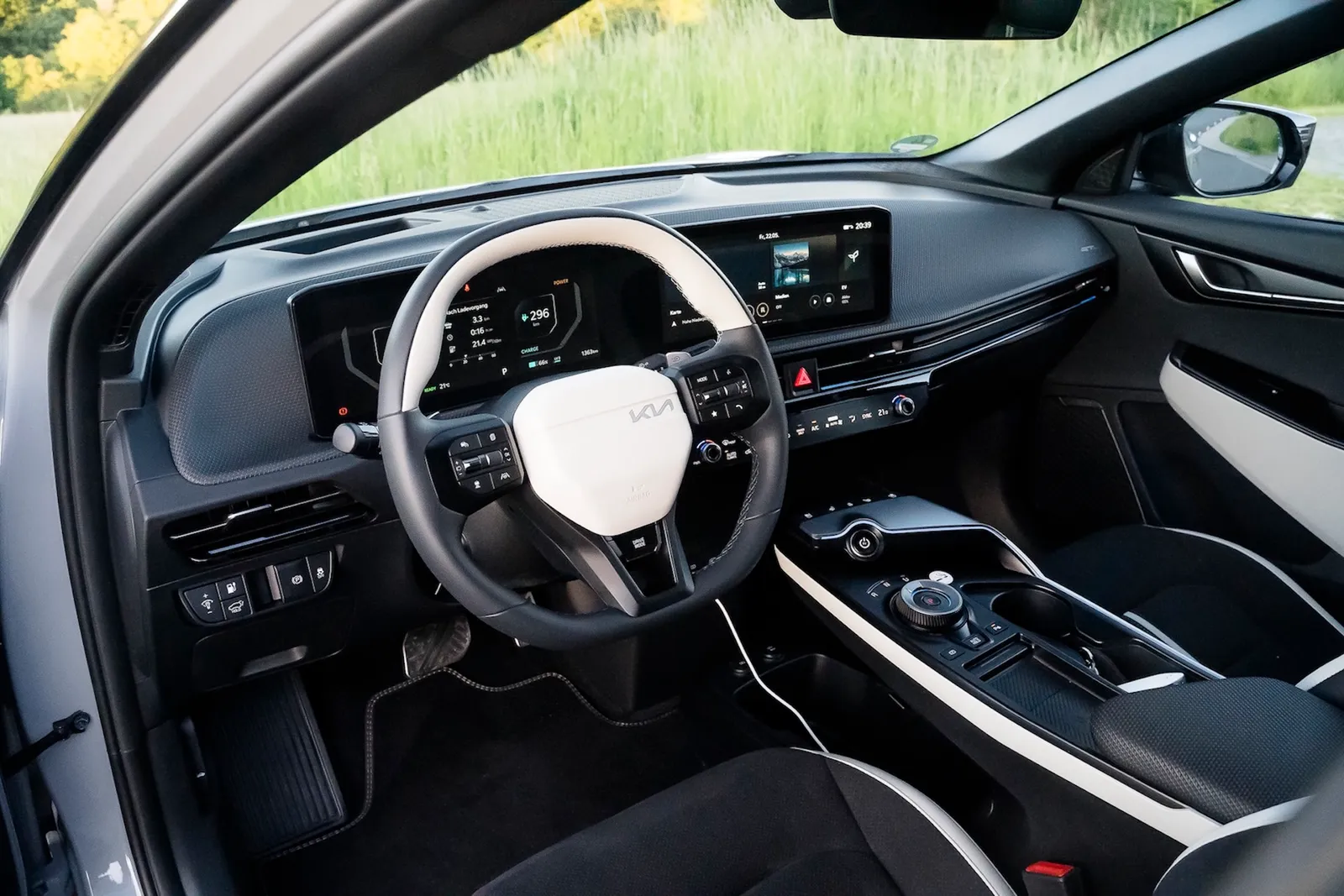
The powertrain is well-known. The combination of two permanent magnet synchronous motors at the front and rear generates a system power output of 239 kW / 325 horsepower and a torque of 605 Newton meters in the AWD model. Pressing the accelerator pedal firmly sends the vehicle to 100 km/h in just 5.3 seconds. This roughly 2.25-ton crossover accelerates so forcefully from moderate speeds that overtaking becomes a mere formality, even on the highway, with top speed reaching 188 km/h.
The real technical breakthrough lies beneath the floor. Thanks to modified cell chemistry with higher energy density, the battery capacity increases from 77.4 to 84 kWh in the same space. With its 800-volt architecture, the Korean vehicle can draw power from an HPC charger at up to 258 kW. Charging from 10% to 80% takes just 18 minutes under optimal conditions.
In terms of suspension, engineers made the right adjustments. While the EV6 was already agile in corners before the model update, it tended to behave unevenly and somewhat stiffly on short, rough bumps. The solution lies in new passive-adaptive dampers that can automatically adjust their frequency to match the road surface. These dampers filter out fine road irregularities more smoothly without compromising the vehicle’s inherent sporty and tight handling characteristics.
The result is impressive lateral dynamics: Despite its weight, the EV6 can navigate tight curves with ease and remarkable stability. The steering is direct and precise, though enthusiasts might prefer even more intense mechanical feedback from the front axle in fast turns. The regenerative braking, controlled via steering wheel paddles, is perfectly implemented, enabling true smooth one-pedal driving in urban conditions. The robust braking system also earns praise—stopping from 100 km/h in under 32 meters is on par with sports cars.
With its larger 84-kWh battery, Kia promises a WLTP range of up to 546 kilometers for the all-wheel-drive model. In real-world testing, fuel consumption under mixed driving conditions averages around 17 to 19 kWh per 100 kilometers, resulting in an extremely long-range capability of 420 to 450 kilometers. The Vehicle-to-Load function adds practical value in everyday use. Whether it’s an e-bike, laptop, or electric grill for camping, external devices can be powered via the adapter on the charging port or the internal socket at a maximum power of 3.6 kW. The all-wheel-drive EV6 with the large battery starts at a confident price of 53,990 euros. This price is offset by nearly comprehensive standard equipment and an industry-leading warranty of seven years or 150,000 kilometers.
The range of assistance systems has also been improved. The Highway Assistant 2.0 keeps the vehicle firmly in its lane, adjusts following distance smoothly, and now performs lane changes after tapping the turn signal in a much smoother and more anticipatory manner. The camera-based traffic sign recognition works flawlessly. However, the EV6 faces significant criticism regarding the speed limit warning required by EU law. The system emits a persistent beep at the slightest excess of speed. To disable this intrusive alert, one must go through a cumbersome process of navigating to the submenus on the touchscreen after each vehicle start-up.