
Kia EV4 GT in the test report: Agility over top performance
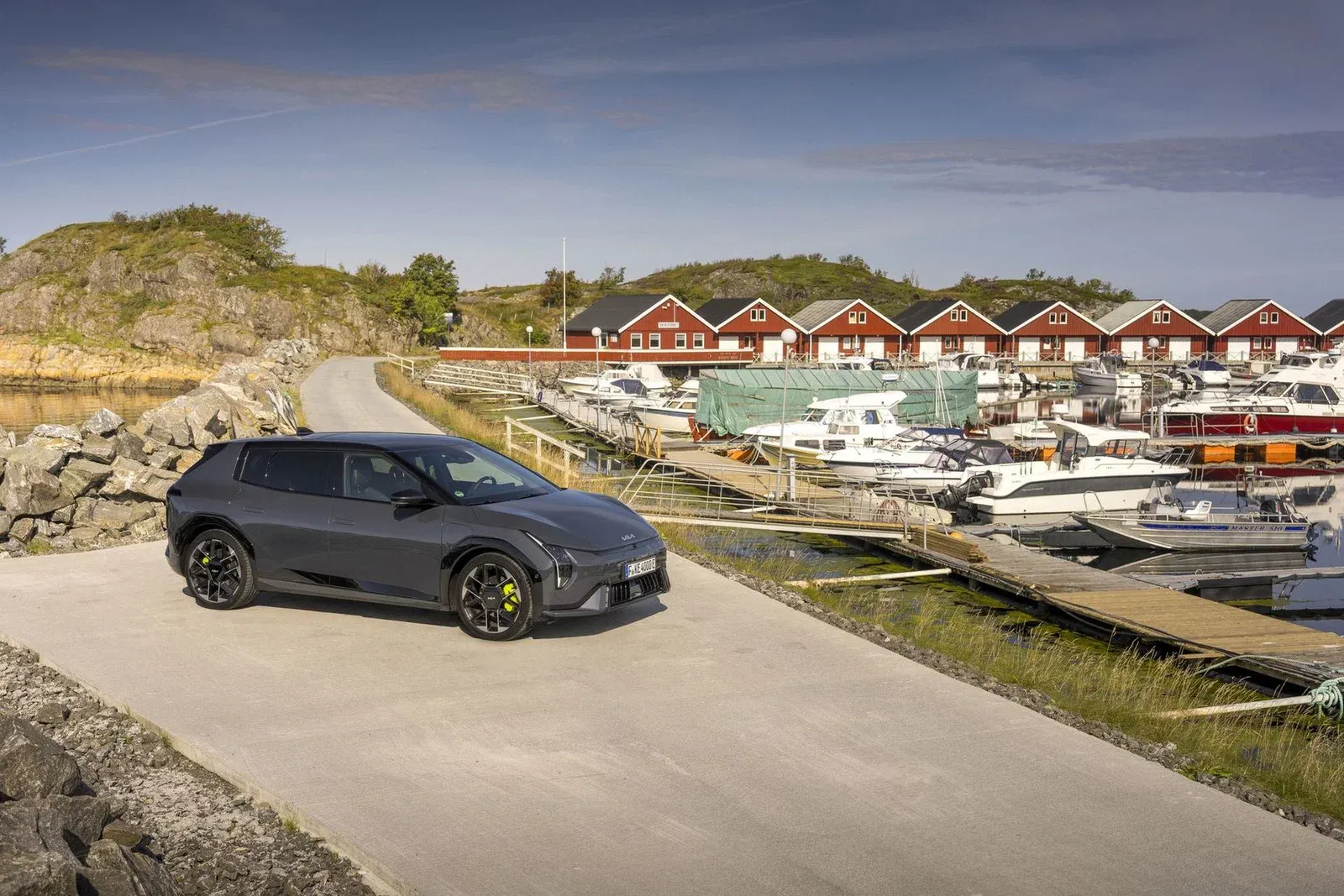
The Kia EV4 GT already conveys a sense of dynamism visually. However, the extra power over the all-wheel-drive version is modest at 20 kW / 27 PS. Instead, Kia aims to impress with its agility. The trend toward visual dynamism in automobiles is certainly nothing new. BMW offers the M Sport package, Audi has the S line, and Hyundai features the N Line. All these trim options share one thing in common: they are based on a manufacturer’s performance models. These tuned vehicles sell quite well even with internal combustion engines, so the same should apply to electric cars as well. At least that is the strategy behind Kia’s sales approach.
"GT stands for fun in everyday driving," says product manager Francesco Conti. To evoke these emotions, the Koreans equipped the Kia EV4 GT with virtual gears including a limiter and the corresponding engine sound. A touch of Hyundai Ioniq 5 N, in other words. The simulated gasoline engine sound divides the fanbase—some are thrilled while others simply turn off the noise.
What truly makes the EV4 GT sporty
This doesn’t change the Koreans’ enthusiasm. They market the EV4 GT as a vehicle for precision drivers—a bold claim indeed. It raises the question of how much the GT differs from the “regular” EV4s. The foundation remains the 400-volt version of the E-GMP platform and a battery with a capacity of 81.4 kilowatt-hours, which provides up to 505 WLTP kilometers of range.
The base EV4 features front-wheel drive and 150 kW / 204 hp. Since summer, Kia has also offered a version with all-wheel drive. This model delivers 195 kW / 265 hp and serves as the true reference version. In the GT, the front permanent magnet synchronous motor (PSM) produces 145 kW / 197 hp along with a torque of 283 Nm. At the rear axle, engineers use an asynchronous motor (ASM) that provides 70 kW / 95 hp and 185 Nm of torque. This results in a system power output of 215 kW / 292 hp and 468 Nm of torque.
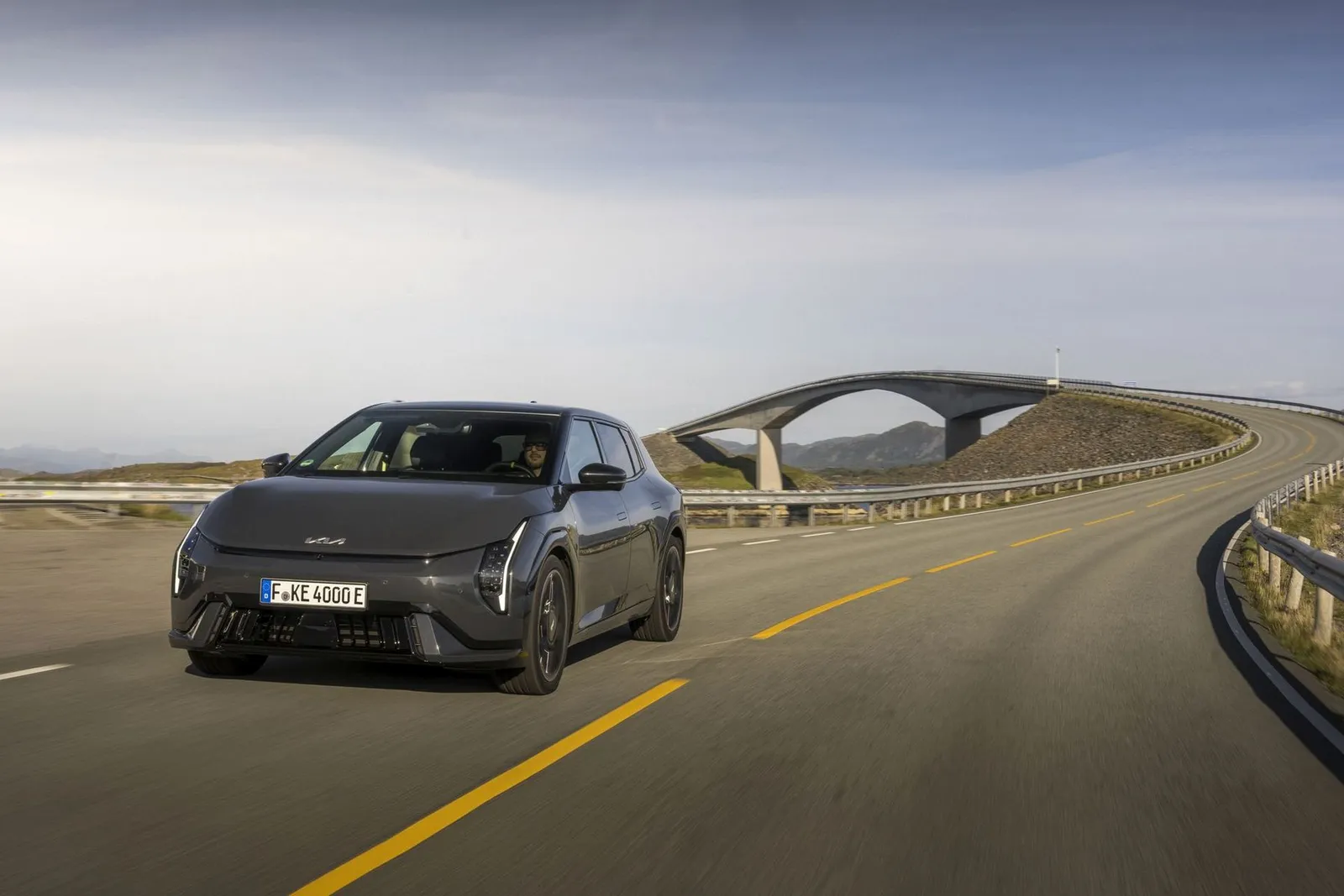
The 20 kW / 27 PS performance boost of the GT comes from the front and fits well with the concept: the ASM motor only engages rapidly to assist propulsion when needed, otherwise it remains electrically deactivated. This approach emphasizes efficiency, as the electric motor can run without power loss when inactive. During our test drive, including some faster segments, we consumed 19.8 kWh per 100 km, which is 1.9 kWh per 100 km more than stated in the specifications. Moreover, the EV4 GT weighs 1985 kilograms. As a result, it takes 5.6 seconds to reach 100 km/h from a standstill. By 170 km/h, the fun is already over. A shame for what’s supposed to be a sports version.
Agility over top performance
The Kia is designed primarily to deliver driving pleasure on country roads rather than highways. “The EV4 GT is essentially identical to the EV3 GT, but it’s more dynamic due to its weight distribution and body design,” Francesco Conti explains the vehicle’s focus. The 4.45-meter-long GT lives up to this promise. The eDTVC (Electric Dynamic Torque Vectoring Control) works well: there is no mechanical limited-slip differential. Instead, software coordinates motor and brake interventions. The GT responds readily to steering inputs and can be turned sharply around corners without challenging the driver behind the wheel. However, this dynamism comes at the cost of a stiff suspension that becomes particularly noticeable on uneven asphalt—the springs and shock absorbers don’t always function smoothly, causing the car to bounce noticeably. The 20-inch wheels also contribute to this issue.
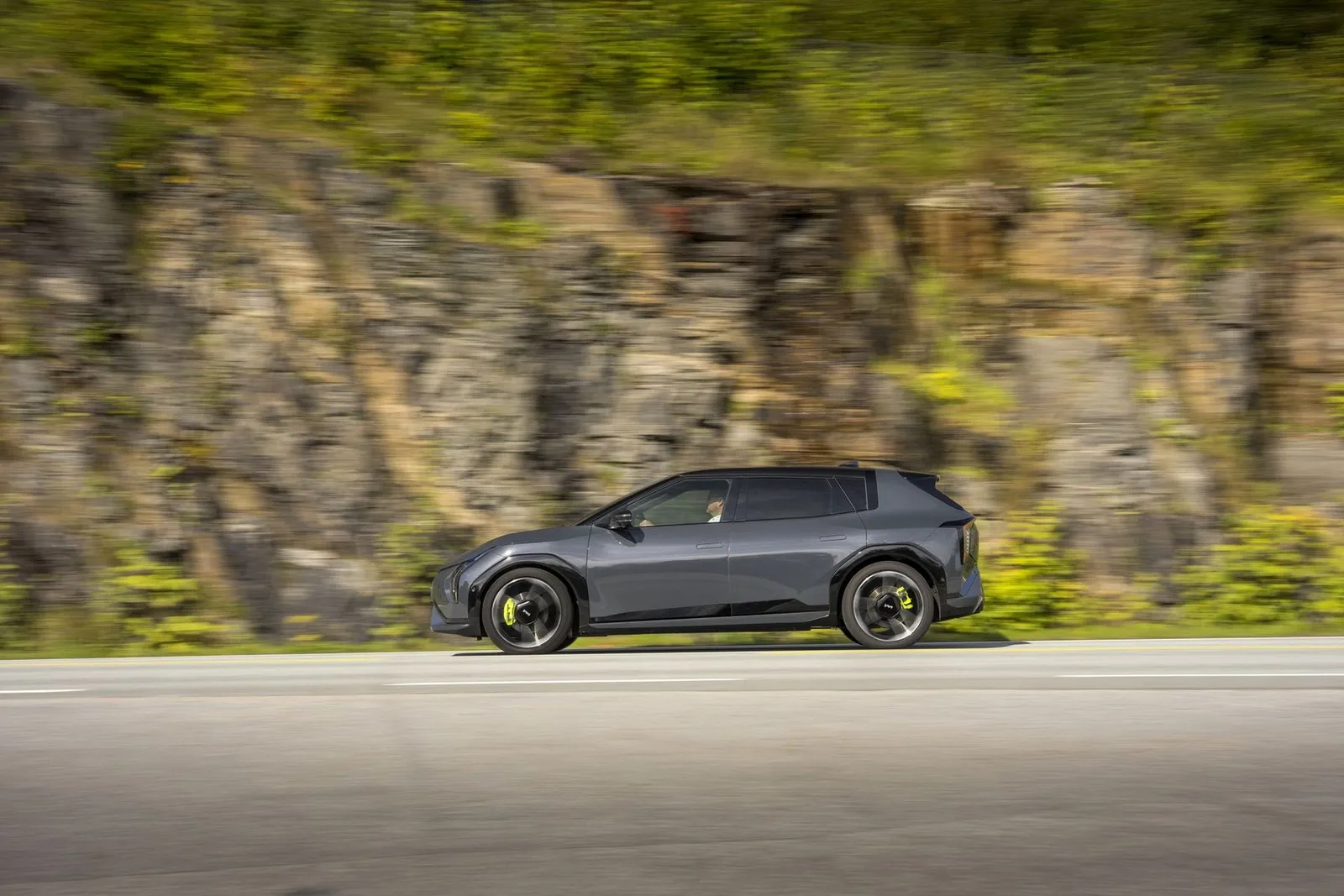
This shows that while a pure software application can be excellent, it cannot perform miracles. The wheel suspension is identical to that of other EV4 versions: McPherson struts at the front and a multi-link suspension at the rear. For the GT, engineers adjust the spring rates, anti-roll bar settings, damper characteristics, and provide it with a dedicated steering gear for a more direct handling experience. Additionally, only the GT features the electronic damping control system ECS: a front camera monitors the road ahead, and the system adjusts the damping force accordingly.
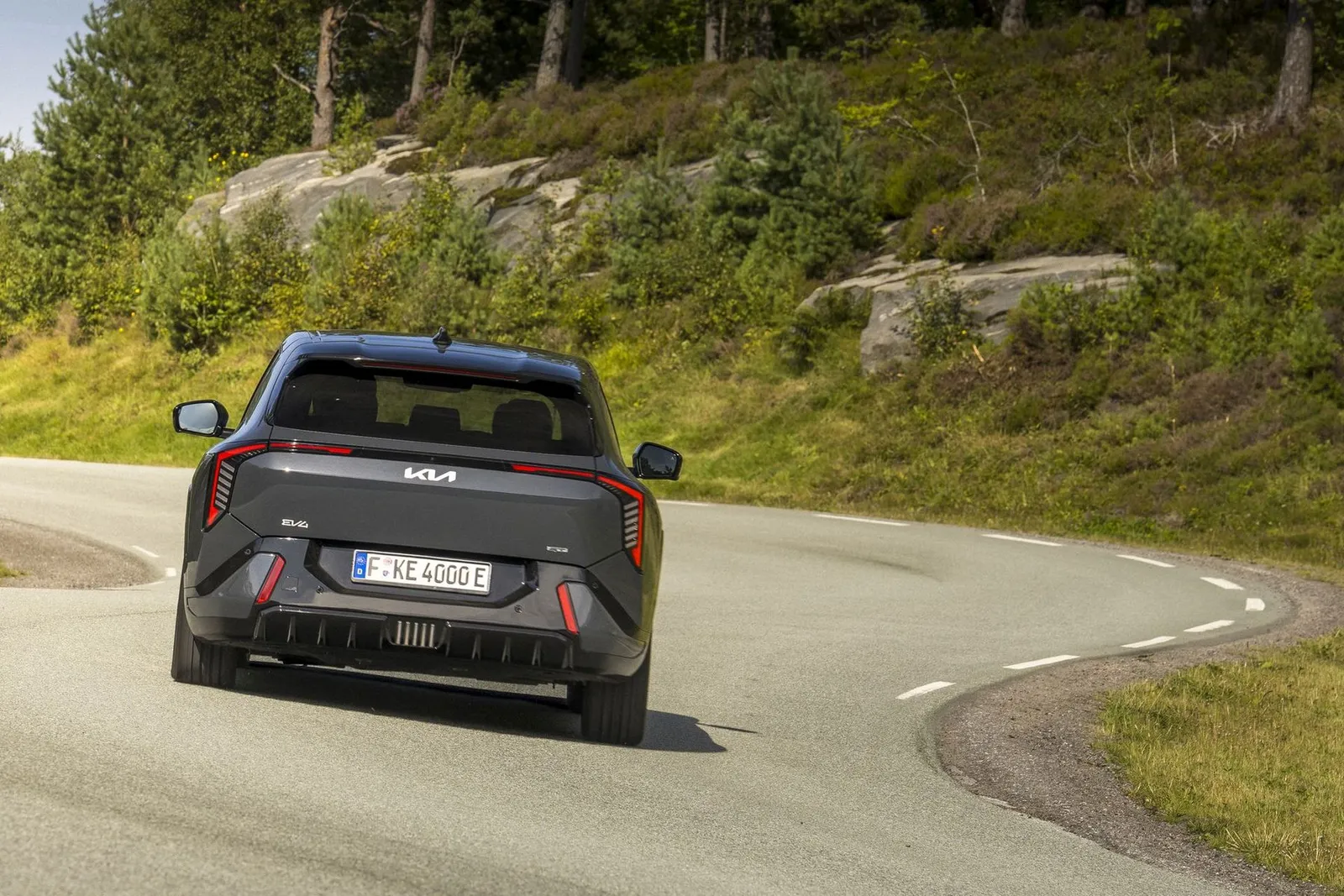
The specific settings of the suspension become evident in the Eco, Normal, Sport, and GT driving modes. In the dynamic programs, the steering feedback is stronger and the accelerator responds more immediately. The GT mode unleashes everything from the powertrain, while ESP gives the rear end more freedom to move. This allows it to actively participate in lateral dynamics and turn readily. Pressing the bright green GT button on the steering wheel a second time switches to the individually configured driving program. We spent most of the time in Normal mode, which was still fast enough. We were pleased to find that the sports seats are not only comfortable but also provide excellent side support.
Why the E-Sportler continues to use a 400 Volt platform
During charging, it becomes clear that the EV4 does not use the 800-volt technology of the EV6 and EV9, but rather a simplified 400-volt version. Accordingly, the maximum DC charging capacity is only 128 kW. It takes 31 minutes to charge the battery from 10% to 80%. At a wall charger, the GT draws three-phase power at 11 kW. In this case, charging from 10% to 100% takes 7 hours and 15 minutes. The optional 22-kW onboard charger costs 990 euros and reduces the charging time to 3 hours and 55 minutes. Features such as plug-and-charge, battery preheating, and V2L (Vehicle-to-Load) with a maximum power of 3.6 kW are standard on the model.
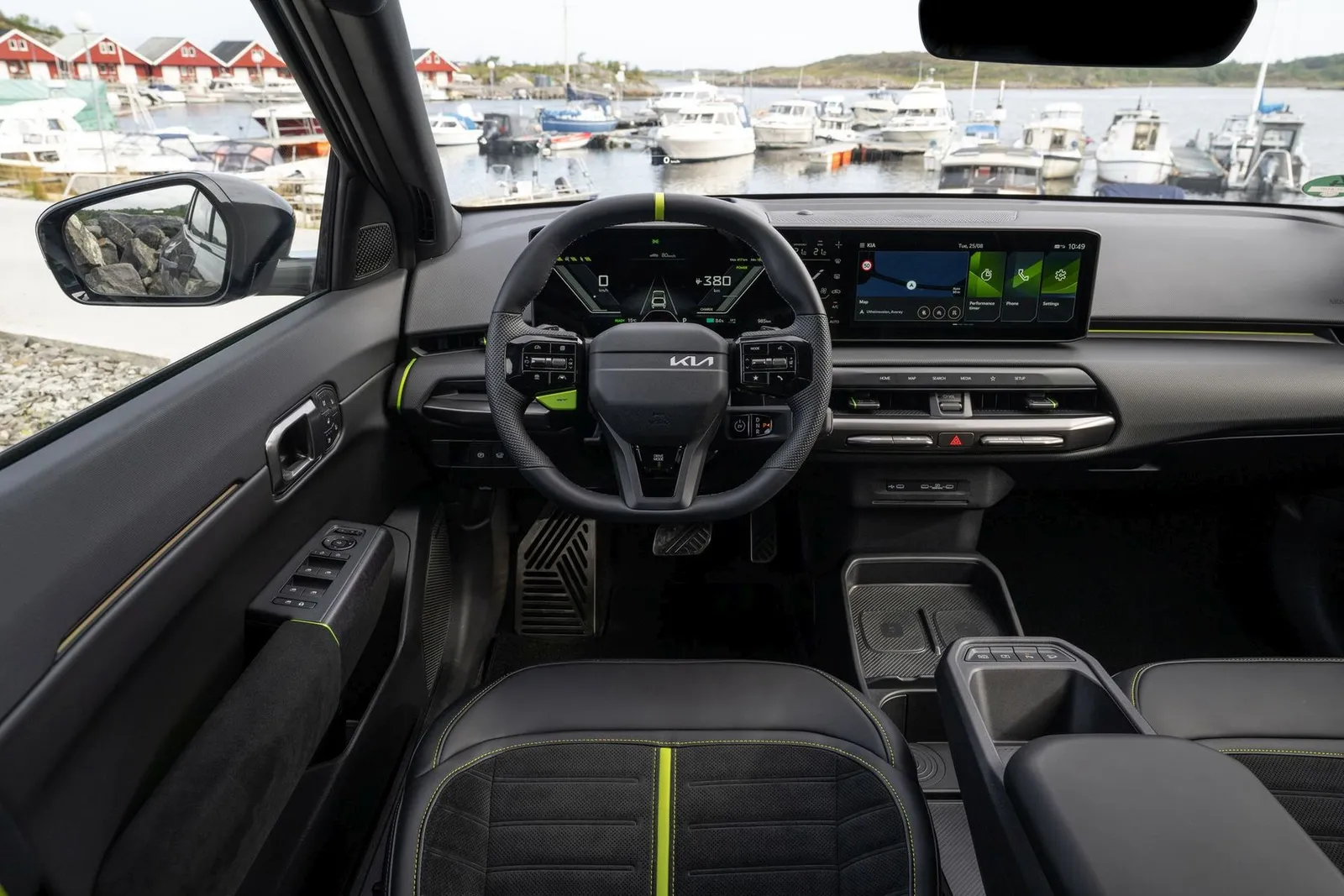
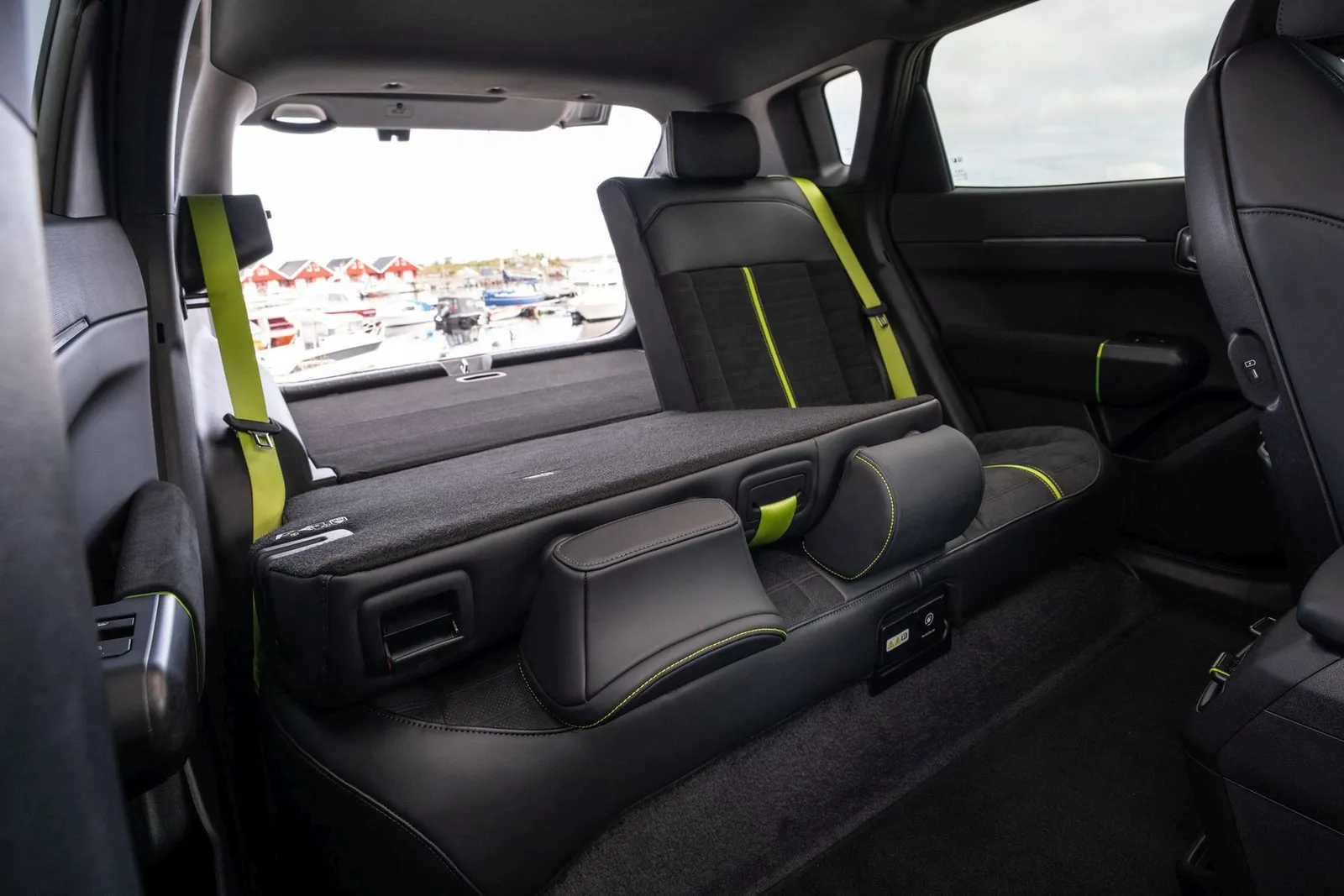
Inside, the GT has a pleasant, unpretentious design. Only neon green seat belts, corresponding accents on the seats, a 12 o’clock marker on the three-spoke steering wheel, and matching brake calipers on the outside denote it as the top variant. The construction is solid, with all surfaces neatly fitted together. However, those who look and touch more closely can recognize hard plastic. Still, the interior doesn’t appear cheap. The panoramic display is part of Kia’s familiar infotainment system: in front of the driver is a 12.3-inch digital instrument display, next to it a 5.3-inch touchscreen for climate control, and on the right side is another 12.3-inch touchscreen.
Those familiar with modern Hyundais and Kias will find it easy to get used to. Apple CarPlay and Android Auto work wirelessly. There are actual buttons and sliders for controlling temperature, volume, and main menus. The placement of the small climate display is less thoughtful, as it sometimes hides behind the steering wheel rim depending on seating position. A head-up display complements this system.
The price remains a concern. The EV4 GT costs 57,840 euros, which is 5,900 euros more than the 195 kW / 265 PS GT-Line AWD model and 9,110 euros more than the Earth AWD with the same twin-motor setup. This price point is quite ambitious. The Cupra Born VZ (240 kW / 326 PS) is available for 50,990 euros, while the MG4 XPower (320 kW / 435 PS) costs 46,990 euros.