
Kia EV3 GT review: Lighter and more agile than the larger EV4 GT
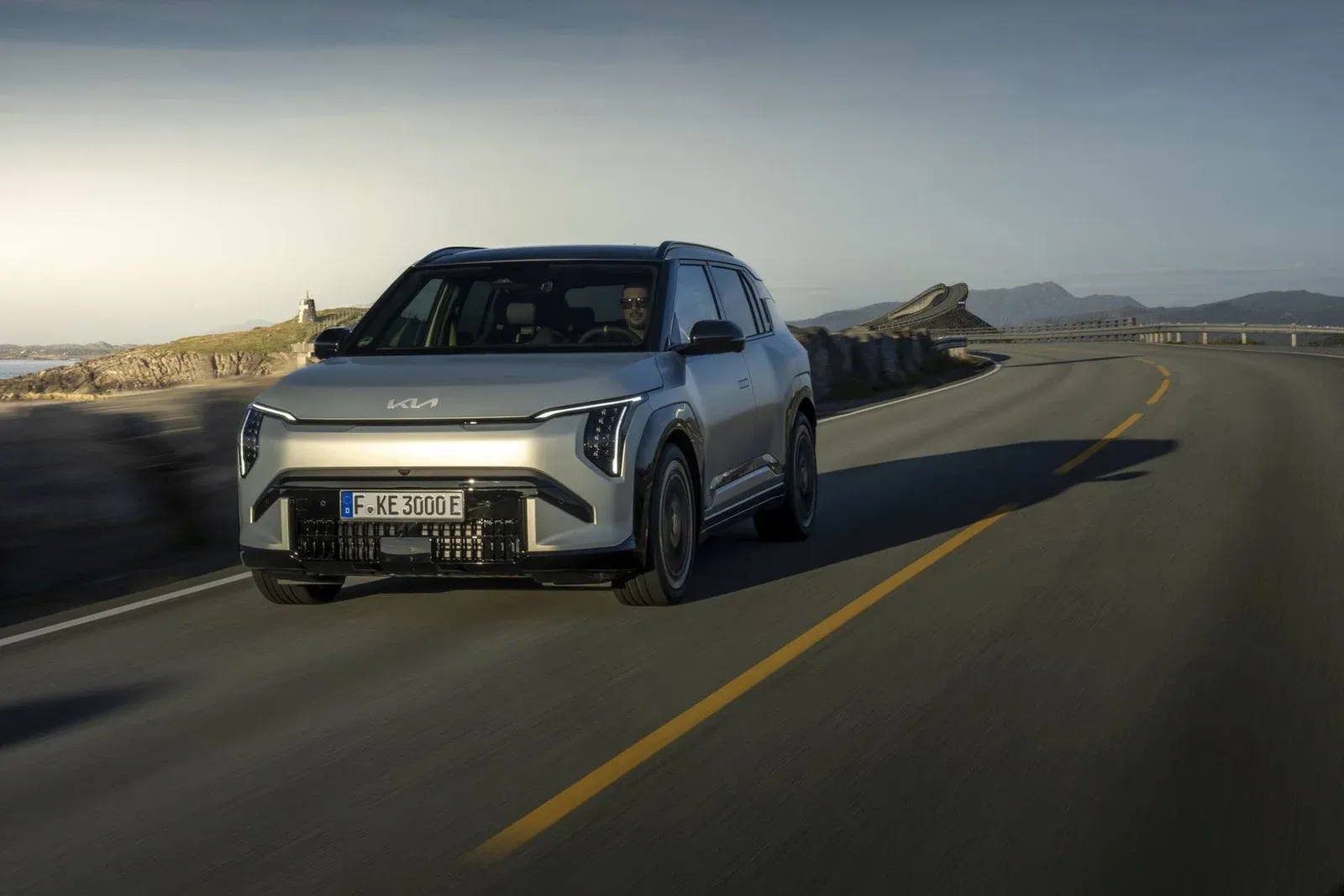
The Kia EV3 GT adds a sporty touch visually to the highly competitive compact SUV segment. As the top model in this series, it excels in driving dynamics but cannot fully overcome the weaknesses of its design concept.
Compact SUVs. This car category sends shivers down many product managers' spines. Few segments are as fiercely contested as the compact SUV class. This applies equally to models with internal combustion engines and electric vehicles. The Kia EV3 polarizes with its angular appearance. To some, it’s a successful design that defies Germanic conventions; to others, the designer drank too much Korean soju. Regardless, this Asian-style compact SUV stands out among the crowd of similar models.
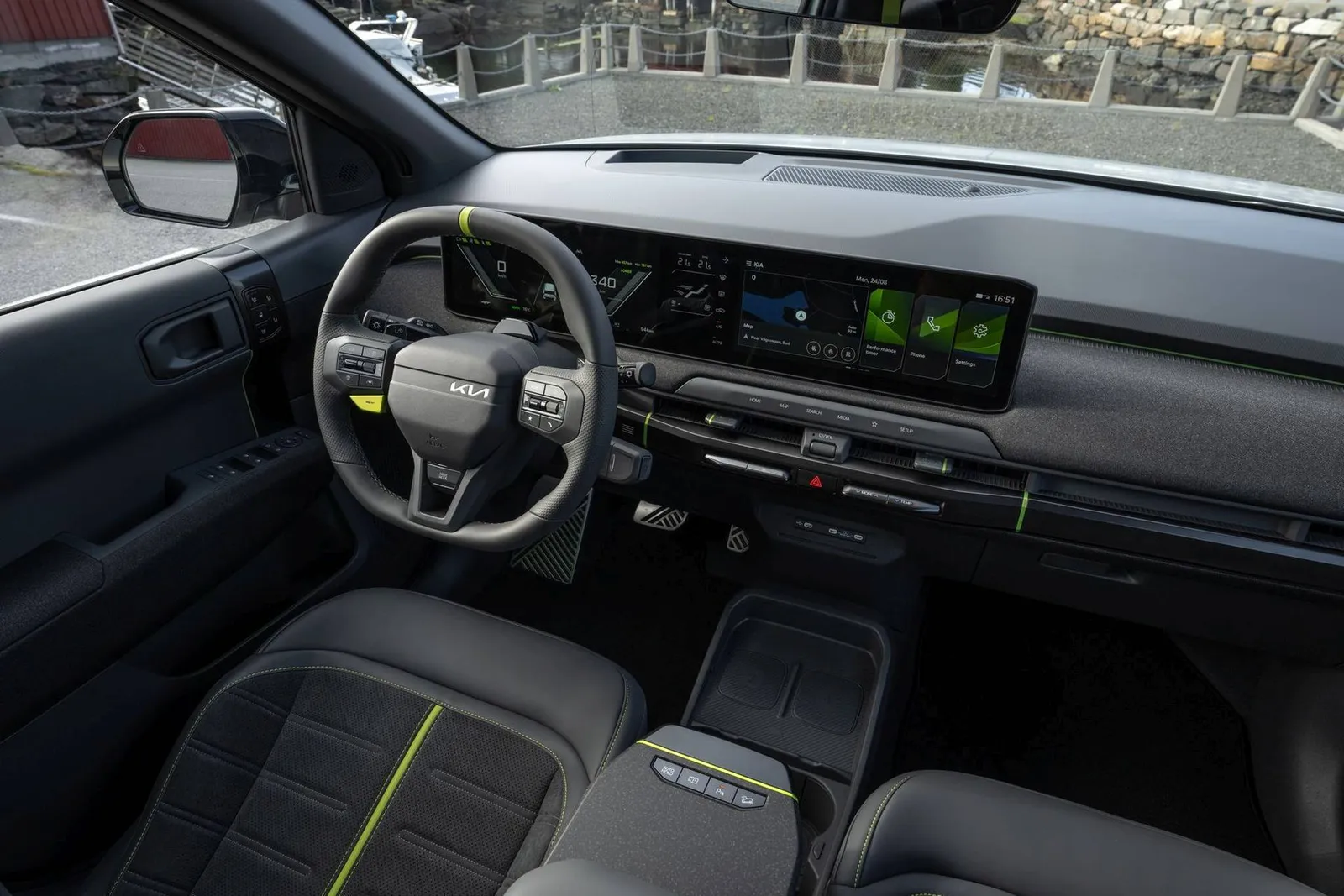
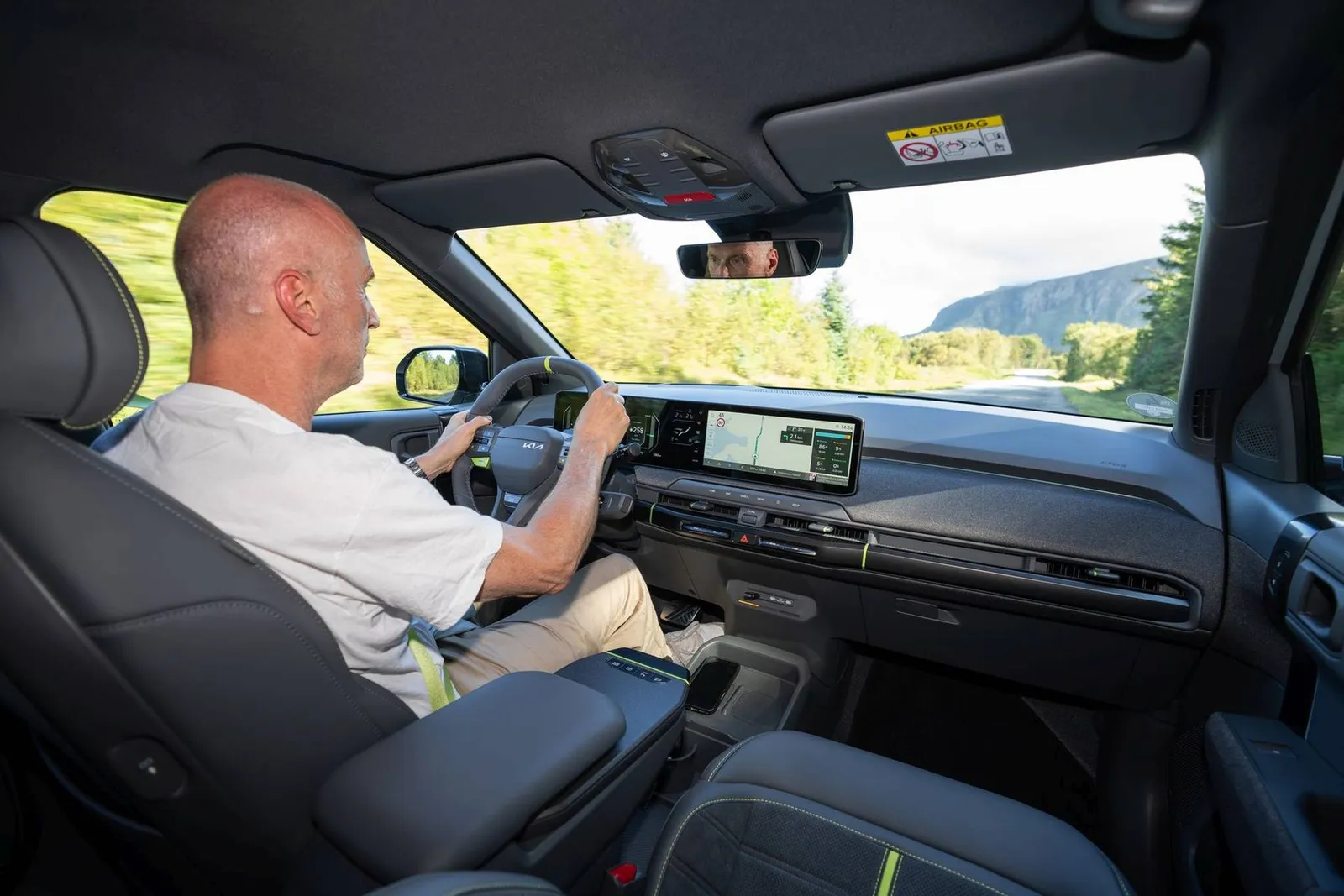
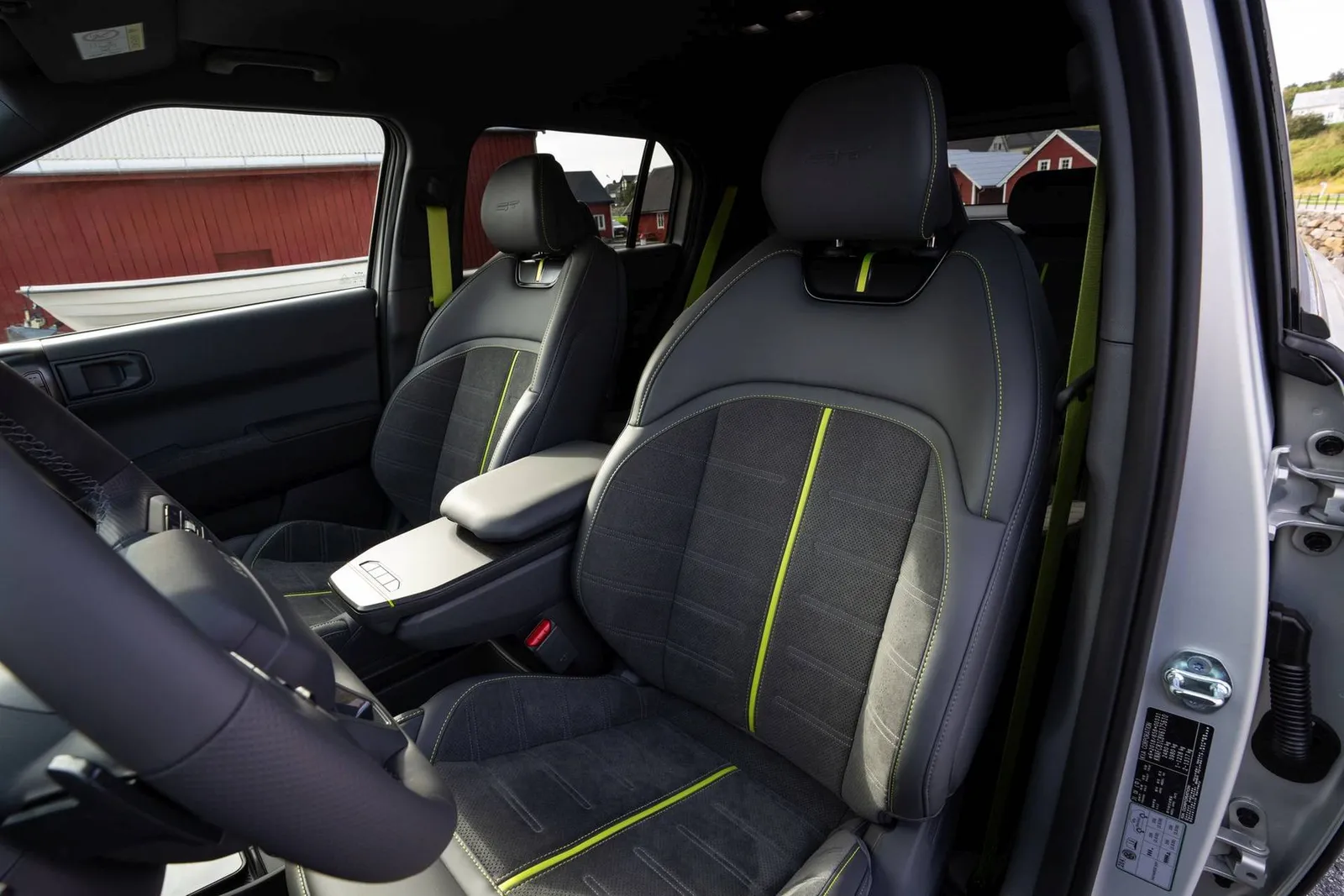
This attitude is further enhanced on the GT. In fact, the sportiest version features neon green brake calipers behind the 20-inch wheels. Inside, the sporty Mamba design continues: the sports seats have toxic green stitching, the three-spoke steering wheel has a corresponding 12 o’clock mark, and even the seat belts are fully colored. There’s also the toxic green GT button on the steering wheel. It looks promising. Those who think it will unleash a power surge are mistaken. The standard EV3 AWD already comes with two motors, delivering 195 kW / 265 horsepower and 385 Nm of torque. The GT offers 215 kW / 292 horsepower and 468 Newton-meters of torque. That’s only an increase of 20 kW or 27 horsepower. So it’s not necessarily a figure that leaves you in awe.
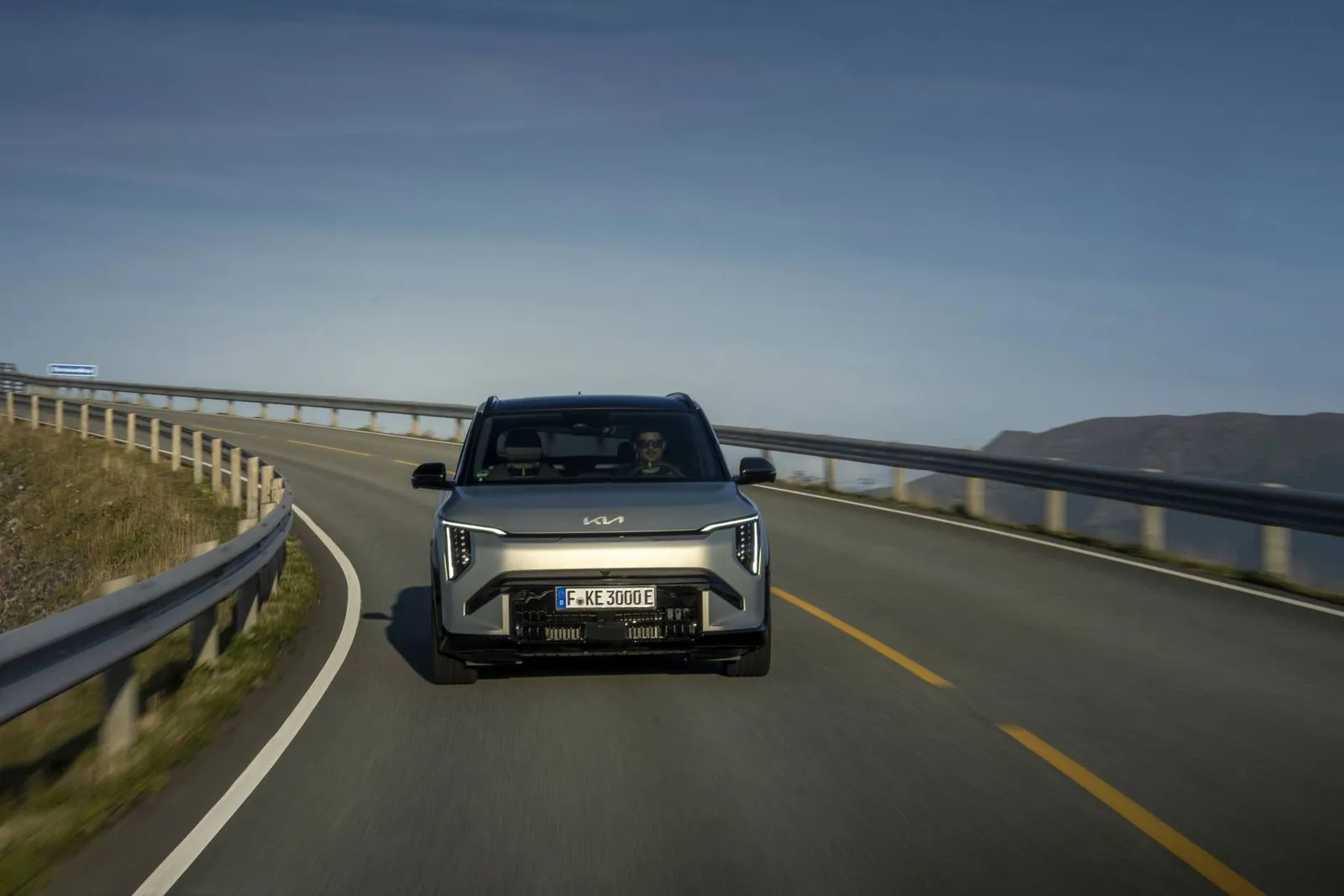
It gets more interesting when examining the power distribution in detail: In normal AWD mode, the front synchronous motor delivers 125 kW / 170 hp, while in GT mode it provides 145 kW / 197 hp. The rear motor remains at 70 kW / 95 hp. Essentially, the rear axle avoids driving as much as possible to save electricity. Whenever the driving conditions require it, the second electric motor quickly steps in again. That’s the theory. “We want to achieve the agility of the ProCeed,” says David Labrosse, director of product planning at the Korean automaker, as the goal.
A camera reads the road for the suspension
This requirement hinges entirely on the suspension system. A heavily sprung electric vehicle that rumbles over the asphalt would be counterproductive. That’s why only the GT models are equipped with electronically controlled dampers (ECS) along with Road Preview. A front camera monitors the road surface and alerts the dampers to unevenness, allowing them to respond within milliseconds. Additionally, there are stiffer springs, stronger anti-roll bars, and a more direct steering ratio. Electric Dynamic Torque Vectoring Control (eDTVC) distributes power to individual wheels and enhances the agility features through targeted braking interventions.
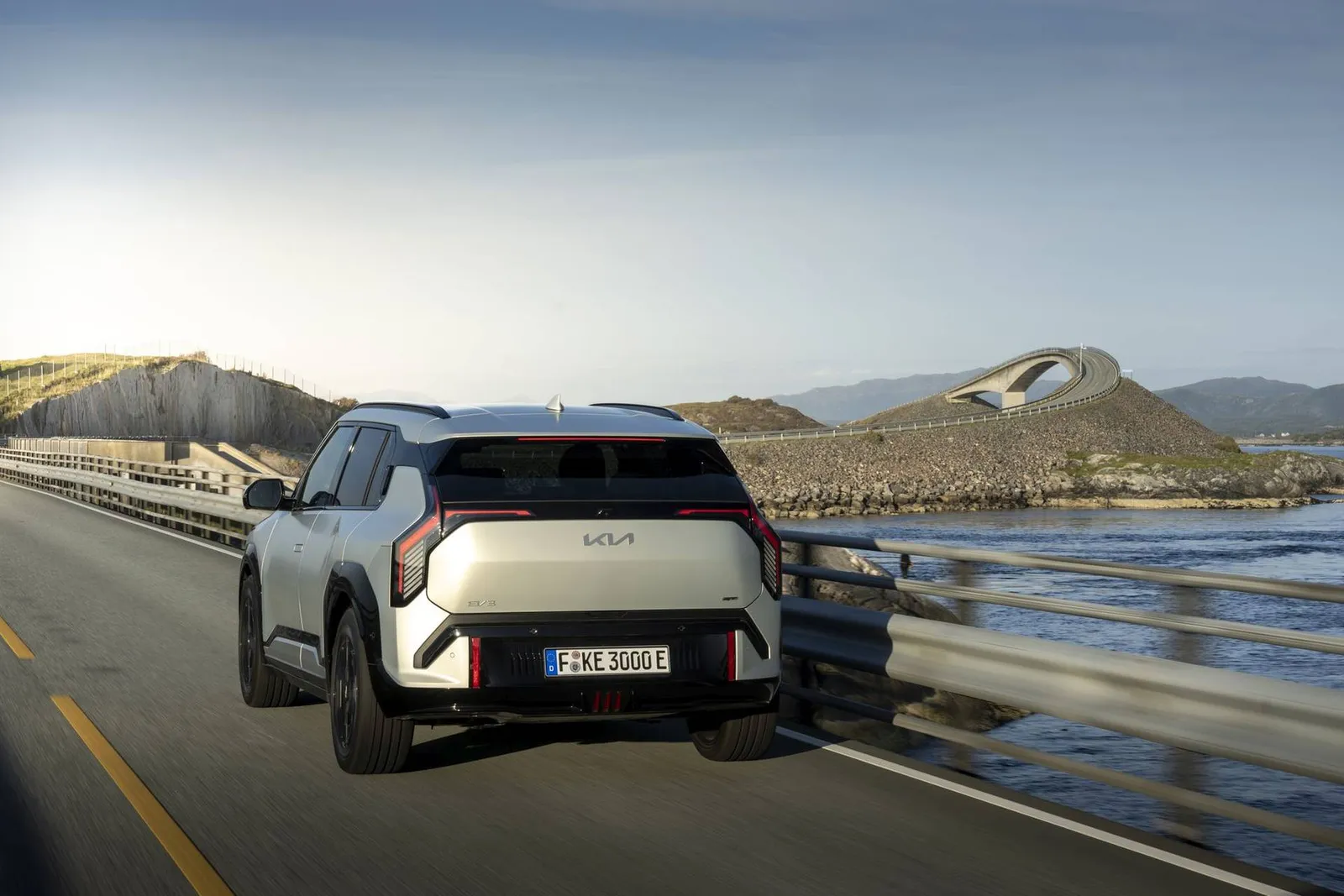
This dynamic setup delivers the desired result. The EV3 GT handles corners with equal parts ease and confidence. In GT mode, all-wheel drive is always active, while ESP gives the rear more freedom. The EV3 GT is more agile and nimble than, for example, the EV4 GT. Only on rain-soaked roads or when taking corners too quickly does the compact sports car’s 1935 kilogram weight become a factor, pushing it toward the edge of the road. The shock absorbers are stiffer than in normal mode, but that’s more than enough to ensure smooth handling.
However, the limitations of this concept become apparent as well: although the GT is tuned more sportily than the standard EV3, its suspension is not entirely smooth. It can sometimes feel a bit stiff when encountering rapid successive uneven surfaces. The modified steering is fine, but it could provide more feedback regarding traction conditions. Users who wish can customize their own settings and retrieve them by pressing the GT button again under “My Drive.”
More driving fun means slightly reduced range
The GT accelerates from 0 to 100 km/h in 5.7 seconds, which is 0.9 seconds faster than its more modest sibling. A launch control system is available for optimal acceleration from a stoplight. The top speed is identical at 170 km/h. In this regard, the sportier model could offer a bit more performance. However, the EV3 GT loses some of its power above 110 km/h. From this perspective, the optional speed limit makes sense again.
According to the WLTP cycle, the GT manages 501 kilometers with its 81.4-kilowatt-hour battery. For comparison, the standard EV3 AWD with the same battery achieves 572 kilometers. The front-wheel-drive Long Range version, equipped with 17-inch wheels, even reaches up to 605 kilometers. Performance comes at the cost of range — nothing new there. But the GT still manages enough distance per charge to be practical. During our test drive, without pushing it to the limit, we recorded 17.8 kWh/100 km. This is 0.3 kWh/100 km less than what Kia claims.
The EV3 also uses the 400-volt version of the E-GMP platform as its GT model. This is evident in its charging performance. A maximum of 128 kW of direct current can be delivered. It takes 31 minutes to charge from 10% to 80% capacity. This is merely acceptable, but far from exceptional. An 11-kW AC charger comes standard, allowing the battery level to go from 10% to 100% in 7 hours and 15 minutes. With the optional 22-kW on-board charger, this time is reduced to 3 hours and 55 minutes. It costs 990 euros but is only available alongside the 590-euro Comfort Package.
Inside, the sporty model remains a practical daily driver
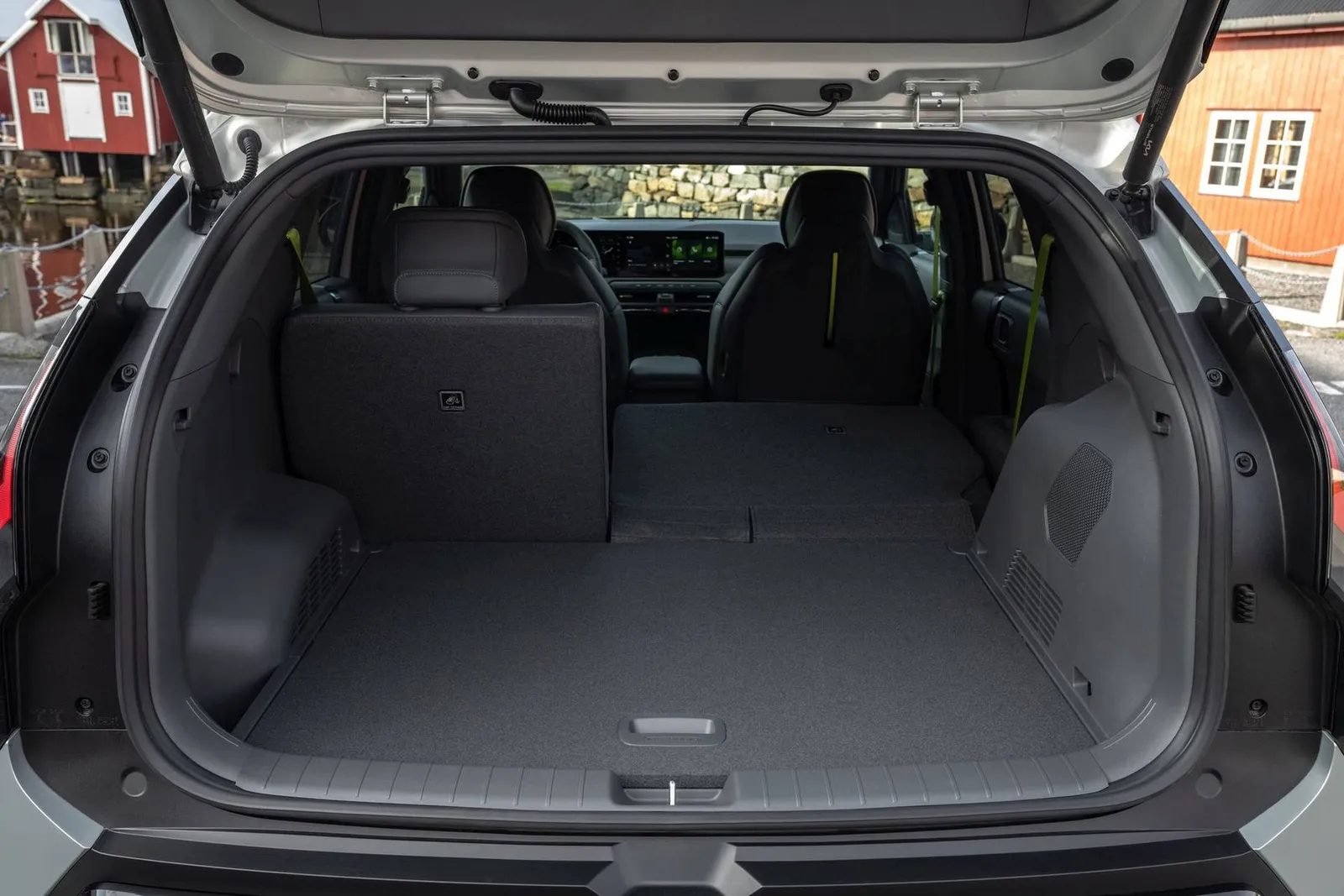
Despite the color accents, the Kia EV3 remains an EV3 inside. The interior has a cozy atmosphere. The monitor trio, consisting of a 12.3-inch digital dashboard, a 12.3-inch infotainment touchscreen, and a 5.3-inch control unit for the climate system in between, is familiar from other EV3 models. It works well here too. A bit less hard plastic would be desirable. Practicality is also considered: the trunk has a capacity of 413 liters, which increases to 1,204 liters when the rear seatbacks are folded down. There’s also a 25-liter glove box, which shrinks to 19 liters with the optional 22-kW onboard charger. The tow capacity is 1,500 kilograms. A head-up display, ventilated front seats, a heat pump, an electric trunk lid, and V2L are standard features.
This combination of sportiness and practicality comes at a price: Kia charges 53,990 euros for the EV3 GT. The cheapest EV3 model currently costs 35,990 euros, meaning the GT is 18,000 euros more expensive. Compared to the EV3 Long Range with an 81.4-kWh battery starting at 41,390 euros, the price difference is 12,600 euros. For the standard AWD version (starting at 46,880 euros), it’s 7,110 euros. The GT-Line AWD, which has nearly identical specifications, differs by only 2,800 euros. Still, the Kia isn’t an obvious buy. The Škoda Elroq RS is a larger all-wheel-drive SUV with 250 kW / 340 horsepower and costs at least 55,240 euros.