
Kia EV2 in everyday use: More fuel-efficient than the WLTP standard promises
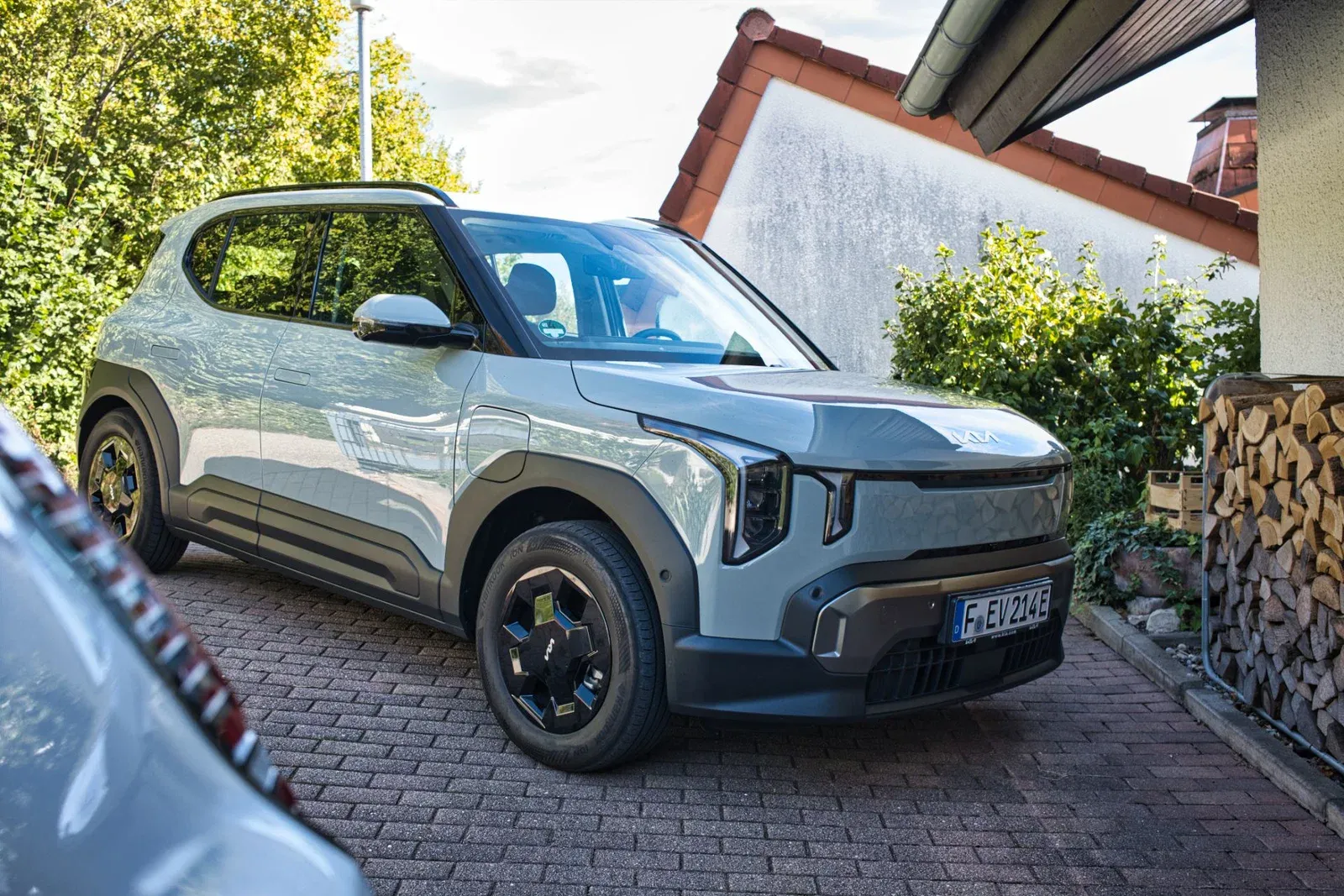
A day on a selected route, a fully loaded car, and a program designed to showcase the test vehicle at its best: drive videos give a first impression, but rarely the complete picture. Whether this impression holds true depends on later experiences, such as grocery shopping, city driving, or highway travel. This exact question remained unanswered after my first outing with the Kia EV2 through the Taunus and Rheingau region.
For a week, the small electric vehicle got to show how it performed in daily use around Heidelberg. It covered nearly 400 kilometers, including urban roads, country lanes, and longer highway segments, with charging done exclusively at its home wallbox. One figure in advance: by the end, the onboard computer showed a consumption level that was significantly lower than even the already good figure from its initial testing. This week also revealed how this happened and where the Kia still hits its limits.
Kia offered exactly the same configuration as during the test drive. That meant the Earth trim in Frost Blue, a small 42.2-kWh lithium-iron-phosphate battery, 108 kW of power at the front axle, along with all available packages. Any differences in perception cannot be attributed to a different trim level but rather solely to changed conditions.
Kia EV2: Agile in the city, confident over potholes
On paper, 108 kW isn’t impressive, nor are 8.7 seconds to reach 100 km/h or a top speed of 160 km/h. Yet for urban and commuter driving, this power output is more than sufficient. Weighing around 1.6 tons, the EV2 isn’t a heavy vehicle, with 250 Nm of torque available instantly, allowing it to move smoothly through traffic. The regenerative braking system can be finely tuned via the knobs on the steering wheel, just like in other Kia electric vehicles; at its strongest setting, it enables smooth one-pedal driving all the way to a stop.
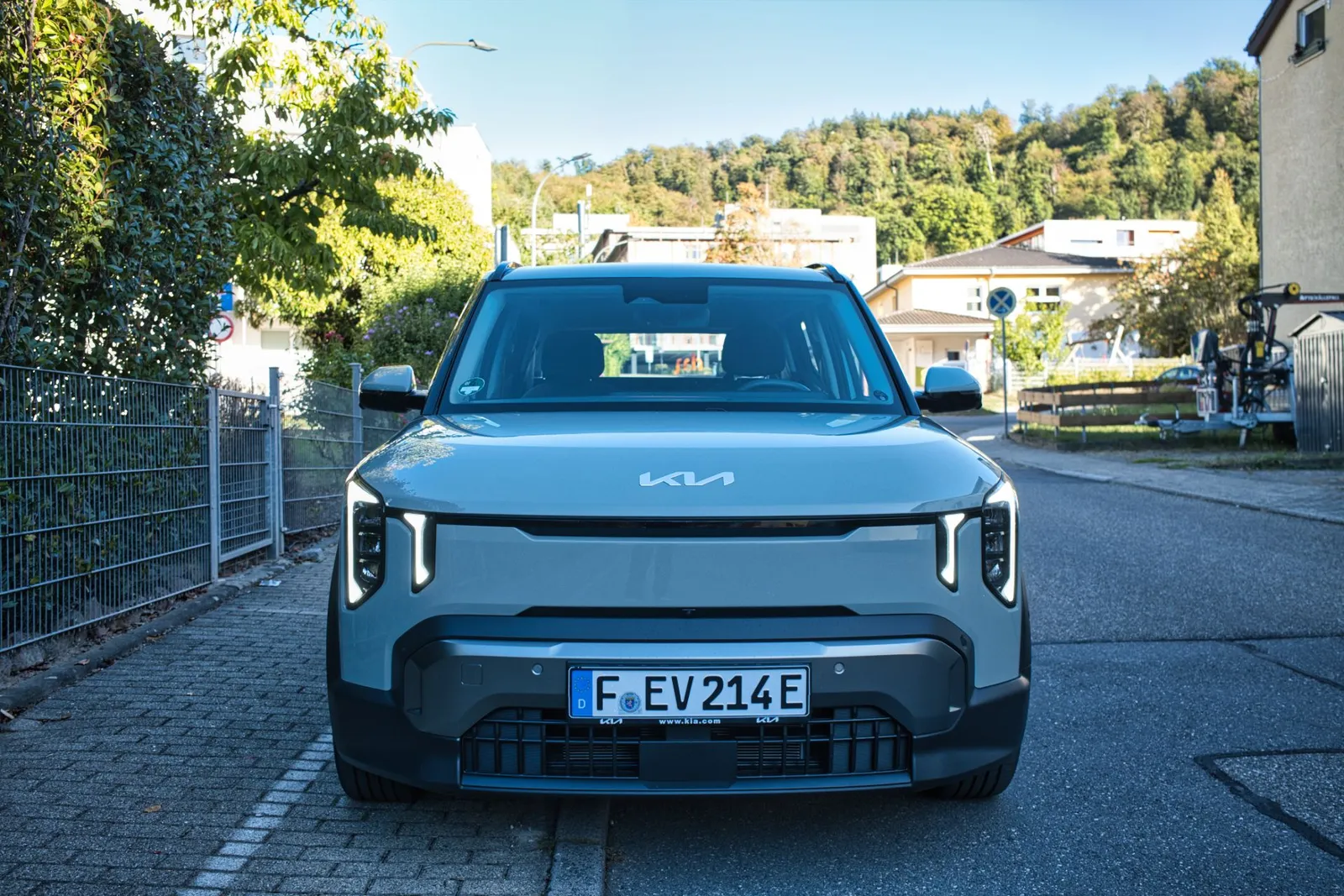
The suspension setup impressed me. Despite its simple multi-link rear axle and short wheelbase, the EV2 handles rough road surfaces and potholes well without excessive bouncing. The steering is smooth and precise enough. However, those who need to navigate curves quickly will soon hit the grip limits of the tires designed for low rolling resistance. For a car in this class, this is a reasonable compromise, especially since these tires likely contribute to the low fuel consumption.
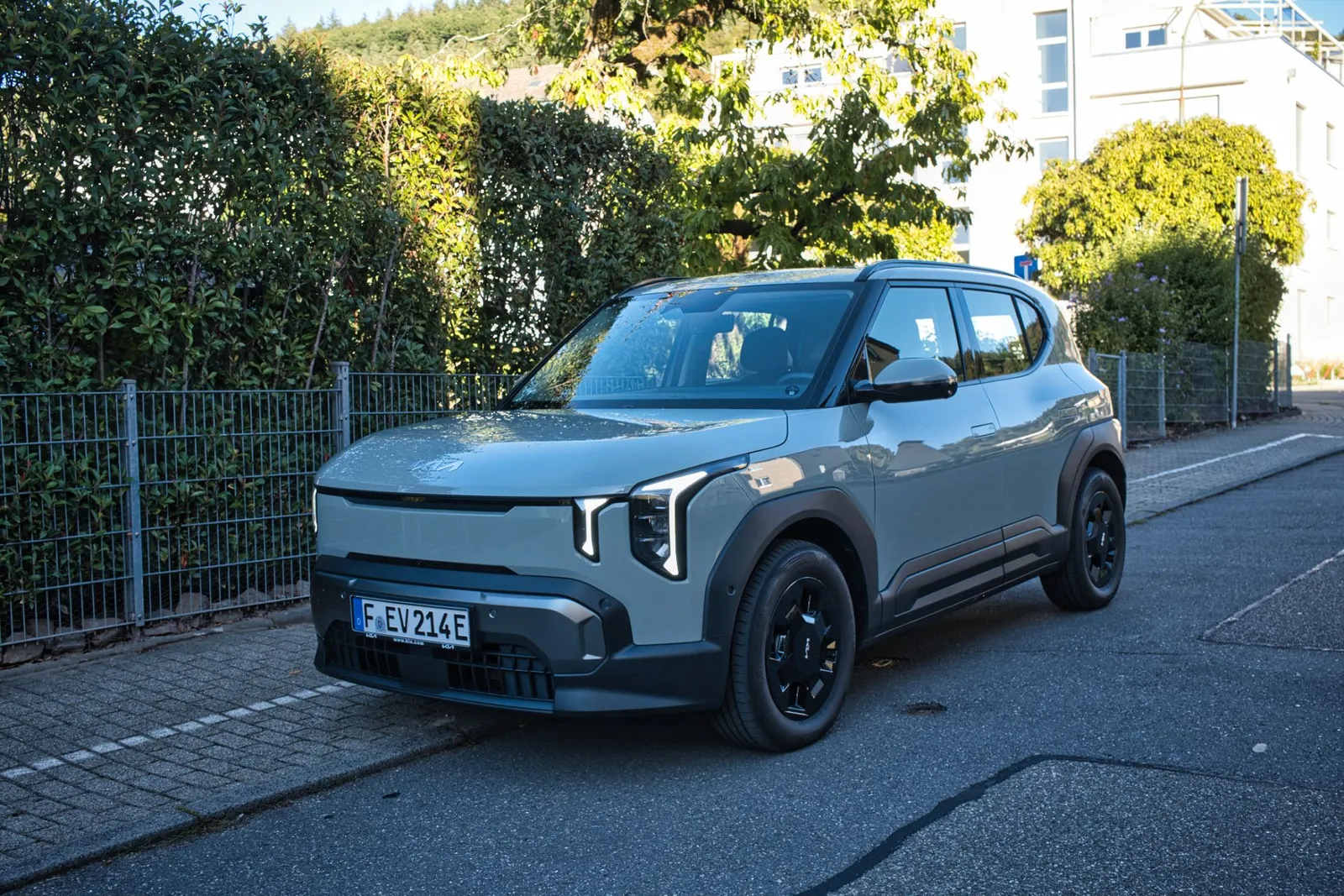
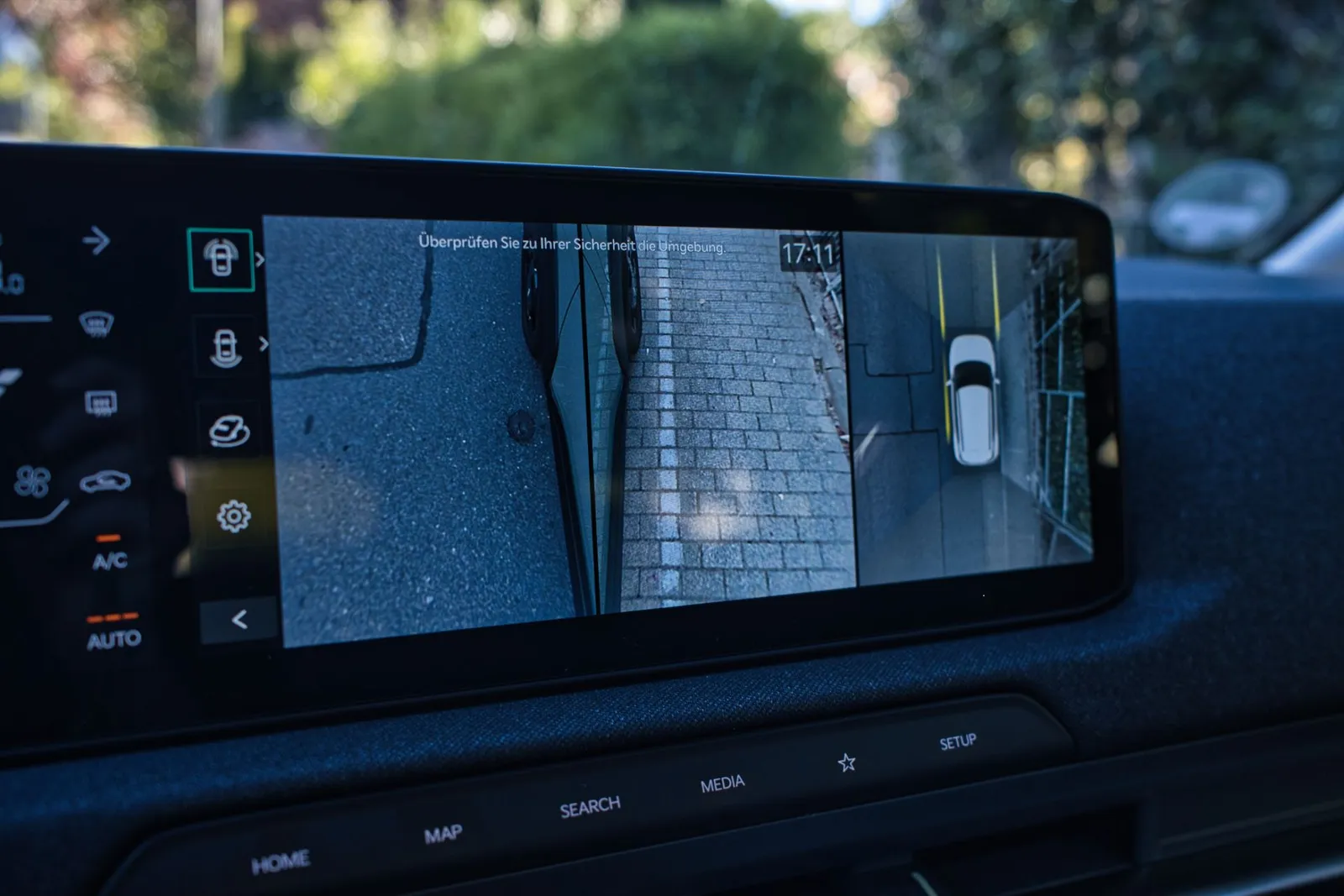
In the city, it also operates from its turning radius of just over ten meters, making turns and parking relatively easy. Visibility ahead is less favorable, as the tall, bulky hood blocks more of the view during maneuvering than is desirable. The surround-view camera from the DriveWise Park package helps solve this issue, providing a well-resolved and clearly visible image. Kia has omitted a cleaning nozzle for the rearview camera, which likely means the lens will get dirty quickly in poor weather conditions.
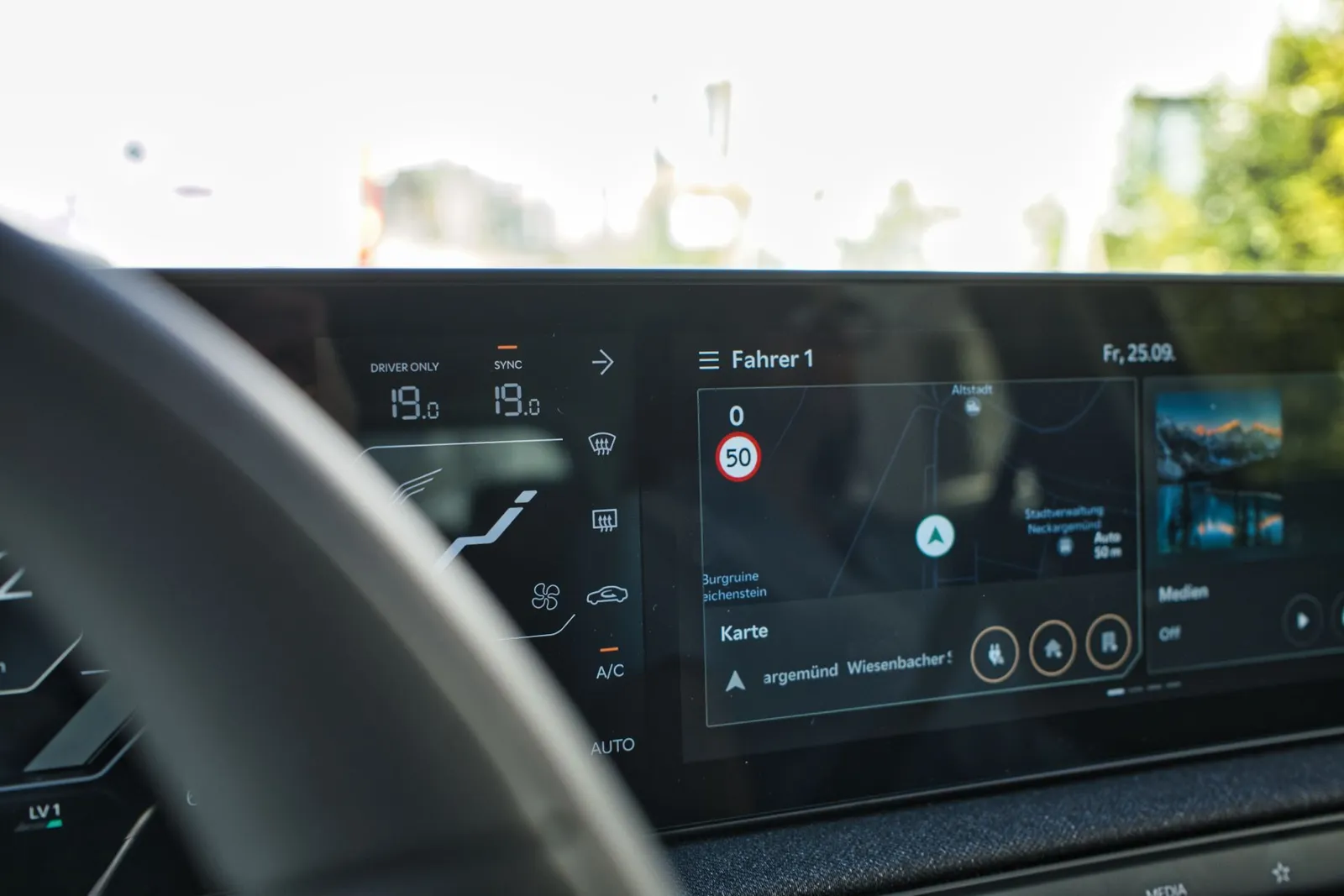
During use, it confirms what was already noticeable in the Rheingau. Buttons on the steering wheel, sensor buttons under the display, and the touchscreen complement each other, allowing quick access to basic functions, with the smartphone connecting wirelessly. Fortunately, it’s easy to silence the speed warnings required by the EU through the infotainment system and the favorite button. One issue became more apparent over the course of the week than during the first test: I missed the head-up display. In daily use, one really wants speed and navigation information right in front of their eyes.
The quiet interior remains positively noteworthy, which is not common for a car of this class. The assist systems also continue to operate discreetly without intervening abruptly.
Everyday use has lower energy consumption than the test day
During the first drive, after about 190 kilometers, the onboard computer showed 13.9 kWh per 100 kilometers, which was already significantly below the WLTP value of 15.1 kWh. After roughly 400 kilometers of normal driving, the display showed 11.7 kWh. This was despite longer highway segments, which typically increase energy consumption in electric vehicles. Thus, there is a difference of more than three kWh per 100 kilometers between the standard value and actual usage, with the practical value being lower.
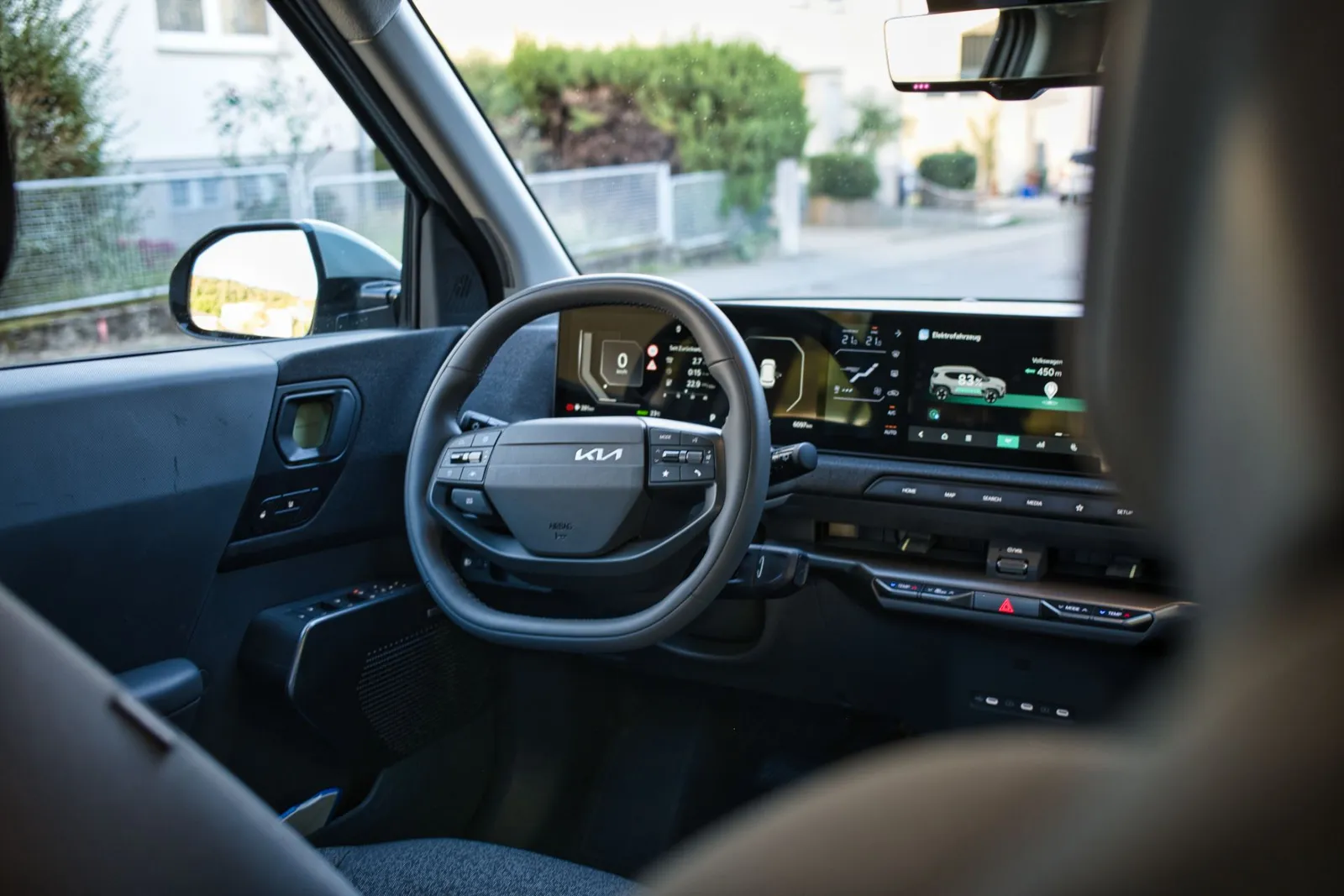
To be honest, the conditions were favorable for the car. At the end of September, late summer returned, with temperatures as high as 31 degrees forecast for the southwest. Cold weather, which increases consumption, was not an issue this week. Mathematically, 11.7 kWh out of 42.2 kWh yields around 360 kilometers, not including buffer distances and charging losses. Therefore, the WLTP figure of 317 kilometers is not a theoretical value under such conditions but rather a realistic target.
In winter, the image will look different, and this applies to every electric car. How significant the difference can be was shown by a prototype equipped with a large battery and 19-inch wheels, which Kia sent onto the road alongside Norway’s “El Prix” range test. At temperatures as low as minus 31 degrees, it managed just under 311 kilometers on a single charge. For this version, Kia cites a preliminary WLTP range of 413 kilometers, meaning the cold reduced the range by about 100 kilometers or 24.8 percent. This may sound like a large drop at first, but under these conditions it represents a surprisingly small reduction—none of the 24 officially participating production models achieved such a low figure.
Charging at Home, Space for Weekly Shopping
The home charger provides 11 kW, so charging the small battery from 10 to 100 percent takes about four hours according to Kia. This isn’t a problem over night. I haven’t connected the EV2 to a fast charger this week. Per the specifications, it can charge at up to 118 kW there and needs just under 30 minutes to go from 10 to 80 percent. Even under the conditions of Norway’s winter test, Kia states it only took six minutes more.
I wasn’t able to test the optional 22-kW AC charger due to a lack of a suitable wallbox. Its usefulness lies elsewhere anyway. Those who live in the city, don’t have their own charging facility, or park at a 22-kW charger while shopping can reduce the charging time for the small battery to 2 hours and 35 minutes, which is about an hour and a half shorter. For those who park at street chargers, the extra 990 euros is therefore worth considering. And those who charge at the charger near the supermarket can return with a full shopping cart.
This brings us to the limitations of the B-segment. Several boxes of water and juice, along with other purchases, fill the trunk to its limit, even though the four-seater model with the rear seats folded down offers up to 403 liters of space. The solution is simple: when the rear seats are folded down, a flat loading area is created, allowing everything to fit. However, it’s important to store the cargo securely. The 15-liter glovebox is only suitable for storing the charging cable.
Who the Kia EV2 Is Suitable For
The final price for the test vehicle on the pricing list was 37,530 euros, more than 6,200 euros higher than the base price of the EV2 Earth at 31,290 euros. What matters most is which extras are truly useful in everyday use. The seating package for 300 euros is essential to me because it includes the adjustable individual seats in the back. The heat pump and V2L features in the Winter-Connect package (1,390 euros) pay off especially during cold weather, while the 22-kW charger (990 euros) is particularly useful for those without their own wallbox. On the other hand, the surround-view camera and parking assistant, navigation with Harman/Kardon sound, 18-inch wheels, and the paint finish are matters of comfort and personal preference.
Those who regularly drive long distances now have an alternative available in the program since summer. The large battery with 61 kWh and a WLTP range of up to 453 kilometers is now on the market. For commuters, city dwellers, and households looking for a practical first or second car, the smaller battery is more than sufficient starting this week.
This week hasn’t overturned the initial impression but rather added depth to it. The EV2 is more fuel-efficient than standards suggest, has a more mature handling experience than its rear axle would imply, and is easy to use right out of the box. My wish list includes a head-up display, better visibility over the hood, and more trunk space for larger purchases. These don’t change much about the overall picture. Maybe it would be the Kia EV3 after all? The positive impression of the EV2 from the test day in Rheingau wasn’t due to ideal conditions; it holds up well in everyday use.
Disclaimer: The Kia EV2 was provided to us by Kia free of charge for one week for this review. This does not affect our honest opinions expressed here.